We have never had an easier time knowing what time it is. The answer is everywhere: glowing on our phones, sitting in the corner of our computers, appearing on cars, appliances and watches that can tell us the hour before we have even thought to ask. Yet the easier time becomes to read, the less interesting the act of reading it seems to be. That makes the clock an unexpectedly fertile design object. When accuracy is no longer the challenge, designers can start asking different questions. What should time feel like? Should it move, perform, disappear or demand our attention? Three recent designs offer three very different answers.
OVODYO by Ekaggrat Singh Kalsi
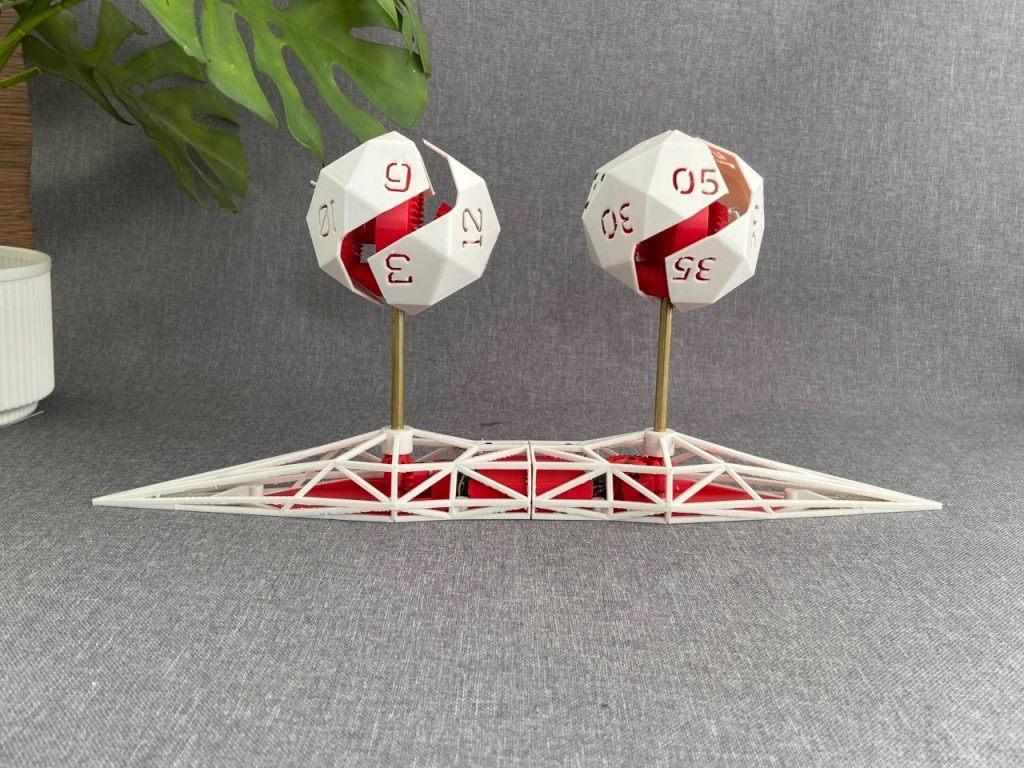
There is something wonderfully unnecessary about a clock that physically throws two geometric objects around just to tell you it is 10:35. That is precisely why OVODYO is so compelling. Designed by Ekaggrat Singh Kalsi, this experimental clock replaces familiar hands and digits with two faceted balls that periodically tumble, rotate and settle into place. Checking the time becomes a tiny mechanical spectacle, complete with a beginning, an action and a satisfying conclusion.
OVODYO by Ekaggrat Singh Kalsi
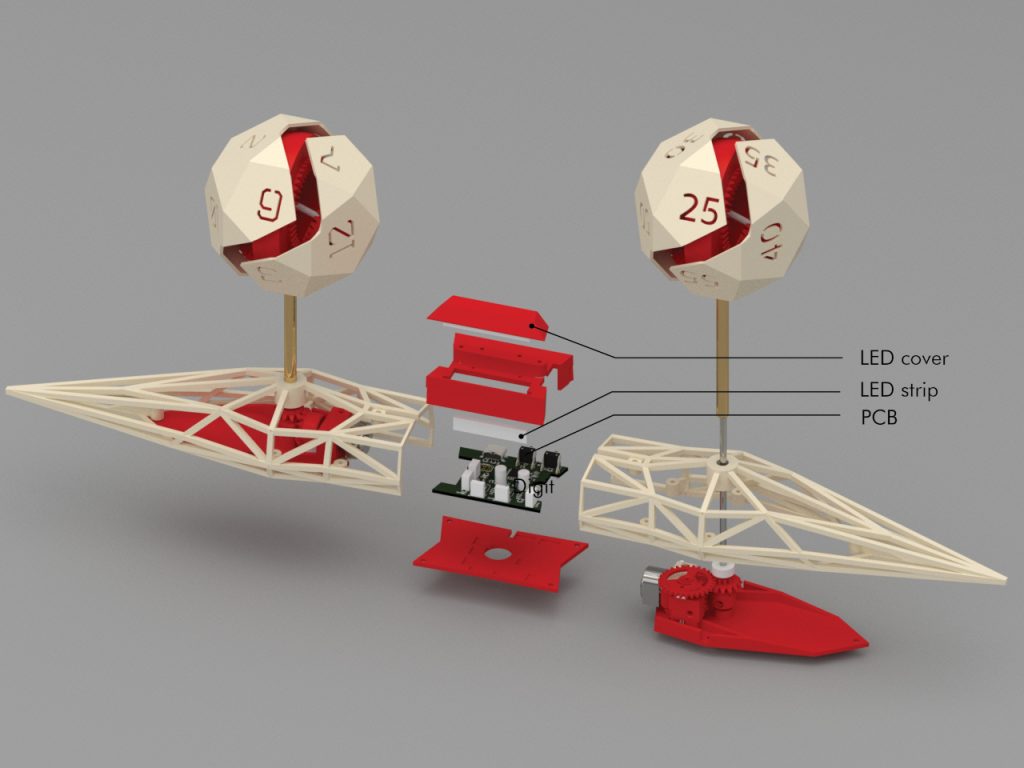
The two objects perform the job of a conventional clock face, but in a much more physical way. One represents the hours and carries 12 hour positions across its faces. The other represents the minutes, divided into five-minute increments. Rather than sweeping continuously, they make deliberate jumps, with each movement changing the visible face and therefore the time being displayed. Something we normally absorb in half a second becomes an event we can actually watch.
OVODYO by Ekaggrat Singh Kalsi
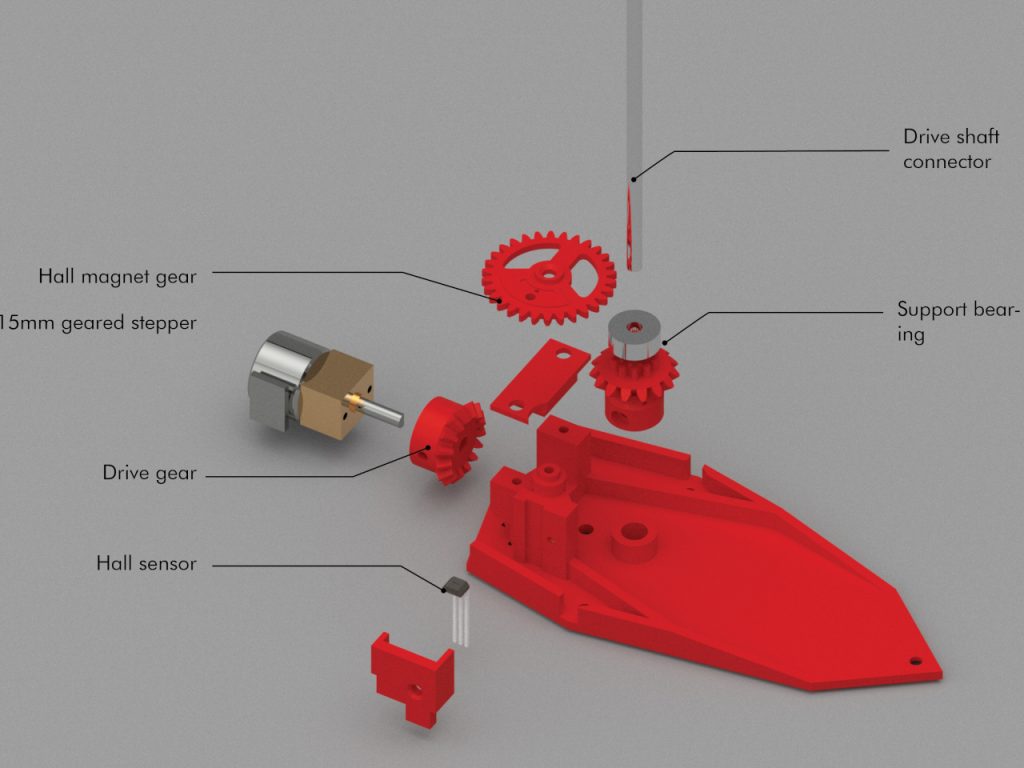
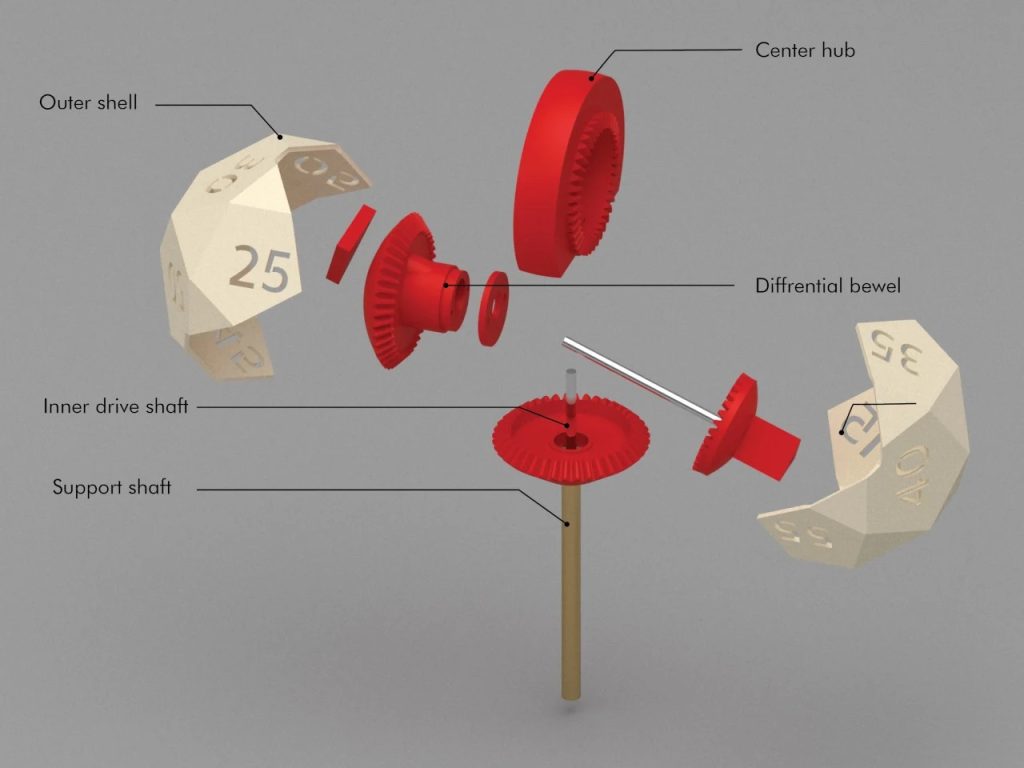
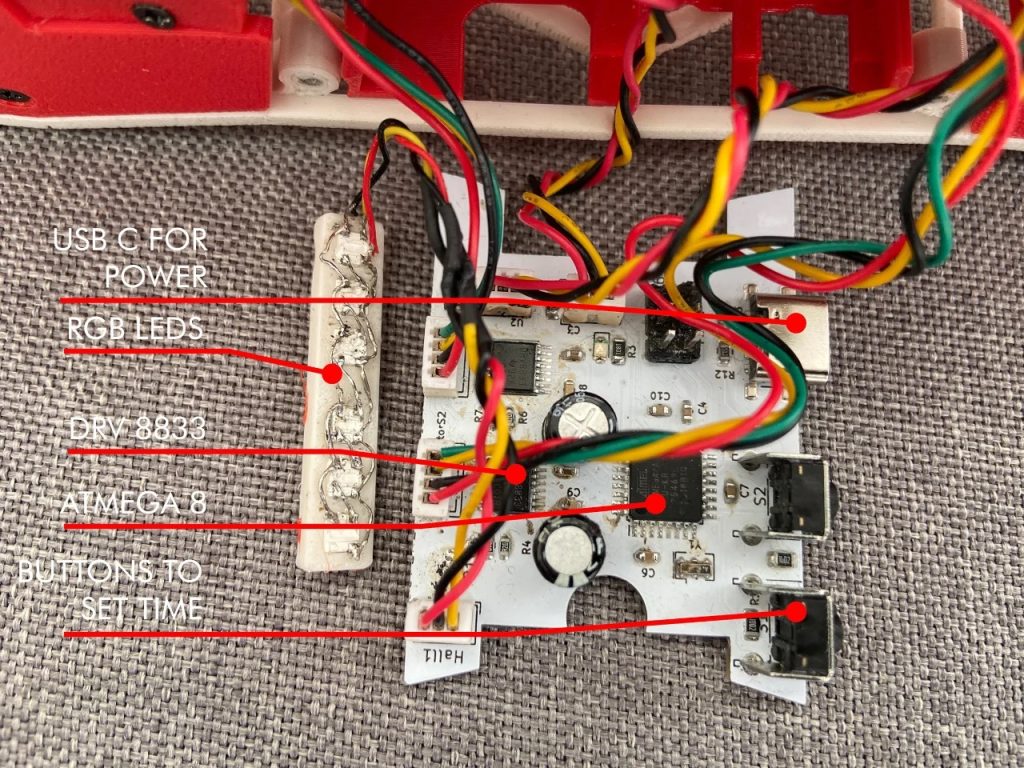
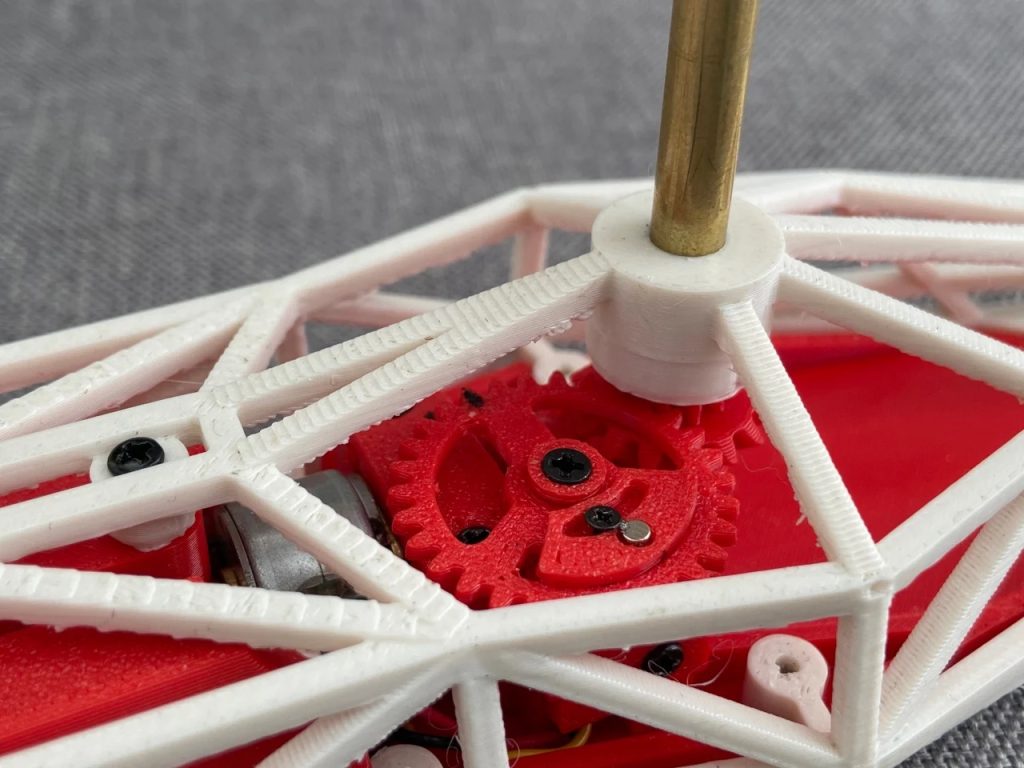
Making a pair of printed polyhedrons land correctly is considerably harder than it sounds. OVODYO combines an ATmega8 microcontroller, stepper motors and Hall effect sensors with a differential mechanism that translates controlled motor rotations into the tumbling action. The sensors provide feedback about position, allowing the system to stop with enough precision for the correct face to become the display. It is a surprisingly sophisticated solution hiding behind what initially looks like a playful trick.
OVODYO by Ekaggrat Singh Kalsi
The development process also reveals the less glamorous side of experimental design. Early versions struggled with friction, with rough printed surfaces making the motors work harder than expected. Bearings eventually gave the shafts the freedom they needed, allowing the mechanism to operate reliably. Only then could attention turn to the enclosure and the transformation from workshop experiment to finished object. OVODYO works because the visual novelty is backed by genuine mechanical thinking. It does not merely look like a pair of dice coming to life. It actually behaves that way.
OVODYO by Ekaggrat Singh Kalsi
And that physicality is important because it raises a larger question: if a clock can make us watch time being calculated, what happens when a designer removes the calculations from view altogether? That is where NMK takes the idea, replacing mechanical drama with something considerably quieter.
NMK by JAYUJAJE
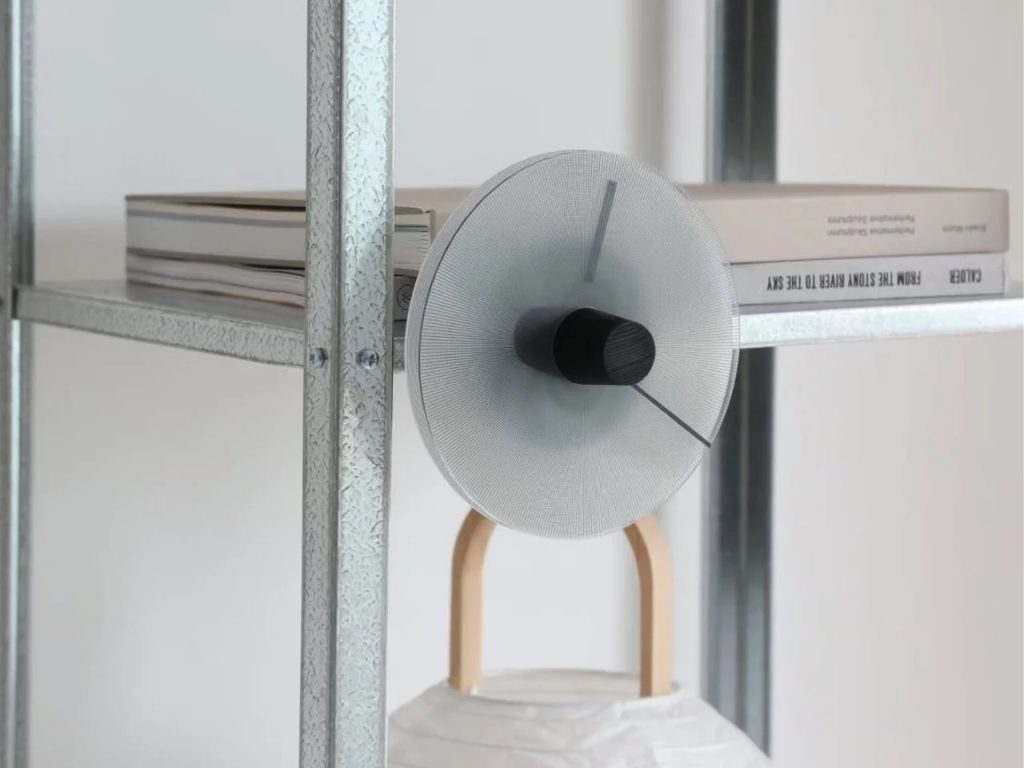
The most unusual thing about NMK may be what is missing. There are no numbers to chase, no markers to decode and no decorative mechanism demanding attention. The concept by Seoul-based studio JAYUJAJE and designer Jin Kim instead uses a shallow field of woven metal mesh, two understated hands and a carefully controlled play of light. It is a clock that seems almost reluctant to admit it is a clock.
NMK by JAYUJAJE
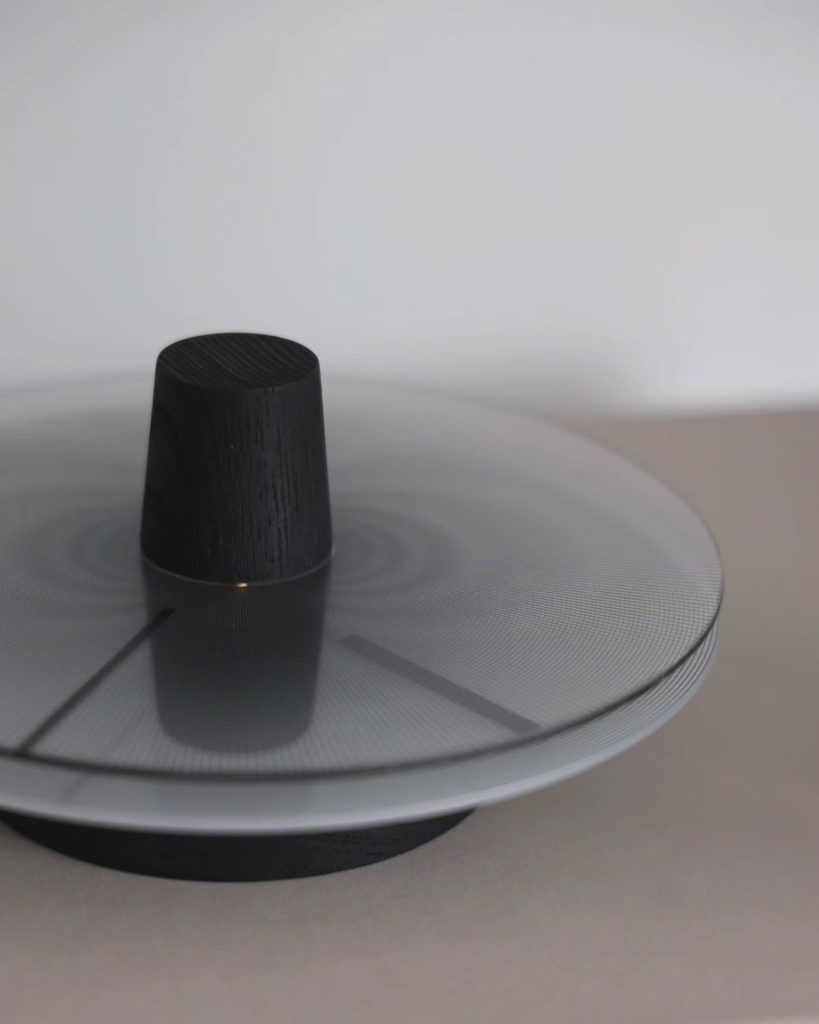
The face is where the idea really comes alive. Fine wire mesh curves gently inward, creating a surface that changes character as it moves toward the center. At the perimeter, it appears light and almost translucent. Toward the middle, it becomes progressively darker. The effect comes from the physical structure of the mesh and its relationship with light rather than from a printed gradient. Two matte-black hands cross this shifting field with almost no visual ornament.
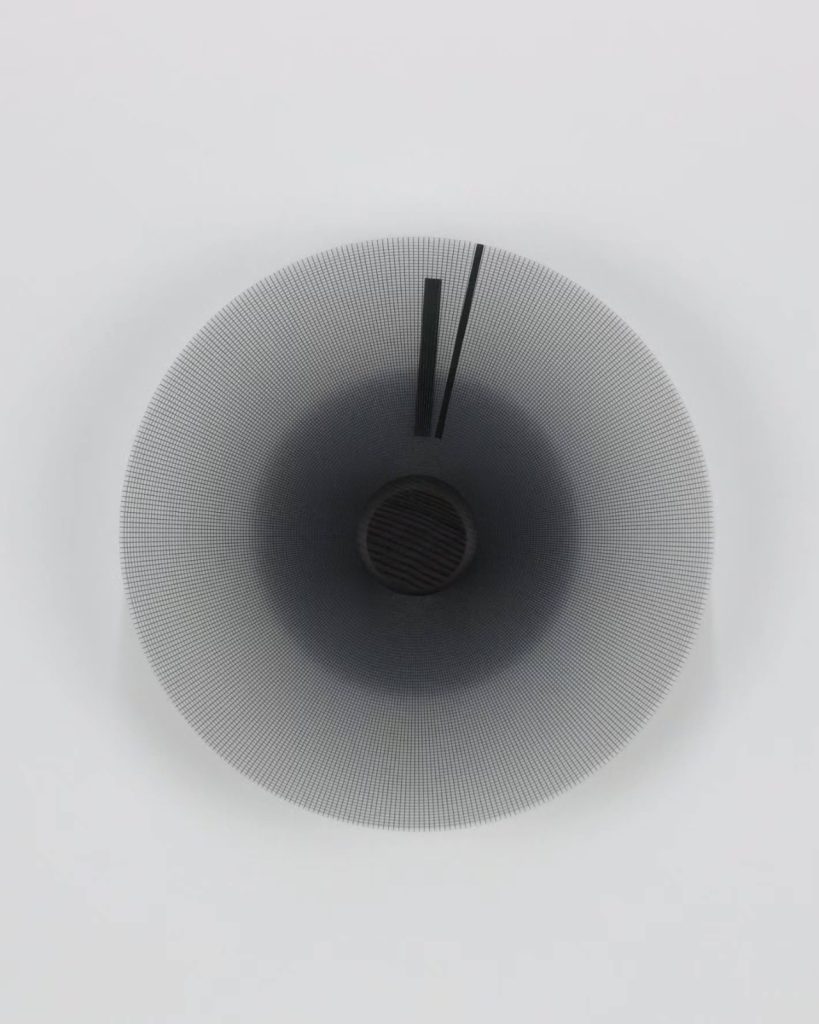
NMK by JAYUJAJE
The material choices reinforce that sense of quiet tension. A blackened wooden hub provides one version with a warm, tactile center, while another explores a heavier dark stone or concrete form. The industrial precision of the mesh meets the irregularity of natural materials, giving the clock a presence somewhere between product, furniture and sculpture. Its ability to sit on a tabletop or hang on a wall only strengthens that ambiguity.
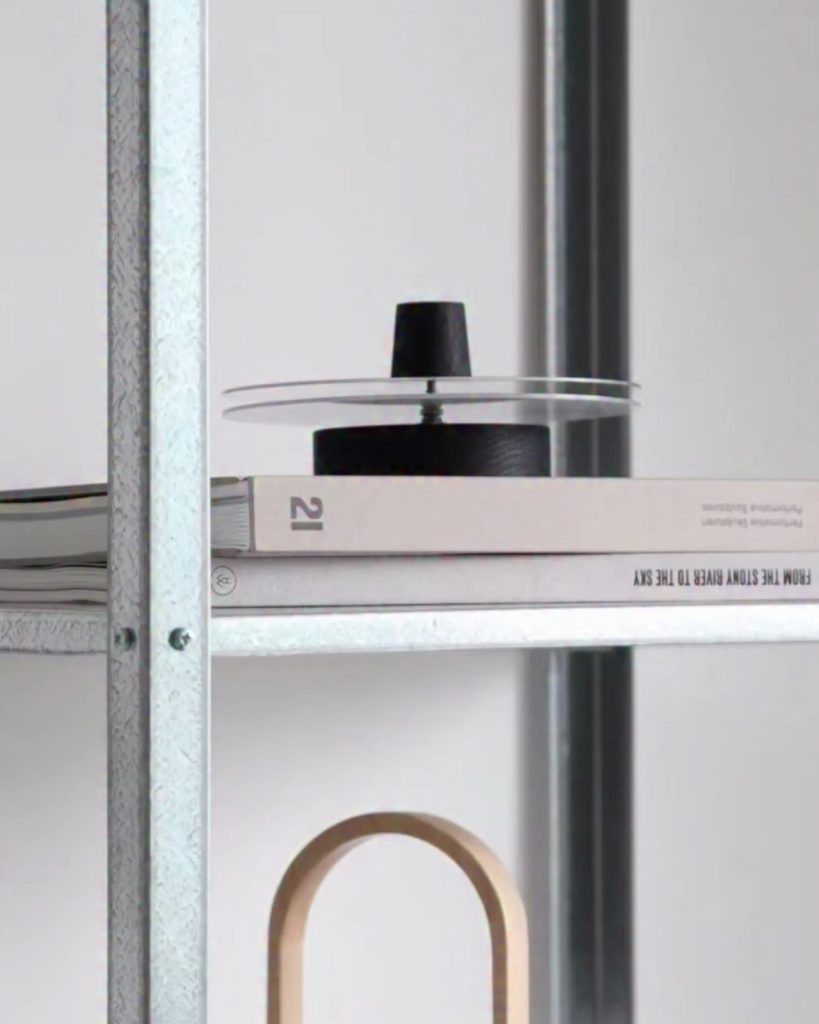
NMK by JAYUJAJE
There is a philosophical idea beneath all this restraint. Kim connects NMK to the way Joseon-era scholars understood time as something continuous rather than simply a sequence of units to be counted. That makes the absence of numbers feel purposeful. If OVODYO asks us to watch time move, NMK asks us to slow down enough to feel it. Muvaqqit 60 goes one step further by deciding exactly when that attention should happen.
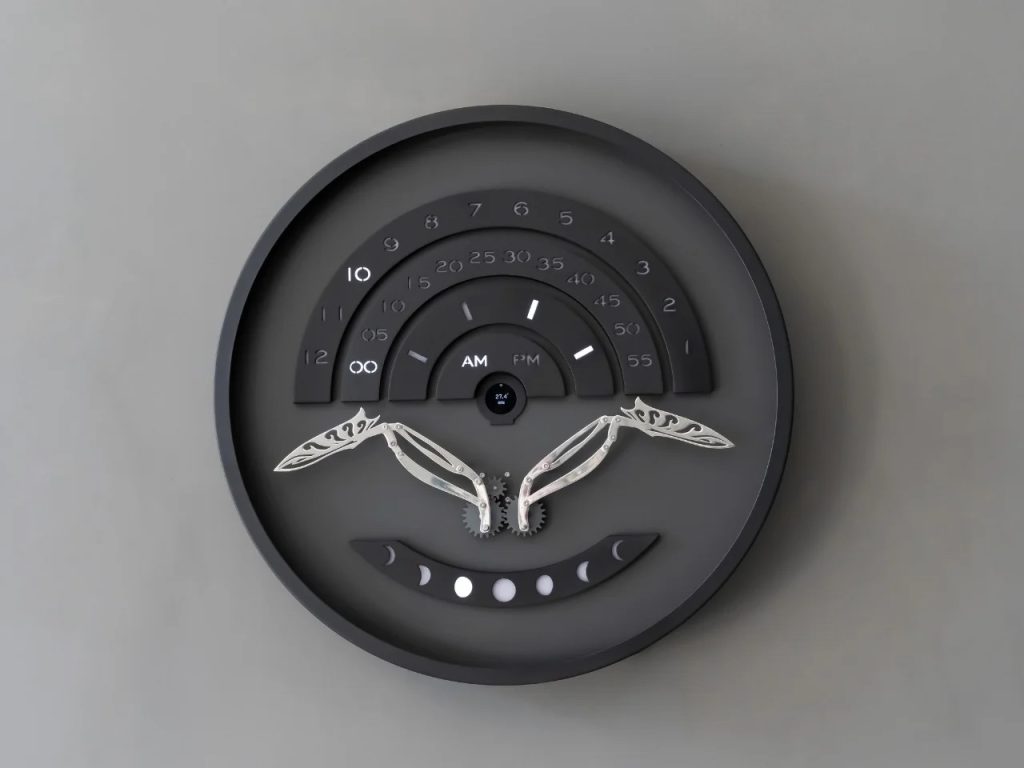
Muvaqqit 60 by Omora Lusso (also header image)
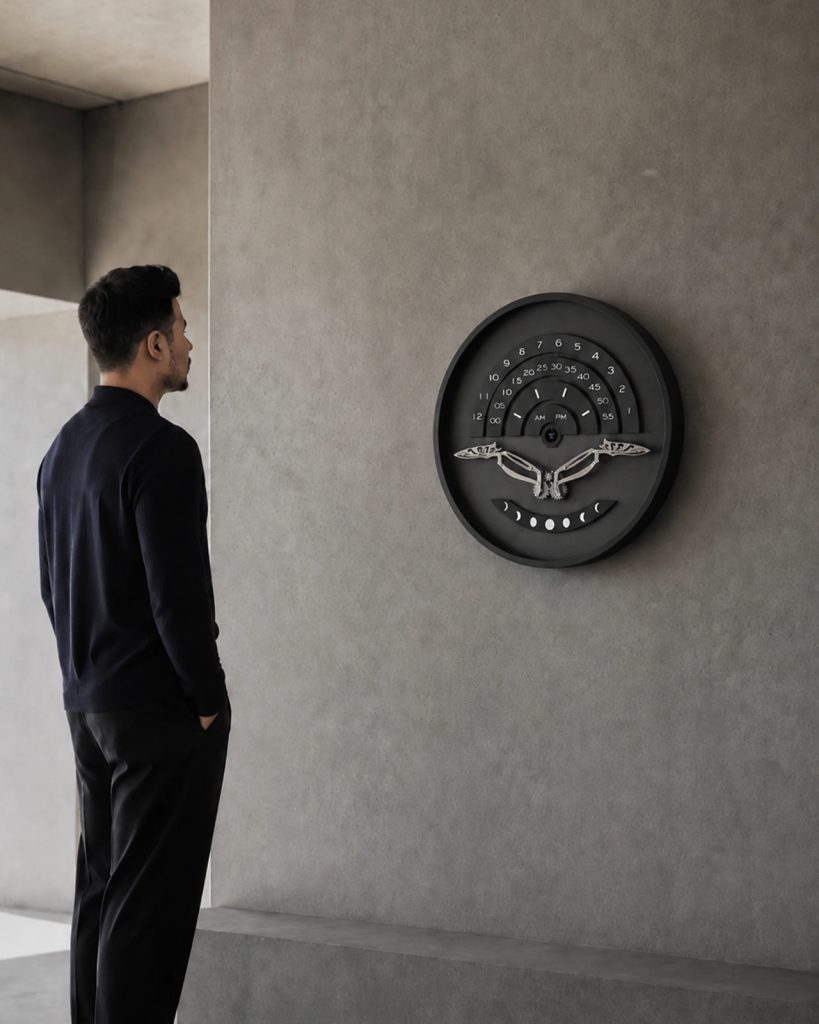
We have become remarkably good at making time disappear. A glance at a phone tells us the hour in an instant, and then the screen goes dark. Muvaqqit 60, created by Istanbul-based studio Omora Lusso, takes the opposite approach. This 60-centimetre kinetic time artwork deliberately makes us wait. Once a minute, it comes alive in a carefully choreographed sequence of light, movement and reflection, turning an ordinary update into something worth noticing.
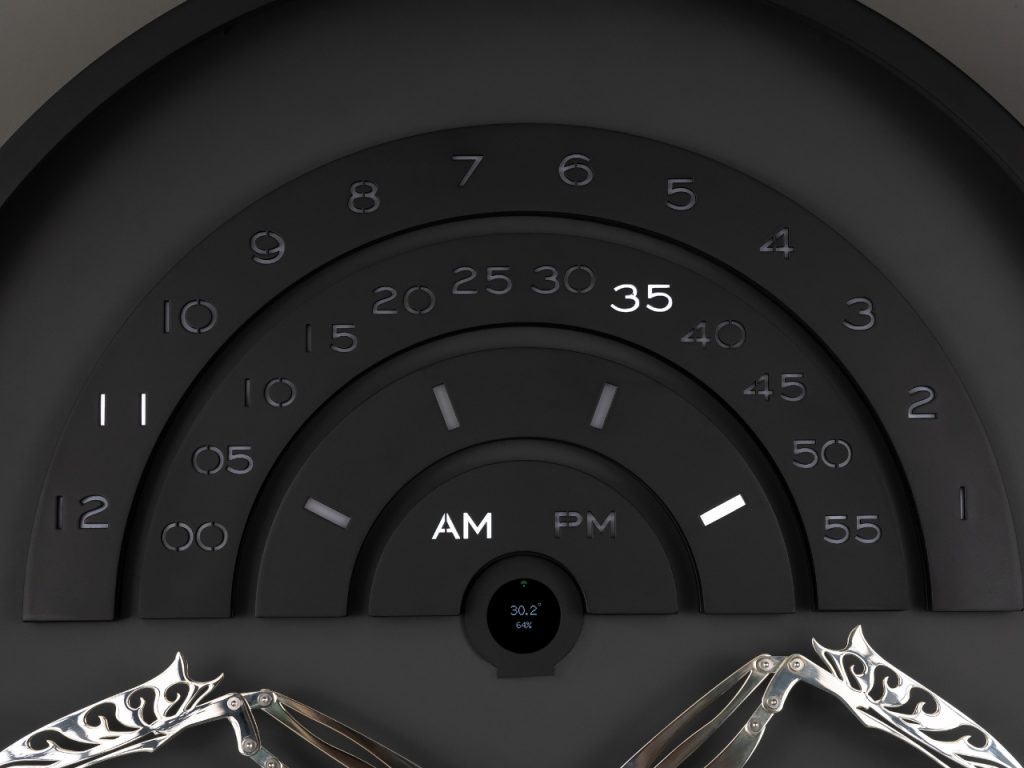
Muvaqqit 60 by Omora Lusso
Its name points toward an older relationship with time. A muvaqqit was historically a timekeeper who used astronomical observation and precise calculation to establish and regulate time. Ottoman cities had dedicated muvakkithanes, where this work was carried out alongside the study of astronomy. Omora Lusso does not reproduce those historical instruments or simply decorate a contemporary object with old symbols. Instead, it borrows the underlying attitude: time deserves observation, precision and attention.
Muvaqqit 60 by Omora Lusso
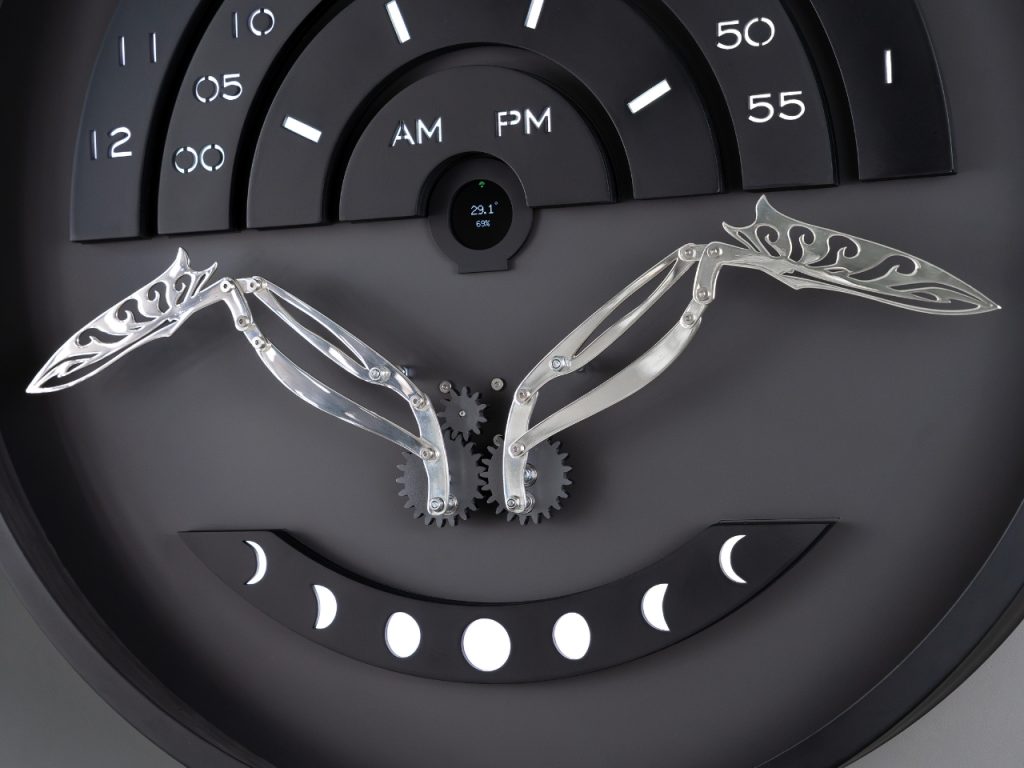
The mechanism is deliberately theatrical. At the appointed moment, light moves through a series of curved scales while a mirror-polished silver bird rises into view. The composition communicates the hour, five-minute interval and individual minute, with additional indications for AM/PM and the lunar cycle. Then the performance ends. For the next 59 seconds, the object returns to relative stillness.

Muvaqqit 60 by Omora Lusso
That pause may be the most interesting part of the entire concept. Most contemporary technology is designed to eliminate waiting. Muvaqqit 60 makes waiting part of the experience. Its silence creates anticipation, so that the moment of movement carries more weight when it finally arrives.The Noir Silver edition reinforces the idea through material contrast, pairing a dark metal body and anthracite dial with a reflective brass bird behind a glass front.
Muvaqqit 60 by Omora Lusso
A digital display is extremely good at telling us the time, but it gives us almost no reason to remember the experience. These clocks approach the problem from another direction. They make the mechanism visible, make the passage of time perceptible or make the moment of reading deliberately slower. The future of the clock may not be about finding a faster way to tell us the time. It may be about giving us a reason to stop and notice that time is passing at all.