What if street furniture could do more than provide a place to sit? From repurposed traffic barriers to modular concrete landscapes, designers are reimagining everyday urban elements as opportunities for connection, creativity and comfort. These three projects show how thoughtful design can transform public spaces, proving that innovation often begins with seeing familiar things differently.
Stop! by Studio Martins Mezulis and 13_0663_tsx
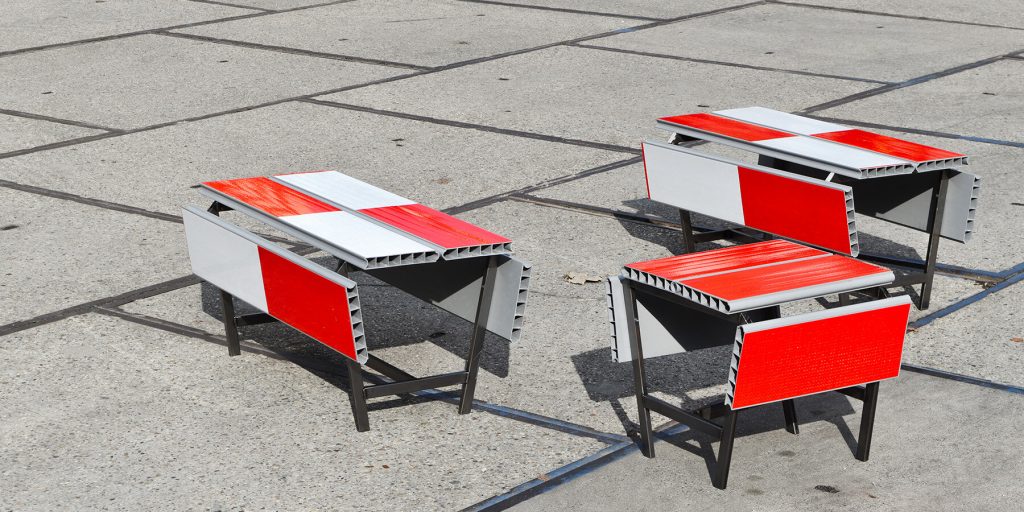
At first glance, the red-and-white aluminum barriers commonly found on Dutch streets are hardly objects of design fascination. Their purpose is straightforward: mark construction zones, redirect pedestrians and cyclists, and keep people away from potential hazards. Yet for Studio Martins Mezulis and 13_0663_tsx, these unmistakable pieces of urban infrastructure have become the starting point for something considerably more inviting. Their stop! collection reimagines the traditional Dutch safety barrier, known as a schrikhek, as a series of outdoor benches and stools that encourage people to do precisely what the original objects were designed to prevent: stop and stay awhile.
Stop! by Studio Martins Mezulis and 13_0663_tsx
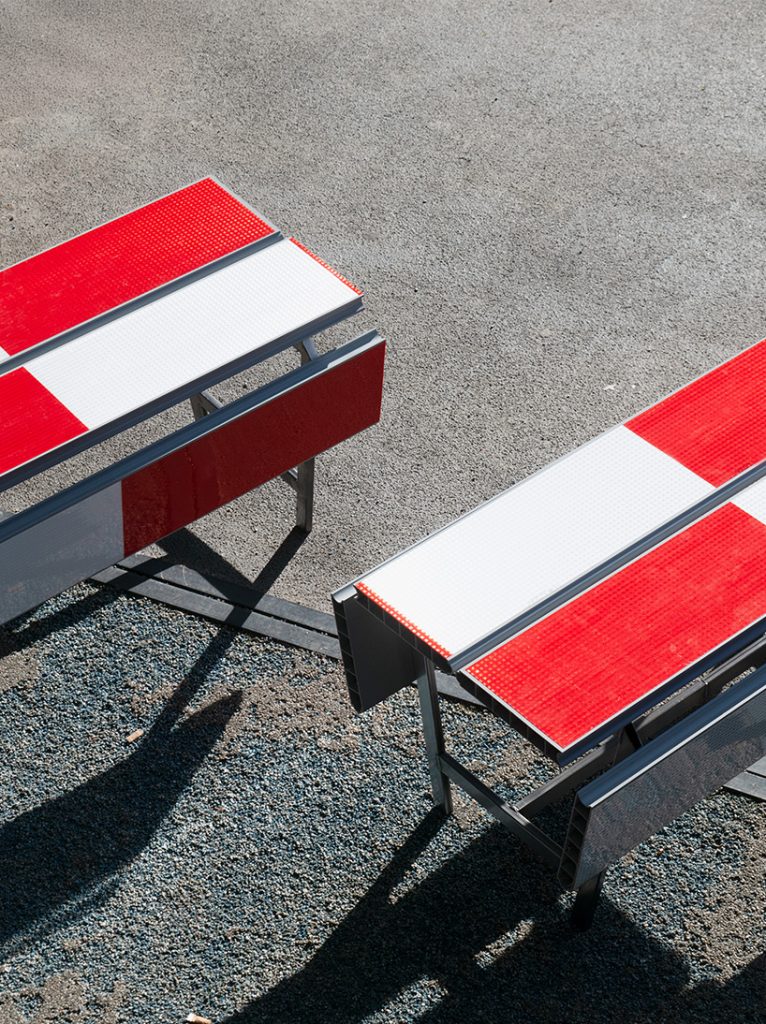
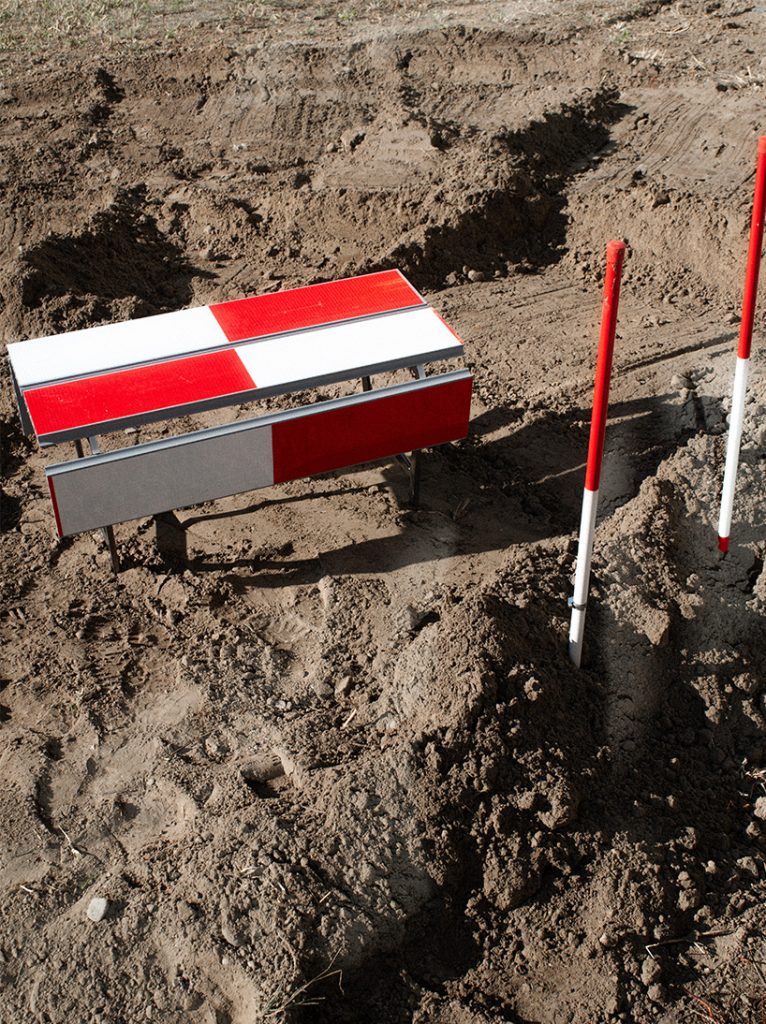
Rather than disguising the barriers beyond recognition, the designers build on their familiar visual identity and material composition. The result is a playful reinterpretation of an everyday object, shifting its role from controlling movement to encouraging social interaction. The high-visibility red-and-white pattern remains central to the concept, allowing the furniture to retain its connection to the streetscape while acquiring a new purpose. It is a clever example of design through recontextualization, in which innovation emerges not from inventing an entirely new form but from reconsidering what an existing one can do.
Stop! by Studio Martins Mezulis and 13_0663_tsx
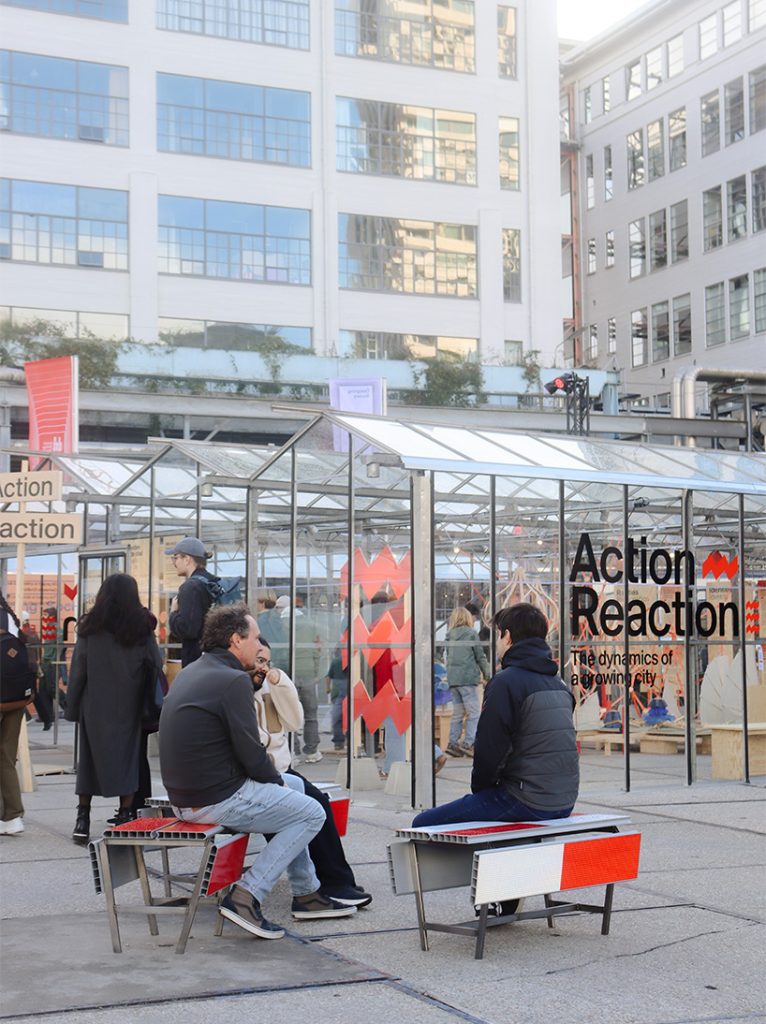
The collection made its public debut during Dutch Design Week in Eindhoven, with installations at Strijp-S Ketelhuisplein and Design Perron. These settings offer an opportunity to experience the furniture in the context of public life, where seating can become more than a practical amenity. A bench can provide a moment of rest, a meeting point or an invitation to strike up a conversation. By turning a symbol of restriction into an instrument of connection, stop! also raises an intriguing question about the urban environment: how many objects that regulate our movements could be redesigned to enrich our time in the city instead?
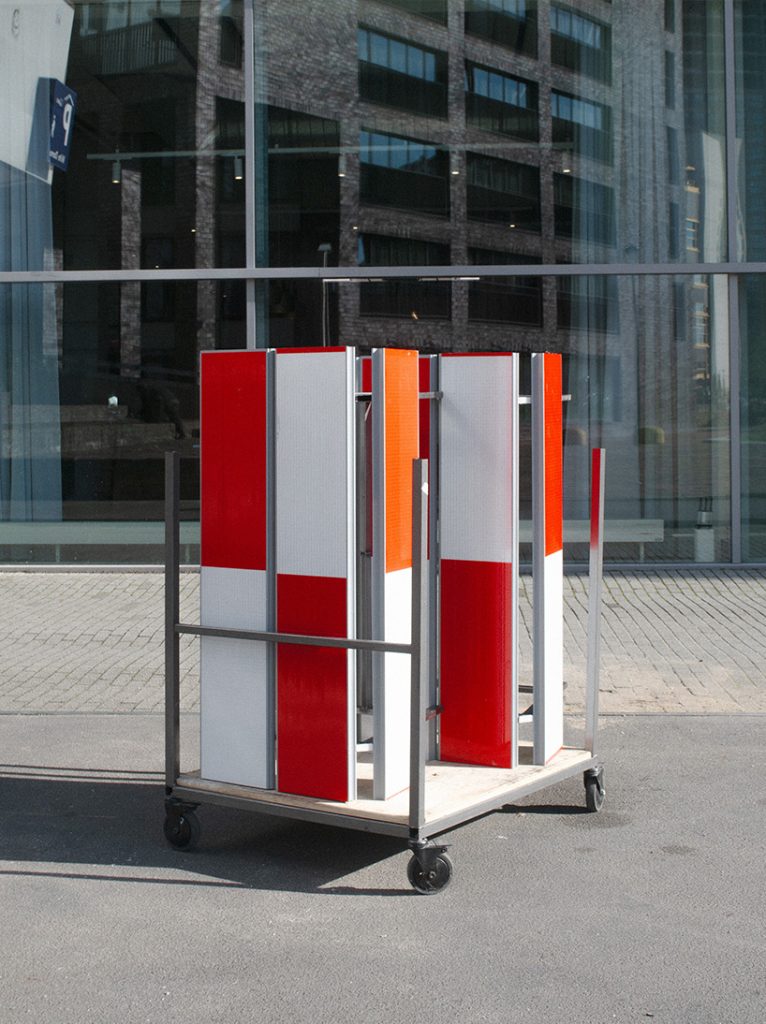
Stop! by Studio Martins Mezulis and 13_0663_tsx
This approach to innovation is particularly compelling because it combines conceptual clarity with an instantly recognizable form. The project does not rely on elaborate technology or complicated visual gestures. Instead, it demonstrates how a fresh perspective can unlock new possibilities within familiar materials and systems. And while stop! finds its inspiration in infrastructure that already exists, another design practice takes a more systematic approach, building an entirely new language for public space from a handful of modular elements.
Barcode by MVRDV
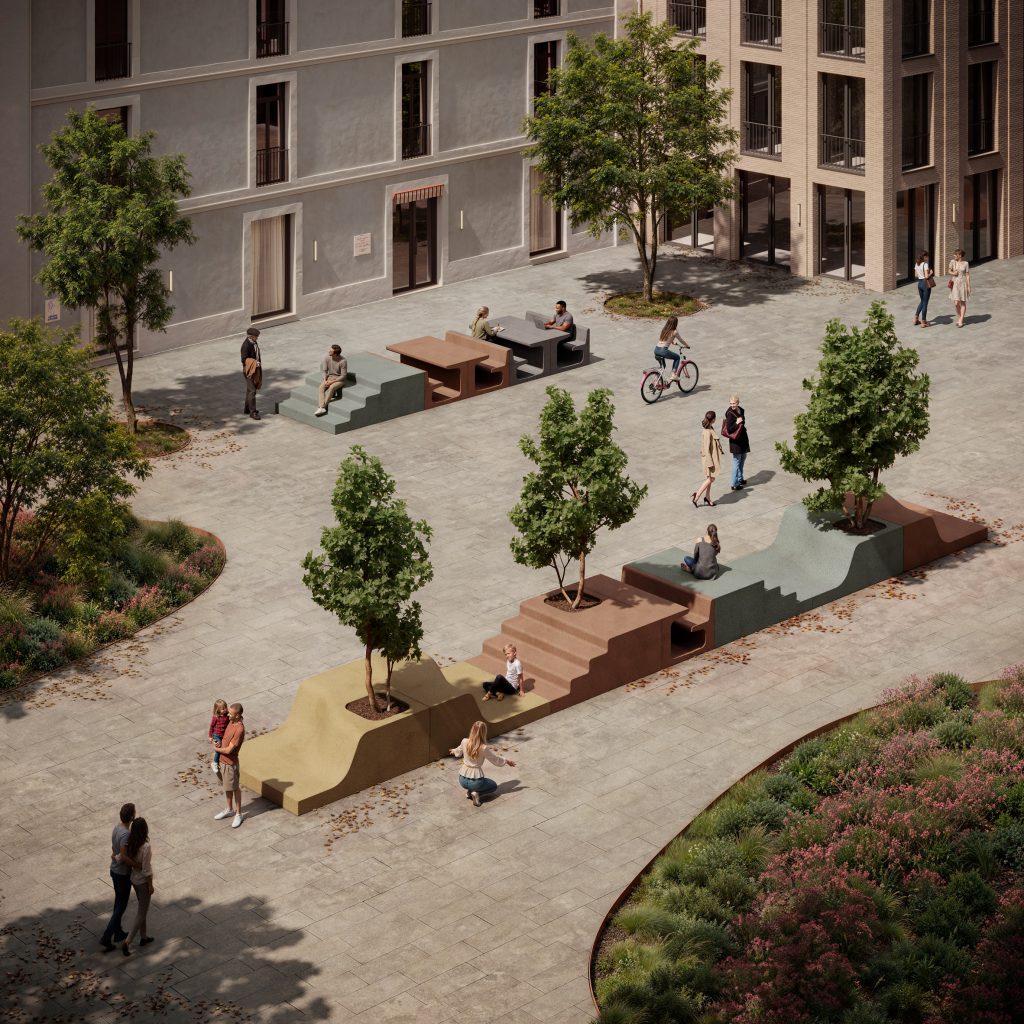
For architecture studio MVRDV, the challenge is not simply to create another attractive bench, but to rethink how street furniture can be arranged, occupied and experienced. Developed for Barcelona-based manufacturer Escofet, the Barcode collection consists of modular concrete elements designed to form adaptable urban landscapes. Its three basic components, Tribune, Dune and Desk, provide a flexible starting point for configurations that range from informal gathering spots to more conventional places to sit, work or eat outdoors.
Barcode by MVRDV
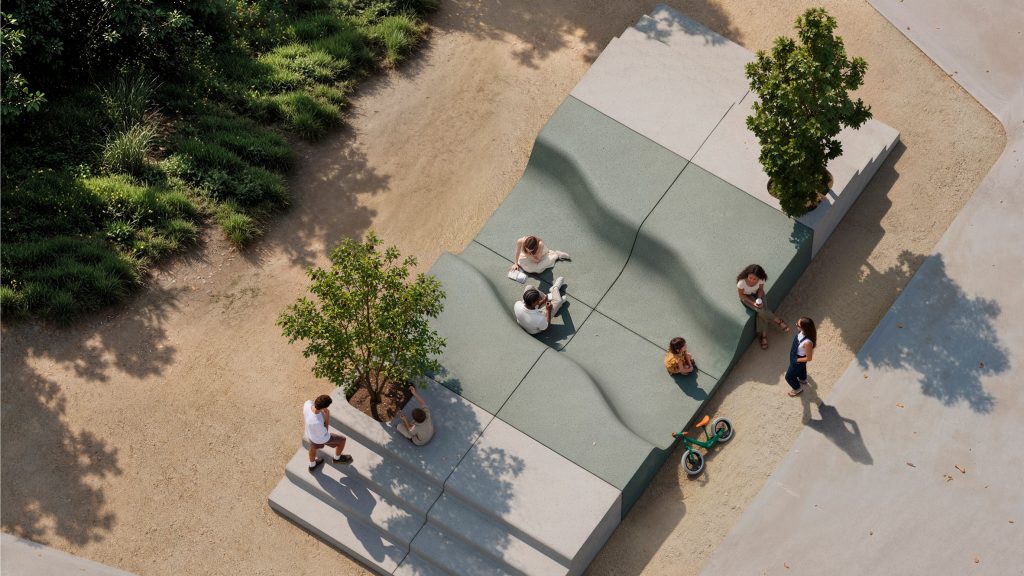
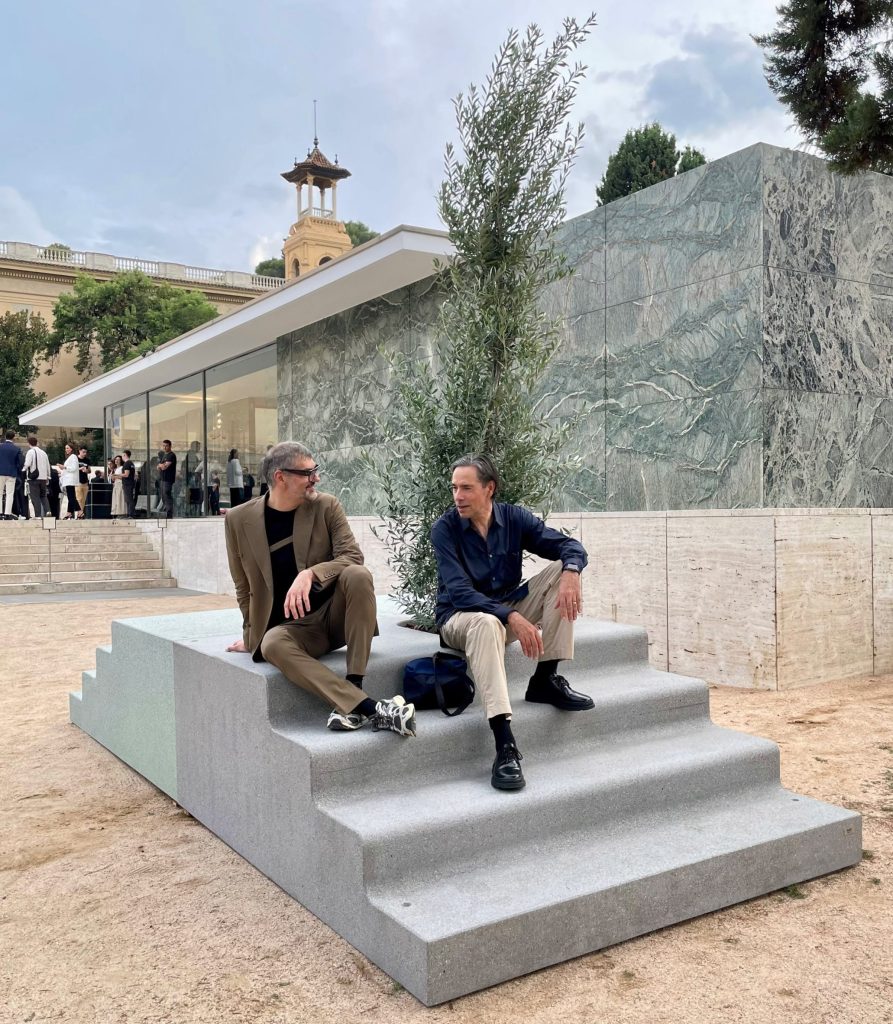
Each module offers a distinct spatial experience. Tribune features broad steps that invite people to sit, climb or perch at different levels. Dune introduces a smooth, sloping surface suited to lounging, while Desk combines a table with two benches for outdoor dining or working. All three share the same height and width, allowing them to connect into continuous arrangements or compact clusters. Available in eight concrete colours, including red, green, yellow and more restrained neutrals, the collection offers considerable freedom in both composition and appearance. Add-ons such as planters expand its possibilities further, making the system adaptable to different sites and uses.
The name Barcode refers to the linear arrangements that the modules can create, but the collection is not limited to orderly rows. According to MVRDV, its 72 possible element choices can be combined into almost endless variations. The ambition is to move away from the predictable placement of standardized benches and towards a more open-ended relationship between furniture and its users. MVRDV co-founder Jacob van Rijs, who led the project, describes this philosophy as one in which human occupation becomes central to the design process. The designer establishes the possibilities, the urban planner shapes the arrangement, and the public ultimately decides how the space comes to life.
Barcode by MVRDV
This is where Barcode becomes particularly interesting. Its concrete components are not merely functional objects but building blocks for informal social landscapes, inviting people to use them in ways that may not have been anticipated. One person might sit on a step, another might stretch out on a slope, while a group could gather around a table or occupy an entire cluster. Such flexibility gives public space a more participatory character, allowing its users to shape the experience through everyday behaviour. Yet experimentation is only one side of successful street furniture. For a design to remain relevant beyond its launch, it must also withstand years of use, adapt to changing urban needs and complement the place it inhabits. This is where Mmcité’s long-term approach to public design offers a valuable perspective.
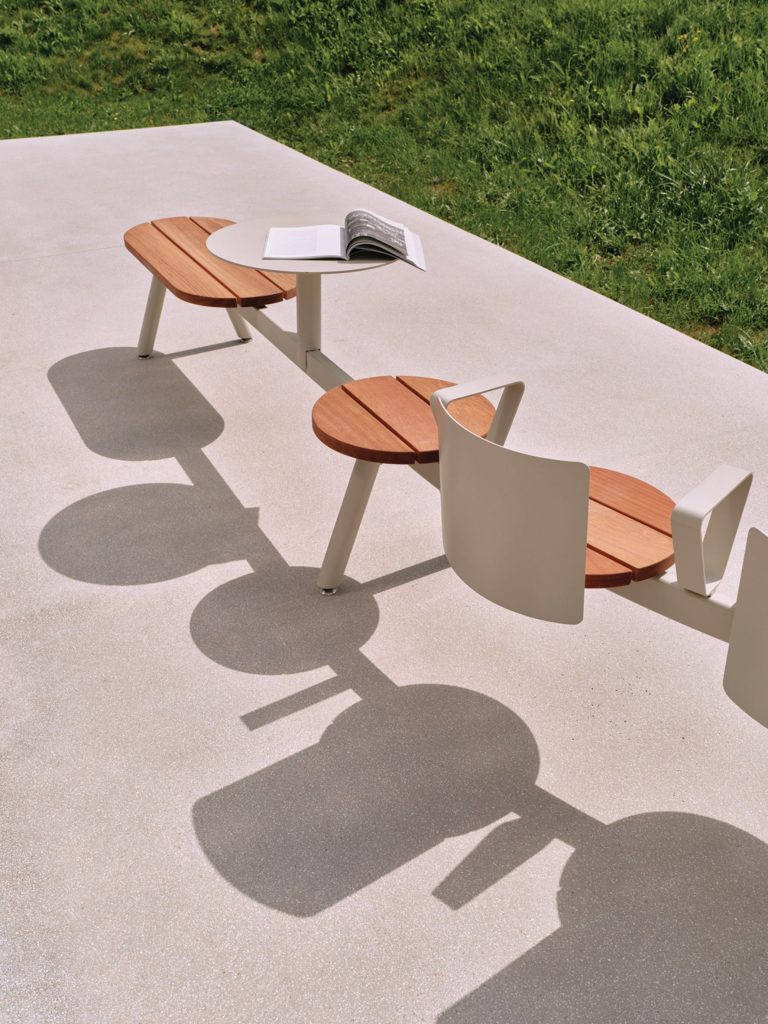
Morse by Studio Segers
The work of Czech urban furniture manufacturer Mmcité offers several examples of how form, material and functionality intersect in contemporary street furniture. Among its recent designs, the Morse seating collection by Belgian practice Studio Segers and the UFO shelter, developed in-house by Mmcité, explore different ways to introduce comfort and character into parks, transport hubs and other public settings.
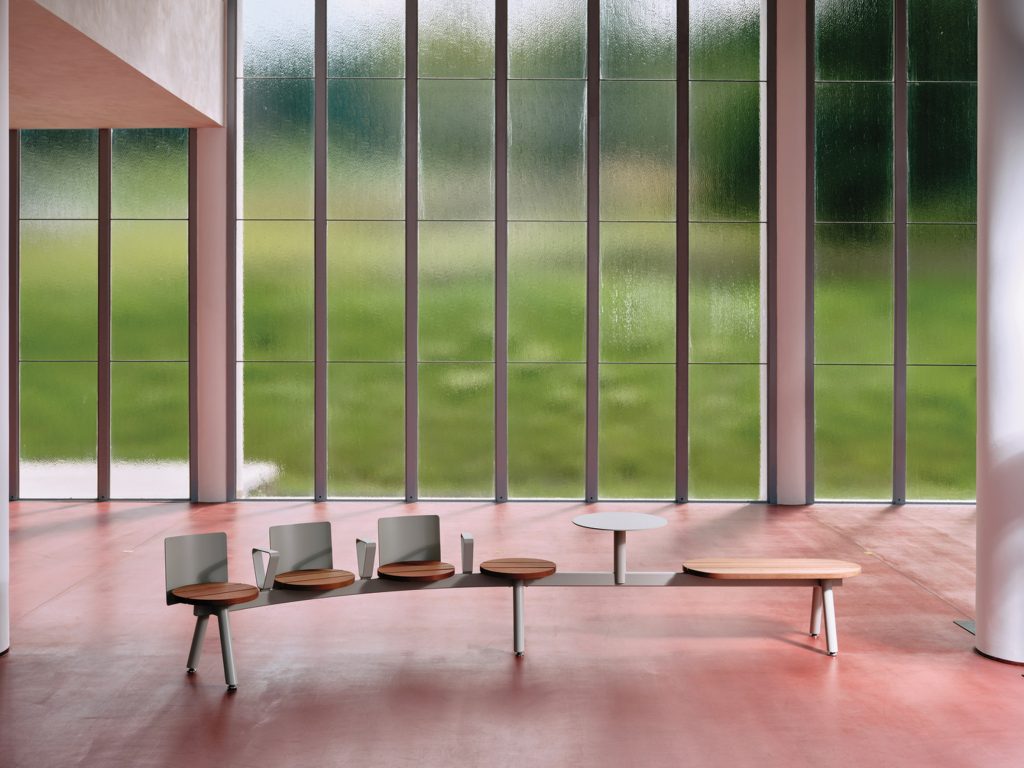
Morse by Studio Segers
Designed by Studio Segers, Morse takes its cue from the dot-and-dash patterns of Morse code. Its defining feature is a linear bar punctuated by rounded or stadium-shaped seats, creating a rhythm of repeated forms rather than a conventional continuous bench. The seats can be customized in different materials and configurations, allowing the collection to adapt to settings ranging from riverbanks and parks to airport terminals. The design balances visual simplicity with flexibility, using repetition as both a functional organizing principle and a distinctive aesthetic feature.
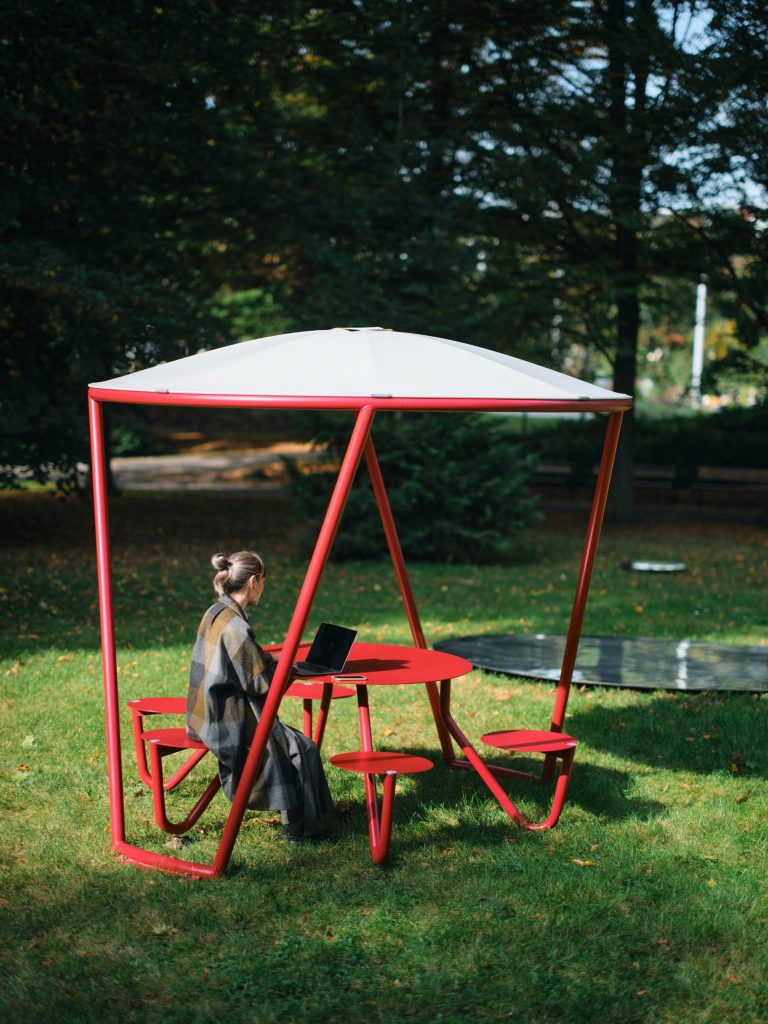
UFO by Mmcité (also header image)
The UFO shelter approaches public furniture from a different direction. Designed in-house, it replaces the familiar central-pole umbrella structure with a sturdy steel frame supporting a fabric dome stretched over laminate rods. The resulting silhouette provides shelter while introducing a softer, more sculptural presence into the urban landscape. An optional circular platform extends the design beyond its primary function, transforming the sheltered area into a daybed for resting or reclining. This addition reflects a broader shift in public-space design towards accommodating not only movement and brief stops, but also moments of relaxation.
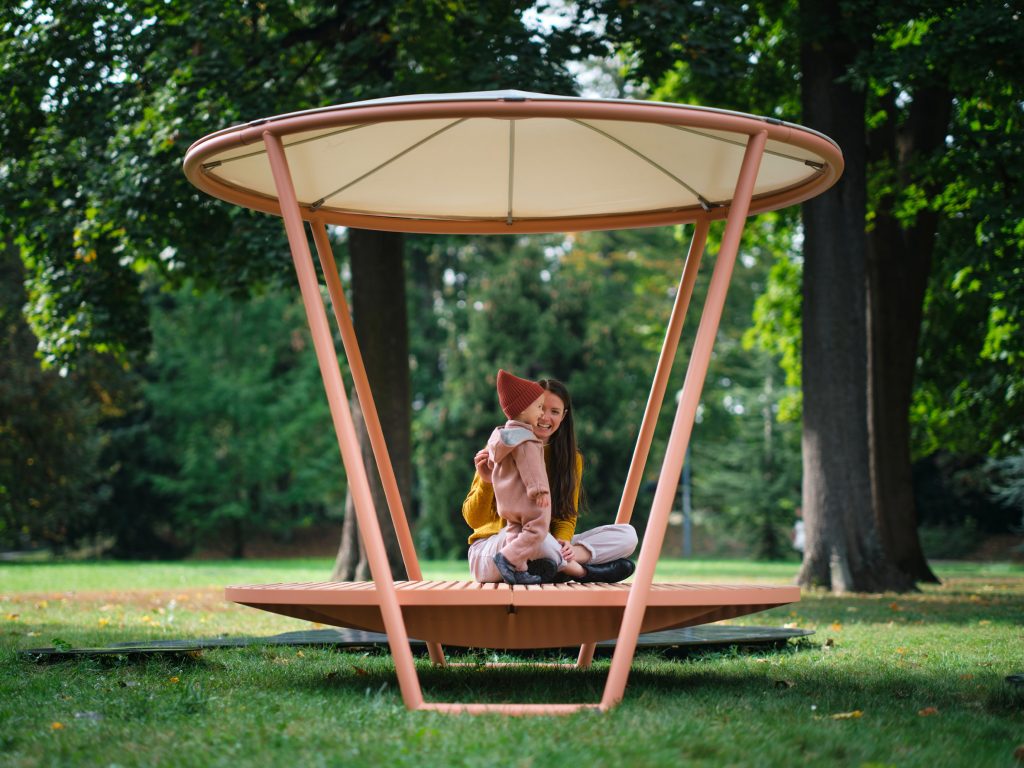
UFO by Mmcité
Whether reimagining safety barriers, creating adaptable concrete landscapes or refining furniture for long-term use, these designers share a common goal: making cities work better for people. Their projects show that meaningful innovation does not always require radical change. Sometimes, a simple shift in perspective can turn ordinary urban infrastructure into something that brings people together.