Great design doesn’t always start with new materials. From scrap metal and discarded lace to vintage glassware, a new wave of designers is transforming overlooked objects into distinctive lighting. These projects prove that resourcefulness and a little creative mischief can turn yesterday’s leftovers into tomorrow’s design icons.
Fused by Audra Grays and Maxim Lester
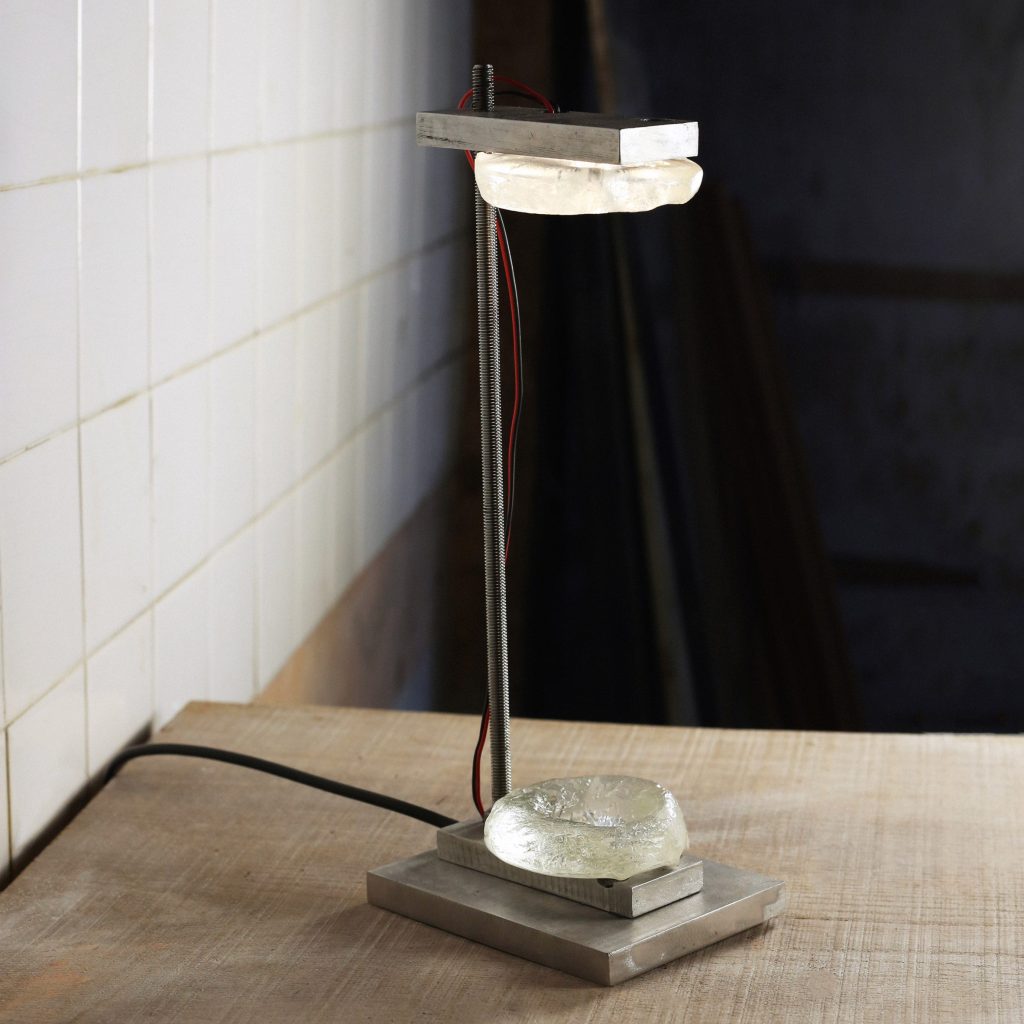
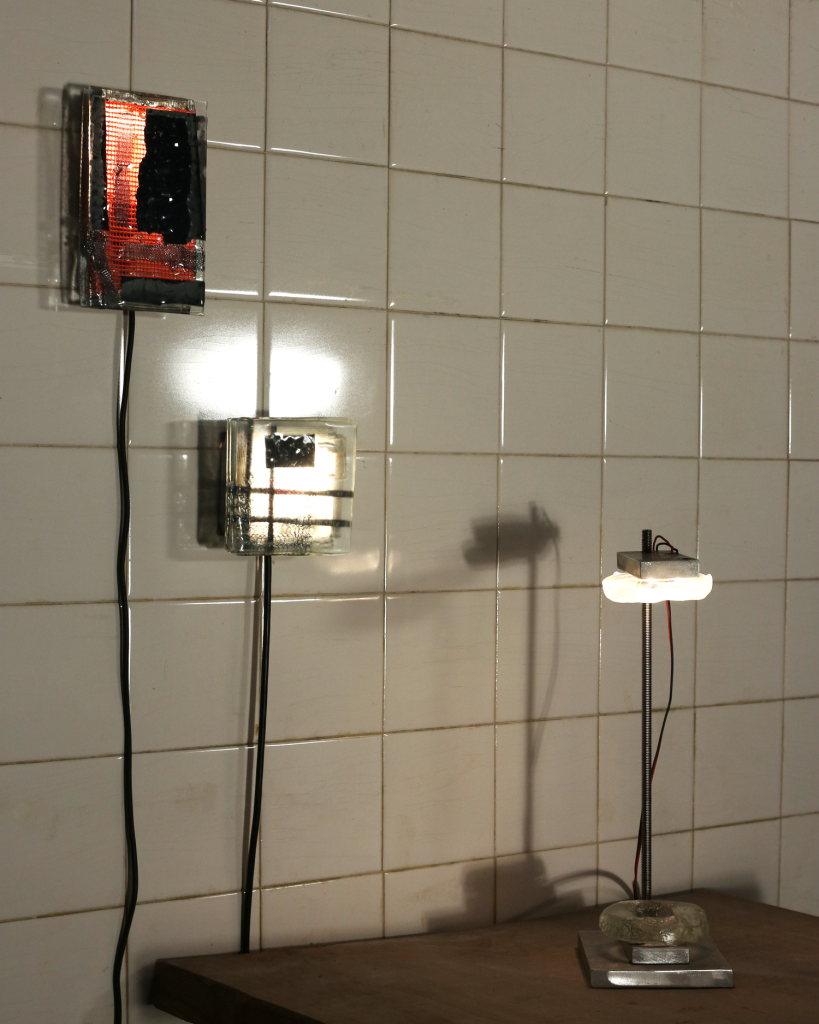
For London-based designers Audra Grays and Maxim Lester, the starting point for innovation is not a materials catalogue, but whatever happens to be lying around the studio. Their collaborative lighting project, Fused, embraces the French concept of bricolage, a creative approach that involves making something new from the materials at hand. Combining offcuts from Grays’ experimental glassmaking practice with remnants from Lester’s metalwork, the duo has created a desk lamp that balances industrial character with considered simplicity.
Fused by Audra Grays and Maxim Lester
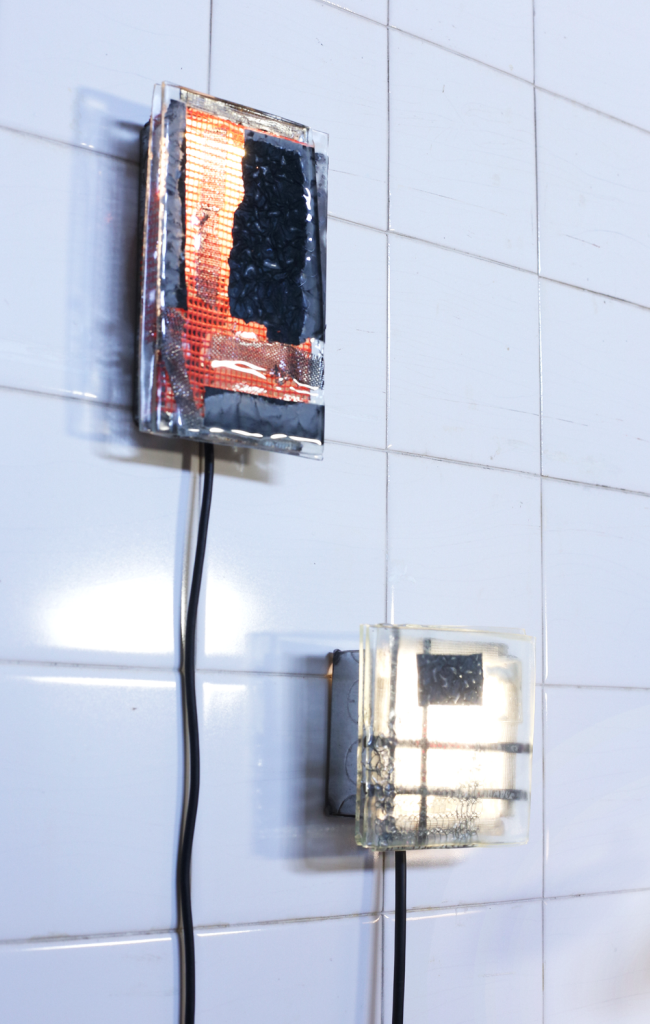
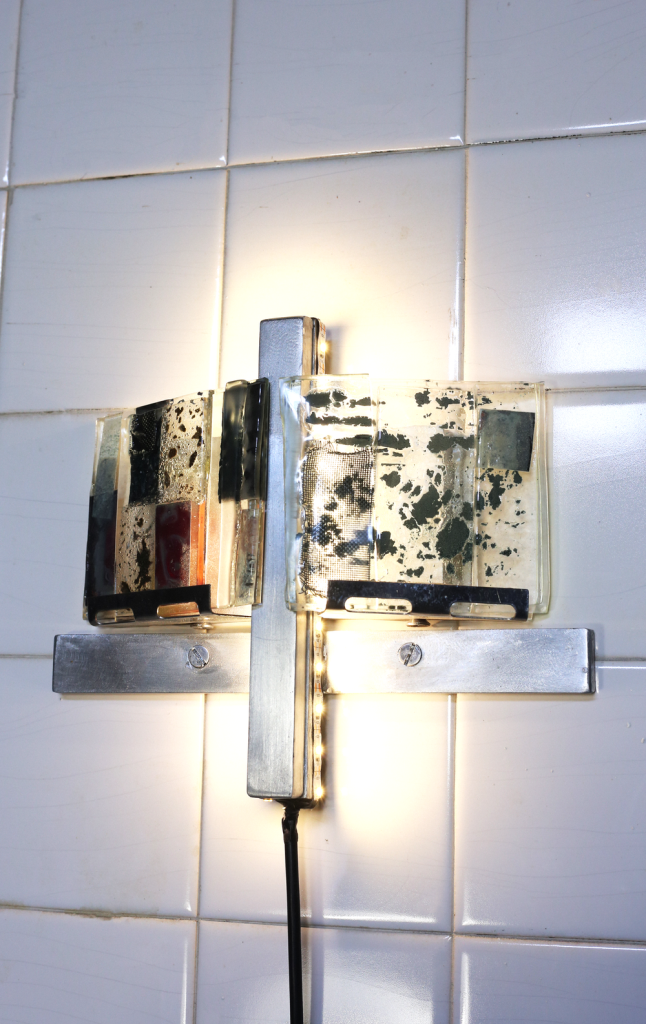
The appeal of Fused lies in the dialogue between its contrasting components. Glass brings its distinctive qualities of light, colour and texture, while scrap metal introduces a more utilitarian sensibility. Rather than concealing the materials’ origins, the design allows their different histories to inform the finished object. The result is a lamp that feels purposeful without being overly polished, demonstrating how constraints can become an integral part of a product’s visual identity.
Fused by Audra Grays and Maxim Lester
There is also a practical lesson behind the project. For emerging designers, material costs and production resources can be significant barriers to experimentation. By working with existing leftovers, Grays and Lester offer an alternative model in which collaboration helps reduce expenditure without compromising creativity. Their approach suggests that resourcefulness need not be a compromise, but can instead provide the very conditions for more distinctive design.
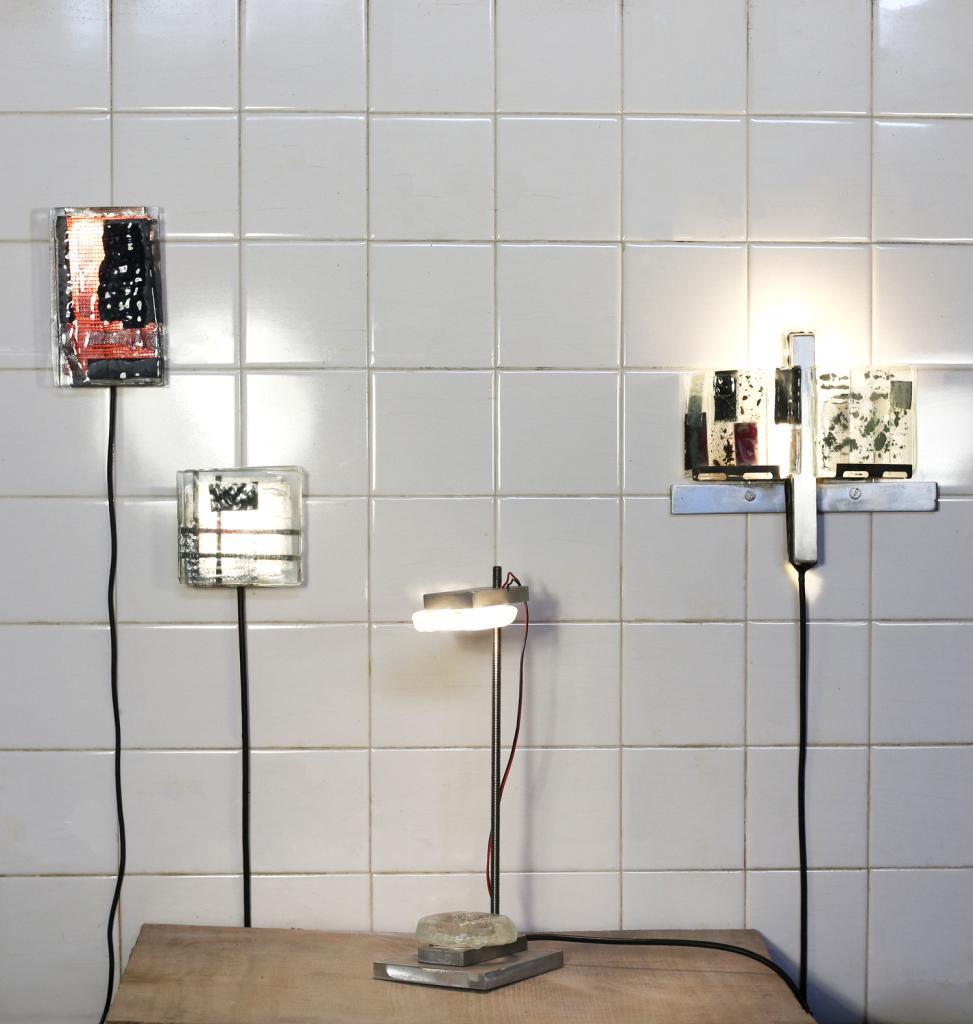
Fused by Audra Grays and Maxim Lester
The first instalment of an ongoing collaboration, Fused is available in made-to-order versions, allowing the project to develop through a more considered production model. It is a modest but persuasive reminder that good design does not always depend on having more. Sometimes, the trick is knowing what to do with less.
Lighting by City Girls
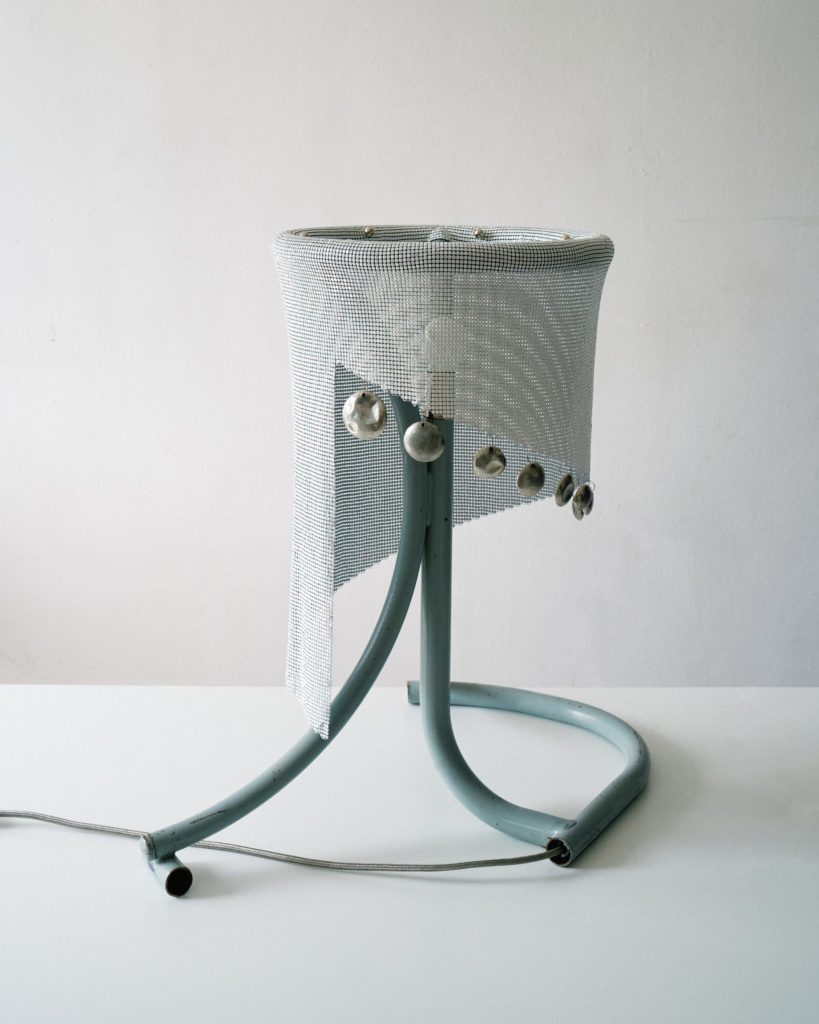
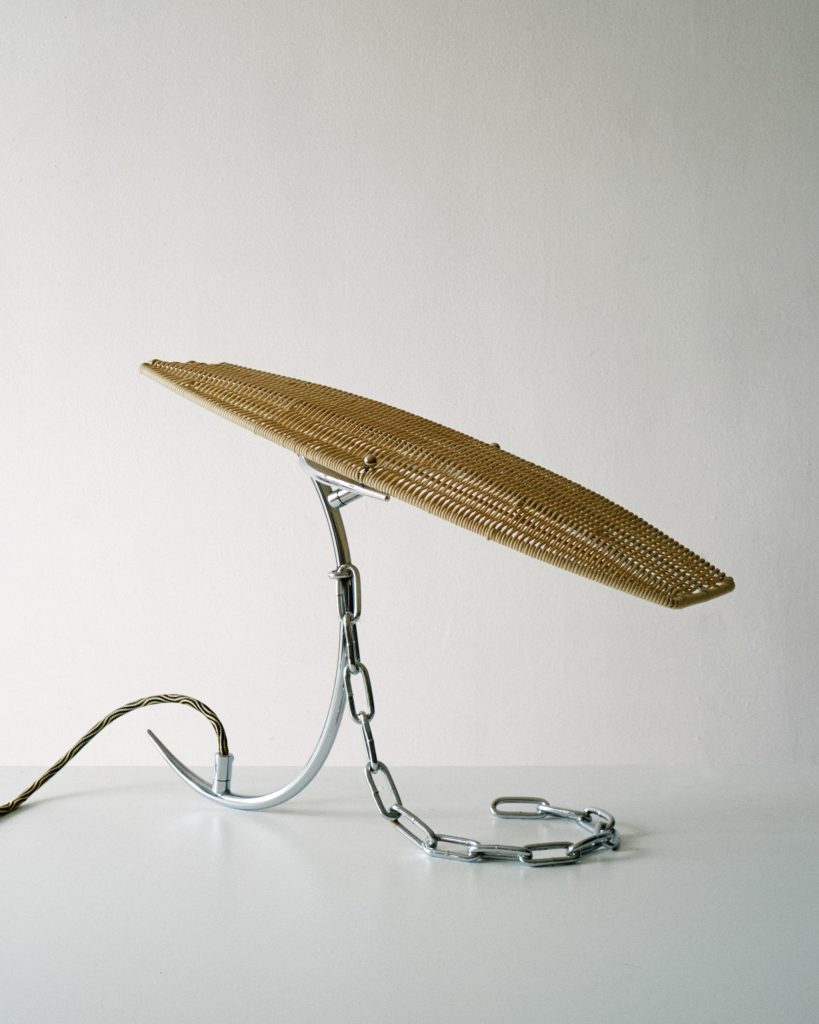
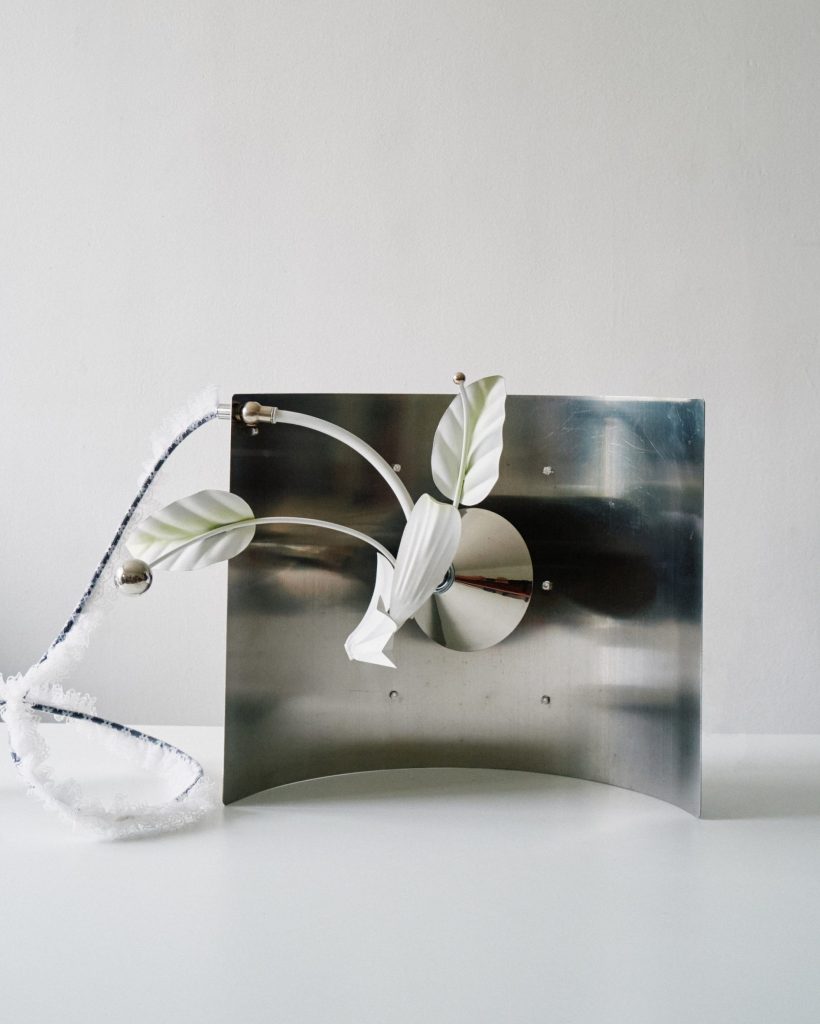
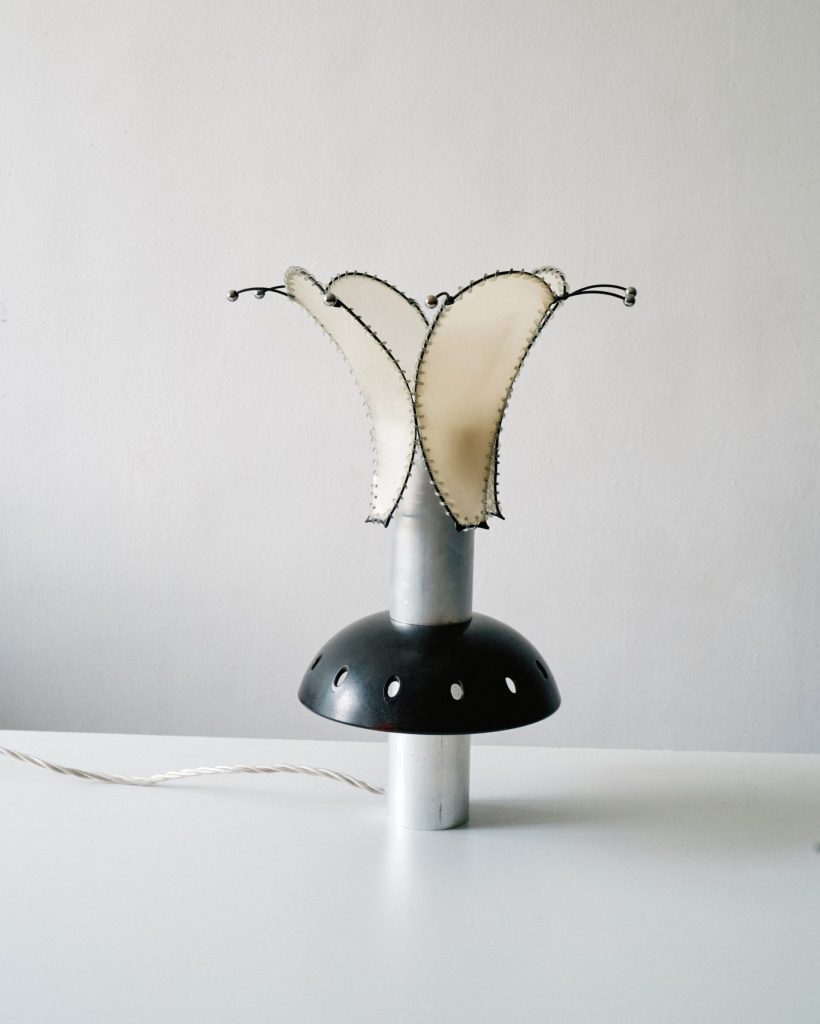
If Fused finds beauty in the practical leftovers of two design studios, anonymous London duo City Girls takes a rather more exuberant approach to the art of reuse. Working under the alias city.girls.xp, the pair creates one-off lamps from an eclectic collection of reclaimed materials, including old lace, coat hangers, discarded sequins, chains, feathers and miniature models sourced from eBay, Facebook Marketplace and the street. Their practice is driven by a shared affection for vintage curiosities and the conviction that seemingly unrelated objects can find new purpose when brought together.
Lighting by City Girls
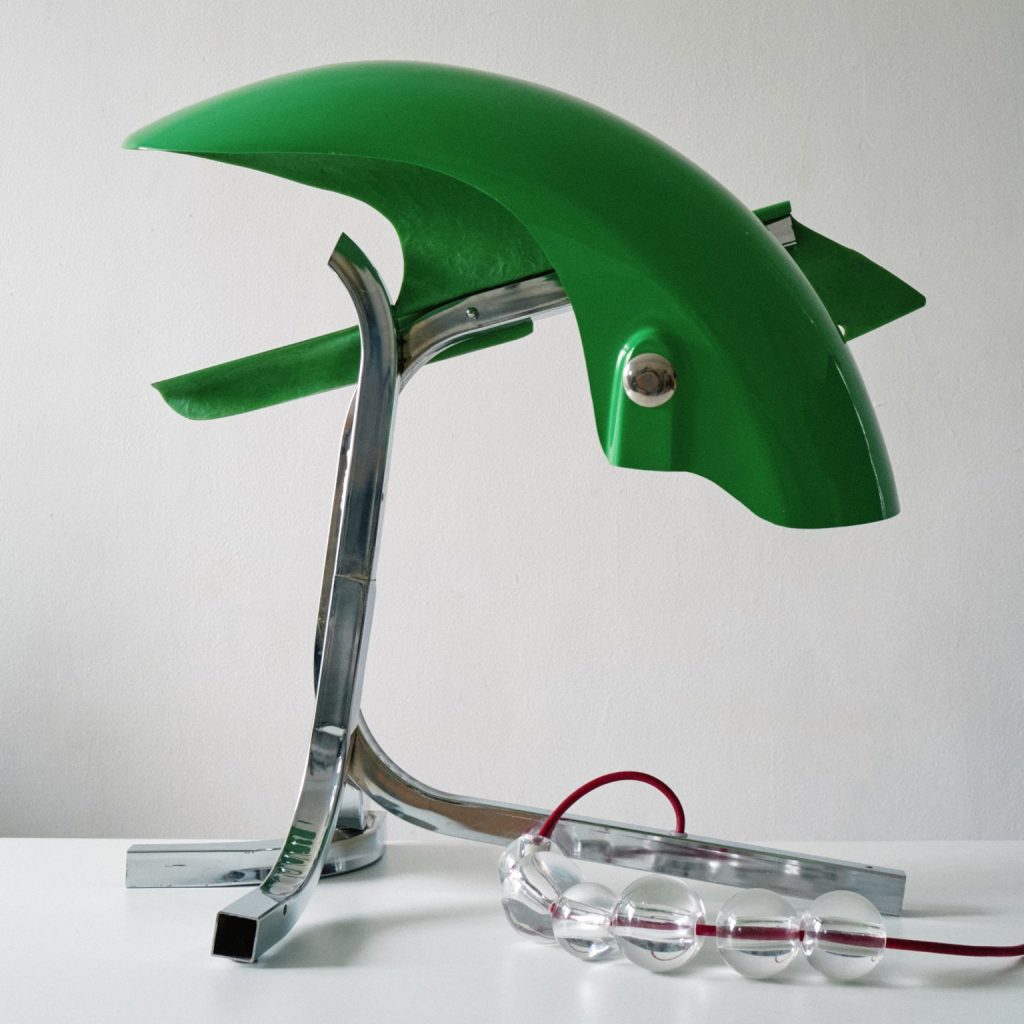
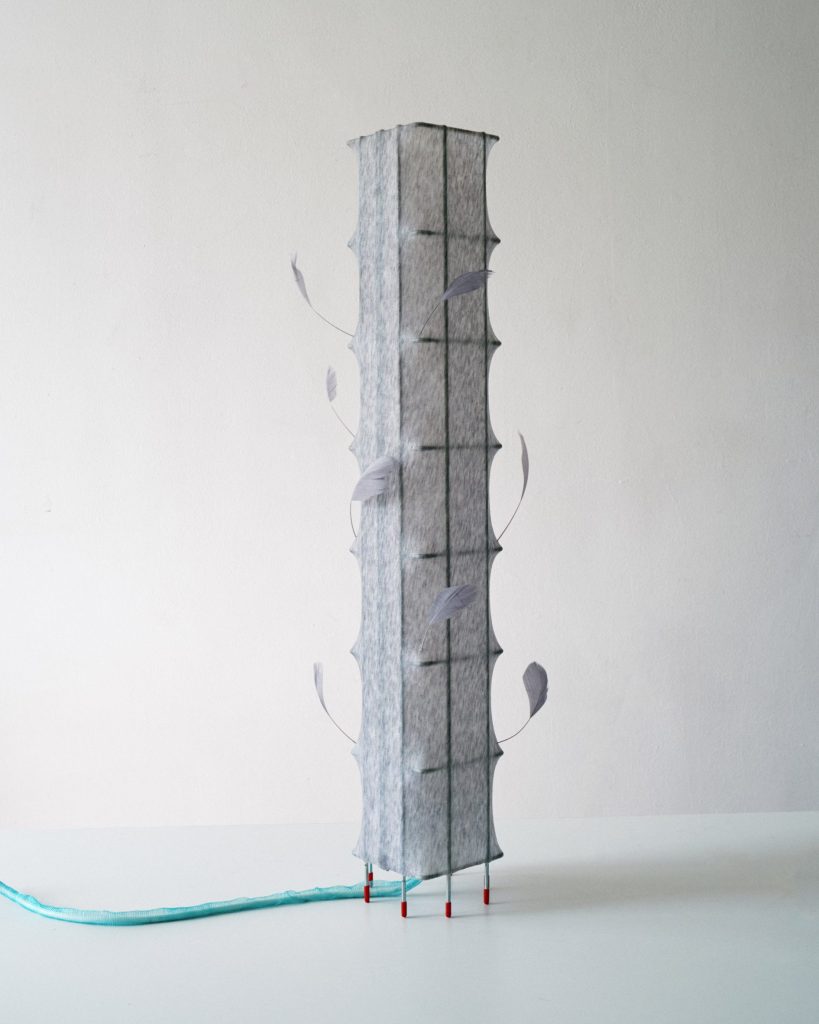
The resulting lights are anything but understated. Take Zoe, a tall floor lamp featuring a gridded metal frame wrapped in old jersey fabric and embellished with goose feathers removed from a hat. Sabine, the duo’s first functioning lamp, combines a fragment of a chrome chair with a translucent shade made from a fibreglass model boat. Elsewhere, the boxy Lola and Nina wear shimmering Glomesh sequins, while Virginia pairs old metal chair legs with a curved green head reminiscent of a swan. Each piece occupies a space somewhere between functional lighting, found-object sculpture and an exceptionally eccentric dressing-up box.
Lighting by City Girls
Indeed, City Girls has likened its process to getting dressed: throwing together disparate elements until an unexpected combination works. This analogy captures the studio’s playful design philosophy, in which clashing materials and contrasting textures are not problems to resolve but opportunities to explore. The designers also retain the traces of an object’s previous life, celebrating visible welds, seams and other signs of fabrication rather than disguising them. Once completed, each lamp receives an individual name, such as Pamela, Jean or Allegra, giving it a personality that seems entirely appropriate to its unconventional appearance.
Lighting by City Girls
There is a more thoughtful idea beneath the visual exuberance. By rescuing materials from obscurity and recombining them into entirely new forms, City Girls challenges the assumption that discarded objects have reached the end of their useful lives. The duo takes its name from A City Girl, a Victorian novel by radical author Margaret Harkness that evokes the streets of 1880s London. Like the city itself, its lamps are assembled from fragments of different histories, resulting in objects that feel layered, imperfect and unmistakably individual. In this case, sustainable design has less to do with restraint than with knowing how to put on a good show.
Buké by Simon Skinner (also header image)
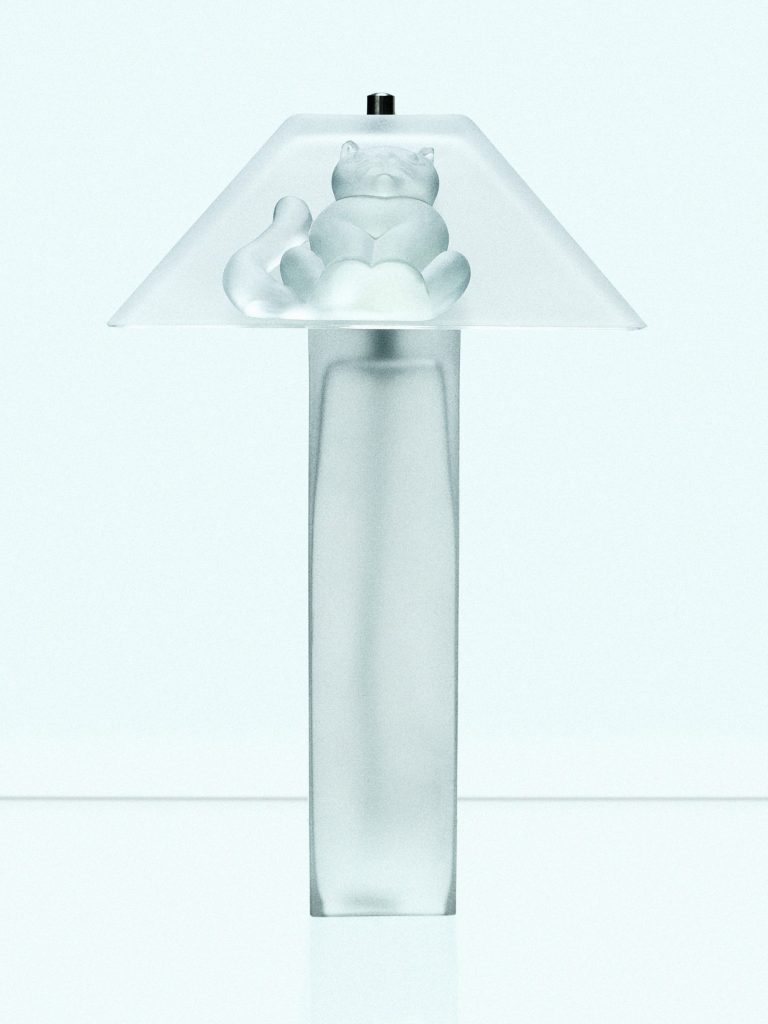
Swedish designer Simon Skinner approaches repurposing with a different sensibility, finding inspiration in the art of flower arranging. His ongoing Buké series brings together second-hand bowls, ashtrays, vases and even cat figurines to create sculptural lamps from familiar pieces of domestic glassware. Sourced from charity shops and flea markets, these objects are combined into 20 distinct compositions, each exploring the relationship between shape, proportion, contrast and balance. The collection, presented as part of Stockholm Creative Edition, turns the act of assembling found objects into a form of three-dimensional still life.
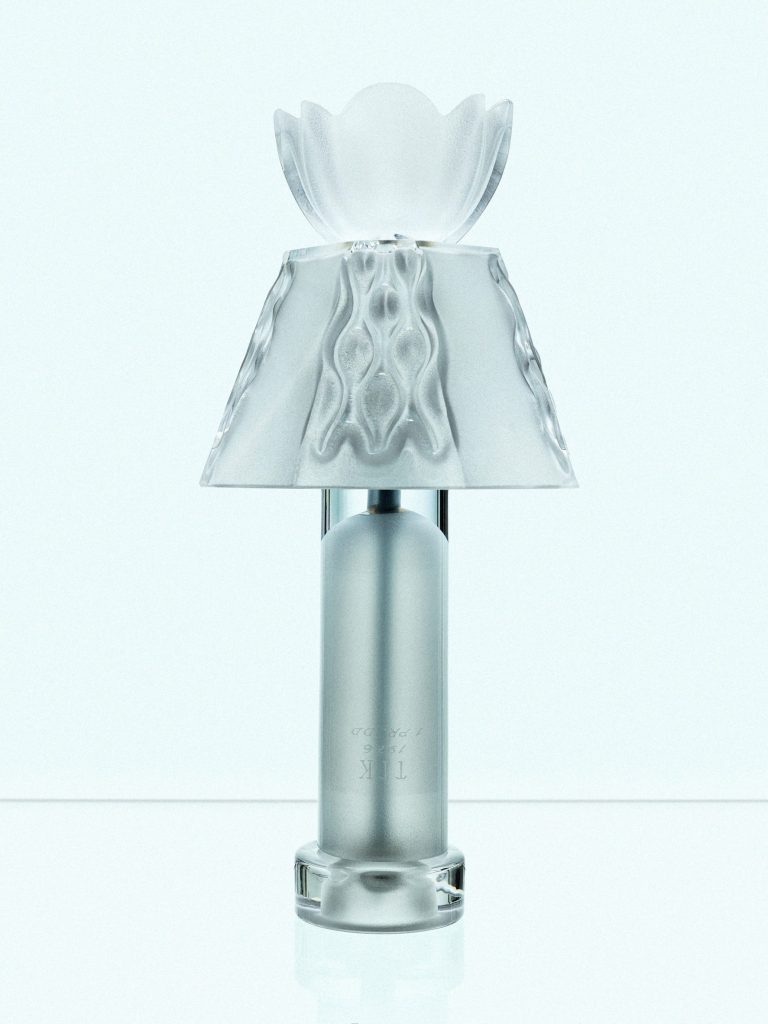
Buké by Simon Skinner
The process is deliberately intuitive. Skinner compares it to playing with Lego or arranging flowers, selecting individual components and experimenting with how they interact. A floral-etched bowl might be inverted to become a lampshade, with an ashtray placed above it to serve as an integrated incense holder. In another composition, a small cat figurine sits atop an angular bowl, while a carefully proportioned vase forms the base. Objects that might once have seemed dated, kitsch or out of place acquire a new context, their familiar forms transformed by unexpected combinations.
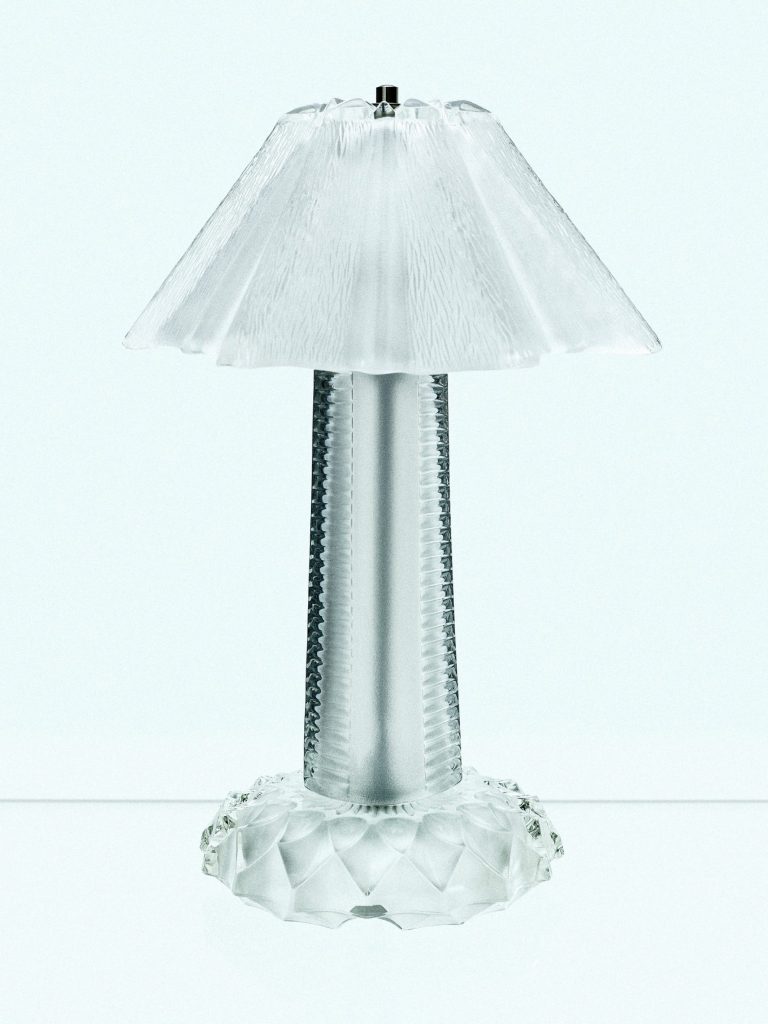
Buké by Simon Skinner
Memory is an important part of the collection’s appeal. Many of the pieces are recognisable elements of traditional Swedish domestic interiors, the sort of glassware that might once have sat on a grandmother’s shelf. By bringing these objects into a contemporary design context, Skinner taps into a collective visual memory while questioning how our perceptions of taste evolve. The humble cat figurine, for instance, becomes less a novelty ornament than a sculptural accent, its meaning altered by the objects around it. Buké demonstrates that innovation can emerge not only from new technologies or materials, but also from reconsidering the cultural associations we attach to familiar things.
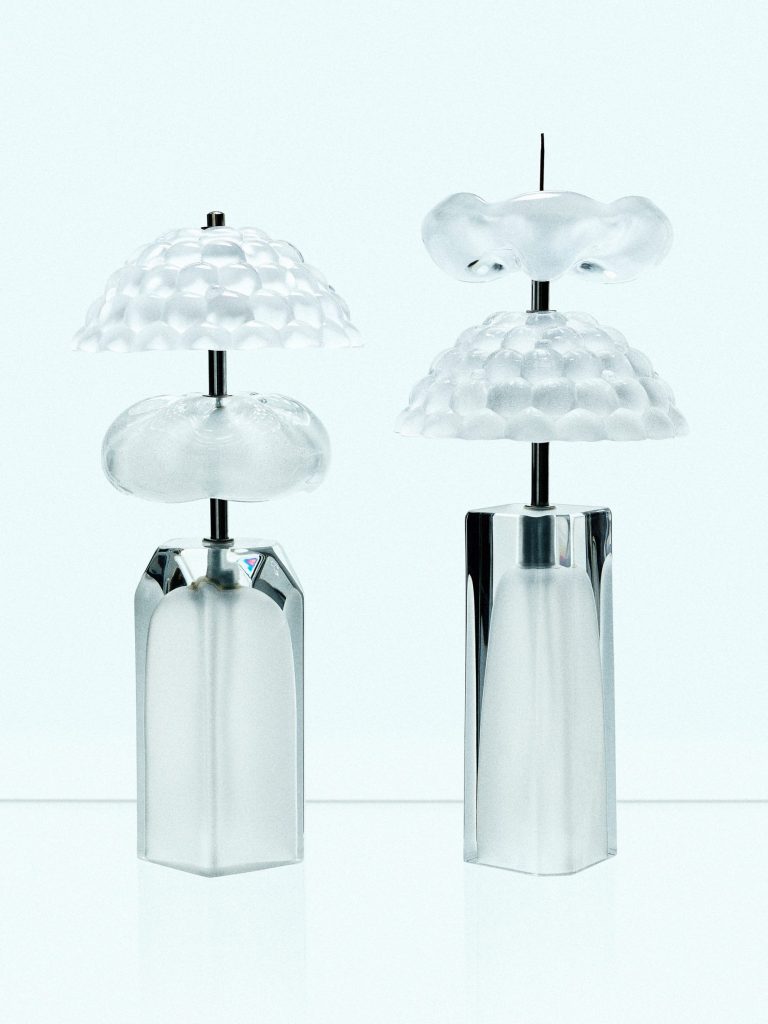
Buké by Simon Skinner
To unify the disparate components, Skinner sandblasts the glass on either its interior or exterior surface, creating a soft, matte finish that conceals scratches and helps hide the light source. The choice depends on the condition of each piece, making the material itself an active participant in the design process. As Skinner explains, working with repurposed materials means following their lead rather than imposing an entirely predetermined outcome. This willingness to adapt is central to Buké: every scratch, curve and imperfection informs the final composition. The result is lighting that feels both nostalgic and contemporary, proving that sometimes the most interesting design decisions begin with what an object has already lived through.
From elegant desk lamps to flamboyant, sculptural creations, these projects show that reuse can be as imaginative as it is resourceful. By giving discarded materials a second life, designers are challenging conventional ideas of value and beauty. Sometimes, the next big design idea isn’t something new at all. It’s something old, seen differently.