The humble sauna is having a surprisingly inventive moment. Once associated primarily with heat, wood and quiet retreat, the sauna is increasingly becoming a testing ground for experimental architecture, sustainable materials and new forms of public life. Across Europe, designers are transforming the familiar ritual of bathing into something more ambitious: a way to engage with environmental history, rethink resource consumption and bring people together.
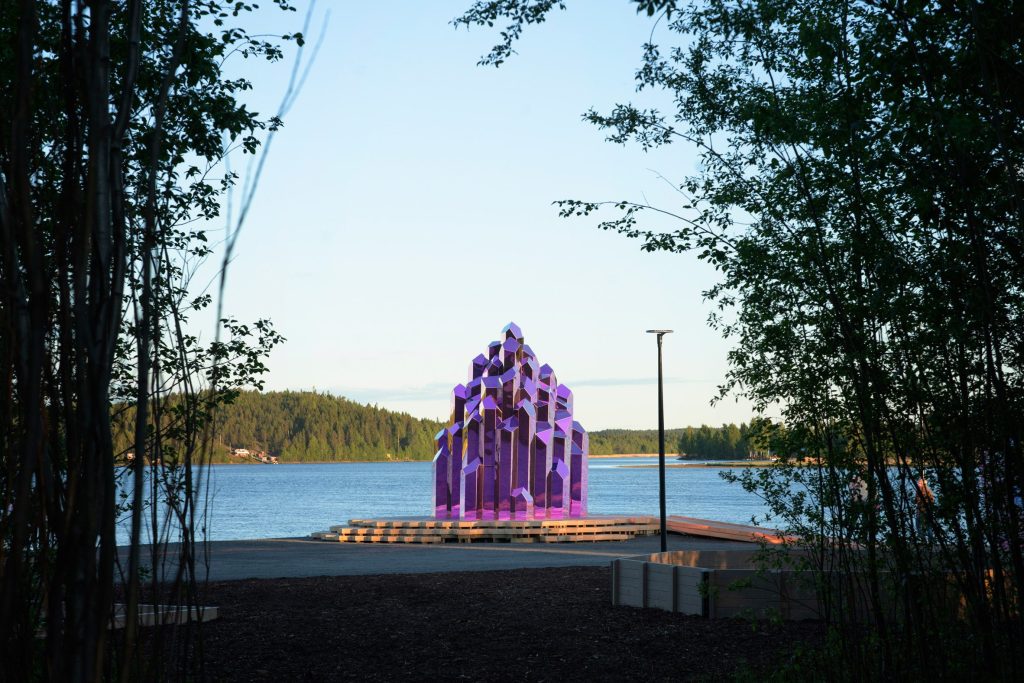
Lithium Crystal Sauna by Bigert & Bergström
In northern Sweden, Stockholm-based artist duo Bigert & Bergström has given the sauna an almost geological makeover. Their Lithium Crystal Sauna, located in Skellefteå, is the first permanent structure completed for WasteLand Climate Action Park, an ambitious project transforming a former industrial site into public space. The setting is significant. The Scharin industrial site was polluted by more than a century of toxic emissions from pulp production and underwent 17 years of soil remediation before beginning its new life as a park.
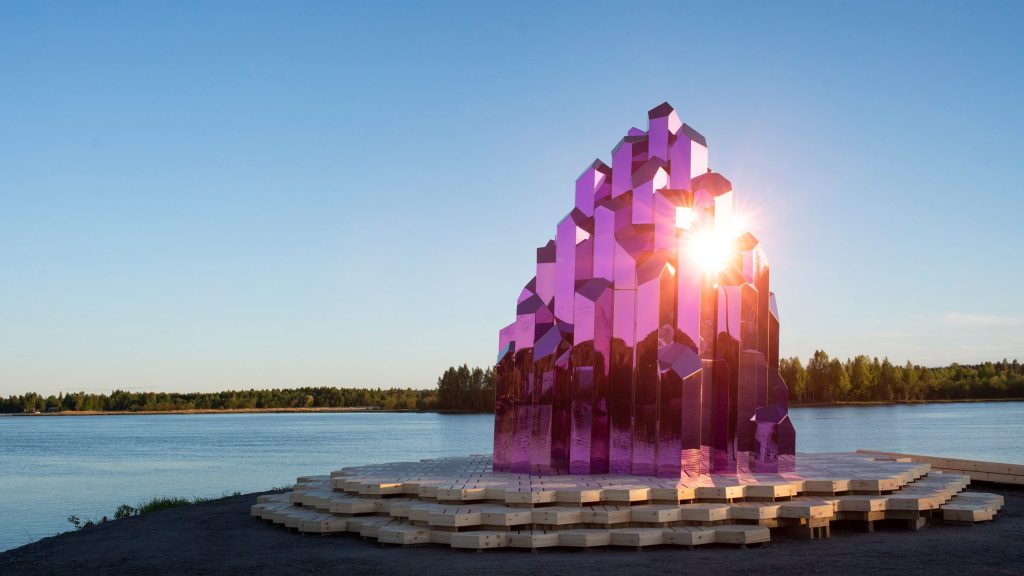
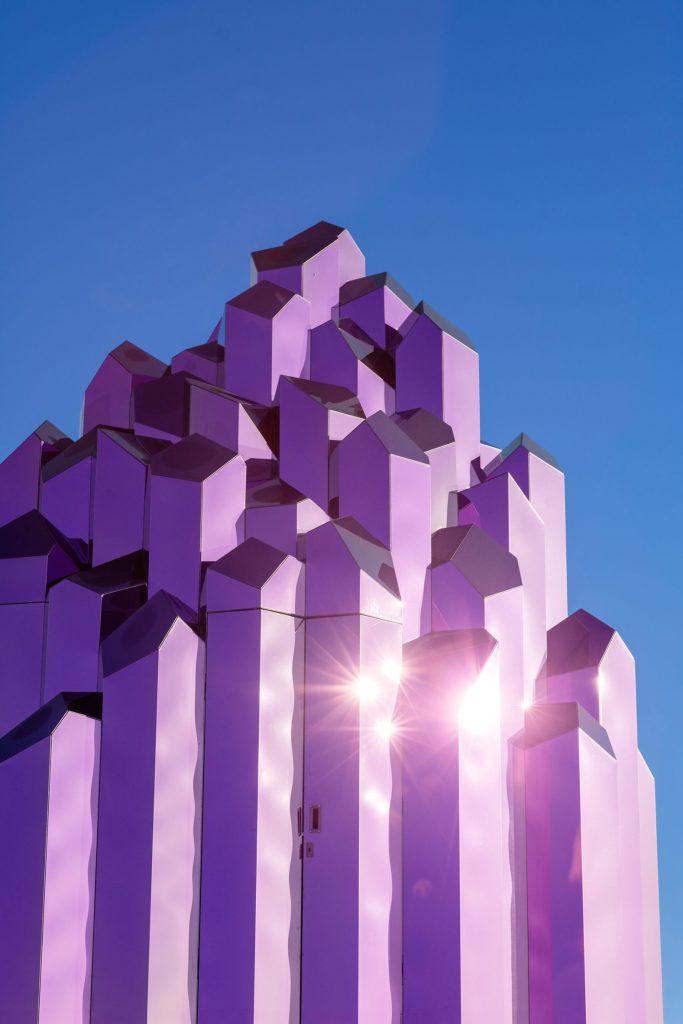
Lithium Crystal Sauna by Bigert & Bergström
Rather than disguising that history, the artists chose to make it part of the architecture. The sauna takes the form of an oversized lithium crystal, a deliberate reference to the mineral’s growing importance in batteries, electrification and the transition away from fossil fuels. Yet lithium also carries its own environmental contradictions, since its extraction can cause serious ecological damage. That tension gives the project its conceptual edge. The building is not simply celebrating the green transition. It is asking what that transition costs, and what kinds of landscapes it leaves behind.
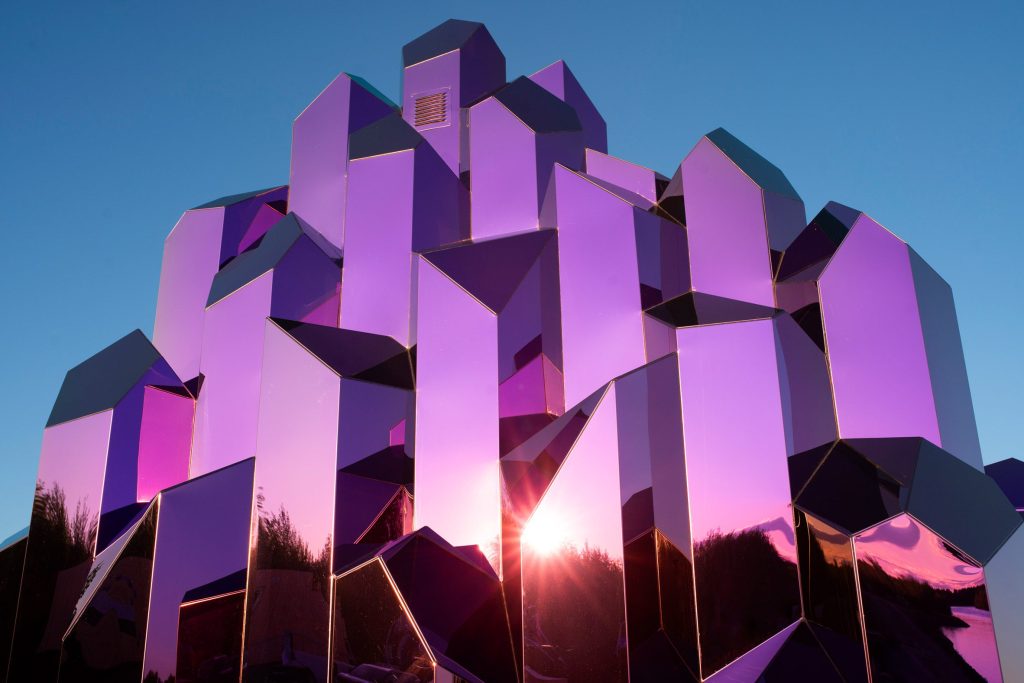
Lithium Crystal Sauna by Bigert & Bergström
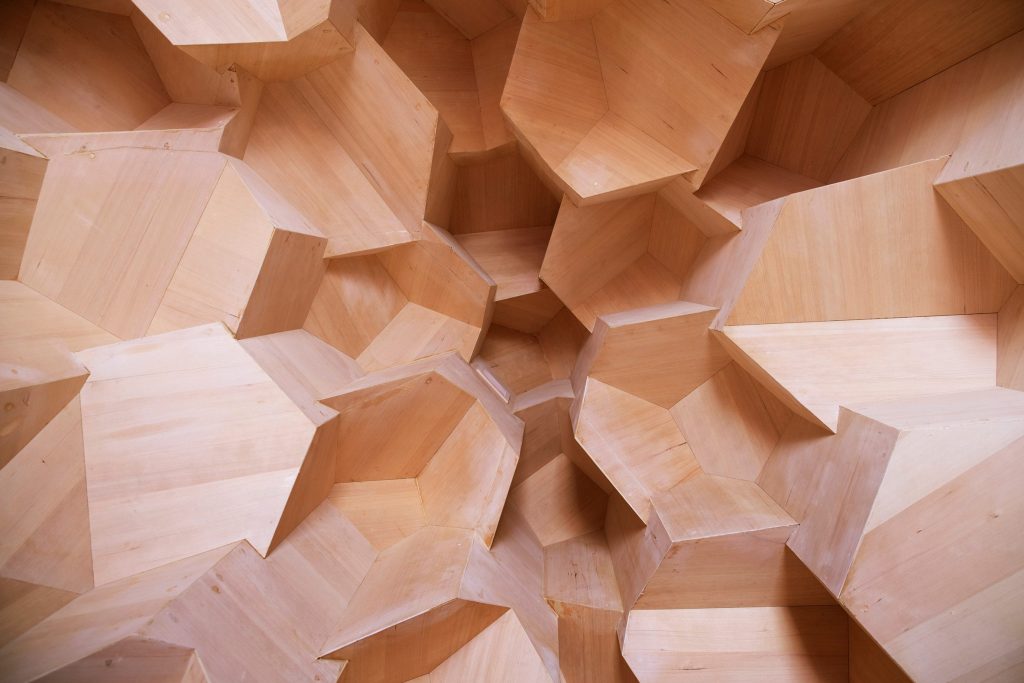
Visually, the sauna is difficult to miss. Approximately 280 faceted prisms form its asymmetrical shell, digitally designed and manufactured using CNC and laser-cutting technology. Its stainless-steel exterior is coated with titanium to produce a distinctive mirrored pink surface, allowing the building to reflect the surrounding river, forest and returning vegetation. Tilted four degrees backwards, the structure appears to emerge from the ground like a mineral that has pushed its way through the landscape.
Lithium Crystal Sauna by Bigert & Bergström
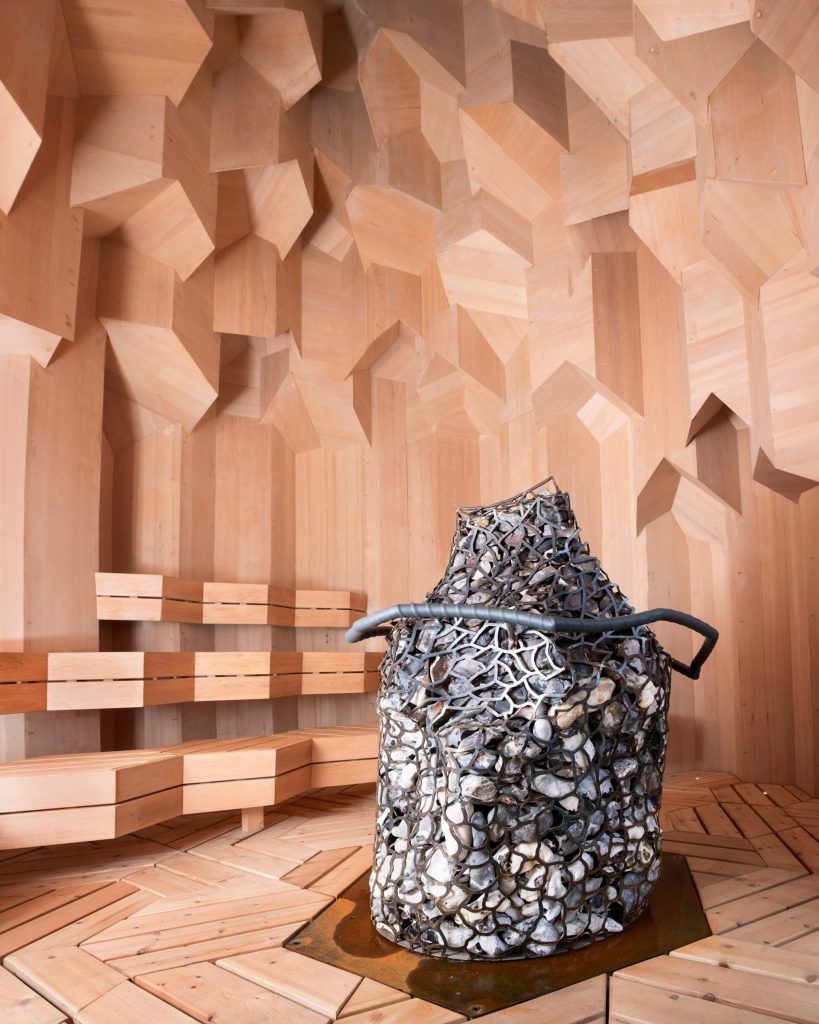
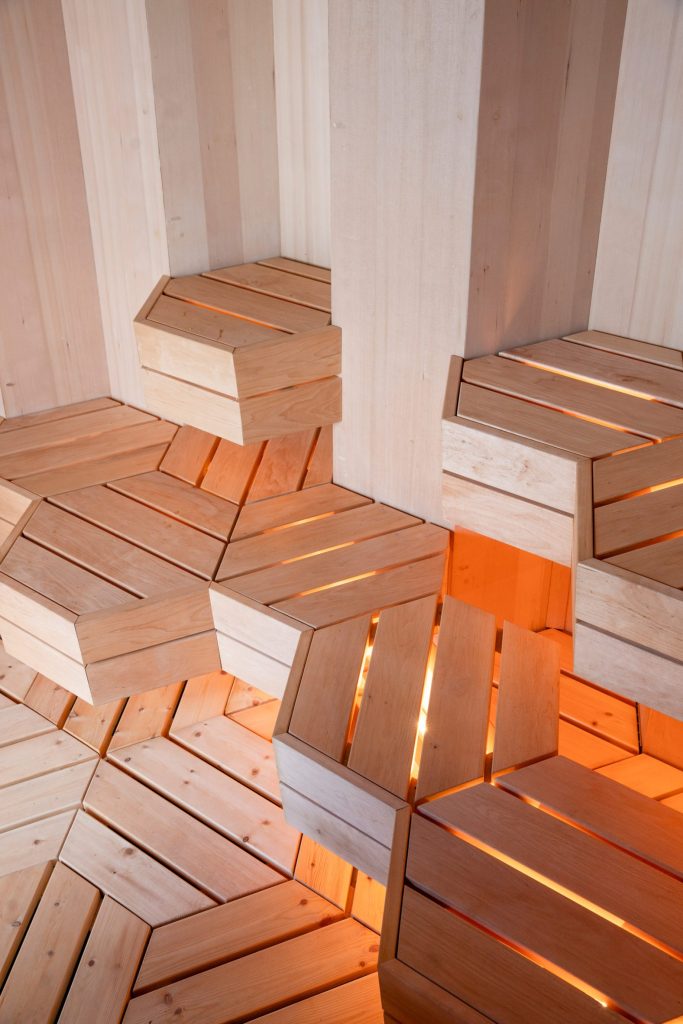
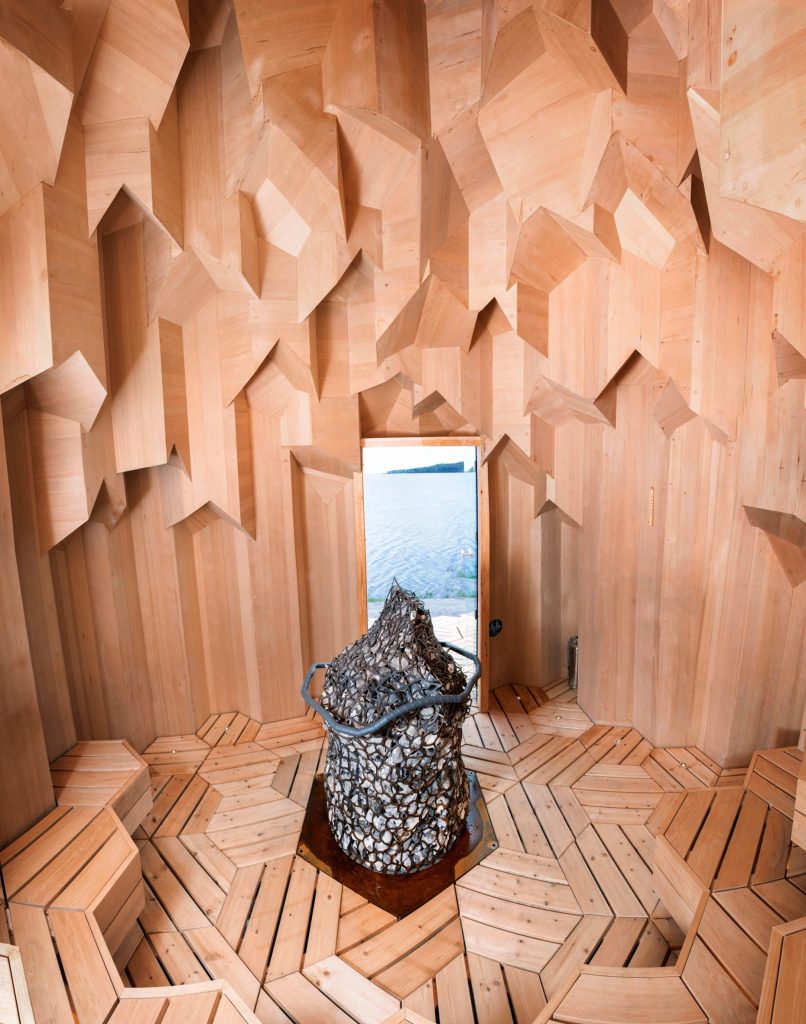
Inside, however, the technological spectacle gives way to something much more elemental. Heat-resistant wood veneer and spruce create a cave-like interior, while handmade alder benches accommodate up to 12 people around a custom battery-powered heater. The heater itself contains 260 kilograms of olivine stones and is designed to run on stored green electricity, including energy supplied by standalone batteries or electric vehicles. The contrast is deliberate: a highly engineered energy system sits alongside a form inspired by one of humanity’s earliest tools, the stone chopper. The result is less a conventional wellness facility than a social sculpture, inviting people to sit together and discuss a landscape undergoing profound change.
Lithium Crystal Sauna by Bigert & Bergström
That idea of collective experience carries naturally into another experimental bathing project, one where the architecture is considerably lighter, more mobile and, quite literally, inflatable.
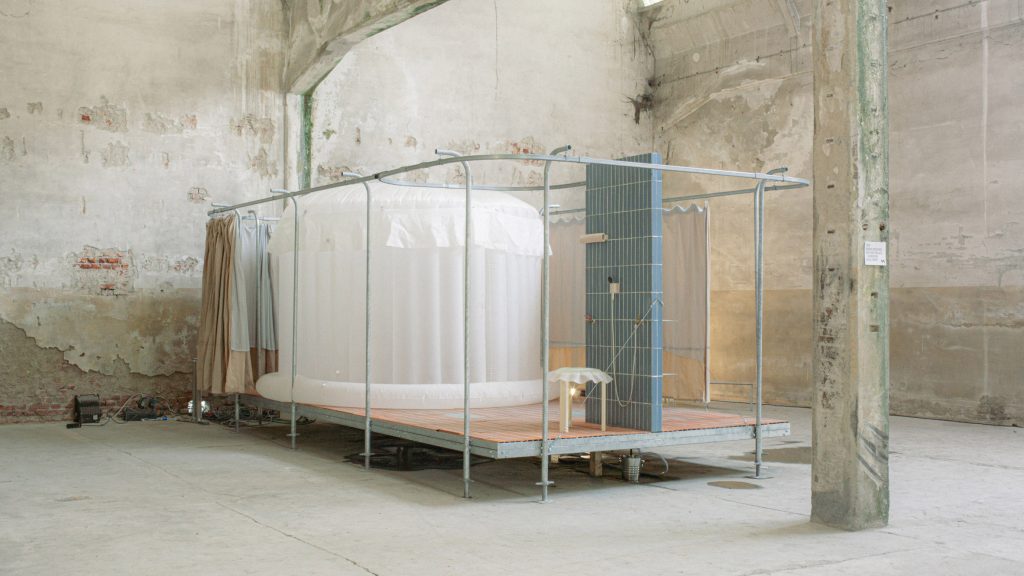
Inflatable hammam by Warm Weekend, Mathias Palazzi and Robinson Guillermet
At Milan Design Week, French studio Warm Weekend collaborated with designers Mathias Palazzi and Robinson Guillermet to present 18 Drops of Sweat, a demountable steam room designed to turn public bathing into a conversation about water, hygiene and community. Where the Lithium Crystal Sauna responds to the history of a particular site, this project asks a different question: what if a bathing space did not need a permanent address at all?
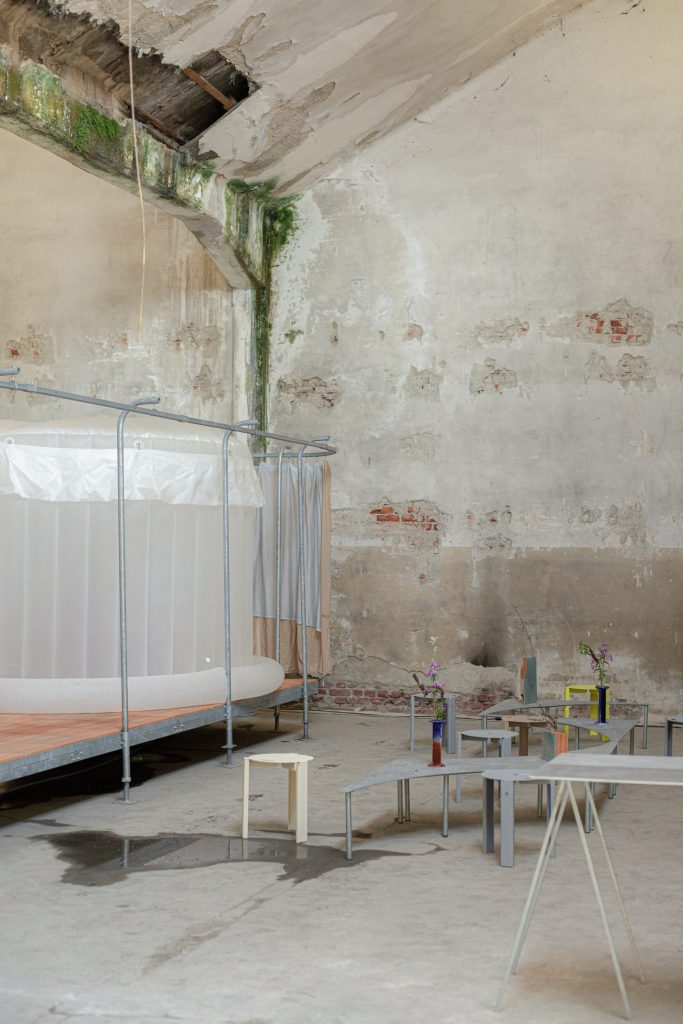
Inflatable hammam by Warm Weekend, Mathias Palazzi and Robinson Guillermet
The centerpiece is an inflatable hammam developed with specialist manufacturer JC Keller. Soft yet spatially commanding, the structure can accommodate up to four people seated or eight standing. Steam enters through a copper pipe positioned at the centre, while an opening at the top of the dome allows air to circulate. The temperature is limited to 55 degrees Celsius to protect the plastic structure, creating a humid environment that feels both functional and theatrical.
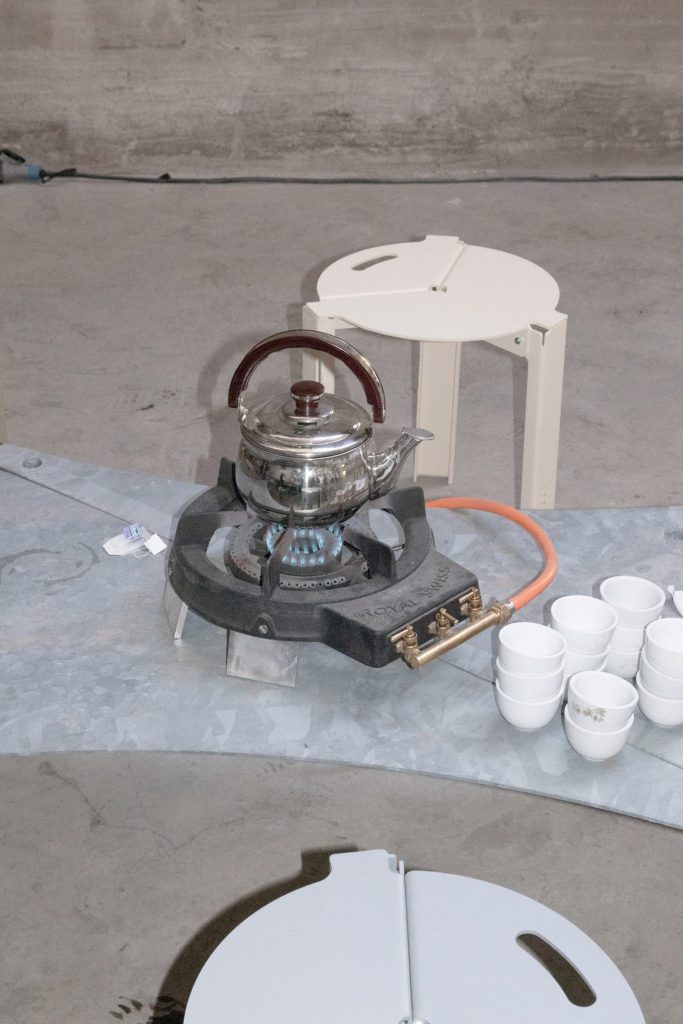
Inflatable hammam by Warm Weekend, Mathias Palazzi and Robinson Guillermet
Its portability is central to the concept. The hammam sits on a demountable galvanised-steel platform that can be transported and assembled in different locations. A shower, tiled wall and deadstock technical-textile curtain allow the space to shift between bathing, relaxation and social interaction. Four low tables form a circular arrangement around the platform, creating an informal setting for sitting, drinking tea and talking. Privacy, in other words, is not treated as a fixed architectural condition. It can be adjusted according to how the space is being used.
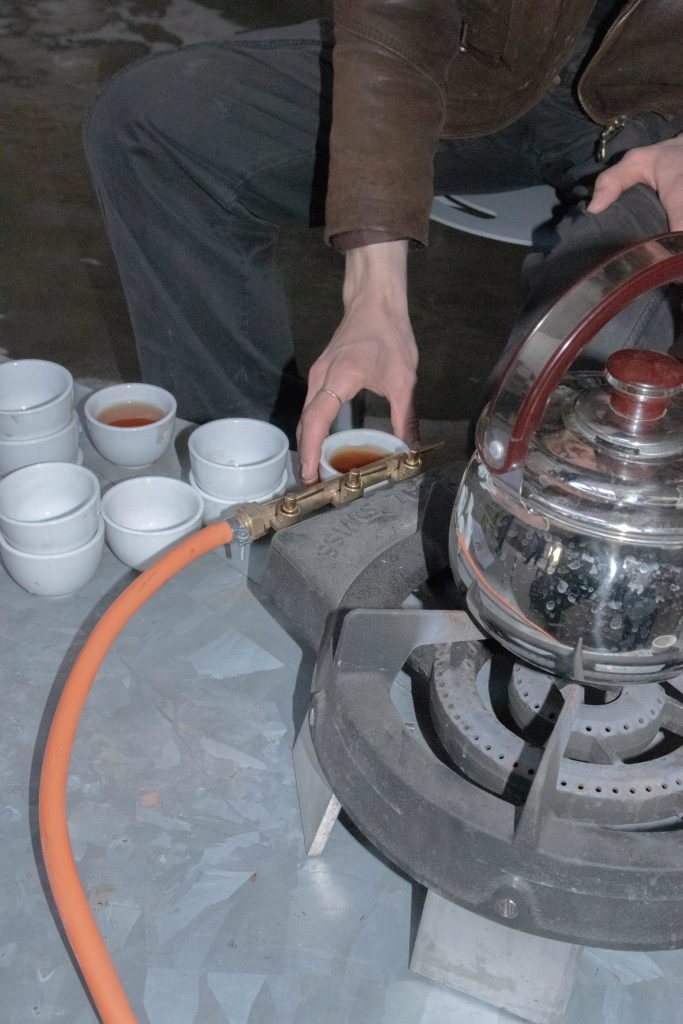
Inflatable hammam by Warm Weekend, Mathias Palazzi and Robinson Guillermet
That flexibility is especially meaningful given the project’s origins. Funded by Agir In Seine-Saint-Denis, 18 Drops of Sweat was developed in response to the lack of public facilities for water-related activities in the Paris suburb of Seine-Saint-Denis. Its first installation at La Station – Gare des Mines served as a shower station and water point for refugees during the day, then became a place for socialising and relaxation at night. The designers describe the ambition as “communal luxury”: an experience in which water becomes playful, generous and shared rather than something consumed privately and invisibly.
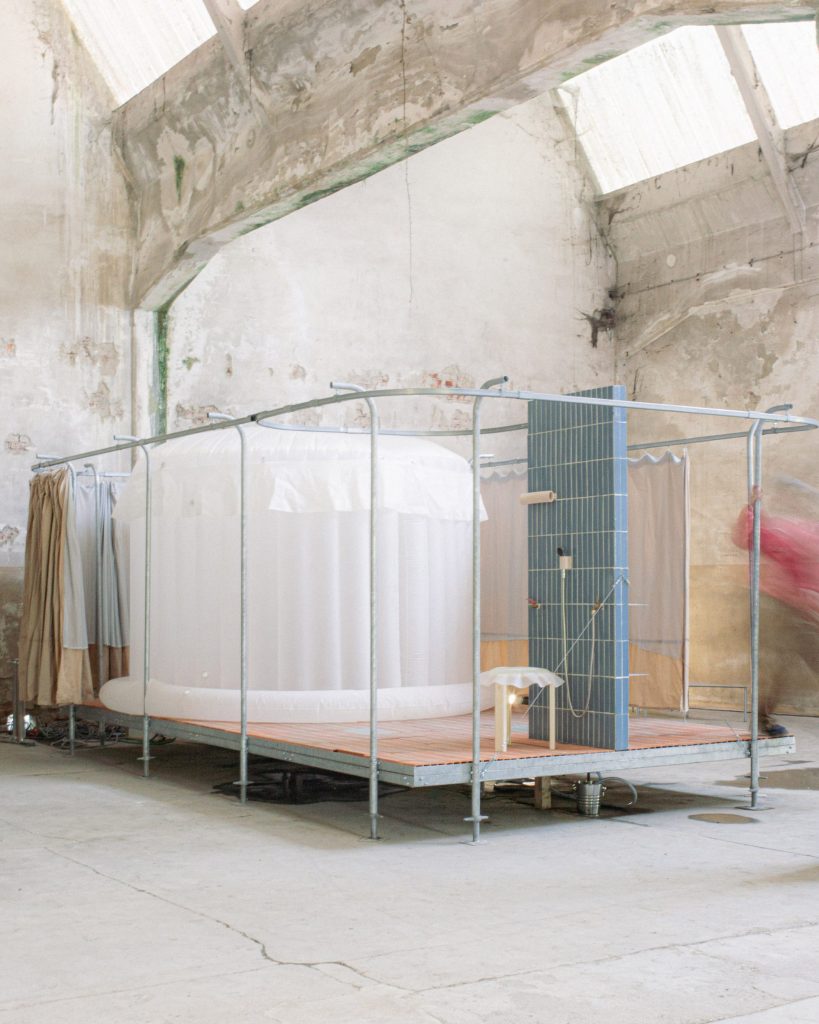
Inflatable hammam by Warm Weekend, Mathias Palazzi and Robinson Guillermet
The installation also extends its philosophy into furniture. Stackable, demountable stools were developed during a residency in a German metal folding factory, while a lounge chair and screen were made using salvaged heat exchangers from a scrapyard. Instead of disguising the industrial origins of these materials, the designers emphasised their existing character. It is a useful reminder that sustainable design can be less about inventing new materials than about discovering new possibilities in what already exists.
And if 18 Drops of Sweat demonstrates how bathing can become portable, another project takes the opposite approach, anchoring the sauna directly to one of Europe’s most recognisable waterfront cultural destinations.
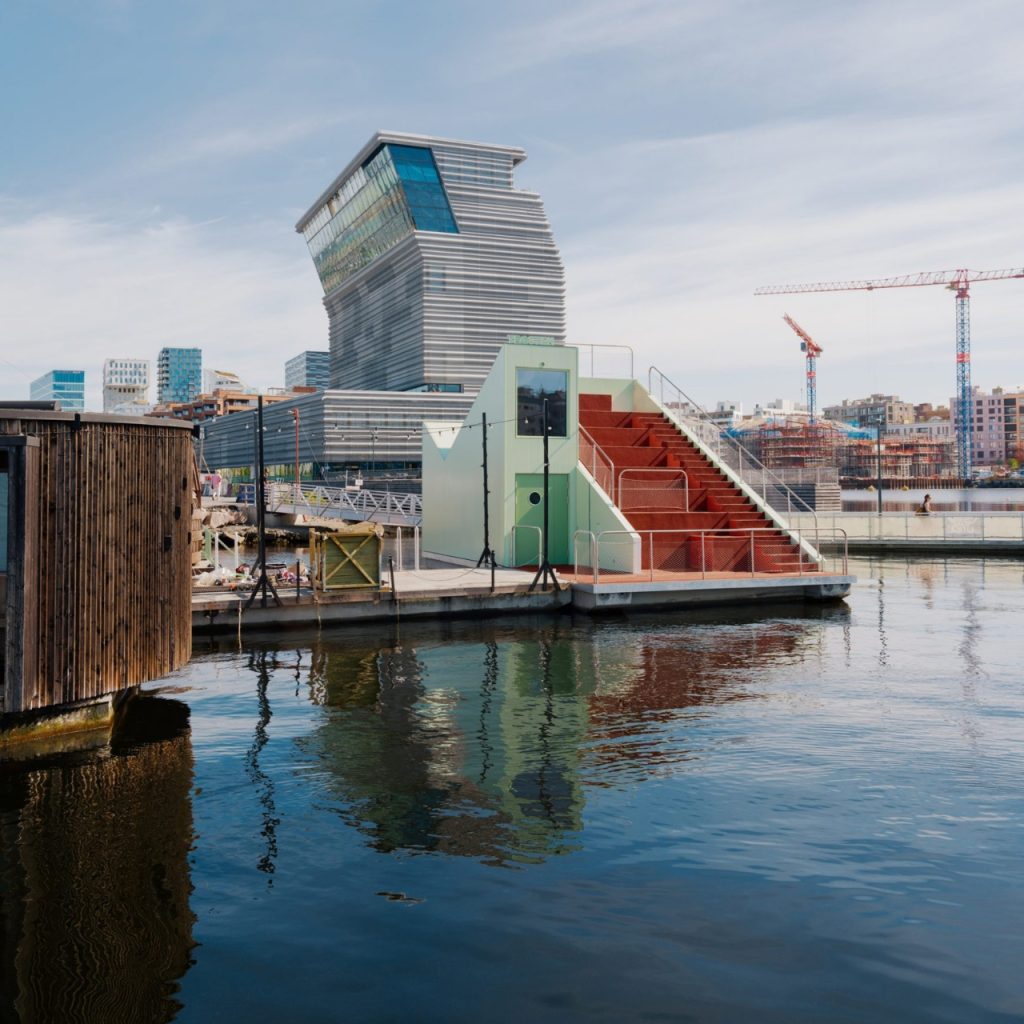
Trosten by Estudio Herreros (also header image)
At the Munch Museum in Oslo, Estudio Herreros has placed a sauna directly on the fjord, creating Trosten, a floating structure that extends the museum experience beyond its galleries. The premise has an appealing simplicity. After spending hours looking at art, visitors can leave the building, step onto the water and exchange cultural contemplation for heat, fresh air and a swim.
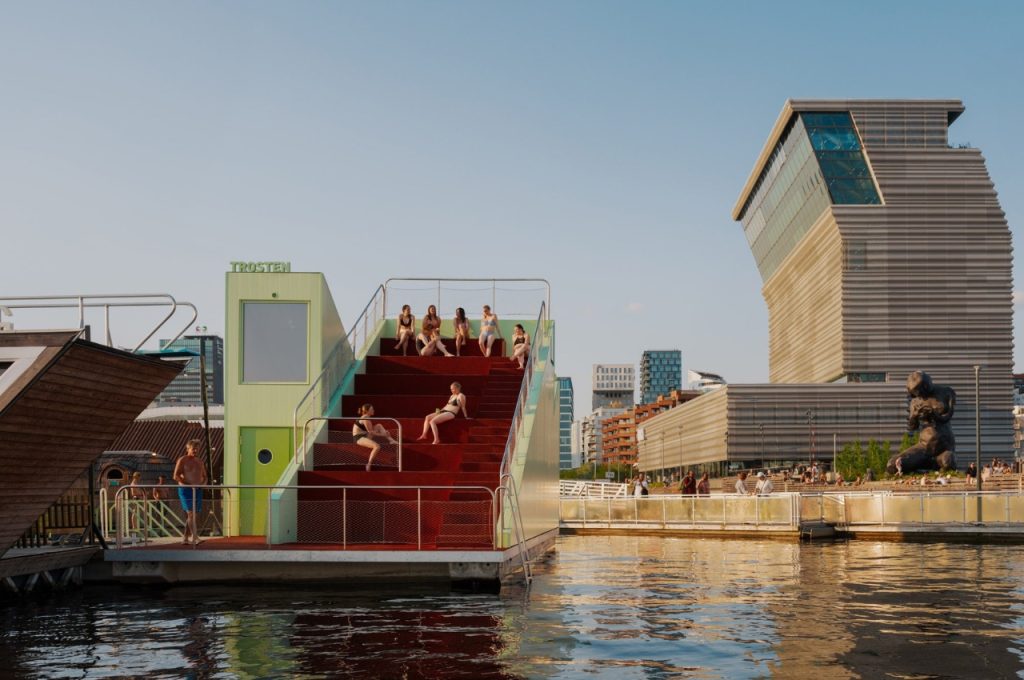
Trosten by Estudio Herreros
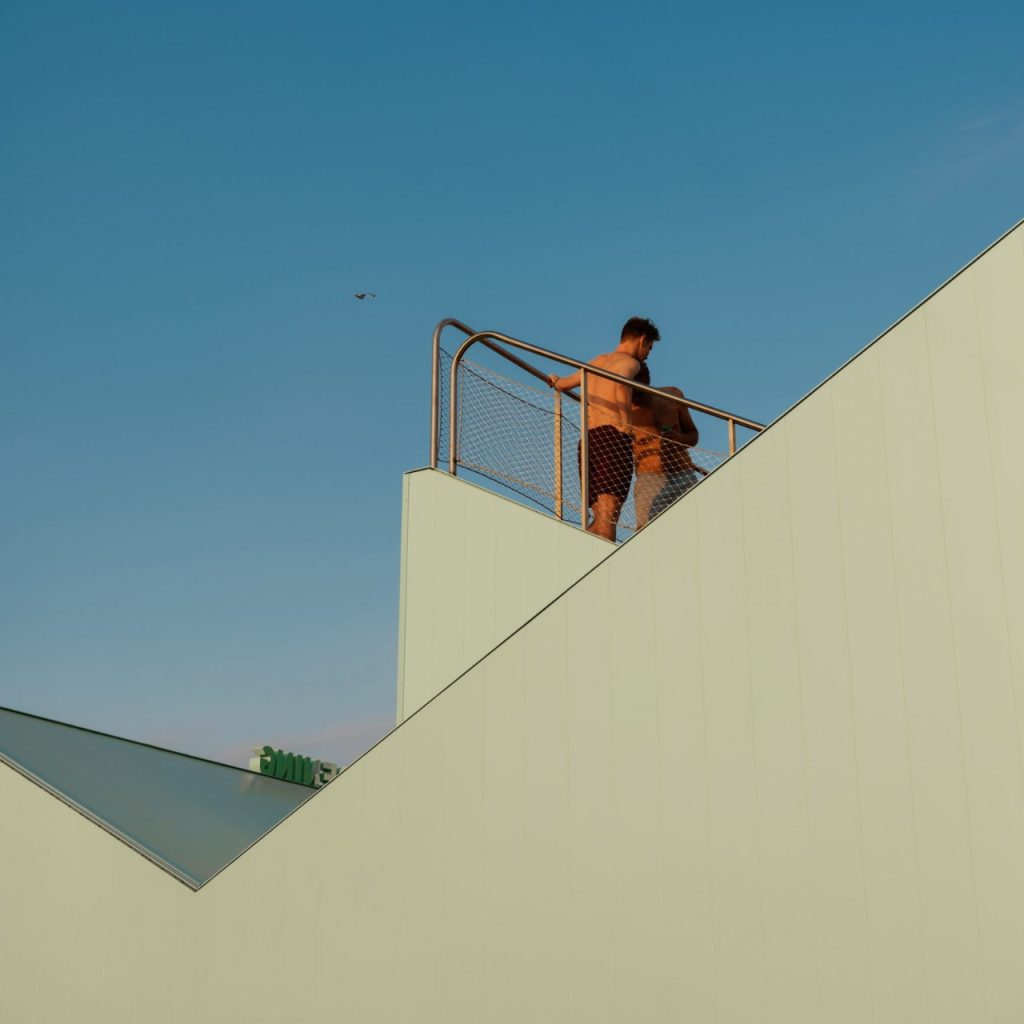
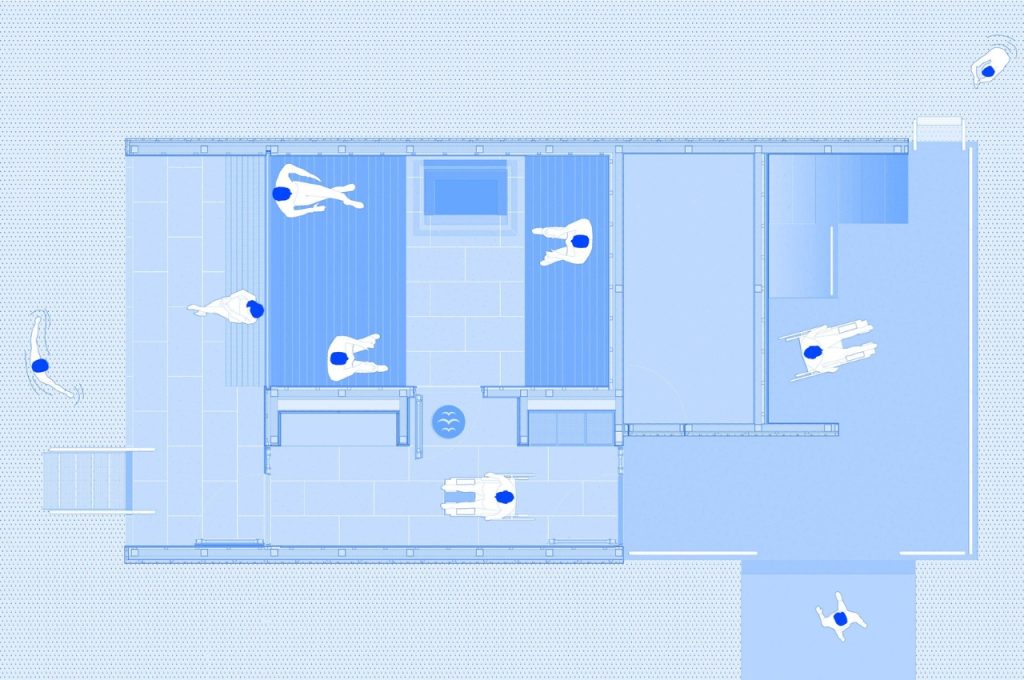
Trosten is designed as both architecture and public infrastructure. Inspired by architectural follies, it has a distinctive volume and colourful silhouette, but its expressive appearance is supported by a highly practical arrangement. The main structure was prefabricated offsite before being placed on a floating concrete platform. Aluminium cladding gives the building a calm green tone, while timber decking, terrazzo surfaces, steel balustrades and safety netting combine to create a robust waterfront environment.
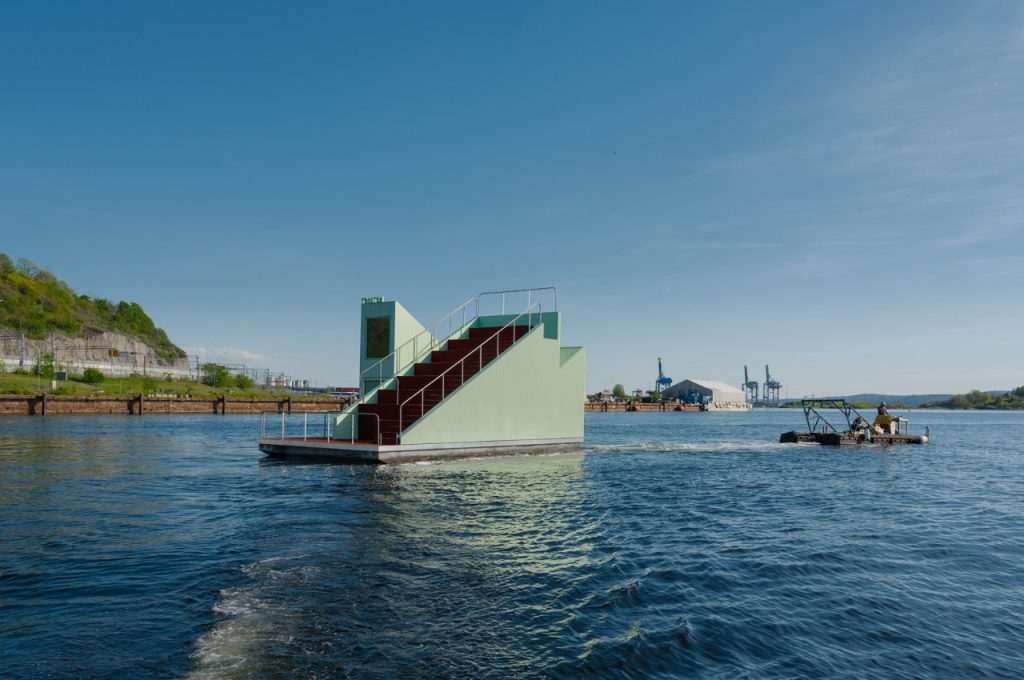
Trosten by Estudio Herreros
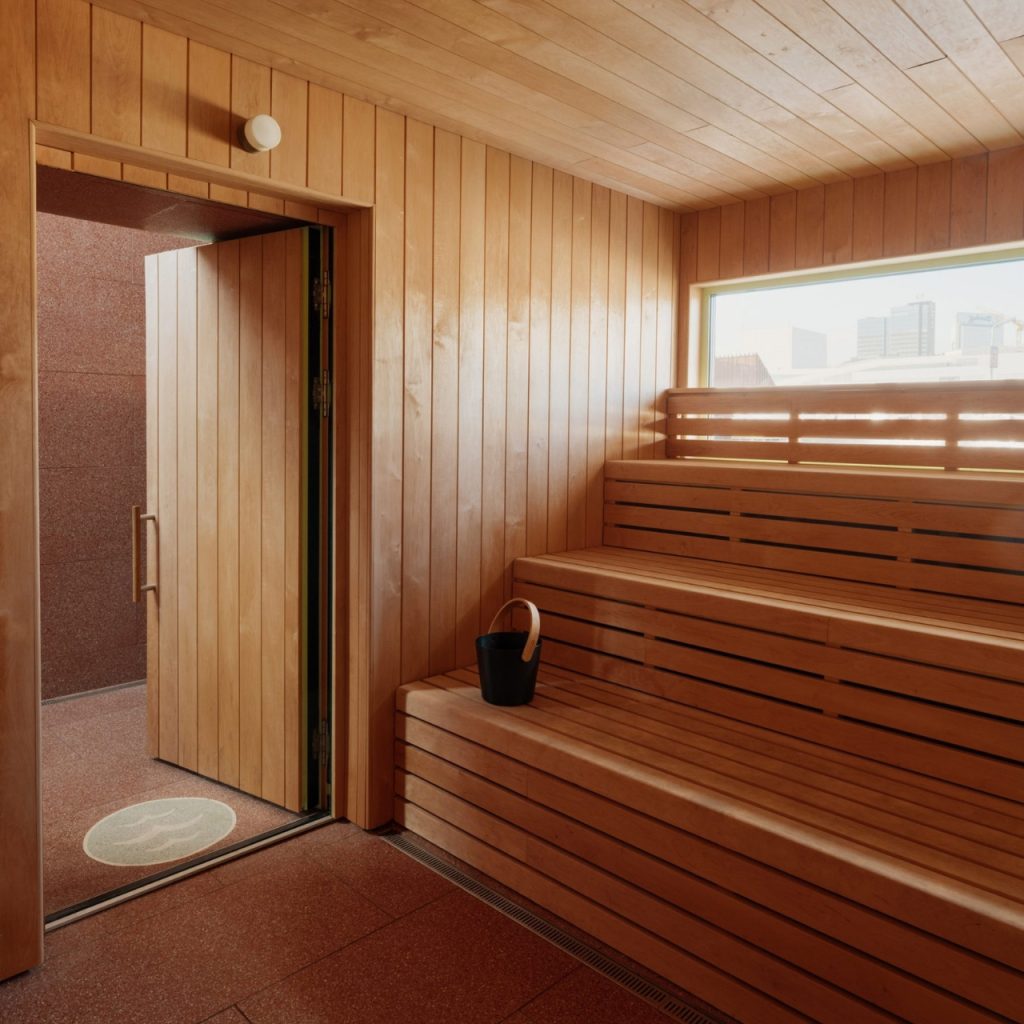
The design also expands the conventional idea of what happens around a sauna. Stepped seating outside provides space for sunbathing and socialising, while the rear of the structure contains a sheltered seating area with access to the fjord. Inside, lockers and seating lead to the sauna itself, where stepped wooden benches create a compact but communal interior. The sequence encourages users to move between hot and cold, enclosed and open, private and public.

Trosten by Estudio Herreros
Sustainability is integrated into that experience rather than treated as an afterthought. Trosten incorporates an energy system and steam recirculation, alongside natural and recycled materials. Its floating construction also offers an adaptable approach to waterfront architecture, allowing the sauna to become part of the public realm without demanding the permanence of a conventional building.
Trosten by Estudio Herreros
What makes these projects compelling is that none of them treats sustainability as a purely technical exercise. Their environmental ambitions are embedded in stories, rituals and social encounters. Materials are reused, energy systems are reconsidered and structures are made adaptable, but the ultimate innovation is human. Each project asks people to gather, slow down and experience a place together.