Every cup of coffee or tea has a final chapter. The drink disappears, the cup gets cleared, and what remains is usually treated as worthless: a damp pile of grounds or a handful of exhausted leaves. But designers are increasingly asking a more interesting question: what if the end of the drink is actually the beginning of the material?
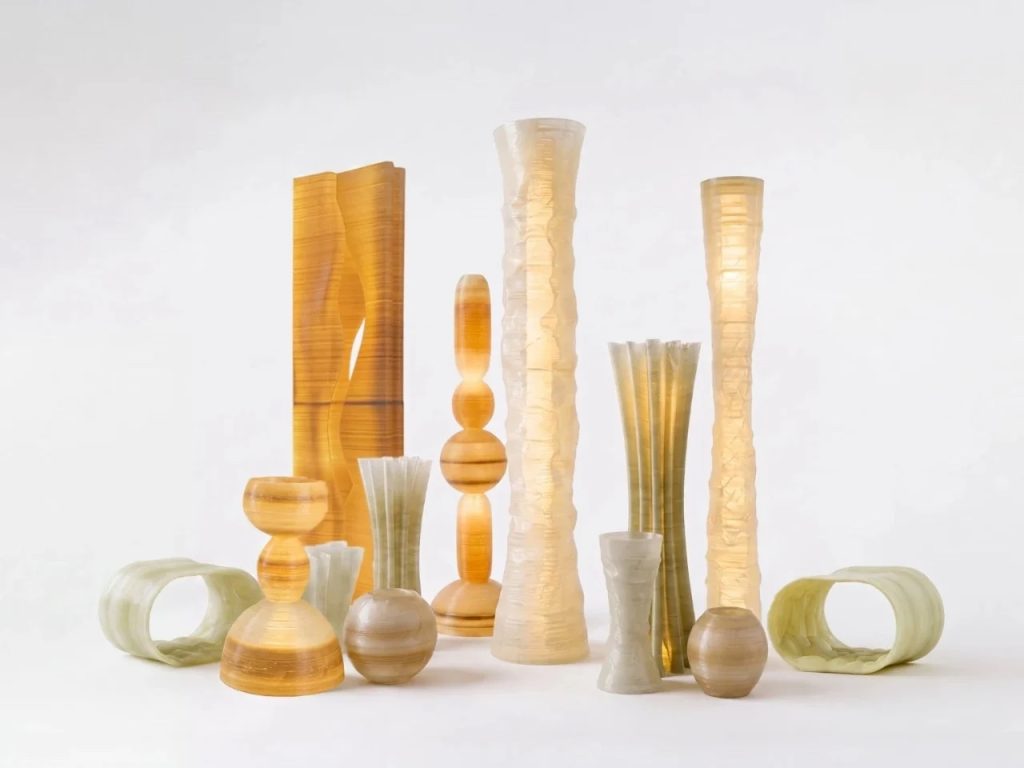
After the Last Sip by Chao-Chun Kung, Ching-Yu Lin, and Chen-Yang Chang
The scale of coffee and tea waste is easy to overlook because each individual serving produces so little. Multiply that by cafés, offices, restaurants, and bubble tea shops across a city, however, and the numbers quickly become substantial. Taiwanese designers Chao-Chun Kung, Ching-Yu Lin, and Chen-Yang Chang decided to tackle that overlooked stream of waste with After the Last Sip, a project that transforms discarded tea leaves from London’s bubble tea shops and used coffee grounds from local cafés into furniture, lighting, and sculptural objects. Rather than treating waste as something that needs to disappear, the designers make it impossible to ignore.
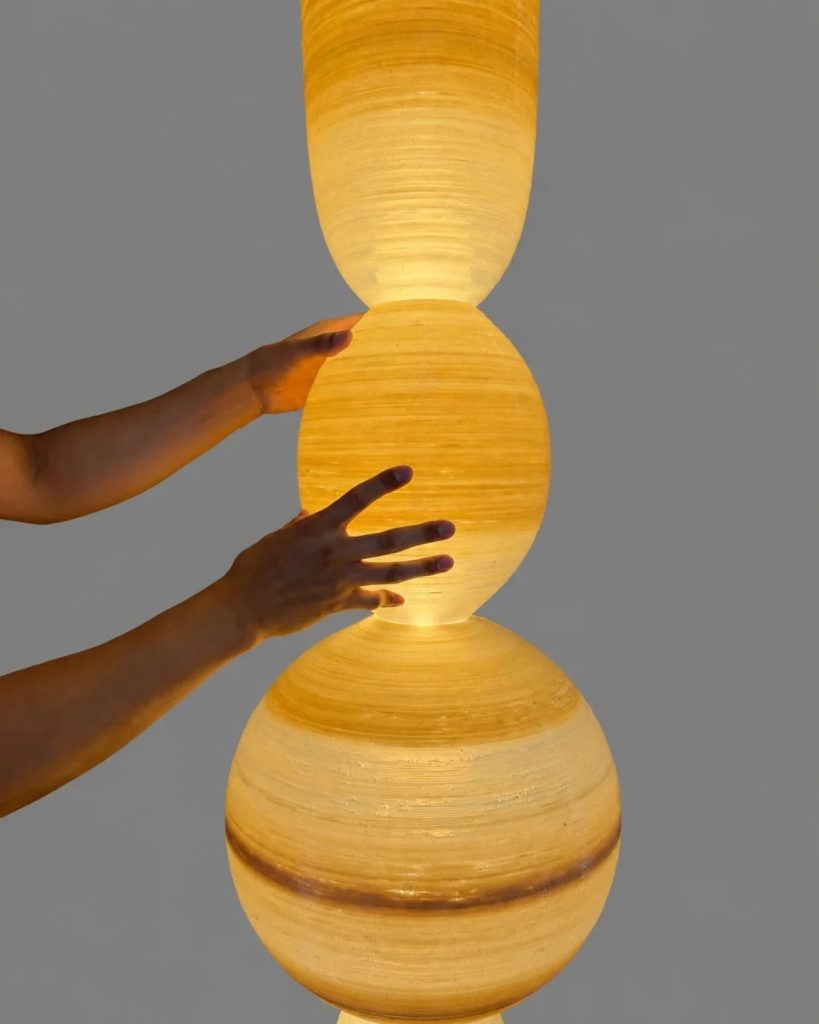
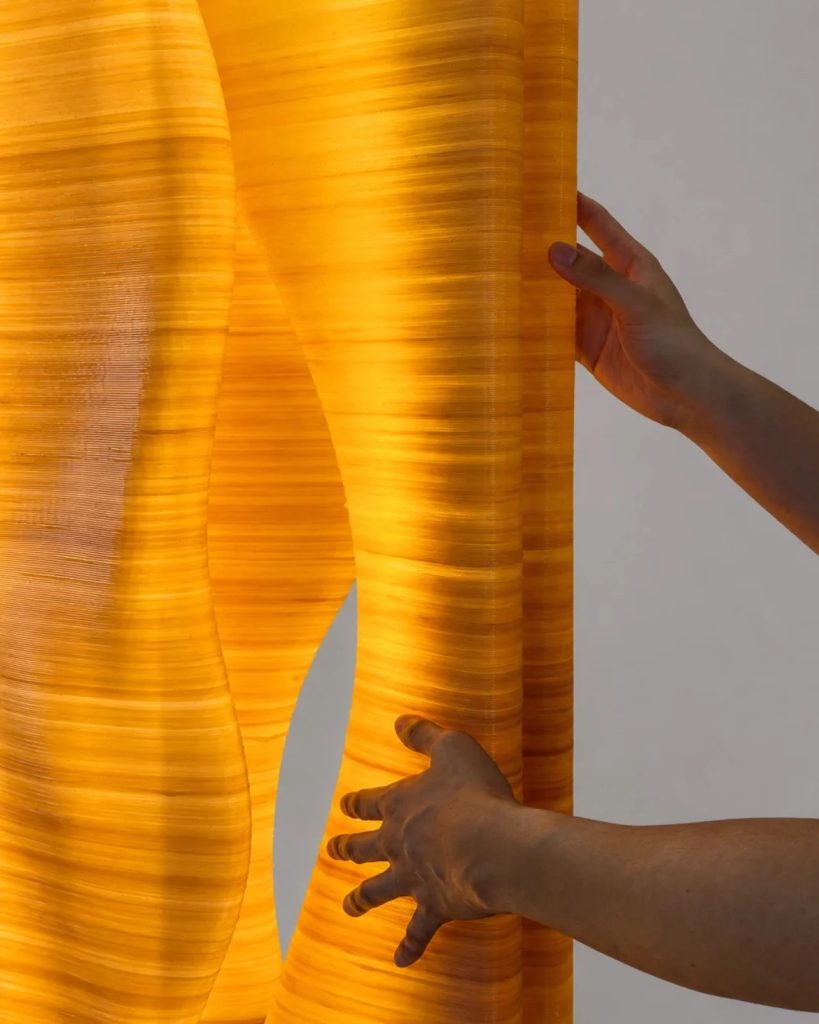
After the Last Sip by Chao-Chun Kung, Ching-Yu Lin, and Chen-Yang Chang
Working from Fab.Pub in East London, the team dried and ground the collected residues before combining them with PLA, a biodegradable polymer, to create a printable composite. Robotic 3D printers then transformed the material into large-scale forms designed through parametric systems, bringing computation and discarded organic matter into the same creative process. The resulting works, including Kung’s CHA, Lin’s Undetermined Shore, and Chang’s Nexus Bloom, take distinctly different approaches to the material. CHA draws on Taiwanese tea culture and the Chinese character for tea, Undetermined Shore turns coffee-ground composites into sediment-like landscapes inspired by Taiwan’s shifting coastline, while Nexus Bloom uses flowing geometries that appear almost grown rather than manufactured.
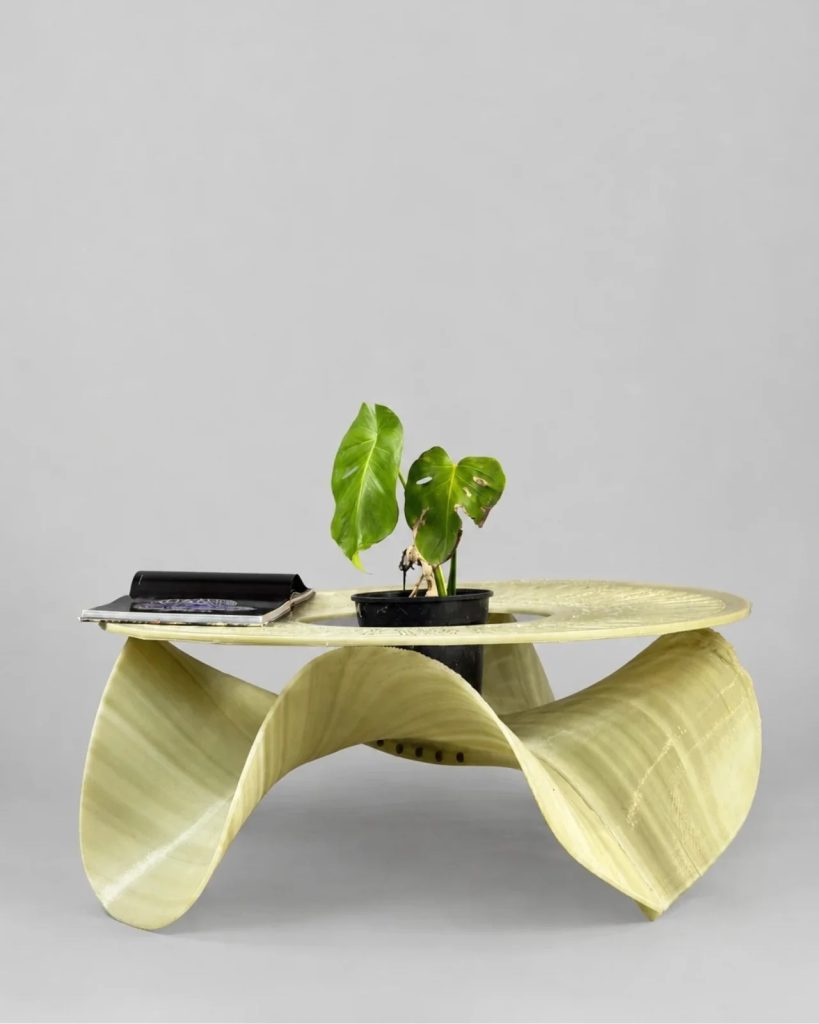
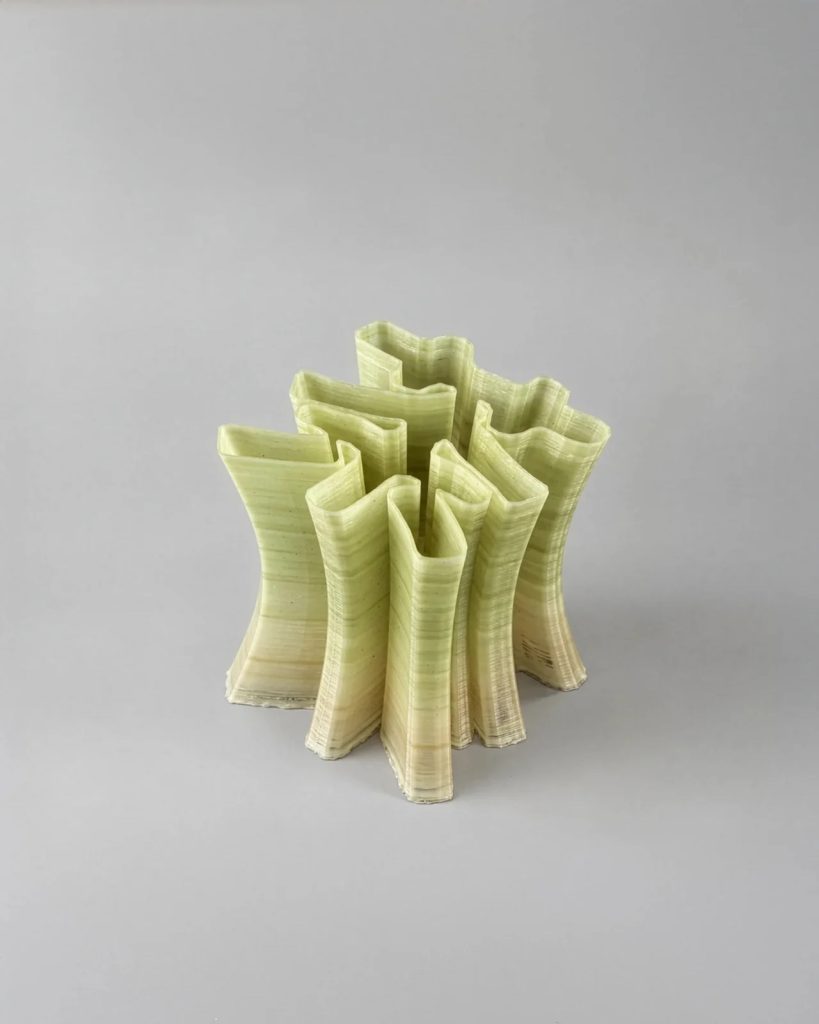
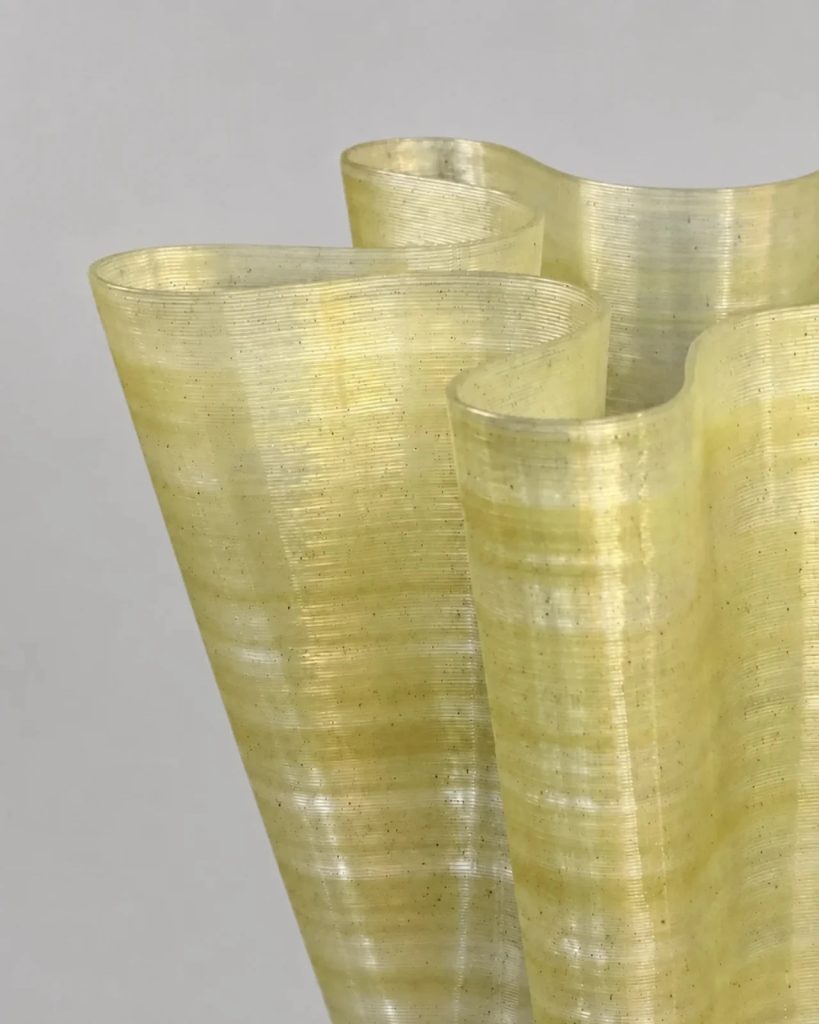
After the Last Sip by Chao-Chun Kung, Ching-Yu Lin, and Chen-Yang Chang
What makes the project particularly compelling is its refusal to disguise its origins. The printed layers remain visible, particles show through the surfaces, and subtle irregularities reveal the material’s previous life. That honesty gives the work a quality that many sustainability-focused objects lack. Instead of polishing away every trace of waste, After the Last Sip makes the waste part of the aesthetic. The message is refreshingly simple: the material in your morning cup does not necessarily have to end its story when the drink is gone.
Tea-earth bricks by Kooo Architects and Onearthstudio
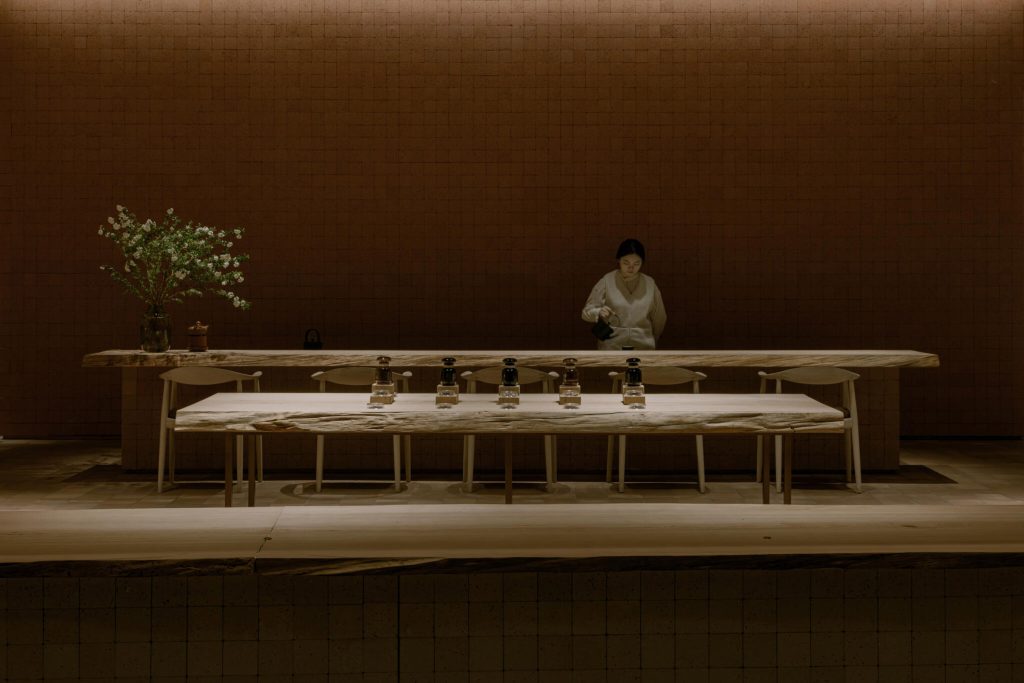
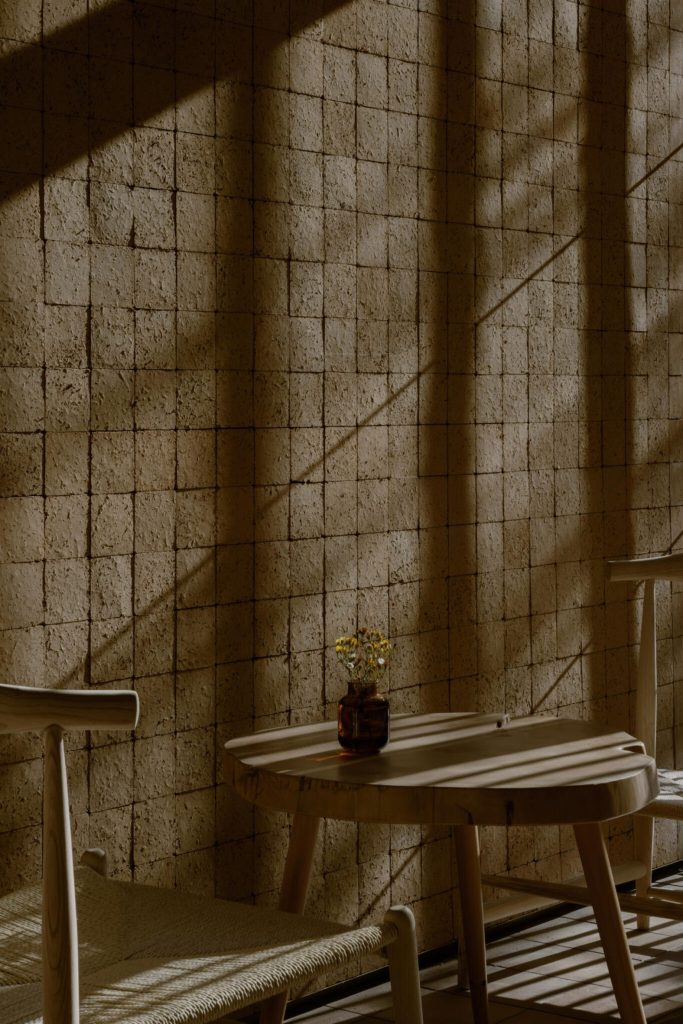
If After the Last Sip turns tea and coffee waste into objects, Kooo Architects takes the idea one step further by making tea waste part of an entire environment. For the Théatre teashop in Beijing’s central business district, the Japanese studio collaborated with Beijing-based Onearthstudio to develop custom “tea-earth bricks”, combining compressed earth with leftover tea leaves. The result is an interior that does not merely sell tea or visually reference it. In a rather literal twist, the tea becomes part of the architecture itself.
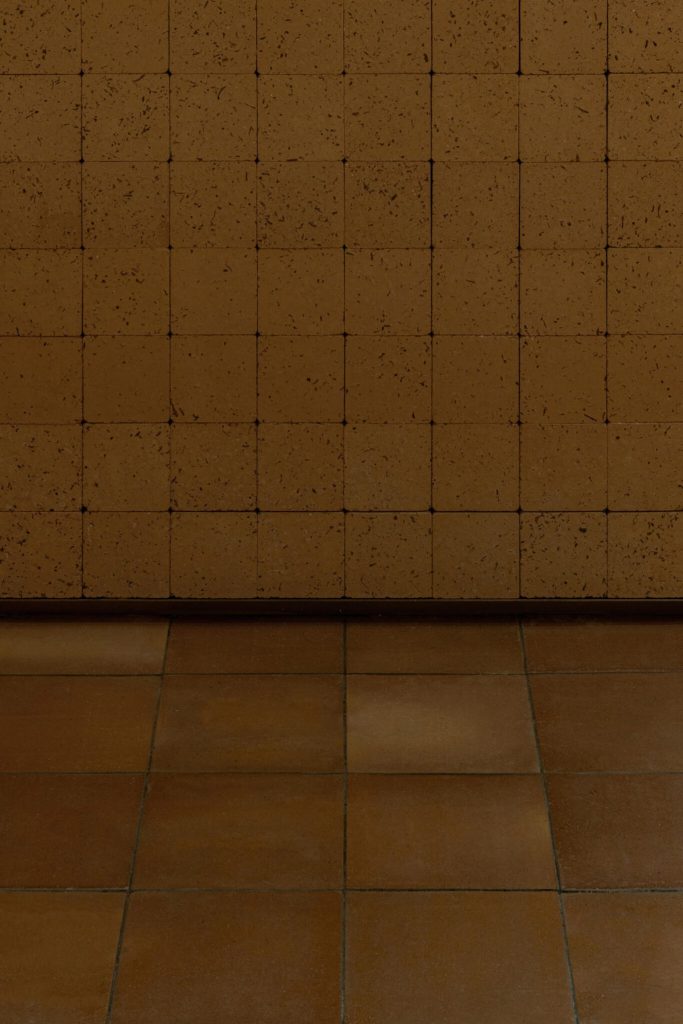
Tea-earth bricks by Kooo Architects and Onearthstudio
The bricks cover around 80 percent of the store’s walls and introduce an unusually tactile palette of natural colours and textures. Kooo Architects experimented with different soil types and tea varieties to achieve the desired tones while maintaining structural strength. The compact 10-by-10-by-3-centimetre modules can be used for walls, doors, and furnishings, while specially developed L-shaped pieces allow the material to wrap around corners. A darker red brick volume creates a focal point, while softer yellow tones elsewhere contribute to the calm, earthy atmosphere. The tea leaves remain visible within the surfaces, providing a subtle reminder that the material is not simply inspired by tea. It is tea.
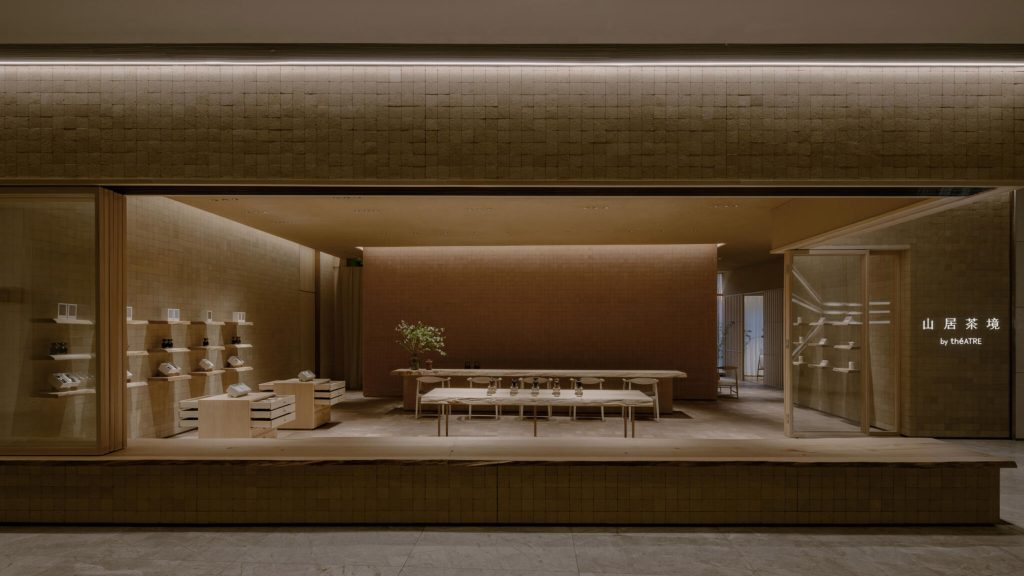
Tea-earth bricks by Kooo Architects and Onearthstudio
The spatial experience reinforces that material story. Counters and shelves are arranged at different heights, samples invite visitors to explore aromas, and a lower tea-ceremony bar creates a more intimate interaction between guests and the ritual of drinking. Toward the rear, a private lounge and VIP tea room reinterpret the traditional tea house with an exposed pitched ceiling and natural light. Perhaps most importantly, the bricks are designed with another life in mind. When the retail interior eventually changes, they can be dismantled and reprocessed for future stores or returned to nature. In other words, the architecture has an exit strategy, which is something too few interiors consider.
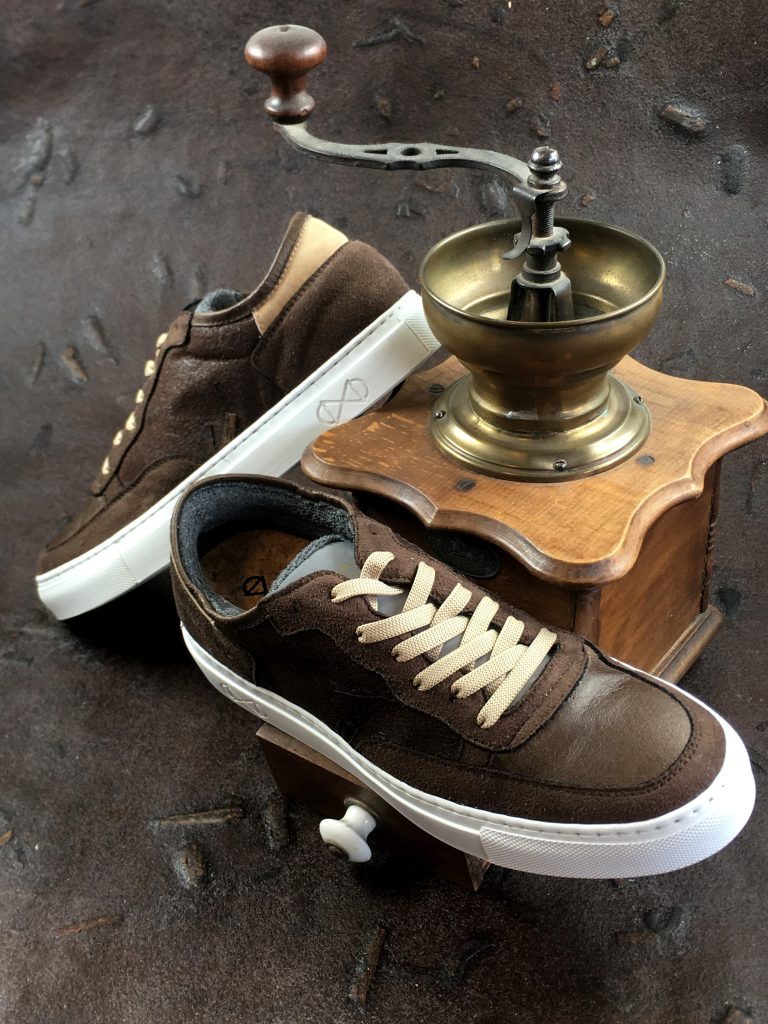
Coffee line by nat-2™
Moving from architecture to fashion, German high-end sneaker brand nat-2™ demonstrates just how far coffee waste can travel from the café counter. Developed by founder Sebastian Thies, the brand’s coffee sneakers are 100 percent vegan and available in high-top and low-top versions. Their most distinctive feature is a surface material containing up to 50 percent recycled coffee, depending on the style. The result is a smooth, finely textured finish that retains something wonderfully unexpected: the natural scent of coffee. Your morning caffeine fix, apparently, can follow you around all day.
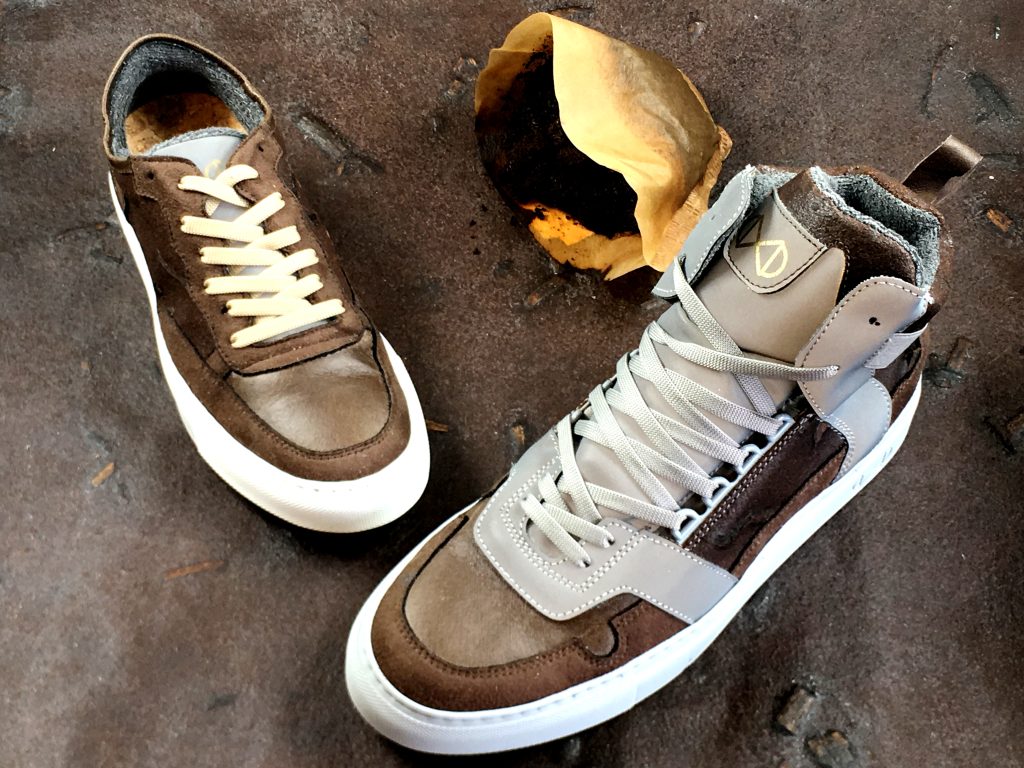
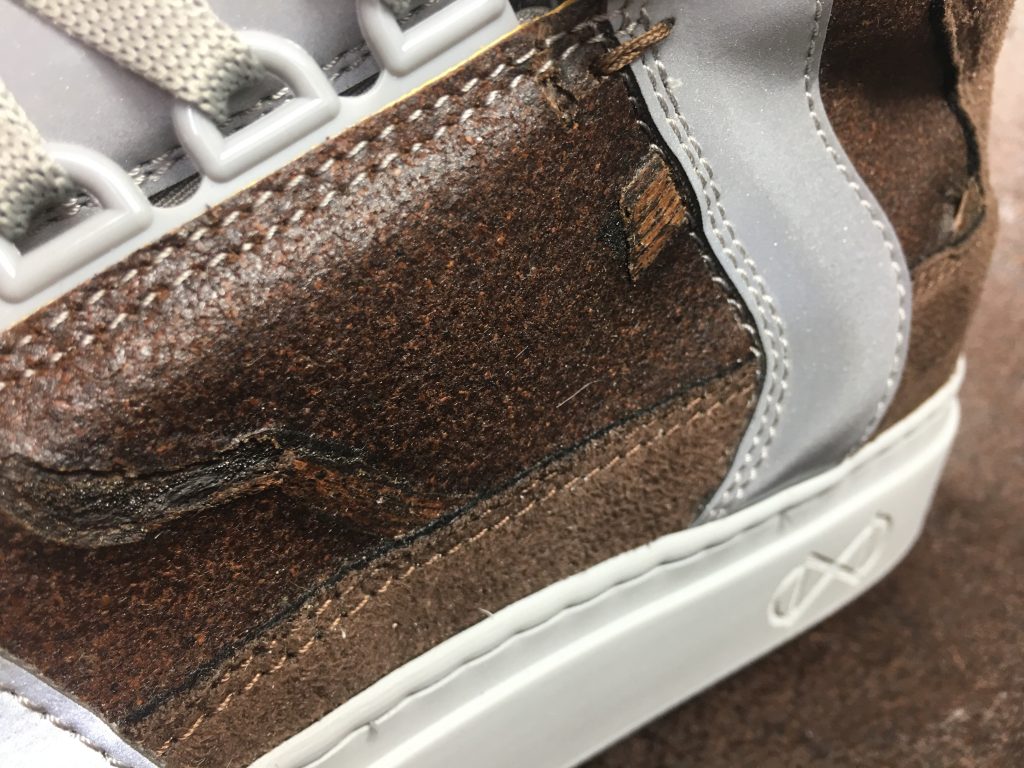
Coffee line by nat-2™
The material is only part of the sustainability story. The sneakers combine recycled coffee with real rubber outsoles, water-based glue, and soft, antibacterial cork insoles. Sections designed to resemble suede or nappa leather are made from recycled PET bottles, while reflective glass details provide the brand’s signature finish. The coffee itself is sourced according to sustainable availability, and each pair is handmade in Italy under fair conditions at a family-run, high-tech facility. It is a useful reminder that material innovation rarely works in isolation. A genuinely thoughtful product considers not only its headline material but also the ingredients, manufacturing process, durability, and working conditions around it.
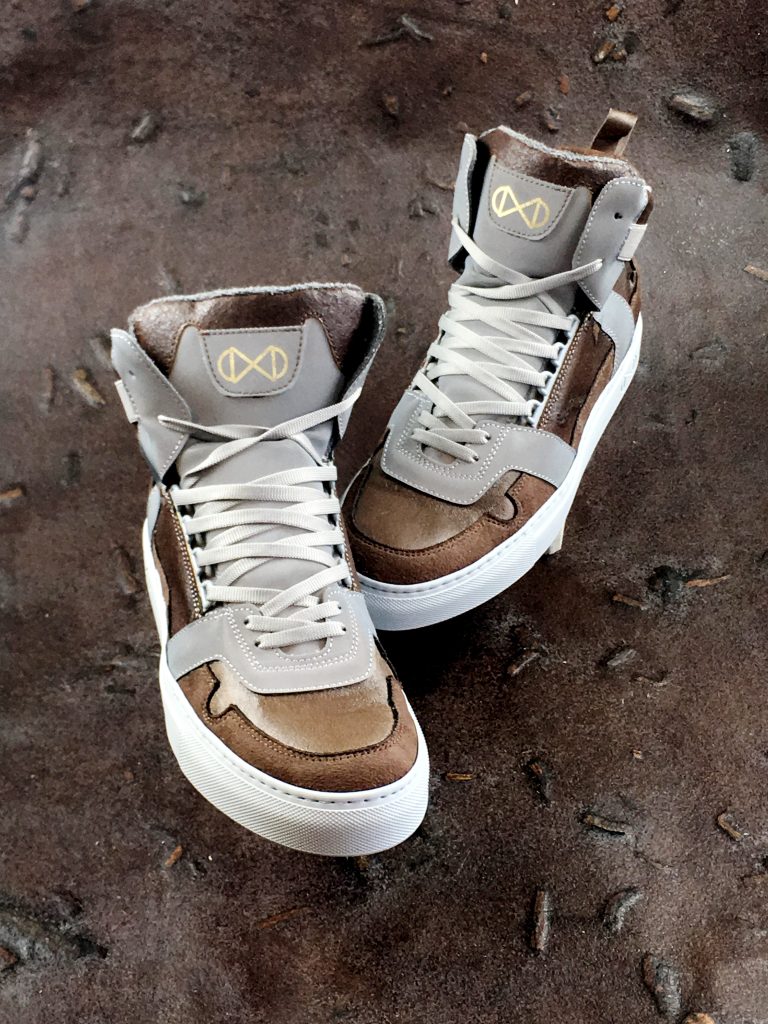
Coffee line by nat-2™
There is also something inherently entertaining about the concept. Coffee is normally associated with warmth, aroma, energy, and a temporary boost, while sneakers are built for movement and endurance. Putting the two together creates a product that feels almost inevitable in hindsight. More importantly, it challenges the idea that sustainable materials must look visibly “eco”.
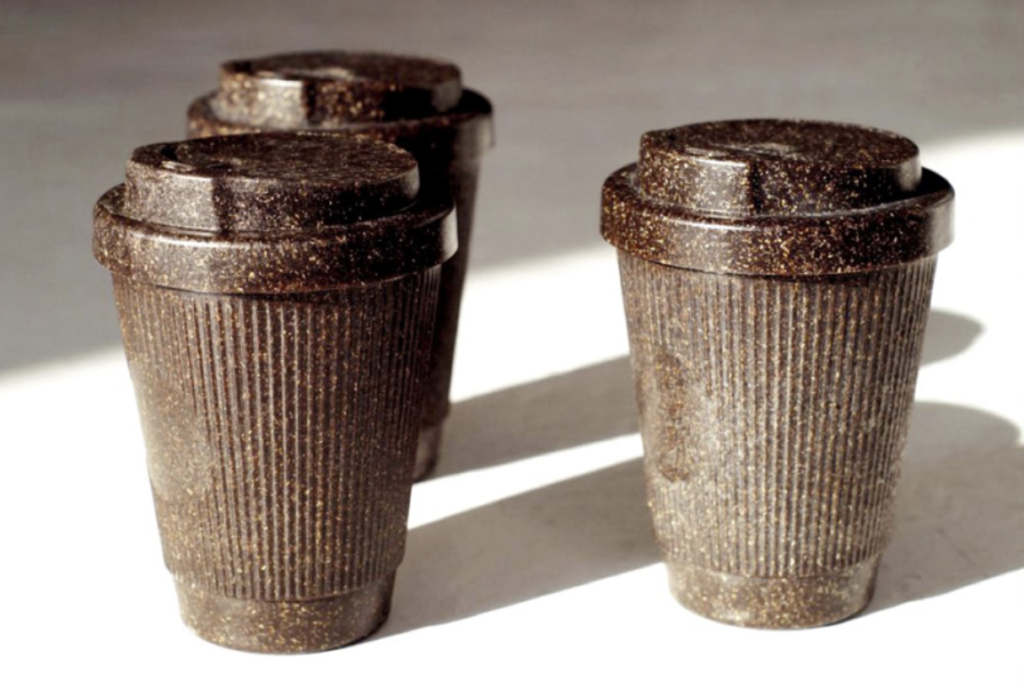
Coffee cups by Kaffeeform (also header image)
The most satisfying circular design stories are the ones that seem to complete a loop. That is exactly what Berlin-based startup Kaffeeform set out to do with its reusable coffee cups, developed by designer Julian Lechner. Instead of allowing used coffee grounds from local cafés to become waste, Lechner collects them and combines them with natural glues and wood particles from sustainable sources. The resulting material can be injection moulded into durable reusable cups, turning yesterday’s coffee waste into tomorrow’s coffee vessel.
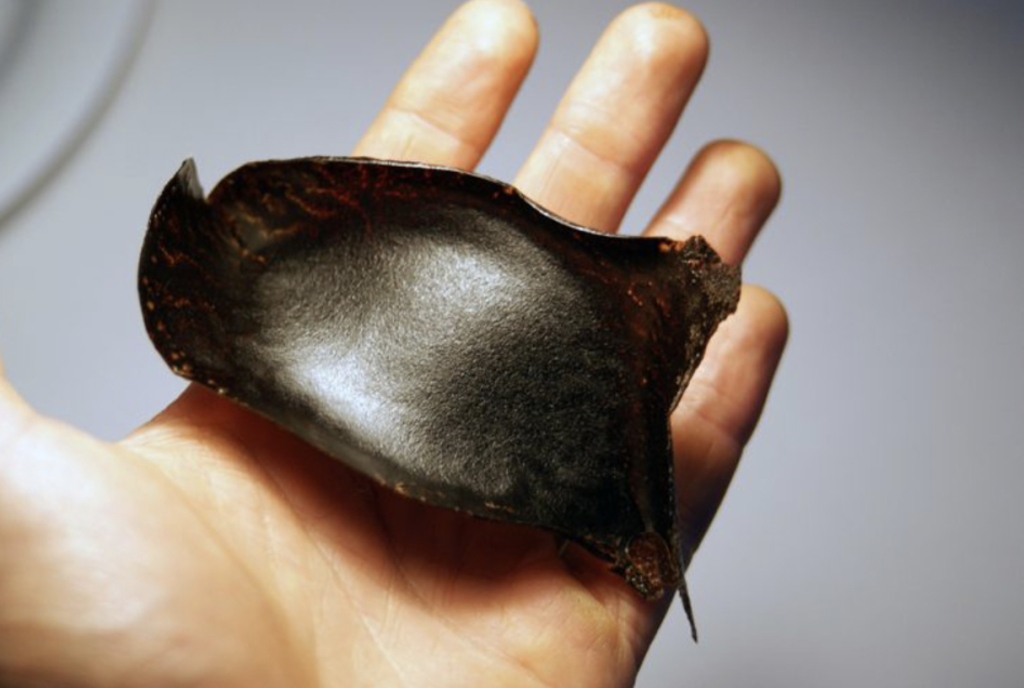
Coffee cups by Kaffeeform
The idea is as practical as it is poetic. Once shaped, the material is dishwasher-friendly and designed for repeated use, moving the grounds from the waste stream into a product intended to stay in circulation. The collection has expanded beyond small espresso cups with side handles and matching curved saucers to include cappuccino cups and a takeaway-style cup. In 2018, the concept received the Red Dot Product Design Award, recognising an approach that connects material experimentation with a familiar everyday object. Instead of inventing a product that asks people to change their behaviour completely, Kaffeeform works with a ritual they already understand: drink coffee, then use a cup.
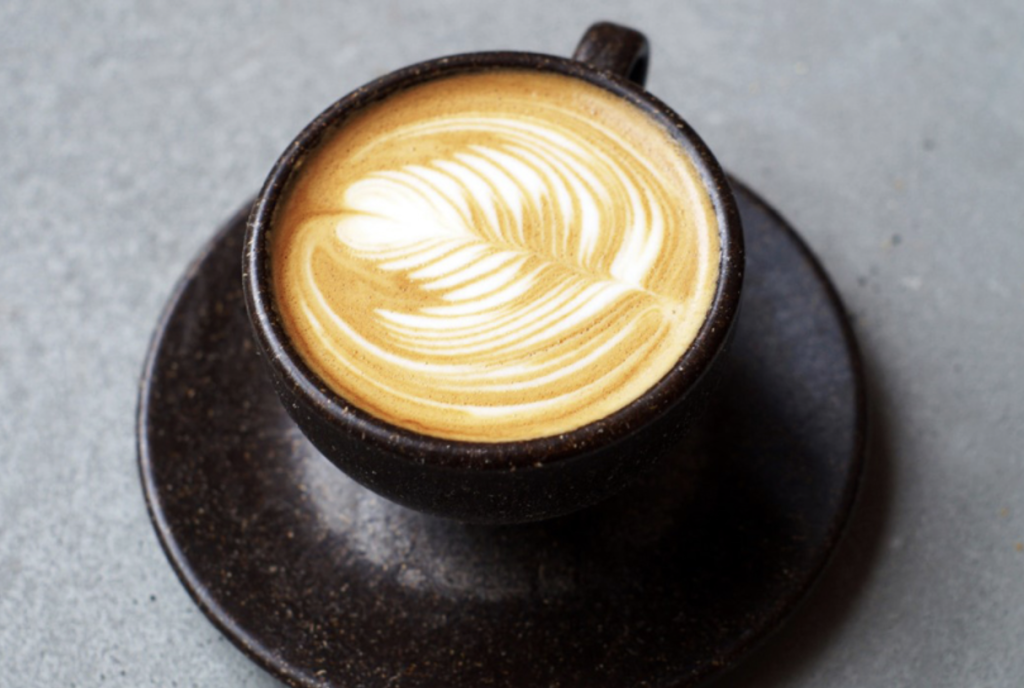
Coffee cups by Kaffeeform
That simplicity may be the project’s greatest strength. Coffee consumption continues to grow globally, meaning the raw material is not exactly in short supply. Lechner’s approach sees this predictable waste stream as a resource rather than a problem waiting for disposal. And that brings us back to the central idea connecting all four projects. Whether coffee grounds become sneakers, cups, furniture, or architectural surfaces, and whether tea leaves become bricks or sculptural forms, the most interesting innovation is not necessarily about creating something from nothing. It is about looking at what already exists and recognising that its useful life might not be over. The last sip, as it turns out, can be the first step in a surprisingly creative second life.