Urban furniture is more than a collection of functional objects placed within public spaces. It shapes how people experience cities, creating moments of rest, interaction, and connection with the environments around them. As urban landscapes evolve, designers are rethinking how these everyday elements are made, exploring new materials and production methods that respond to environmental challenges. The featured projects share a common ambition: transforming urban furniture into a platform for innovation, where waste materials become durable, meaningful, and visually compelling objects.
The Second Mine by BENTU Design
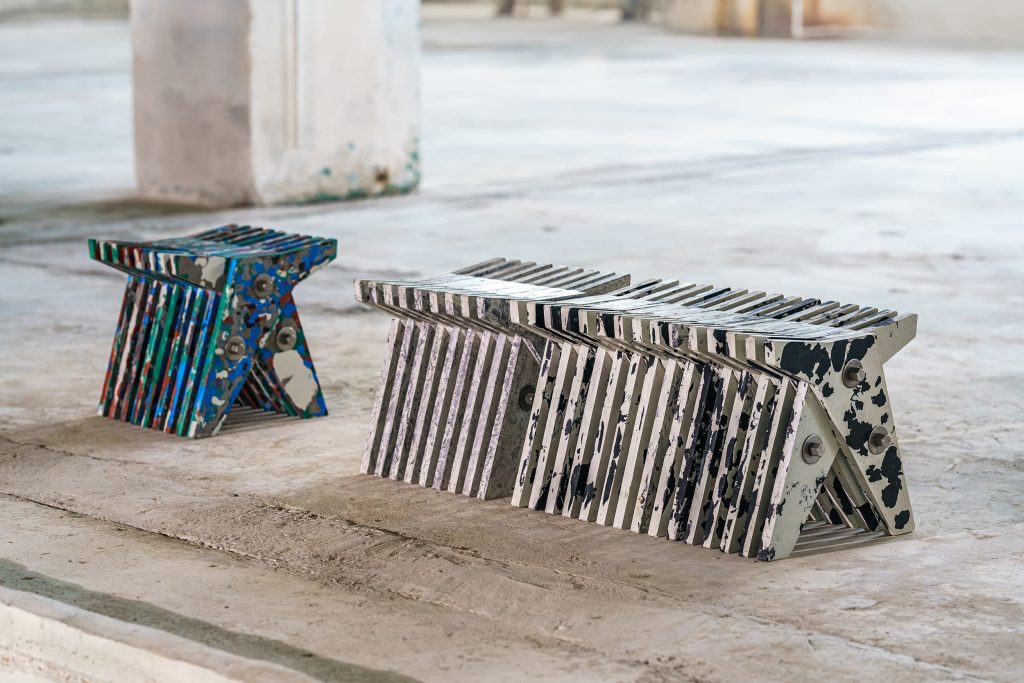
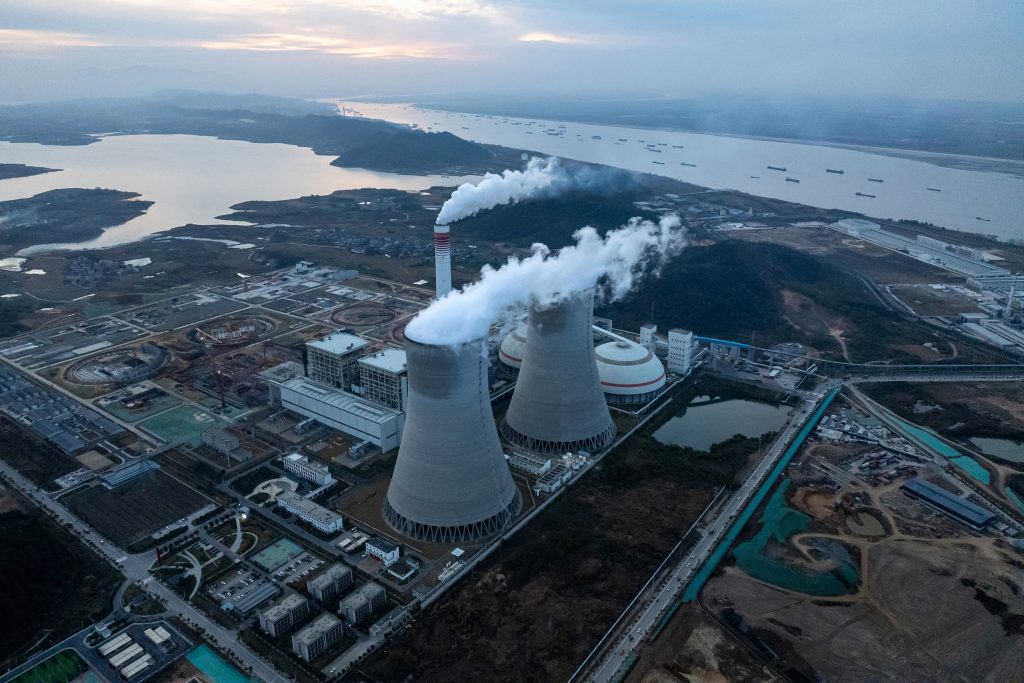
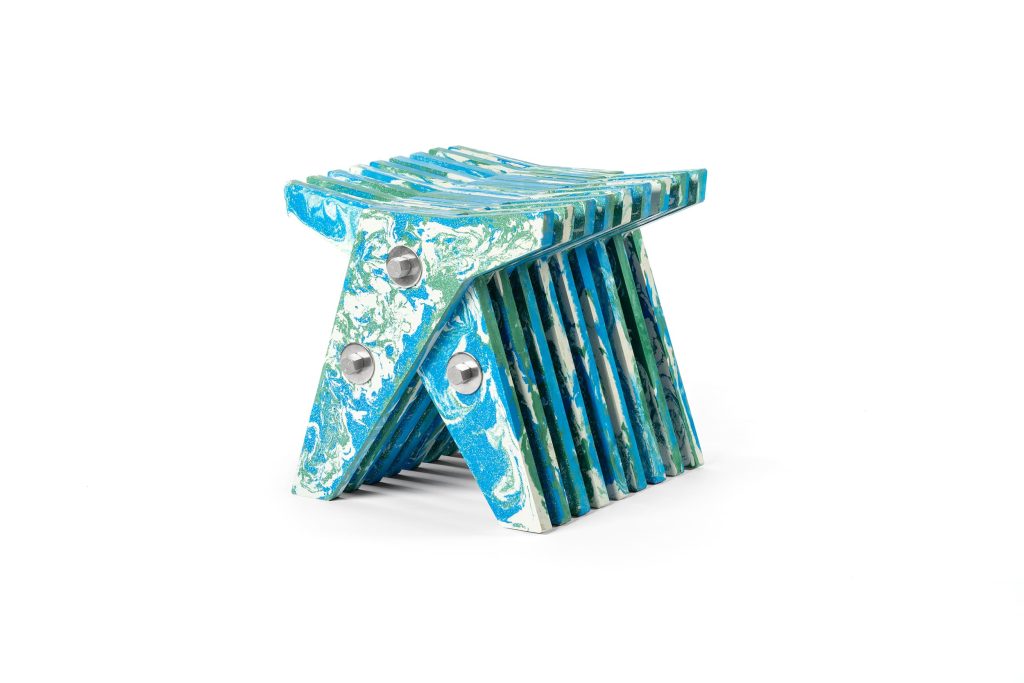
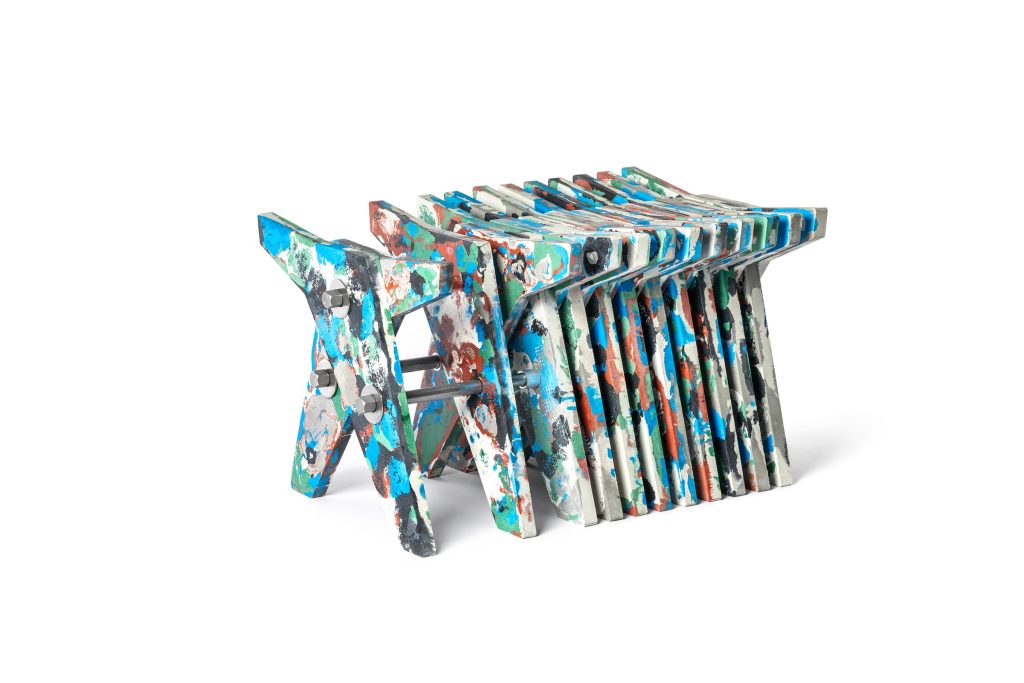
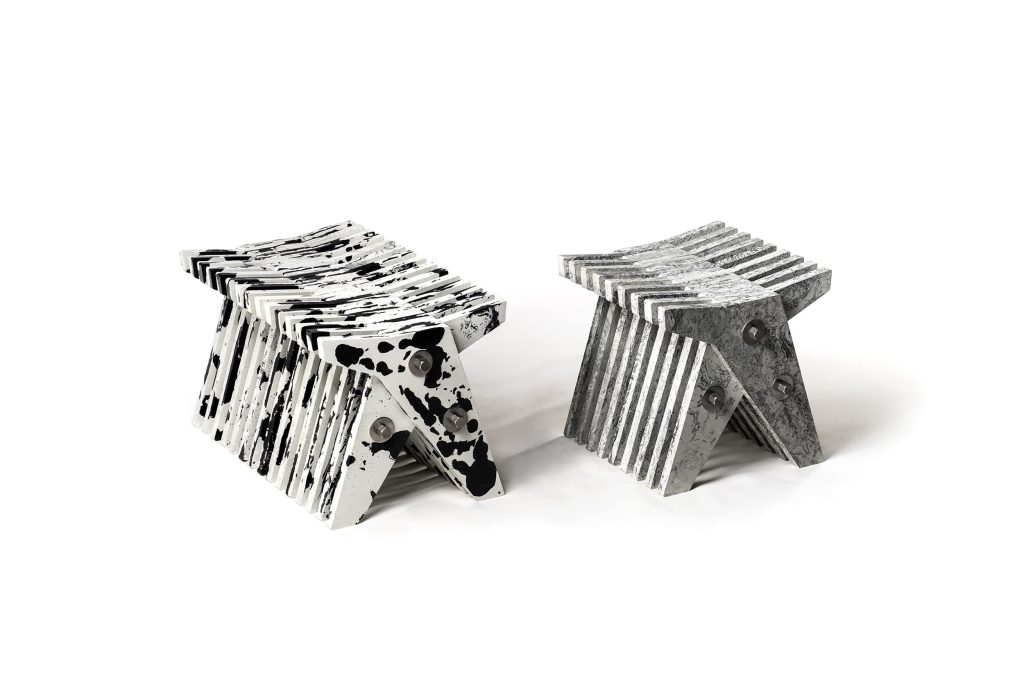
At the meeting point of Poyang Lake and the Yangtze River in China, BENTU Design explores a new understanding of waste through The Second Mine, a project that reimagines coal fly ash as a valuable design resource. Sourced from the nearby Shenhua Power Plant, this industrial by-product becomes the foundation for a collection of concrete urban furniture pieces. Rather than treating fly ash as an unwanted residue, the project positions it as a material with untapped potential, transforming it into a durable composite through a combination of slag and other solid waste materials.
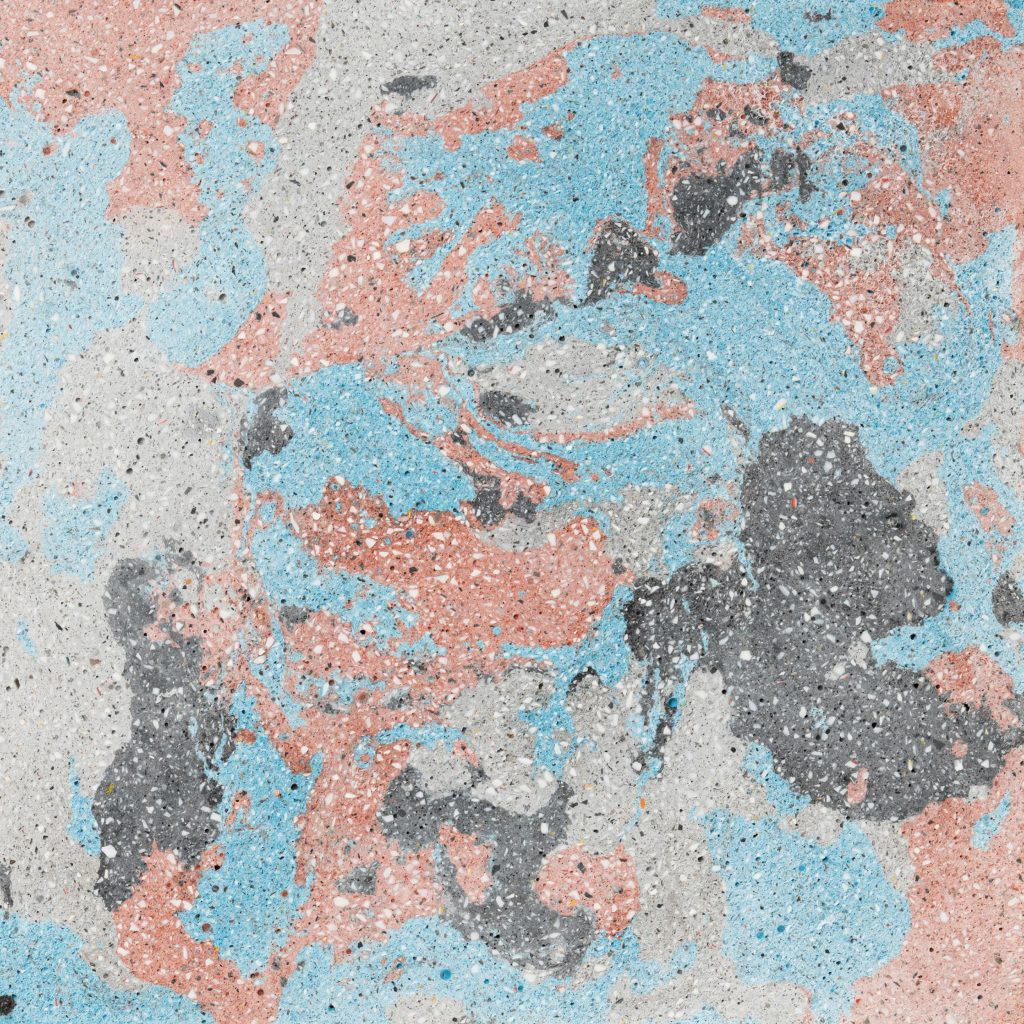
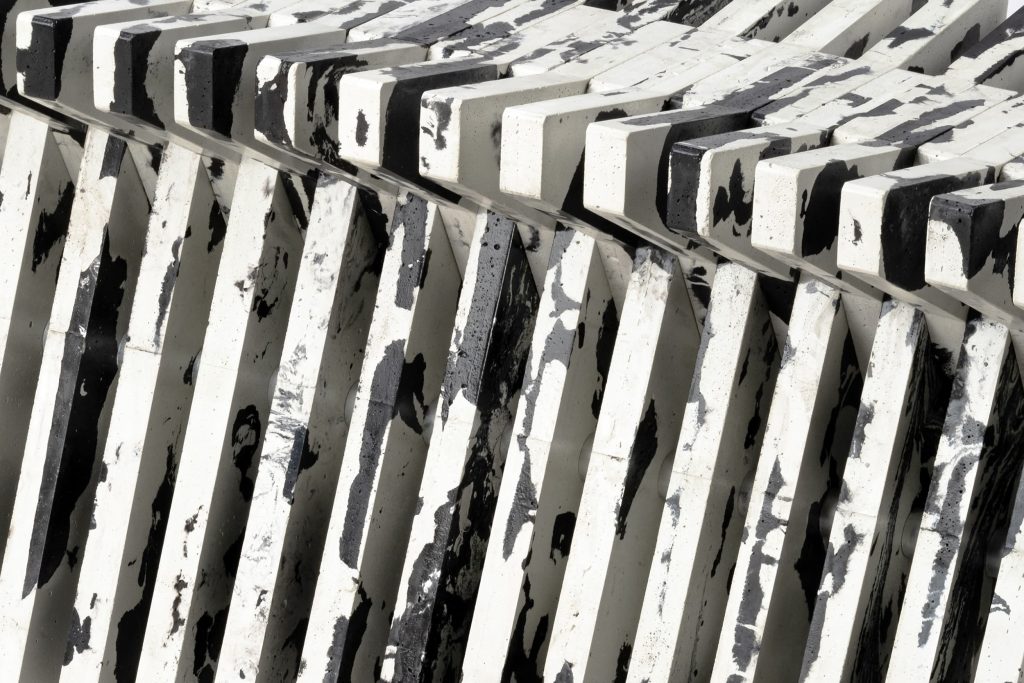
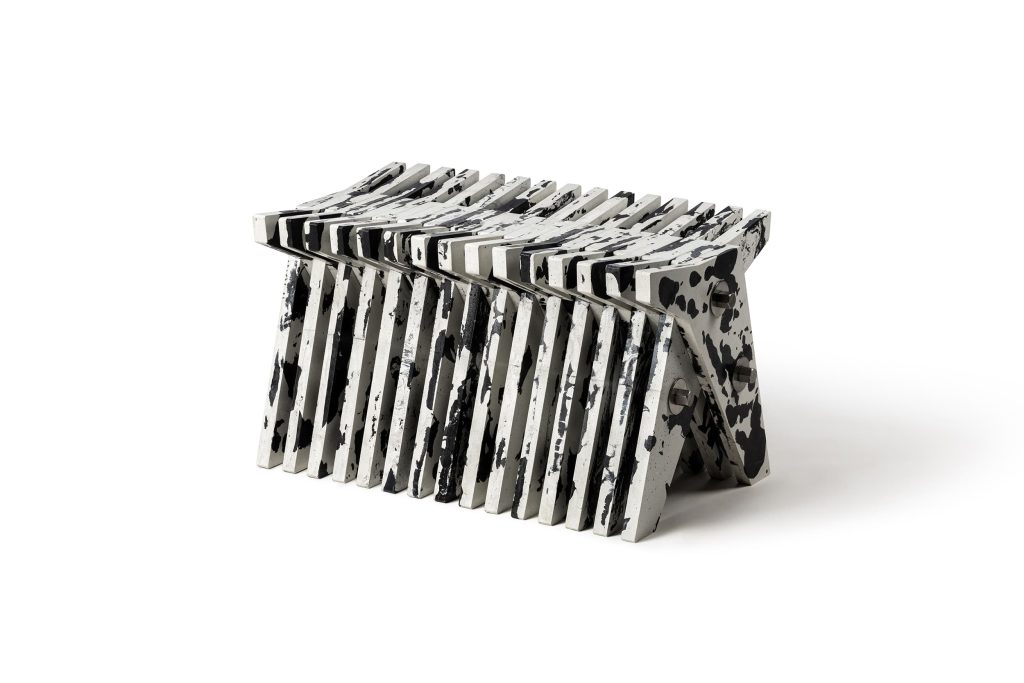
The innovation behind The Second Mine lies in its ability to rethink the internal logic of material production. By reducing cement content and refining the structure of the composite, BENTU Design creates a material that is both environmentally responsible and visually distinctive. The fine, powder-like qualities of fly ash contribute to density, smooth surfaces, and long-term stability, allowing the history of the material to remain visible in the finished objects.
The Second Mine by BENTU Design
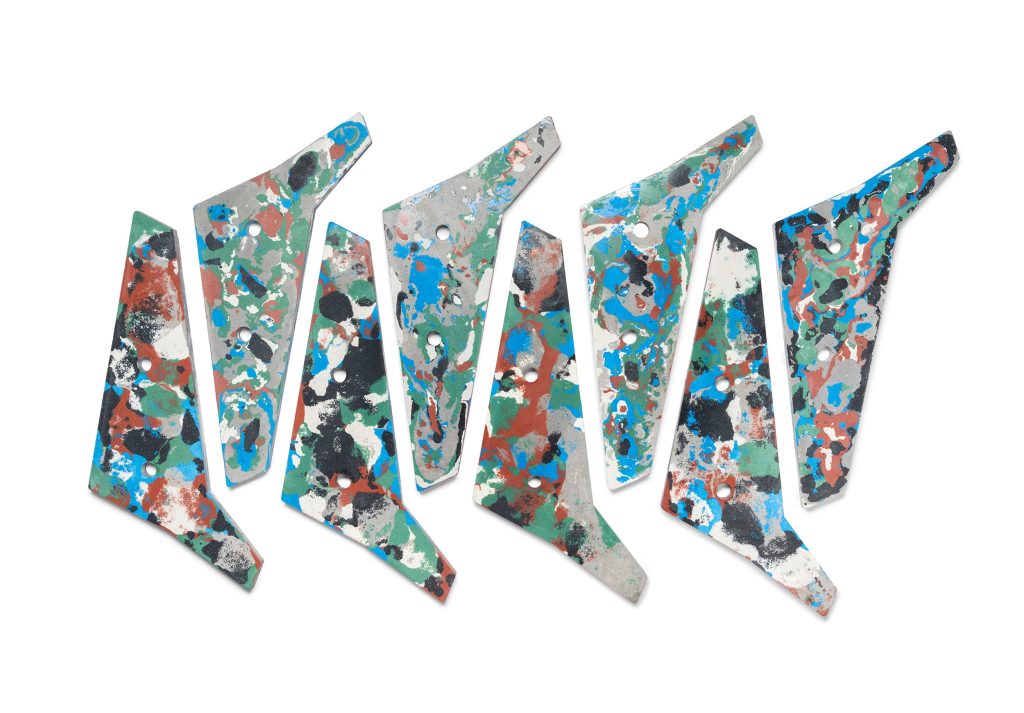
This approach introduces the idea of “urban mining,” where existing industrial outputs become the foundation for future production cycles. The furniture pieces act as material investigations, revealing their origins through subtle textures, tonal variations, and granular finishes. Instead of hiding the imperfections associated with recycled materials, the design celebrates them as evidence of transformation.
The Second Mine by BENTU Design
Beyond the objects themselves, The Second Mine proposes a broader shift in how cities understand resources. By sourcing locally and working with regional industrial waste, BENTU Design creates a direct relationship between place, production, and design. The project demonstrates that circular design is not simply about recycling materials, but about creating new systems where discarded matter can regain relevance and purpose.
Inorganic Growth by BENTU Design (also header image)
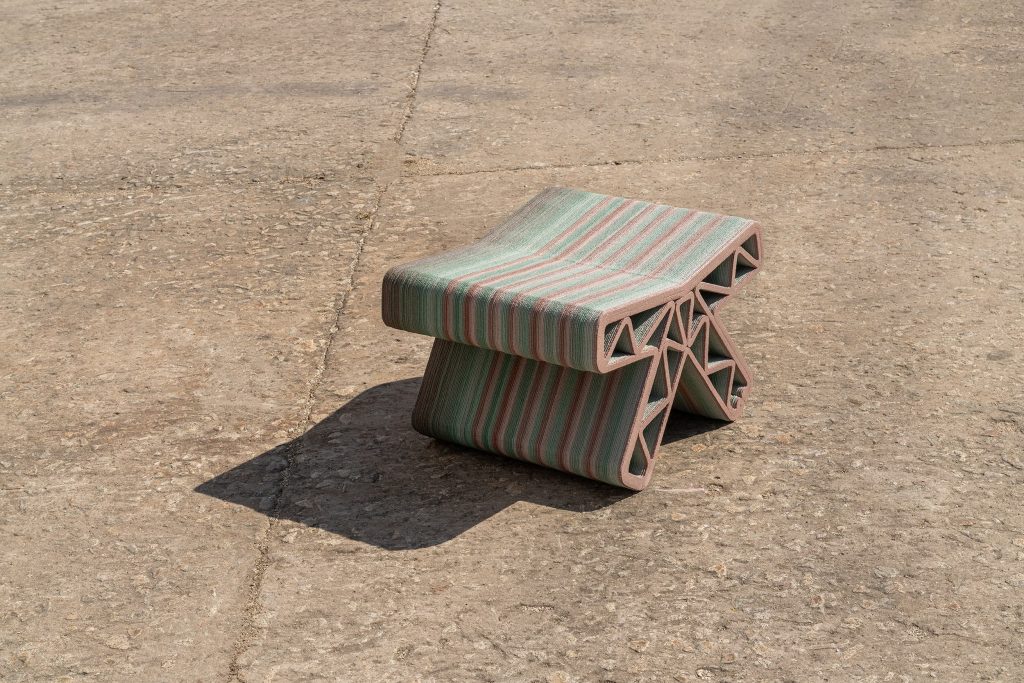
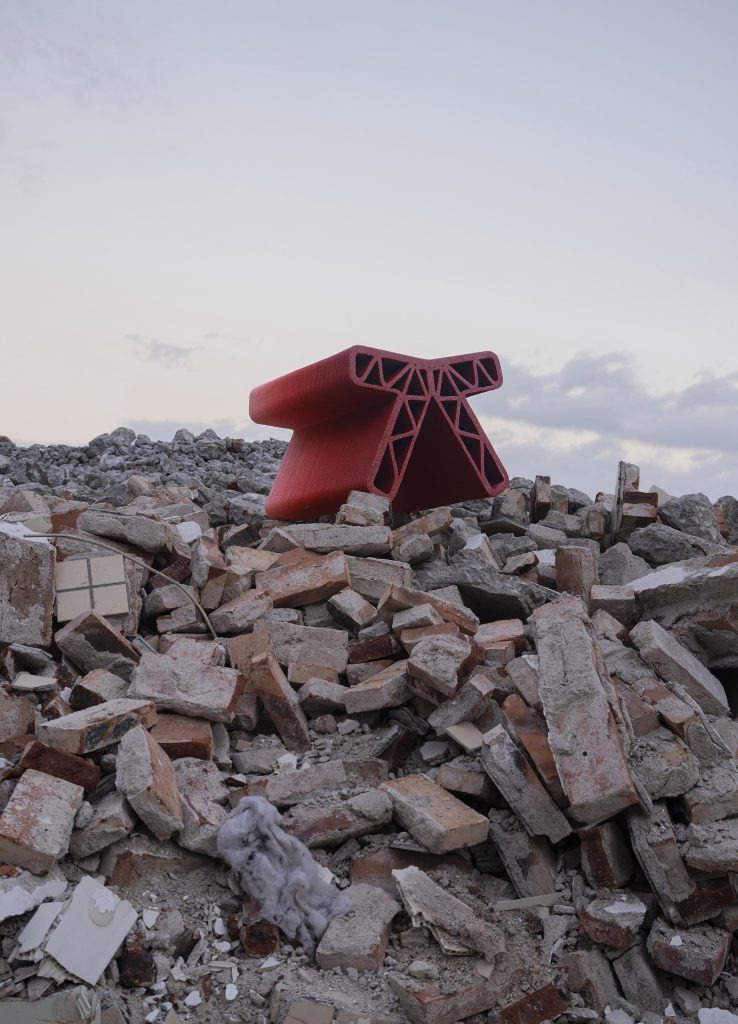
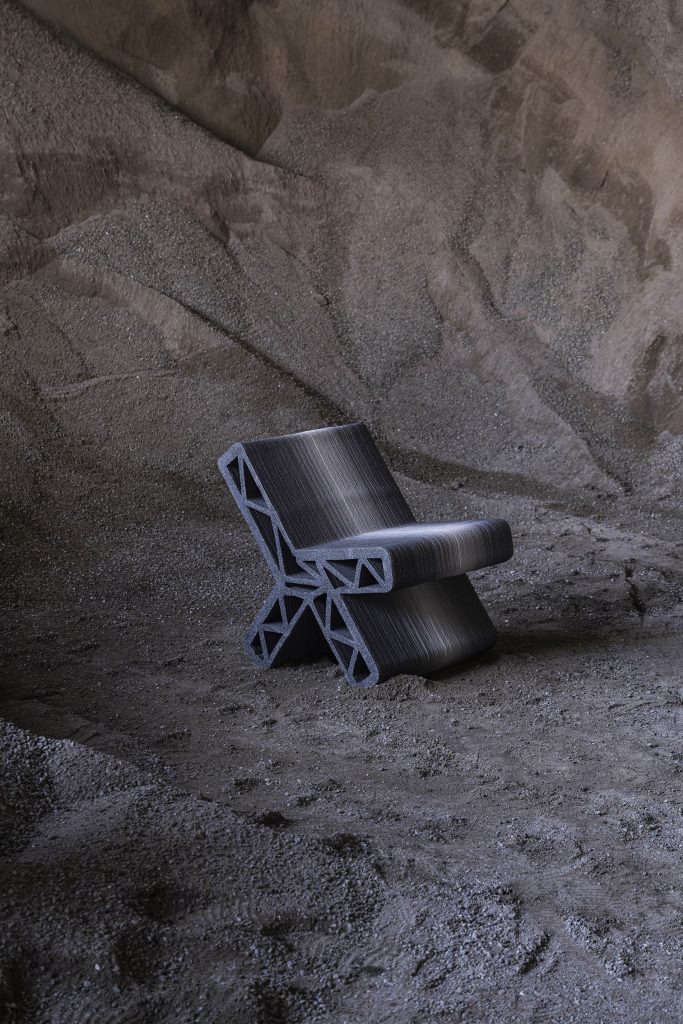
Following this exploration of industrial waste, BENTU Design continues its investigation into circular materials with Inorganic Growth, a research-driven project that combines construction waste recovery with 3D printing technology. The initiative transforms debris from demolished urban villages, including concrete fragments, brick rubble, and mortar, into printable cementitious composites. With recycled solid waste accounting for up to 85 percent of the material composition, the project presents demolition waste as a resource rather than an obstacle.
Inorganic Growth by BENTU Design
The process behind Inorganic Growth integrates material recovery, digital fabrication, and local production into a continuous cycle. Construction waste is collected, crushed, sorted, and refined before being combined with industrial by-products such as fly ash, slag powder, and silica fume. Through mechanical activation and chemical adjustments, the recycled material gains the performance characteristics required for additive manufacturing.
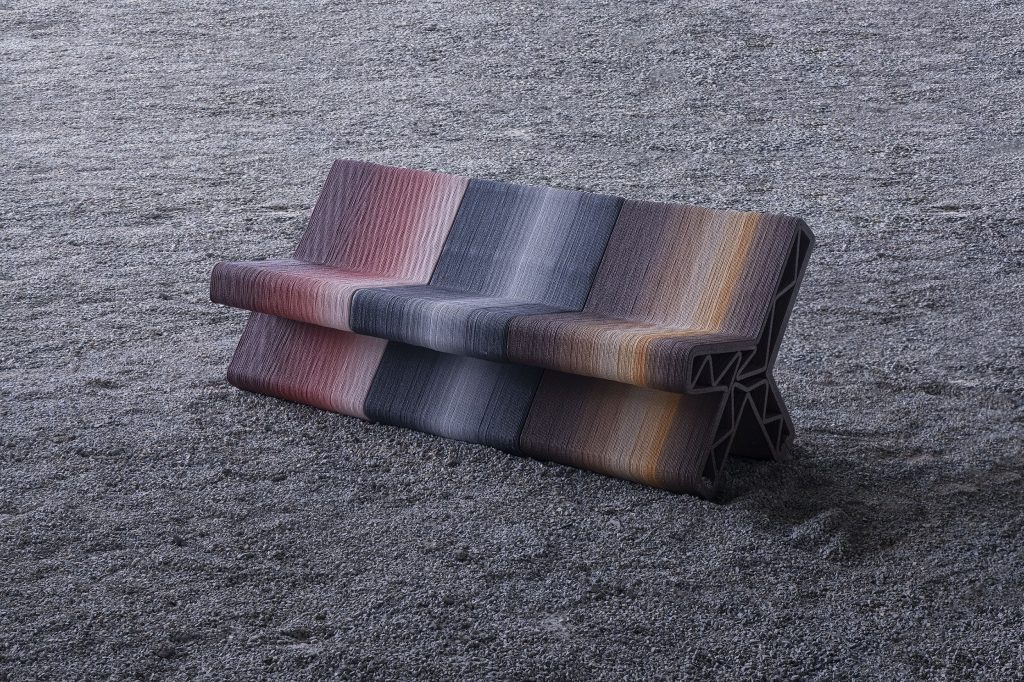
Inorganic Growth by BENTU Design
Advanced material engineering allows the composite to balance two demanding qualities: the fluidity needed for extrusion and the stability required after printing. Nano-suspension surface modification improves structural performance, while AI-assisted optimization helps fine-tune the mixture. This combination of digital intelligence and material research enables recycled resources to move beyond experimental applications and into functional urban objects.
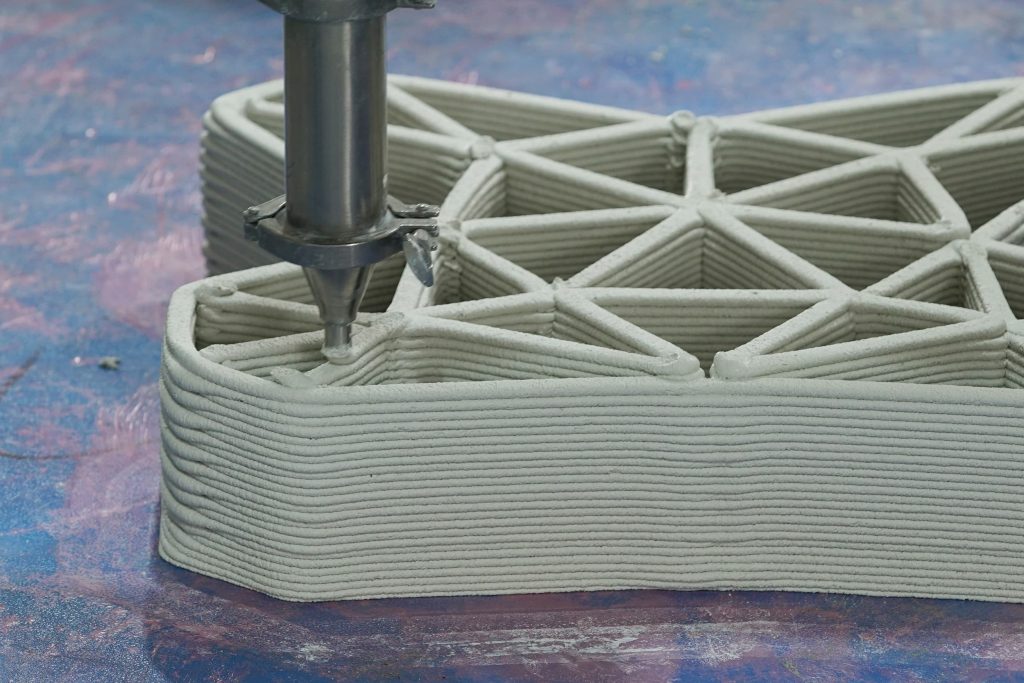
Inorganic Growth by BENTU Design
The project’s visual language adds another layer of meaning. Inspired by the colors and textures of urban villages, the furniture captures traces of demolished environments through mineral tones derived from brick, concrete, and ceramic fragments. Using layer-by-layer 3D printing techniques, these colors form gradual transitions across the surfaces, creating objects that resemble geological sections shaped by time.
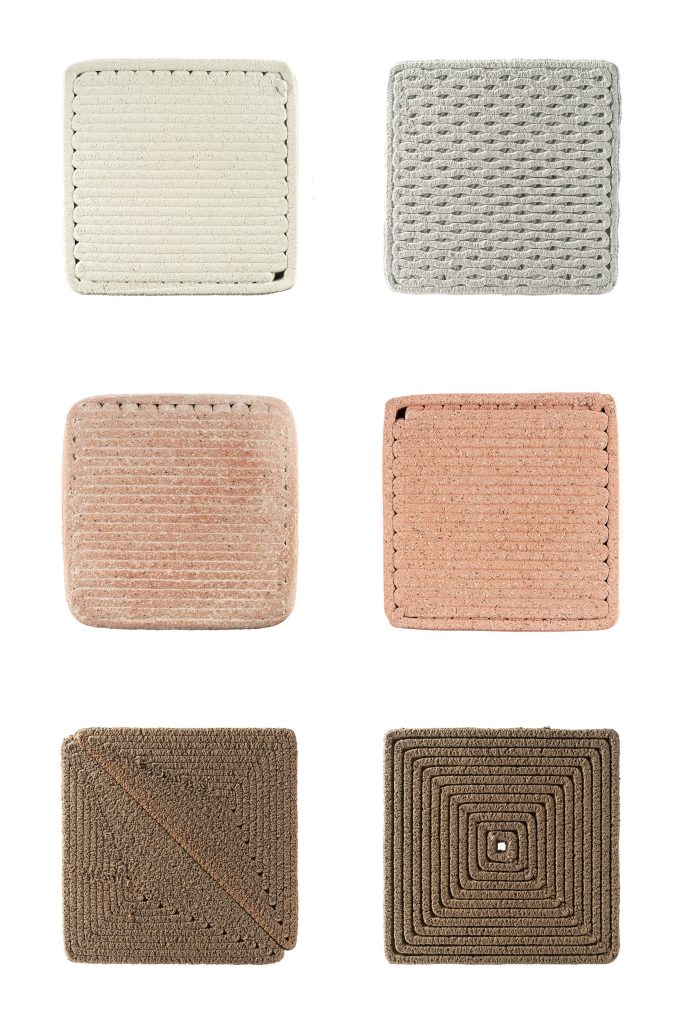
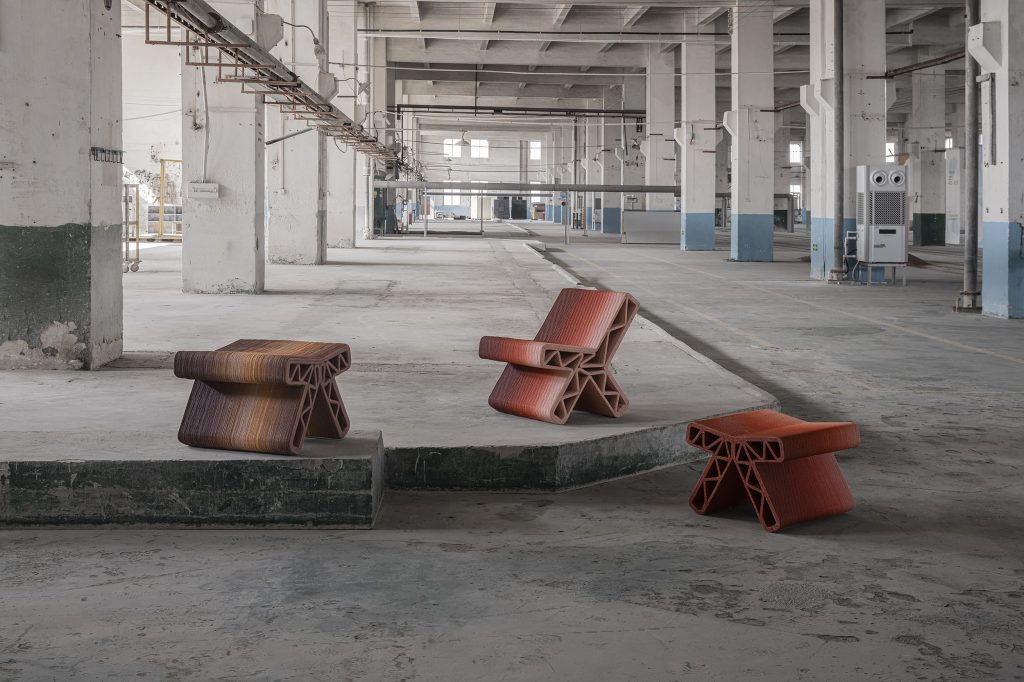
Inorganic Growth by BENTU Design
Inorganic Growth ultimately transforms urban debris into a record of urban memory. The project suggests that demolition does not have to represent an ending, but can become part of a regenerative cycle. By combining localized processing, digital fabrication, and contextual storytelling, BENTU Design demonstrates how future cities might build with their own discarded materials.
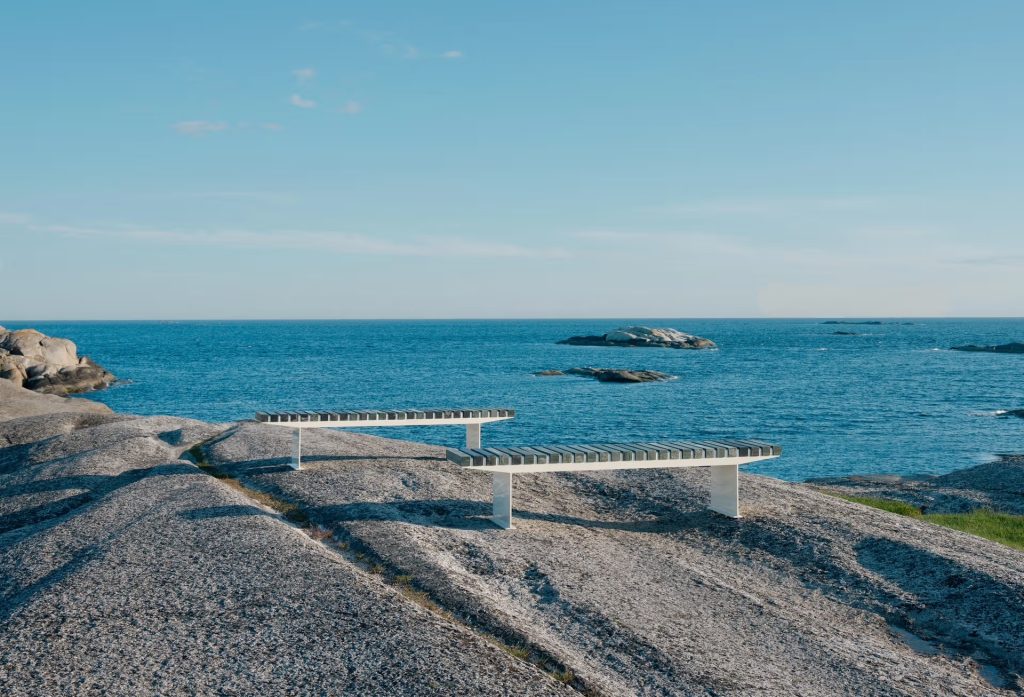
Coast Bench by Vestre
While BENTU Design explores waste generated by industrial and urban development, Norwegian urban furniture brand Vestre turns its attention toward another pressing environmental challenge: marine plastic pollution. The Coast bench, developed in collaboration with environmental initiative Ogoori, is presented as the world’s first bench made from ownerless marine plastic. Collected from Norwegian beaches and waterways by volunteers, the discarded plastic is transformed into colorful recycled panels that form the seat of the outdoor furniture piece.
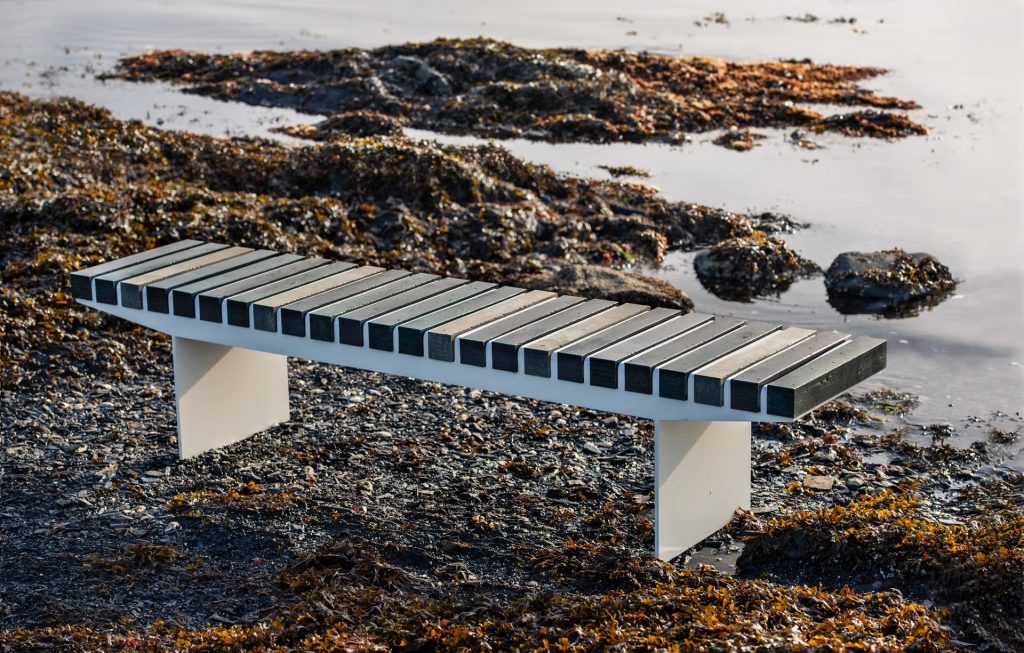
Coast Bench by Vestre
The design intentionally keeps the structure simple, allowing the recycled material to become the main visual focus. According to designer Allan Hagerup, the form avoids unnecessary details so that attention remains on the story embedded within the plastic itself. The seat’s slightly convex shape references the hull of a boat, creating a subtle connection between the bench, the ocean, and the material’s previous life.
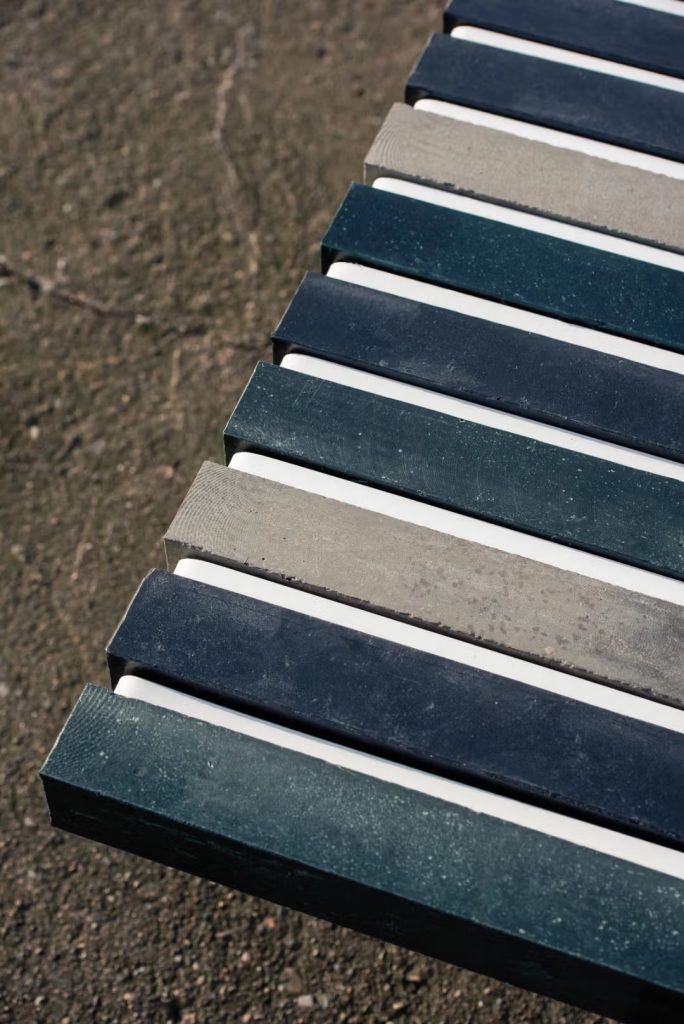
Coast Bench by Vestre
Designed for coastal environments, the Coast bench reflects the closed-loop system that inspired its creation. Its steel frame and replaceable plastic components are intended to support long-term use while making future maintenance easier. When the recycled panels eventually reach the end of their lifespan, they can be processed again and transformed into new products, extending the material’s journey.
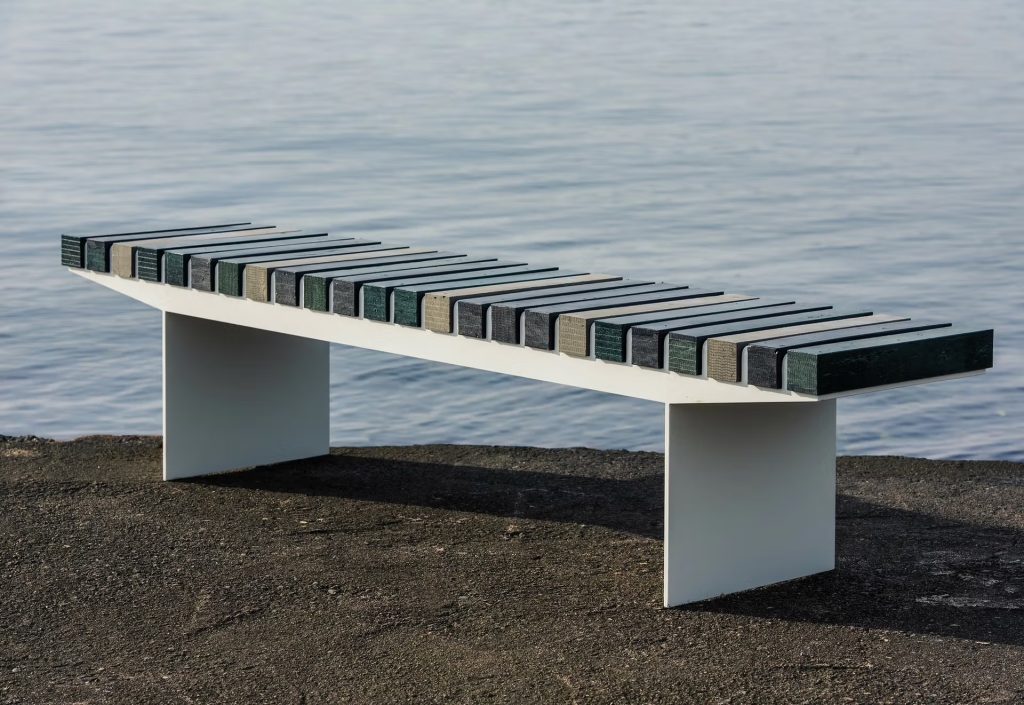
Coast Bench by Vestre
Although currently developed as a prototype, the Coast bench represents a larger movement toward responsible product design. Its creators are continuing to test the material’s durability, UV resistance, and safety before potential production. The project acknowledges the challenges of working with recycled materials while demonstrating that adaptability and repairability are essential elements of sustainable design.
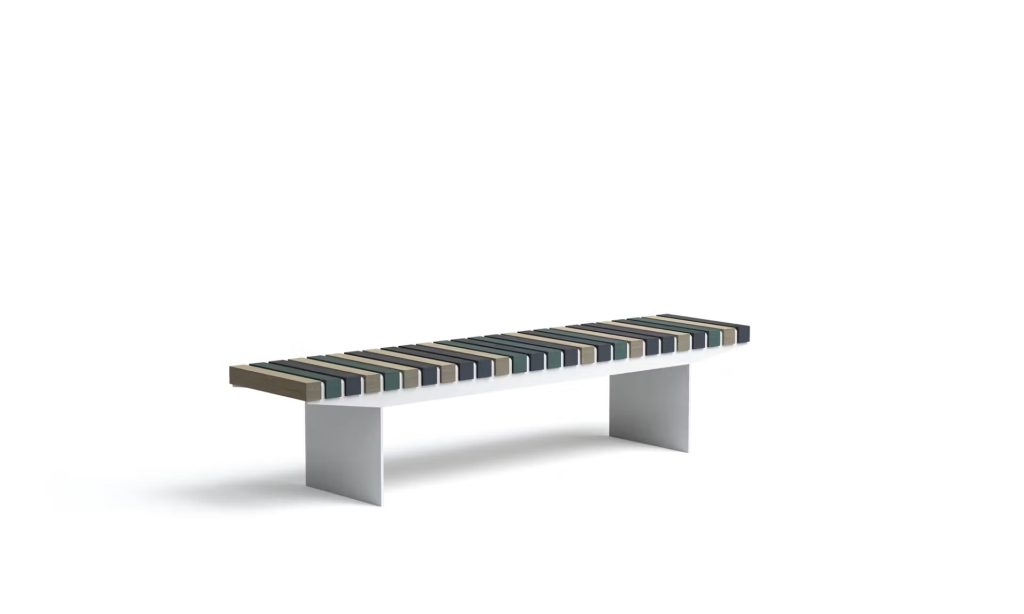
Coast Bench by Vestre
Whether extracted from industrial waste, reclaimed from demolished buildings, or recovered from the ocean, discarded resources can become the foundation for meaningful design. As designers continue to rethink production systems, the most inspiring creations may come not from discovering new materials, but from seeing familiar ones in a completely new way.