Photosynthesis is one of nature’s oldest and most efficient technologies. For millions of years, plants and algae have quietly transformed sunlight, water, and carbon dioxide into oxygen and new life. Today, designers are reimagining this natural process as a tool for innovation. Instead of simply mimicking nature’s forms, they are incorporating its functions into products that clean the air, generate materials, and even become living companions. These projects show how photosynthesis is evolving from a biological phenomenon into a powerful design principle.
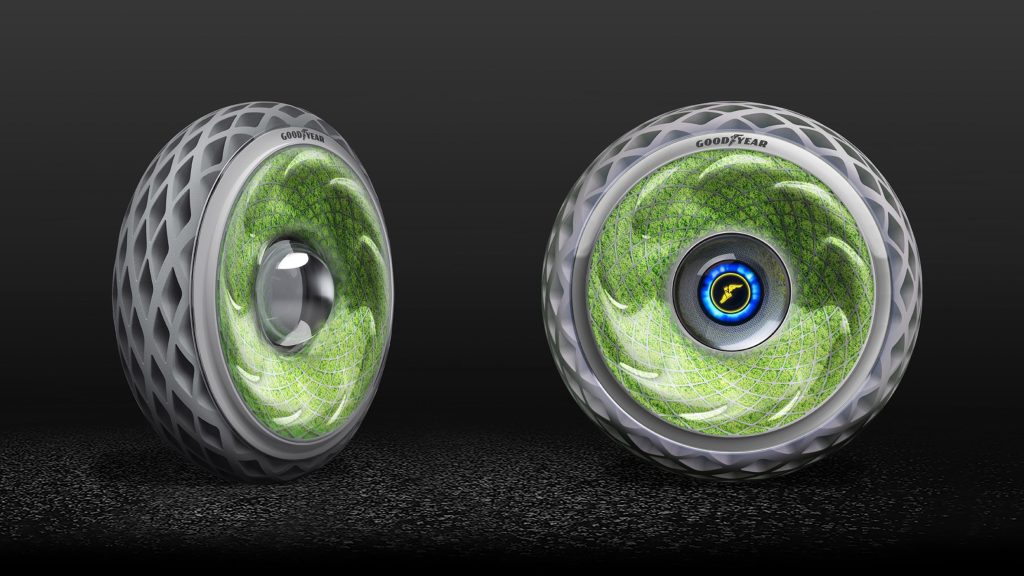
Oxygene by Goodyear
One of the most compelling examples comes from tyre manufacturer Goodyear, which introduced the Oxygene concept wheel at the 2018 Geneva Motor Show. Rather than treating tyres as purely mechanical components, Goodyear imagined them as living infrastructure. The concept features a 3D-printed structure made from recycled rubber that houses living moss within its sidewalls, creating a tyre capable of interacting with its environment in ways conventional designs never could.


Oxygene by Goodyear
The design addresses a growing urban problem. According to research from the World Health Organization, more than 80 percent of people living in cities are exposed to unsafe levels of air pollution. The Oxygene tyre responds by absorbing moisture from the road through its open tread and sidewall structure. Sunlight reaches the moss through a transparent outer layer, allowing photosynthesis to convert carbon dioxide into oxygen while simultaneously producing electricity to power embedded sensors and artificial intelligence systems.

Oxygene by Goodyear
Beyond its environmental function, the concept also rethinks vehicle safety and durability. Because the tyre is built as a solid 3D-printed structure, it eliminates the risk of punctures. Integrated lighting embedded within the sidewall communicates braking, reversing, and other vehicle movements to surrounding pedestrians and drivers.
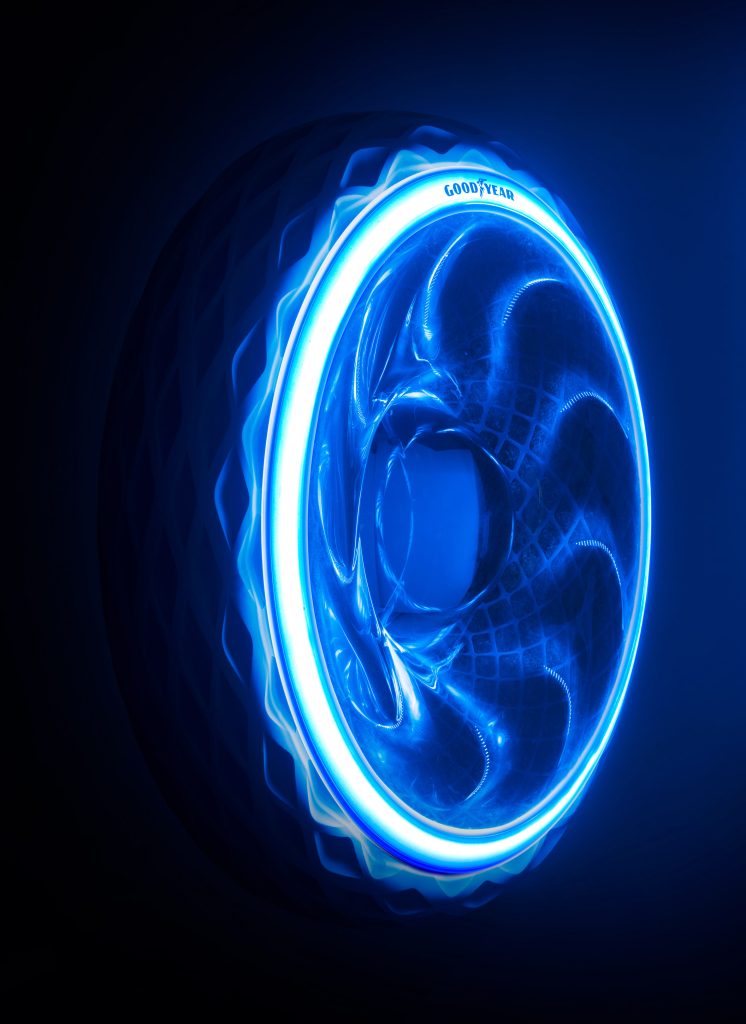
Oxygene by Goodyear
According to Goodyear, if deployed across a city the size of Paris, the tyres could collectively generate thousands of tons of oxygen while absorbing substantial amounts of carbon dioxide every year. Although Oxygene remains a concept, its greatest contribution may be the conversation it started. Rather than asking how tyres can perform better, Goodyear asked how they might improve urban life itself.
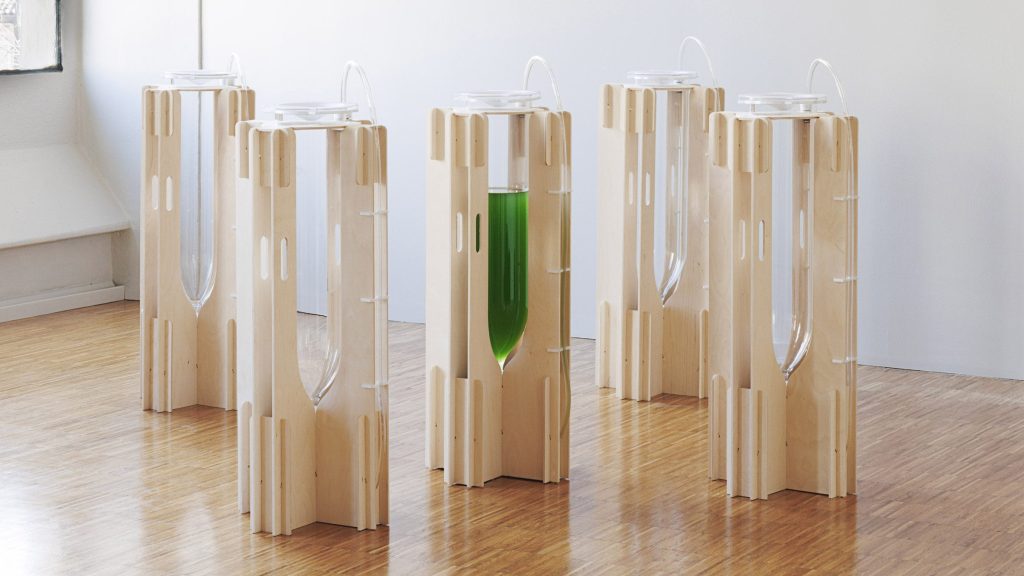
PhotoSynthetica by EcoLogicStudio (also header image)
This shift toward living systems extends beyond transportation and into the spaces we inhabit every day. London-based practice EcoLogicStudio demonstrates how biological processes can become part of everyday domestic life through a collection that transforms algae into both an air-cleaning technology and a manufacturing material.
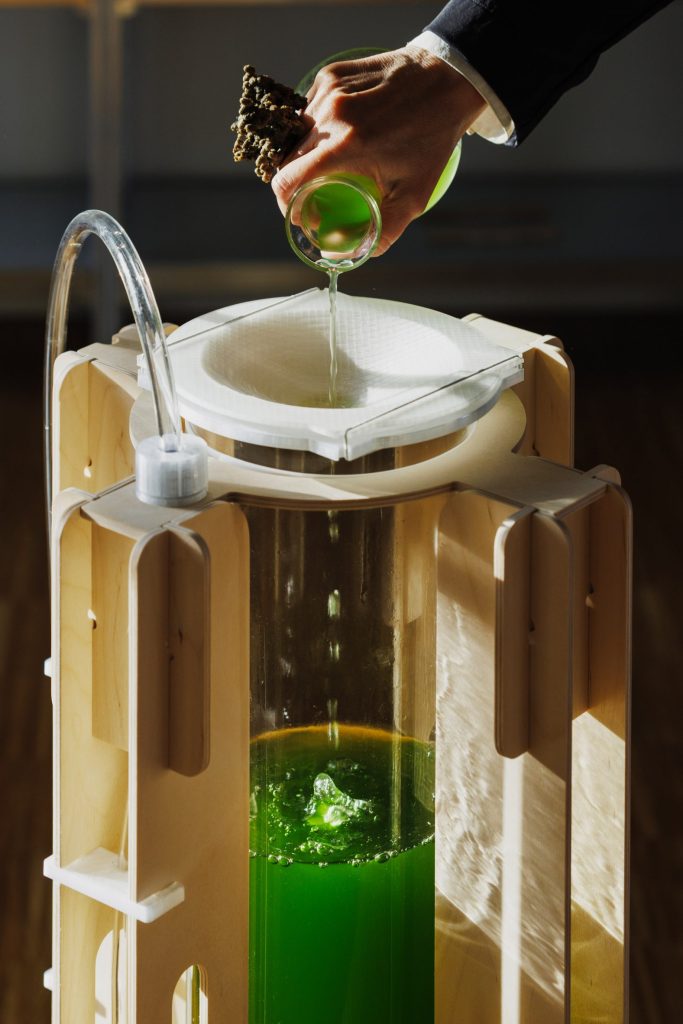
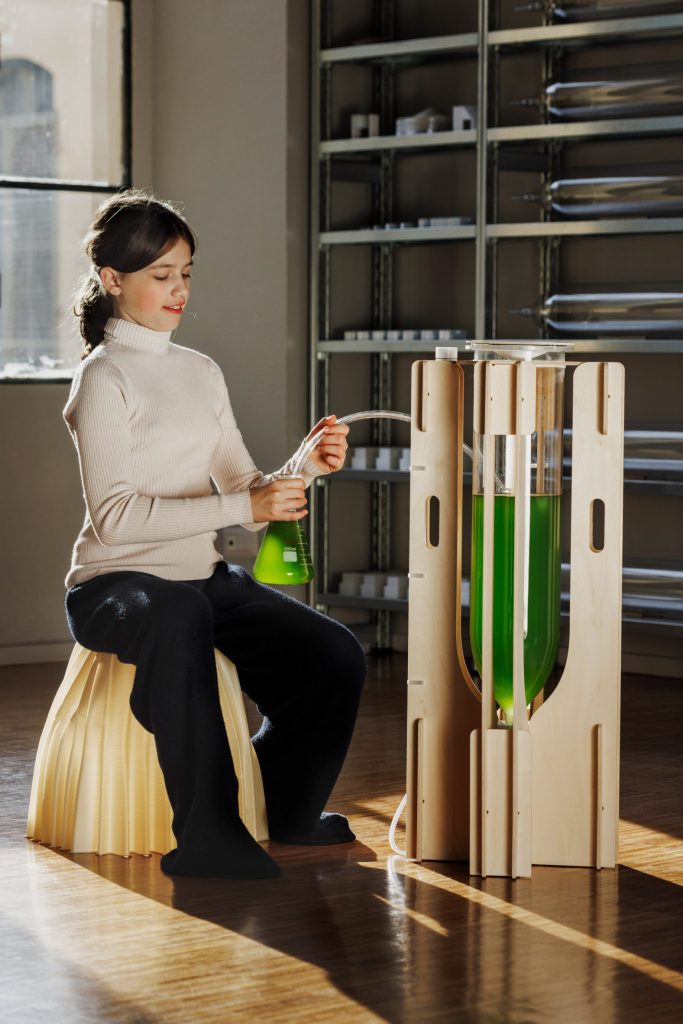
PhotoSynthetica by EcoLogicStudio
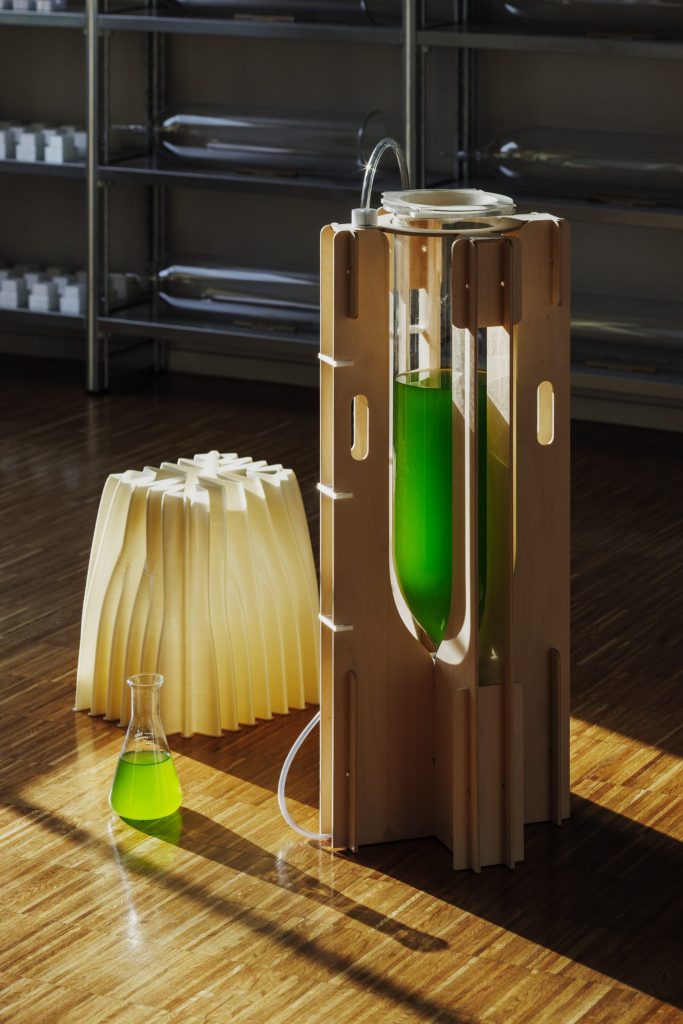
At the heart of the PhotoSynthetica collection is the AIReactor, a desktop photobioreactor designed to purify indoor air using microalgae. Housed within a recyclable birch plywood frame, the transparent glass chamber contains living algae cultures that absorb carbon dioxide and airborne pollutants while releasing oxygen through photosynthesis. A reactor continuously circulates the liquid, recreating the movement of natural aquatic environments to maximize biological activity.
PhotoSynthetica by EcoLogicStudio
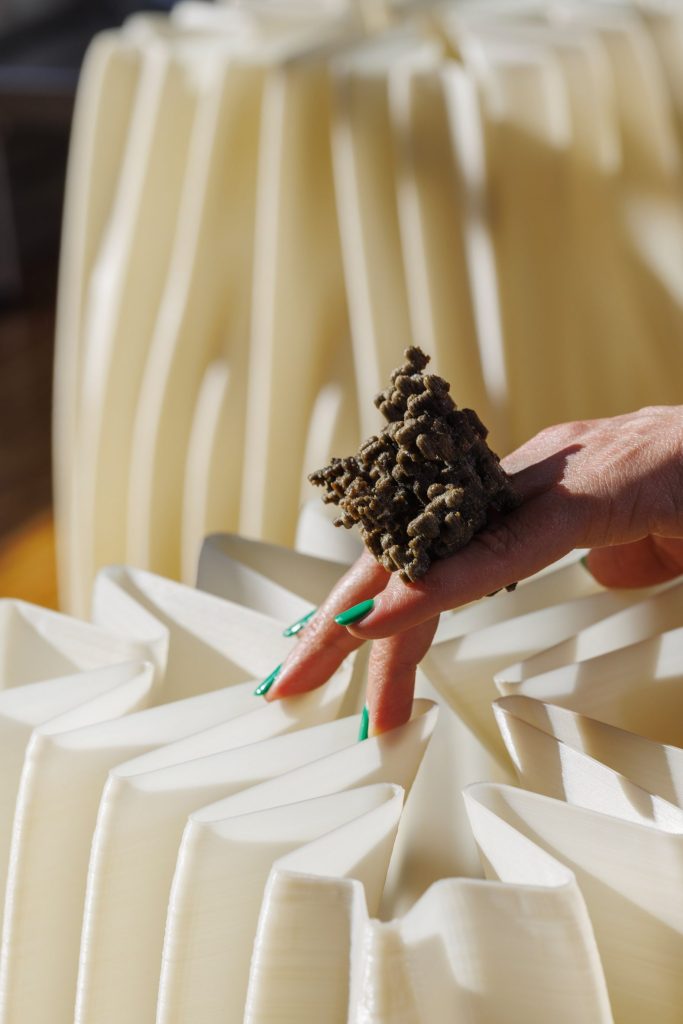
What makes the project particularly fascinating is its circular design strategy. Instead of treating the resulting biomass as waste, EcoLogicStudio harvests it to produce biopolymers that become the raw material for new products. The accompanying 3D-printed stool and sculptural ring both incorporate up to 30 percent algae-derived material, demonstrating how a single biological process can improve air quality while simultaneously supplying resources for manufacturing.
Biogarmentry by Roya Aghighi
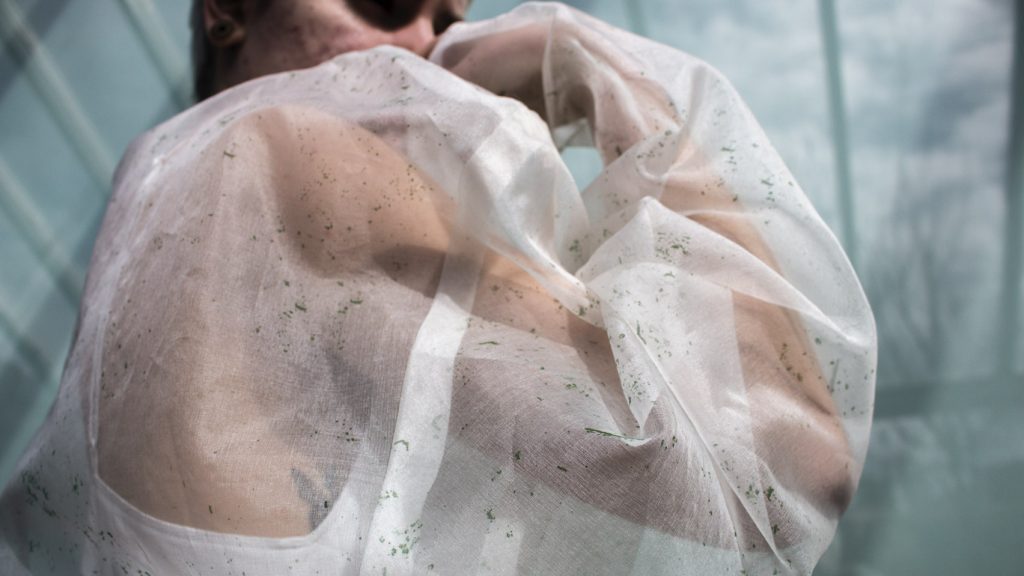
If algae can improve our homes, could it also transform what we wear? Canadian-Iranian designer Roya Aghighi believes the answer is yes. Her project, Biogarmentry, challenges one of the fashion industry’s biggest environmental problems by creating garments that are not simply made from sustainable materials but are themselves living organisms.
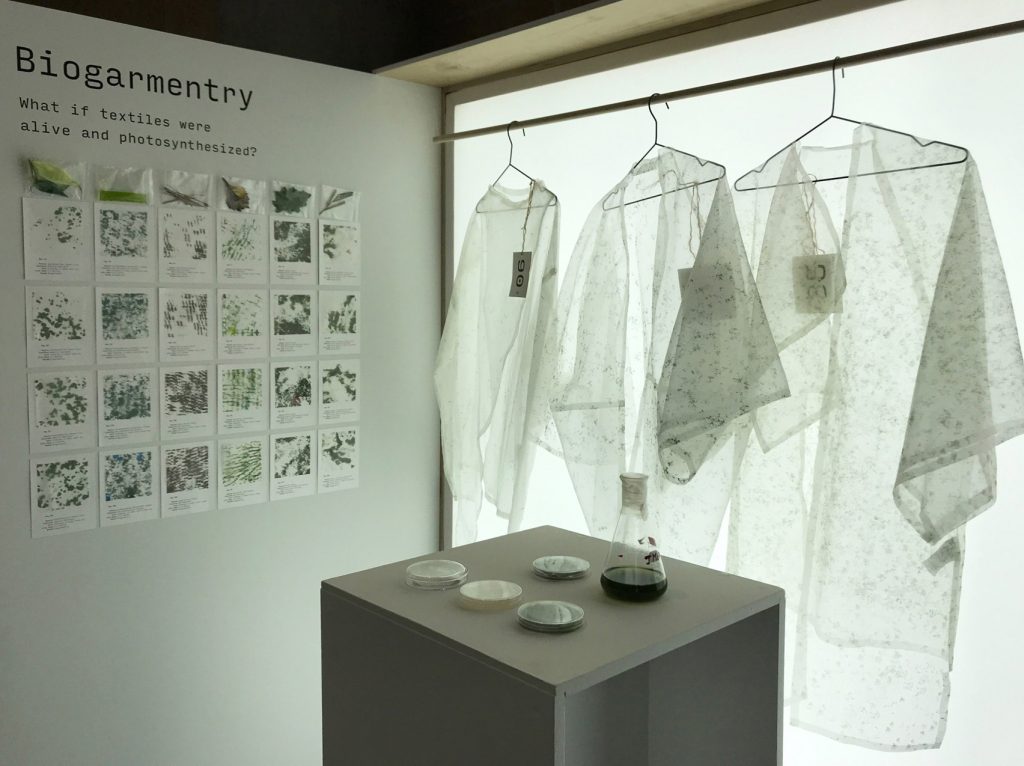
Biogarmentry by Roya Aghighi
Developed in collaboration with researchers at the University of British Columbia and Emily Carr University, Biogarmentry combines single-cell green algae with nanopolymers to create what is described as the first nonwoven living photosynthetic textile. The fabric behaves much like a plant, converting carbon dioxide into oxygen whenever exposed to sunlight. Instead of traditional washing, the garment requires only a weekly misting of water to remain alive and functional.

Biogarmentry by Roya Aghighi
This radically changes the relationship between people and their clothing. Rather than treating garments as disposable products, wearers become caretakers responsible for maintaining the life of the textile itself. Aghighi argues that this emotional connection encourages longer product lifespans while challenging the consumption habits that define fast fashion. Once the garment reaches the end of its life, it can be composted instead of contributing to landfill waste.

Biogarmentry by Roya Aghighi
By embedding nature’s ability to convert sunlight, carbon dioxide, and water into oxygen within tyres, household products, and clothing, designers are reimagining everyday objects as living systems that actively improve their surroundings. Rather than simply reducing environmental impact, these innovations point toward a regenerative future where design gives back to the planet.