For centuries, bridges have been judged by a simple metric: their ability to get people from one side to the other. Today, however, a growing number of architects are challenging that definition. The contemporary pedestrian bridge is no longer just a piece of infrastructure. It is a public space, a cultural statement, an environmental response, and increasingly, a destination in its own right.
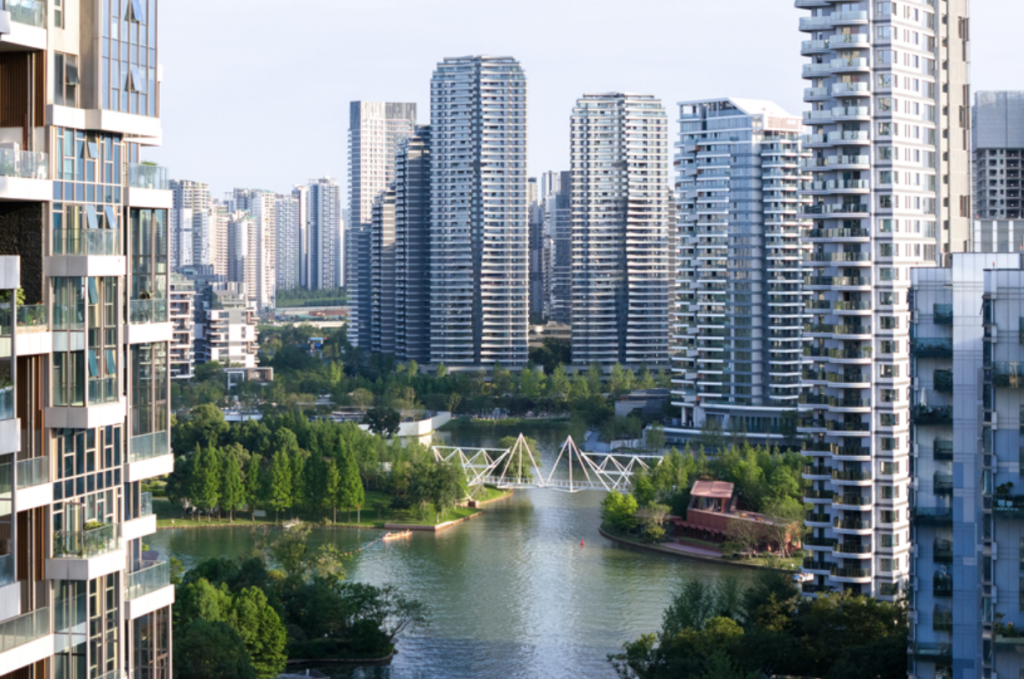
Edenland Pedestrian Bridge by Unarchitecte (also header image)
In Luxelakes, China, architecture studio Unarchitecte has taken a refreshingly restrained approach with the Edenland Pedestrian Bridge. Surrounded by more expressive and winding crossings, the project stands apart through its commitment to geometric clarity. Rather than competing for attention through complexity, the bridge embraces a minimalist language built around a single defining element: the triangular pyramid.
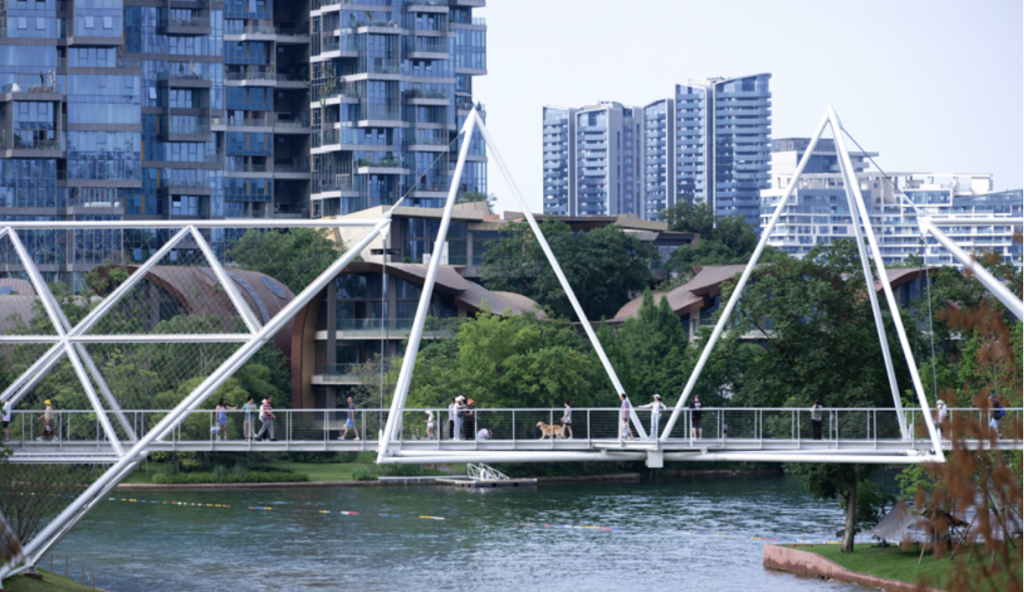
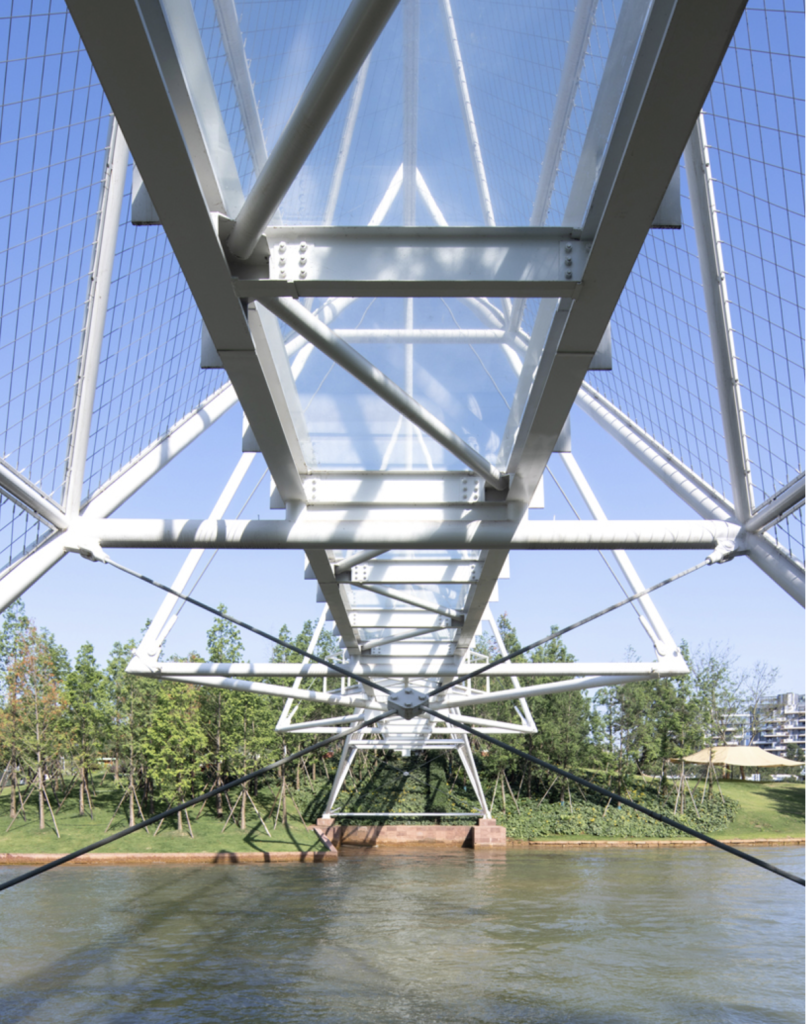
Edenland Pedestrian Bridge by Unarchitecte
The bridge’s form emerges directly from its structure. Four triangular steel pyramids anchor a tensegrity system that relies on a precise balance of cables and compression elements. The result is a composition that feels both delicate and remarkably self-assured. Suspended above the water, the white geometric framework appears almost like a three-dimensional drawing sketched across the landscape.
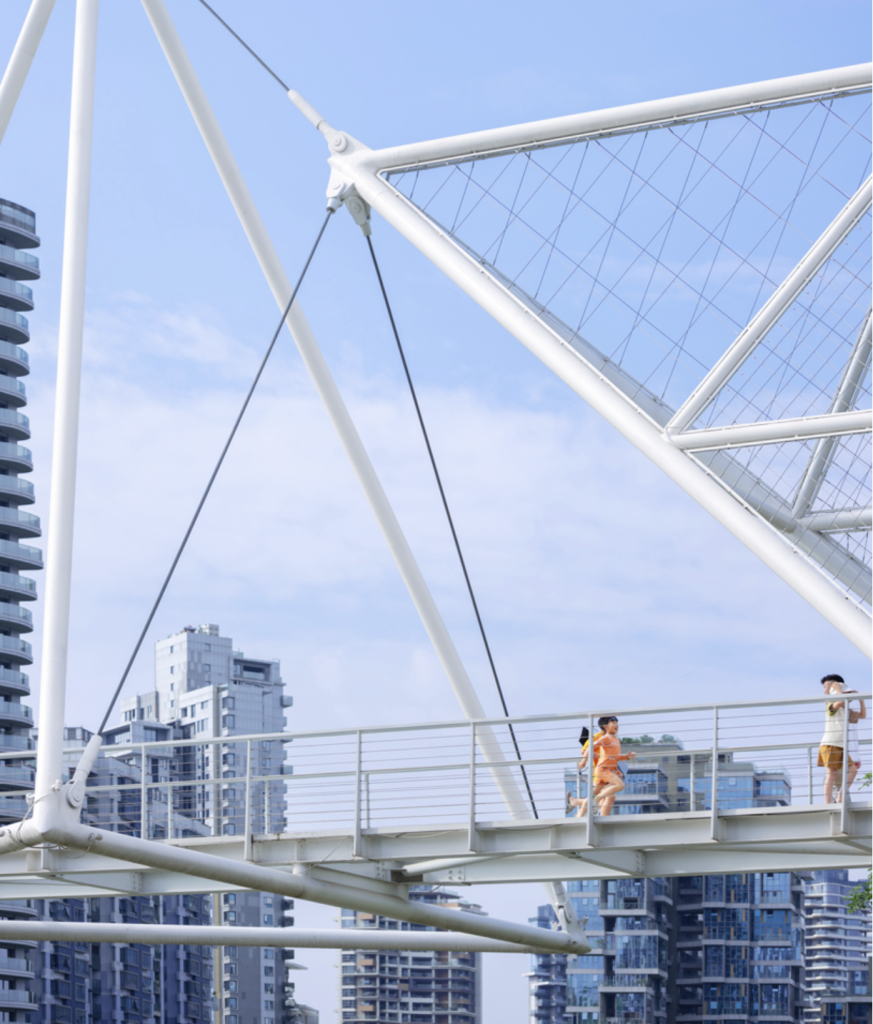
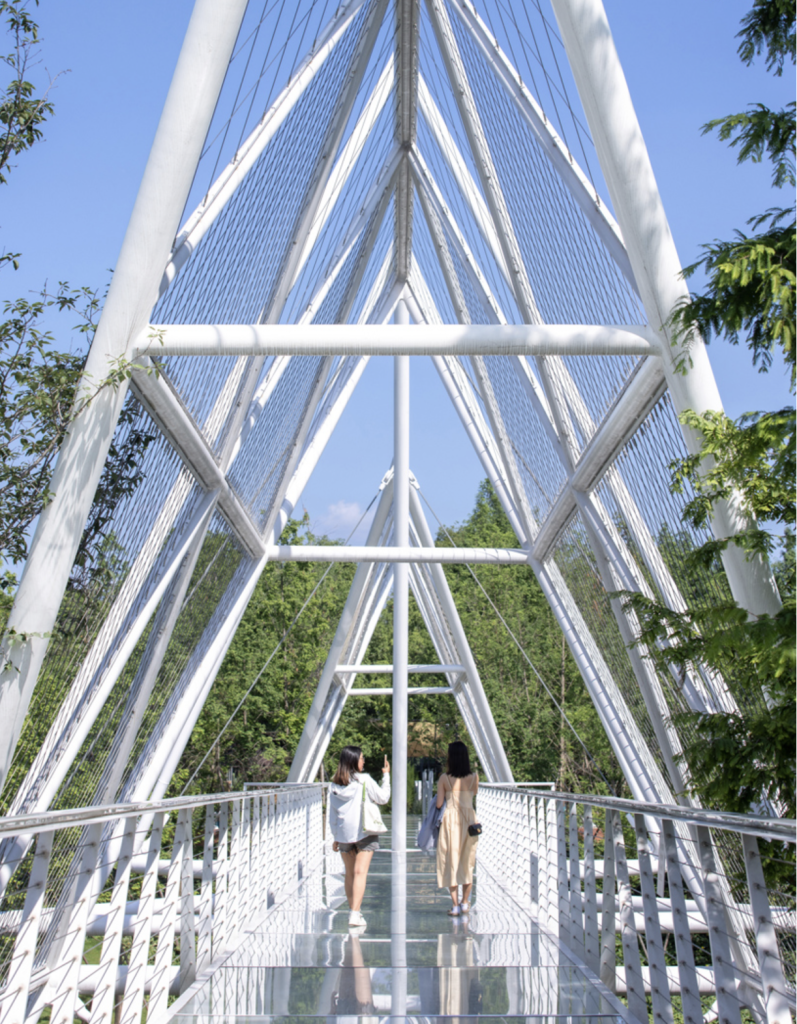
Edenland Pedestrian Bridge by Unarchitecte
What makes the project particularly compelling is the absence of excess. Every rod, cable, and connection contributes to the structural performance of the bridge. Custom-engineered steel nodes reinforce the purity of the geometry, while the central intersection of the pyramids creates a rhombus-shaped viewing platform that subtly breaks the linear journey across the span. The bridge becomes an opportunity to pause and observe rather than simply pass through.
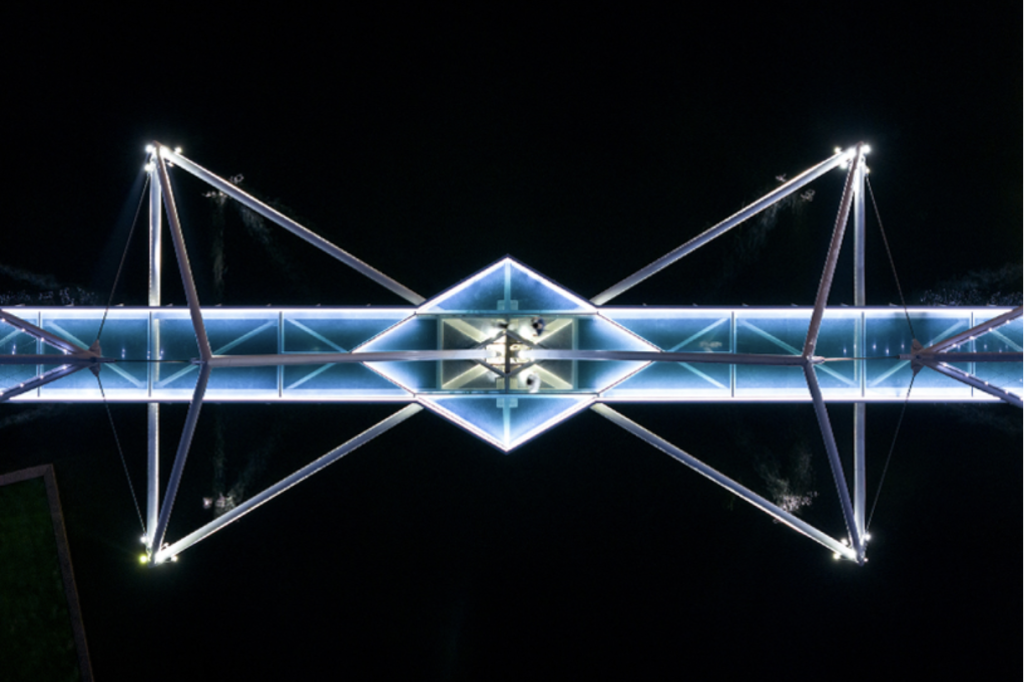
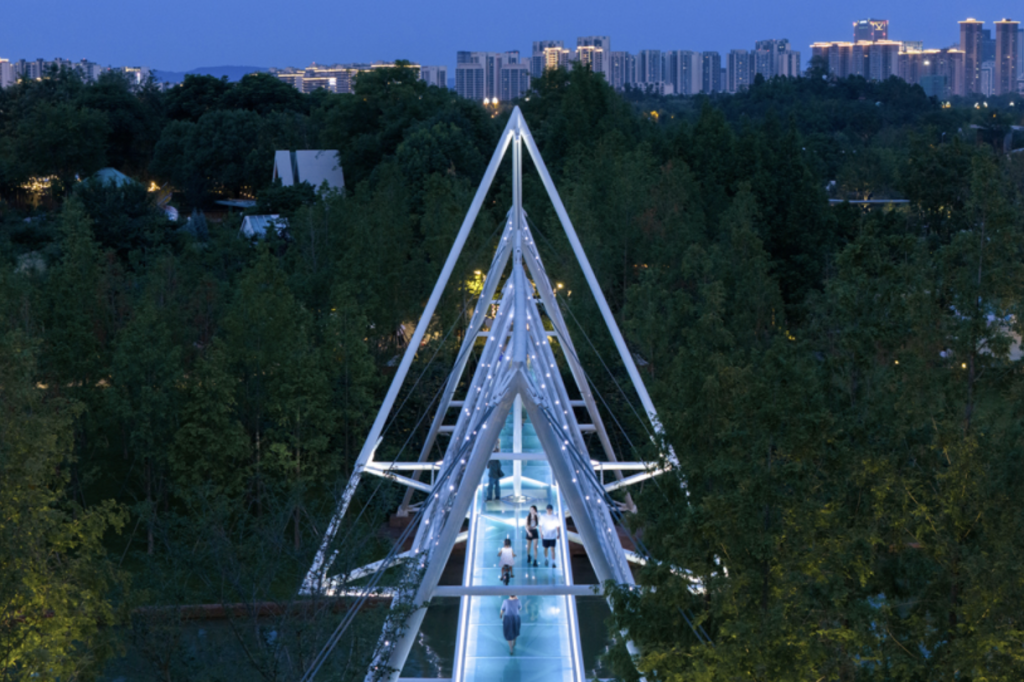
Edenland Pedestrian Bridge by Unarchitecte
Behind the visual simplicity lies a sophisticated engineering strategy. External loads, temperature fluctuations, prestress forces, and pedestrian comfort were carefully calibrated, while concealed tuned mass dampers ensure stability without compromising the bridge’s clean appearance. The result is a project that turns structural logic into architecture, proving that innovation does not always require visual complexity. Sometimes, the most memorable designs emerge from disciplined simplicity.
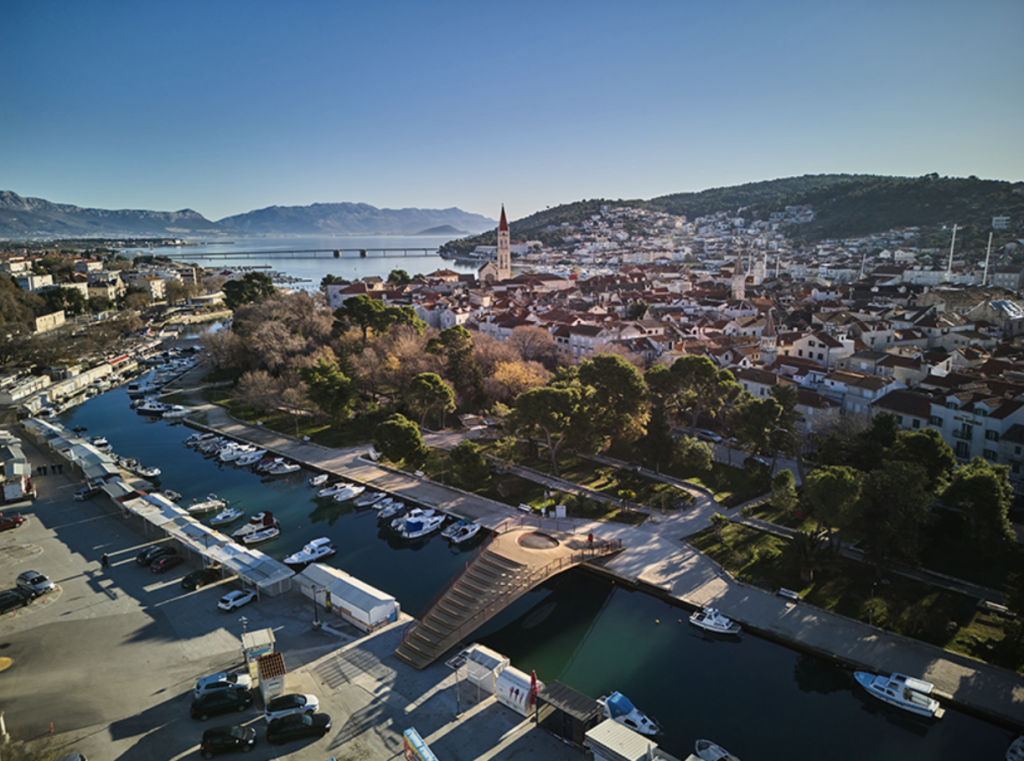
Bridge over Foša by Prostorne Taktike
If the Edenland Bridge celebrates abstraction, the Bridge over Foša in Trogir demonstrates the power of context. Designed by Prostorne Taktike, the pedestrian crossing occupies a highly sensitive location within a UNESCO World Heritage Site, linking the city’s historic core to Fortin Park across a narrow sea channel.
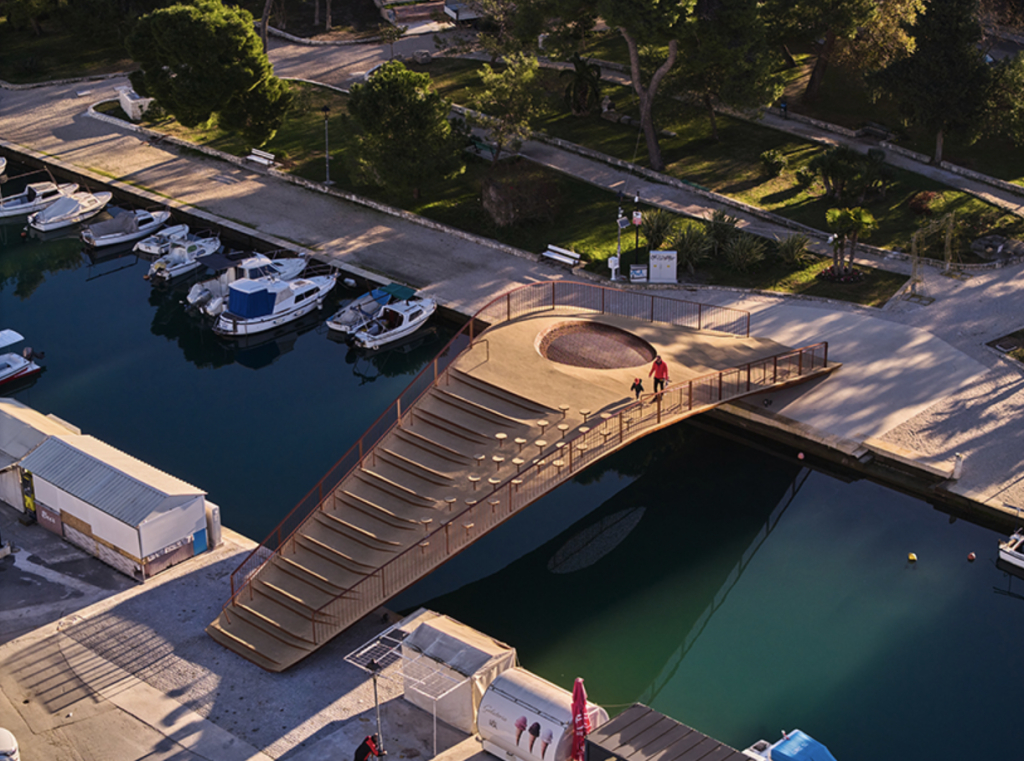
Bridge over Foša by Prostorne Taktike
Rather than competing with centuries of architectural history, the bridge adopts a remarkably light presence. Its asymmetric hyperbolic paraboloid form creates a slender steel shell that minimizes visual obstruction and preserves views toward Trogir’s historic landmarks. The highest point of the structure acts almost like an invisible threshold, allowing the old town to remain the dominant visual experience.
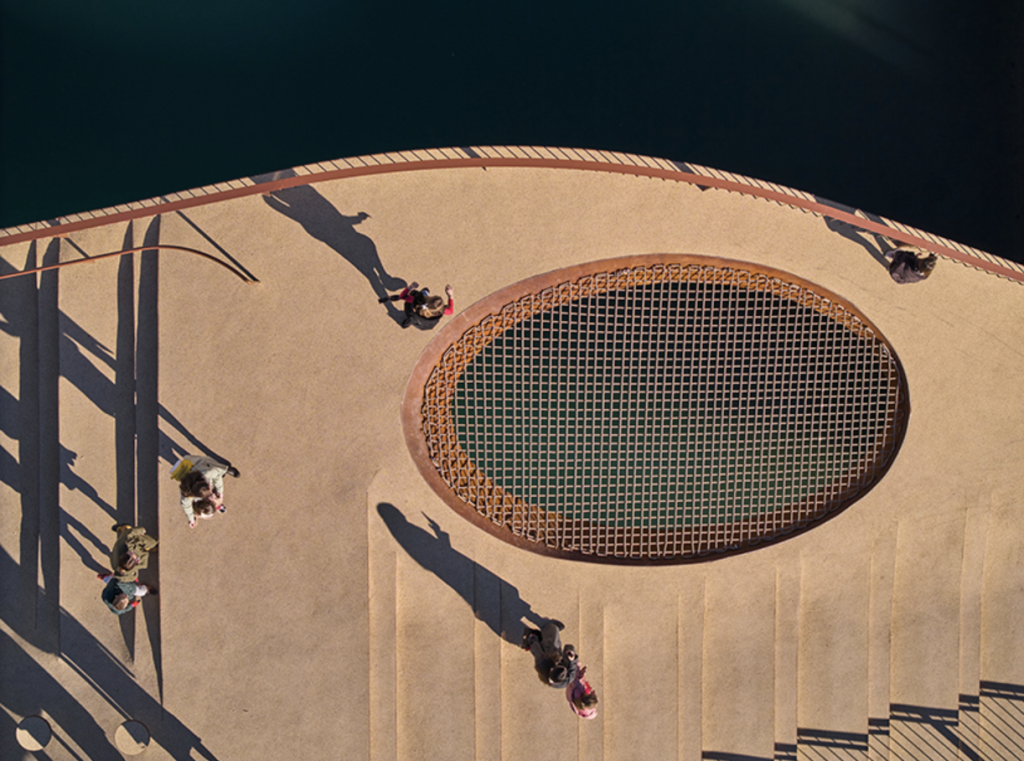
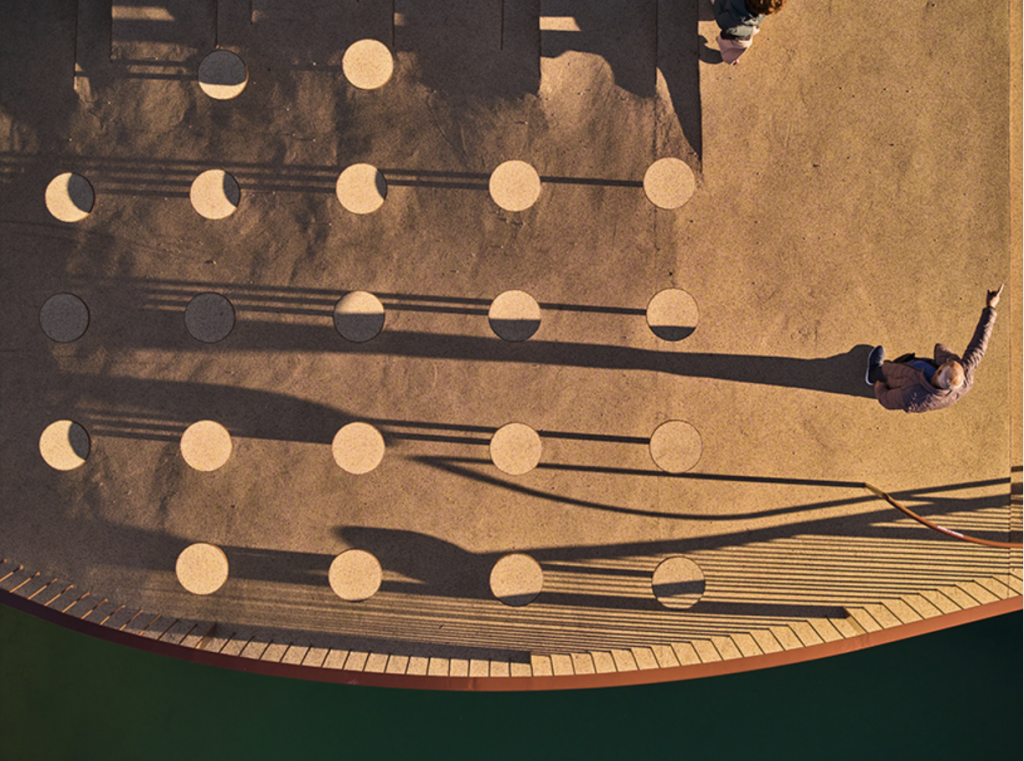
Bridge over Foša by Prostorne Taktike
The project’s most interesting innovation lies beneath its surface. Drawing inspiration from Trogir’s long shipbuilding tradition, the bridge incorporates an internal caisson system similar to double-bottom ship construction. This connection to local craftsmanship extends to the fabrication process itself. The entire bridge was assembled in a nearby shipyard as a single unit before being transported by barge and installed in a single day. It is a contemporary project rooted firmly in local knowledge and industry.
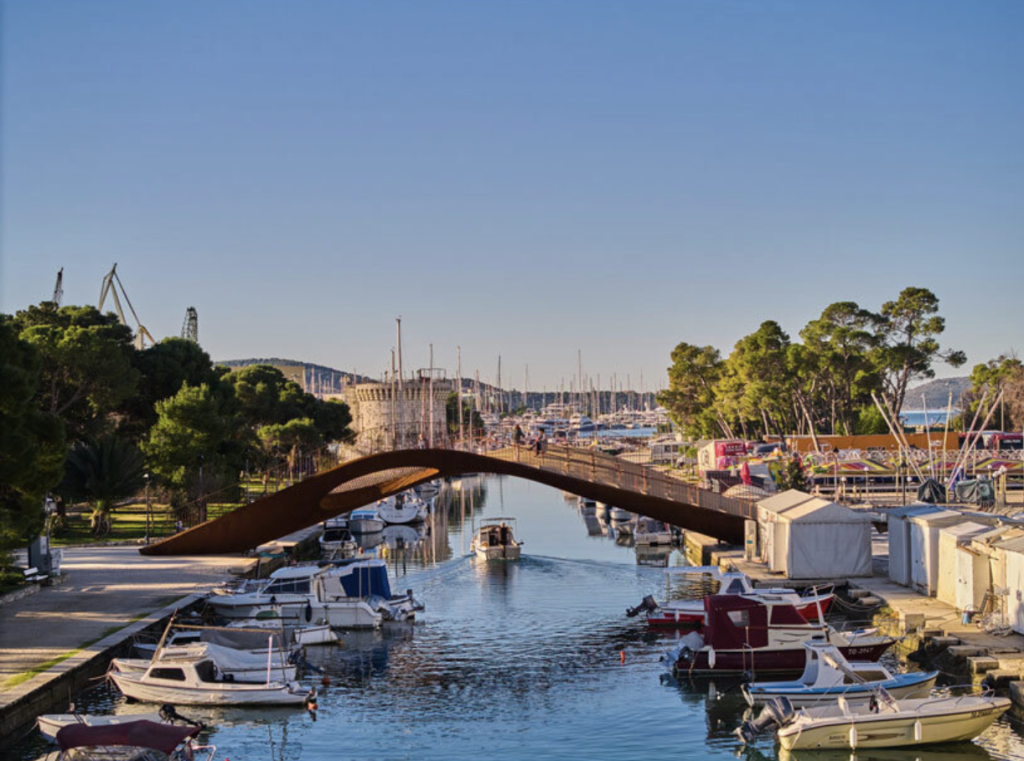
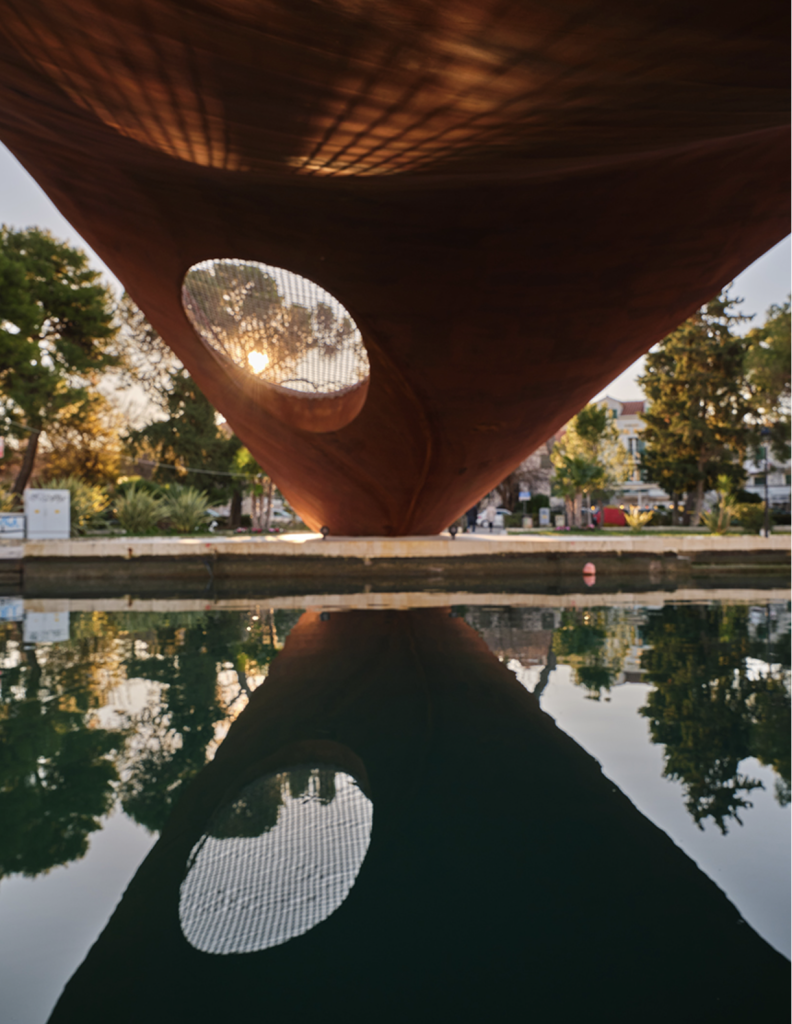
Bridge over Foša by Prostorne Taktike
Yet the bridge is more than an exercise in contextual design. Seating areas, perforated steel elements, and integrated net lounges transform it into a social space suspended above the water. Visitors can stop, gather, and engage with the surrounding landscape in ways that traditional infrastructure rarely encourages. By combining technical efficiency with civic generosity, the project expands the role of the bridge from connector to community space.
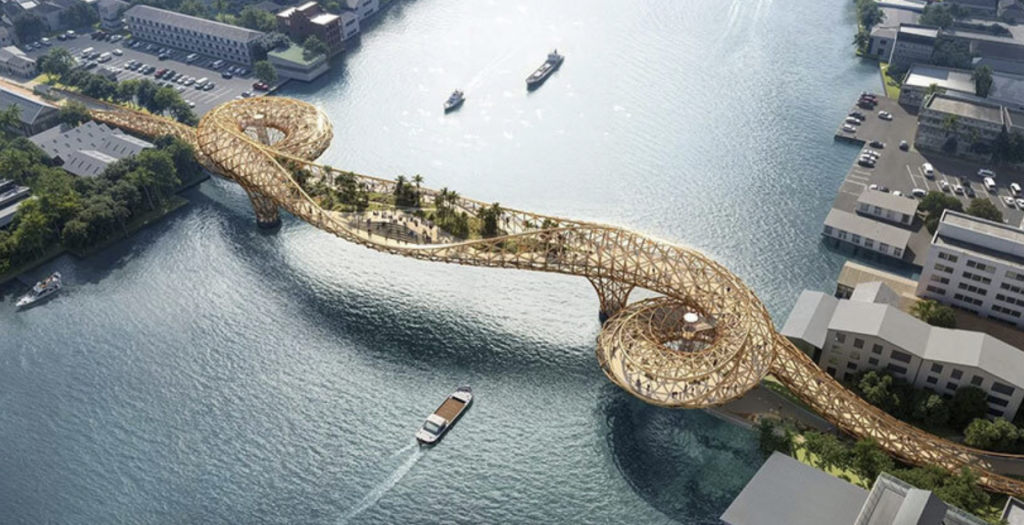
Bangkok’s River Crossing
While the projects in China and Croatia focus on structure and context, Bangkok’s proposed pedestrian bridge across the Chao Phraya River introduces a different idea altogether. Here, the bridge becomes a piece of urban landscape.
Planned by the Bangkok Metropolitan Administration, the project will provide a dedicated route for pedestrians and cyclists between the historic district of Phra Nakhon and the residential neighborhoods of Thonburi. In a city where crossings are typically dominated by vehicles, the proposal signals a growing commitment to human-centered mobility and public space.
The design is defined by an intricate lattice of gold-toned steel that wraps around the walkway like a woven canopy. More than a sculptural gesture, the lattice serves as a climate-responsive device. Its density varies along the bridge, filtering harsh tropical sunlight while allowing cooling breezes from the river to circulate through the structure. It is a reminder that aesthetics and environmental performance can work hand in hand.
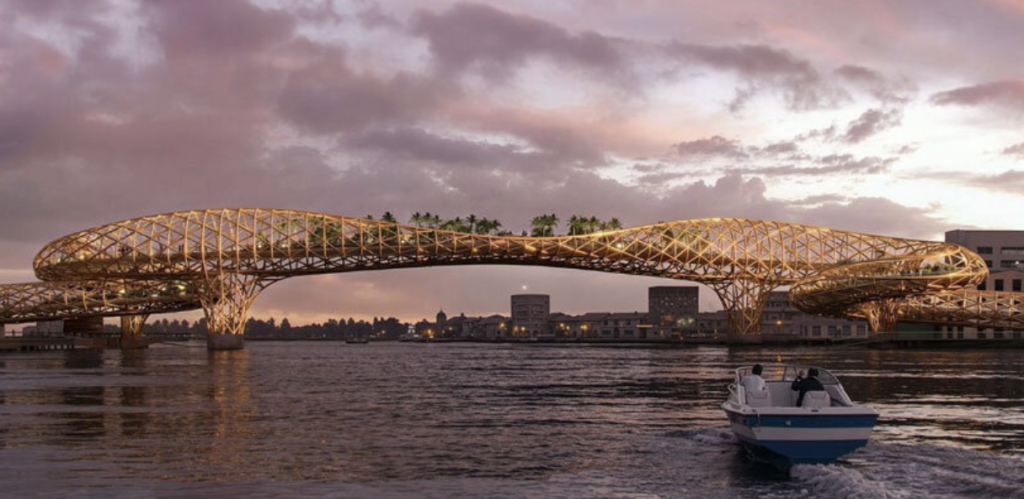
Bangkok’s River Crossing
At the center of the span, the bridge expands into what is effectively an elevated park. Terraced seating, timber platforms, and lush tropical planting interrupt the journey and create opportunities for gathering, relaxation, and river viewing. Instead of treating movement as the sole objective, the design celebrates the moments in between. Crossing the river becomes an experience rather than a task, offering residents and visitors a new perspective on one of Bangkok’s most important waterways.
Collectively, the three projects reveal a common ambition: transforming movement through the city into an experience. Whether through structural innovation, local storytelling, or the integration of landscape and leisure, they demonstrate how infrastructure can contribute to urban life far beyond its functional purpose.