Bridges have long been symbols of human ingenuity, connecting places, people, and ideas. Today, advances in robotics, computational design, and additive manufacturing are transforming how architects and engineers conceive and construct these essential structures. Rather than relying on conventional methods and material-heavy solutions, a new generation of experimental bridges demonstrates how digital fabrication can unlock unprecedented efficiency, sustainability, and formal freedom.
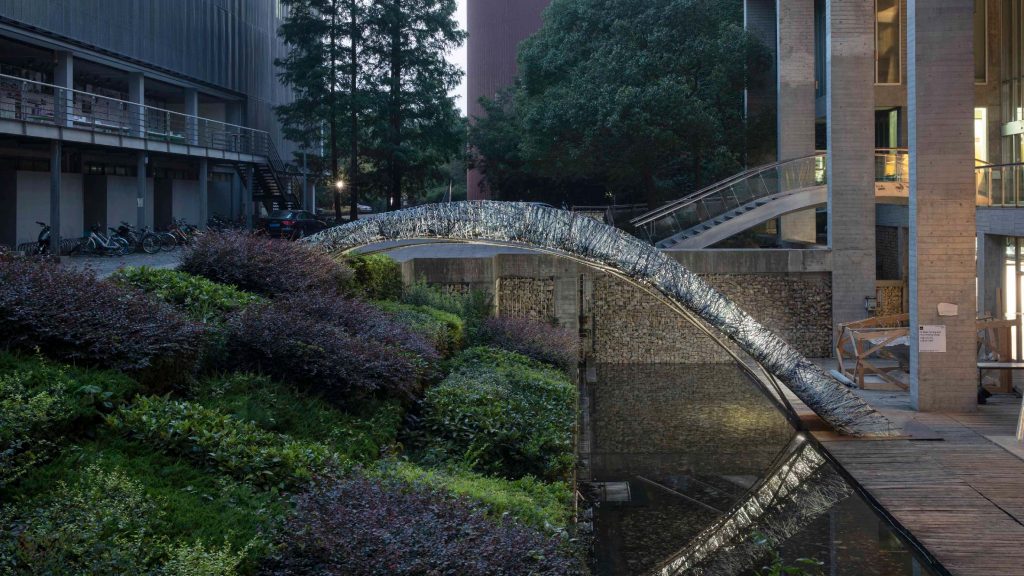
Robot Fabricated Hybrid Bridge by Tongji University and Fab-Union
One of the most compelling examples of this shift emerged from the DigitalFUTURES International 2019 summer workshop at Tongji University in Shanghai. Developed by students in collaboration with research studio Fab-Union, the Robot Fabricated Hybrid Bridge combines two cutting-edge fabrication methods: large-scale metal 3D printing and robotic filament winding. The result is an elegant arch bridge capable of supporting more than twenty people while serving as a full-scale experiment in next-generation construction.
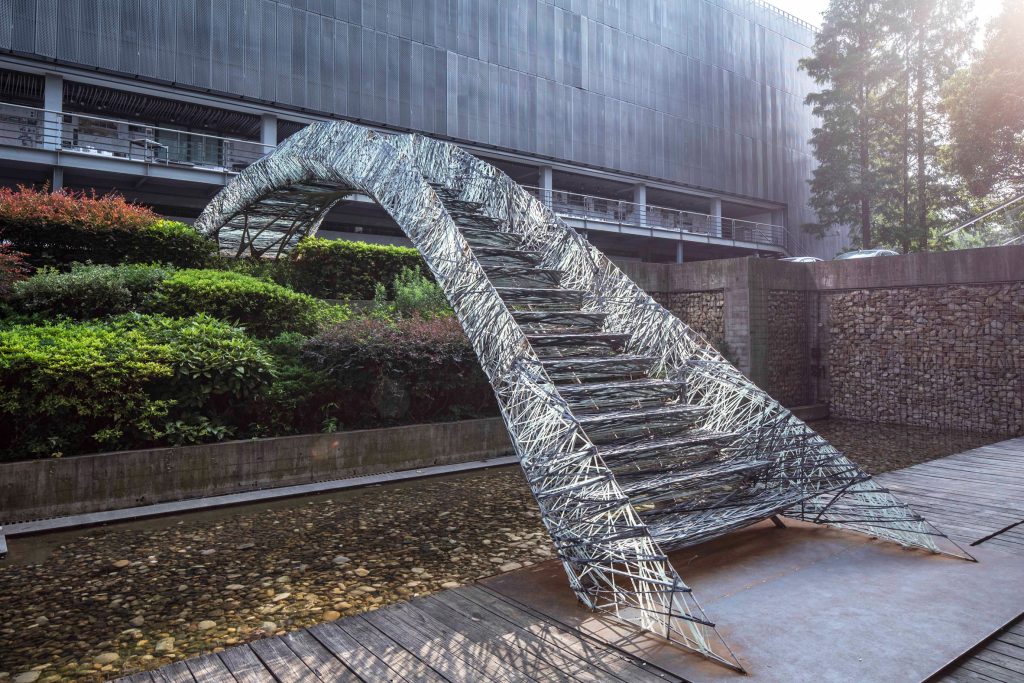
Robot Fabricated Hybrid Bridge by Tongji University and Fab-Union
The project’s innovation lies in the synergy between its two manufacturing techniques. A skeletal steel frame was produced through robotic metal 3D printing, while carbon and glass fibres were precisely wound to create the bridge’s web-like steps and handrails. Together, these systems eliminated the need for molds or formwork, significantly reducing material waste while expanding the possibilities for complex geometries that would be difficult or impossible to achieve through conventional construction.
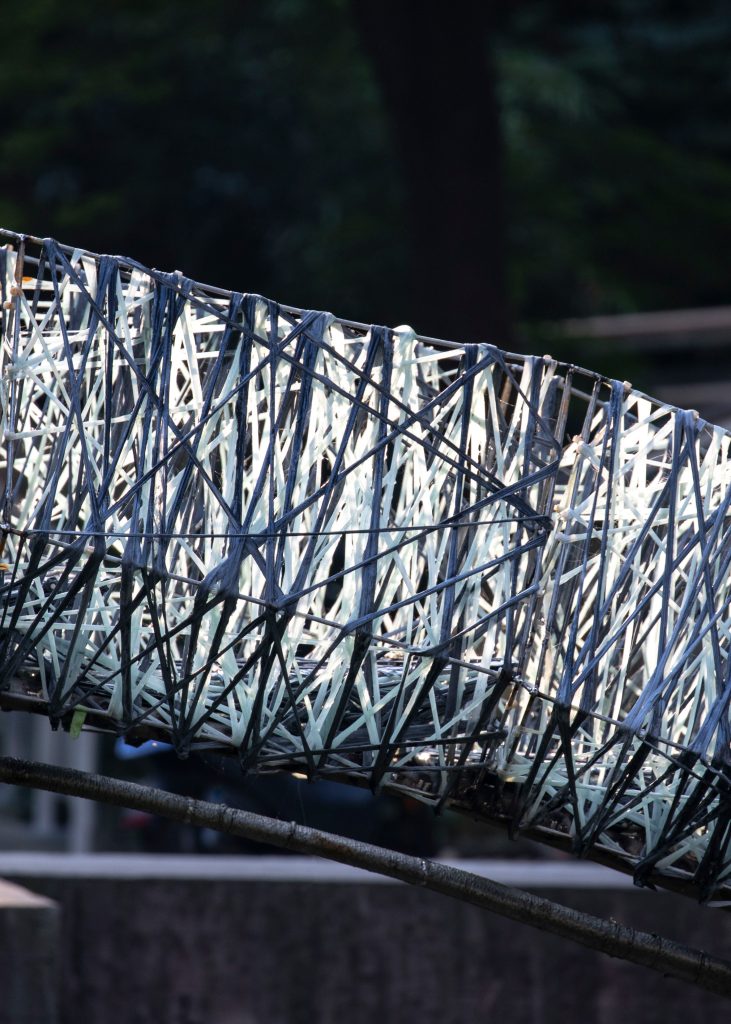
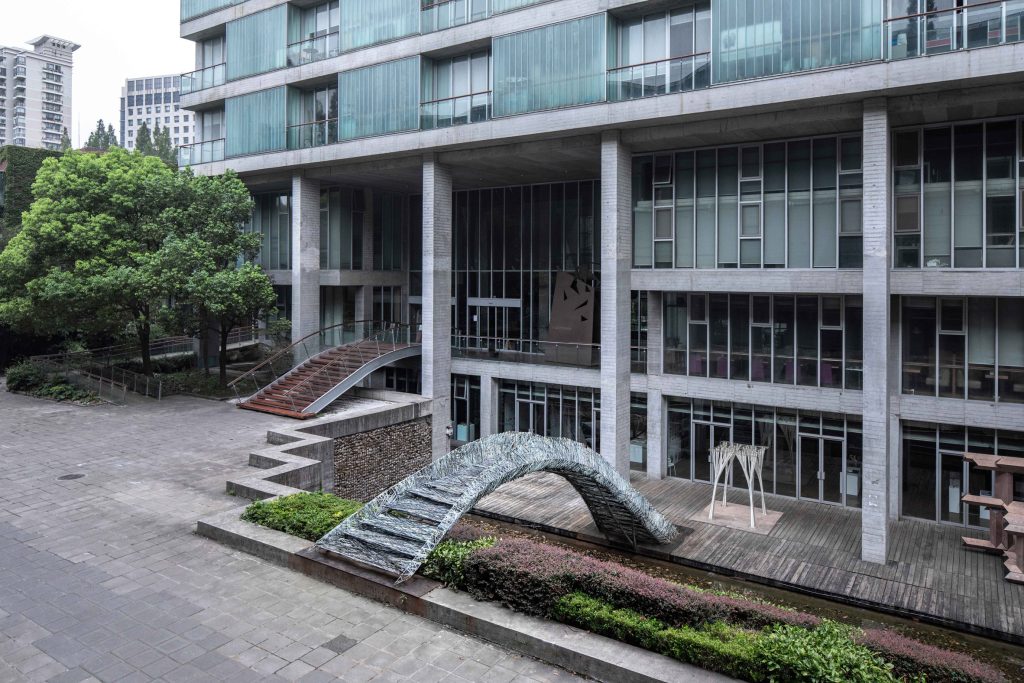
Robot Fabricated Hybrid Bridge by Tongji University and Fab-Union
Computational optimization played a central role in the design process. Using topology optimization software, the team removed every unnecessary gram of material, resulting in an 11.4-meter-long bridge that required only 263 kilograms of steel. The lightweight structure demonstrates how digital tools can generate forms that are both visually striking and structurally efficient. Four robots worked in tandem over a twenty-day fabrication period, highlighting the growing role of automation in architectural production.
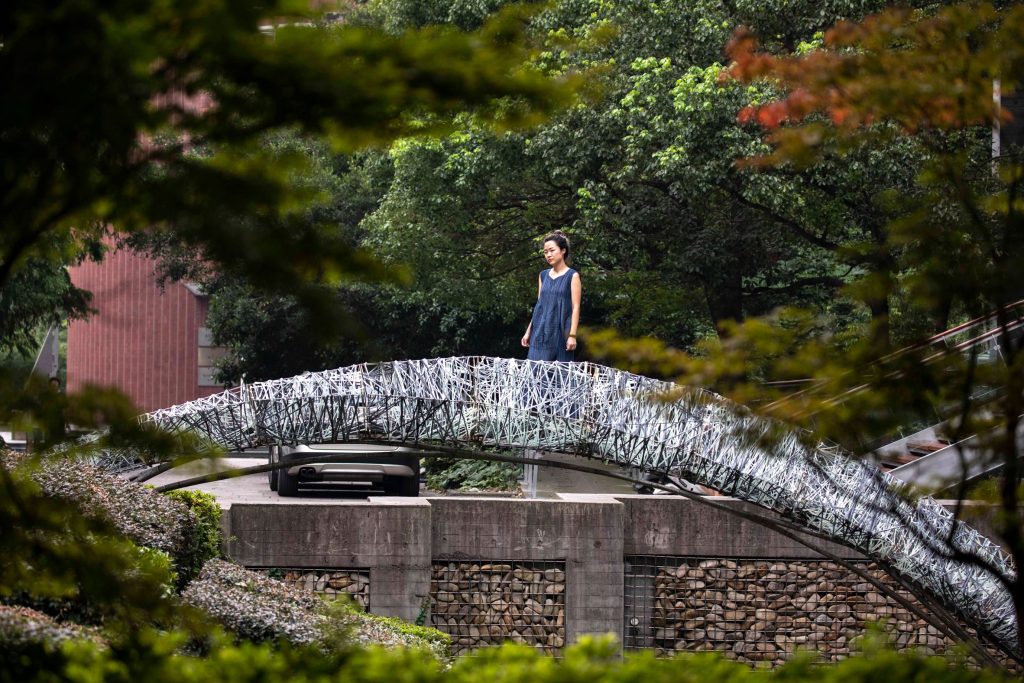
Robot Fabricated Hybrid Bridge by Tongji University and Fab-Union
Yet the bridge’s appeal extends beyond engineering performance. The designers intentionally stripped away decorative elements, allowing the materials themselves to become the architectural expression. As sunlight passes through the glass fibres, the bridge glows with a soft luminosity that transforms a technical prototype into an atmospheric experience. It is a reminder that robotic fabrication can enhance not only efficiency but also the sensory qualities of design.
While the Shanghai project explores hybrid materials and fabrication techniques, another bridge pushes innovation further by revisiting one of architecture’s oldest structural principles through the lens of digital technology.
Striatus by Zaha Hadid Architects’ Computation and Design Group and the Block Research Group
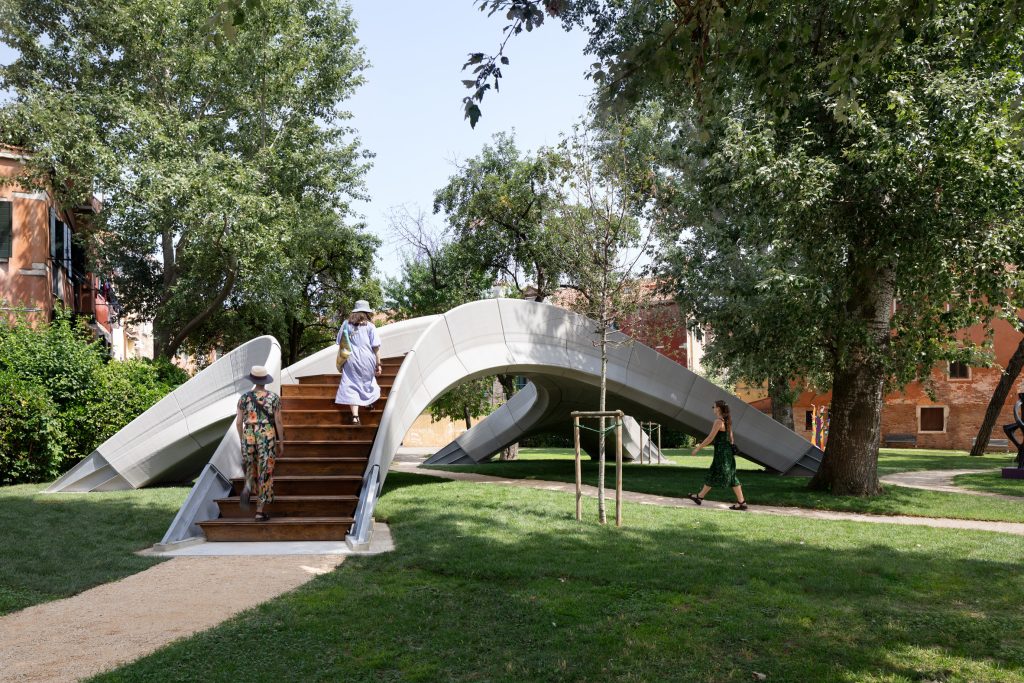
Created by Zaha Hadid Architects’ Computation and Design Group and the Block Research Group at ETH Zurich, the Striatus bridge demonstrates how advanced technology can rediscover and refine historic building wisdom. Installed in Venice, the 16-meter-long footbridge is composed entirely of 3D-printed concrete blocks assembled without mortar, glue, or traditional reinforcement.
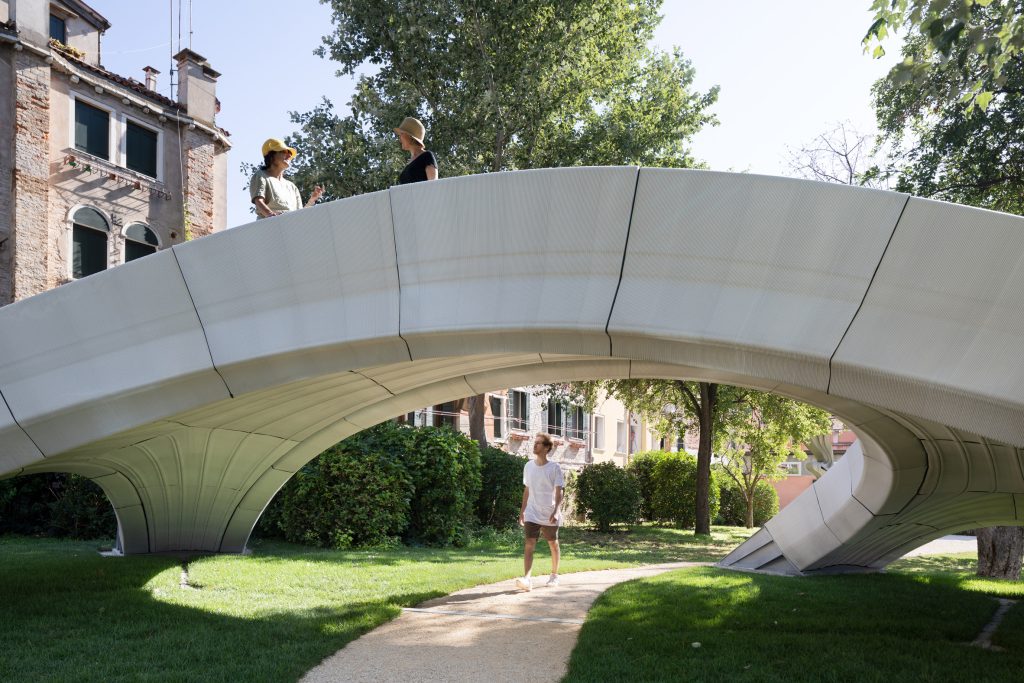
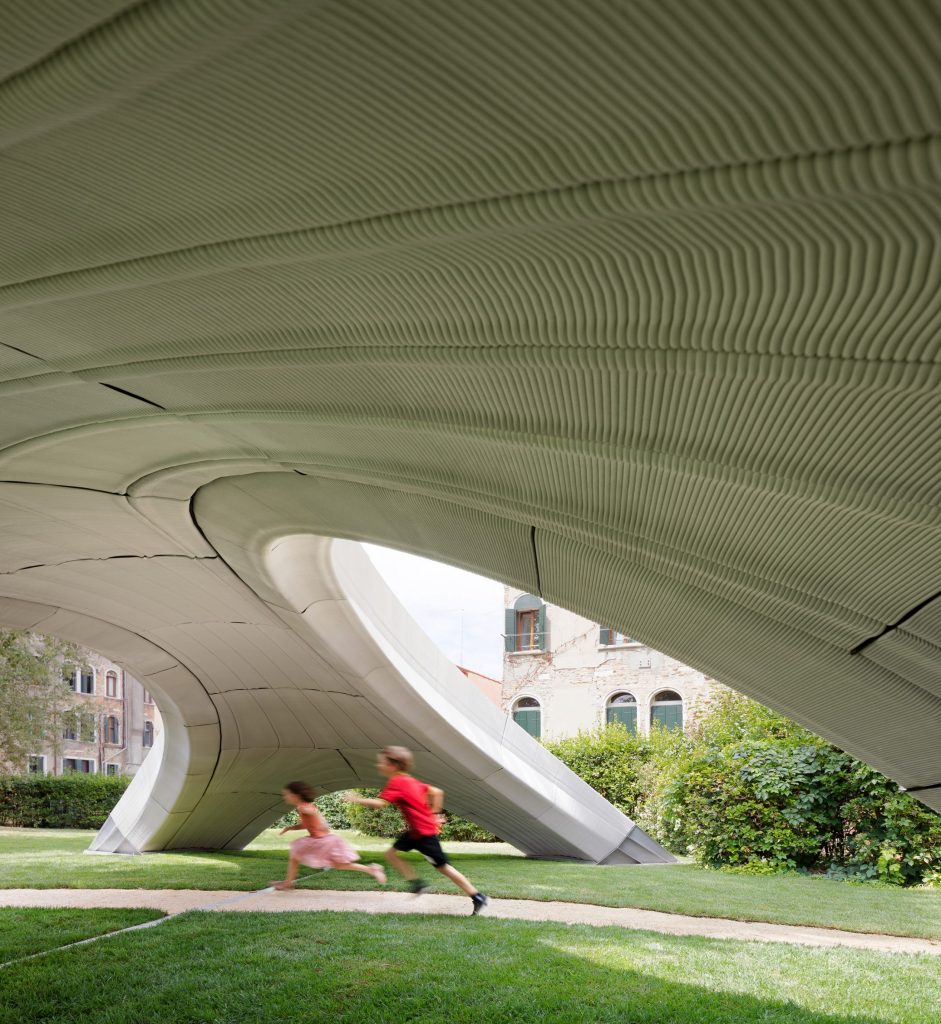
Striatus by Zaha Hadid Architects’ Computation and Design Group and the Block Research Group
At first glance, the bridge appears futuristic, but its structural logic is rooted in centuries-old masonry construction. Composed of 53 hollow concrete blocks printed layer by layer, Striatus relies entirely on compression and gravity to maintain stability. The wedge-shaped elements, known as voussoirs, are arranged into arches and vaults that efficiently transfer loads to the foundations, much like Gothic cathedrals have done for centuries. The difference is that every component was digitally optimized and robotically fabricated.
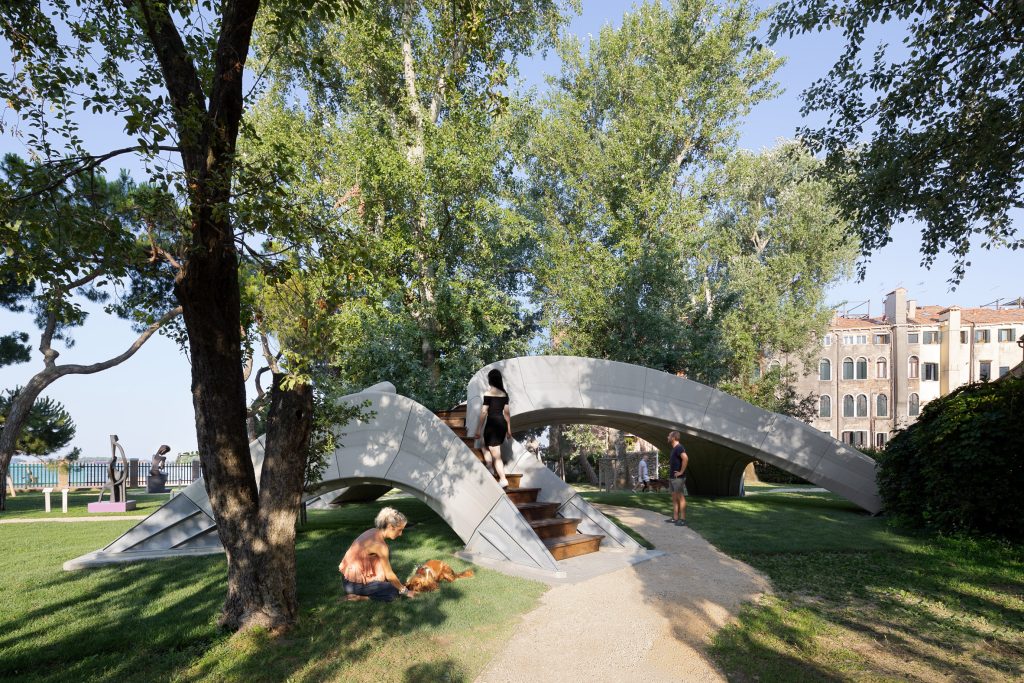
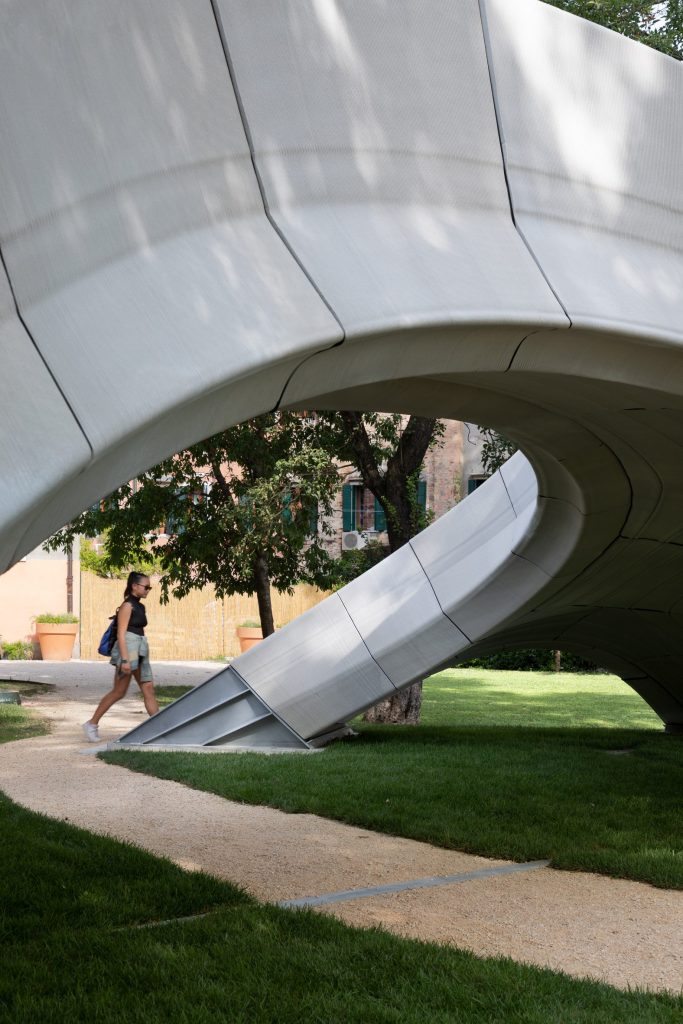
Striatus by Zaha Hadid Architects’ Computation and Design Group and the Block Research Group
This approach offers significant environmental and practical advantages. The hollow geometry of each block reduces material consumption, while the absence of adhesives means the entire structure can be disassembled and reused. During assembly, neoprene pads were inserted between blocks to manage friction and stress distribution, creating a sophisticated yet reversible construction system. The bridge demonstrates that permanence and adaptability do not need to be opposing goals.
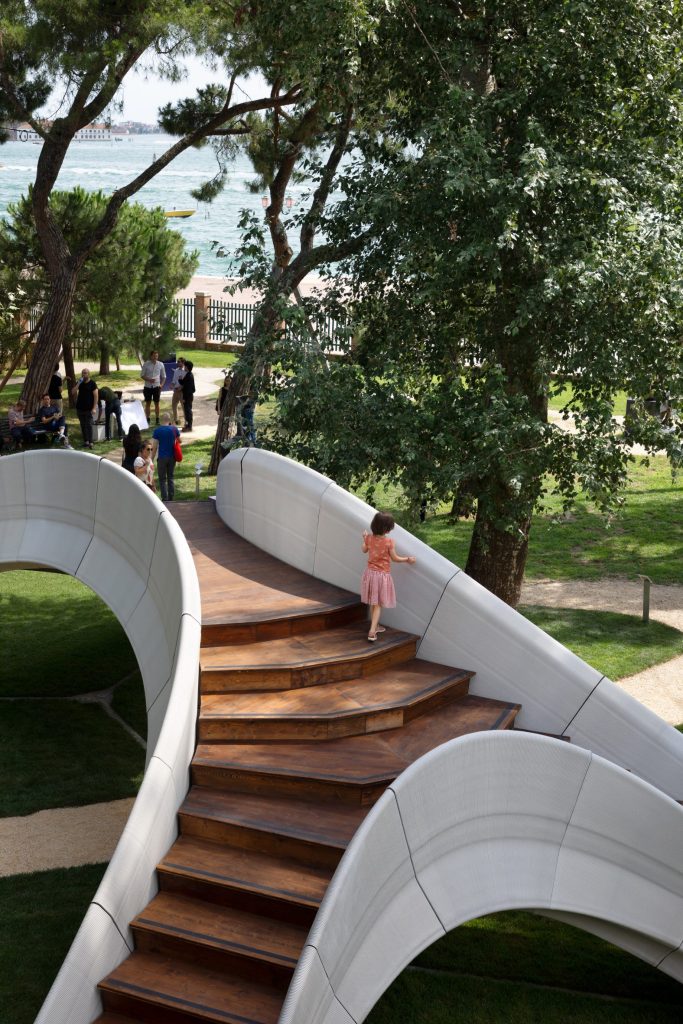
Striatus by Zaha Hadid Architects’ Computation and Design Group and the Block Research Group
The manufacturing process itself is equally remarkable. Rather than printing horizontal layers in a conventional manner, a robotic arm deposited concrete along non-uniform and non-parallel paths, enhancing structural performance. All 53 blocks were printed in just 84 hours, showcasing the speed and precision achievable through robotic construction. More importantly, Striatus challenges the assumption that 3D printing must simply replicate traditional building techniques. Instead, it leverages digital fabrication to rethink how structures work from the ground up.
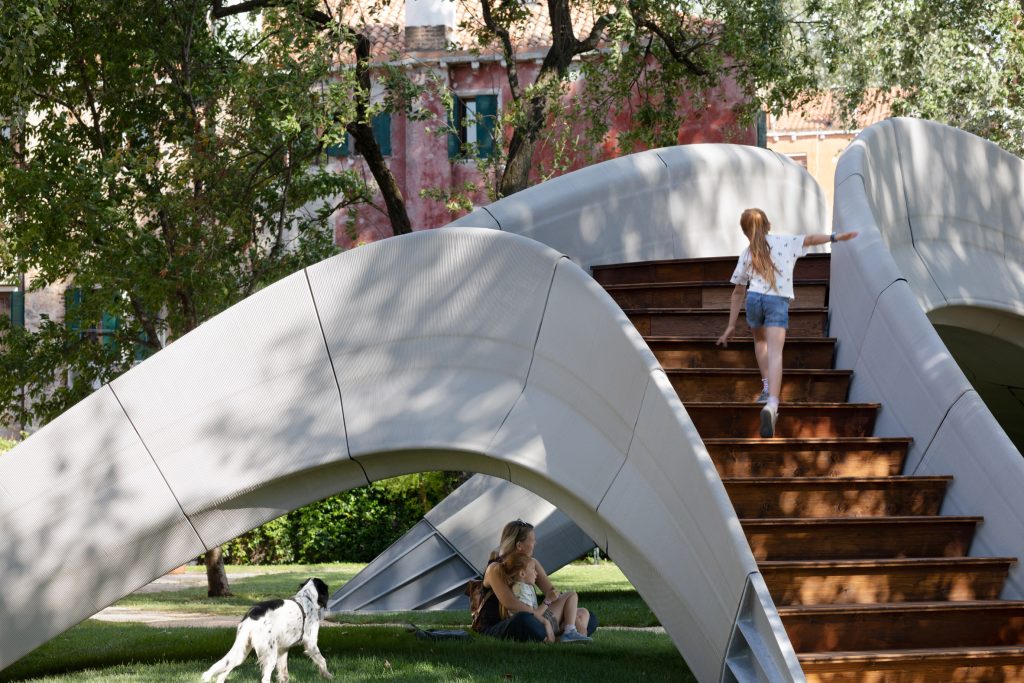
Striatus by Zaha Hadid Architects’ Computation and Design Group and the Block Research Group
If Striatus illustrates how computational design can modernize ancient construction principles, the next project points toward a future where entire building systems are designed for assembly, disassembly, and circular use from the very beginning.
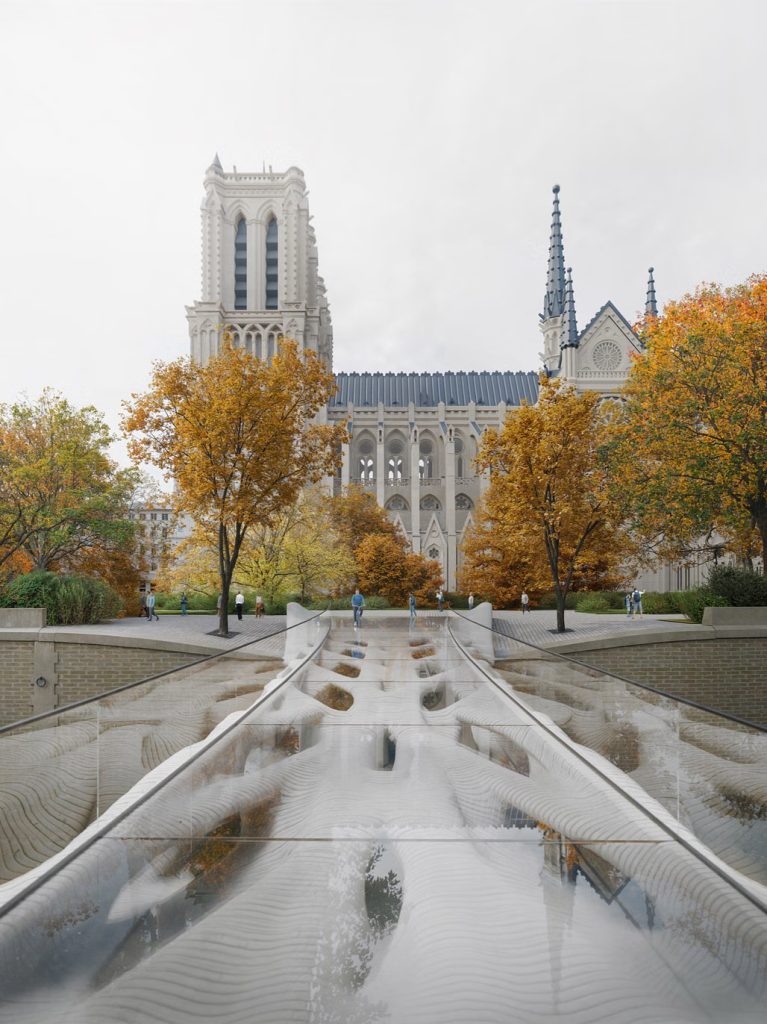
Diamanti bridge by Professor Dr. Masoud Akbarzadeh and the Polyhedral Structures Laboratory (also header image)
Presented at the Time Space Existence exhibition in Venice, the Diamanti bridge offers a compelling vision of low-carbon, modular construction. Led by Professor Dr. Masoud Akbarzadeh and the Polyhedral Structures Laboratory at the University of Pennsylvania, the project brings together expertise from academia and industry to explore how robotic concrete printing can support more sustainable infrastructure.
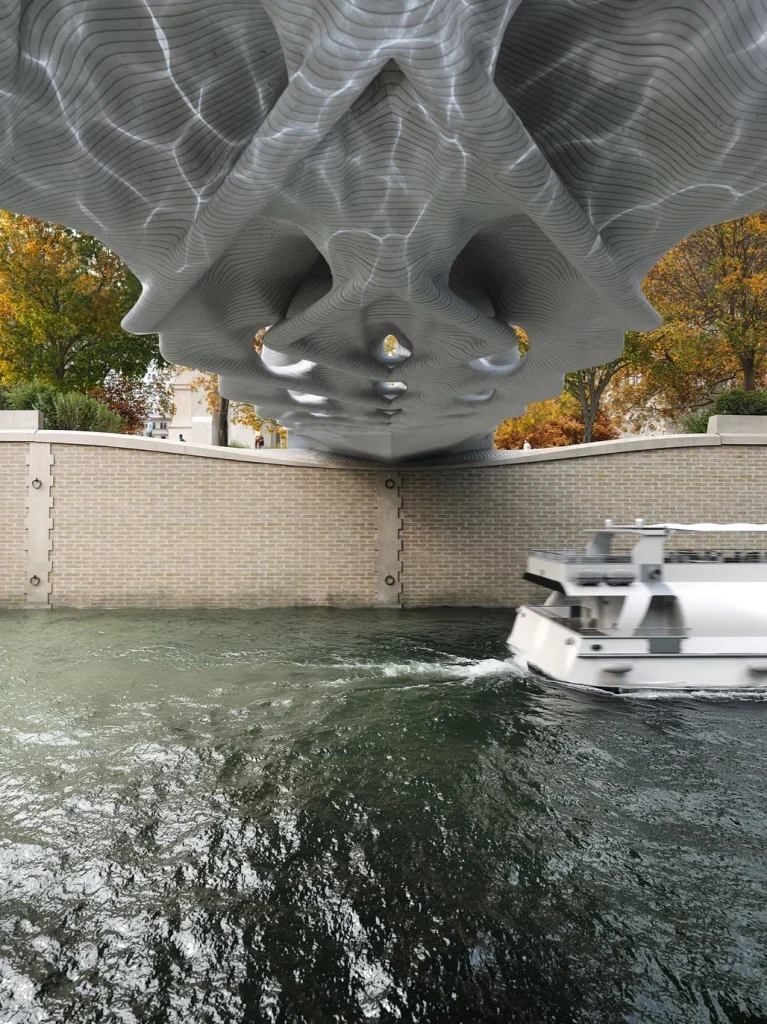
Diamanti bridge by Professor Dr. Masoud Akbarzadeh and the Polyhedral Structures Laboratory
Unlike monolithic concrete structures, Diamanti consists of nine prefabricated segments produced through robotic 3D printing. Each component incorporates strategically designed voids and textured surfaces that improve structural performance while reducing material usage and embodied carbon. The bridge’s distinctive geometry is based on Polyhedral Graphic Statics, a computational design methodology that channels forces through highly efficient forms shaped by both structural logic and fabrication constraints.
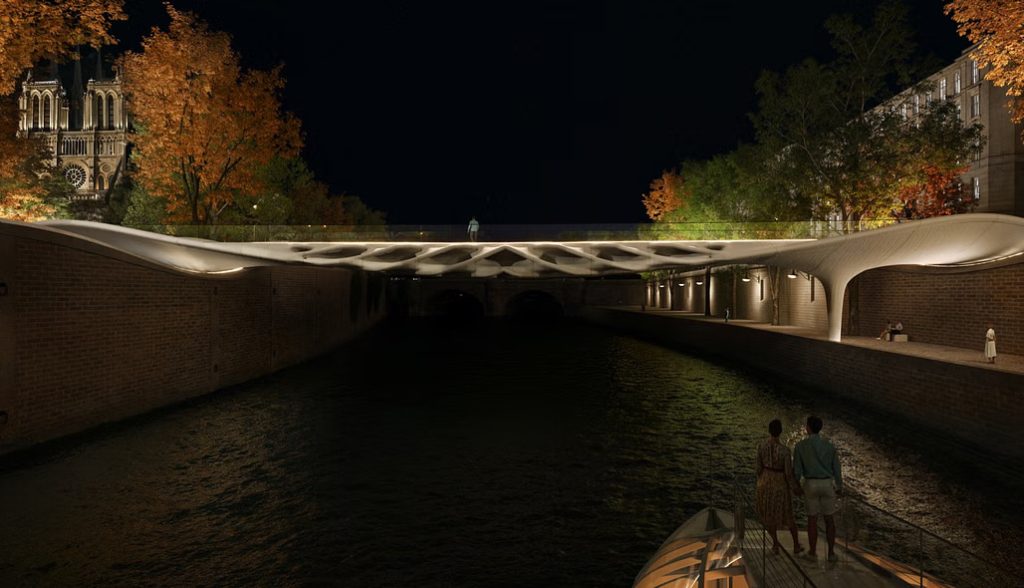
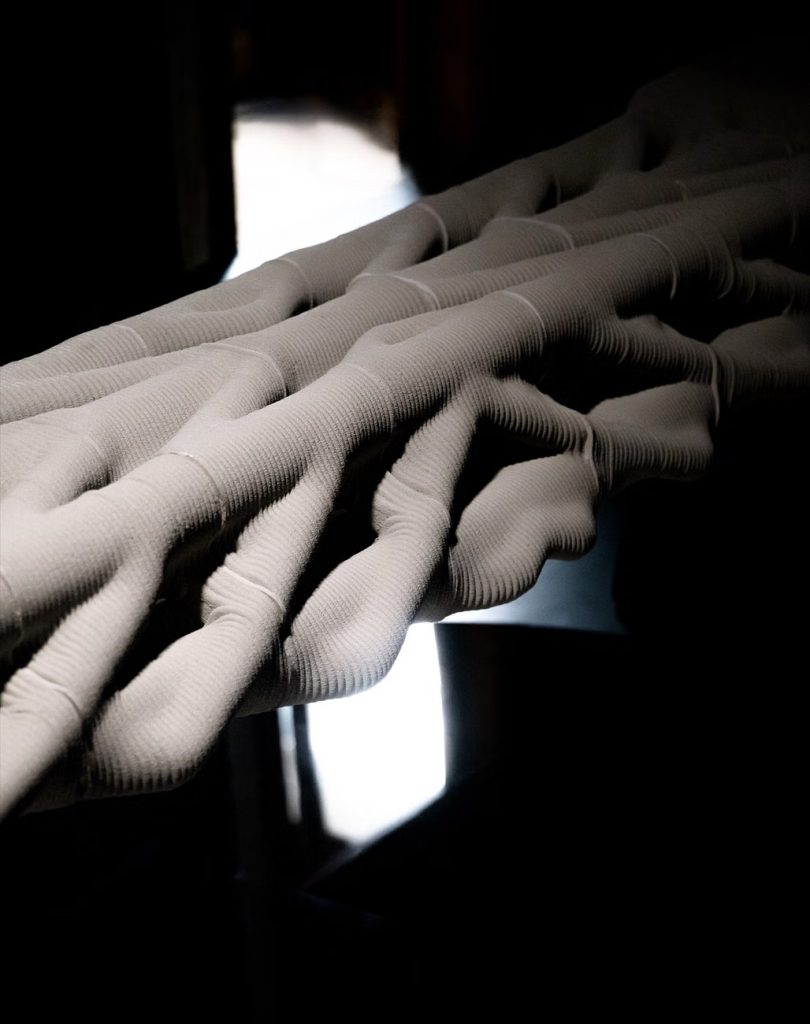
Diamanti bridge by Professor Dr. Masoud Akbarzadeh and the Polyhedral Structures Laboratory
A key innovation lies in the bridge’s assembly system. Rather than relying on permanent connections, the segments are joined using ungrouted steel cables that create a post-tensioned structure. No adhesives, grout, or irreversible connections are required. As a result, the bridge can be dismantled, relocated, repaired, or recycled with relative ease. This reversibility aligns with emerging circular economy principles that encourage designers to think beyond construction and consider an object’s entire lifecycle.
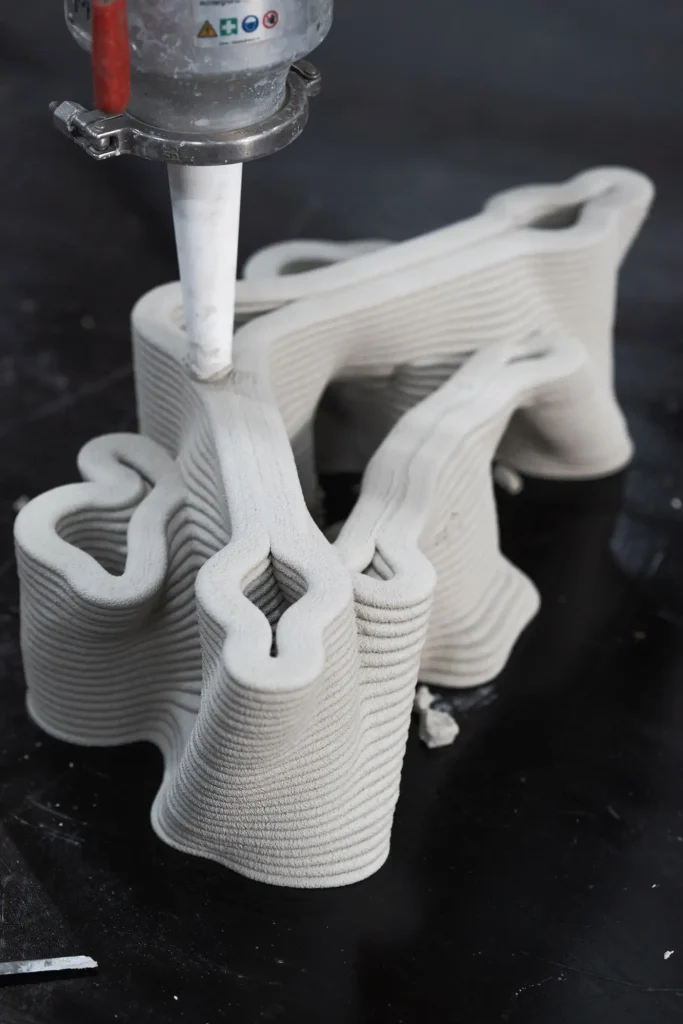
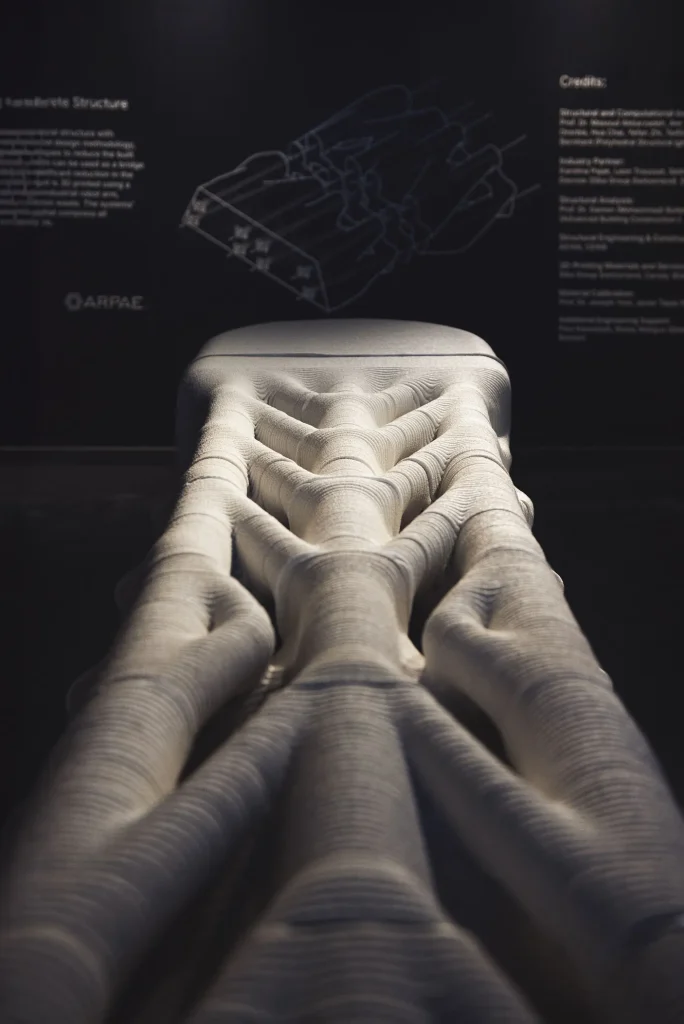
Diamanti bridge by Professor Dr. Masoud Akbarzadeh and the Polyhedral Structures Laboratory
What makes Diamanti particularly significant is its collaborative development model. Material scientists, robotic fabrication specialists, structural engineers, and academic researchers all contributed to the project. The result is a testbed for a new generation of construction systems where computational geometry, advanced materials, and robotic manufacturing converge to create infrastructure that is lighter, smarter, and more adaptable.
Taken together, these three bridges reveal a profound transformation in the relationship between design and construction. Whether through woven carbon fibres, compression-only concrete assemblies, or modular post-tensioned systems, each project demonstrates that robotic fabrication is not simply a new way to build. It is a new way to think about architecture itself.