Plants soften hard lines, bring rhythm to static spaces, and offer something no object can quite replicate: a sense of life unfolding in real time. But a new generation of designers is pushing beyond the decorative role of greenery and asking a more interesting question. What if planters, vases, and growing systems could do more than hold plants? What if they could become architectural statements, therapeutic tools, and living interfaces between people and nature?
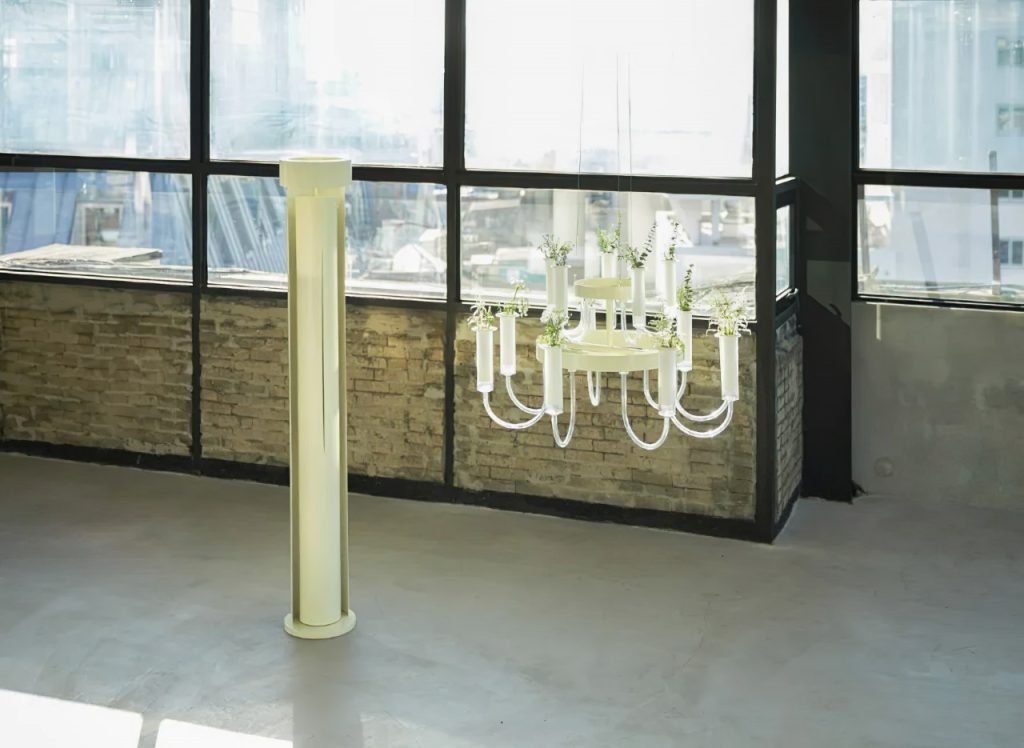
Poetic Beauty Vase by Yeonsu Ra
There is a simple truth at the core of Yeonsu Ra’s Poetic Beauty Vase: lighting can brighten a room, but plants animate it. A space with four walls and carefully selected furniture may look complete on paper, yet still feel emotionally flat. By suspending greenery overhead, Ra transforms that familiar design instinct into something far more theatrical. The Poetic Beauty Vase is, in essence, a chandelier reimagined as a living planter, one that trades crystal drops for leaves, stems, and the quiet drama of growth.
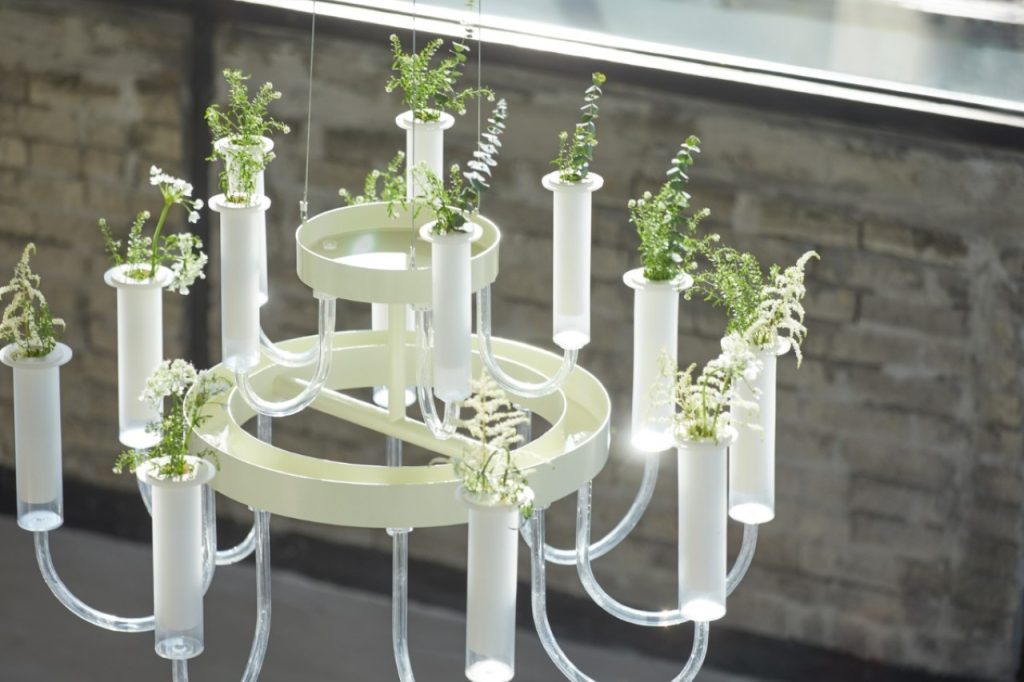
Poetic Beauty Vase by Yeonsu Ra
Visually, the piece makes an immediate impression. Thirteen hanging vessels are arranged in two tiers, creating a silhouette that feels both ornamental and organic. Rather than simply hanging individual planters from the ceiling, Ra composes them as a unified installation, turning the act of displaying plants into a spatial gesture. It is easy to imagine the object inhabiting a minimalist apartment just as comfortably as a maximalist interior, because its impact comes not from stylistic excess but from the contrast between domestic structure and botanical softness. The result is part lighting typology, part indoor garden, and entirely conversation starter.
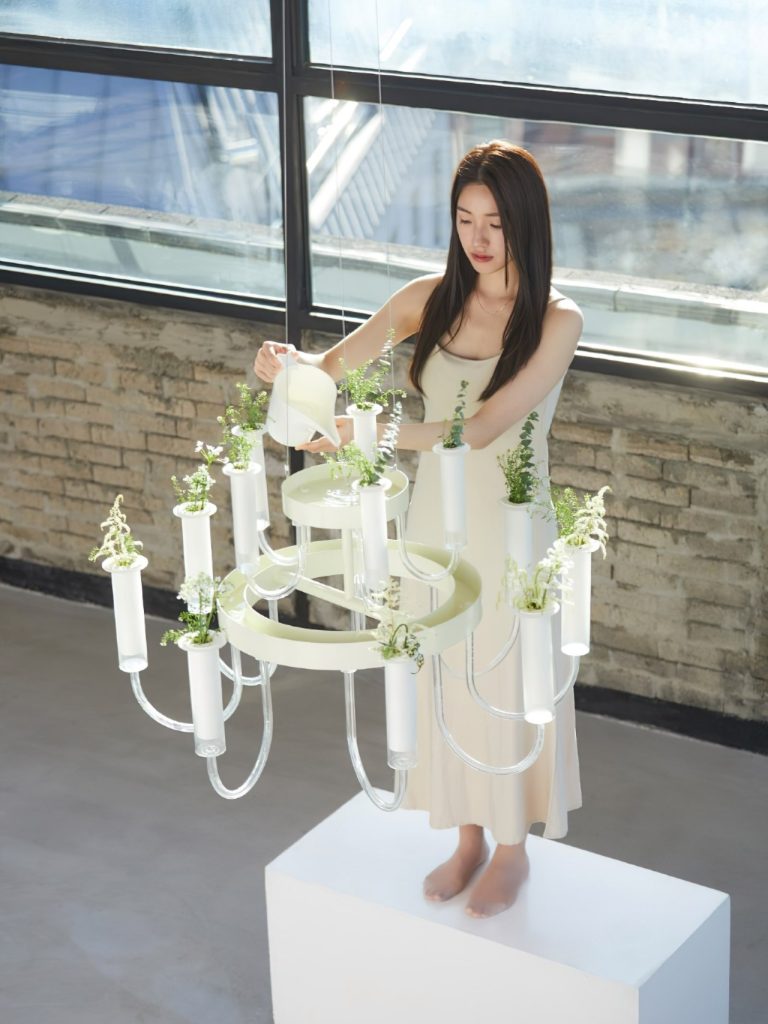
Poetic Beauty Vase by Yeonsu Ra
Its innovation, however, is not only formal. The Poetic Beauty Vase incorporates a self-watering system built around two central trays that distribute water through clear pipes to the base of each planter. The plants sit in buoyant containers that rise and fall according to the water level below, creating a built-in visual cue for maintenance. When the planters sink to their lowest point, it is time to water the chandelier, a sentence that still feels delightfully surreal. What could have been a fussy hanging installation becomes a thoughtful, almost meditative system, one that turns plant care into a recurring ritual rather than a chore.
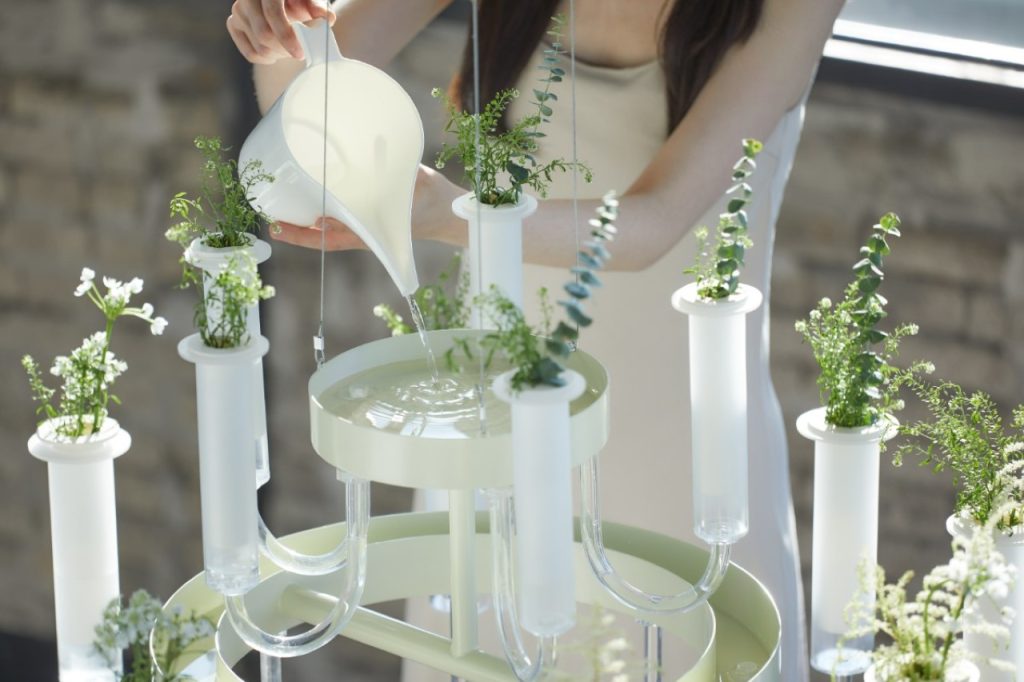
Poetic Beauty Vase by Yeonsu Ra
That sense of ritual is central to the project’s appeal. By requiring only periodic refilling, the object invites a slower and more attentive relationship with the home. Ra has described the piece as an expansion of an earlier menorah-inspired planter project, carrying forward an interest in buoyancy and symbolic form. In Poetic Beauty Vase, those ideas mature into a design that feels equal parts product and performance. It does not just hold greenery; it stages it, elevating the humble houseplant into something architectural, ceremonial, and emotionally resonant.
If Ra’s chandelier planter turns greenery into spectacle, the next project shifts the focus from atmosphere to care, showing how plant-centered design can support not just interiors, but people.
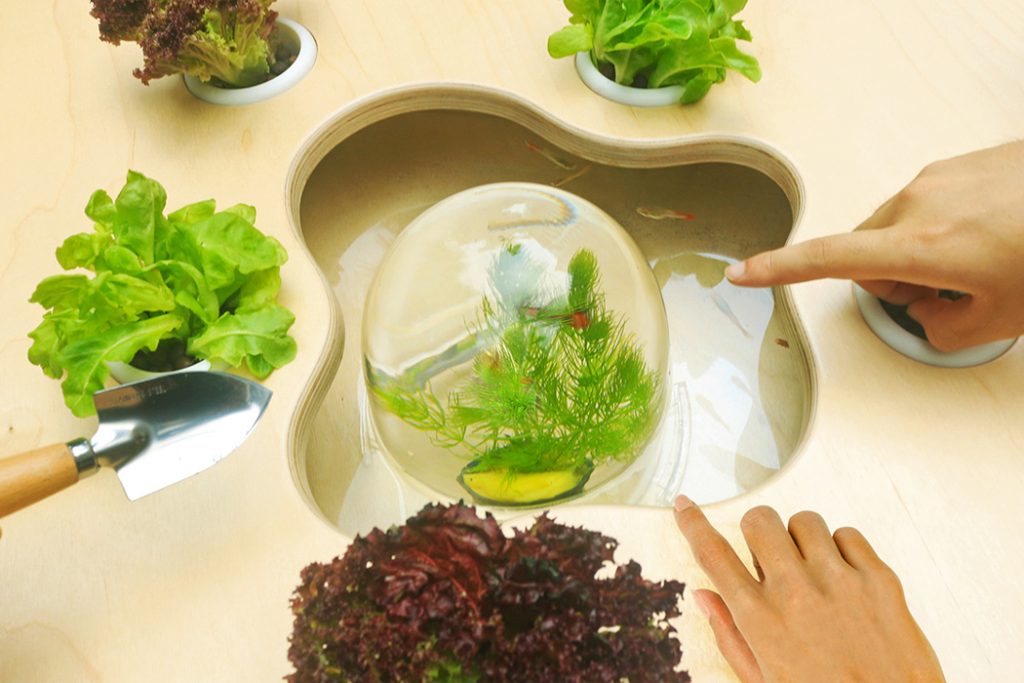
Lively Greens by Yu-Chin Gao
Horticultural therapy has been used around the world in healthcare, rehabilitation, and residential settings for good reason. Its benefits extend well beyond the pleasure of keeping plants alive, supporting mood, memory, cognition, stress reduction, and social engagement. Yu-Chin Gao’s Lively Greens approaches this therapeutic territory with unusual sensitivity, designing not simply for plant cultivation, but for the specific challenges faced by elderly users living with dementia. It is a project that understands wellness design as something practical, empathetic, and deeply embedded in daily life.
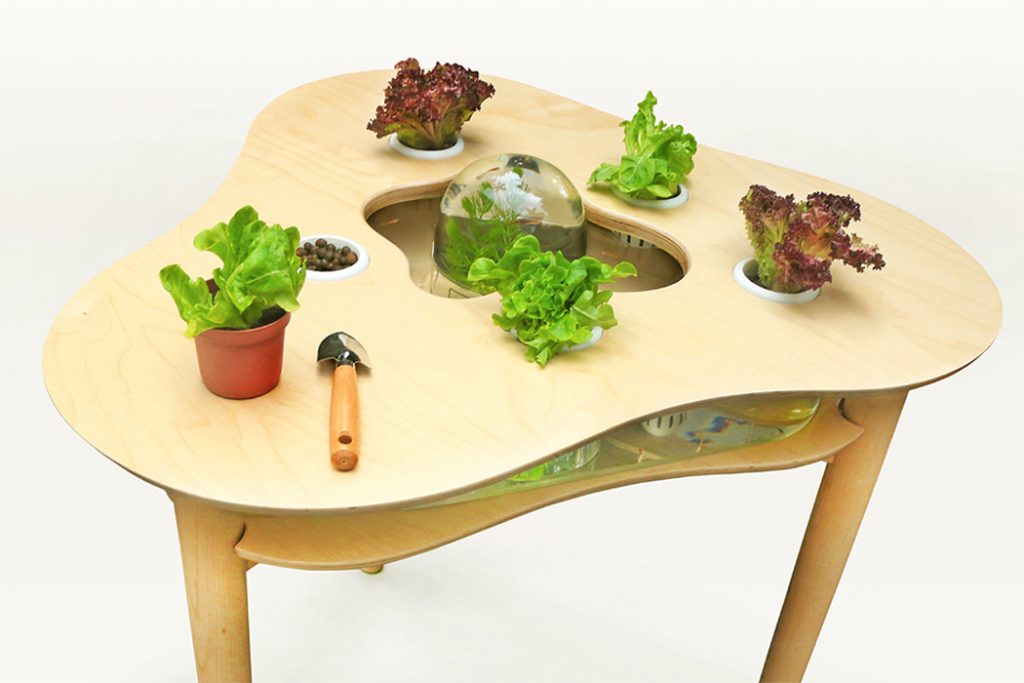
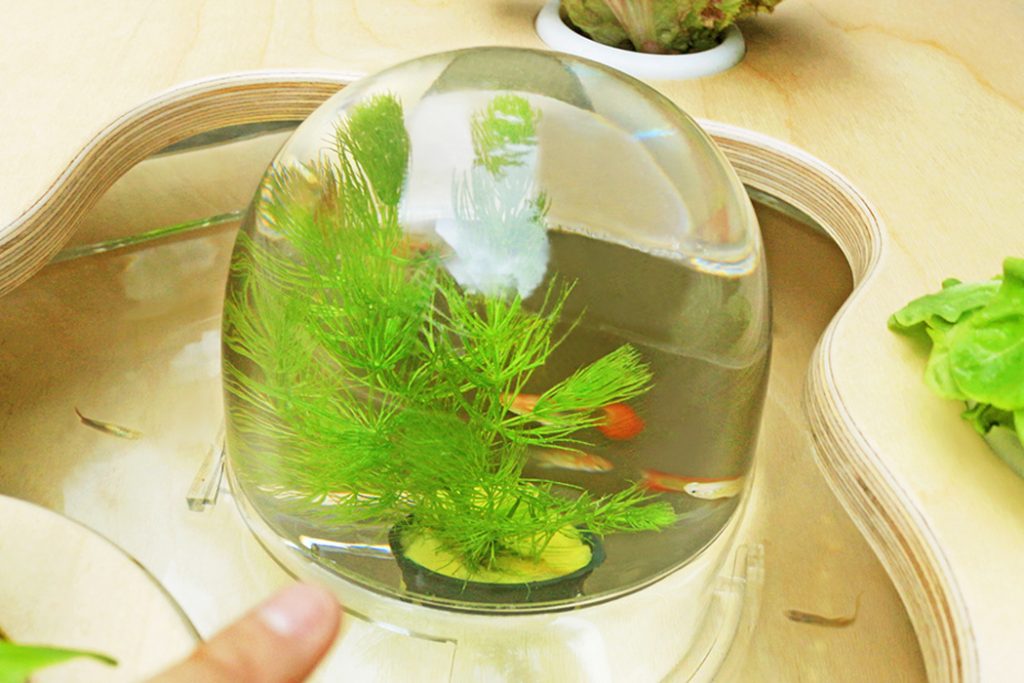
Lively Greens by Yu-Chin Gao
At first glance, Lively Greens reads as a compact tabletop ecosystem. The design combines a fish tank with five planting pots in an aquaponic system that merges aquaculture and hydroponics. As the fish live and swim below, their nutrient-rich water feeds the plants above, creating a self-sustaining loop that supports growth with minimal intervention. Users participate by initiating the planting and then observing the system as it develops, with the aquatic life effectively helping to maintain the plants over time.
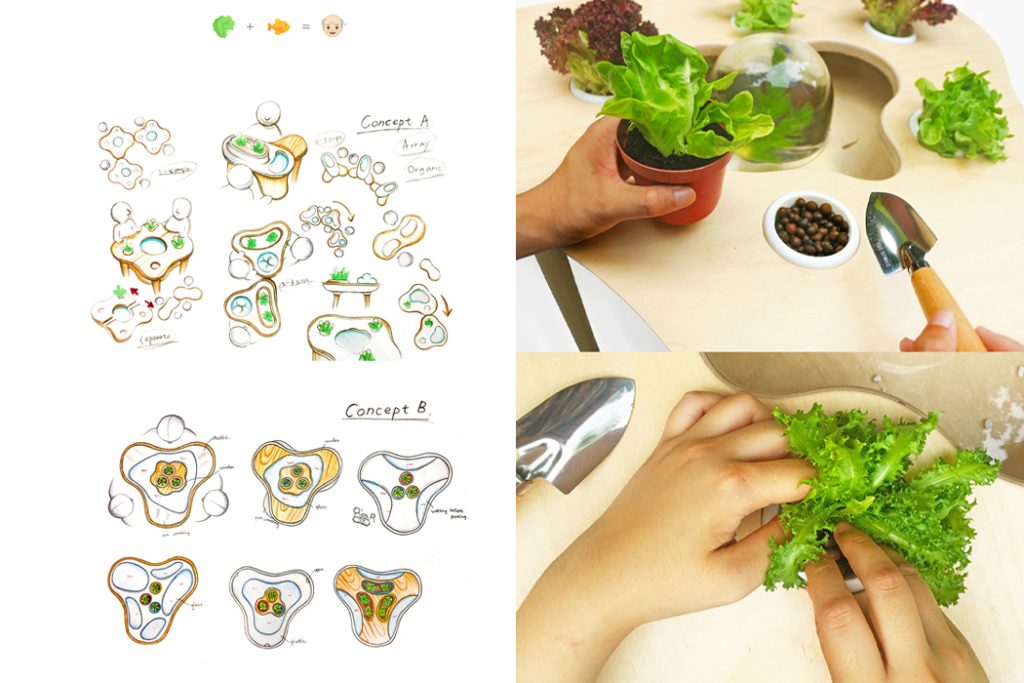
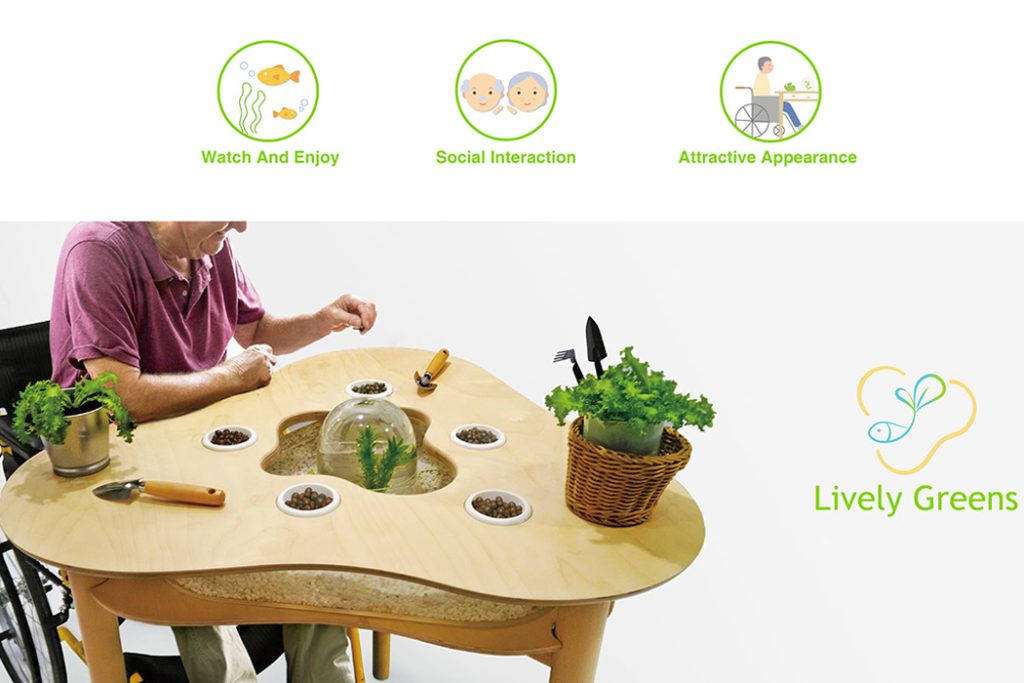
Lively Greens by Yu-Chin Gao
That reduction matters. Traditional plant care often depends on routines that can be difficult for people experiencing memory loss to maintain consistently. Forgetting to water, monitor, or rotate plants can quickly turn a therapeutic activity into a frustrating one. Gao’s response is to design away that friction. By removing the need for frequent watering and relying on the natural exchange between fish and plants, Lively Greens allows users to access the benefits of horticultural therapy without requiring the same level of cognitive load. It preserves the pleasure of watching life grow while lowering the threshold for participation.
Lively Greens by Yu-Chin Gao
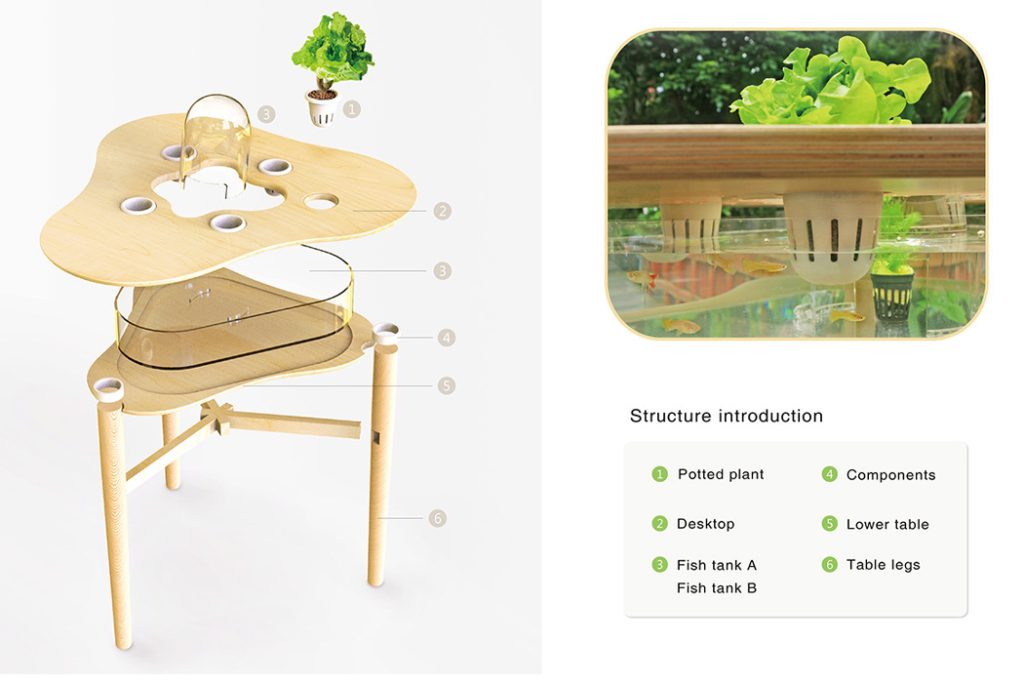
Lively Greens by Yu-Chin Gao
The project is particularly compelling because it treats accessibility not as a constraint, but as a source of innovation. Rather than simplifying the experience to the point of blandness, Gao creates a richer ecosystem, one that introduces movement, observation, and even a subtle sense of companionship through the presence of fish. In that sense, Lively Greens does more than make gardening easier. It reframes therapeutic design as relational design, where emotional wellbeing emerges through interaction with a living system that responds, evolves, and asks only for attention rather than constant management.
Where Lively Greens demonstrates how plant systems can be designed around human care needs, the final project tackles a different challenge altogether: how to make indoor growing cleaner, easier, and more compelling for urban life.
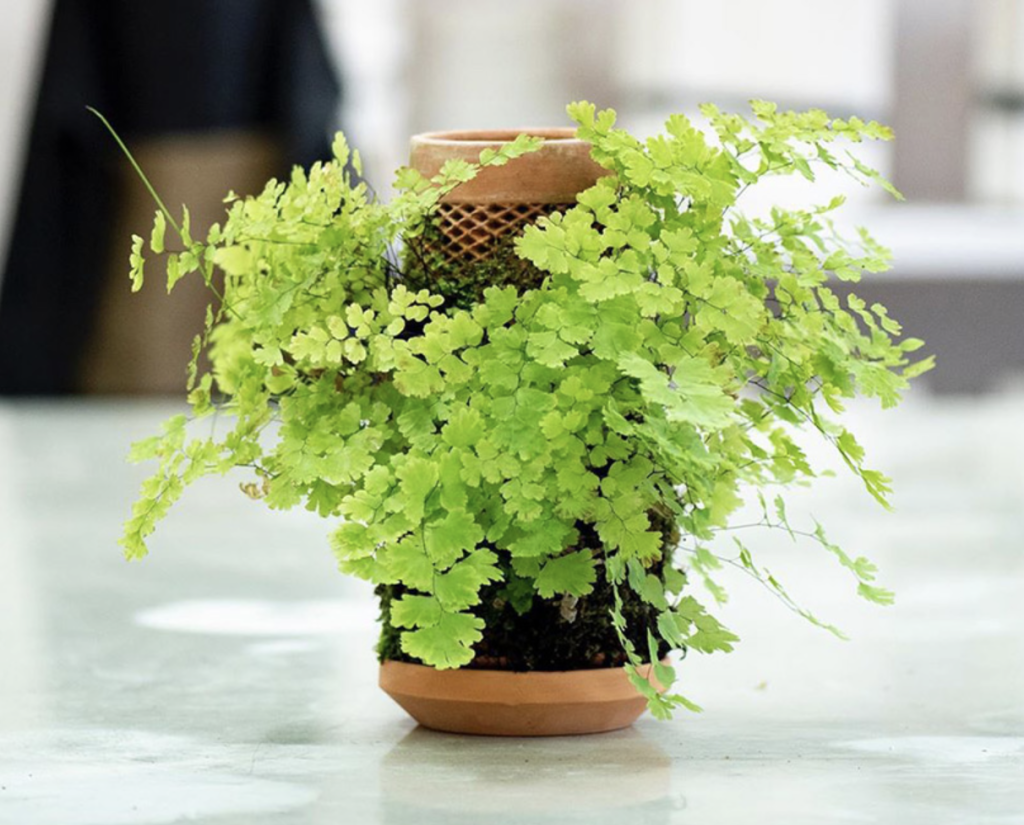
Terraplanter by Eran Zarhi and Elad Burko (also header image)
For urban plant lovers, indoor gardening often comes with a familiar list of compromises: spilled soil, inconsistent watering, and the quiet guilt of a dying herb on the windowsill. The Terraplanter, created by industrial designer Eran Zarhi and eco-entrepreneur Elad Burko, offers a striking alternative. Designed for people who love greenery but not necessarily the mess and maintenance that can accompany it, the planter reimagines hydroponics as an object that is both highly functional and visually arresting.
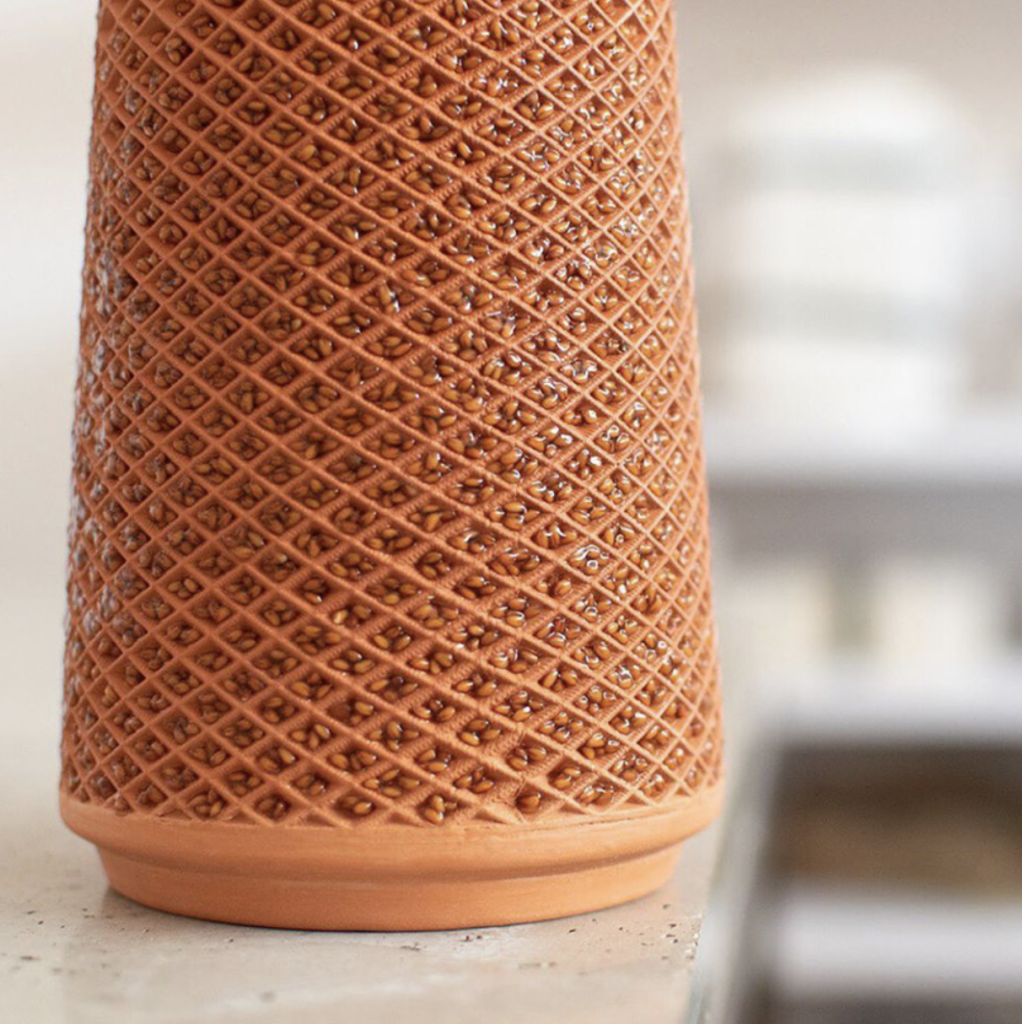
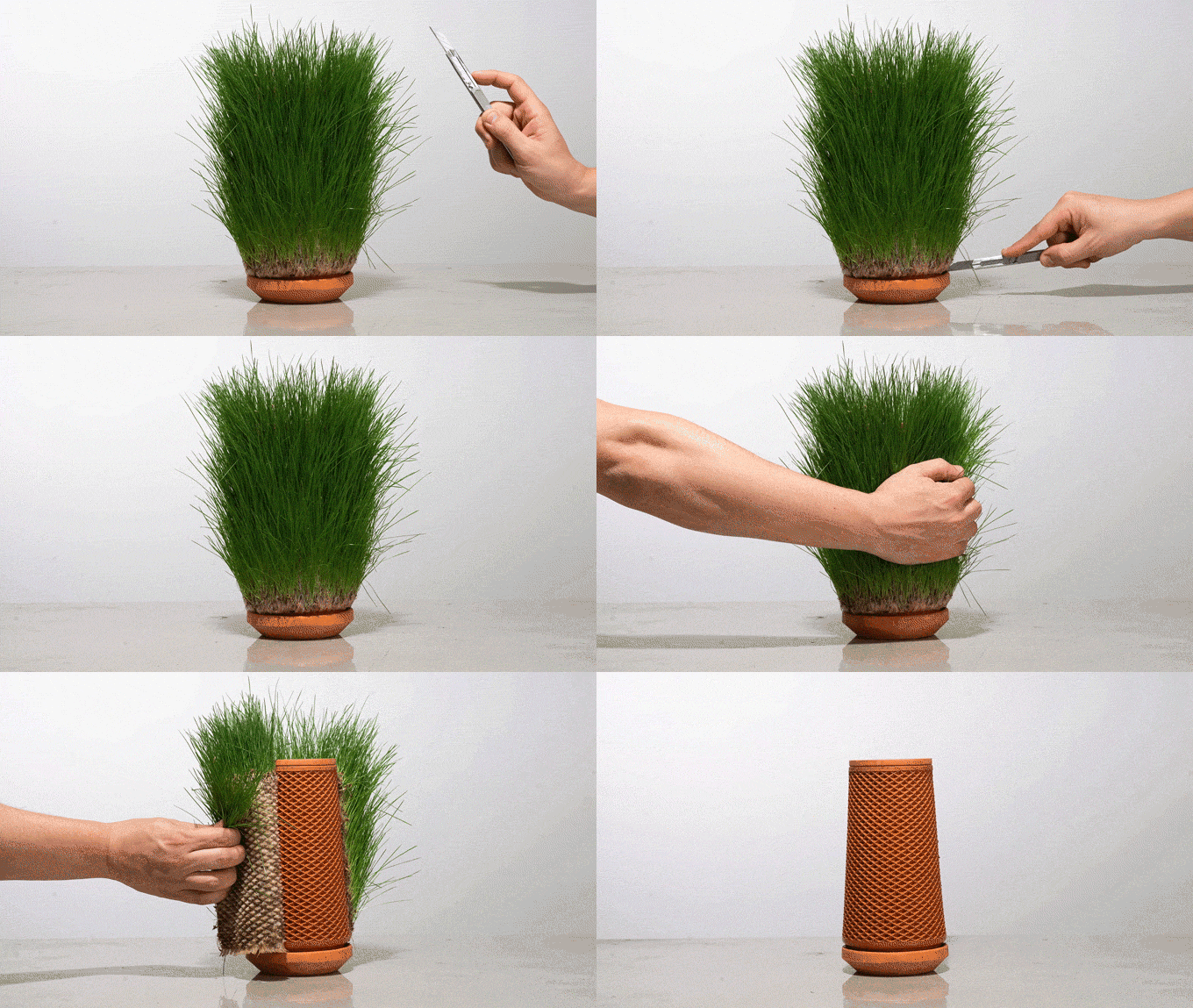
Terraplanter by Eran Zarhi and Elad Burko
The concept is deceptively simple. Instead of containing soil inside a pot, the Terraplanter uses a solid yet porous ceramic body that acts as a water reservoir. Moisture slowly diffuses through the material, allowing plants to grow directly on the exterior surface of the object. In other words, the planter turns itself inside out. Rather than hiding roots in a dark interior cavity, it makes growth visible, transforming the vessel into an active landscape where seeds sprout, roots cling, and leaves unfold across the outside of the form.
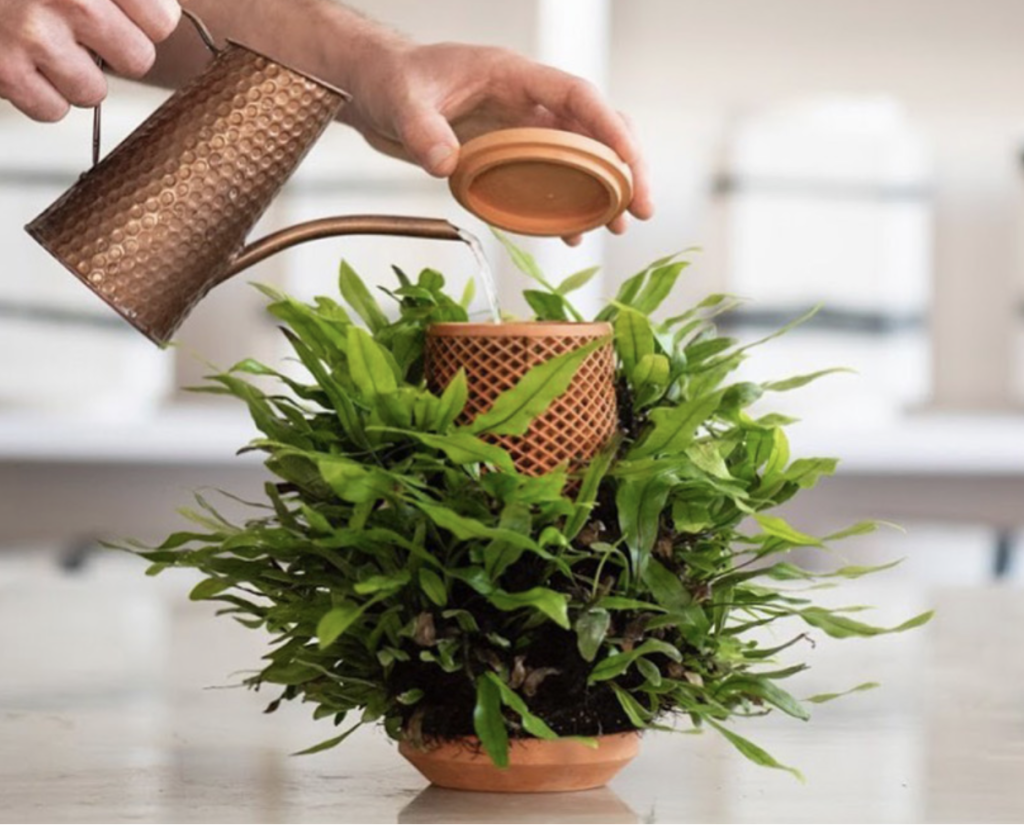

Terraplanter by Eran Zarhi and Elad Burko
That visibility is not just aesthetic flourish; it is the core of the design. Inspired by rainforest environments where roots often remain exposed and attach themselves to moist structures with constant access to air and water, the Terraplanter mimics those natural conditions through a micro-textured ceramic surface. Around 1,400 tiny cells provide grip for roots, guiding them across the planter’s exterior as they search for moisture. The result is a product that blurs the line between planter and habitat. Instead of being a neutral container, it becomes the terrain itself.
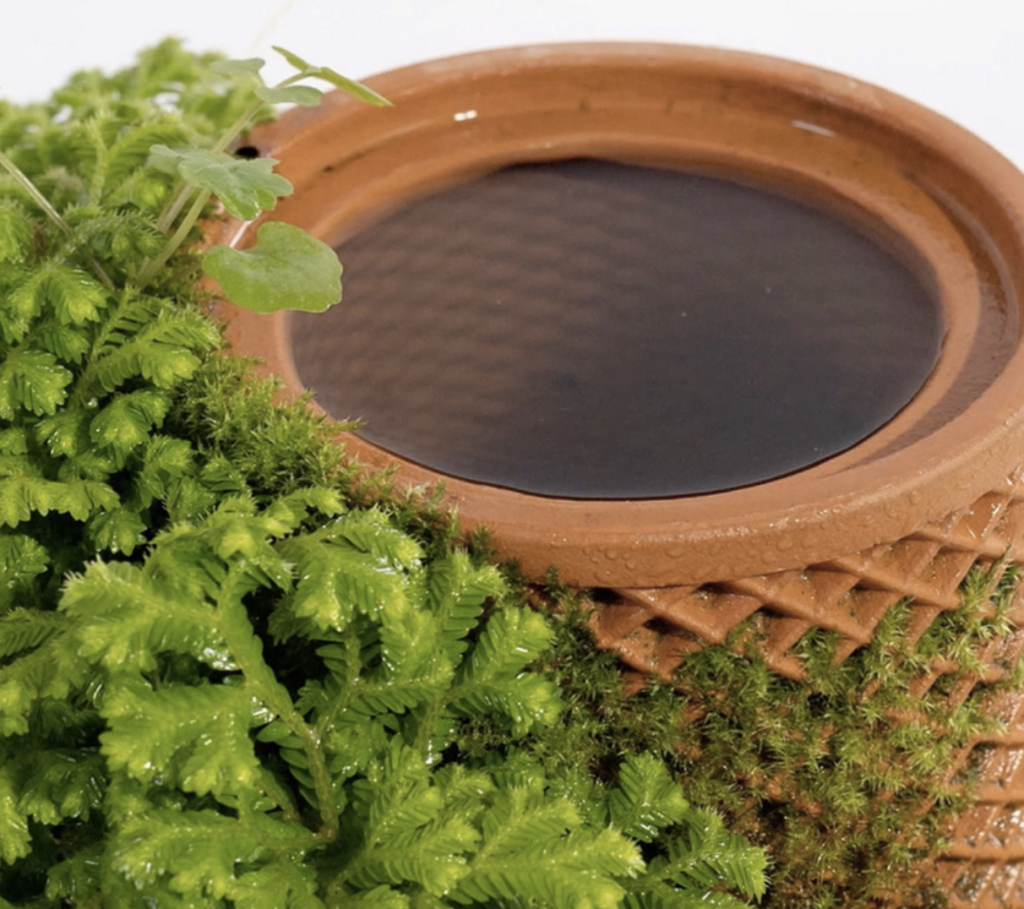
Terraplanter by Eran Zarhi and Elad Burko
What makes the Terraplanter especially compelling is the way it turns plant growth into a visible event. Zarhi and Burko describe the project as a collaboration between design and nature, and that feels exactly right. There is a transparency to the system that invites users to witness every stage of development, from first sprout to full bloom.
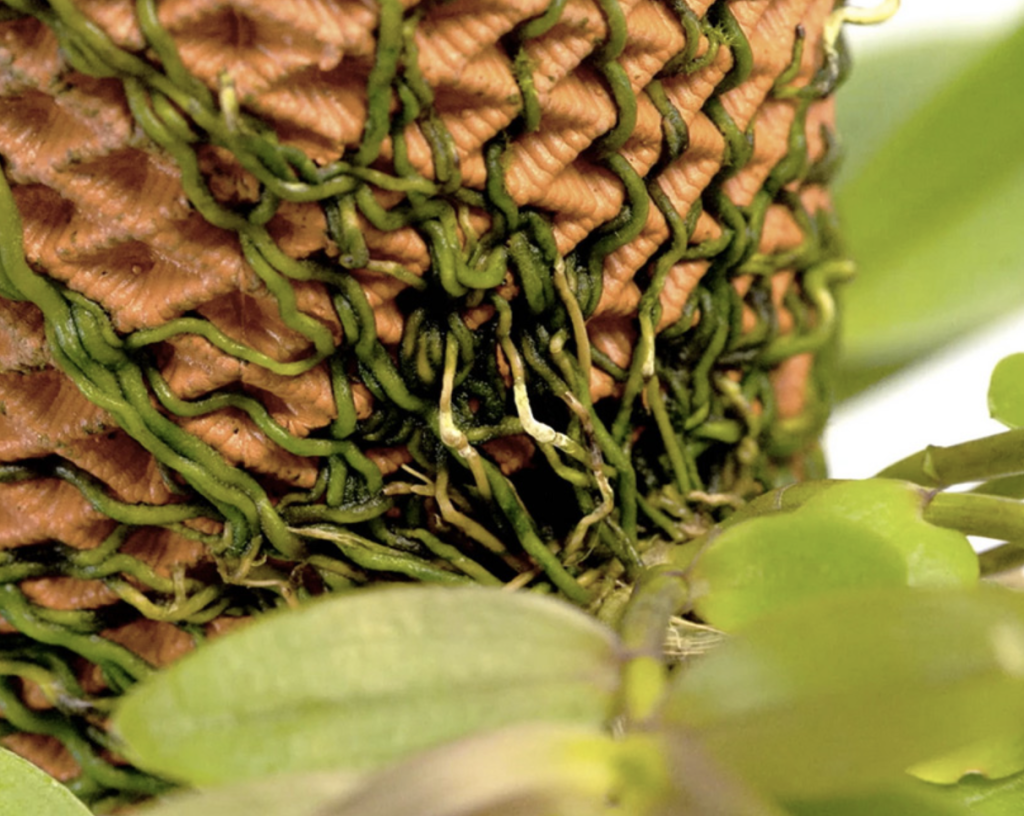
Terraplanter by Eran Zarhi and Elad Burko
These three stories reveal a broader design movement: one that sees biophilic design not as a trend, but as a platform for experimentation. From ritual and atmosphere to wellness and urban practicality, each project demonstrates a different way design can make our relationship with plants more intuitive, more meaningful, and, in some cases, a lot more beautiful.