The guitar has always been an object of contradiction. It is both icon and tool, sculpture and machine, heirloom and piece of gear. For decades, most innovation in guitars has happened under the hood through pickups, processors, materials, and software, while the silhouette itself remained almost sacred. But a new class of foldable and travel-friendly electric guitars is beginning to challenge that assumption. Instead of treating portability as an afterthought, these instruments make it the central design problem, then use electronics, modularity, and digital interfaces to rethink what a guitar can be in the first place.
RIFFMATE by LKK Design Beijing
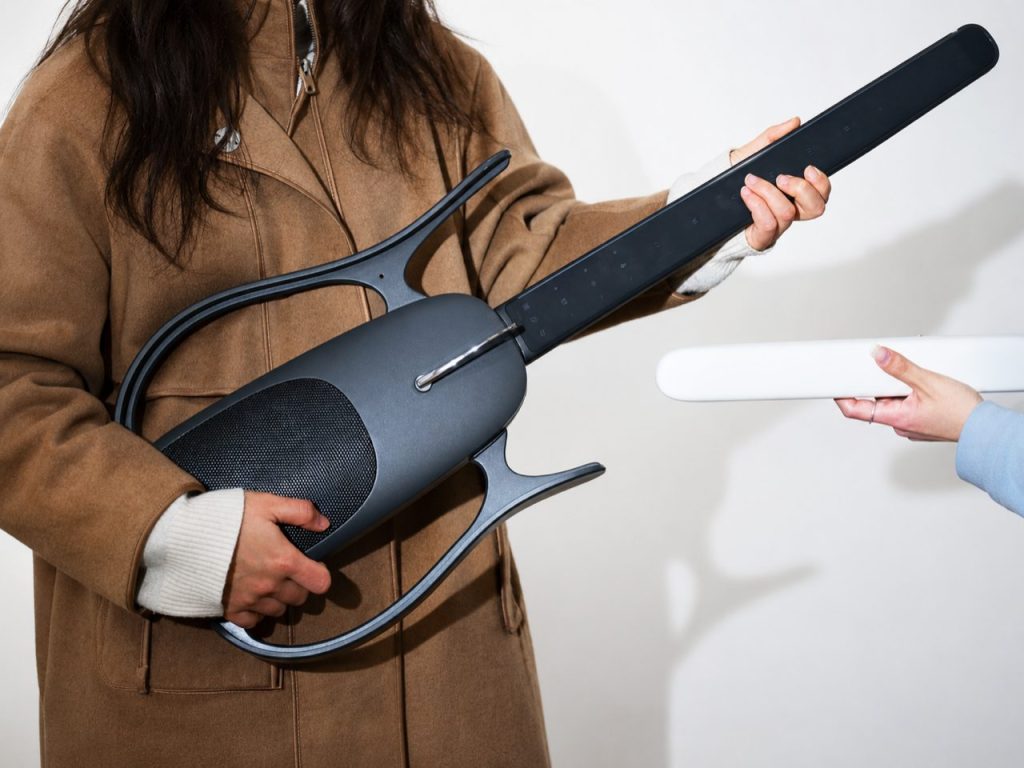
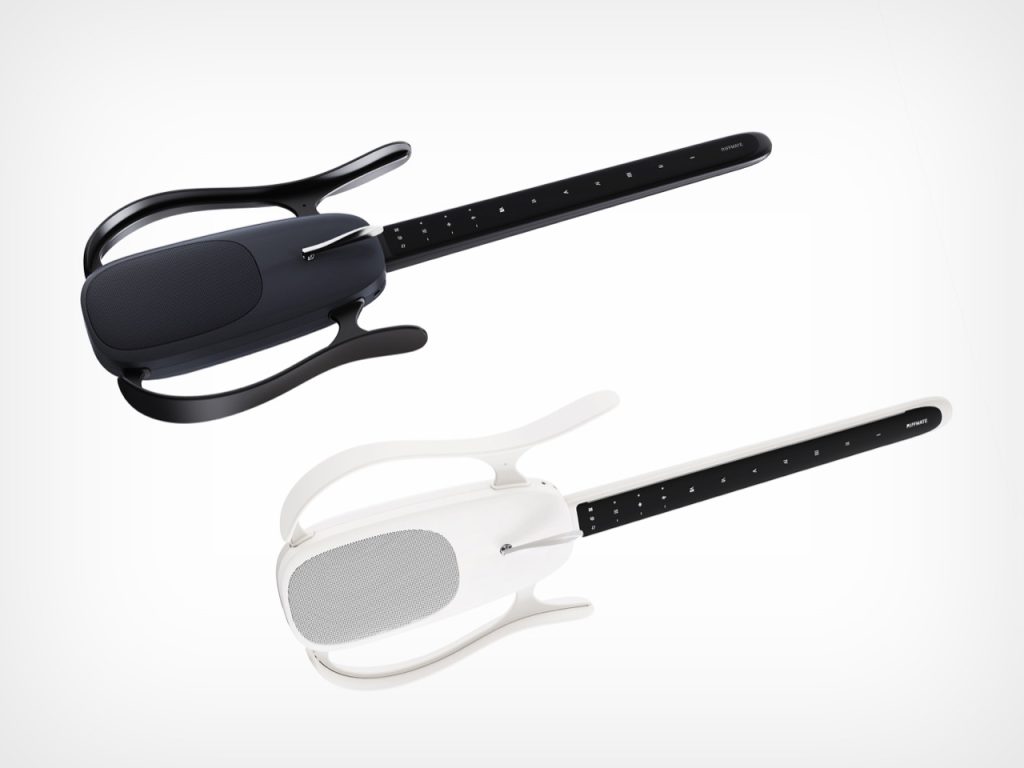
Look at RIFFMATE for a second and try to name what is missing. No strings. No fretboard bristling with metal wire. No solid slab of tonewood. What remains is the silhouette of an electric guitar sketched in mid-air, a skeletal frame that holds the familiar double-cutaway outline while hollowing out almost everything inside it. The sweeping arms that curve off the body trace the exact territory where a guitar’s shoulders and horns would normally sit, but instead of filling that space, they frame it. The result feels less like an instrument carved from wood and more like an idea of a guitar rendered in negative space.
RIFFMATE by LKK Design Beijing
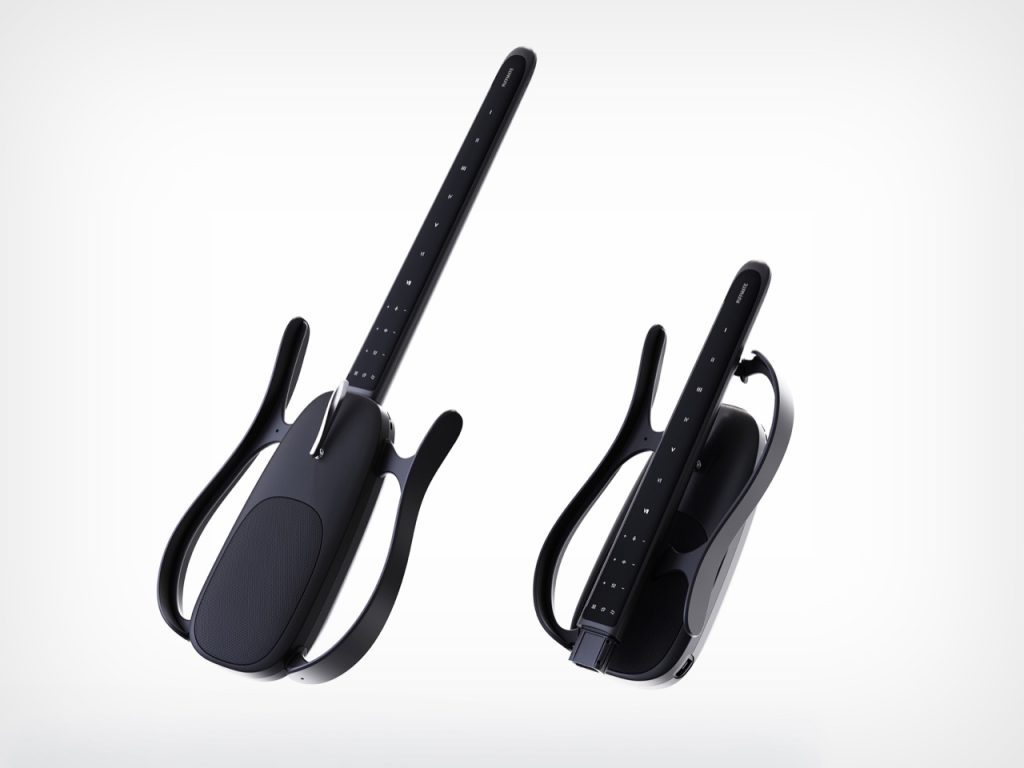
That kind of subtraction takes nerve, and RIFFMATE, formally the RiffmateGT01, commits to it completely. Developed by Shanghai’s Wo Tan Ni Chang Technology with industrial design by LKK Design Beijing, the instrument breaks the guitar into two core elements: a slim touch-strip neck and a central pod containing the speaker, electronics, and acoustic chamber. Roman numerals mark the neck where frets would usually appear, turning the instrument into a tactile interface rather than a conventional stringed surface. Instead of asking beginners to battle finger pain, tuning instability, and the emotional damage of the first failed barre chord, RIFFMATE uses an AI-assisted sound system to flatten the learning curve and make the first encounter with the guitar feel less punishing.
RIFFMATE by LKK Design Beijing
Its most compelling move, though, may be physical rather than digital. The guitar uses one-key disassembly so the neck can detach from the body in seconds, allowing the whole instrument to collapse into a carry-on-sized bag and reassemble just as quickly. For anyone who has ever tried to shepherd a guitar through an airport, that feature alone reads as a design intervention rather than a convenience. The outer shells are also removable, which transforms customization into a practical sustainability strategy. RIFFMATE has been shown in finishes ranging from matte black and crisp white to walnut, gradient purple, sunshine yellow, and blue-to-silver fades. Those panels can be swapped to refresh the look or replace a damaged surface, extending the product’s lifespan and shifting the guitar from static object to evolving system.
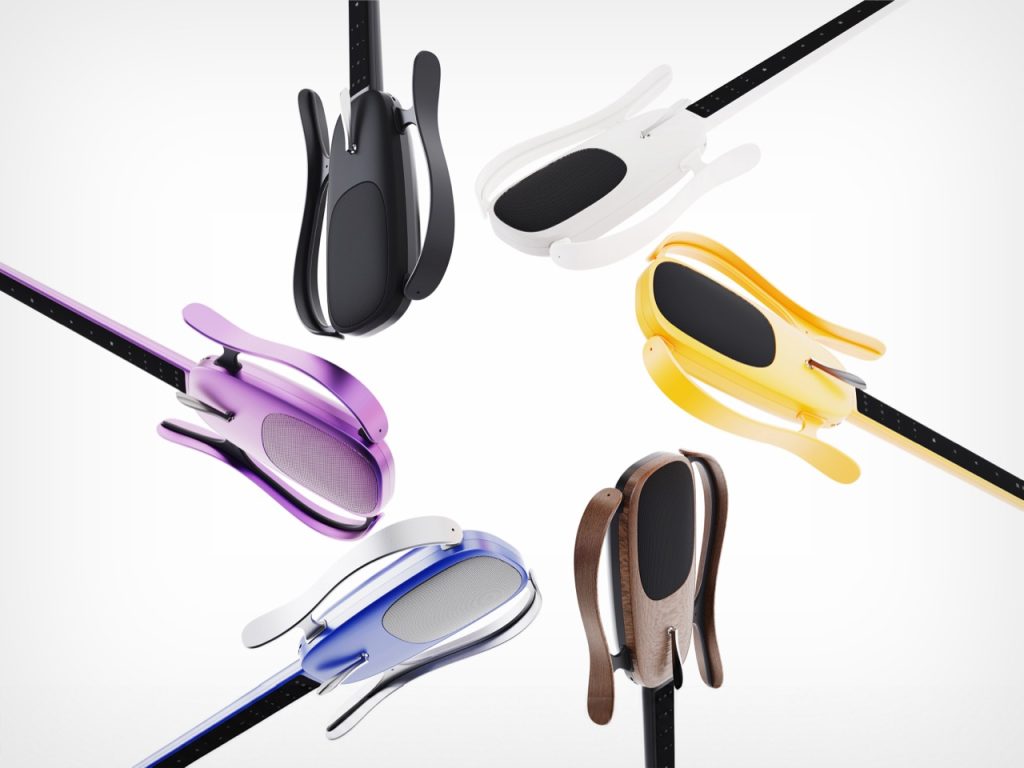
RIFFMATE by LKK Design Beijing
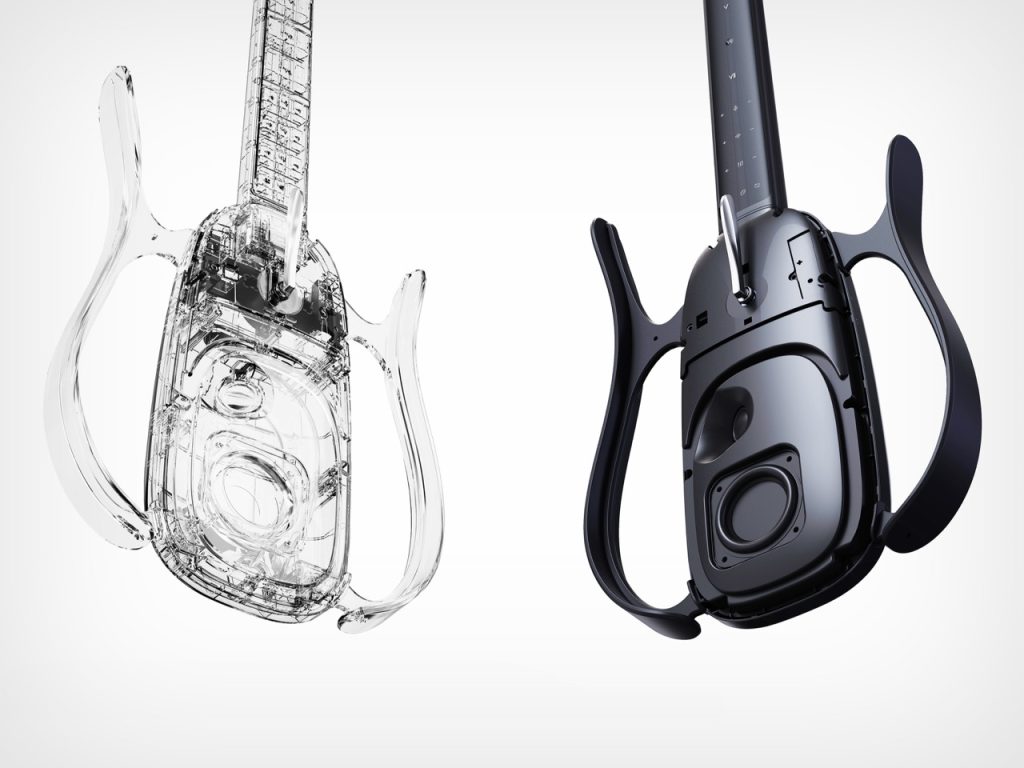
Inside that compact central pod is a properly considered acoustic cavity with internal channels feeding a front-facing driver, which gives RIFFMATE self-amplifying capability without the usual tangle of external gear. The softened, matte-frosted body language feels closer to a premium Bluetooth speaker than a traditional Strat-style slab, and that is very much the point. It is approachable, tactile, and age-agnostic, designed to appeal just as easily to a curious ten-year-old as to an adult guitarist returning after years away. RIFFMATE is still, at this stage, more vision than shipping product, and that distinction matters. But as an industrial design proposition, it is one of the clearest examples of what happens when designers stop asking how to improve the guitar and start asking which parts of the guitar are actually essential.
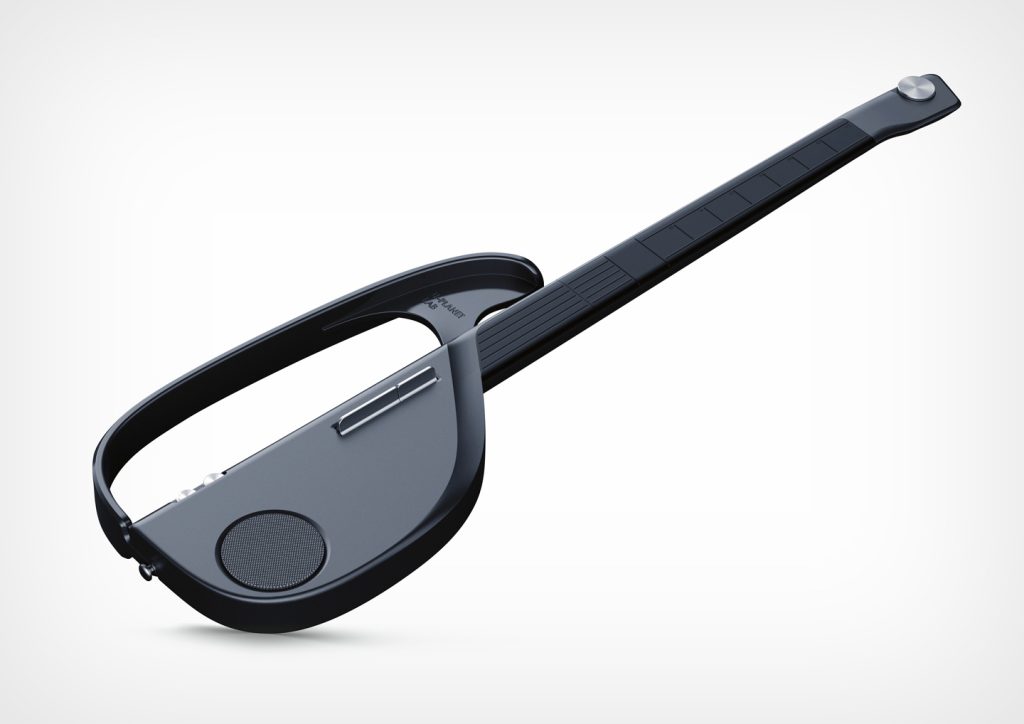
U-Lab 001 by inDare Design Strategy (also header image)
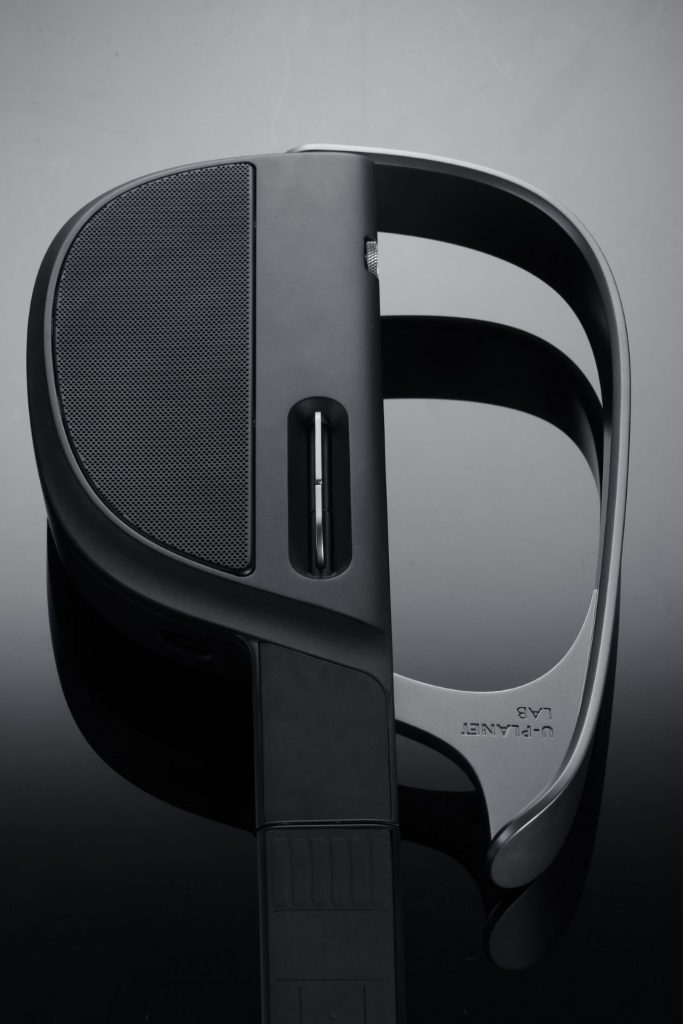
If RIFFMATE represents radical subtraction, the next project takes a slightly different route. Instead of turning the guitar into an elegant ghost of itself, it reframes it as a smart music device that happens to borrow the guitar’s shape. A winner of both the Red Dot Product Design Award and the iF Design Award, the U-Lab 001 occupies an intriguing middle ground between instrument, teaching tool, and consumer electronics product. At a glance, it still reads as a guitar, but only just. The body features a hollow cutout, there are no strings stretched across the frame, and the entire form folds in half when needed. Those decisions are not aesthetic provocations for their own sake. They stem from a more fundamental repositioning of the guitar away from acoustics or electromagnetics and toward the logic of a smart electronic music device.
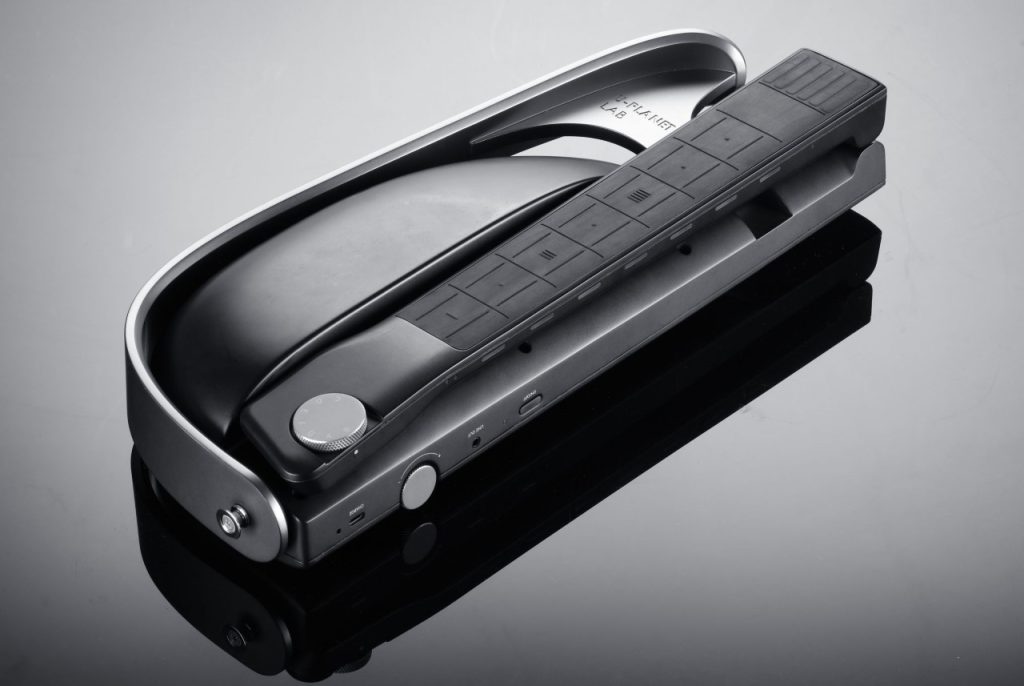
U-Lab 001 by inDare Design Strategy
Designed by inDare Design Strategy for Unknown Galaxy Ltd., the U-Lab 001 is built for novices, especially those with little or no formal musical training. Its foldable architecture is one of the most persuasive parts of the concept. By removing strings and rethinking the internal layout, the instrument can collapse down to roughly one-third of its original footprint, making it dramatically easier to store or carry. Opened up, however, it becomes a surprisingly expressive interface. The right hand interacts with two rocker switches that simulate either strumming across multiple strings or picking individual ones, while the left hand works across a touch-sensitive illuminated fretboard that teaches notes, chords, and music theory through visual guidance and app-connected feedback.
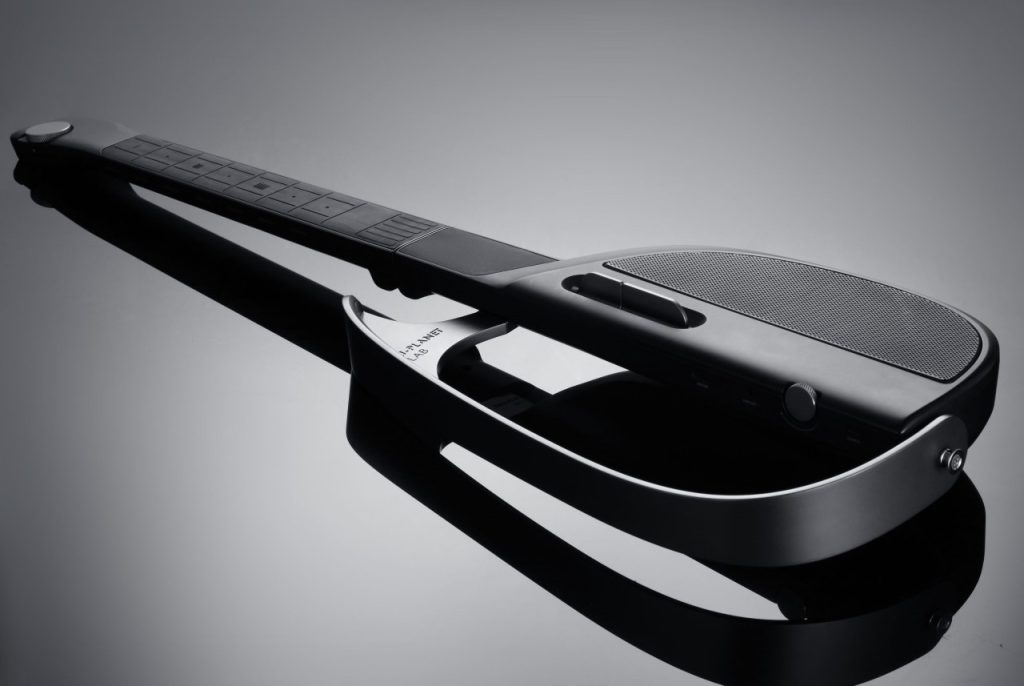
U-Lab 001 by inDare Design Strategy
That teaching dimension is where the design becomes especially sharp. Plenty of instruments claim to make music easier to learn, but the U-Lab 001 integrates pedagogy directly into the object rather than outsourcing it to YouTube tabs and good intentions. The illuminated fretboard turns abstract theory into a live, playable map, while the companion smartphone app expands the system into something closer to a structured learning platform. The guitar is not just an instrument to practice on. It is also a tutor, a feedback surface, and a simplified interface for building muscle memory without first mastering the mechanics of steel strings.

U-Lab 001 by inDare Design Strategy
The rest of the hardware reinforces that all-in-one mindset. A built-in speaker allows the guitar to play back performances without an amplifier, a rotary knob above the speaker handles volume, and a dedicated scale-adjustment control replaces the traditional cluster of tuning keys at the headstock. There is even a headphone jack for silent practice, which feels like a small but telling detail in a product designed for modern living conditions, where not everyone has the luxury of a soundproof studio or forgiving roommates. In design terms, the U-Lab 001 is compelling because it refuses to treat the guitar as a sacred object that must remain unchanged. Instead, it treats it as a user journey that can be redesigned from first principles.
U-Lab 001 by inDare Design Strategy
That brings us to the third and perhaps most commercially grounded example in this group. Where RIFFMATE and U-Lab 001 challenge the guitar by stripping away its traditional mechanics, Natasha takes a more evolutionary approach, keeping the strings, the tactile familiarity, and much of the performance language intact while radically improving portability and digital capability.
Natasha Smart Travel Guitar
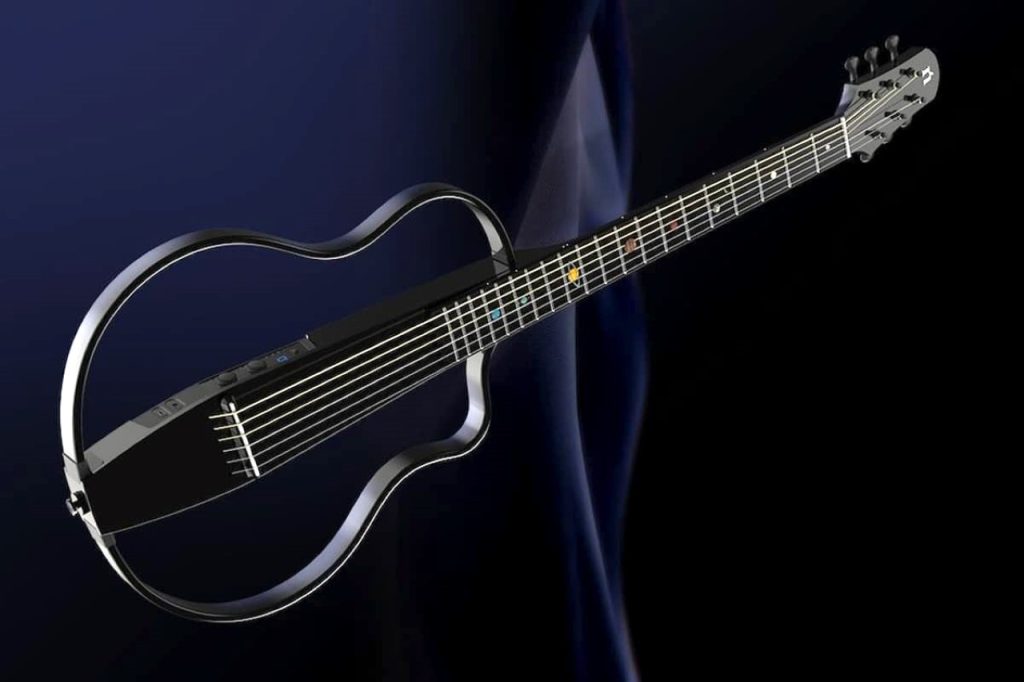
Travel guitars have existed for years, but Natasha’s Smart Travel Guitar makes the category feel less like a niche compromise and more like a legitimate future-facing instrument. The premise behind travel and silent guitars has always been straightforward: create a guitar that can be played quietly, packed easily, and used without hauling around a full acoustic body or amplifier setup. Natasha’s version embraces that premise, then layers on a suite of smart features that make it feel far more contemporary than the category usually allows. The result is a guitar that still looks and behaves like a guitar, but one designed around mobility, self-sufficiency, and a far more software-driven idea of musicianship.
Natasha Smart Travel Guitar
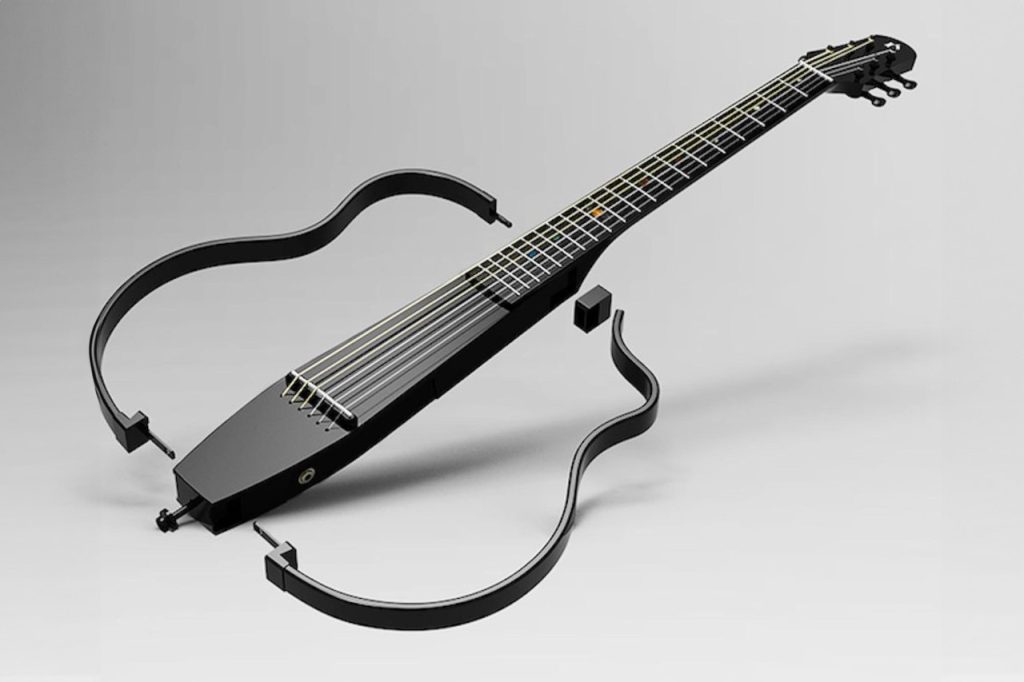
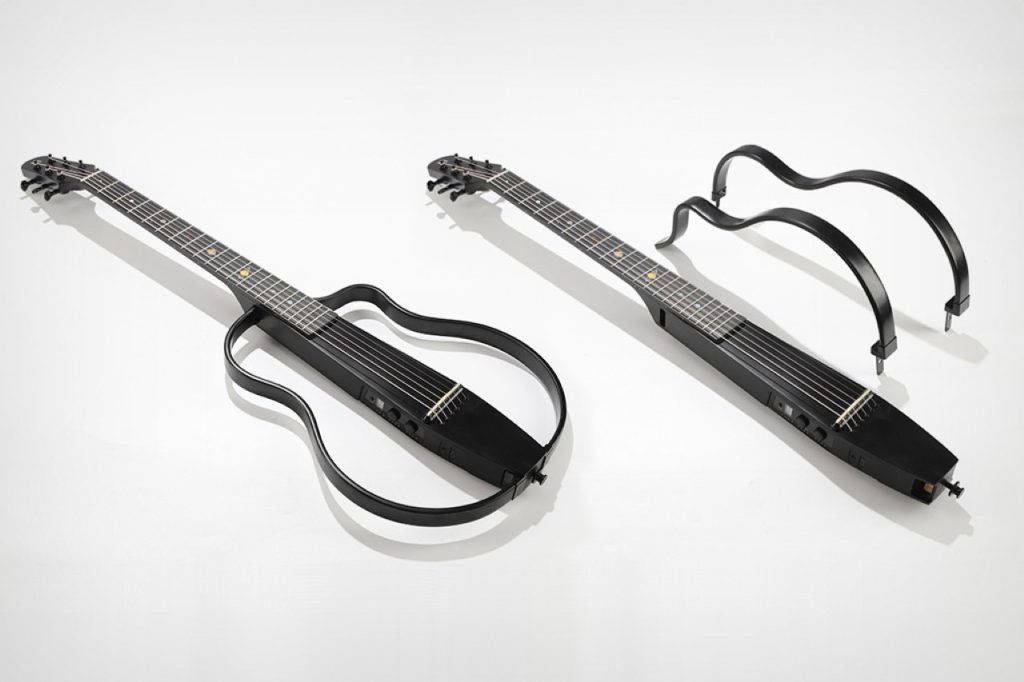
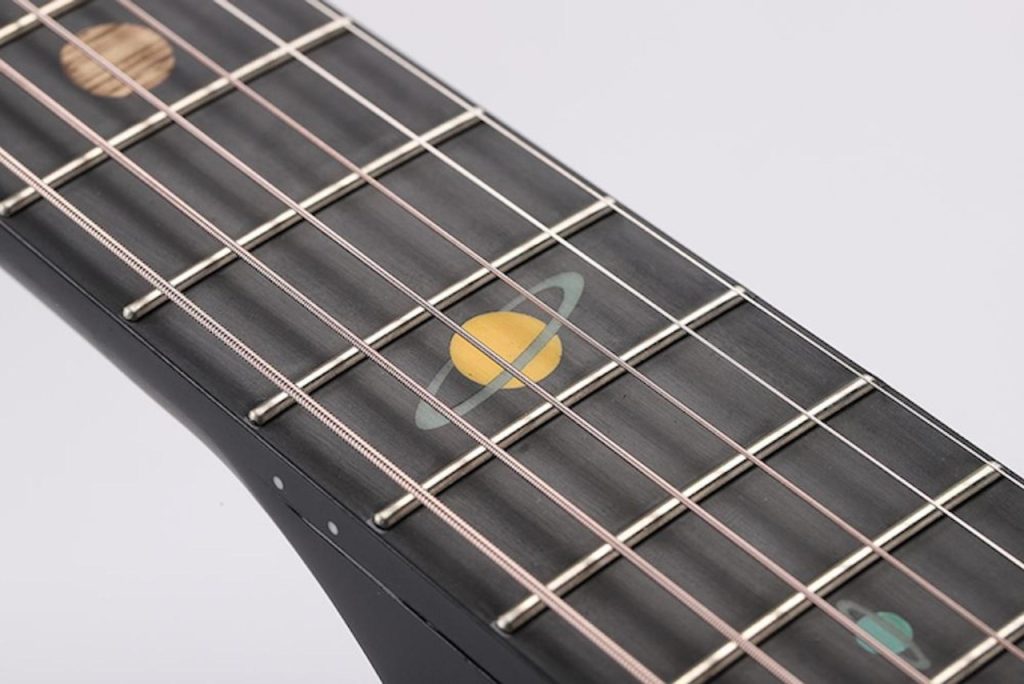
Visually, it is one of the most resolved products in this space. The all-black bamboo construction gives it a clean, almost stealth-like presence, while the optional Starry Sky edition softens that seriousness with planetary fret markers that add just enough whimsy without tipping into novelty. Structurally, the guitar borrows from the logic of Yamaha’s Silent Guitar, using a slim central body with detachable curved wooden elements that plug into the top and bottom during play. Those side pieces restore the familiar silhouette and ergonomics of a conventional guitar, then unplug when it is time to travel, reducing bulk without forcing the player to relearn posture or hand position. It is a smart compromise between stage comfort and transit efficiency.
Natasha Smart Travel Guitar
Under the surface, the Natasha guitar is closer in spirit to an electric guitar than an acoustic one, even though it can function independently without an external amp. A 2000mAh battery powers an internal processor and onboard sound system, giving players the ability to plug directly into wired headphones, external speakers, or a phone-based setup and start playing immediately. The guitar includes built-in effects, EQ adjustments, tone presets, and an onboard tuner, all of which are controlled through its integrated electronics rather than a sprawling pedalboard or rack of outboard gear. In practical terms, it turns a guitar session into something far more self-contained: switch it on, dial in a sound, plug in headphones, and play.
Natasha Smart Travel Guitar
The companion app is where Natasha makes its strongest argument for what a modern travel guitar can be. Through a USB-C connection, the guitar links to a smartphone app that opens access to additional effects, recording tools, looping functions, editing features, and even rhythm support through a drum machine. That ecosystem shifts the guitar from being merely a practice instrument to being a compact production platform. You are no longer just rehearsing riffs in private. You are sketching ideas, layering textures, capturing demos, and shaping songs without needing an amp stack, a laptop, or a band in the room. With up to 20 hours of battery life and a price point well below many premium silent guitars, Natasha’s Smart Travel Guitar feels like a particularly sharp example of design innovation not because it reinvents the guitar from scratch, but because it understands exactly which parts of the old experience are worth preserving and which are overdue for an upgrade.
If the twentieth century guitar was built for the stage, the studio, and the bedroom wall, the twenty-first century version may be built for the carry-on bag, the smartphone, and the player who wants to move between learning, practicing, recording, and performing without changing tools. And if that means the future guitar sometimes has no strings, folds in half, or looks suspiciously like a luxury speaker with a neck attached, that may be less a disruption than an overdue design correction.