There are few furniture categories designers love testing themselves against more than the lounge chair. It demands comfort, certainly, but comfort alone has never been enough to make a chair memorable. The best lounge chairs carry a point of view. They reveal how a designer thinks about materials, structure, movement, craftsmanship, and increasingly, the realities of modern living.
Arc One by Deniz Özdemir
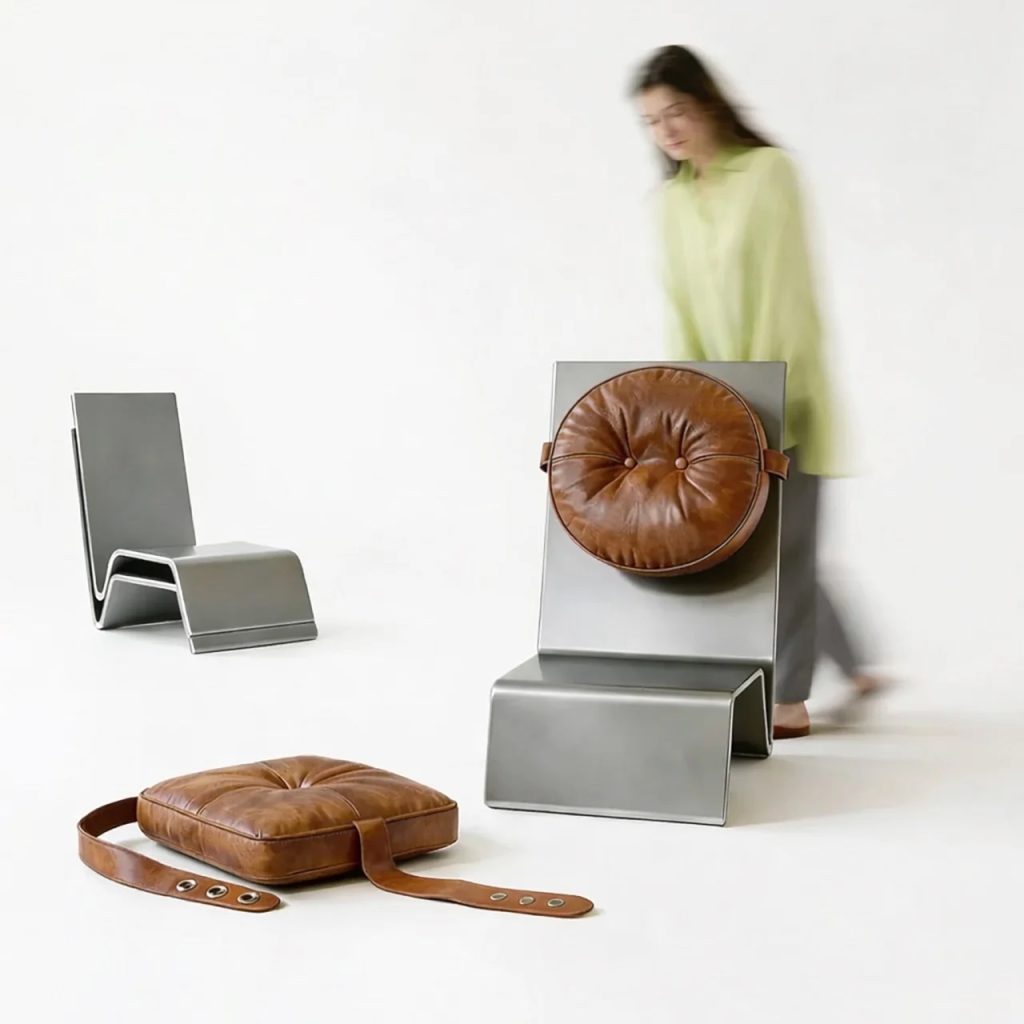
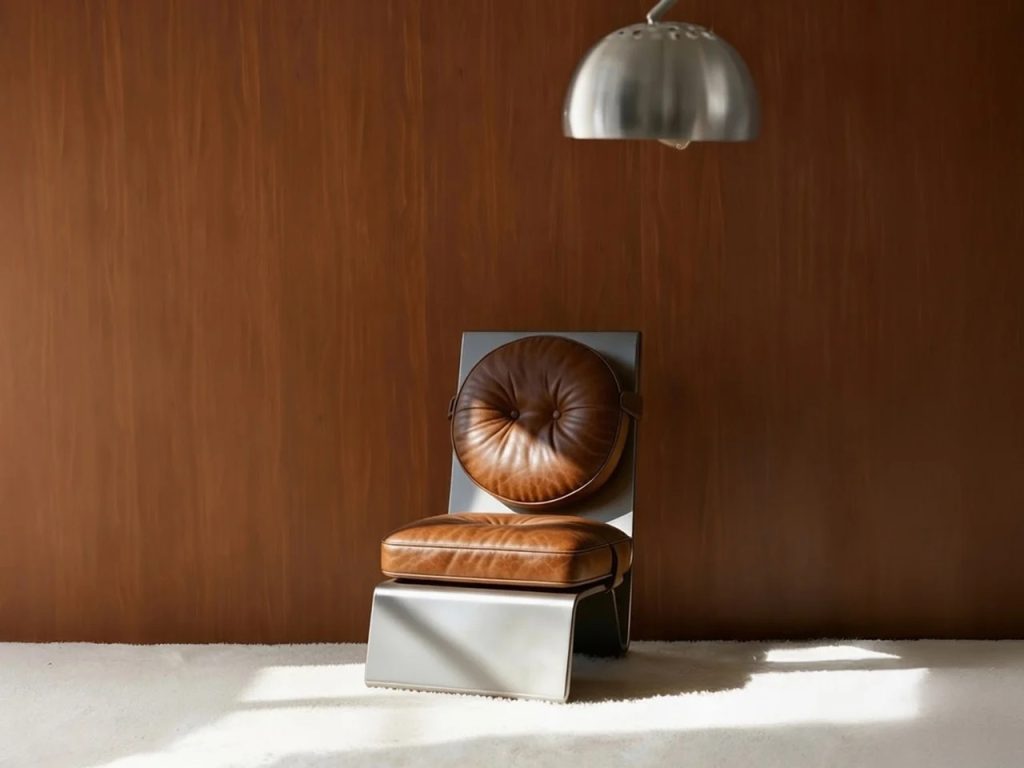
Sheet metal has existed inside furniture for decades, but usually in hiding. It functions as the unseen skeleton beneath upholstery, concealed under layers of foam, lacquer, or timber cladding. Deniz Özdemir’s Arc One lounge chair flips that hierarchy completely. The A’ Design Award-winning piece places the sheet metal front and center, allowing the structural body itself to become the visual identity of the chair.
Arc One by Deniz Özdemir
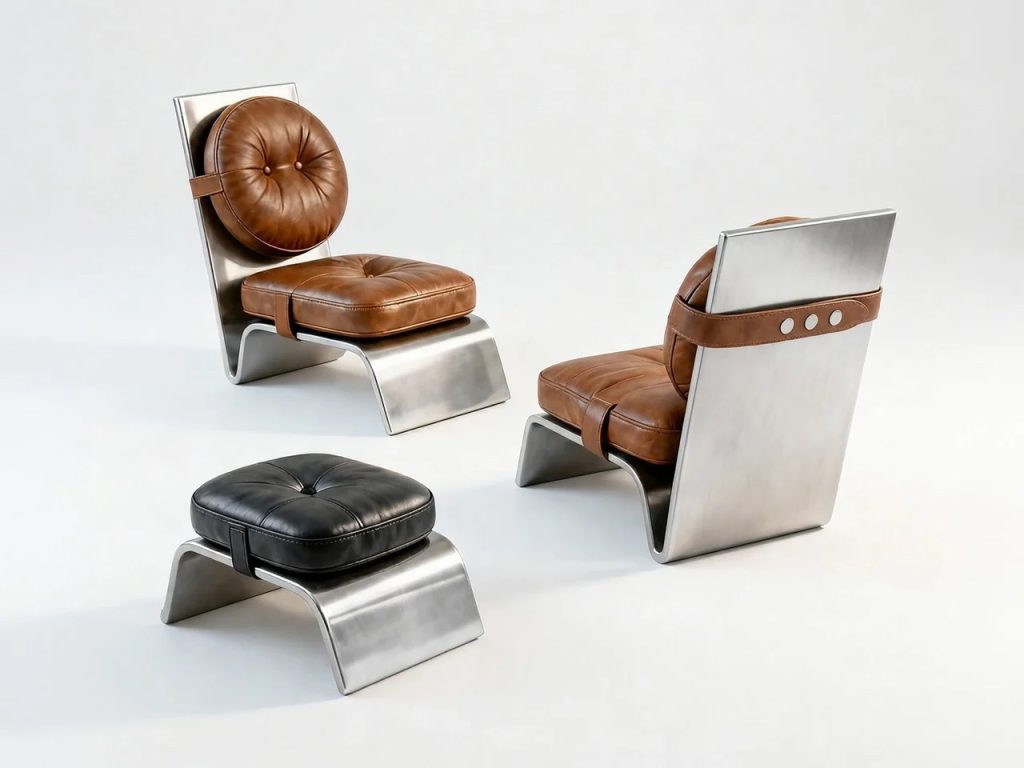
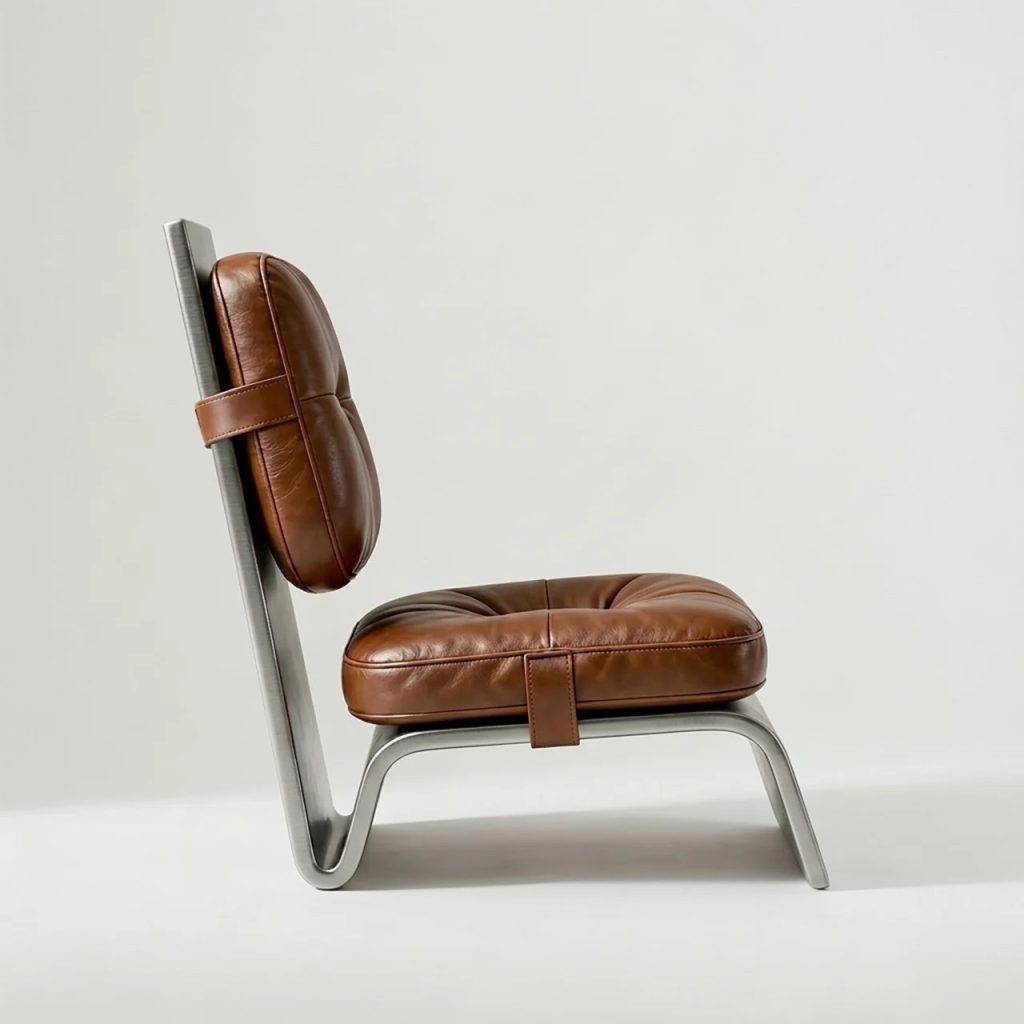
Seen from the side, Arc One appears almost impossibly continuous. A single bent-metal surface sweeps from the backrest into the seat and curves directly into the base without interruption. There are no visible legs, no secondary frame, and no decorative disguise masking the engineering beneath. The chair relies entirely on laser cutting and CNC bending, processes that demand precision because they leave little room for corrective hand-finishing later. The result is a form that feels remarkably pure, where fabrication logic and aesthetic expression become the same thing.
Arc One by Deniz Özdemir
What makes Arc One particularly intelligent is how efficiently it resolves manufacturing and logistics concerns without compromising visual sophistication. Most lounge chairs are complicated assemblies involving multiple joints, brackets, fasteners, and structural layers. Arc One eliminates welding and mechanical fastening altogether through its single-piece construction. Bare frames can stack flat for storage and transport, dramatically reducing shipping volume and production complexity. It is a practical advantage rarely prioritized in furniture at this level of sculptural ambition, yet here it becomes integral to the design narrative.
Arc One by Deniz Özdemir
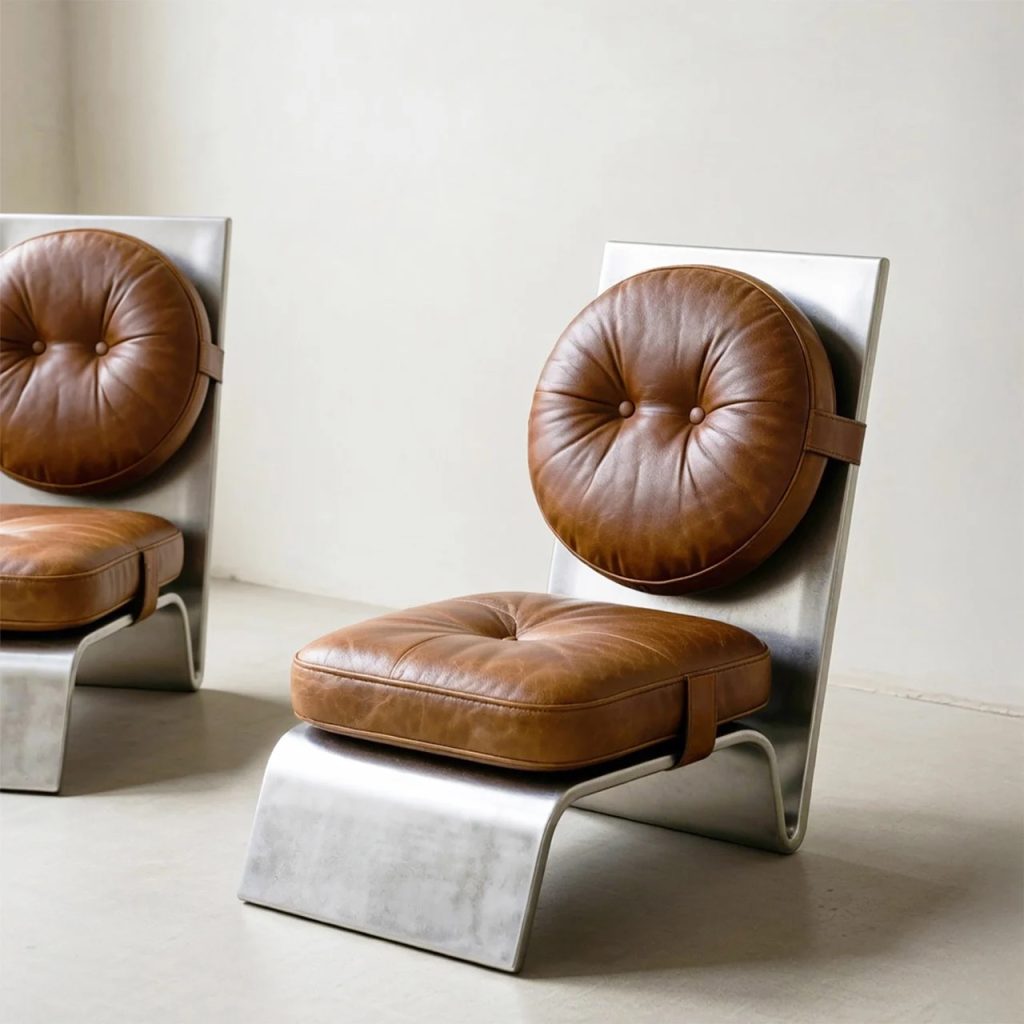
Tufted leather cushions attach to the metal shell using visible leather straps and snap fasteners that feel closer to equestrian craftsmanship than traditional furniture detailing. The cognac leather paired with brushed raw metal recalls the confidence of mid-century Italian masters like Osvaldo Borsani, where industrial materials and luxurious surfaces coexisted unapologetically. Crucially, the cushions are replaceable, allowing the chair to evolve over time rather than aging into obsolescence. That decision transforms Arc One from a static statement piece into something more adaptable and enduring.
AquaForma by Valentina Algorta, Lorenzo Gennari, and Sabrina Lounis
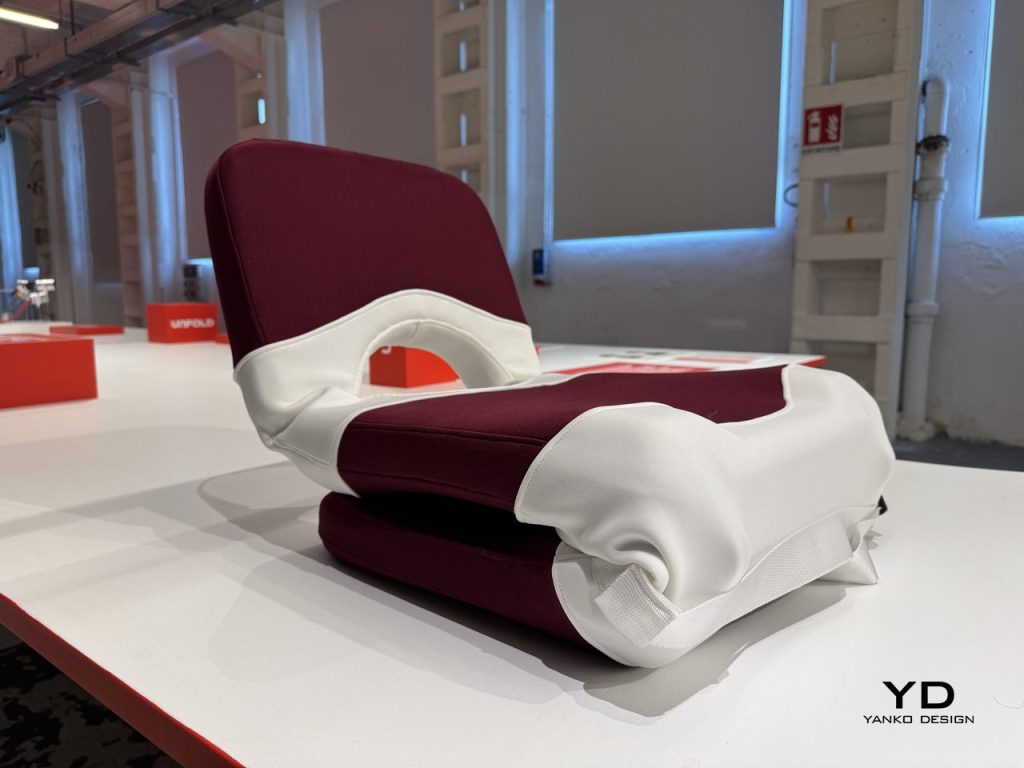
If Arc One examines how industrial fabrication can become emotionally expressive, the next project asks a far more urgent question: what happens when furniture must respond not only to comfort, but to crisis? Flooding has become one of the defining spatial anxieties of contemporary life. Homes built for permanence increasingly face conditions they were never designed to survive, yet most furniture still behaves as though the domestic environment is stable and predictable. AquaForma, developed by Domus Academy Milano students Valentina Algorta, Lorenzo Gennari, and Sabrina Lounis, confronts this disconnect directly through a piece that quietly transforms from lounge seating into an emergency flotation device.
AquaForma by Valentina Algorta, Lorenzo Gennari, and Sabrina Lounis
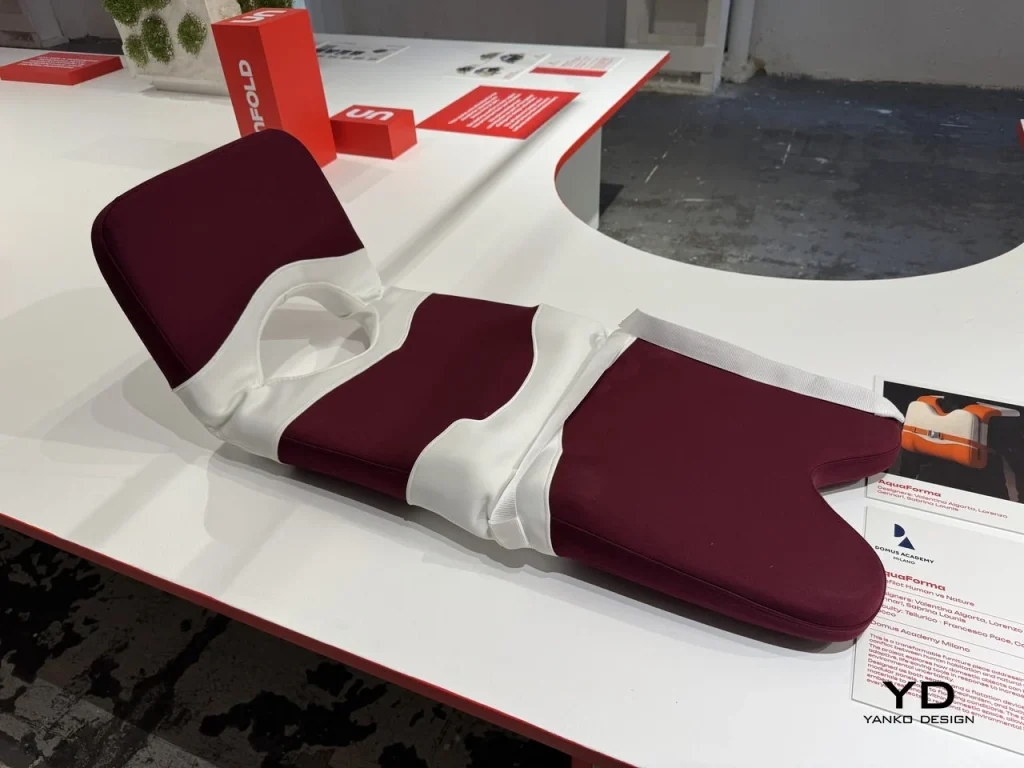
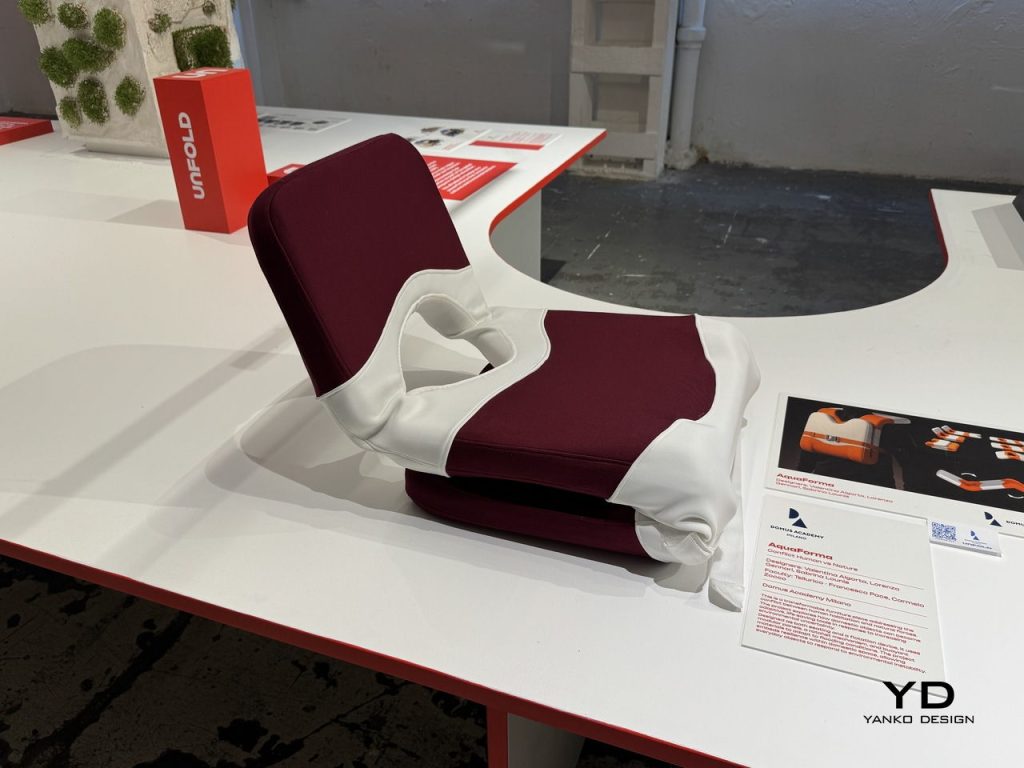
At first glance, AquaForma reads as an elegant low-profile lounge chair. Upholstered in deep burgundy fabric and wrapped in a sculptural white shell, the piece fits comfortably within contemporary interior aesthetics. The organic curves and soft proportions reveal nothing about its secondary function. That restraint is precisely what makes the concept compelling. Rather than aestheticizing disaster preparedness, the designers embed resilience invisibly into everyday domestic life.
AquaForma by Valentina Algorta, Lorenzo Gennari, and Sabrina Lounis
The transformation mechanism relies on modular buoyant components and a ratchet buckle system that allows the chair to be disassembled and reconfigured during emergencies. Panels interlock and shift orientation, converting the object into a flotation structure capable of supporting human survival during flooding events. Importantly, the hardware never feels gratuitous or performative. The ratchet strap that secures the chair in normal use becomes the same mechanism that enables structural adjustment during crisis scenarios. Every component performs multiple roles, balancing domestic elegance with emergency utility.
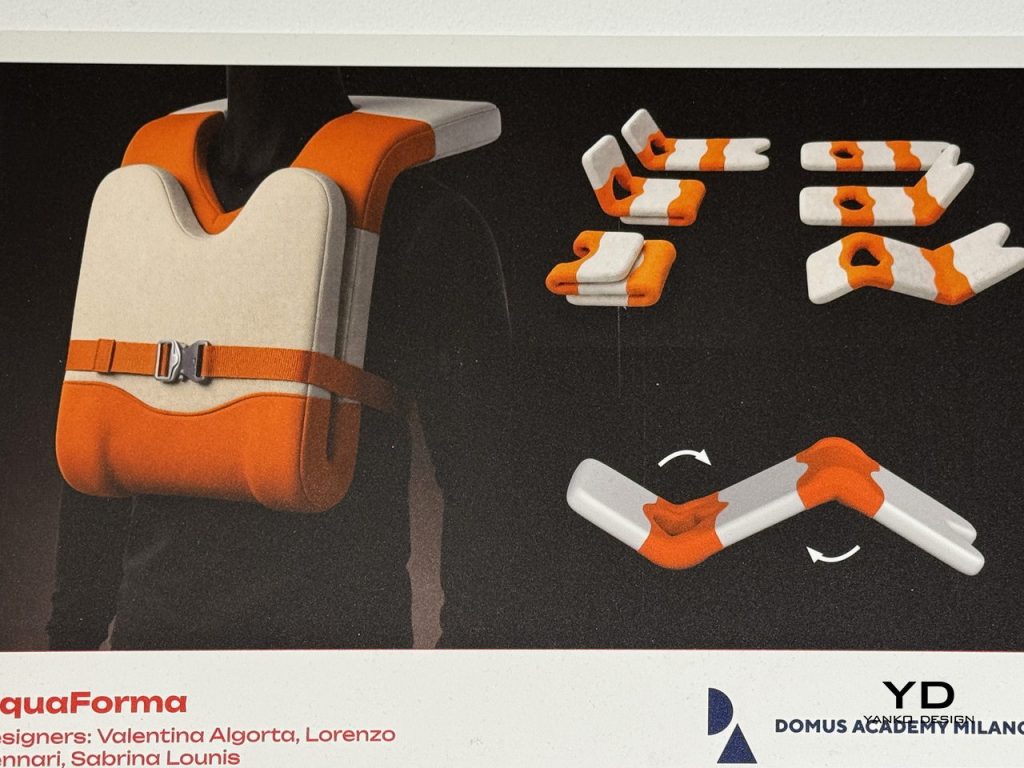
AquaForma by Valentina Algorta, Lorenzo Gennari, and Sabrina Lounis
Presented during Milan Design Week 2026 at BASE Milano as part of the UNFOLD exhibition, AquaForma demonstrates a growing shift in design thinking where resilience becomes integrated rather than reactive. The project succeeds because it refuses to look like survival equipment. It preserves dignity and normalcy until the moment adaptation becomes necessary. In that sense, AquaForma feels less like speculative design and more like a realistic preview of how future furniture may need to operate in a climate-altered world.
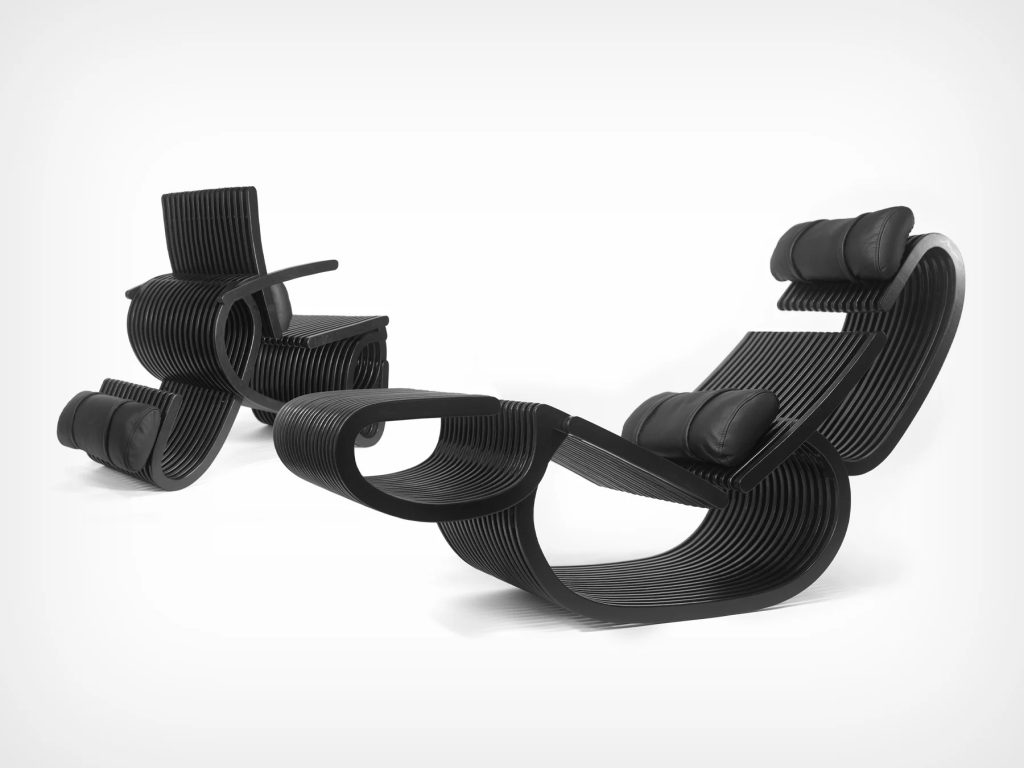
Silhouette by Jonah Rappaport (also header image)
Where AquaForma responds to environmental uncertainty, Jonah Rappaport’s Silhouette tackles another longstanding problem within furniture design: how to make transformability feel elegant rather than apologetic. Transformable furniture has historically struggled with aesthetics. Sofa beds, recliners, and Murphy beds often reveal their mechanisms too openly, burdened by exposed hardware and awkward structural compromises that make them feel more utilitarian than architectural. Jonah Rappaport’s Silhouette, winner of the A’ Design Award 2025-2026, approaches this issue differently by treating the visual awkwardness itself as the central design problem.
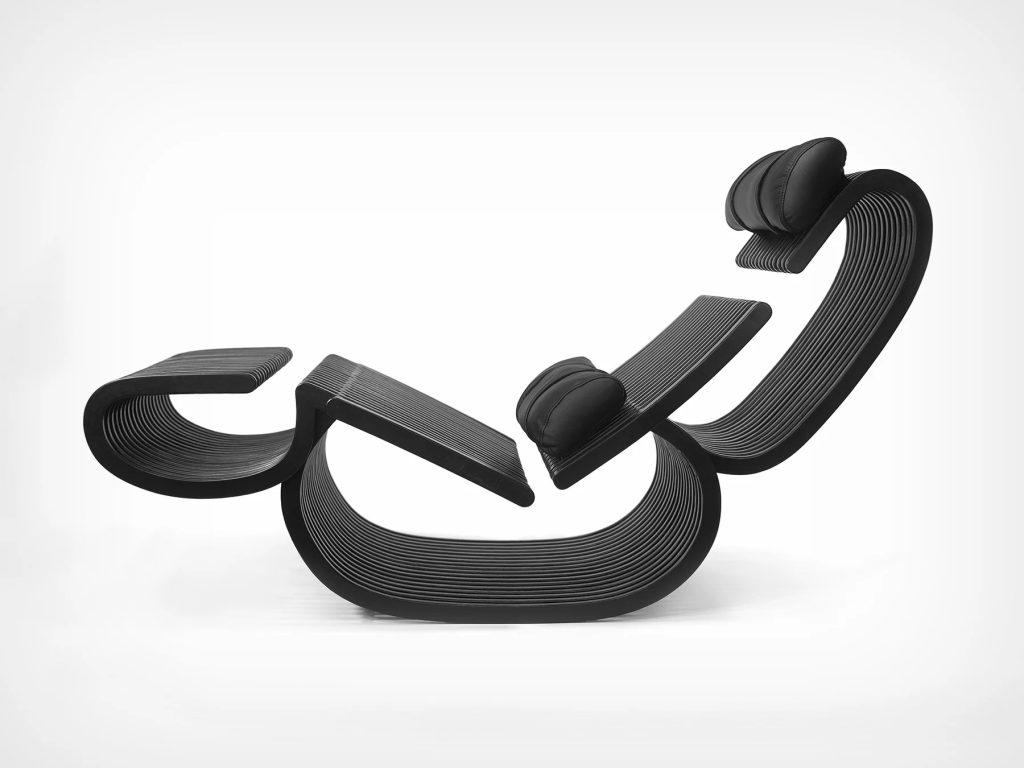
Silhouette by Jonah Rappaport
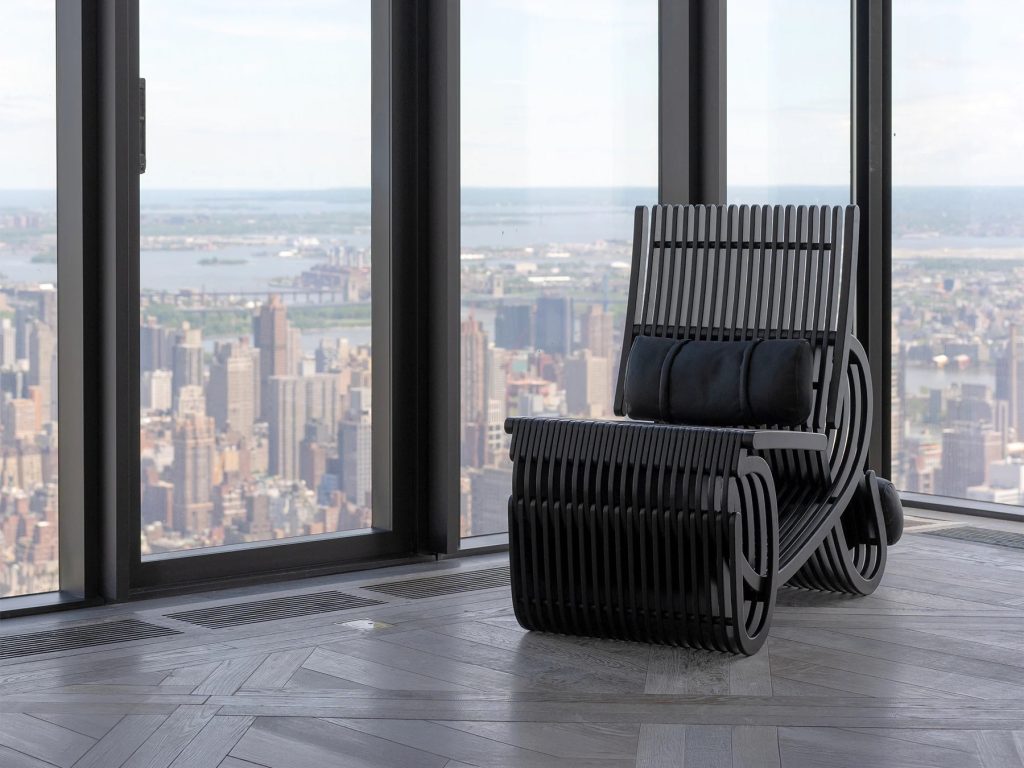
The result is a convertible chair that behaves less like machinery and more like sculptural calligraphy. Constructed from layered Baltic birch plywood finished in deep black stain, Silhouette transitions between armchair, lounge chair, and chaise longue configurations through fluid structural movement rather than visible mechanical intervention. Depending on the configuration, the chair resembles an abstract ribbon looping through space, with no obvious indication that it transforms at all.
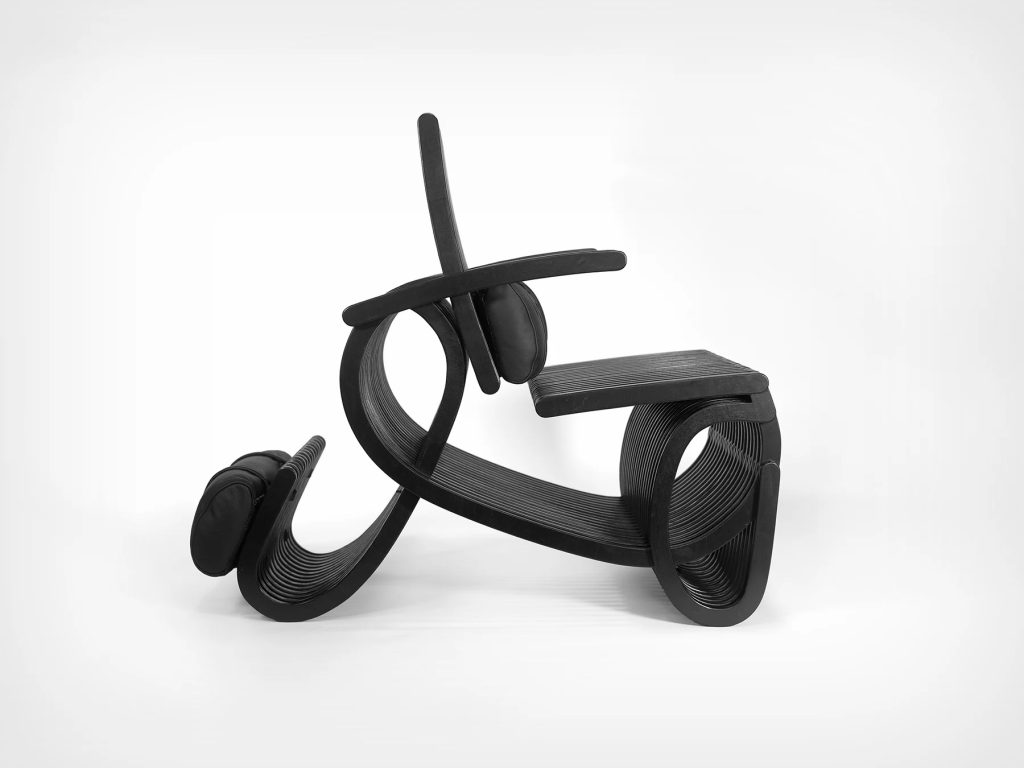
Silhouette by Jonah Rappaport
What makes the engineering impressive is how seamlessly the structural logic shifts between modes. Components that suspend the headrest and legrest in chaise configuration rotate downward to become load-bearing legs in armchair mode. Rather than adding external mechanisms, the chair reorganizes its own geometry. Concealed locking systems integrated into the base secure each position, while adjustable armrests and an infinitely variable backrest allow smooth ergonomic transitions without tools or exposed hardware.
Silhouette by Jonah Rappaport
Equally significant is the project’s commitment to repairability. Every moving connection is metal-to-metal, with no permanent adhesive bonds holding structural joints together. The chair can be fully disassembled, repaired, and reassembled without damaging the wood components, a notable departure from an industry that frequently treats furniture as semi-disposable. Designed and fabricated within Yale’s wood and metal shops over four months, Silhouette carries the precision of a thesis project but the maturity of a commercially viable product. It suggests that transformable furniture does not need to sacrifice visual coherence for functionality after all.