Power strips are among the most essential objects in our daily lives, yet they rarely receive the design attention they deserve. Tucked behind sofas, hidden beneath desks, or buried in a tangle of cables, they have long been treated as practical necessities rather than considered parts of our interiors. But as our homes and workspaces become increasingly connected, perhaps it is time to rethink the role of these everyday accessories. What if power strips were designed not to disappear, but to be seen?
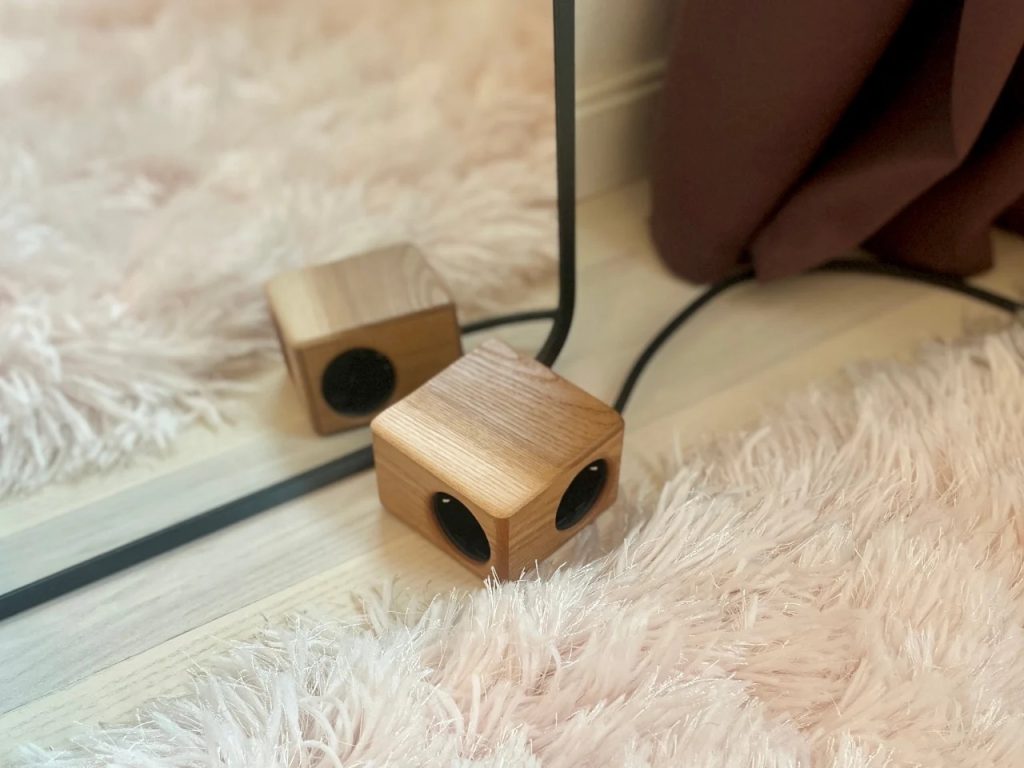
Cuboid+ by Kord x Bark Sweden
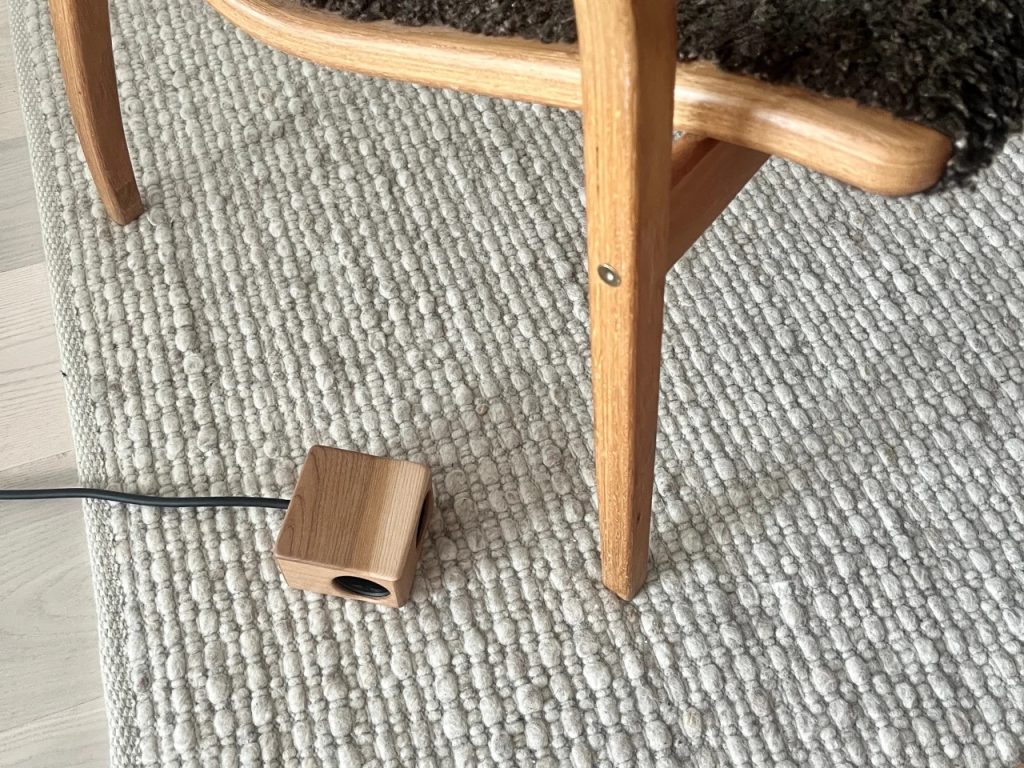
There is something wonderfully unexpected about seeing a power strip dressed in wood. Swedish brands Kord and Bark Sweden have teamed up to give the Cuboid+ a more considered appearance with the Wooden Case, a beautifully crafted shell made from reclaimed elm. Designed by Gustav Rosén of Kord in collaboration with Bark Sweden, the accessory swaps the usual anonymous plastic exterior for a material that feels much more at home alongside furniture and carefully selected interior objects. Its broad square top, softly rounded edges, and circular openings create a restrained, almost furniture-like presence without hiding its purpose. The sockets remain accessible through openings around the sides, while dedicated cutouts accommodate the USB-C ports and power cable.
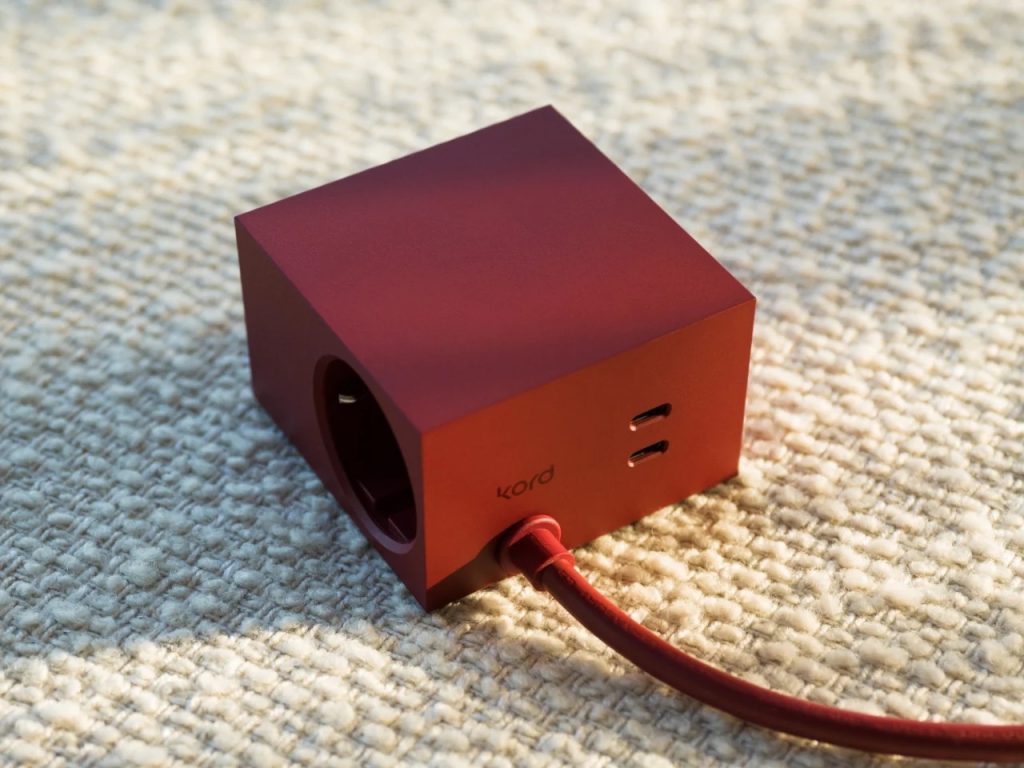
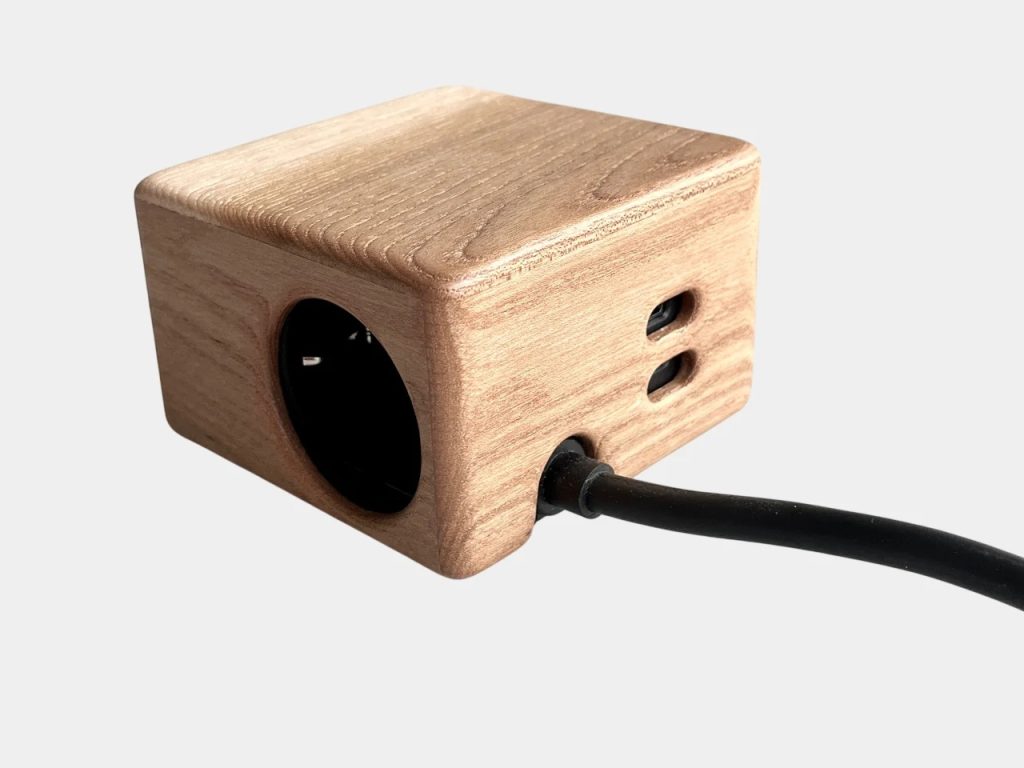
Cuboid+ by Kord x Bark Sweden
The beauty of the concept lies in its simplicity. Rather than reinventing the electrical product itself, the designers focus on changing how it looks and feels within a space. The Cuboid+ still offers three power sockets and two USB-C ports, providing the same practical functionality beneath its wooden exterior. The case simply slides on and off, making it possible to refresh the appearance without replacing an otherwise perfectly functional power strip. It is a small intervention, but one that challenges an established design habit: why should something we use every day automatically be something we hide?
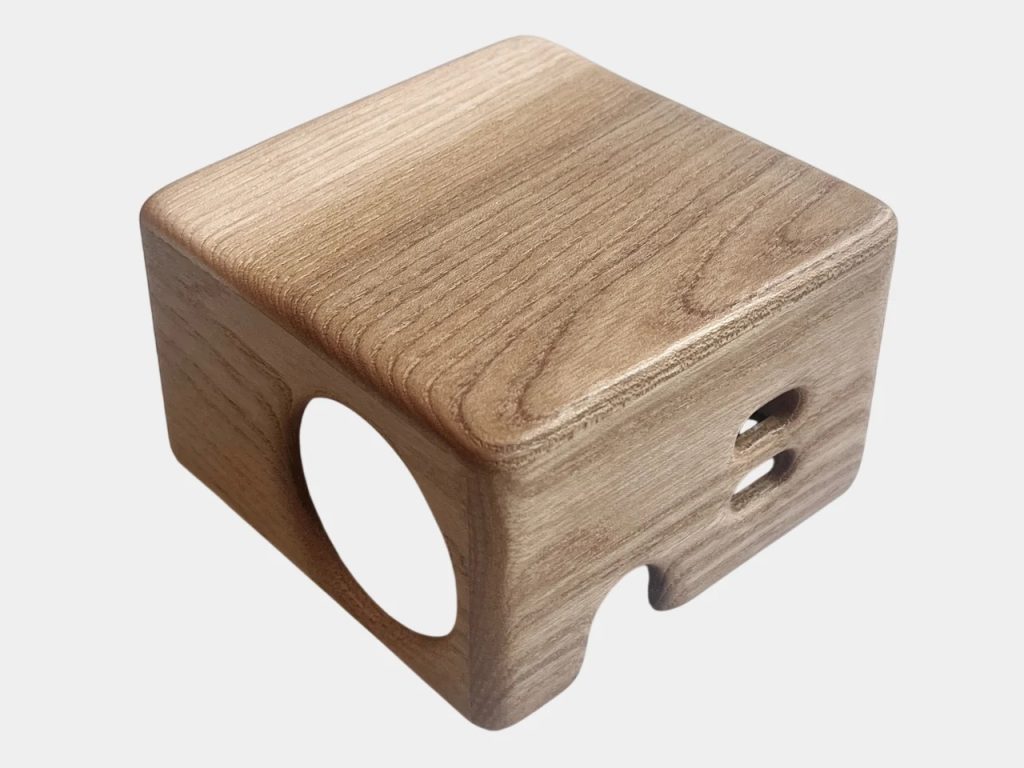
Cuboid+ by Kord x Bark Sweden
The material choice also brings a compelling story of its own. The elm used for the cases once grew beside the River Tidan at Åreberg Farm in Sweden’s Skaraborg region. After Dutch elm disease forced the tree to be felled, Bark Sweden reclaimed the timber and gave it a second life. Each case therefore carries its own natural grain patterns and subtle variations, making every piece slightly different. Precision woodworking and CNC machining ensure that the curved edges and carefully positioned openings fit the Cuboid+ with accuracy. Designed and manufactured in Sweden, the collaboration also brings together two founders whose paths first crossed while studying mechanical engineering at Stockholm’s KTH Royal Institute of Technology.
Nomad Collection by Form Us With Love (also header image)
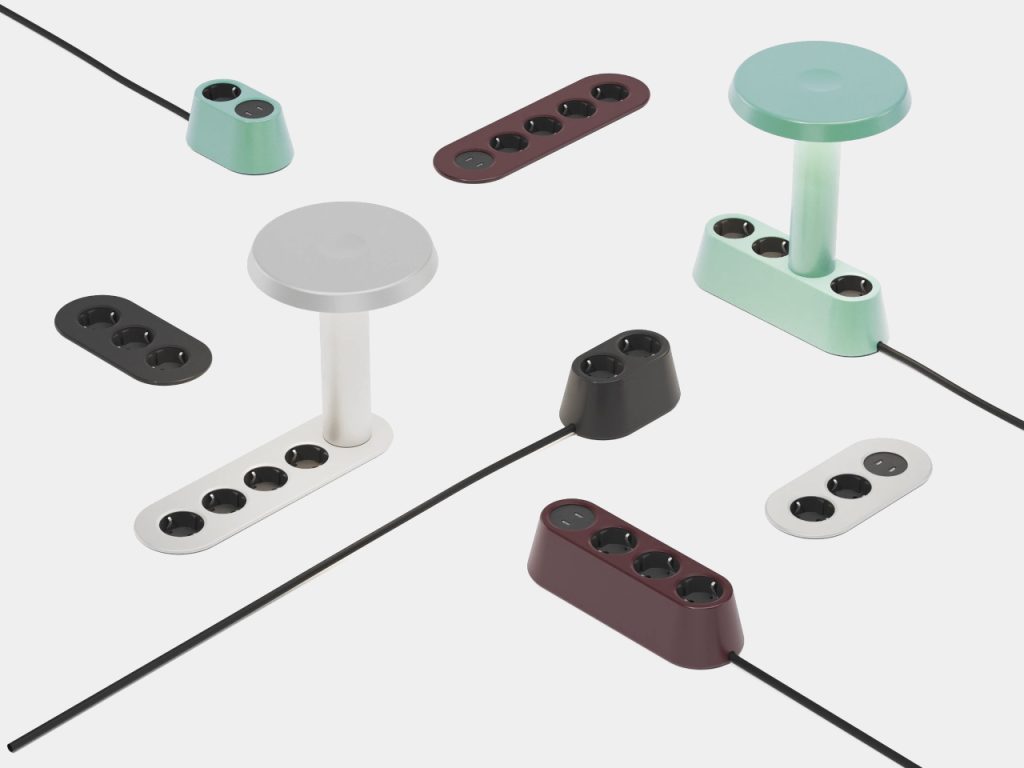
If Kord and Bark Sweden approach the power strip as an object worthy of a material makeover, Form Us With Love takes a broader view of how electrical accessories should fit into contemporary interiors. Its Nomad Collection, developed for Forming Function, treats power and charging solutions as an integral part of the spaces we inhabit rather than inconvenient necessities to be concealed. The collection responds to a familiar contradiction in modern design: we invest in beautiful furniture, carefully organized workspaces, and thoughtfully selected lighting, only to disrupt the overall picture with an assortment of plastic adapters and tangled cables. Nomad proposes a more harmonious alternative, turning functional accessories into objects that contribute to the visual language of a room.
Nomad Collection by Form Us With Love
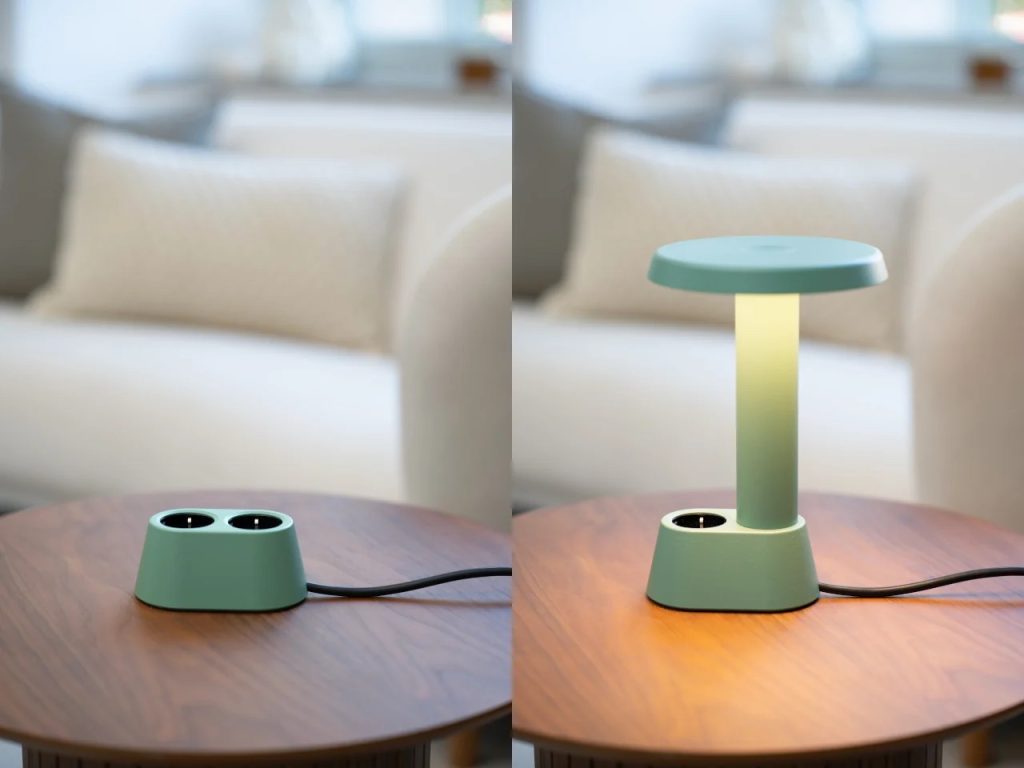
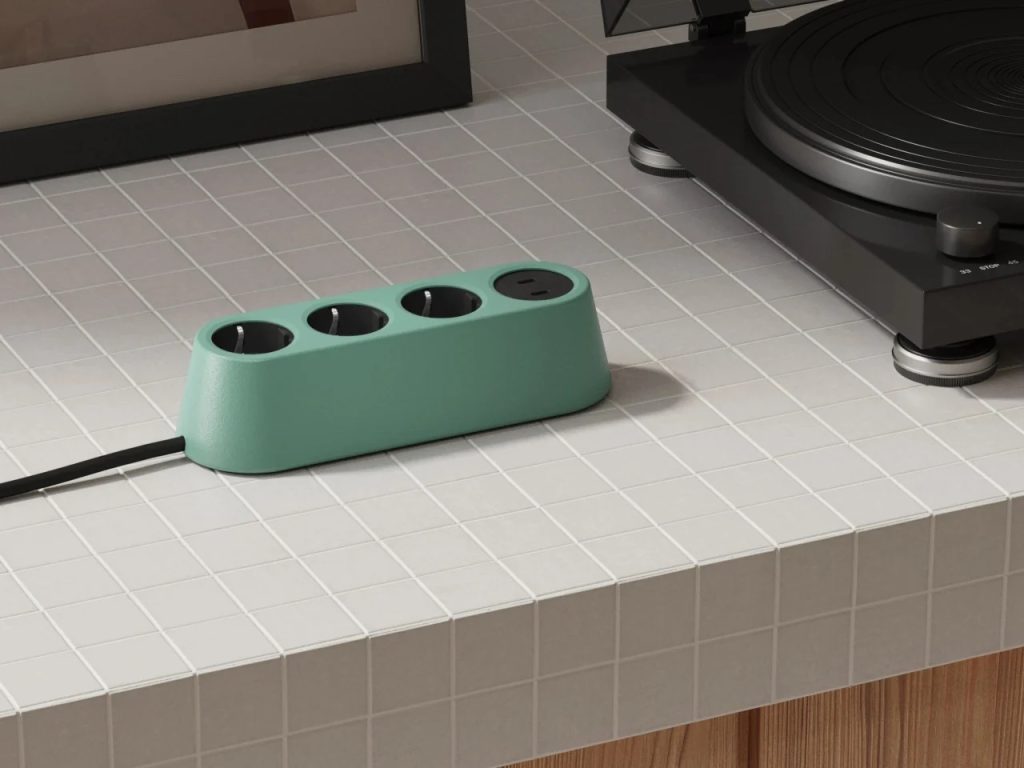
The collection includes two distinct products, the Nomad Block and the Nomad Strip. The Block features a compact, portable form with softened rectangular edges and a tactile matte finish, while the Strip offers a recessed solution designed to integrate directly into desk surfaces. Both rely on understated geometry, restrained branding, and clean proportions, allowing them to blend naturally into different environments. Rather than looking like conventional electronics, they have the presence of small architectural or sculptural objects. It is a subtle distinction, but an important one: good design doesn’t always need to attract attention. Sometimes, it simply needs to make everything around it feel more considered.
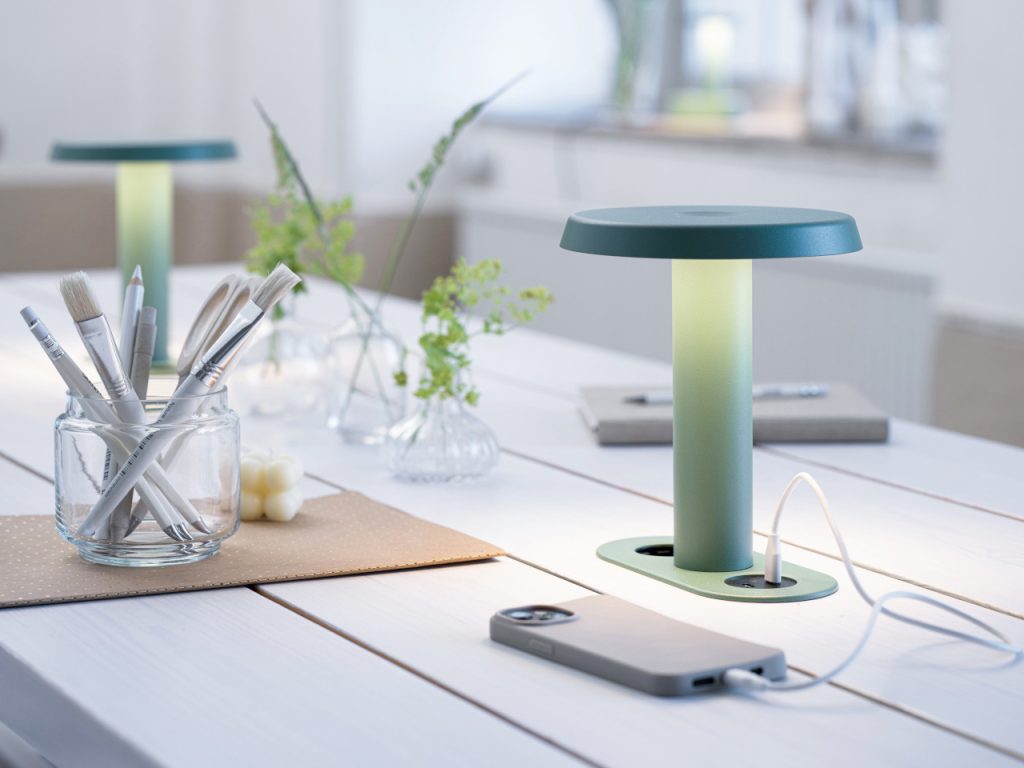
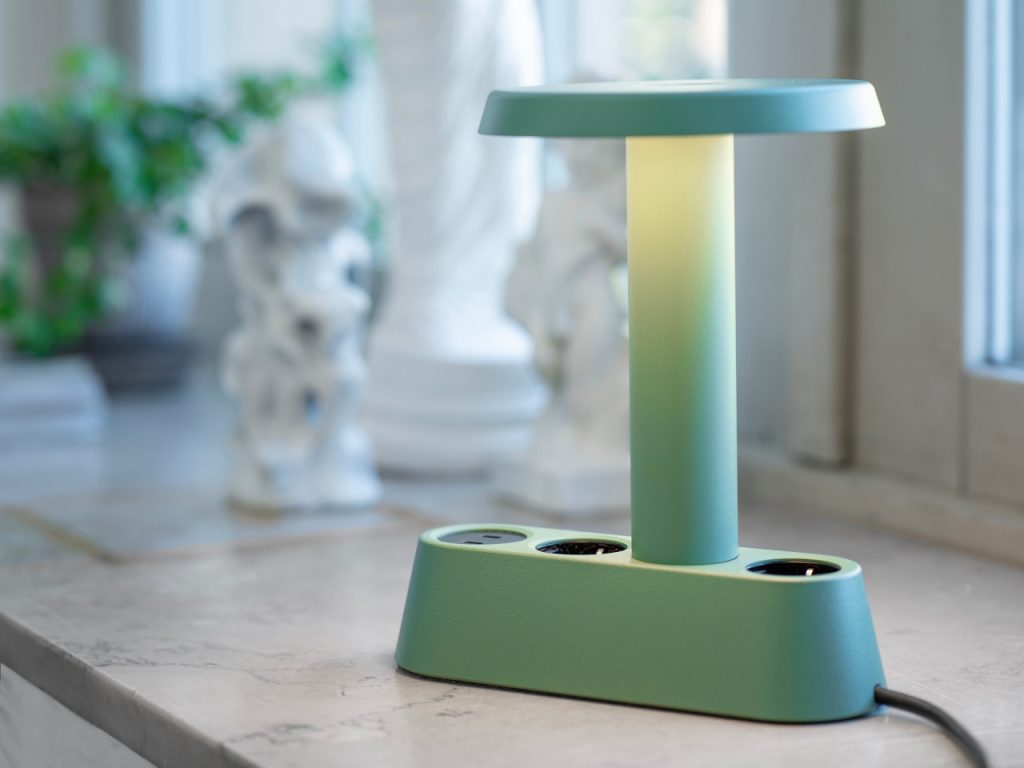
Nomad Collection by Form Us With Love
Materials play an equally important role in establishing the collection’s identity. Each housing is handcrafted in Småland, Sweden, using 100% recycled, traceable aluminum. The choice gives the products a substantial, premium feel while connecting their appearance to a more responsible approach to manufacturing. The aluminum’s understated finish also makes the collection feel less disposable than the typical plastic power accessory. Functionality, meanwhile, is anything but overlooked. The Nomad Block features a magnetic base for attachment to metal surfaces, alongside an adhesive mounting plate for other installations. Its three-meter cable offers flexibility in placement, while configuration options include multiple sockets or a combination featuring dual USB-C ports with 30W fast charging.
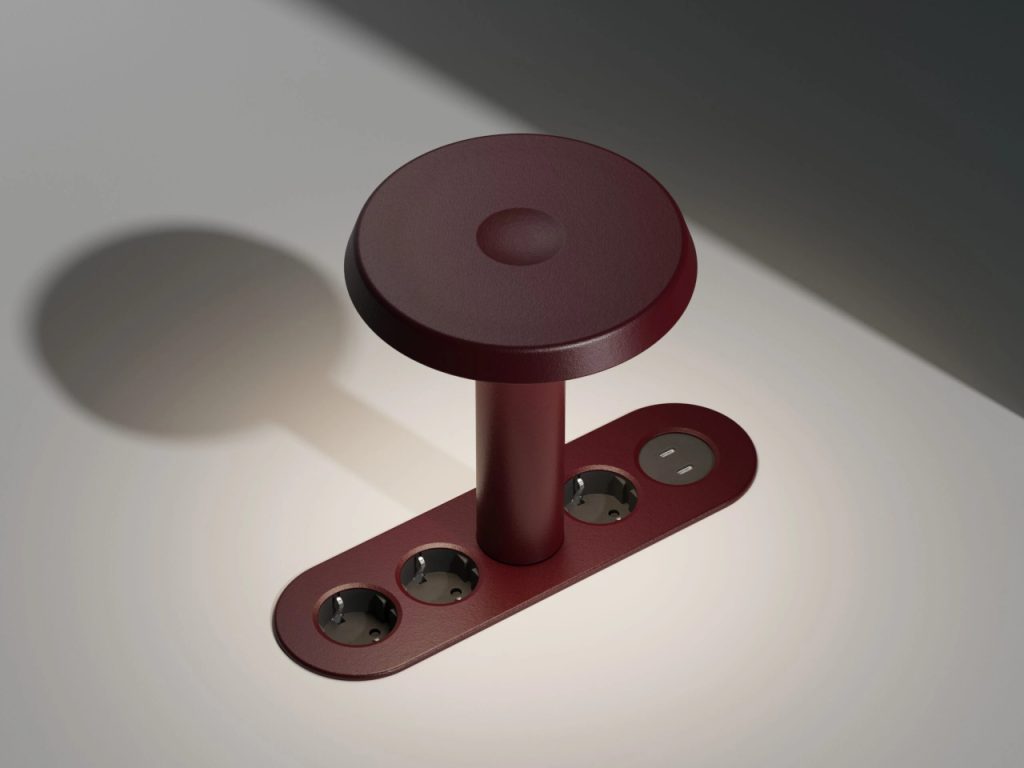
Nomad Collection by Form Us With Love
The Nomad Strip takes the integration concept a step further, sitting flush with the desk surface through a recessed installation. Complete with installation instructions and a cutout template, it turns power access into a planned part of the furniture rather than an accessory added after everything else is in place. The collection also pairs naturally with the Nomad Lamp series, creating a cohesive family of products for lighting, charging, and connectivity.
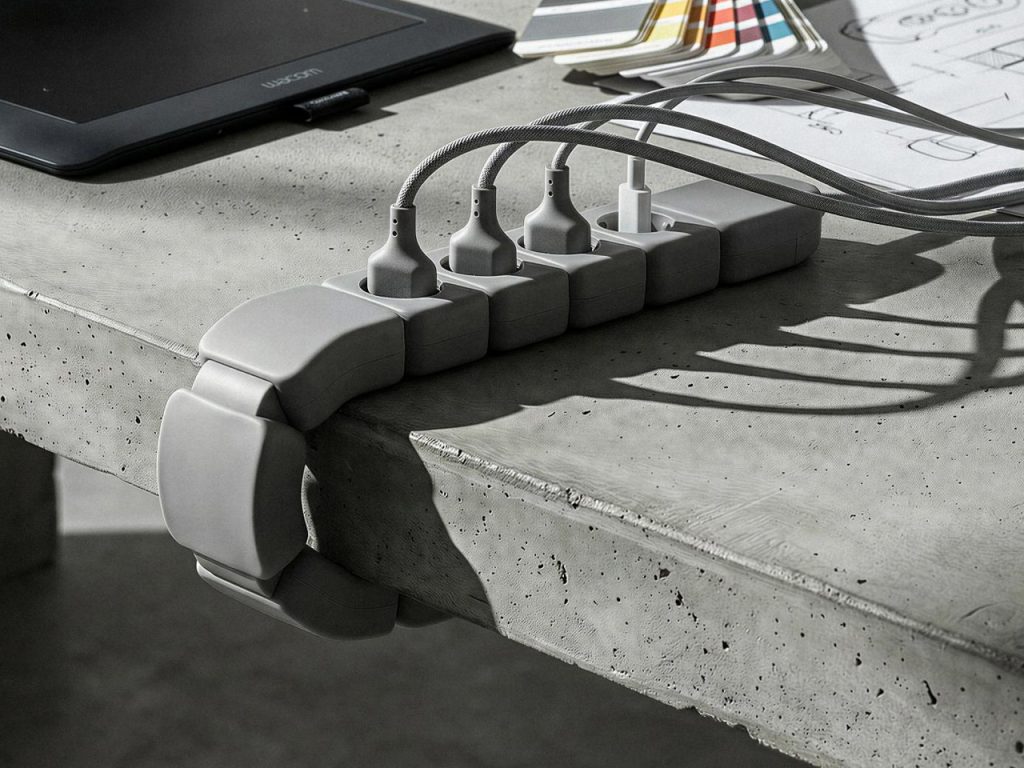
Edge by ChangZhou University
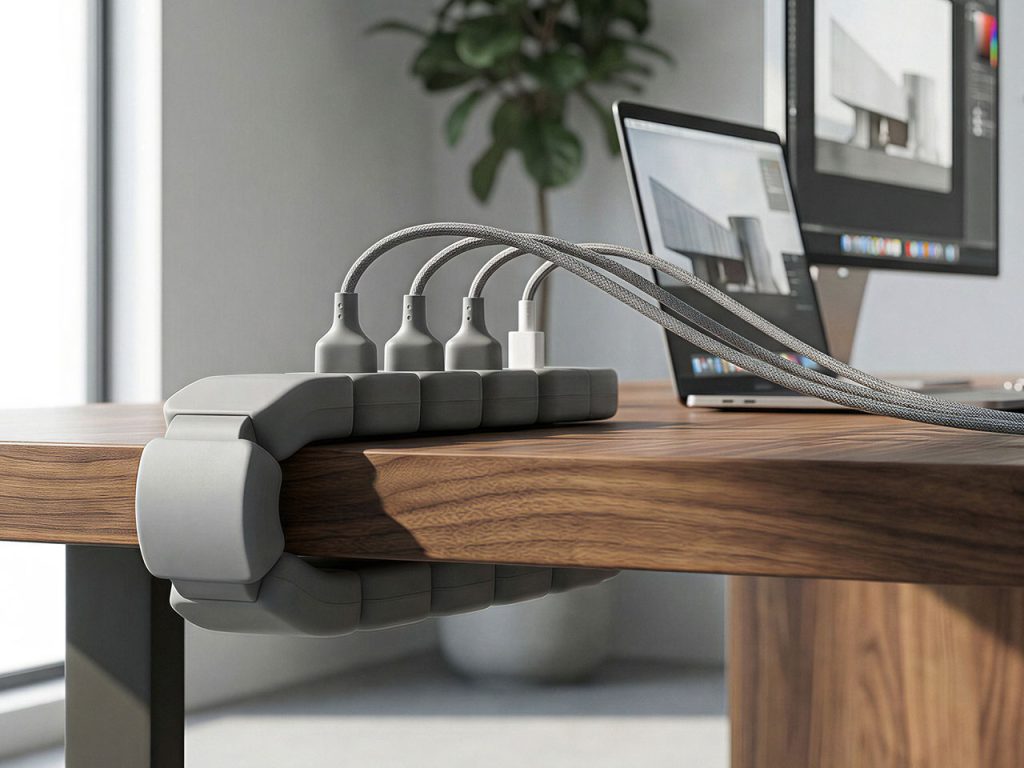
While the previous two projects focus on making power strips more attractive, Edge by ChangZhou University tackles another longstanding frustration: their placement. Even the most beautifully designed power strip can be inconvenient when it is lying on the floor, hidden beneath a desk, and surrounded by cables. Edge takes a refreshingly direct approach by bringing power access up to the desk’s edge, exactly where users need it. Recognized with an award at the New York Product Design Awards, the clamp-on modular power solution rethinks the relationship between furniture, technology, and everyday interaction. Instead of asking users to reach down whenever they need another socket, it makes power an accessible extension of the workspace itself.
Edge by ChangZhou University
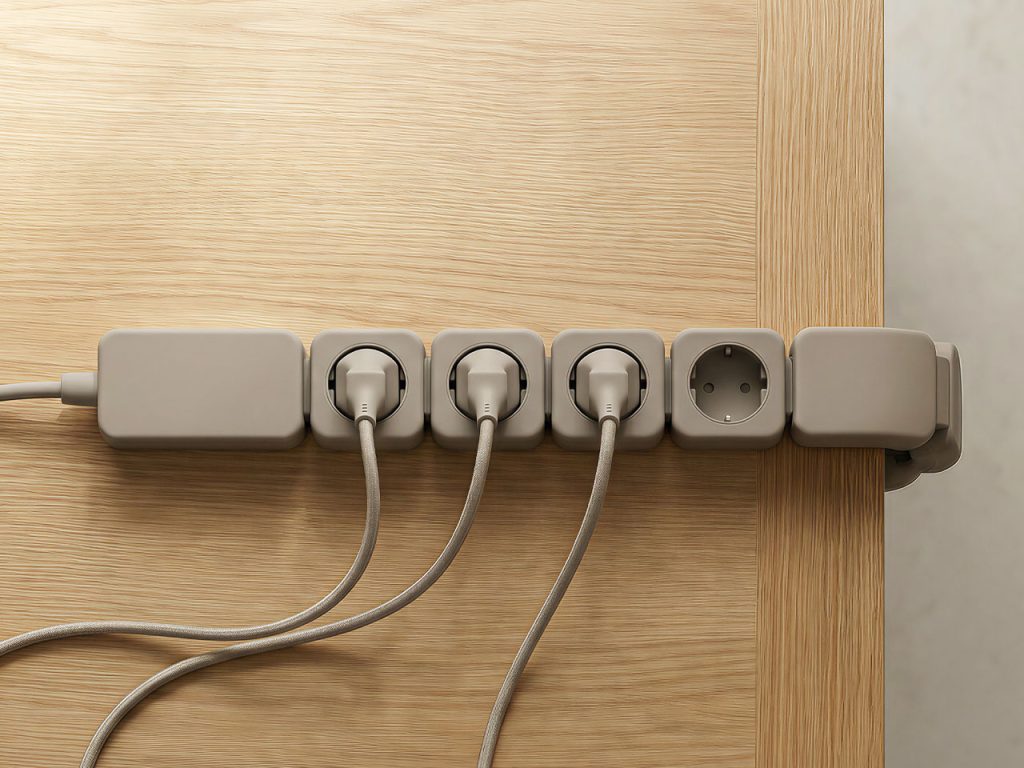
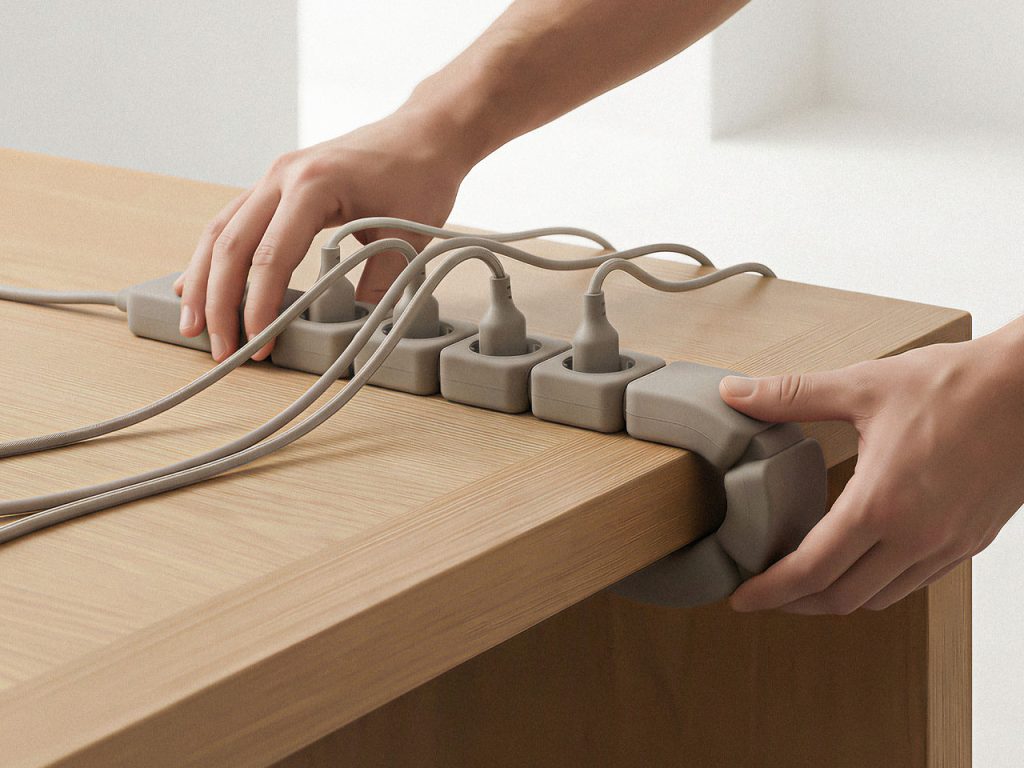
The cleverness begins with the mounting system. Edge uses a tool-free clamp that can be attached, repositioned, and adapted to different desk setups. At its heart is an over-center, self-locking mechanism that passes a neutral point as the clamp closes, helping it stay securely in place. Extended contact surfaces further improve stability and reduce unwanted movement, even with the repeated pulling and pushing that comes with connecting and disconnecting devices. It is a deceptively simple mechanical solution, but one that addresses a real problem. After all, a power strip that moves every time you unplug a charger isn’t exactly an improvement. By making the installation flexible yet secure, Edge accommodates everything from permanent home offices to shared workspaces and temporary setups.
Edge by ChangZhou University
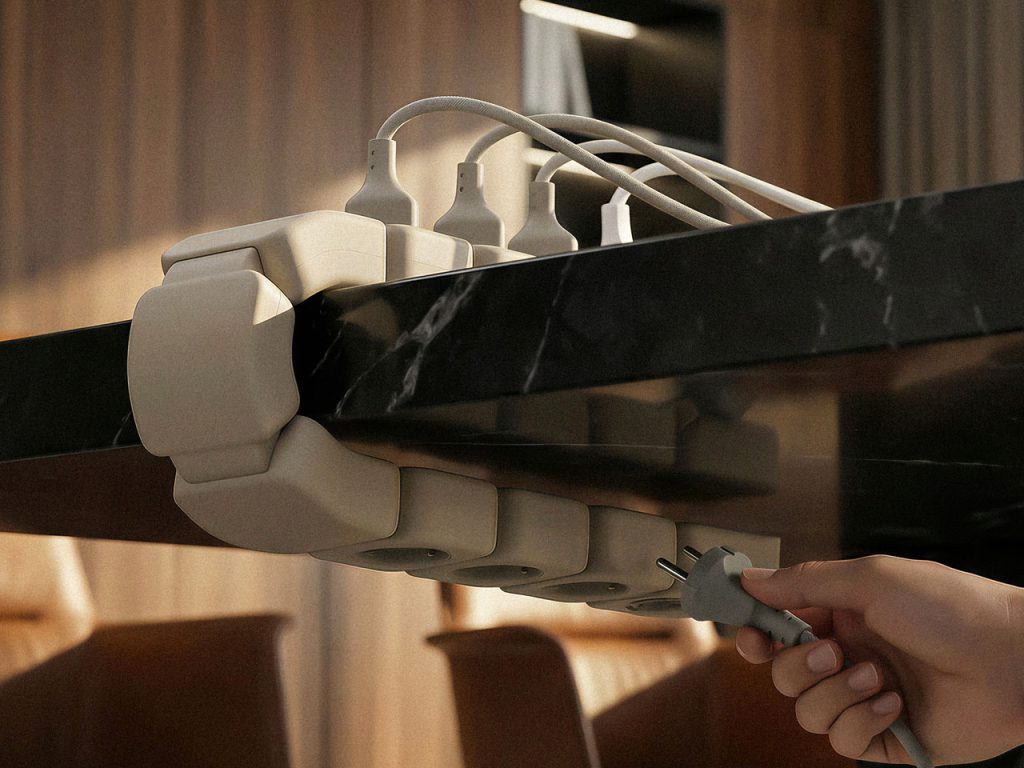
Its eight outlets are also arranged with everyday behavior in mind. Four are positioned on top for devices that need frequent access, while another four sit underneath for chargers and connections that can remain plugged in. This division helps keep the desk surface more organized without sacrificing convenience. The segmented modular body adds another layer of thoughtful engineering, helping distribute stress while allowing the product to adapt to different desk configurations. Lifting the power strip off the floor also brings some practical benefits that are easy to overlook. It keeps electrical connections away from accidental spills and cleaning water, reduces the risk of stepping on cables, and prevents office chairs from catching wires as they move around.
Edge by ChangZhou University
What makes Edge particularly compelling is that its innovation comes from reconsidering something we have simply accepted for years. We have become accustomed to power strips living under desks, as though their awkward placement were an unavoidable part of working with technology. Edge may not have the material warmth of reclaimed elm or the refined aluminum finish of the Nomad Collection, but it offers something equally valuable: a better way to interact with an everyday object.
Edge by ChangZhou University
None of these designs fundamentally changes what a power strip does. They still provide the sockets and charging connections we depend on every day. What changes is how they fit into our lives, our furniture, and our surroundings. And perhaps that is the most interesting lesson here: good design doesn’t always need to reinvent a product. Sometimes, it simply needs to give an overlooked object the attention it has deserved all along. After all, if we are going to live with cables, chargers, and power strips everywhere, they might as well look good doing it.