What happens when design stops behaving like an object and starts behaving like an atmosphere? Across Milan and New York, a new generation of installations is exploring that question through inflatable structures, vivid color, participatory environments, and architecture designed to be felt as much as seen. Rather than asking visitors to stand back and observe, they invite people to enter, linger, touch, rest, draw, and play.
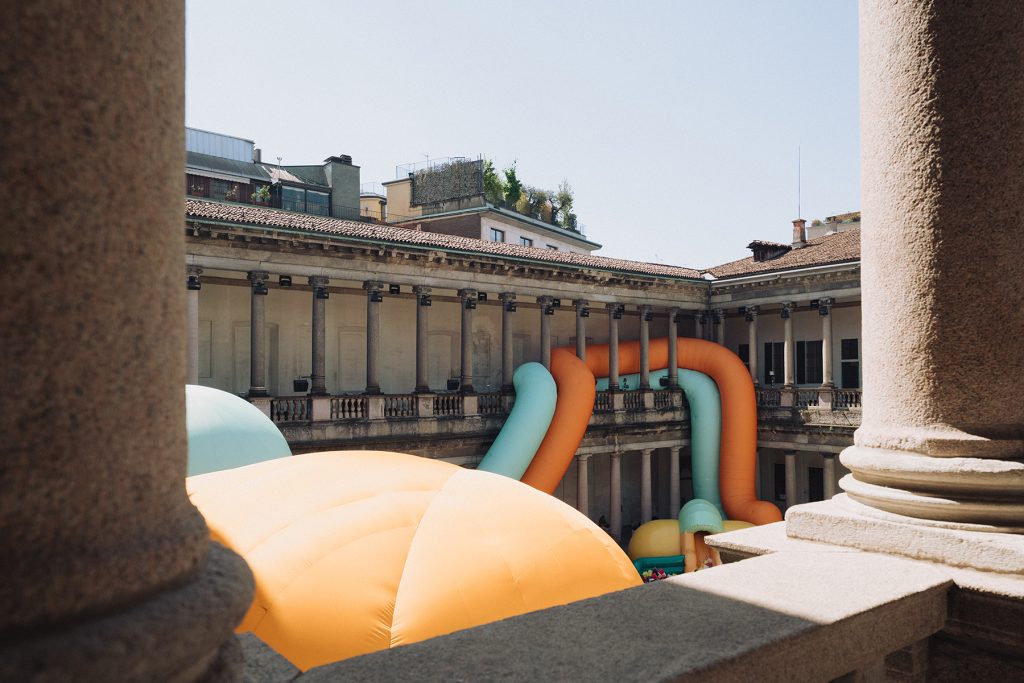
Ooooh, that’s EpiQ! by Ricardo Orts of Ulises
At Milan Design Week 2026, Škoda Auto took the familiar logic of the automotive exhibition and gave it a decidedly softer twist. Ooooh, that’s EpiQ! transformed the courtyard of Palazzo del Senato into an immersive inflatable landscape conceived by Spanish architect and digital artist Ricardo Orts of Ulises Studio. Inspired by the tactile qualities of modeling clay, the installation filled the historic setting with oversized, brightly colored forms that appeared to have been shaped by hand and dramatically scaled up.
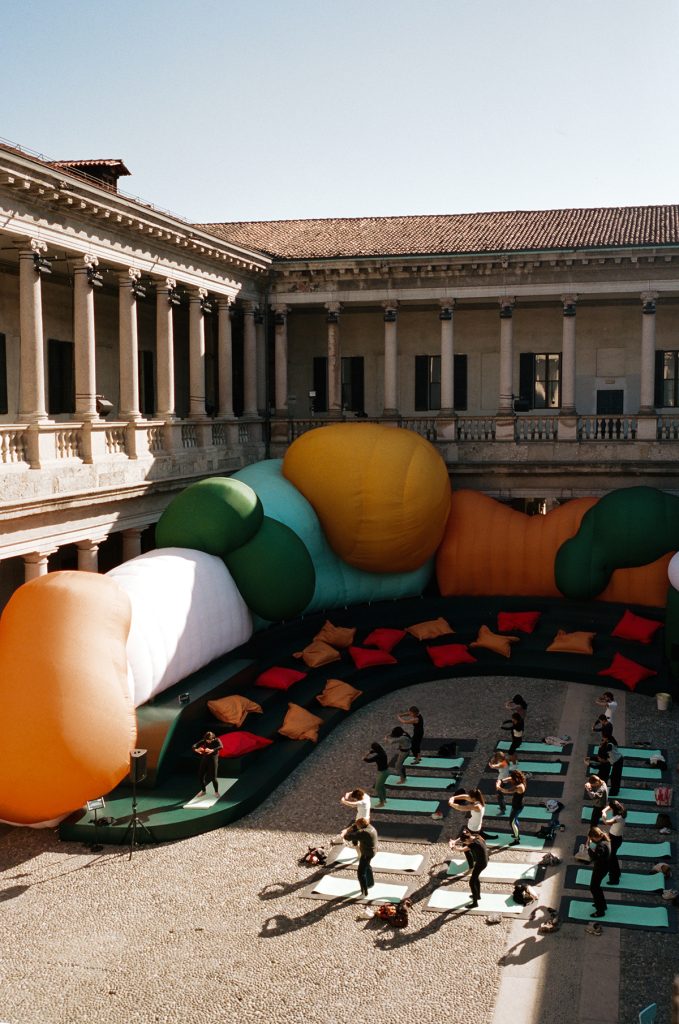
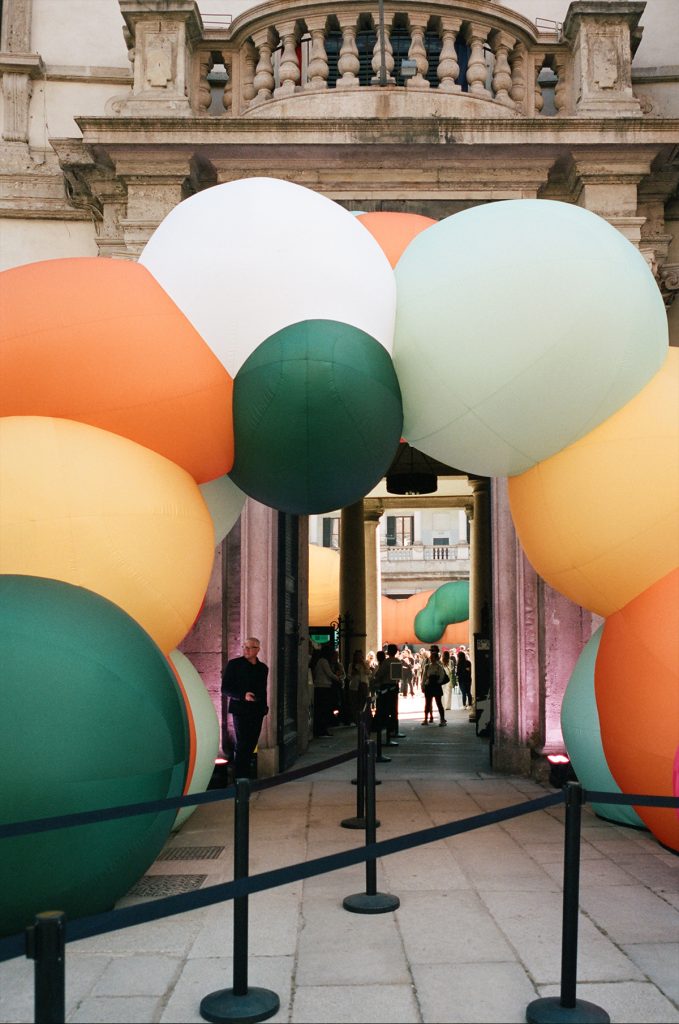
Ooooh, that’s EpiQ! by Ricardo Orts of Ulises
The result was less conventional showroom than temporary playground. At its center, the still-camouflaged Škoda Epiq sat alongside the EpiQ sculpt, anchoring a landscape in which the boundaries between vehicle, sculpture, architecture, and visitor became deliberately blurred. The contrast was part of the appeal. The softness and exuberance of the inflatable forms stood against the ornate permanence of the Palazzo del Senato, creating an environment that felt simultaneously familiar and unexpected.
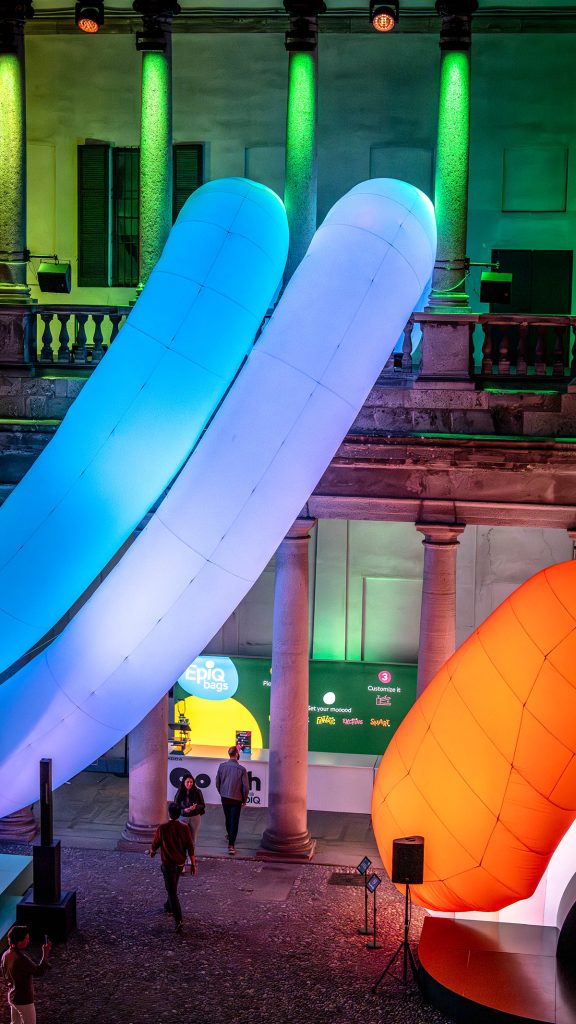
Ooooh, that’s EpiQ! by Ricardo Orts of Ulises
The installation unfolded through a sequence of different zones, each encouraging a different kind of engagement. Visitors could relax in the open atrium, explore LED-driven digital narratives, gather in an open auditorium, or spend time in a family-oriented area. Škoda’s Elroq was even transformed into a mobile café, turning hospitality into another element of the scenography. The programming gave the installation a rhythm that extended beyond the visual spectacle, keeping the space active throughout the day.
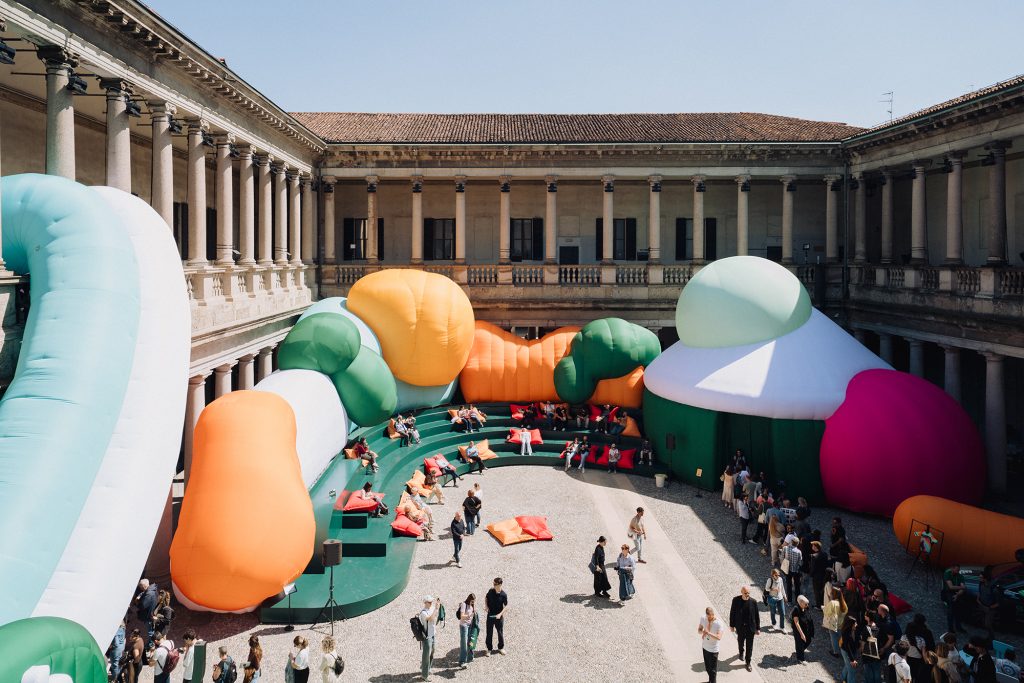
Ooooh, that’s EpiQ! by Ricardo Orts of Ulises
That sense of discovery was captured in the recurring phrase “Ooooh, that’s EpiQ!”, which functioned almost like an invitation to look again. After dark, lighting changed the atmosphere once more, demonstrating how a temporary environment could evolve without changing its fundamental structure. Ulises Studio’s design ultimately turned brand communication into an experience built around curiosity, participation, and play.
And if Škoda used softness to make a product environment more approachable, Sara Ricciardi used it to explore something far more intangible: happiness itself.
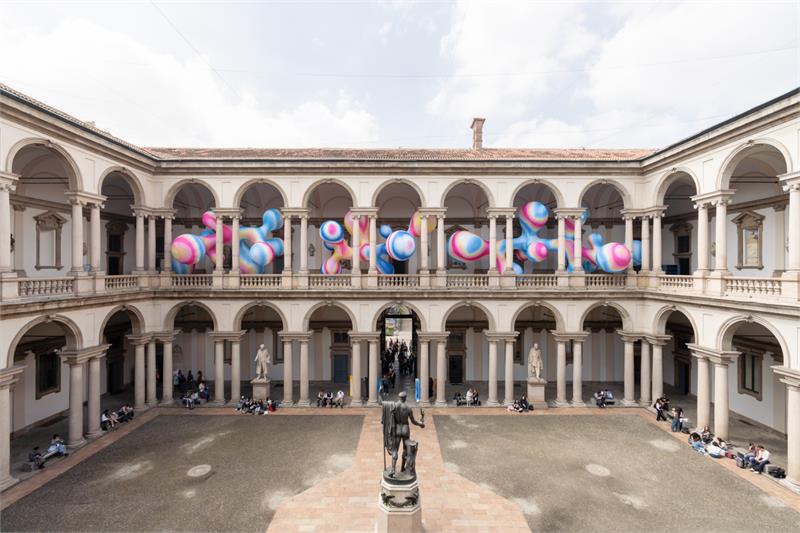
Serotonin, The Chemistry of Happiness y Sara Ricciardi Studio (also header image)
Inside the historic loggiato of Milan’s Pinacoteca di Brera, Sara Ricciardi Studio’s Serotonin, The Chemistry of Happiness took an idea from biology and turned it into an immersive spatial experience. Presented during Milan Design Week 2026 in collaboration with American Express, the installation replaced diagrams and scientific explanation with an environment of inflated forms, saturated color, light, and sound. The intention was not simply to represent serotonin, but to suggest what its effects might feel like in the body.
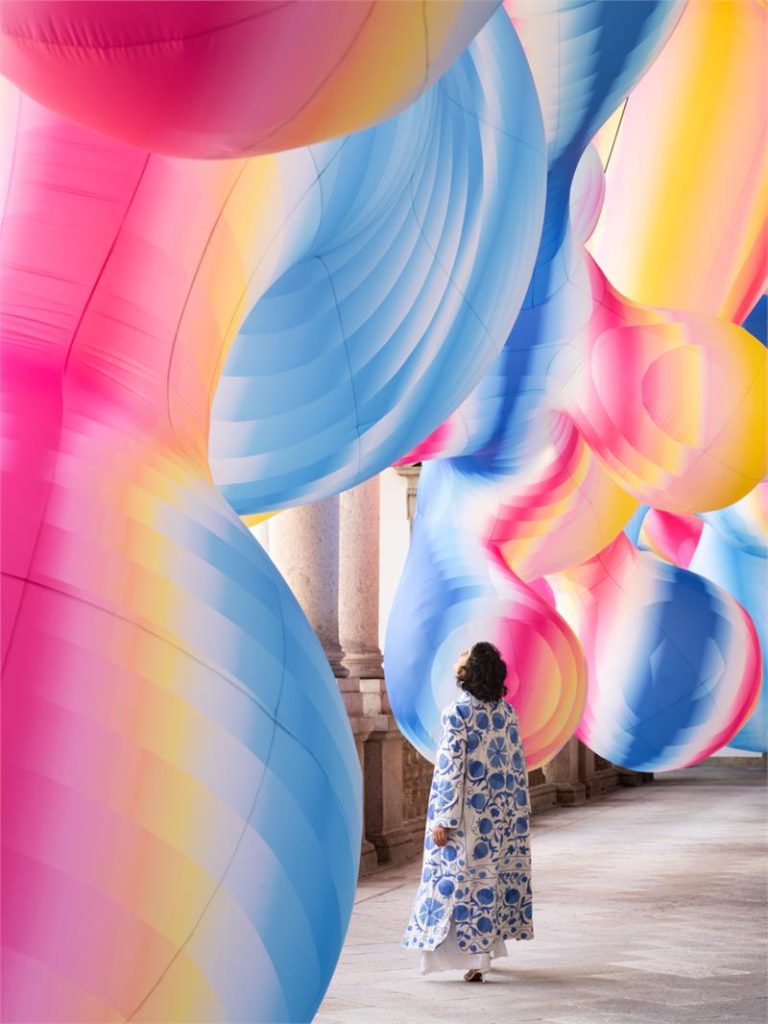
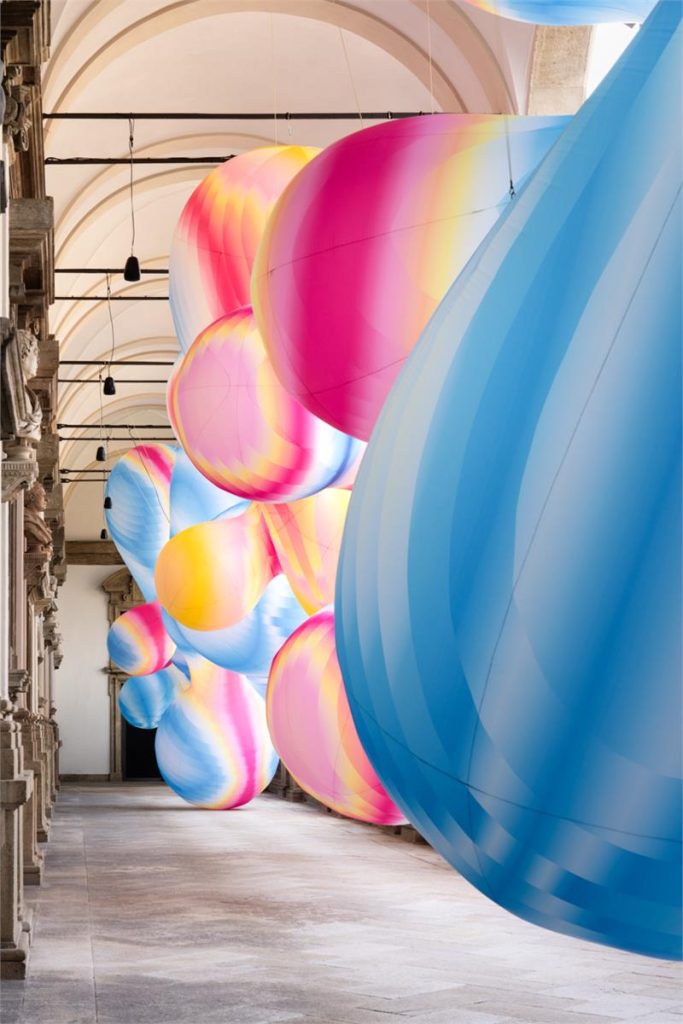
Serotonin, The Chemistry of Happiness y Sara Ricciardi Studio
The inflatable structures gently expanded and contracted, introducing a rhythm that recalled breathing and the heartbeat. Rather than remaining static, the installation seemed to pulse through the historic loggiato. Bright colors and shifting optical patterns altered the perception of depth, while visitors moving through the space became part of the visual composition. The result felt less like a sculpture placed inside a building and more like an organism temporarily inhabiting it.
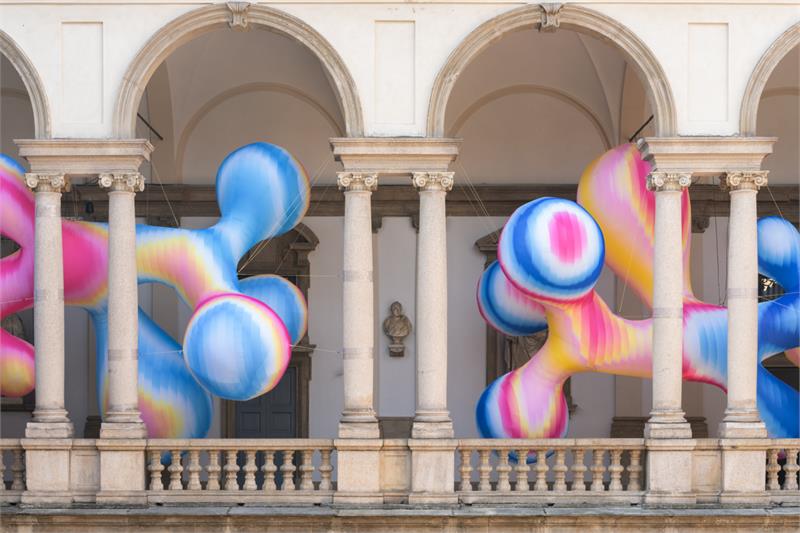
Serotonin, The Chemistry of Happiness y Sara Ricciardi Studio
This was where the installation’s relationship with its surroundings became particularly important. The airy, mutable forms created a direct counterpoint to the stone architecture and sculptures of Brera. Ricciardi described this contrast as a dialogue between rigid and organic structures. The building provided permanence and weight, while the inflatable environment introduced movement, softness, and change. Neither element overwhelmed the other. Instead, their differences made both more perceptible.
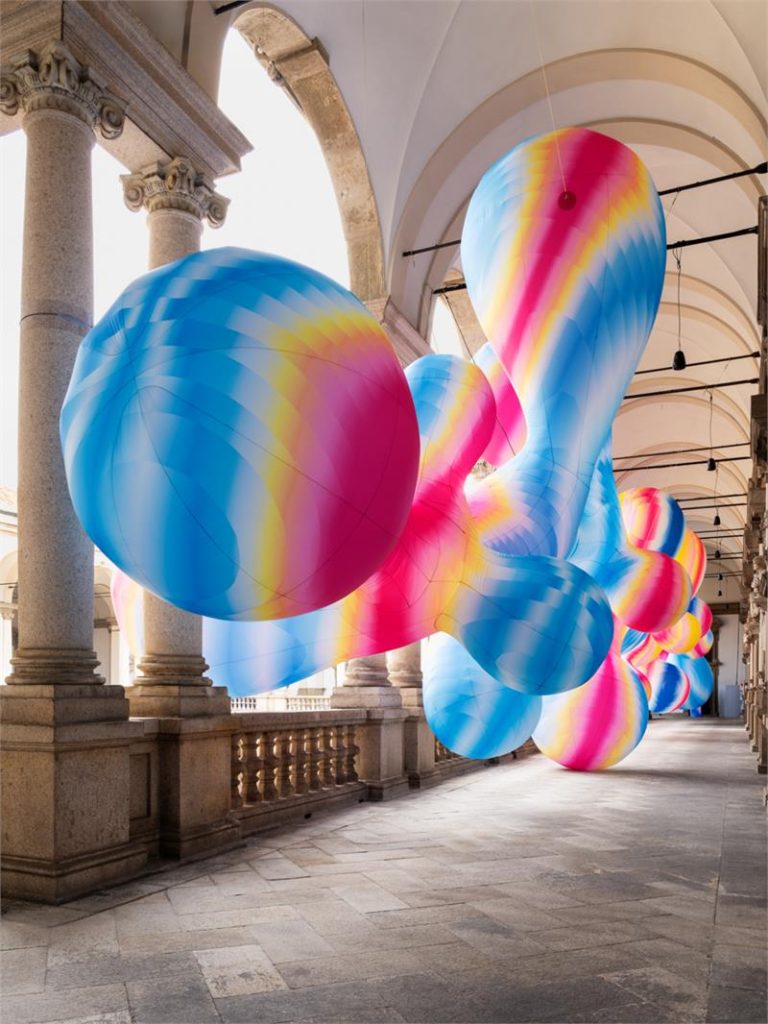
Serotonin, The Chemistry of Happiness y Sara Ricciardi Studio
The project also approached happiness as something temporary rather than fixed. Its changing light, movement, and sensory intensity suggested pleasure as a fluctuating state that could emerge, peak, and disappear. In that sense, the installation did not simply illustrate a chemical process. Instead, it asked visitors to experience a physical metaphor for one. The science became atmosphere, and atmosphere became a form of storytelling.
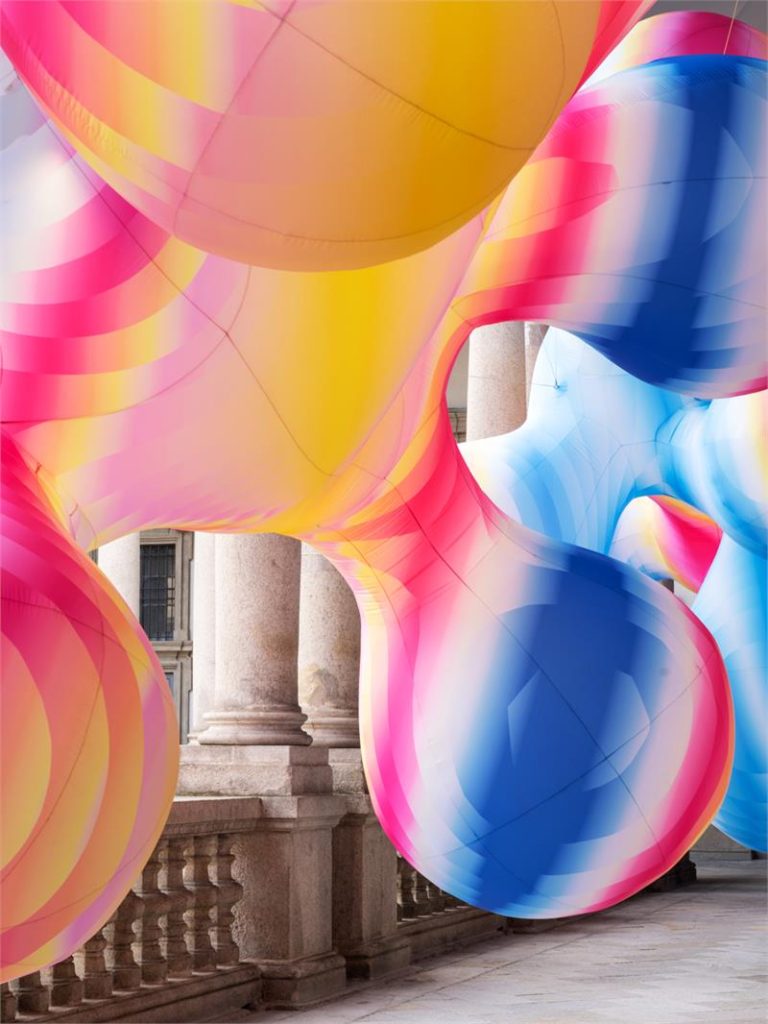
Serotonin, The Chemistry of Happiness y Sara Ricciardi Studio
That transformation from information into sensation connected Ricciardi’s work with a broader shift in contemporary experiential design. But while Brera explored pleasure through sensory excess, another installation took an equally elemental experience, shade, and asked what it meant to share it.
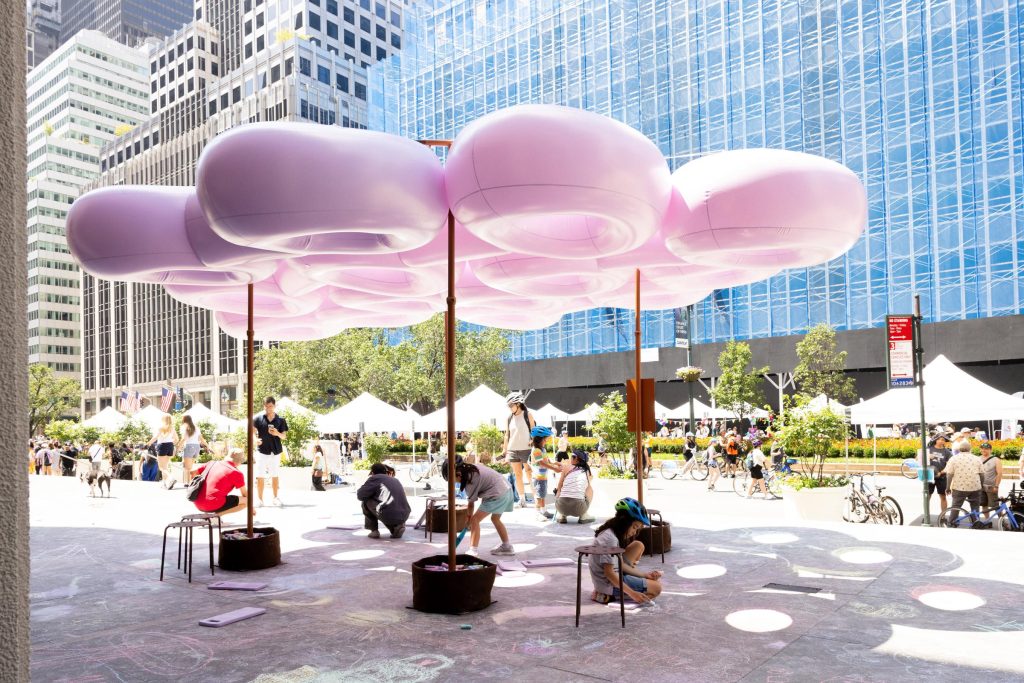
The Bower by Elsa Ponce
For The Bower, Brooklyn-based architect and artist Elsa Ponce turns attention toward something cities often treat as an afterthought: protection from the sun. Commissioned by the NYC DOT Art Program for Summer Streets 2026, the temporary installation creates a shaded public room beneath a canopy of clustered inflatable forms. Presented at Park Avenue and Foley Square across three Saturdays, the project responds to increasingly hot New York summers and the uneven availability of shade throughout the city.
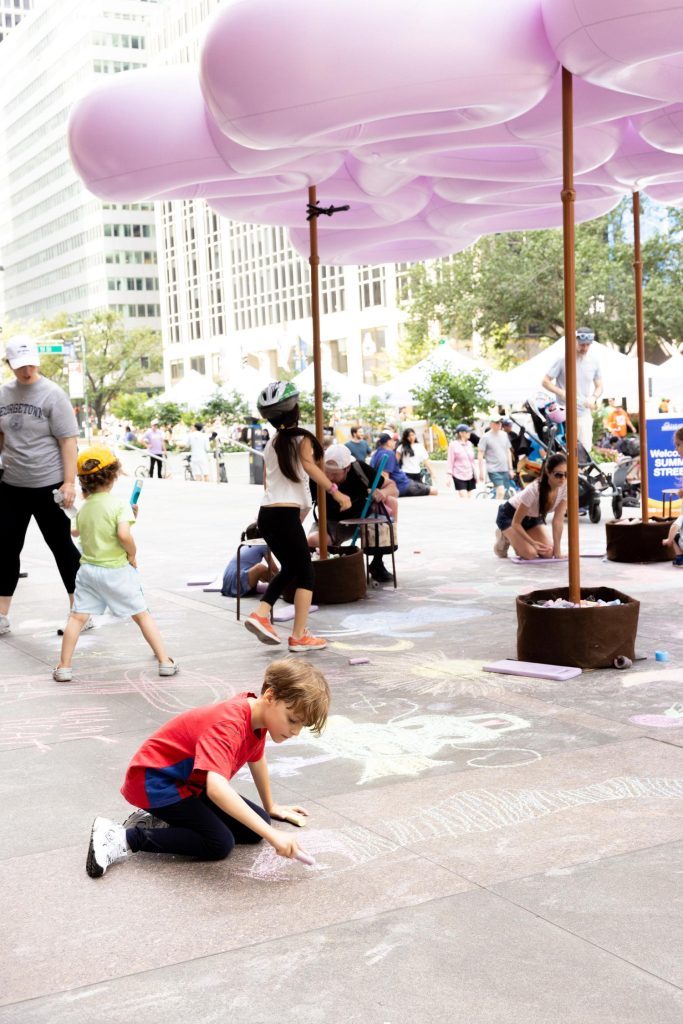
The Bower by Elsa Ponce
The idea has both practical and personal roots. In Mexico, Ponce grew up with the expression vete por la sombrita, roughly meaning “walk in the shade.” More than advice for avoiding the sun, the phrase carries an implication of care and protection. That idea becomes the conceptual foundation for The Bower, whose name refers to leafy shelters found across cultures as places of refuge and gathering. Here, shade is not merely a technical response to heat. It becomes a social gesture.
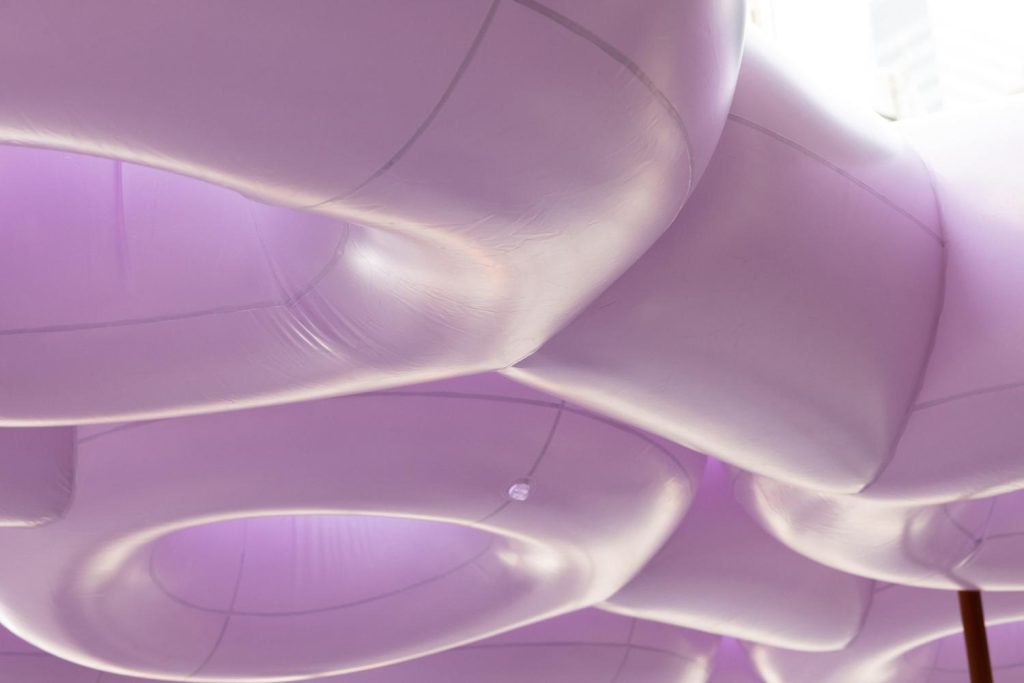
The Bower by Elsa Ponce
The installation’s soft inflatable geometry contrasts sharply with New York’s hard pavement and rectilinear streetscape. Suspended forms filter sunlight overhead, producing a constantly changing pattern of light and shadow. Their pale lilac and pastel pink tones reference the jacaranda trees associated with Ponce’s memories of Mexico, while the canopy’s shifting shadows create a moving drawing across the pavement.
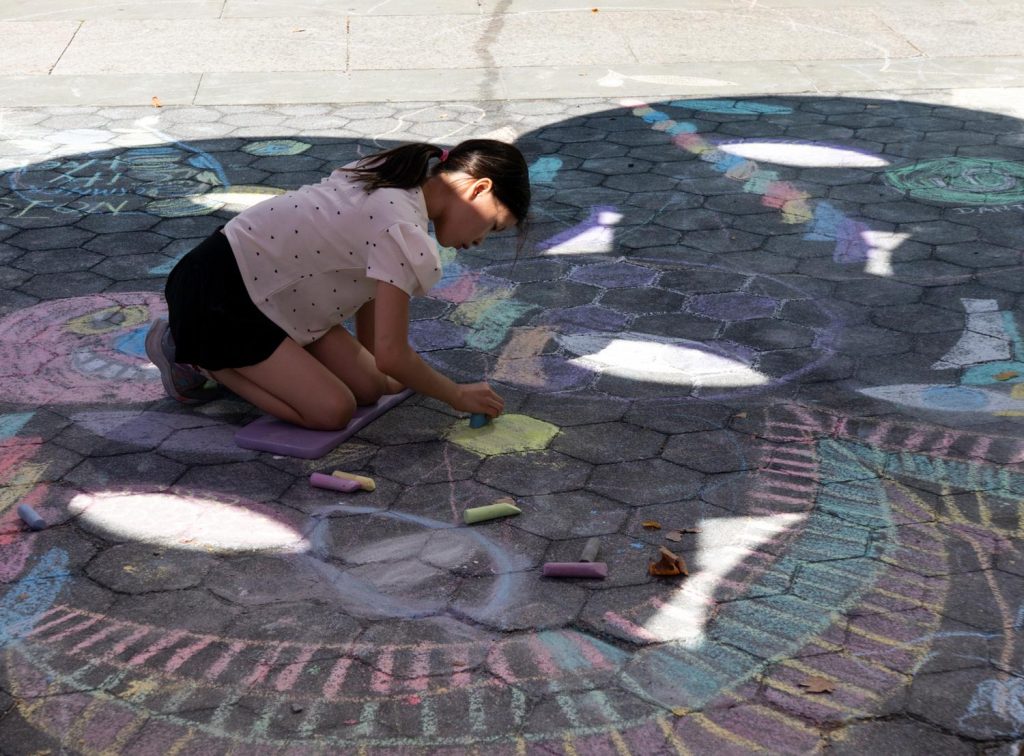
The Bower by Elsa Ponce
Visitors can participate directly using bags of colorful chalk, tracing the shadows or adding their own marks to a collective mural. As the sun moves, the shadows move with it, leaving the drawings to evolve throughout the day. Cyclists, outdoor workers, families, and passersby can also use the canopy simply as a place to stop and cool down. The installation therefore operates simultaneously as artwork, gathering space, and a small piece of climate-responsive infrastructure.
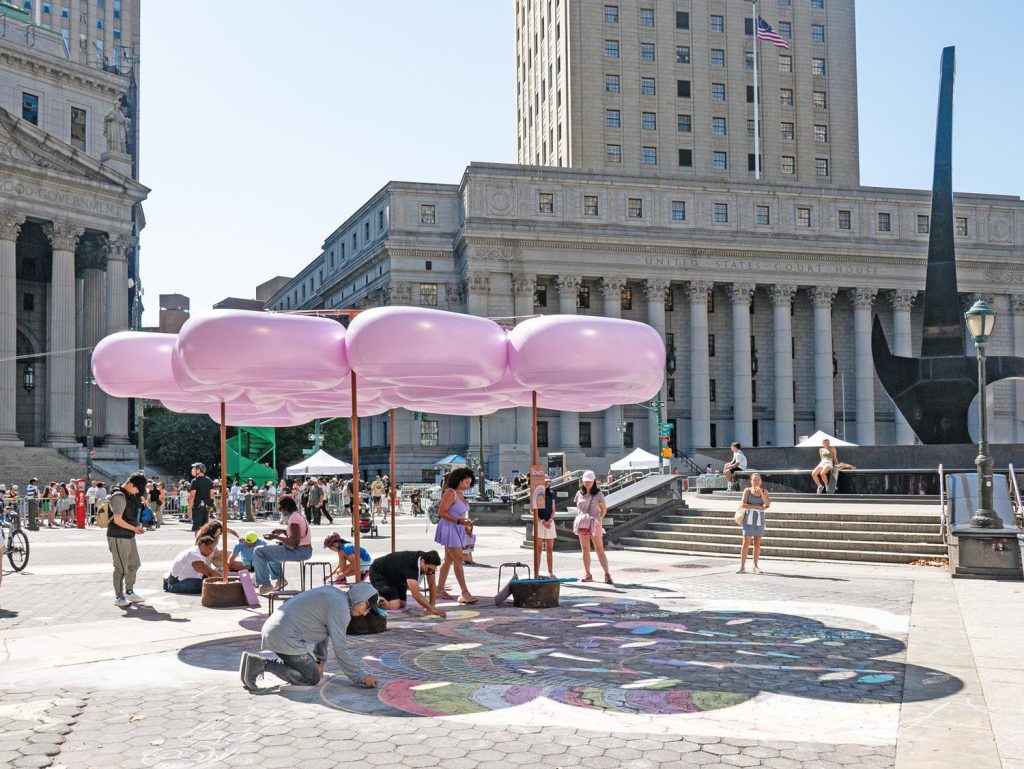
The Bower by Elsa Ponce
Contemporary design is increasingly concerned not only with what a space looks like, but with what it allows people to feel and do. Whether through play, pleasure, or protection, these installations demonstrate the power of temporary architecture to change a familiar setting, even if only for a few hours. Softness, it turns out, can be a surprisingly powerful design tool.