Few household objects expose the blind spots of contemporary interiors quite like cat furniture. While nearly every category of domestic design has been refined, softened, or elevated, the cat tower has remained oddly resistant to reinvention, often treated as a purely functional object exempt from aesthetic standards. That is beginning to change. Across a new generation of projects, designers are approaching feline furniture as a legitimate design brief, rethinking how scratching, climbing, lounging, and play can be translated into objects that also speak the language of the home.
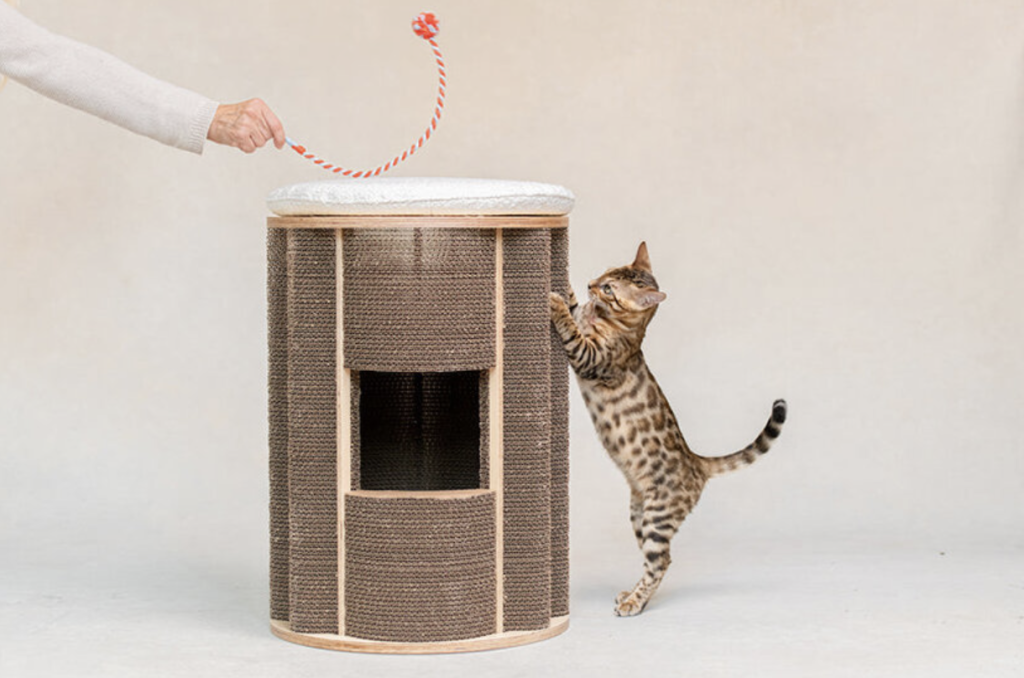
Cat furniture by SØDE Design
SØDE Design’s new collection is perhaps the clearest expression of how pet furniture can be repositioned as interior design. The Dutch startup describes itself as operating at the intersection of pet, interior, and sustainability, and the collection makes that ambition tangible. Rather than offering a conventional line of cat accessories, SØDE presents a small family of objects designed for both feline use and domestic cohesion, all filtered through a distinctly Scandinavian sensibility. The pitch is as much about atmosphere as utility: clean silhouettes, tactile materials, and pieces that do not force cat owners to sacrifice elegance in the name of pet care.
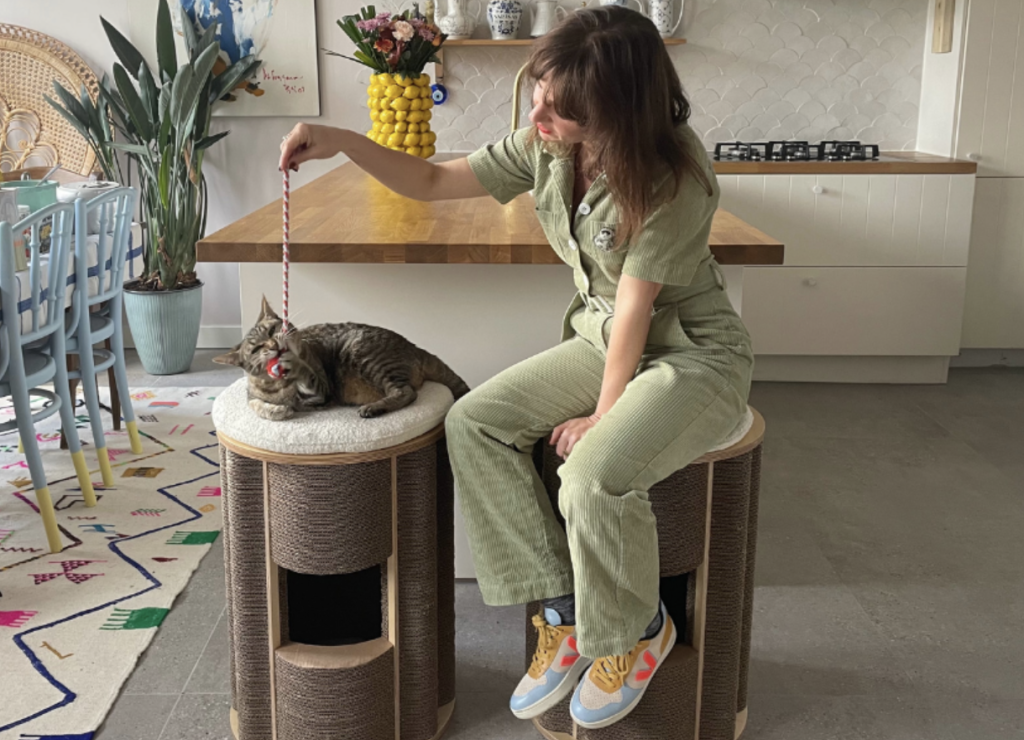
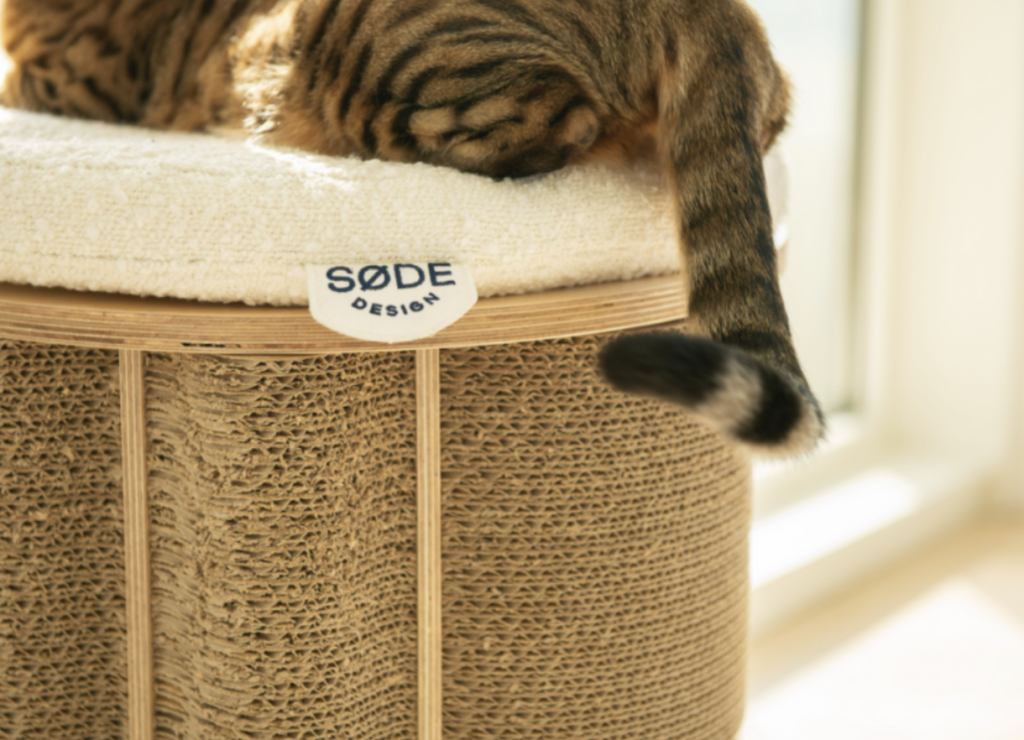
Cat furniture by SØDE Design
The collection’s standout is ORIGAMEOW, a hybrid object that works as a cat hideaway, scratching post, and play space while also functioning as a bar stool for humans. It is an unusually clever piece because it treats multifunctionality not as a gimmick but as a design principle. Built from premium recycled cardboard, sustainably sourced wood, and Oeko-Tex certified fabrics, ORIGAMEOW acknowledges the reality of compact living and shared spaces. It is furniture for a cat, certainly, but also furniture for a home where every object is expected to earn its place.
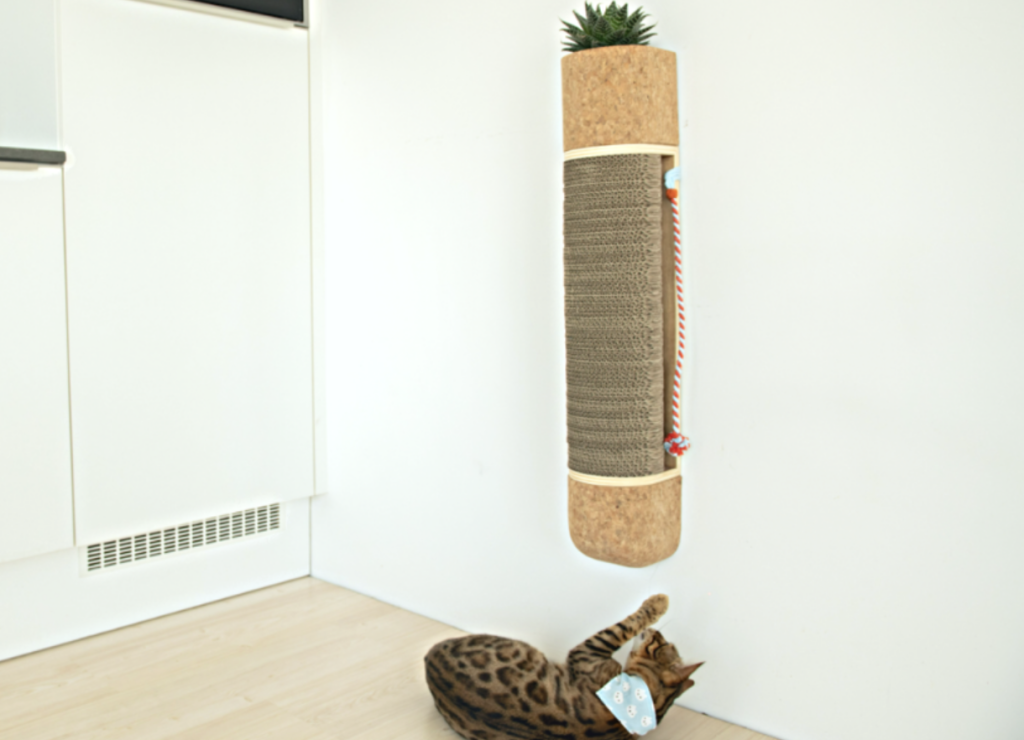
Cat furniture by SØDE Design
The supporting pieces expand that same logic. FLOWER PAWER is a wall-mounted scratcher topped with a built-in planting pot, turning a routine feline behavior into an opportunity for vertical styling and greenery. PAWTY ROPE, meanwhile, introduces a softer and more playful note: a colorful handwoven toy made from recycled industrial waste that can also be attached to FLOWER PAWER for extra interaction. What elevates the entire collection is the ecosystem around it. Handmade in Portugal under renewable-energy-led production conditions, the products also arrive in convertible shipping boxes that transform into cat playhouses. It is a small but telling gesture, one that reveals a designer’s instinct to extend usefulness beyond the product itself.
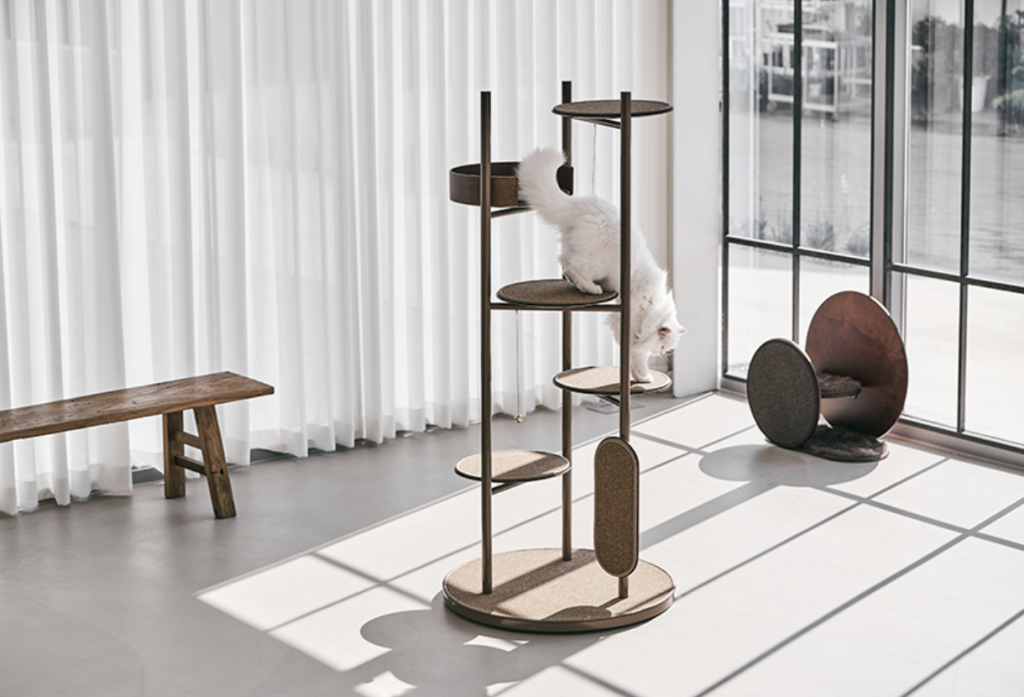
Cat furniture by Jiyoun Kim Studio (also header image)
If SØDE Design frames cat furniture as a sustainable lifestyle object, Jiyoun Kim Studio and Korean pet brand Milliong approach it as a problem of visual harmony. Their starting point is refreshingly blunt: most pet products are simply not designed to live well with sophisticated interiors. Scratching posts and litter boxes, as the studio notes, tend to be oversized plastic intrusions rather than thoughtful additions to the home. The collaboration responds by treating pet furniture as a companion to architecture and décor rather than a separate, lesser category. Its guiding idea, “beautiful together,” proposes a home in which pets and their owners are considered in the same design equation.
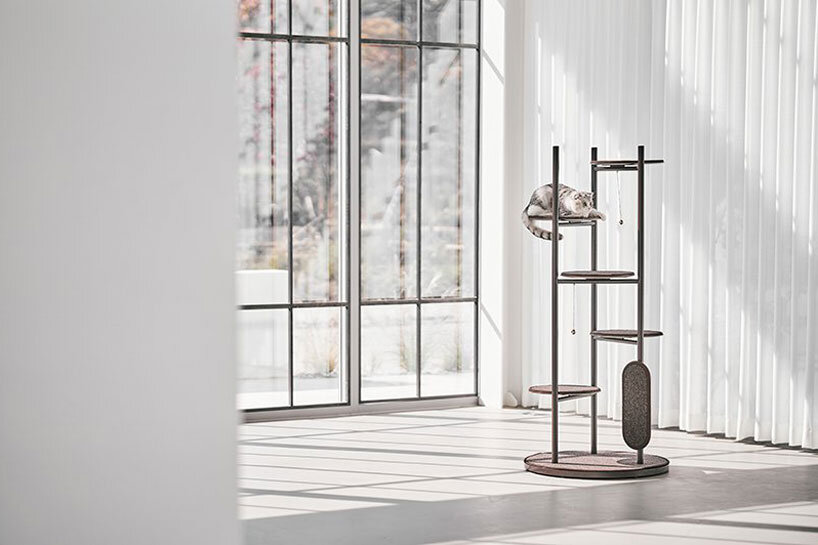
Cat furniture by Jiyoun Kim Studio
The Three Poles Cat Tower is the clearest embodiment of that philosophy. First introduced in 2019 and later updated with revised proportions, a reinforced lower metal base, and a low version for shorter-legged cats, the tower balances modularity with restraint. Circular birch plywood platforms rest on three metal rods, creating a lightweight but stable vertical structure that can be rearranged by users according to their preferences. This modularity is important because it shifts the object away from the fixed logic of traditional cat trees and toward something more architectural. It feels less like pet equipment and more like a customizable interior element.
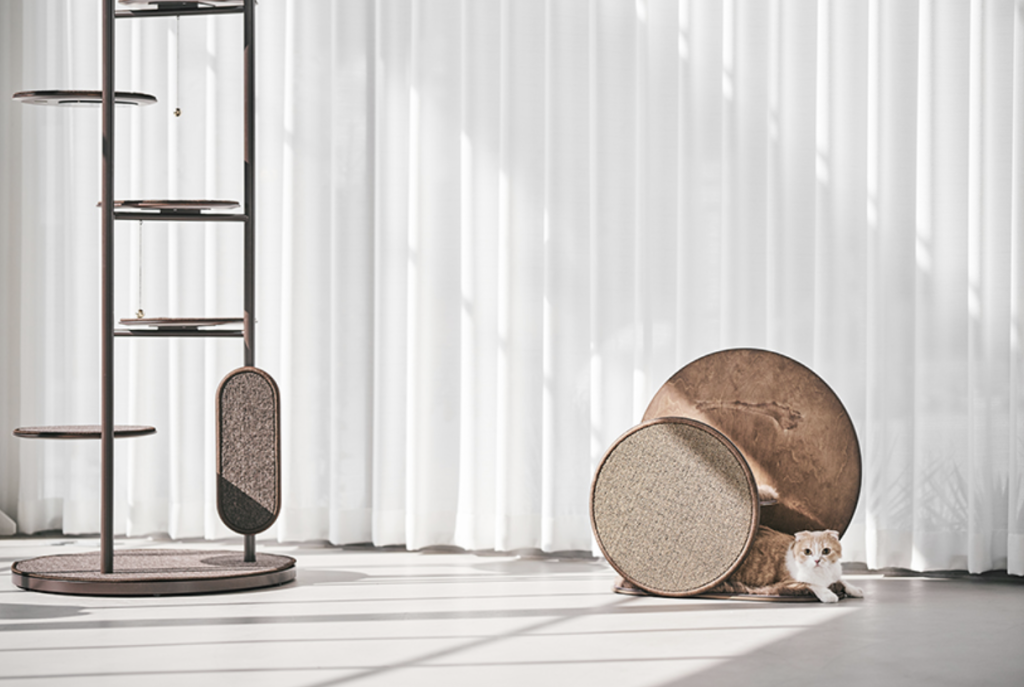
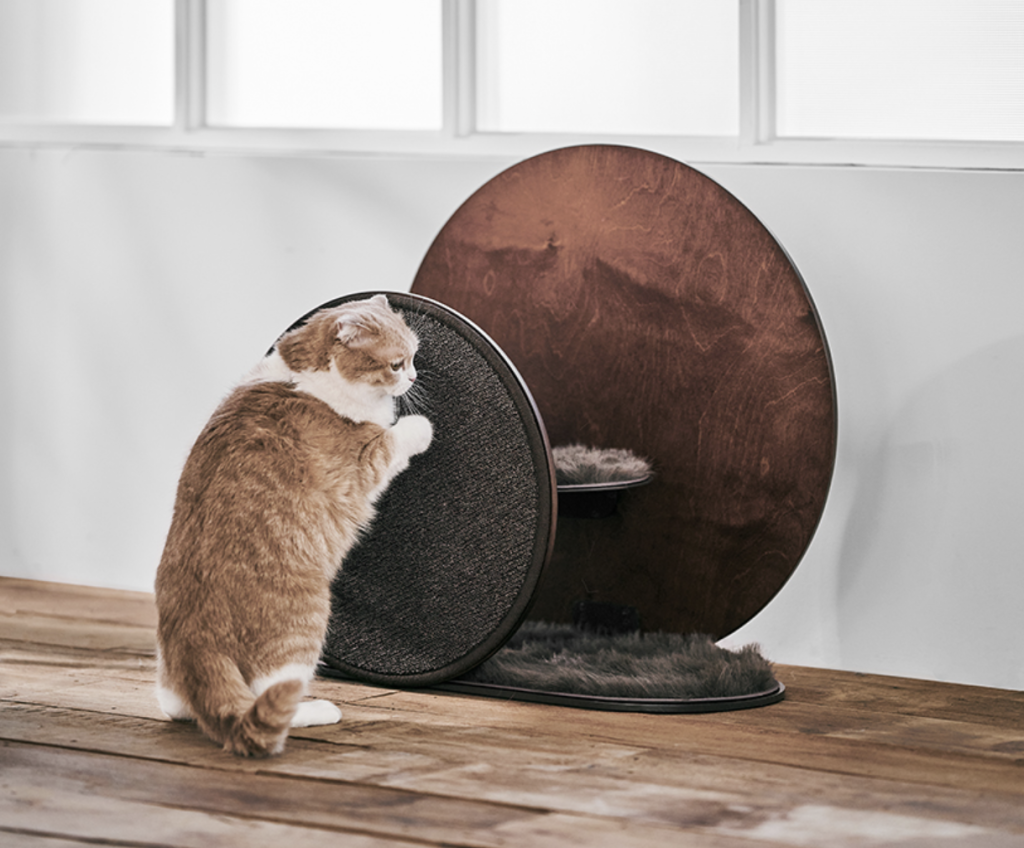
Cat furniture by Jiyoun Kim Studio
The Two Circle Cat Scratcher extends the same visual language with admirable discipline. Fabric and birchwood circles overlap elegantly when viewed from the front, producing a graphic composition that is almost decorative in its simplicity. The metal structure remains pared back, allowing the material contrast and geometry to carry the design. What Jiyoun Kim Studio does especially well is resist overdesign. These pieces do not rely on novelty or whimsy to justify themselves. Instead, they succeed through proportion, material clarity, and a calm confidence that makes them feel entirely at home in a well-designed apartment. In a market crowded with visual noise, that restraint becomes its own form of innovation.
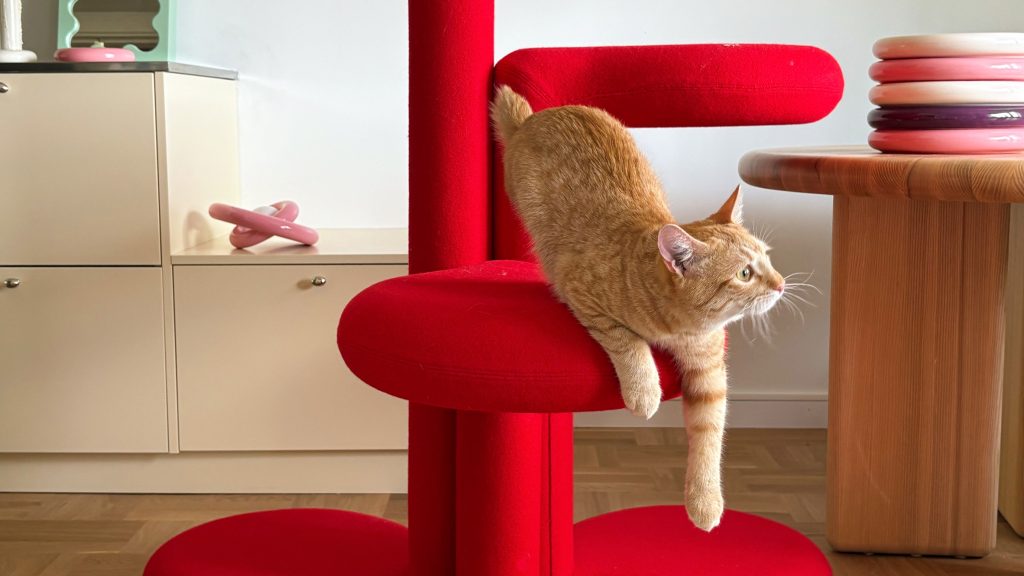
Chunky Cat Tree by Gustaf Westman
Where SØDE is understated and Jiyoun Kim Studio is quietly architectural, Gustaf Westman takes a more exuberant route. The Swedish designer has built his reputation on rounded, oversized forms and candy-colored objects that sit somewhere between furniture and visual punchline. His Chunky Cat Tree brings that sensibility to the feline world, transforming the cat tower into a plush sculptural statement. In many ways, it is the most direct challenge to the category’s visual baggage: instead of trying to disguise the cat tree, Westman turns it into a centerpiece.
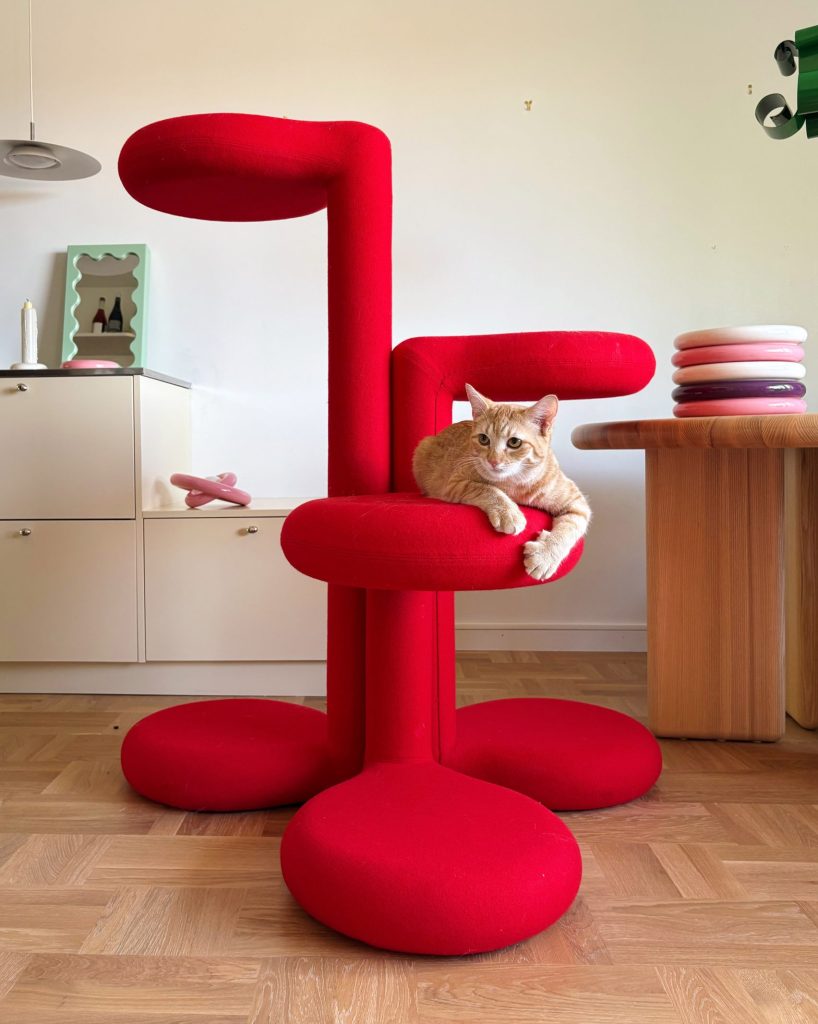
Chunky Cat Tree by Gustaf Westman
The project draws on Westman’s Blob Sofa, translating its stacked, bulbous forms into a tripod structure with multiple platforms at different heights. The cat tree allows several cats to perch at once, while the rounded feet create additional resting spots closer to the ground. Functionally, it still performs the familiar role of a cat tower, offering elevation, vantage points, and lounging zones. But formally, it belongs to Westman’s broader universe of playful domestic objects, where exaggerated silhouettes and saturated color are used to make everyday life feel slightly surreal and much more fun.
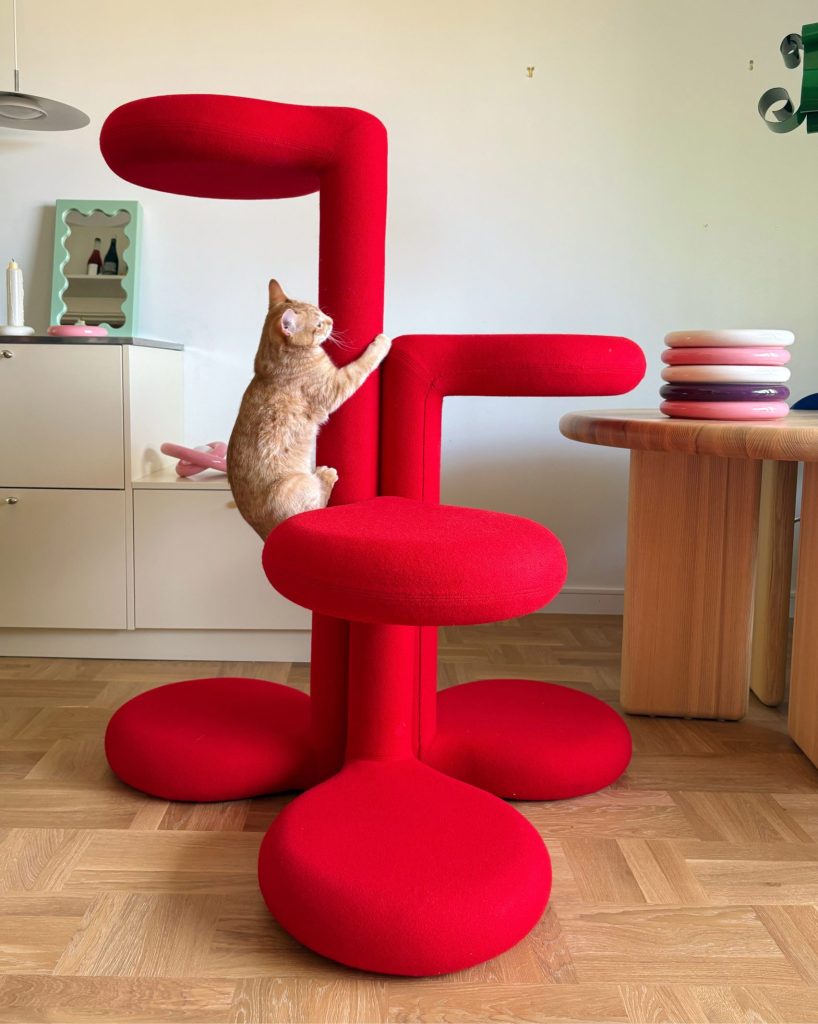
Chunky Cat Tree by Gustaf Westman
That sense of fun is not incidental. Westman has said that after seeing so many ugly cat trees, he wanted to tackle the category as a design challenge, and the result is persuasive because it treats form and function as equal partners. Made to order in Sweden and upholstered in a palette that includes red, yellow, purple, blue, and cobalt blue wool, the Chunky Cat Tree is less an accessory than a character in the room. It suggests that pet furniture does not need to blend in politely to be successful. It can also perform through delight, humor, and visual confidence, provided it still understands the needs of the animal using it.
The new generation of cat furniture is not just redesigning pet products, it is redesigning the relationship between pets, people, and interiors. These objects acknowledge that cats are part of domestic life, and that the things built for them shape the home just as much as a lamp, a rug, or a chair. In that sense, cat towers are no longer niche accessories. They are becoming a surprisingly revealing design frontier, one where aesthetics, care, and innovation meet at eye level, or in a cat’s case, preferably a little above it.