For a category that sits so close to the body, headphones have often been surprisingly conservative in the way they think about the body, the environment, and the object itself. In a market often dominated by incremental upgrades, better drivers, stronger noise cancellation, longer battery life, the most interesting ideas tend to come from designers who stop asking how to improve audio and start asking what listening could mean in the first place. That shift opens the door to products that do more than play music. They can translate rhythm into touch, turn everyday accessories into characterful objects, or rethink materials and manufacturing through the lens of sustainability.
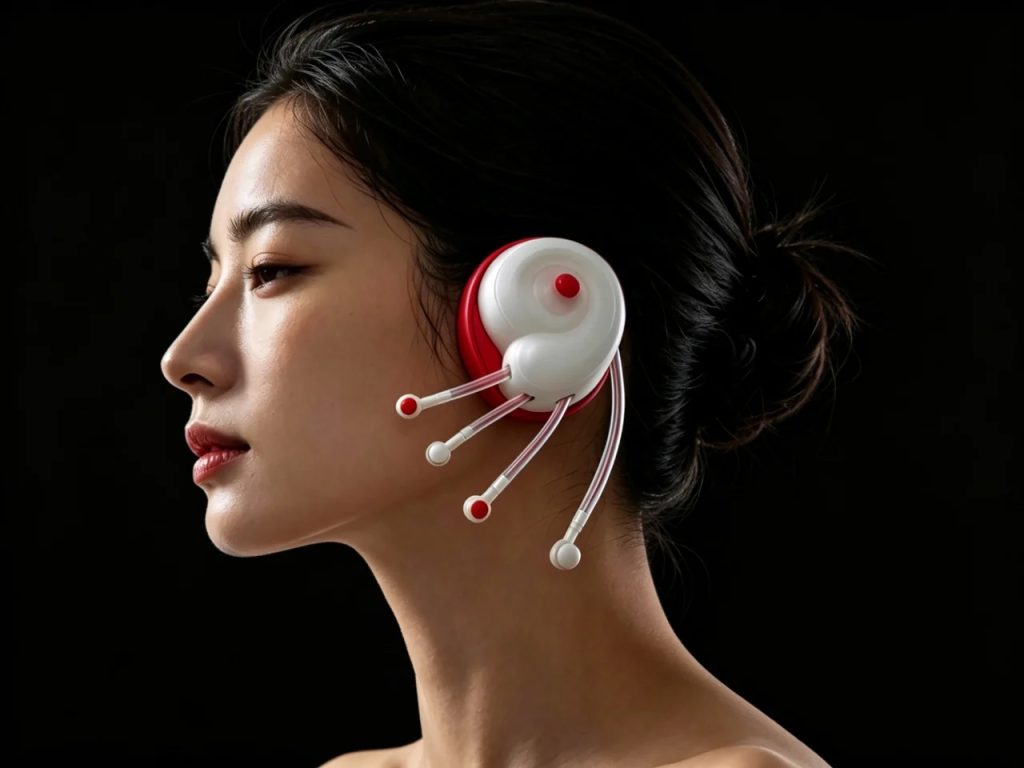
Live Beats by Haji Yang (also header image)
Noise-canceling headphones have become the standard response to a simple problem: the world is loud and music is fragile. Most audio products treat that mismatch as a battle to be won by blocking, sealing, filtering, and muting the outside environment until the song can be heard clearly. It is a remarkably successful model, but it is still built on a narrow assumption that listening happens through the ears and that silence is the ideal condition for it. Haji Yang’s Live Beats begins from a much more intriguing premise. What if the environment is not a failure state to eliminate, but a condition to design around?

Live Beats by Haji Yang
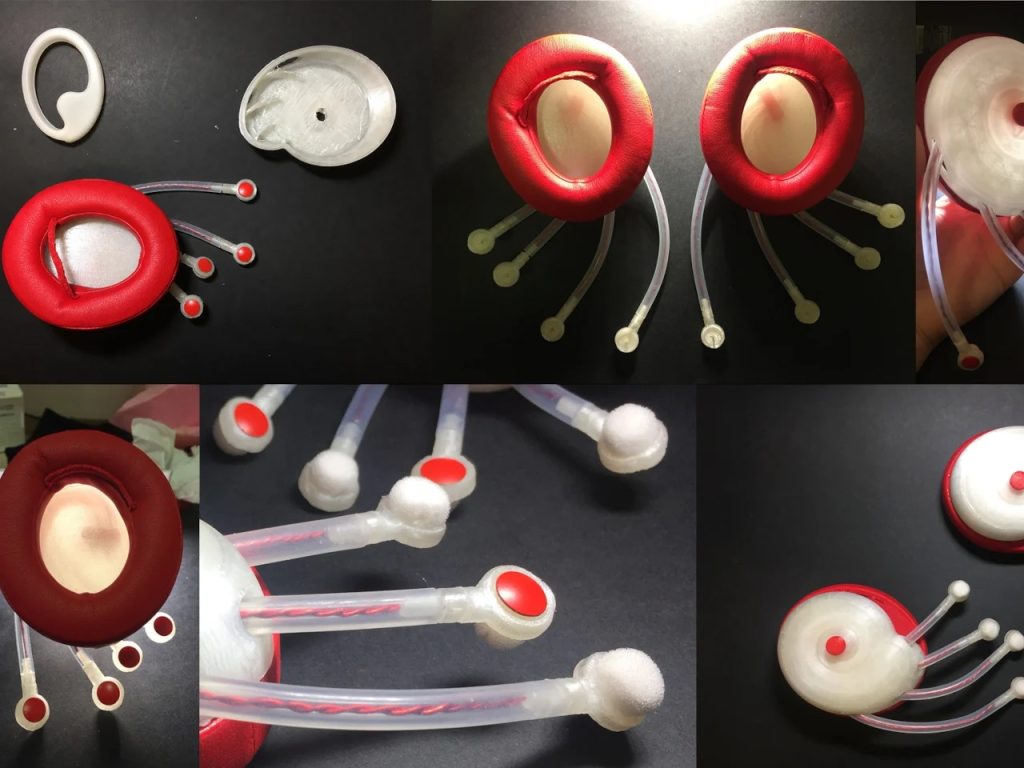
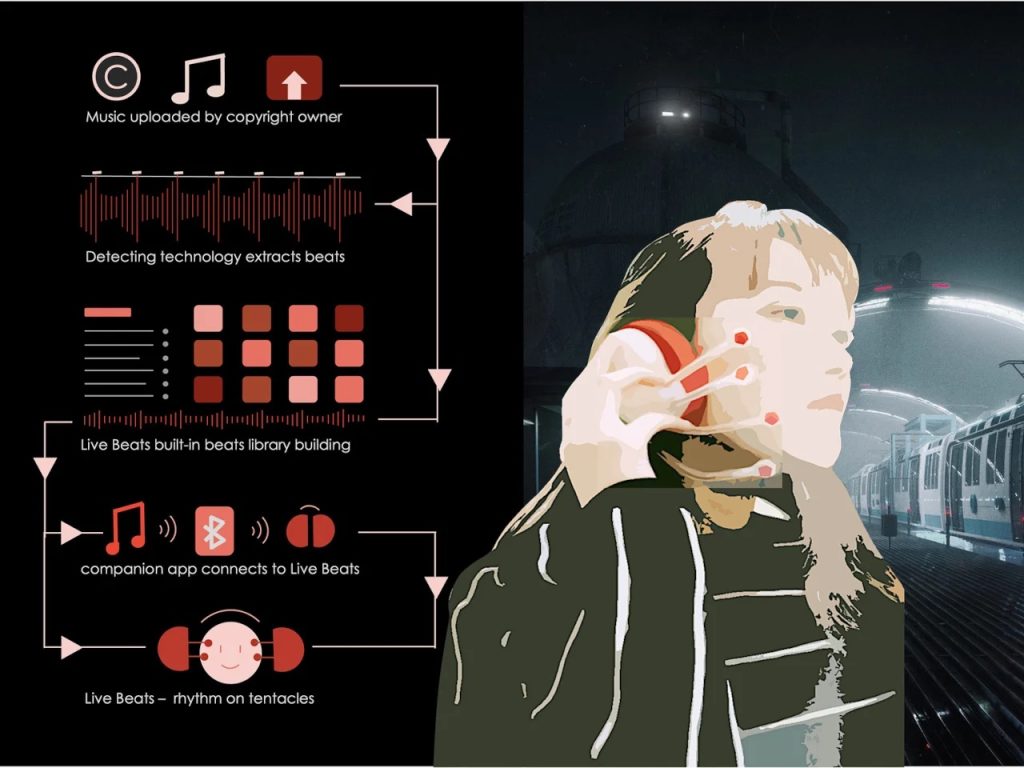
Instead of trying to overpower ambient noise, Live Beats reroutes the musical experience through touch. The conceptual wearable uses four soft tentacle-like extensions on each unit, resting gently against the user’s cheek. An ambient sensor continuously monitors the surrounding sound level, and when noise crosses a threshold that would compromise the listening experience, the device activates a tactile feedback system. In that moment, the music does not disappear. It simply changes medium. Rhythm travels from the ear to the skin, carried through synchronized taps on the face.
Live Beats by Haji Yang
A companion app analyzes the music, separating bass, percussion, and melodic layers, then assigning them to distinct tactile patterns. Crucially, the system does not attempt the impossible by translating every detail of a song into touch. It focuses on rhythm, which is the part of music most legible to the body. Rather than chasing a one-to-one sensory replica, Live Beats identifies the element that can survive the transition from sound to skin and builds the experience around that strength.
Live Beats by Haji Yang
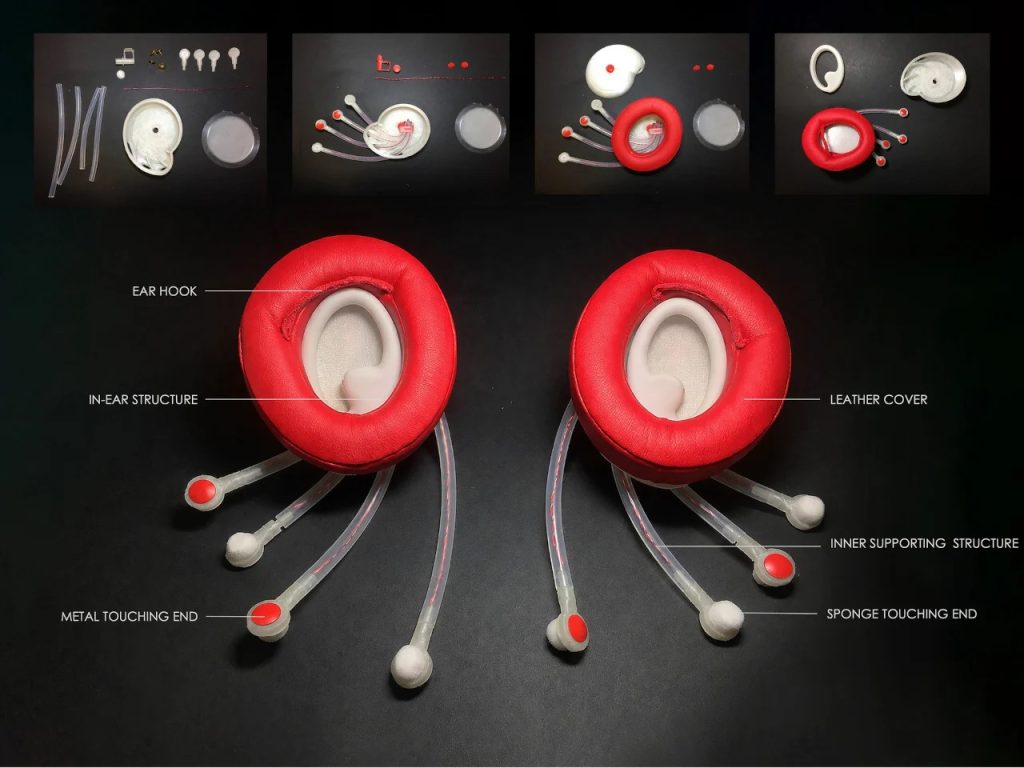
Yang draws from conch shells and octopus tentacles rather than the familiar vocabulary of drivers, stems, and hard plastic housings. The translucent shell and red spiral structures inside the tentacles give the piece a faintly bio-mechanical presence, somewhere between wearable technology and speculative organism. Even the interchangeable touch heads, available in soft sponge or cool metal, suggest that tactile listening could have its own material language and emotional texture.
Bird-Inspired Earbuds by Jinho Choi and Seunghun Jeong
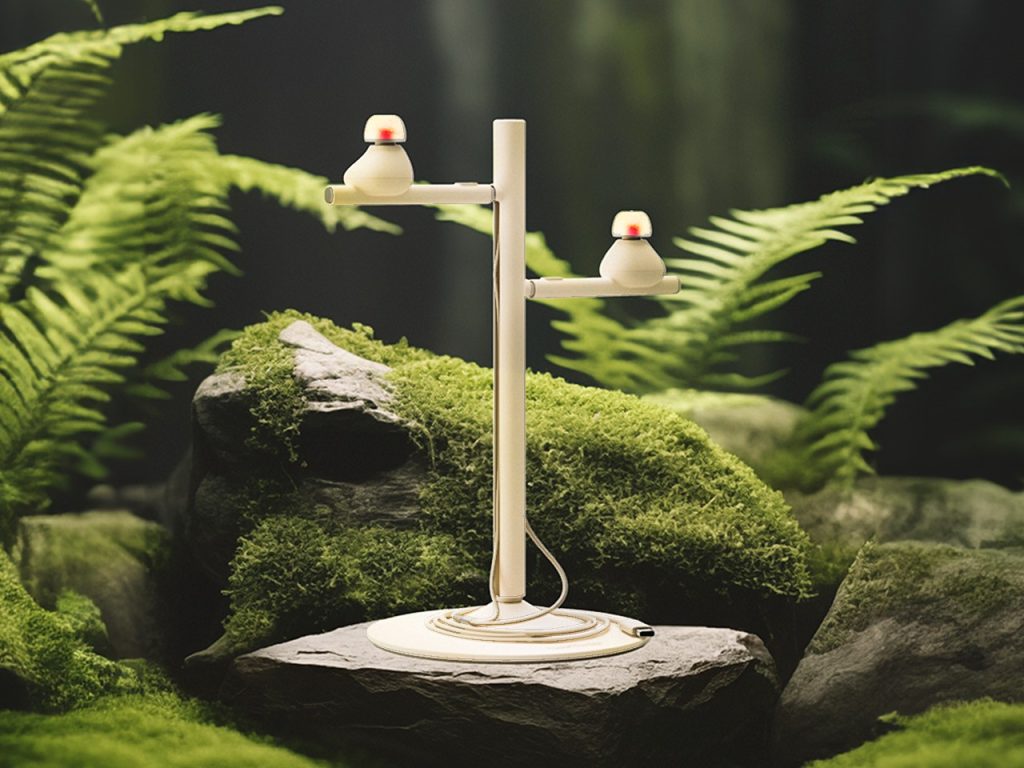
If one problem in headphone design is sensory predictability, another is visual monotony. Wireless earbuds have spent the last several years trapped in an imitation loop, with countless products echoing the same stem-and-bulb silhouette popularized by Apple. There are good reasons for that convergence, of course. Ergonomics, acoustics, battery placement, and microphone performance all impose constraints. But good constraints do not have to lead to boring objects. Jinho Choi and Seunghun Jeong offer a reminder that even within a familiar form factor, there is still room for imagination, humor, and a bit of visual theater.
Bird-Inspired Earbuds by Jinho Choi and Seunghun Jeong
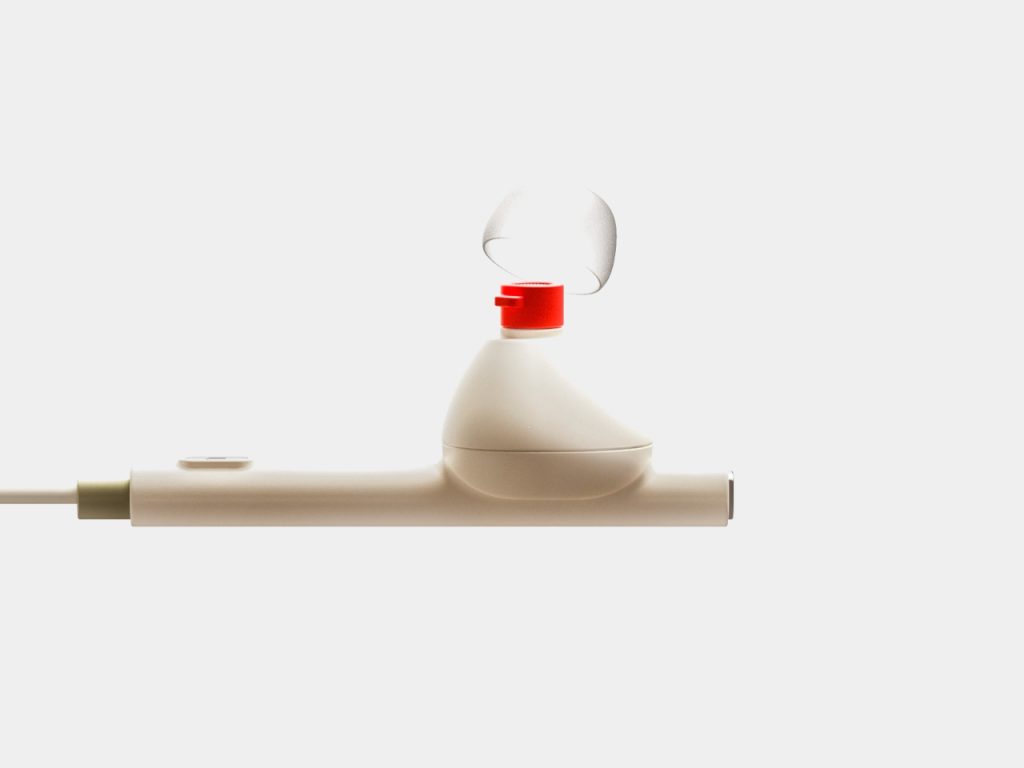
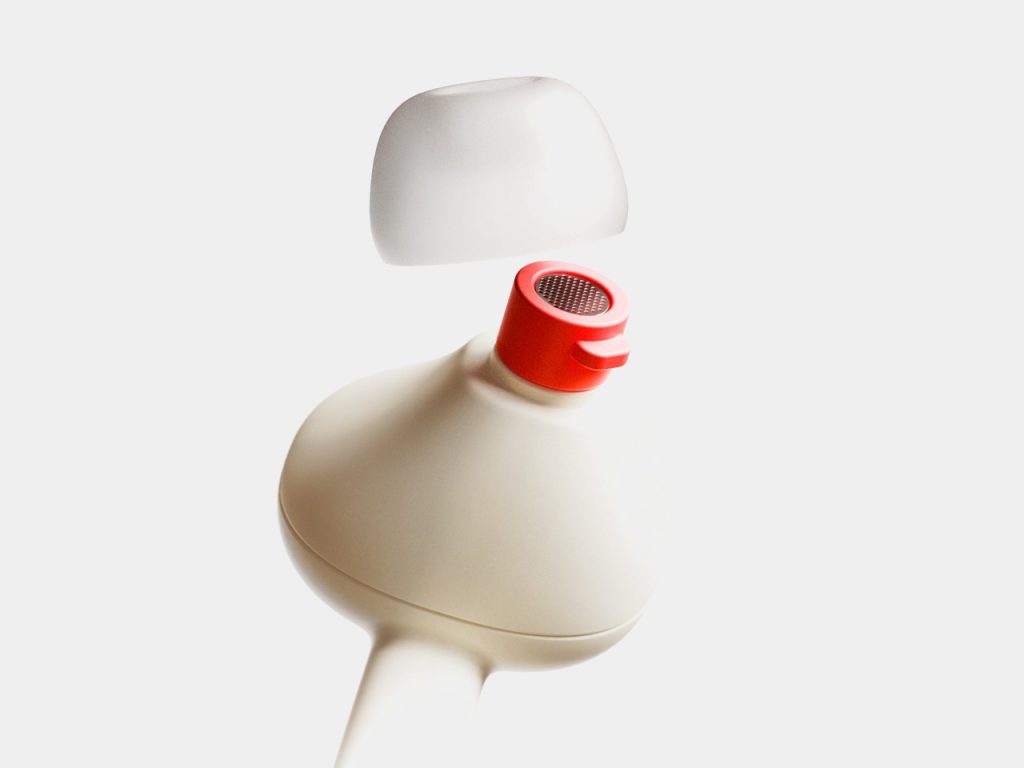
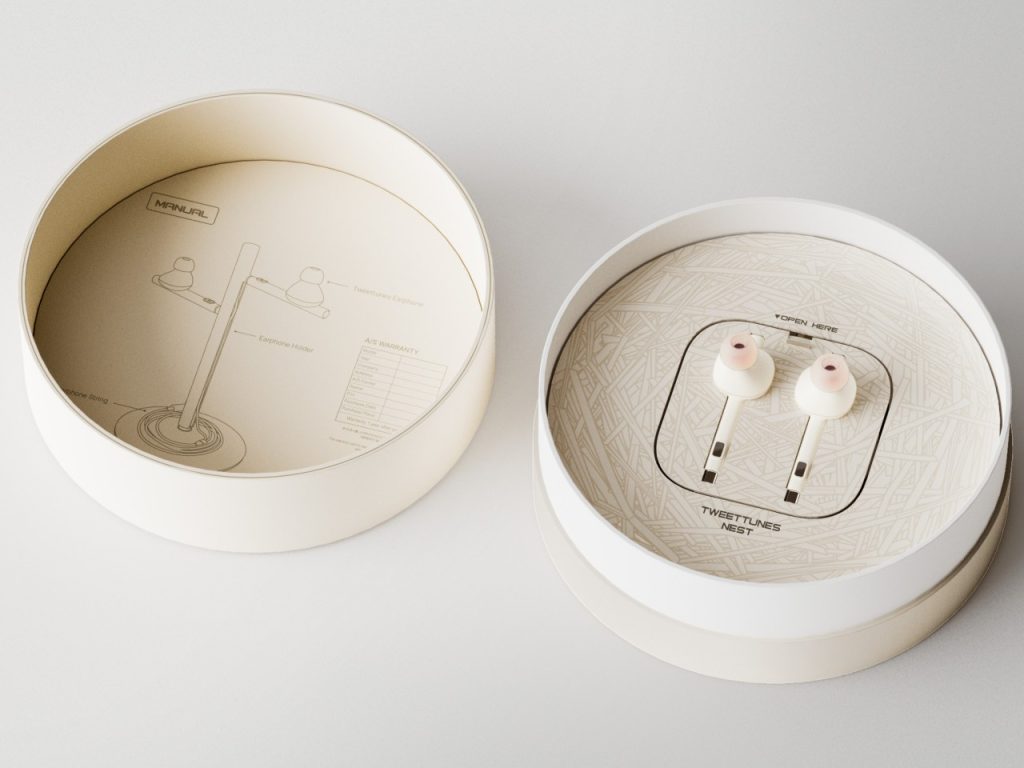
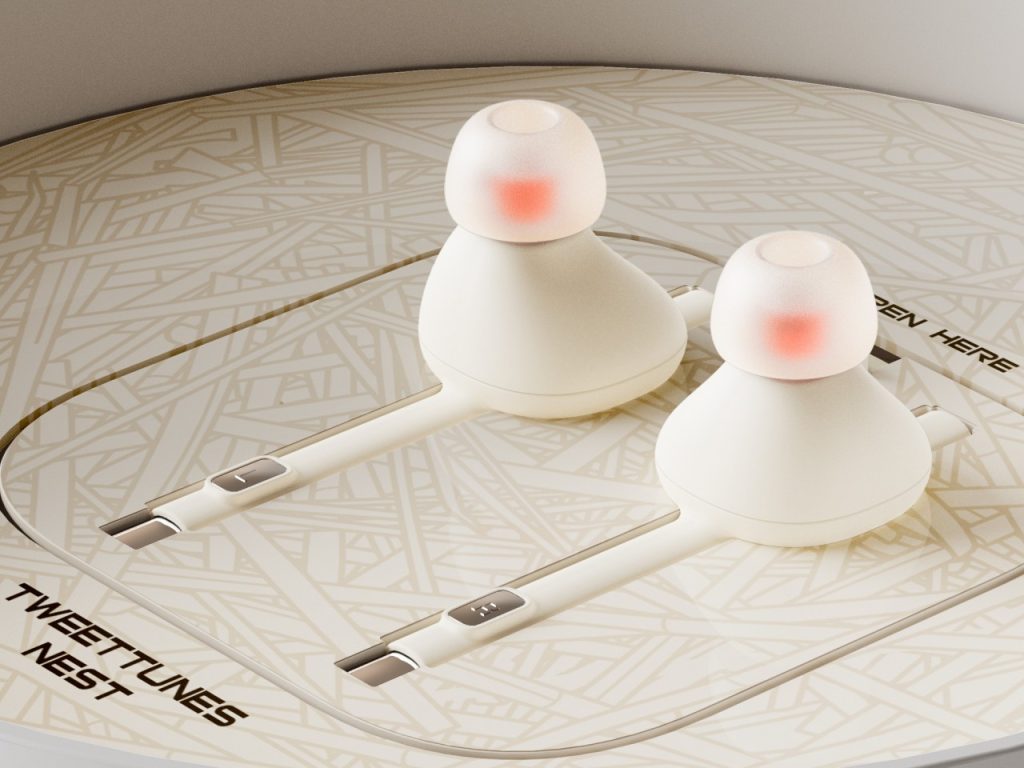
Their earbud concept starts with an observation that feels obvious only after someone says it: the standard earbud silhouette already looks a little bit like a bird perched on a stick. The designers lean into that resemblance and turn the earbuds into tiny avian characters. Not generic birds, either, but birds wearing astronaut helmets. The result is playful without becoming childish, which is a difficult line to walk in consumer electronics. It transforms an overfamiliar object into something memorable while keeping the basic logic of the product intact.
Bird-Inspired Earbuds by Jinho Choi and Seunghun Jeong
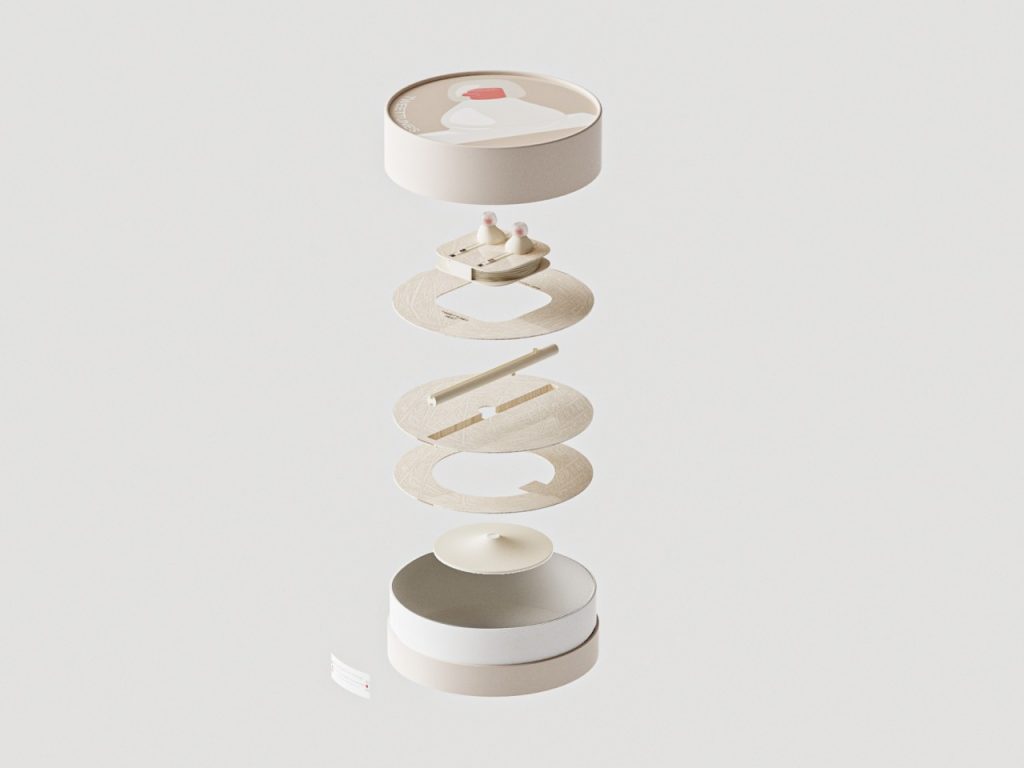
What makes the concept work is that the metaphor is integrated into the product’s geometry rather than pasted on as decoration. The rounded earbud body becomes the bird itself, while the translucent tip reads as a space helmet that conveniently solves the problem of not being able to taper the form into a beak-like point. The stalk functions as a branch when the earbuds are placed down in a certain orientation, creating a miniature scene rather than a pair of components.

Bambass by Aakansh Chaturvedi
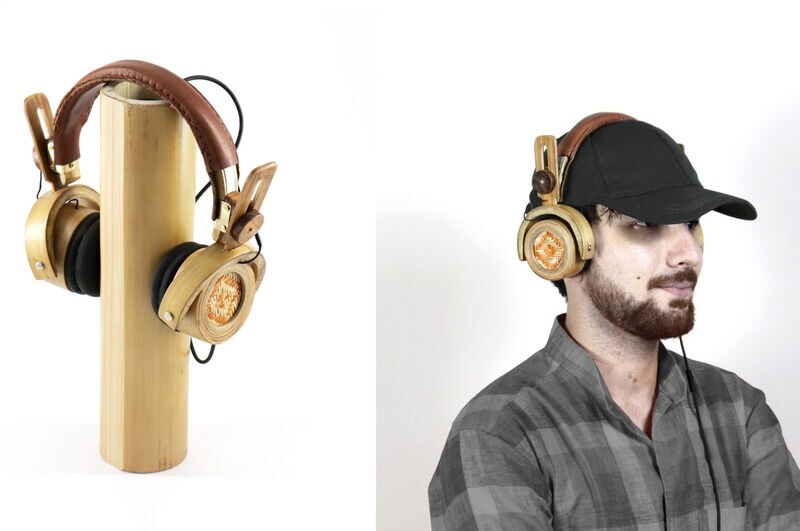
The Bambass concept asks a more foundational question: what should headphones be made of in the first place? Plastic dominates consumer electronics because it is cheap, lightweight, and easy to manufacture at scale, but it also contributes to a waste stream the industry can no longer afford to treat as incidental. Designed by Aakansh Chaturvedi of the Indian Institute of Technology Bombay, Bambass proposes a materially different future: an open-back headphone constructed primarily from bamboo, with more than 70 percent of its material composition being eco-friendly or recyclable.
Bambass by Aakansh Chaturvedi
What elevates Bambass beyond a simple sustainable-material swap is the way it treats bamboo not as a token surface finish, but as a structural and cultural design medium. Thin coiled bamboo strips form much of the body, offering both sound insulation and a distinct visual identity. The headband uses stacked bamboo strips for flexibility and resilience, supported by a stainless steel reinforcement that helps maintain comfort and durability. The design also tackles the practical complexity of headphone mechanics, particularly the adjustable earcup joint, with a screw-based sliding mechanism that allows the cups to move up and down while remaining sturdy enough for repeated use.

Bambass by Aakansh Chaturvedi
Chaturvedi’s process is just as important as the final object. The development of Bambass involved learning bamboo handling and making techniques directly from craftspeople, then translating those traditional methods into a product language suitable for contemporary electronics. The headphones carry an Indian cultural touch without becoming nostalgic or overly decorative.
Bambass by Aakansh Chaturvedi
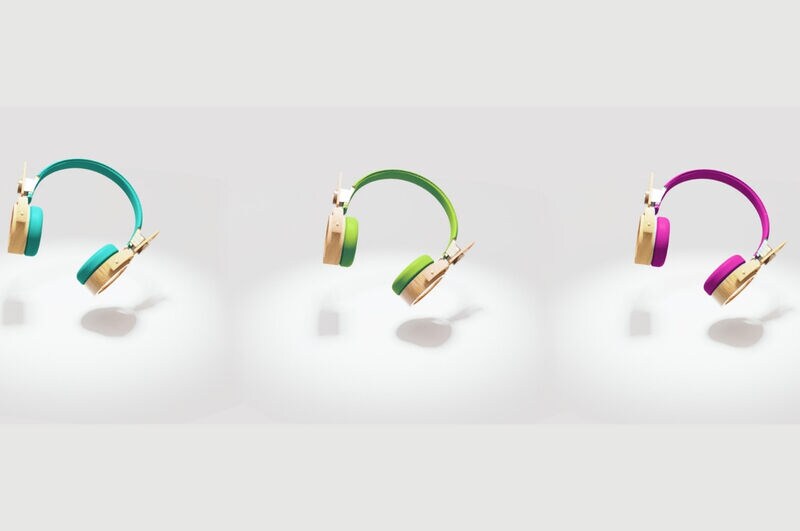
Visually, the most striking detail may be the braided bamboo at the open ends of the earcups, where abstract patterns create subtle variation from one pair to the next. That means mass production does not have to result in perfect sameness. Each unit can retain a degree of uniqueness, a rare quality in consumer tech and one that feels especially fitting for a material like bamboo. Add coated vegan leather for color flexibility and a protective melamine layer for longevity, and Bambass begins to look less like a conceptual provocation and more like a blueprint for a different kind of electronics design, one where sustainability, craftsmanship, and product viability are treated as parts of the same conversation.
Taken together, these three projects make a strong case that headphone design is at its best when it stops obsessing over the usual spec-sheet arms race and starts exploring broader design questions.