A new wave of experimental designers is turning the humble phone case into something far more ambitious: a social critique, a portable workspace, even a living ecosystem. These projects reveal how even the most ordinary tech objects can become vehicles for experimentation when designers stop asking what a phone case should look like and start asking what it could do.
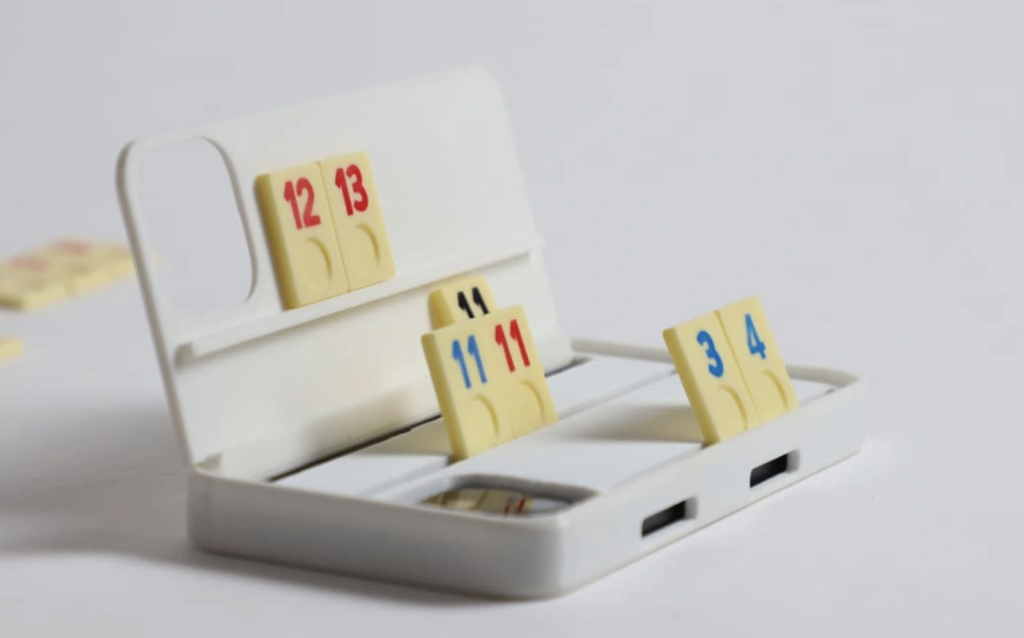
Another Round? by Candela del Barrio
Candela del Barrio’s Another Round? approaches smartphone addiction with a sense of humor that quickly turns into something more reflective. Inspired by traditional board games, the project introduces a phone case that physically reacts when the user interrupts in-person activities to check their device. The case holds small tokens, and whenever the phone is picked up during gameplay, those pieces fall out. It is a playful mechanism, but one loaded with social meaning.

Another Round? by Candela del Barrio
The brilliance of the concept lies in its simplicity. Rather than relying on app timers, digital wellness notifications, or algorithmic interventions, del Barrio creates a tangible consequence tied directly to human behavior. The act of reaching for the phone becomes visible and disruptive to everyone around the table. In doing so, the design externalizes a habit that often operates unconsciously.
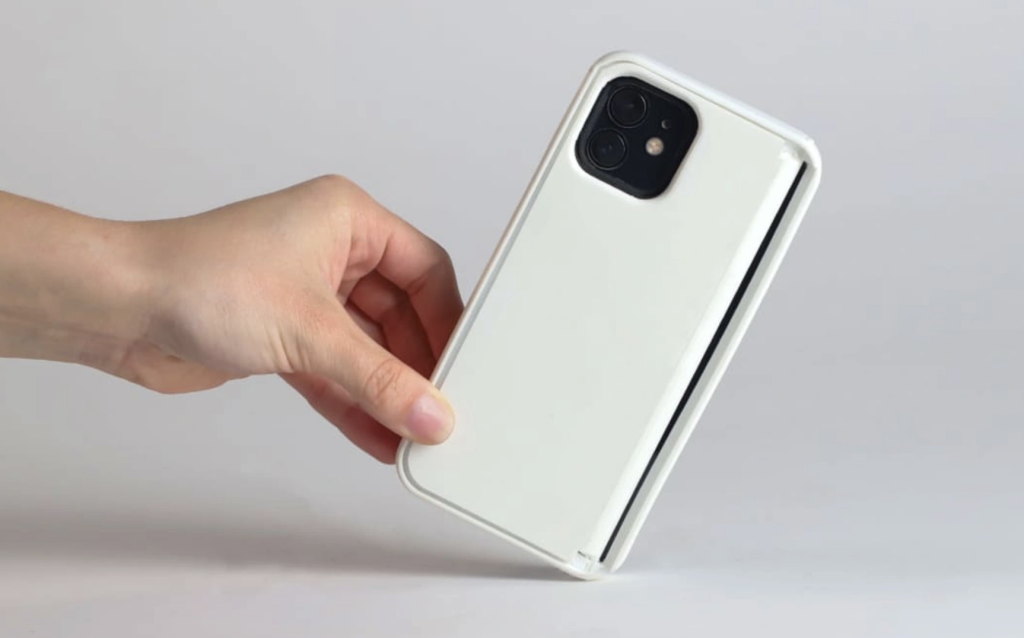
Another Round? by Candela del Barrio
There is also an interesting tension between nostalgia and modern technology. Board games traditionally encourage eye contact, conversation, and collective participation, while smartphones often fracture those same interactions. By combining the two, Another Round? transforms the phone itself into a participant in the social dynamic. The object no longer quietly competes for attention in the background. Instead, it publicly reveals when digital distraction takes priority over real-world engagement.
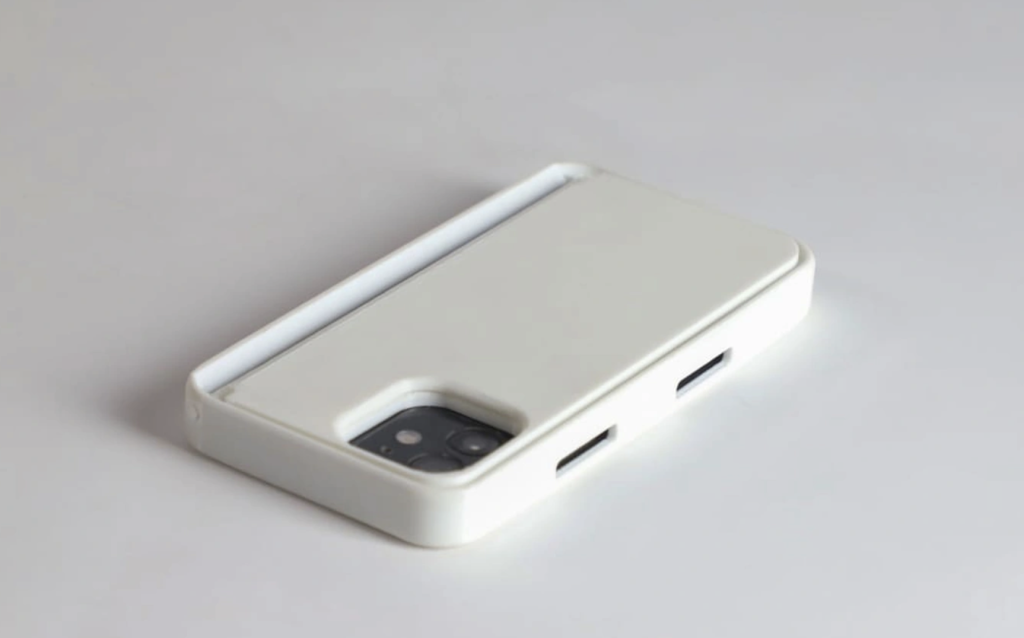
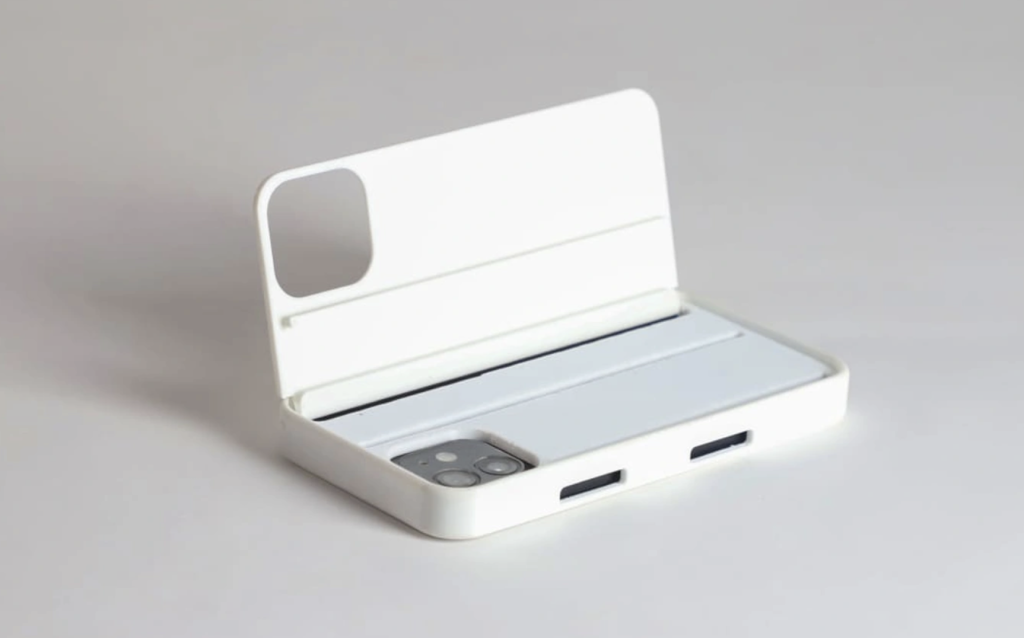
Another Round? by Candela del Barrio
Beyond its clever mechanics, the project speaks to broader concerns about cognitive overload and social isolation. Del Barrio’s design does not attempt to eliminate smartphones from everyday life. Instead, it proposes moments of intentional disconnection. That subtle distinction makes the concept especially effective. It acknowledges that technology is unavoidable while still advocating for healthier boundaries through thoughtful design.
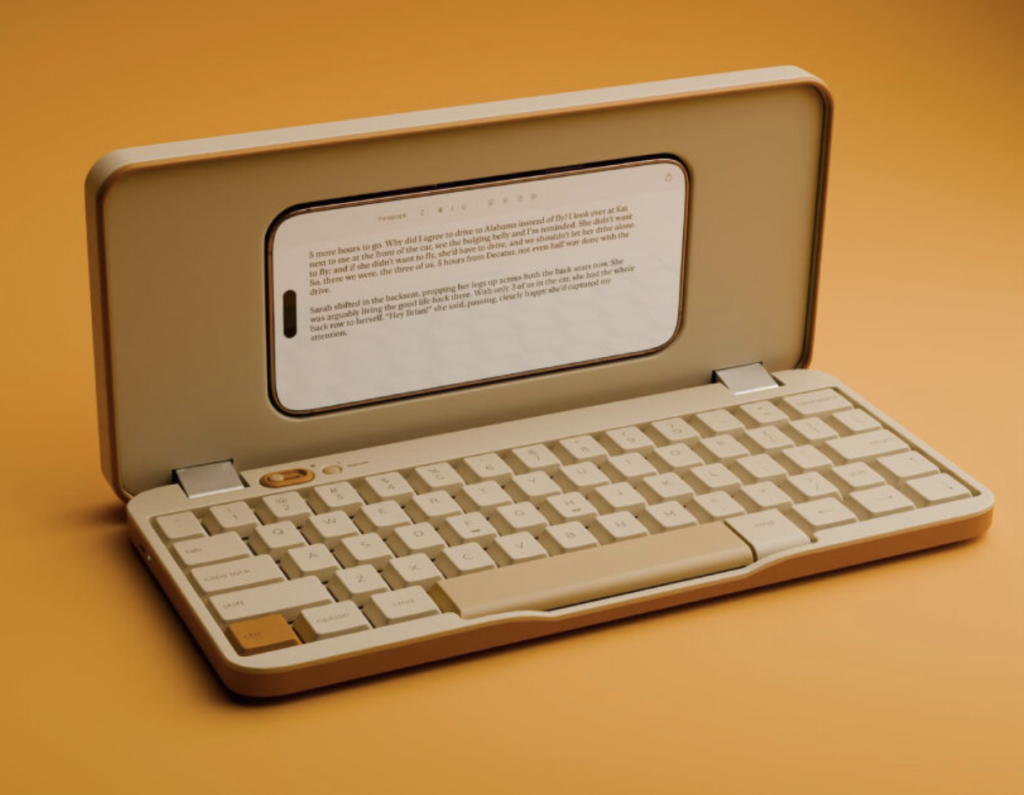
AmberDeck by Justin Mitchell
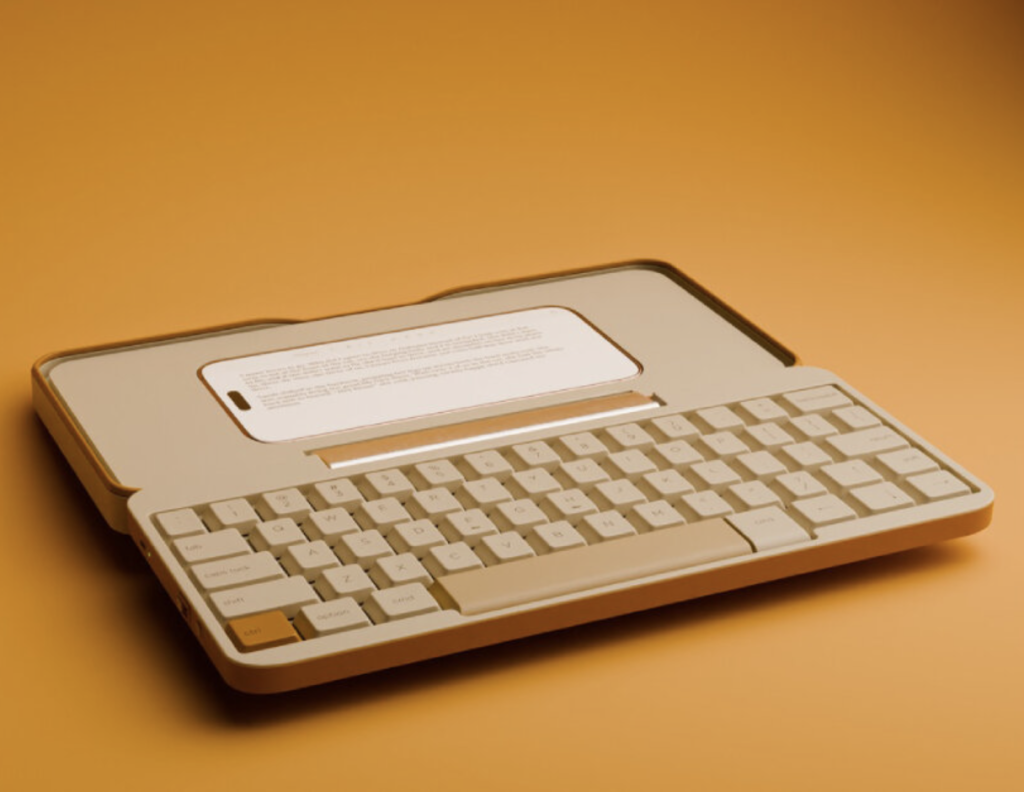
If Another Round? encourages users to step away from their phones, Justin Mitchell’s AmberDeck explores how smartphones can become more purposeful tools. The concept portable clamshell keyboard transforms iPhones and Samsung Galaxy S devices into miniature laptops, complete with mechanical keys and a foldable form factor that fits into a small bag.
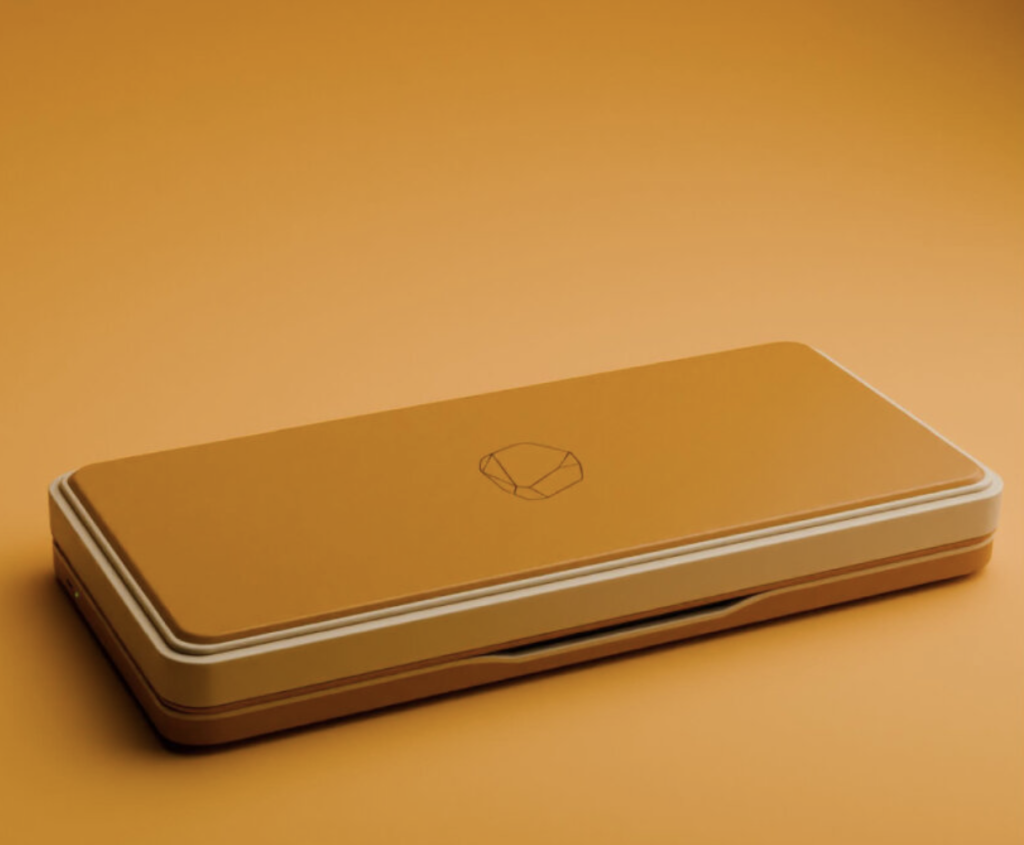
AmberDeck by Justin Mitchell
At first glance, AmberDeck feels delightfully retro. The clamshell structure recalls early laptops and handheld word processors, while the chunky mechanical keys evoke the tactile satisfaction of classic keyboards. Yet the project is rooted in a thoroughly contemporary need: focused productivity in a world dominated by touchscreen multitasking. Mitchell created the concept because he wanted a dedicated writing device for working on the go, and that personal motivation gives the design a refreshing clarity.
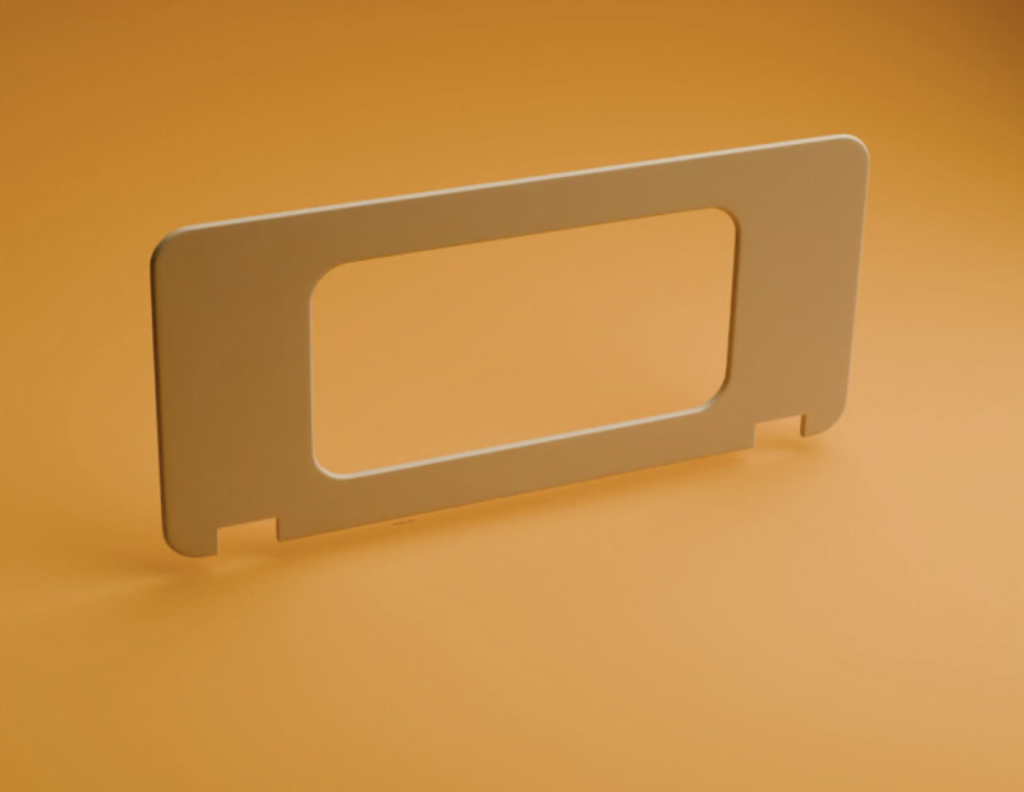
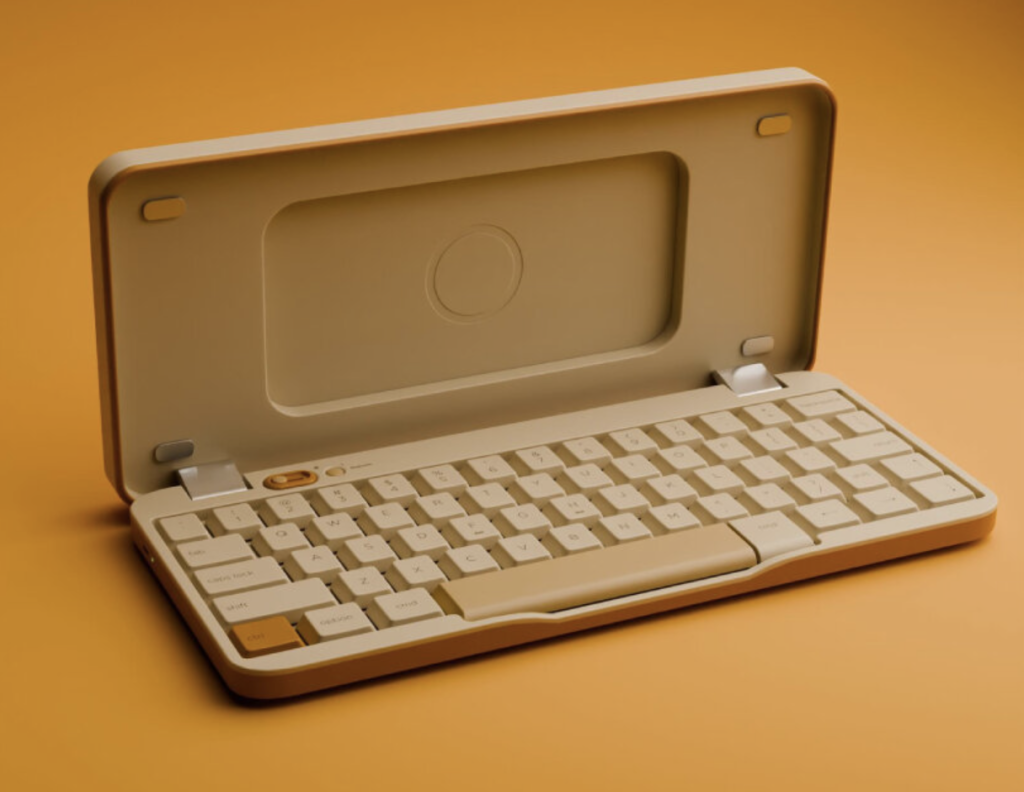
AmberDeck by Justin Mitchell
The evolution of the prototype also highlights the iterative nature of innovation. Initially designed around the rounded edges of iPhones, the keyboard’s inset was later reshaped into a more universal boxy form capable of accommodating Samsung Galaxy S models as well. Mitchell continued refining the design after unveiling it online, adding a centered hinge that allows the keyboard to lie flat during collaborative sessions and adjusting the arrow and shift keys for a more familiar typing experience.
AmberDeck by Justin Mitchell
What makes AmberDeck particularly fascinating is how it reframes the smartphone. Modern phones are already powerful enough to perform many laptop tasks, yet their form factor often discourages sustained creative work. Mitchell’s concept does not attempt to replace the smartphone. Instead, it unlocks dormant potential through physical interaction design. By adding tactile keys, structure, and ergonomic positioning, AmberDeck transforms a distraction-heavy device into something that feels intentional and focused.
Terrarium Phone Case by Daniel Idle (also header image)
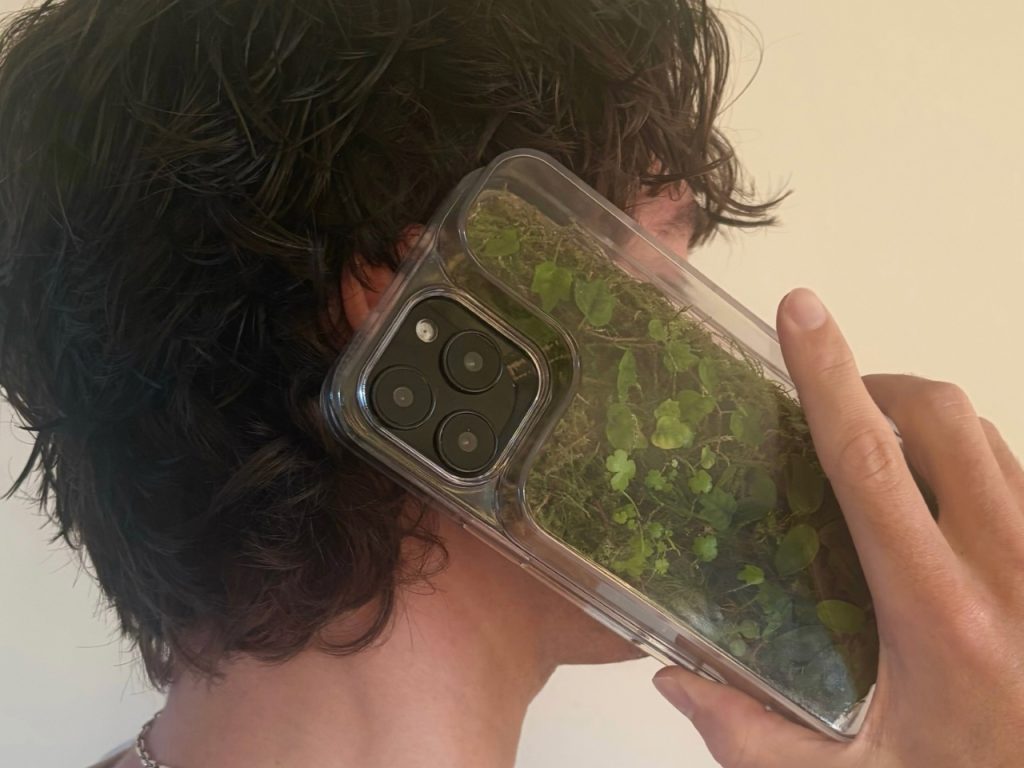
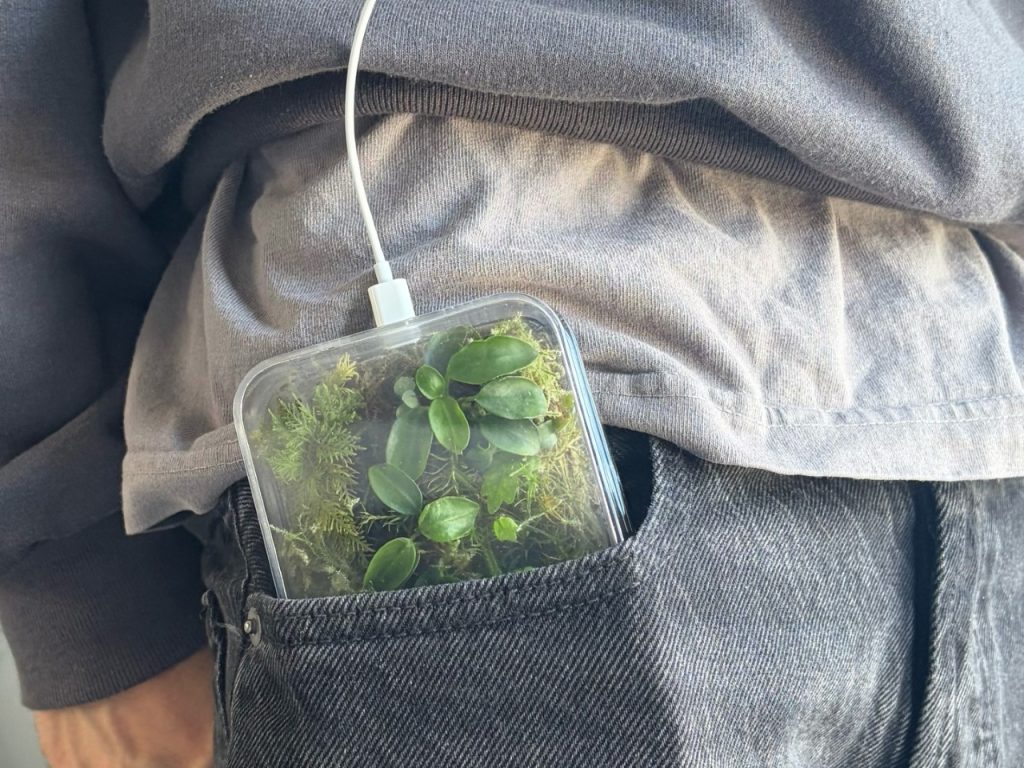
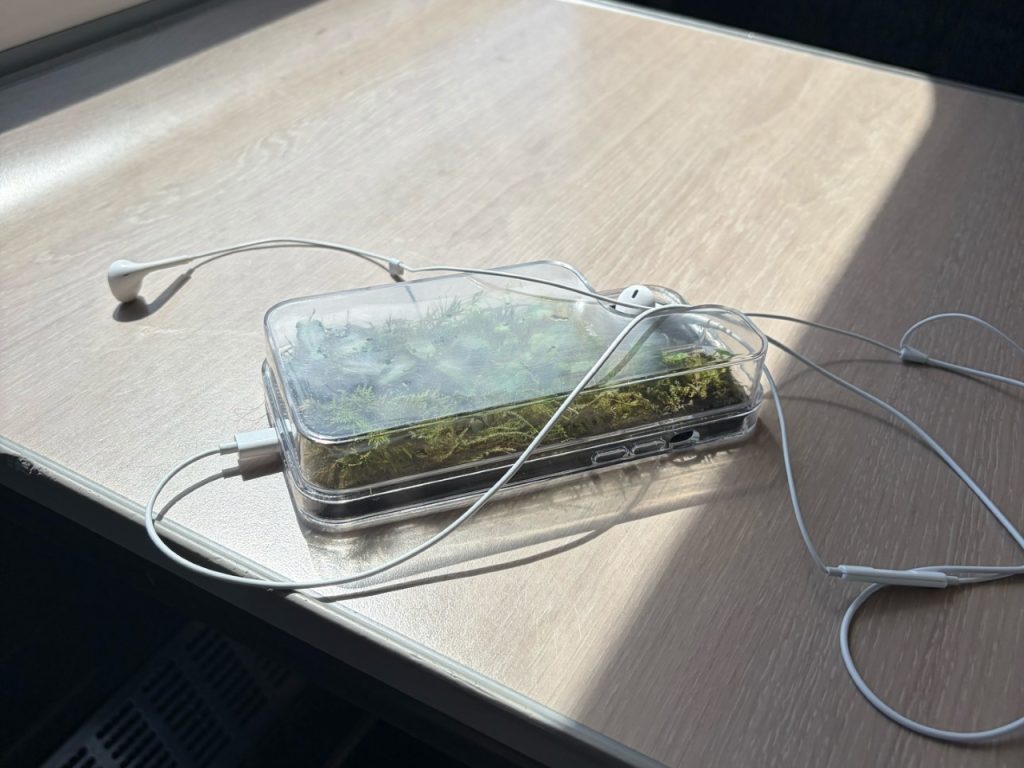
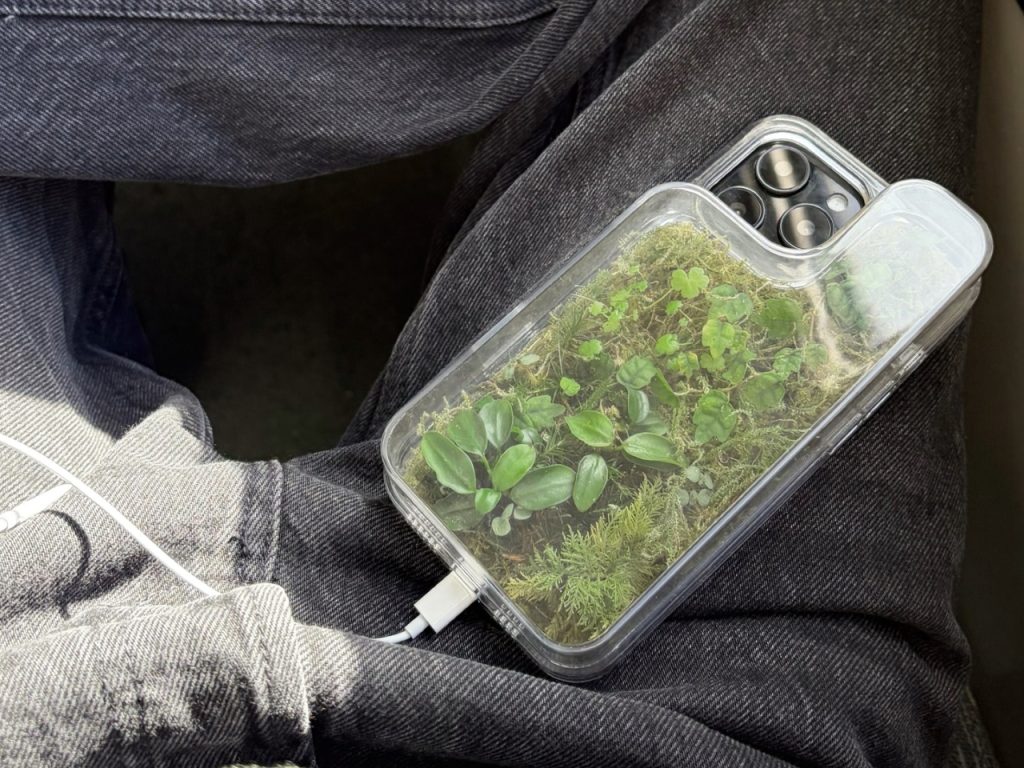
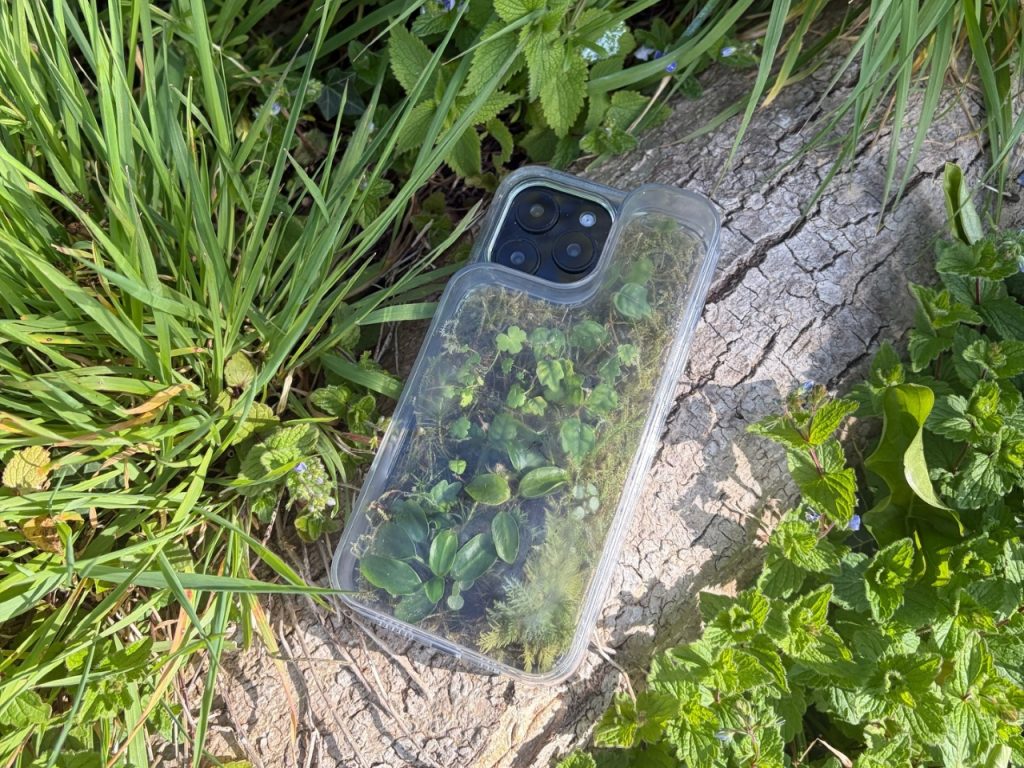
While AmberDeck reimagines productivity, Daniel Idle’s Terrarium Phone Case explores an entirely different relationship between technology and daily life. Designed for the iPhone 16 Pro Max, the transparent resin case contains an actual planted environment complete with moss, soil, and small-scale vegetation. The result sits somewhere between industrial design, biology, and speculative art.
Terrarium Phone Case by Daniel Idle
The case functions as a sealed miniature ecosystem. Using a stabilized substrate and a closed-loop moisture cycle, the internal environment sustains itself through evaporation, condensation, light exposure, and gradual nutrient release. Condensation gathering along the inside of the shell is not treated as a flaw but as evidence of life actively responding to its surroundings. In an industry obsessed with sterile perfection, that decision feels surprisingly radical.
Terrarium Phone Case by Daniel Idle
Idle’s project also stands apart from many biophilic design trends currently dominating interiors and architecture. In most cases, plants are decorative additions layered onto an existing object or space. Here, the organic system is integrated directly into the structure of the product itself. The terrarium is not ornamentation. It is the defining feature of the object’s identity.
Terrarium Phone Case by Daniel Idle
Of course, the concept also embraces a certain degree of absurdity. A moisture-filled ecosystem wrapped around an expensive smartphone naturally raises questions about practicality and durability. Yet that tension is precisely what makes the project memorable. The Terrarium Phone Case exists in the sweet spot between feasible product design and speculative provocation. It invites users to reconsider how disconnected modern technology has become from the natural world and whether our devices could someday feel less artificial, less sealed off from life itself.
Terrarium Phone Case by Daniel Idle
In a tech landscape often driven by incremental upgrades and predictable aesthetics, these unusual phone cases remind us that innovation can still surprise us. Sometimes all it takes is a designer willing to look at an everyday object and ask a stranger, smarter question.