What happens when a fast-food nugget becomes a handbag, a takeaway bag becomes a backpack, and mayonnaise finds its way onto the runway? Increasingly, brands are discovering that the most memorable products do not simply display a logo. They transform something familiar into an object people want to interact with, wear, photograph, and talk about. The result is a curious new territory where marketing, product design, and fashion overlap, and where a condiment can have just as much design potential as a luxury accessory.
Burger King’s Le Nugguette (also header image)
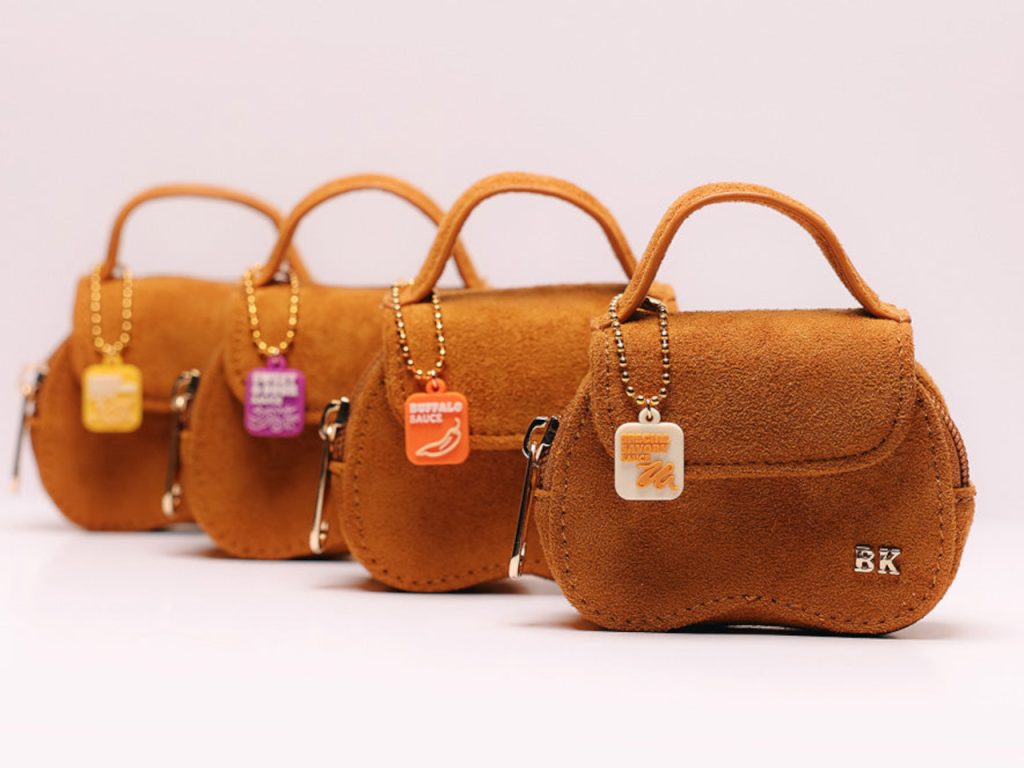
Fast-food marketing usually operates at the level of packaging and promotion. Burger King, however, pushed the idea considerably further with Le Nugguette, a micro-bag shaped and colored to resemble one of its newly reformulated chicken nuggets. Rather than putting a nugget graphic on a conventional handbag, the design turns the food itself into the product. The result is part accessory, part advertising object, and entirely committed to the joke.
Burger King’s Le Nugguette
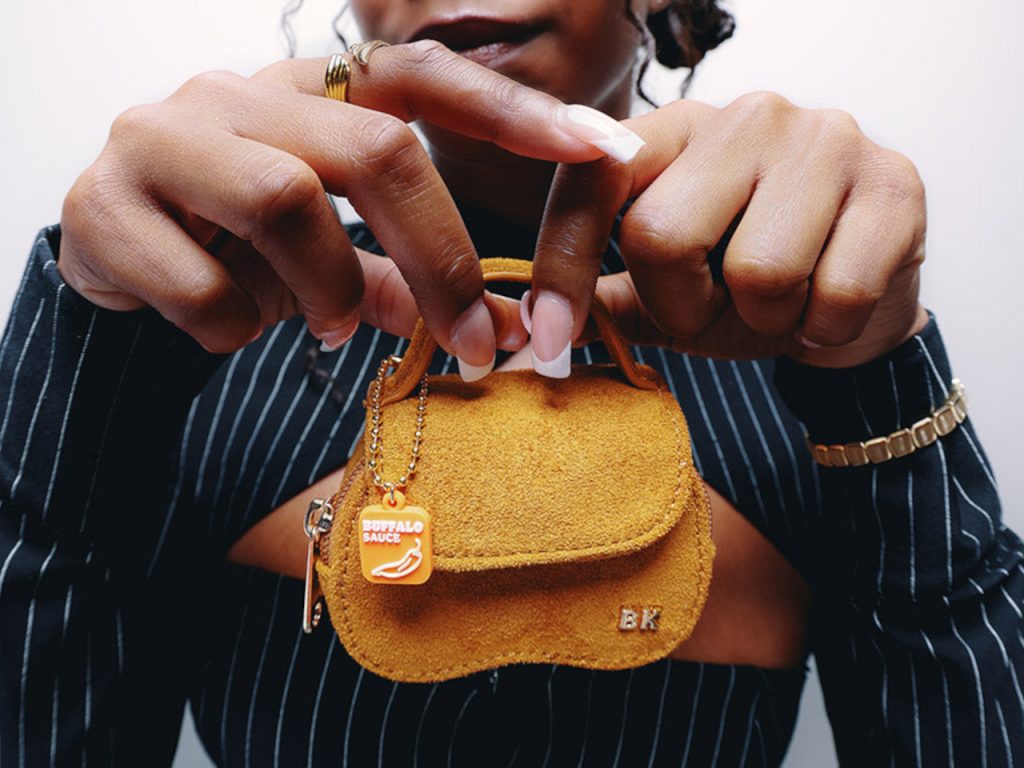
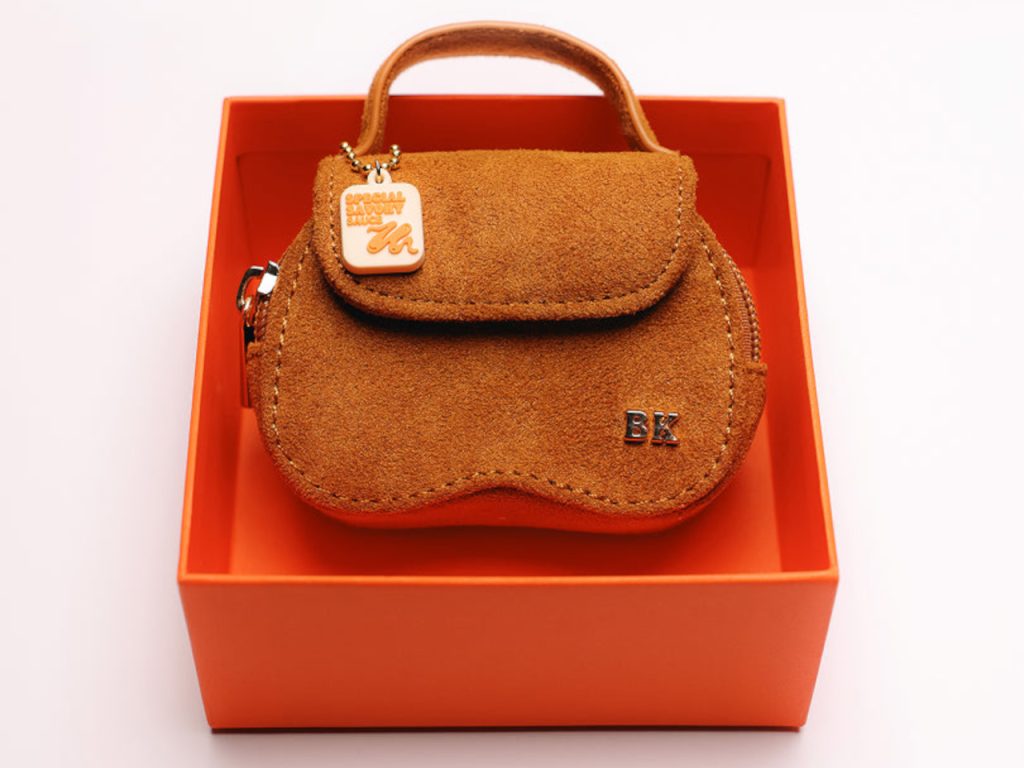
The shape is what makes the concept work. Le Nugguette preserves the rounded, irregular silhouette and golden-brown appearance of an actual nugget instead of translating it into a more conventional purse shape. A short handle and zippered compartment make the object genuinely carryable, while a small metallic BK logo provides a restrained branding detail. The bag does not need to announce what it is because its silhouette does most of the talking.
Burger King’s Le Nugguette
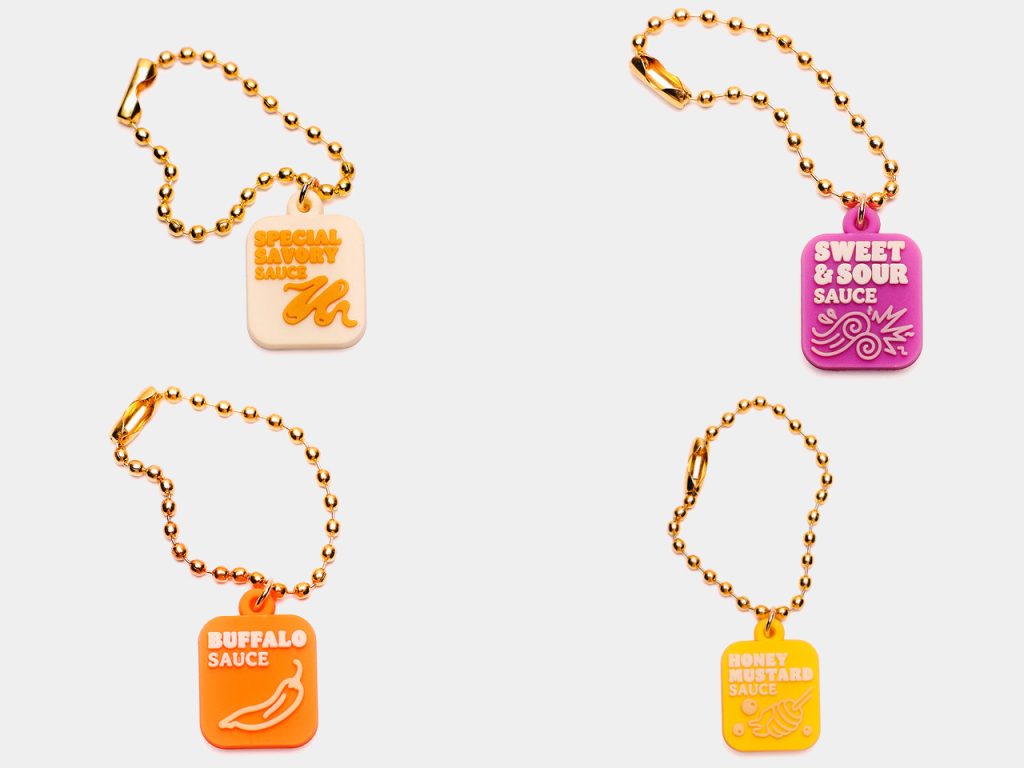
Scale is equally important. At roughly the size of three real nuggets, the bag lands somewhere between a handbag and a novelty accessory. That deliberately diminutive proportion keeps the visual joke intact. A full-sized nugget handbag might simply resemble an unusual brown purse, whereas this smaller version remains unmistakably connected to its edible inspiration. Even the accessories reinforce the idea. Each bag comes with one of four charms based on Burger King’s sauce lineup, including Special Savory, Honey Mustard, Buffalo, or Sweet and Sour.
Burger King’s Le Nugguette
The pricing completes the concept. Le Nugguette costs $3.99, matching the price of the nugget order that inspired it, and each purchase comes with a code for a four-piece nugget order. The relationship between product and promotion is therefore unusually direct. Instead of merely advertising the food, the accessory becomes a physical extension of it. That is a clever example of how design can turn an ordinary marketing campaign into an object people might actually want to keep.
And Burger King is not alone in discovering that food packaging can be fertile design material. McDonald’s China takes the idea in a more functional direction, turning one of its most familiar paper objects into something designed to leave the restaurant and enter everyday life.
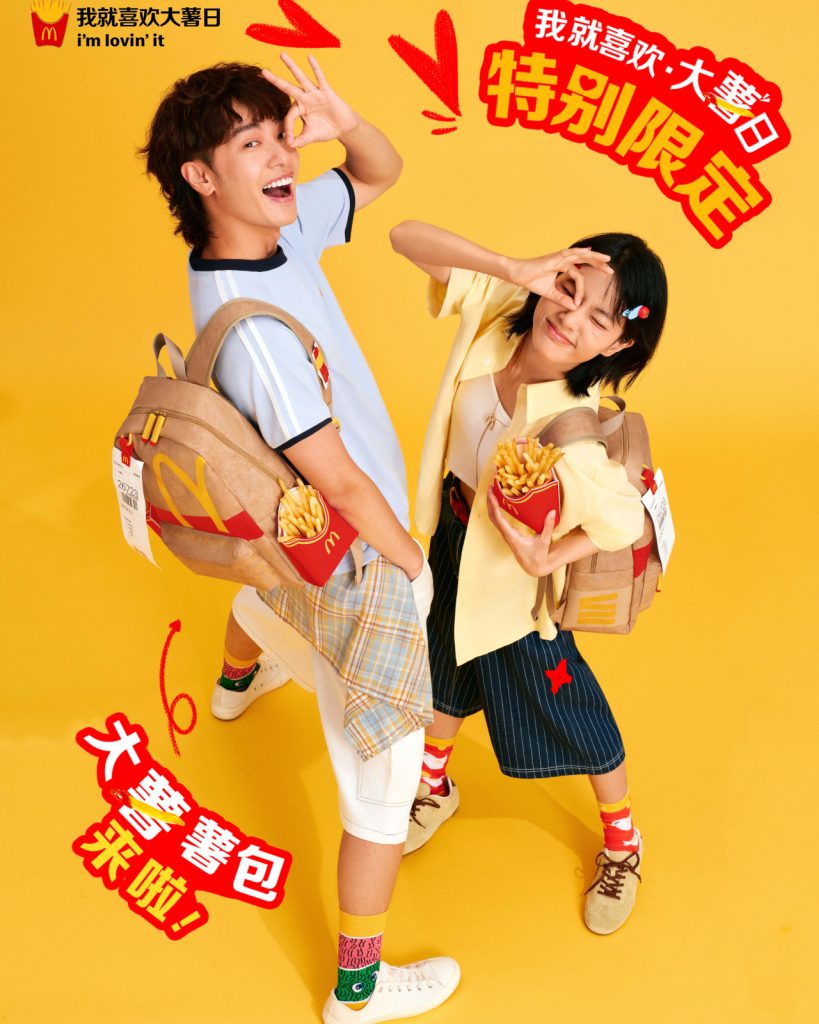
McDonald’s Big Fries Backpack
For the 12th edition of Big Fries Day, McDonald’s China released a limited-edition backpack modeled after the brown paper takeaway bag associated with its restaurants. The concept goes beyond printing the Golden Arches on a conventional backpack. Instead, the design translates the takeaway bag itself into a wearable object, preserving its proportions, graphics, material cues, and even some of the rituals associated with ordering food.
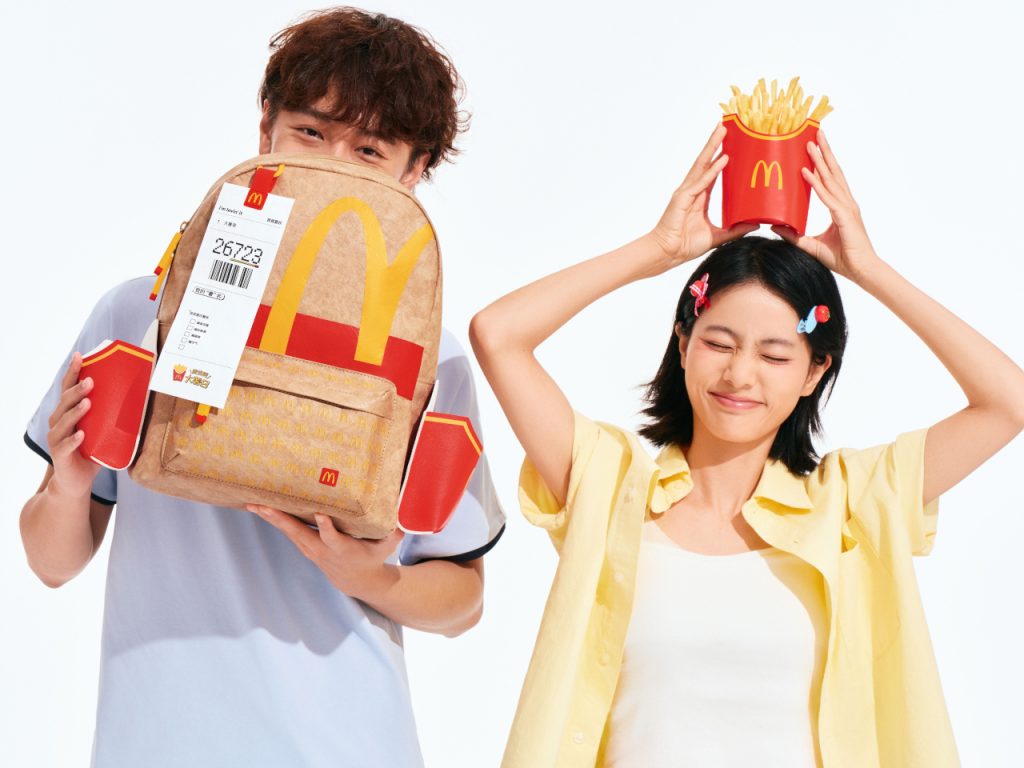
McDonald’s Big Fries Backpack
The project has an unusual origin story. A Chinese craft blogger had previously created a handmade backpack inspired by McDonald’s takeaway packaging and shared it online. The concept attracted enough attention for McDonald’s China to collaborate with the creator and develop an official version for Big Fries Day, an annual event established in 2015 around Dashu, the Chinese solar term known as Major Heat. The name itself is a wordplay between Dashu and “da shu”, a shorthand for large fries, giving the campaign a distinctly local cultural hook.
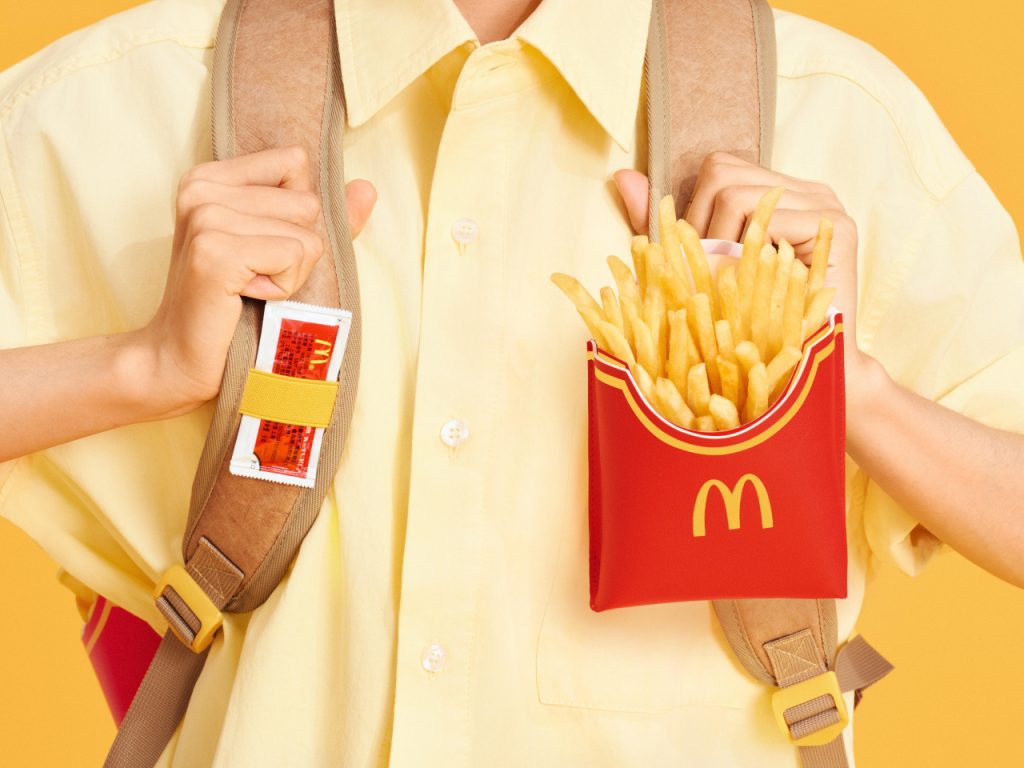
McDonald’s Big Fries Backpack
The backpack is packed with details that reward closer inspection. Its lightweight DuPont paper material mimics the texture of a takeaway bag, while the Golden Arches, fry graphics, and folded-paper details recreate the visual language of the original packaging. A detachable charm resembles a McDonald’s receipt, and the zipper pulls take the form of fries dipped in ketchup. The most playful feature, however, is a pair of detachable red side pockets shaped like fry cartons, which can actually hold fries. There is even a dedicated compartment inside for ketchup packets.
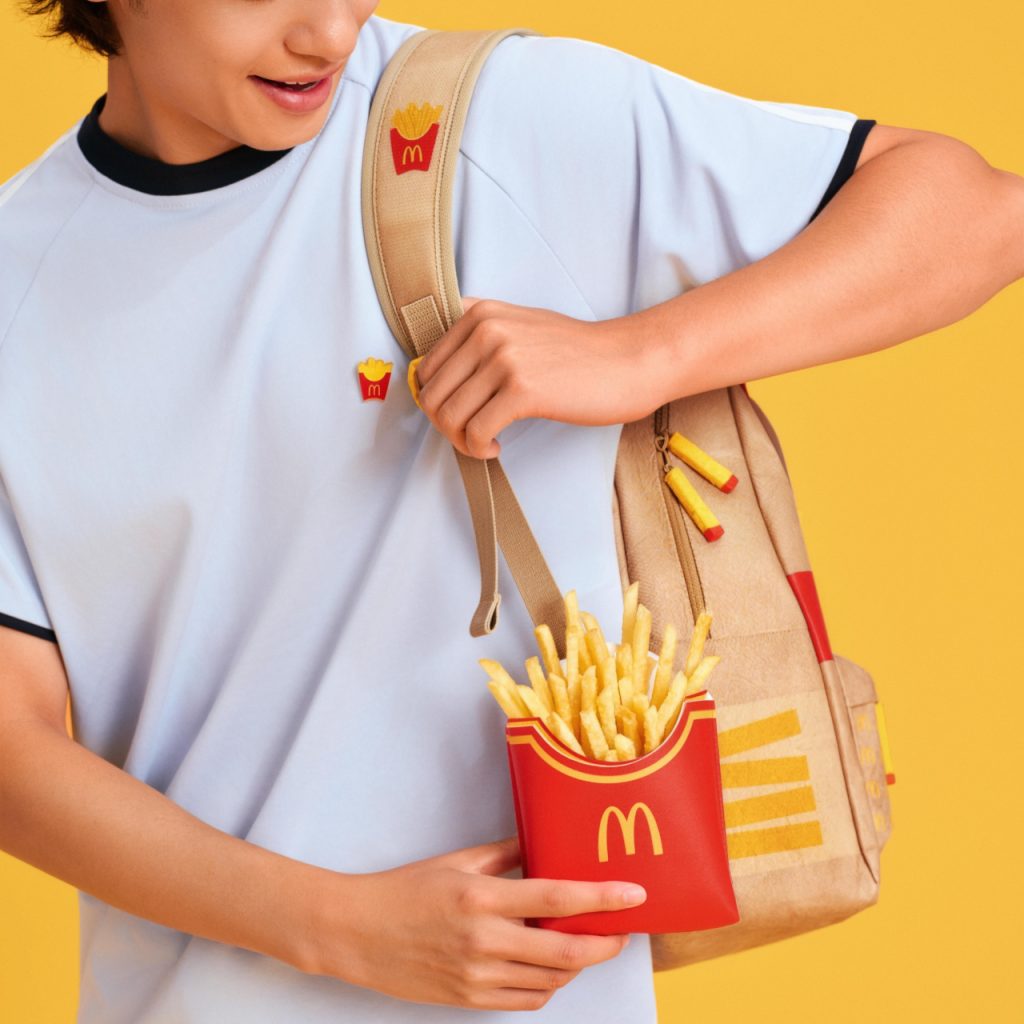
McDonald’s Big Fries Backpack
Despite all the visual humor, the backpack does not stop at novelty. The main compartment includes dividers and can accommodate a 13- or 14-inch laptop, giving the object enough practical functionality for everyday use. Its shoulder strap is also designed to keep a fry carton upright. It is a wonderfully specific solution to an equally specific lifestyle question: what if your lunch could travel with you, literally attached to your backpack? The design succeeds because the joke is supported by genuine product thinking.
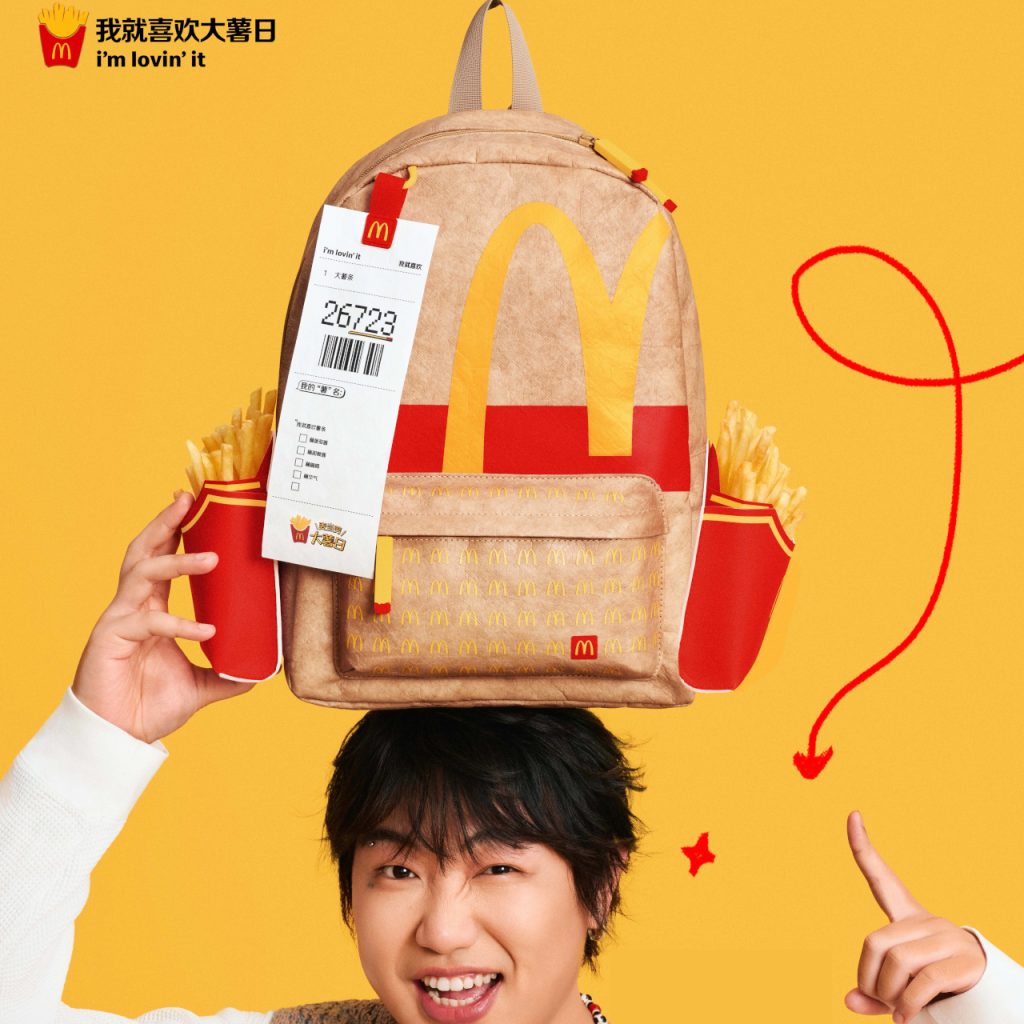
McDonald’s Big Fries Backpack
That balance between the ridiculous and the usable becomes even more interesting when food moves from fast-food packaging into fashion. At London Fashion Week, Hellmann’s and Chopova Lowena explored a similar idea, but with a condiment that is arguably even more polarizing than a novelty nugget.
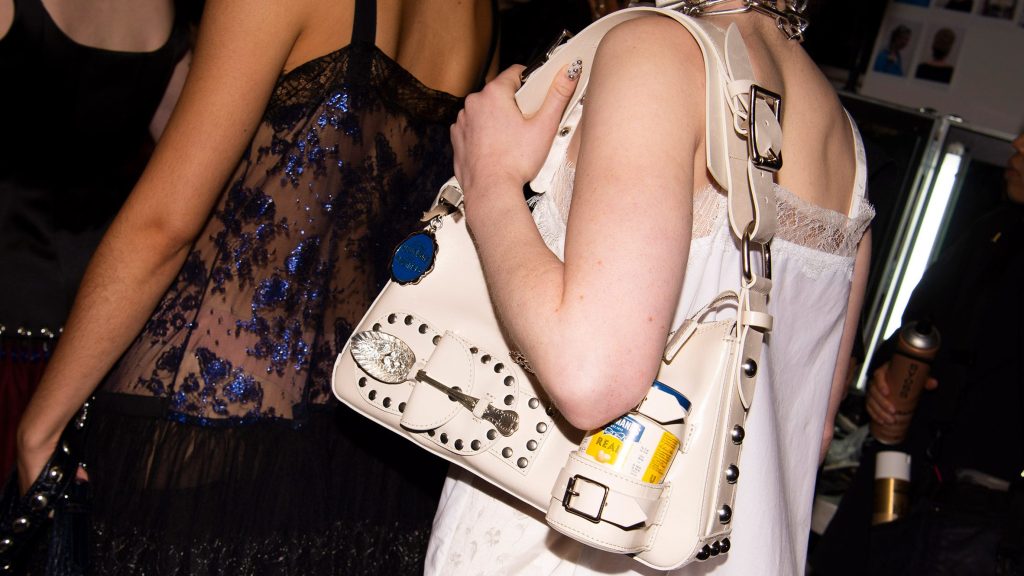
Hellmann’s Margaret Bag
The Margaret bag, created by Hellmann’s and fashion label Chopova Lowena, takes branded product design into more explicitly fashion-led territory. Named after Margaret Hellmann, co-founder of the condiment brand, the bag was unveiled at London Fashion Week in 2024 with an unapologetically specific purpose: to take mayonnaise “beyond the fridge.” Instead of hiding its connection to the kitchen, the design makes that connection the central feature.
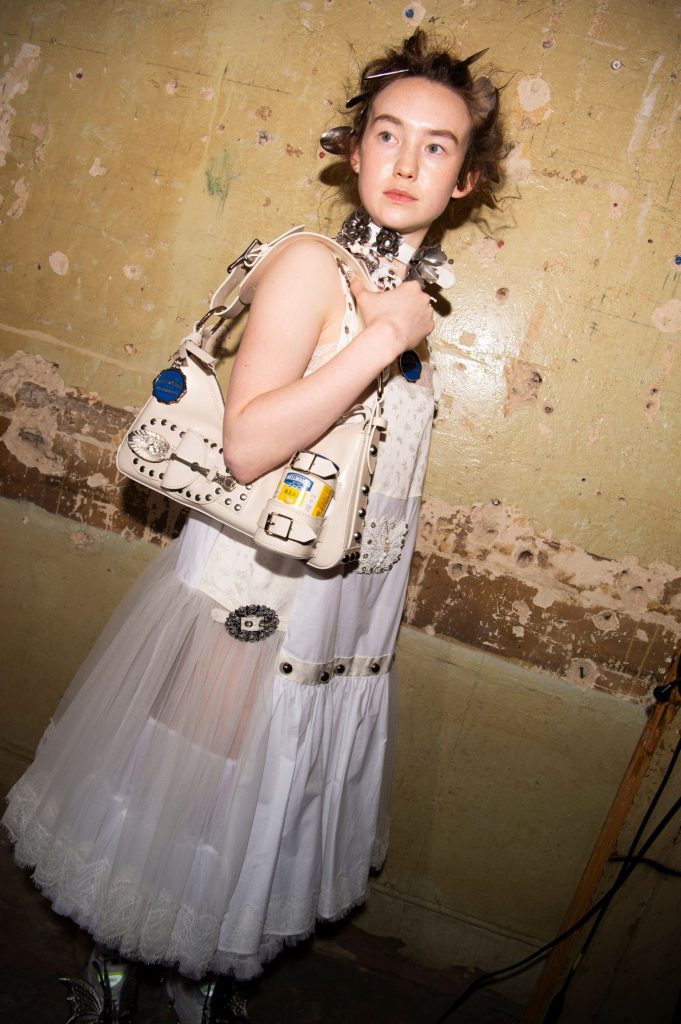
Hellmann’s Margaret Bag
The bag is based on Chopova Lowena’s Sofia bag, which draws inspiration from vintage travel cases filled with specialized compartments and pockets. That original concept was developed as a kind of “girlhood survival kit”, with everyday objects such as a comb, pen, and carabiner attached externally through a network of pockets, buckles, and clips. The Margaret bag adapts this philosophy to a much more eccentric theme. A jar of Hellmann’s mayonnaise is secured directly to the exterior with buckled straps, while a Victorian-style spoon sits beside it in dedicated loops.
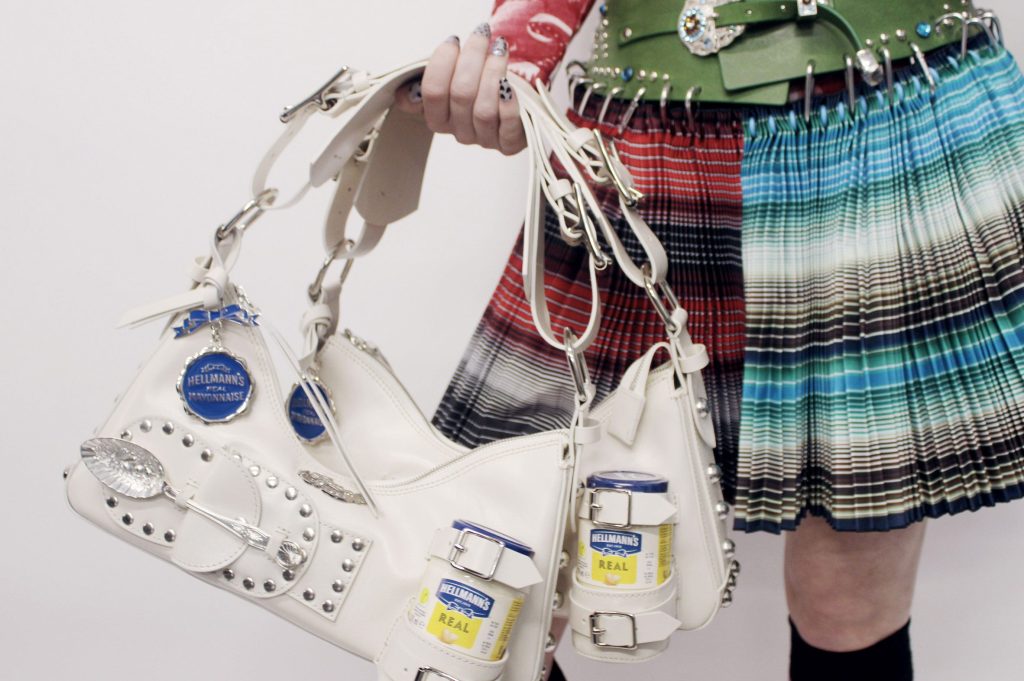
Hellmann’s Margaret Bag
The details are deliberately elaborate. Silver rivets echo the bag’s existing hardware, while a blue charm references the Hellmann’s lid and the ribbon on its label. During the fashion presentation, models were even styled with spoons in their hair, extending the condiment-inspired visual language beyond the bag itself. Chopova Lowena’s founders explained that their research began with antique spoons, whose intricate forms inspired the decision to pair them with a product they genuinely enjoyed.
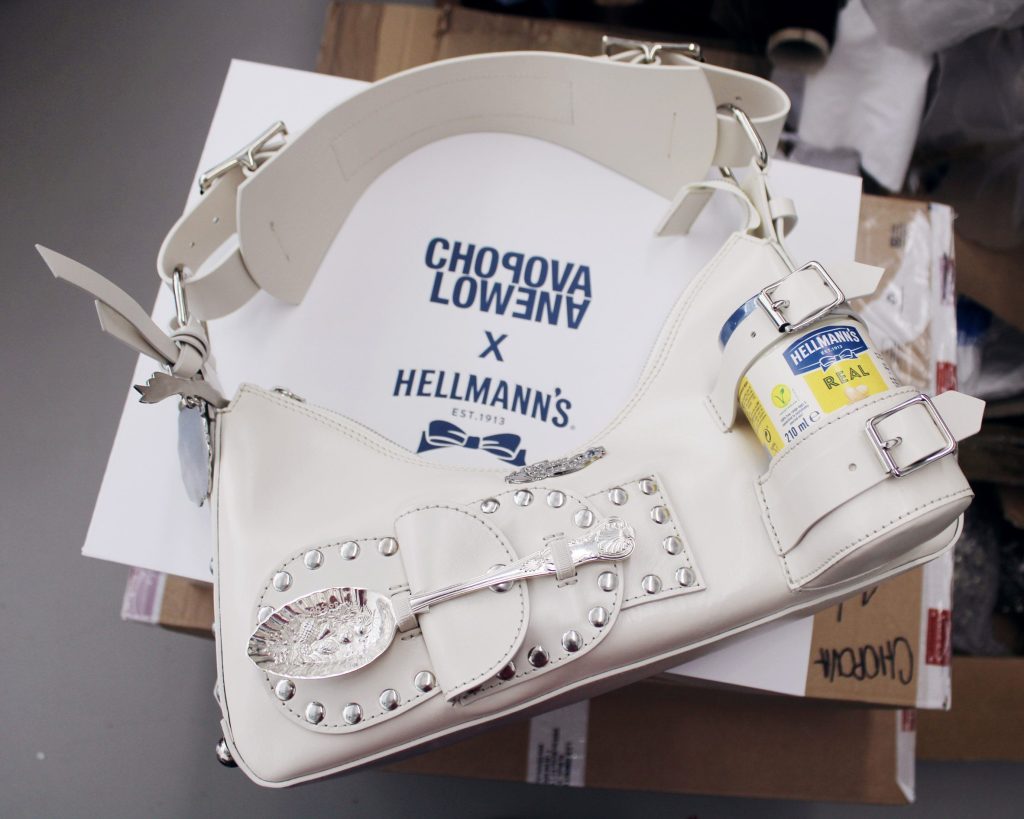
Hellmann’s Margaret Bag
Crucially, the designers have described the Margaret as something more than a novelty product. Their stated intention was to create a bag that people would actually want to wear, with the ridiculous function serving as an unexpected layer rather than the entire point. That distinction reveals something important about this emerging category of branded design. The strongest collaborations do not simply make merchandise funny. They give the joke a coherent design language, a functional rationale, and enough aesthetic appeal to exist beyond the campaign that created it.
There is an important lesson here for designers working beyond food and fashion. Novelty by itself has a short shelf life. What makes these objects interesting is the attention paid to the details that make the central idea believable. The most successful collaborations are no longer asking how a brand can decorate an existing product. They are asking what happens when the brand’s own visual language, rituals, materials, and products become the raw material for something completely new. When that happens, even a chicken nugget can become a handbag, and a jar of mayonnaise can earn a place on the runway.