What happens when musical technology stops looking like technology? Across a new generation of experimental instruments, designers are rethinking the relationship between sound, touch, and discovery. Instead of hiding complexity behind screens, menus, and technical terminology, these projects turn music-making into something spatial, tactile, and even playful. From synthesizers inspired by lakes and ecosystems to magnetic drum machines and modular instruments that behave like building sets, each project asks a similar question: can better design make experimentation feel less intimidating and more instinctive?
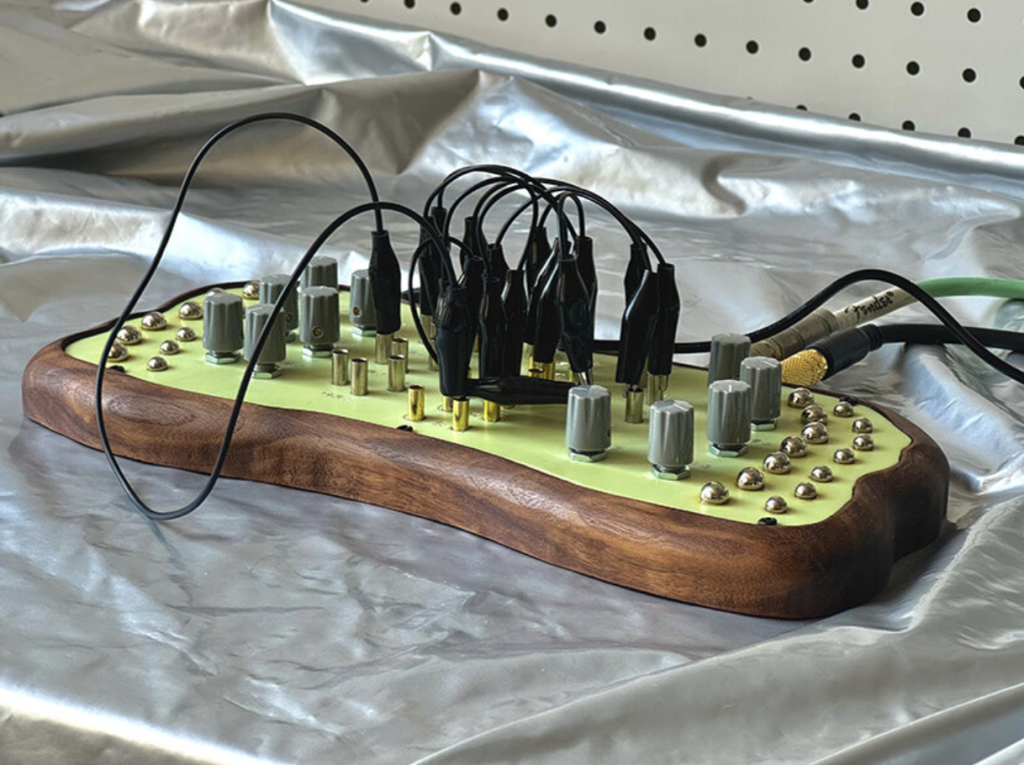
Synthesizers by Madkids Empire (also header image)
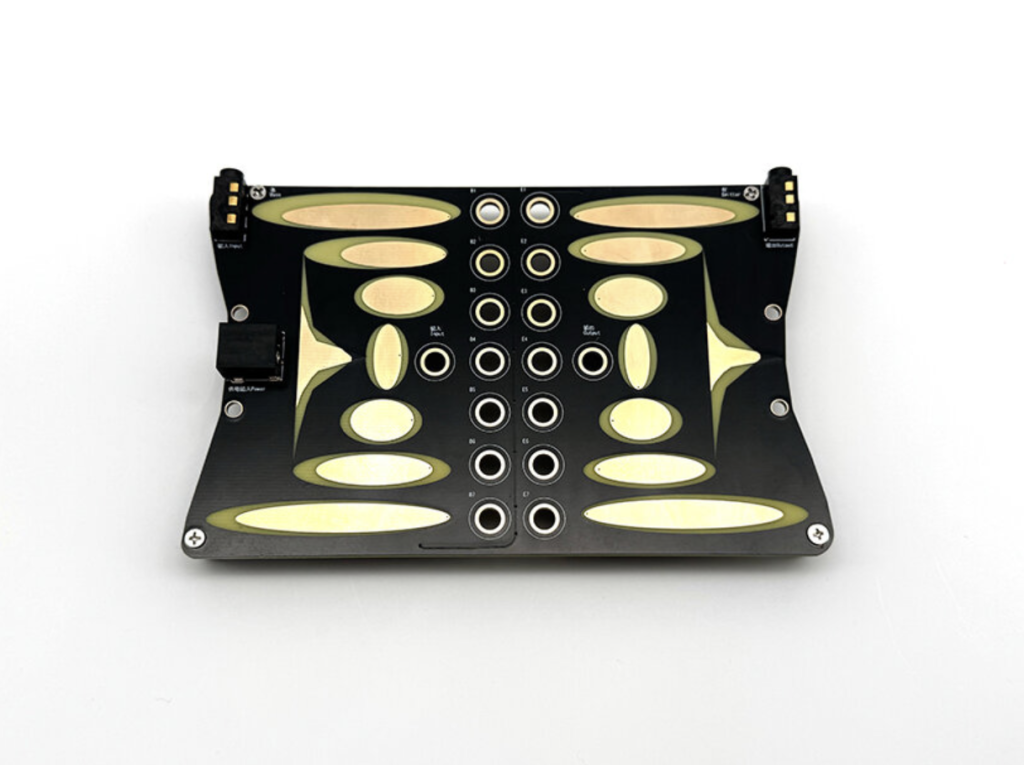
The synthesizers created by Madkids Empire look less like conventional electronic instruments and more like maps of imaginary worlds. Founded by Xam, the experimental practice builds analog instruments whose sculptural forms and intuitive interfaces draw inspiration from lakes, mountains, trees, and other natural systems. Their unusual layouts translate the complexity of analog circuitry into physical environments that encourage users to explore rather than simply operate a machine.
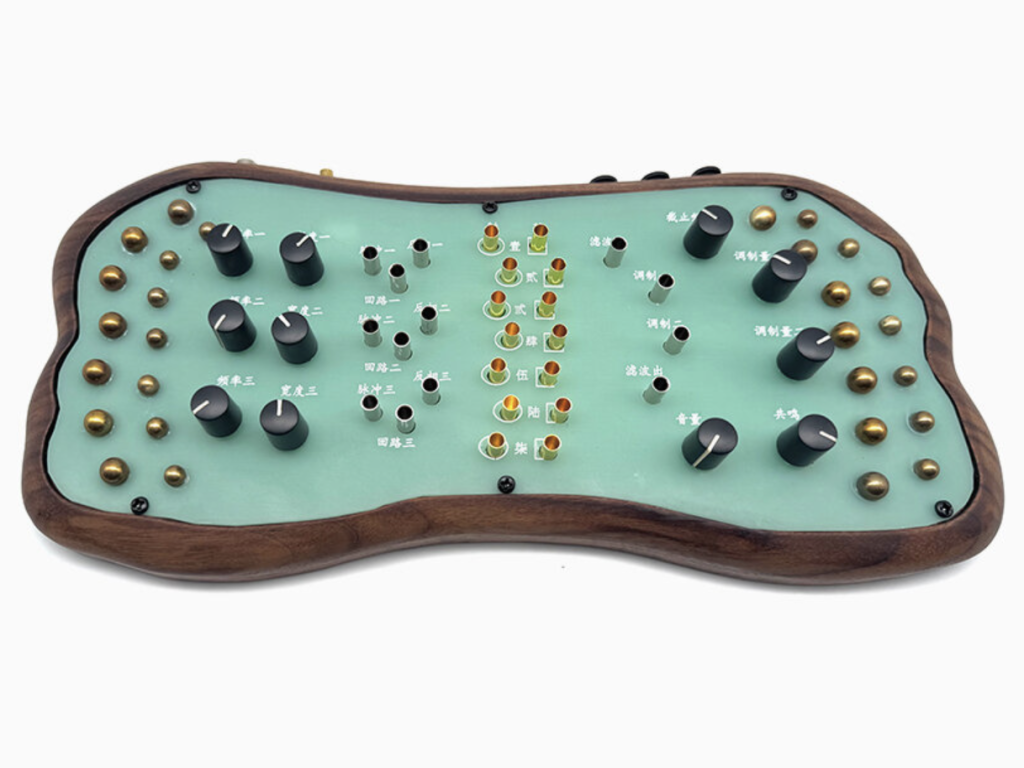
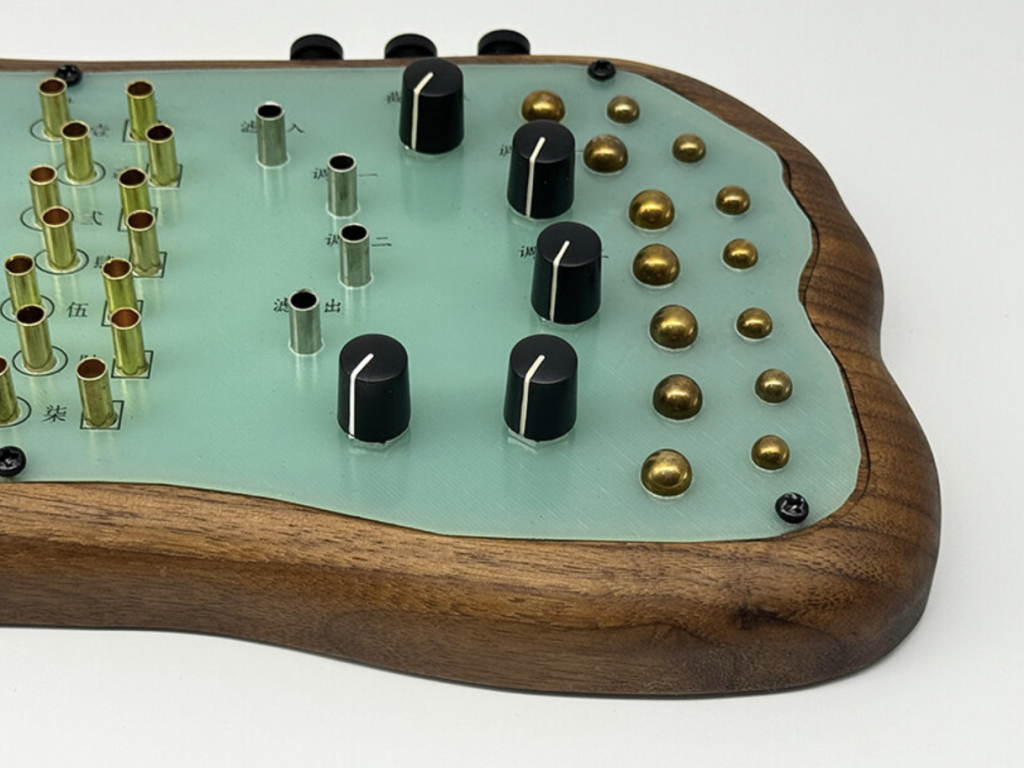
Synthesizers by Madkids Empire
For Xam, the fascination begins inside the circuit. Analog electronics can behave like living systems, with individual components constantly influencing one another and producing unexpected relationships. Rather than treating this unpredictability as a problem, Madkids Empire makes it part of the instrument’s character. The visual design follows the same logic, with natural metaphors becoming maps for navigating the underlying electronics. In this sense, the exterior is not decoration added after the technology is complete. It is an interpretation of how the technology behaves.
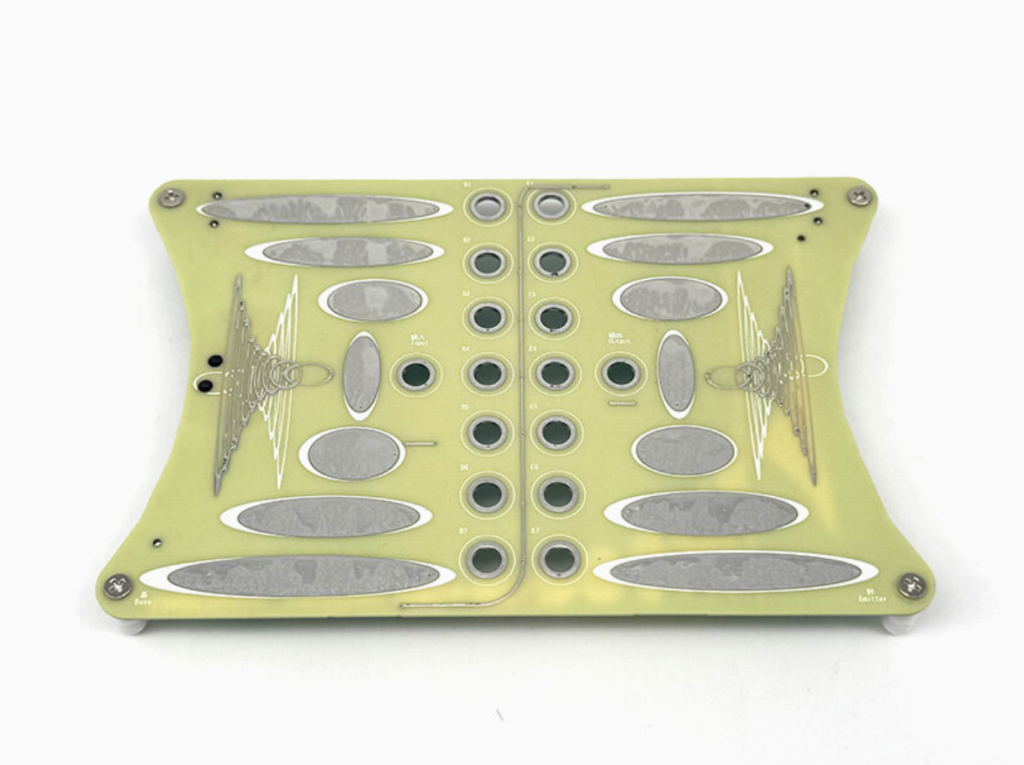
Synthesizers by Madkids Empire
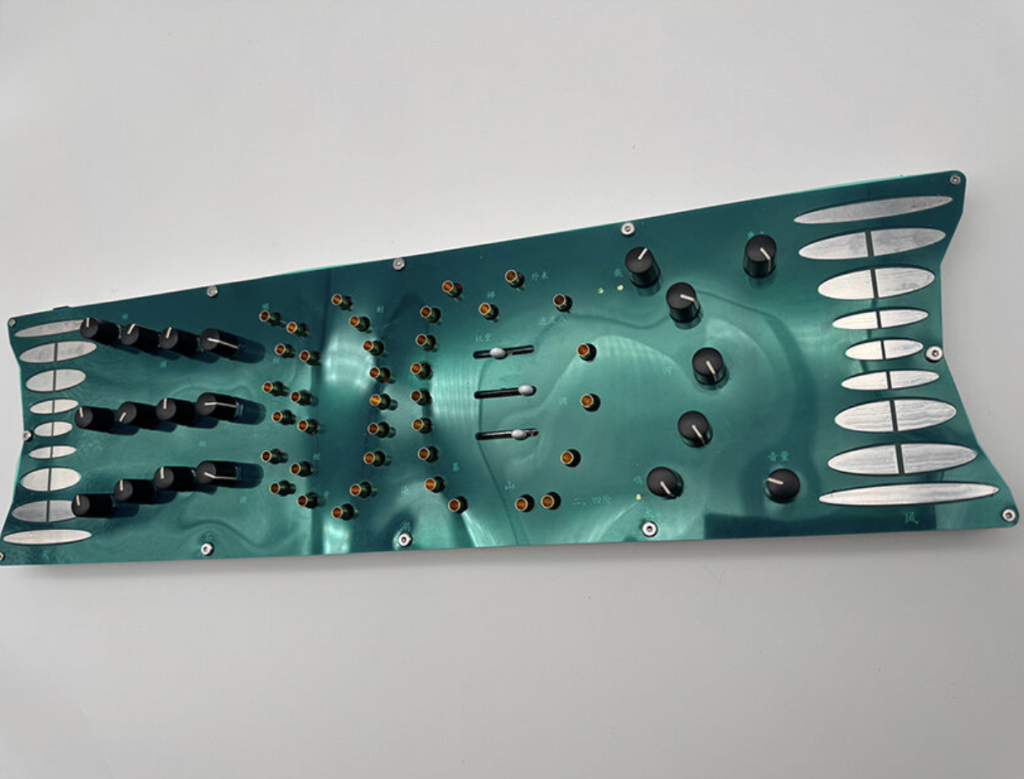
That philosophy extends directly to the interface. Symbols, graphics, and Chinese annotations replace much of the conventional technical vocabulary associated with synthesizers. Instead of telling users exactly what every control does, the instruments offer clues and conceptual descriptions, leaving room for interpretation. Xam sees this ambiguity as useful because the behavior of an interconnected analog circuit cannot always be reduced to the function of a single knob or switch. Users learn by touching, adjusting, listening, and responding, turning sound synthesis into something closer to a game of exploration.
Synthesizers by Madkids Empire
Nature also becomes a tool for developing new instruments. Lake, for example, grew from an idea about sounds gathering together like a swarm. Its eight analog filters influence one another to produce water-drop-like sounds, while the Starmap module references a starry sky above a lake and maps frequencies to a musical scale. Even the naming of individual elements can be intuitive rather than strictly analytical. The result is an instrument that sits somewhere between synthesizer, sculpture, and interactive landscape. And while Madkids Empire remains focused on circuit-based sound, its broader ambition is to keep investigating new ways that people can interact with sound.
That desire to make musical systems physical leads naturally to another project that replaces traditional controls with something even more tangible: magnetic pieces that can be moved around a board.
Tembo by Musical Beings
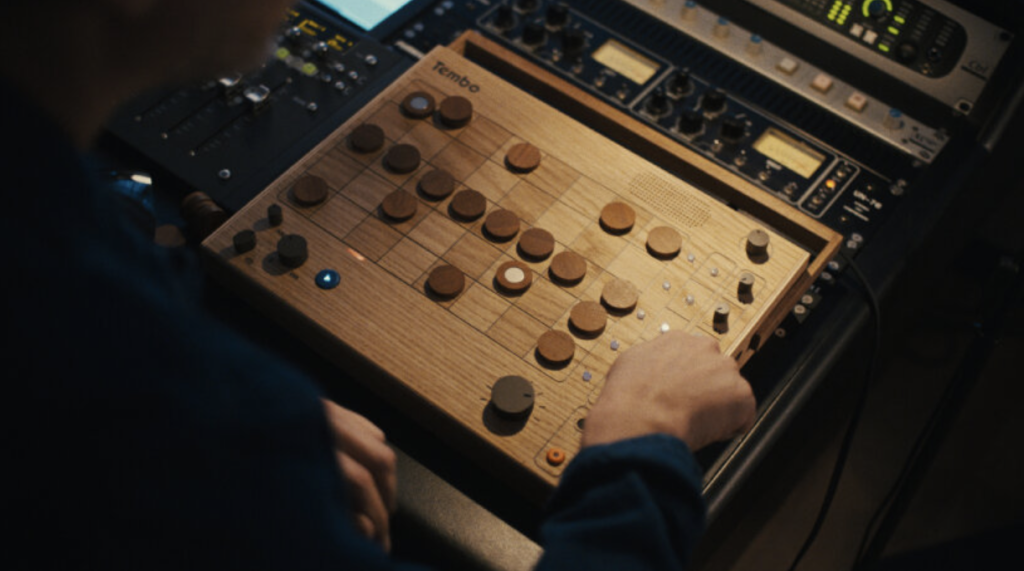
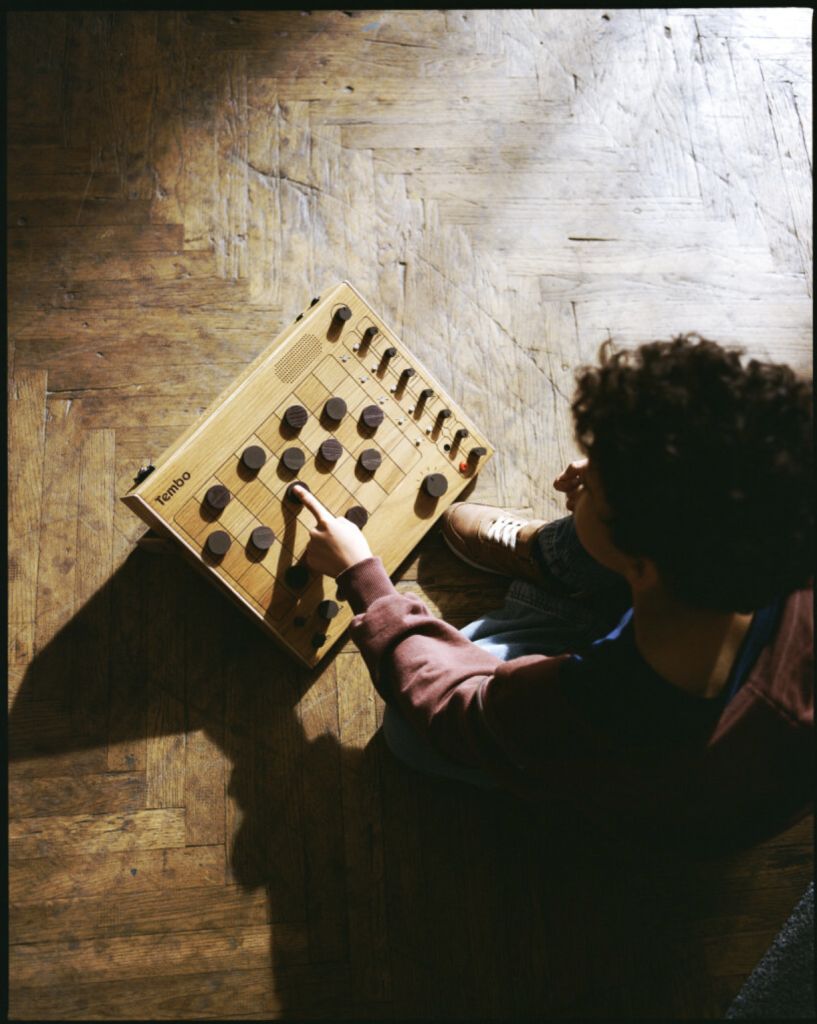
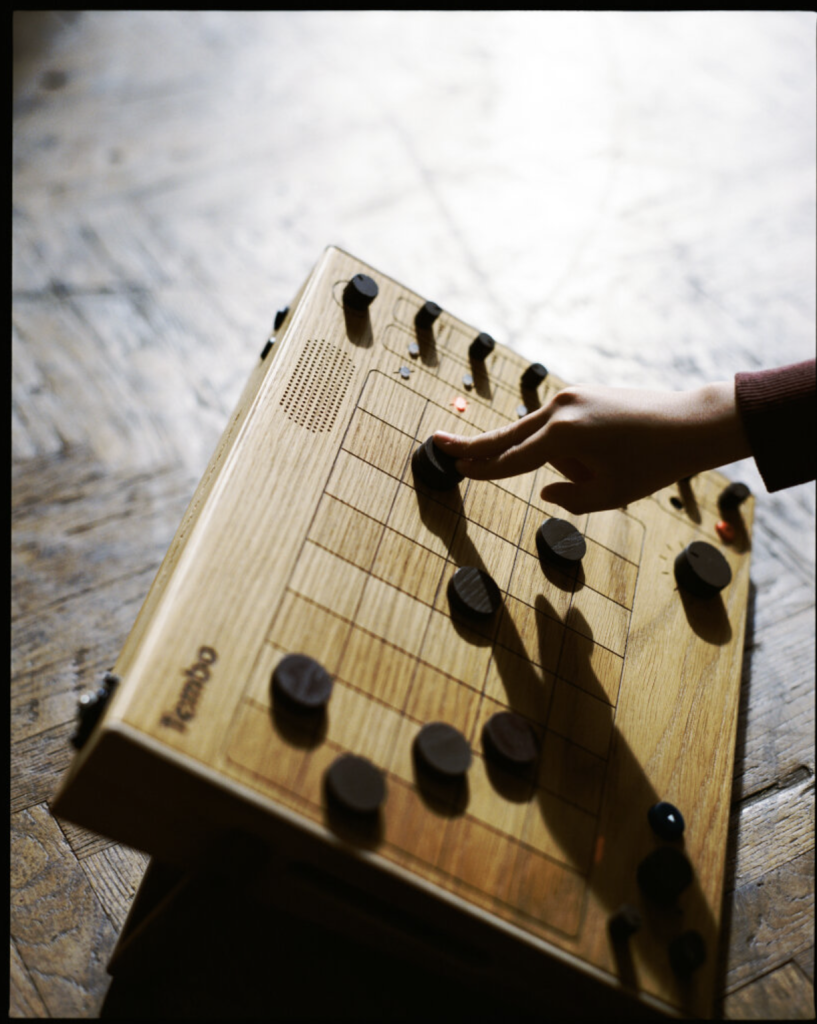
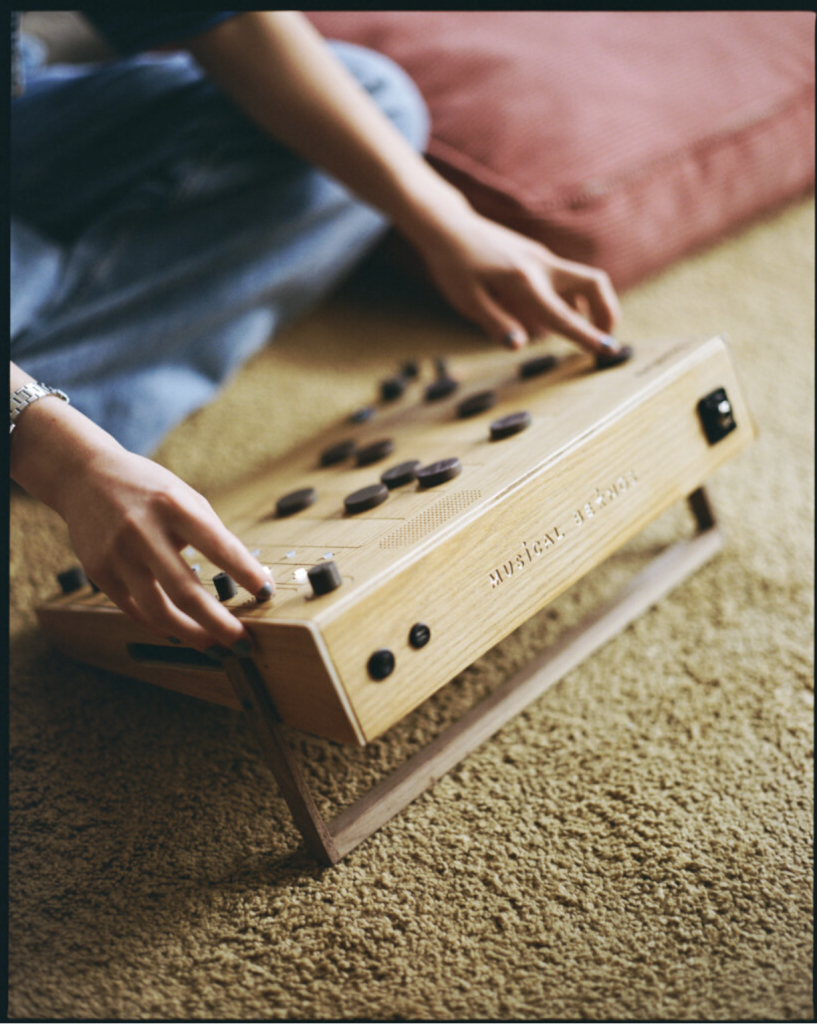
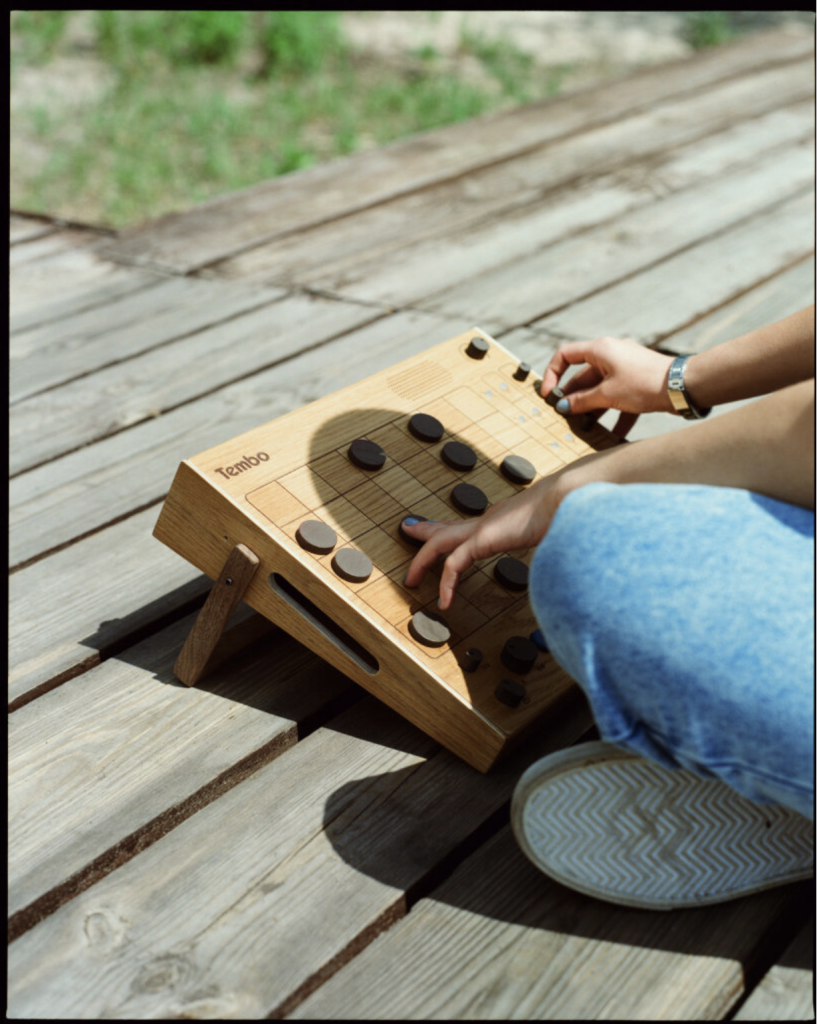
Tembo, created by the startup Musical Beings, approaches music-making with the logic of a chessboard. The wooden device combines a drum machine, sequencer, and sampler, but its most distinctive feature is how users create rhythms. Small magnetic pieces called Beats are placed onto a grid, with each position corresponding to a step in the rhythmic sequence. Move a piece and the rhythm changes. Add another and a new sound enters the pattern. Building a track becomes an act of arranging physical objects.
Tembo by Musical Beings
The device keeps its controls deliberately restrained. Two large knobs dominate the lower section, handling tempo, transport, volume, and parameter adjustments, while smaller controls along the side manage individual tracks, effects, and pitch. A blue button provides a simple visual starting point, while a microphone and line input open the instrument to external sounds. Because Tembo is also a sampler, users can record anything from a voice to a piano chord and immediately transform it into a rhythmic element.
Tembo by Musical Beings
The concept is simple, but the technology underneath remains capable enough for more experienced musicians. Tembo includes MIDI output for connecting to other instruments and studio equipment, alongside adjustable effects for shaping sequences. Its development was also informed by testing with more than 300 people, including children, musicians, and music producers. The team’s experience at companies including Google, Waves Audio, and Wix helped inform an approach focused on making a complex musical system easier to understand without stripping away its creative potential.
Tembo by Musical Beings
That balance between accessibility and depth is particularly interesting. Tembo does not ask beginners to understand sequencing theory before they can make something. The act of placing and moving a Beat provides an immediate relationship between physical action and sonic result. It is an interface that explains itself through cause and effect. With its campaign now launched, Musical Beings plans to begin shipping its first batches in January 2027, positioning Tembo as a musical instrument that can sit comfortably between studio equipment, educational object, and creative toy.
Synth by Madhav Binu
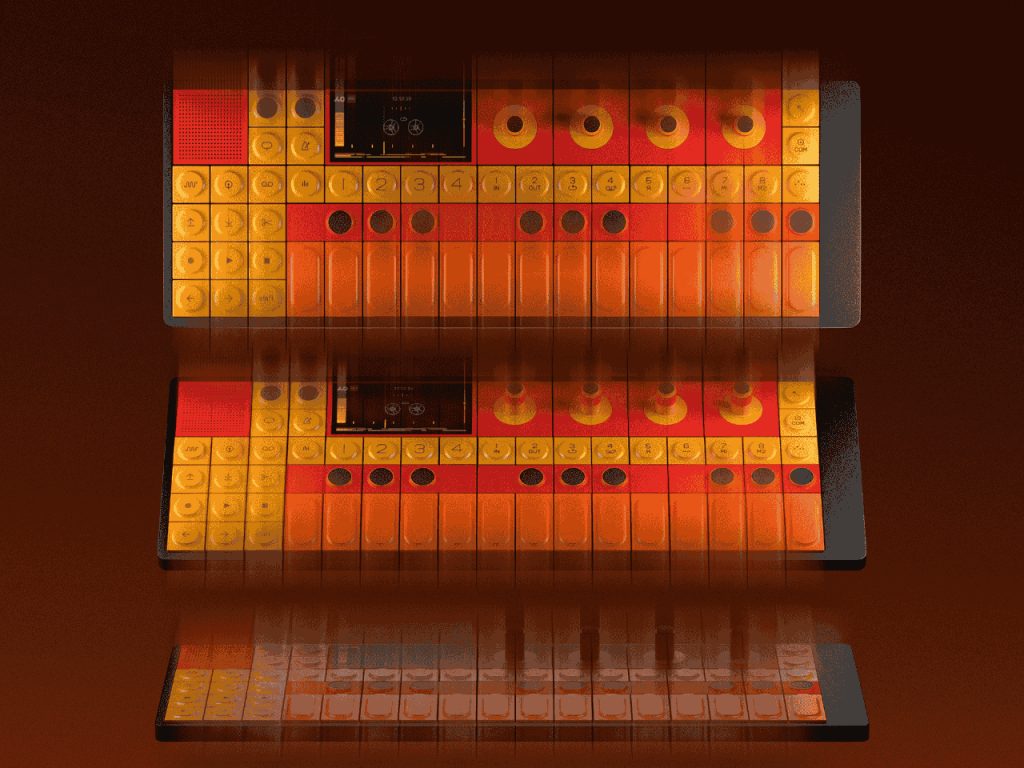
But if Tembo turns sequencing into a board game, another concept takes the idea further by turning the synthesizer itself into a construction set. Modular synthesis has always promised almost limitless possibilities, but its patch cables, oscillators, filters, and unfamiliar terminology can make the format intimidating for newcomers. Synth, a modular music synthesizer concept by designer Madhav Binu, proposes a more approachable alternative. Instead of treating the instrument as a fixed machine or a traditional rack, the concept breaks its functions into physical blocks that can be assembled, rearranged, and expanded.
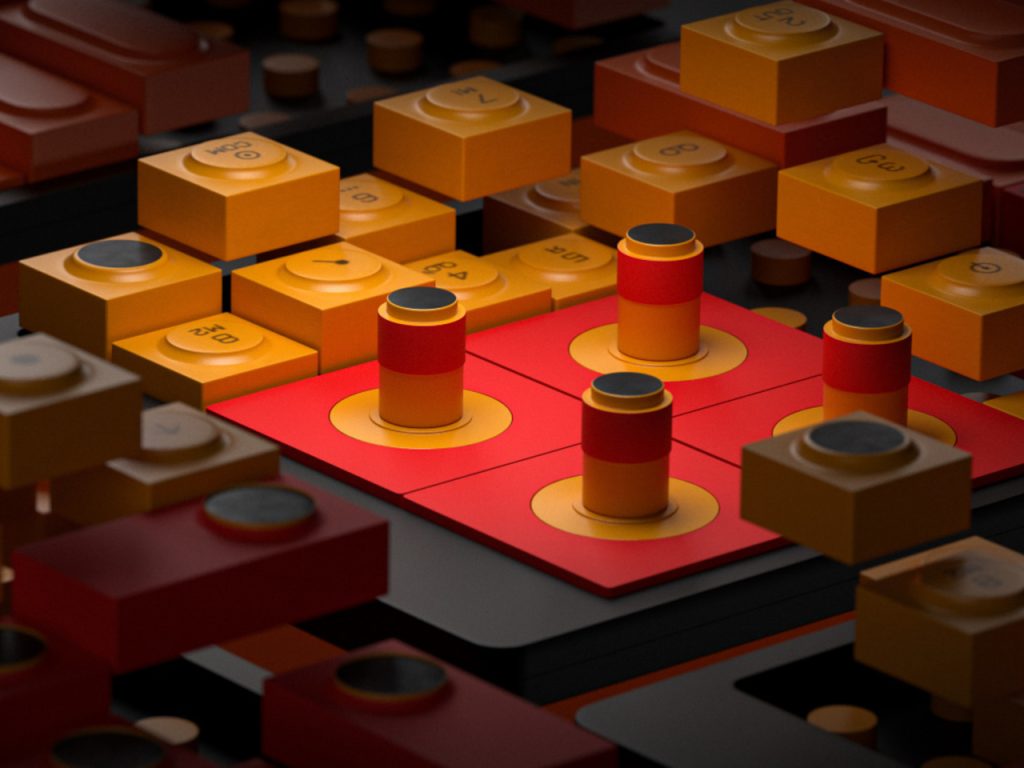
Synth by Madhav Binu
Keys, pads, knobs, a display, sequencer, and effects each exist as separate modules that snap into a studded base. A beginner could start with little more than a strip of keys, a small display, and an effects block. As their understanding develops, they could add modules, change their positions, or create a layout optimized for live performance. A performer might place pads, faders, and a sequencer within easy reach, while a sound designer could build a longer chain dedicated to modulation and effects.
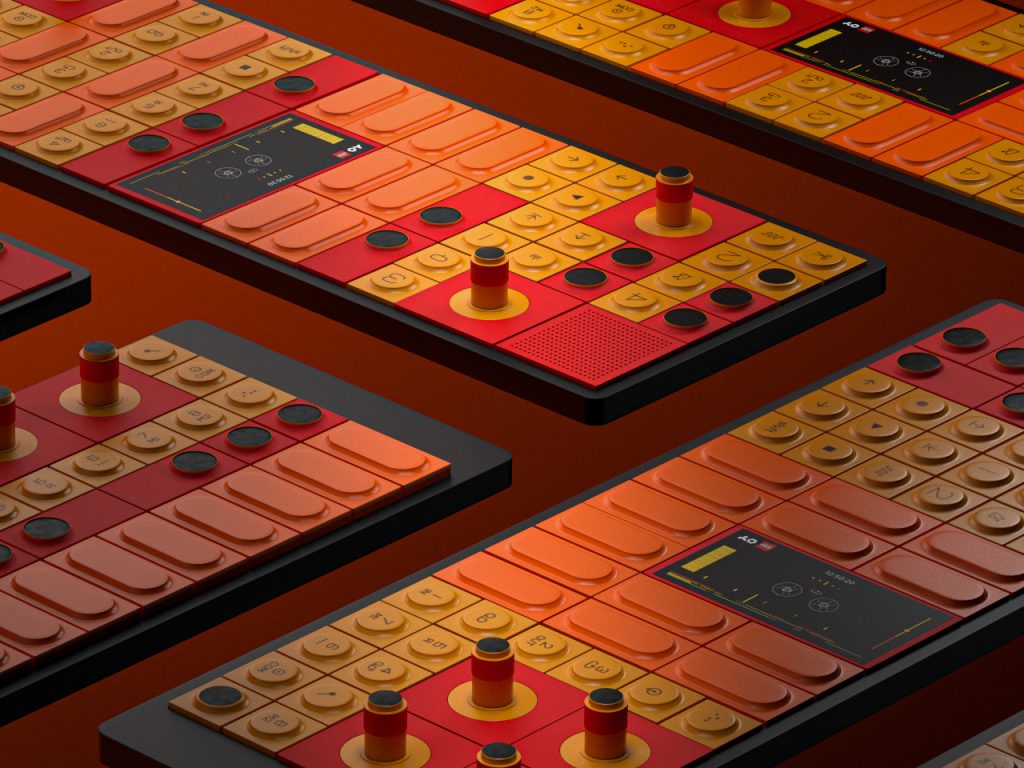
Synth by Madhav Binu
The physical arrangement also makes the logic of synthesis visible. Placing modules from left to right, or from top to bottom, can mirror the path that sound takes through an instrument. Oscillator, filter, envelope, and effects become tangible stages in a chain rather than abstract concepts hidden inside software. This turns learning into a spatial activity. Instead of memorizing what a parameter does, users can begin to understand relationships by moving pieces around and hearing what changes.
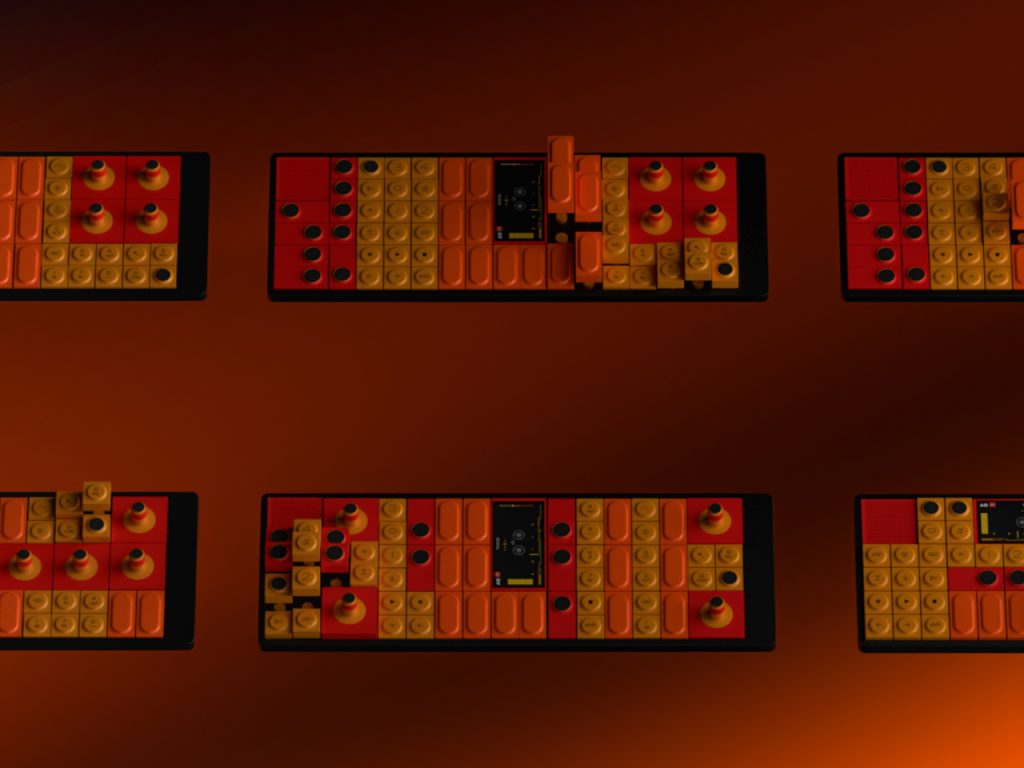
Synth by Madhav Binu
The warm, tile-based aesthetic reinforces that approach. Bold forms and simplified controls make the instrument feel closer to a construction set or board game than a piece of intimidating studio equipment. Most importantly, the system can evolve with its user. The interface is not fixed, and neither is the workflow. Even as a concept, Synth suggests a future in which modular music hardware is not simply about changing what happens inside the machine, but about changing the physical environment in which music is created.
Although Madkids Empire, Tembo, and Synth take very different approaches, they share a remarkably similar design instinct. Each recognizes that complexity does not necessarily have to be removed to make technology accessible. Instead, it can be translated into forms that people can understand through interaction. Whether navigating a sculptural soundscape, moving magnetic Beats across a wooden grid, or assembling a synthesizer one module at a time, these projects make music feel less like a technical discipline and more like a place to wander.