Metal furniture has long occupied an interesting position in the design world. It can be rugged or refined, industrial or elegant, understated or unapologetically sculptural. Yet its greatest potential may lie not in its strength alone, but in the freedom it offers designers to rethink how furniture is made, moved, used, and experienced. From flat-pack seating built to survive multiple moves to a side table shaped like a continuous ribbon and an armchair that turns transparency into a statement, these recent designs reveal just how far metal can go when innovation meets imagination.
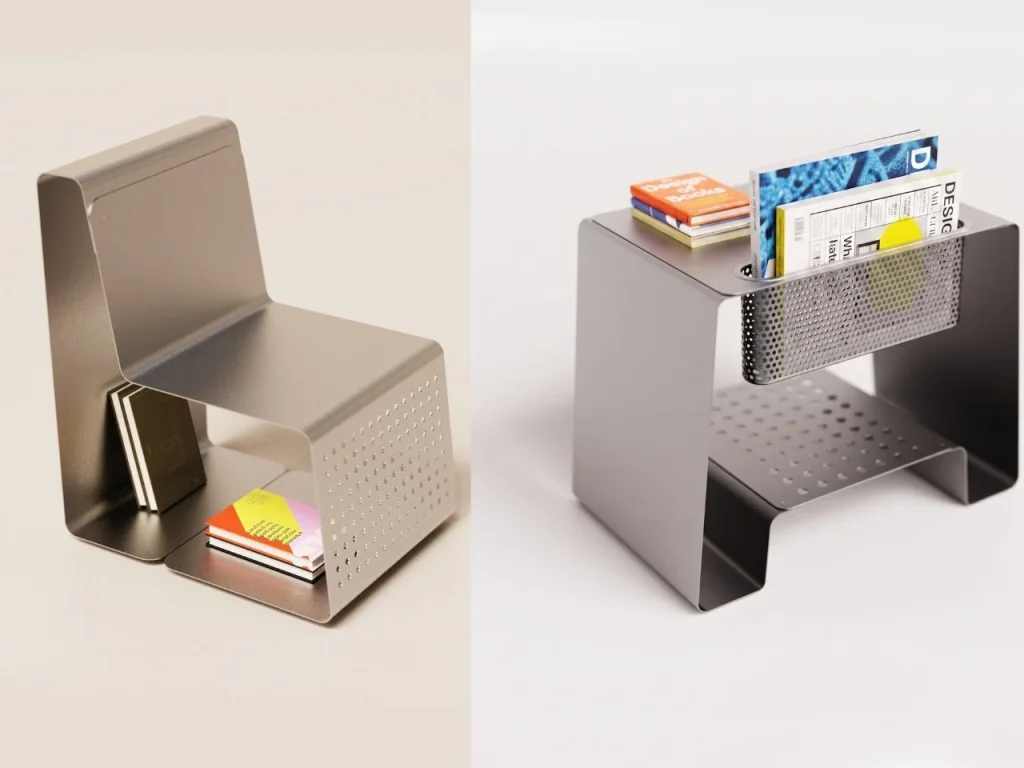
Platea and Vault by Gokce Nafak
Anyone who has assembled a flat-pack bookshelf knows the familiar sequence: an ambitious beginning, a confusing collection of parts, and a growing suspicion that the final screw is either missing or completely unnecessary. The real frustration, however, often arrives much later, when the furniture begins to wobble, swell, or surrender to everyday use. Turkish industrial designer Gokce Nafak is challenging this disposable approach with Platea and Vault, two sheet-metal furniture designs that rethink the relationship between convenient shipping and long-term durability.
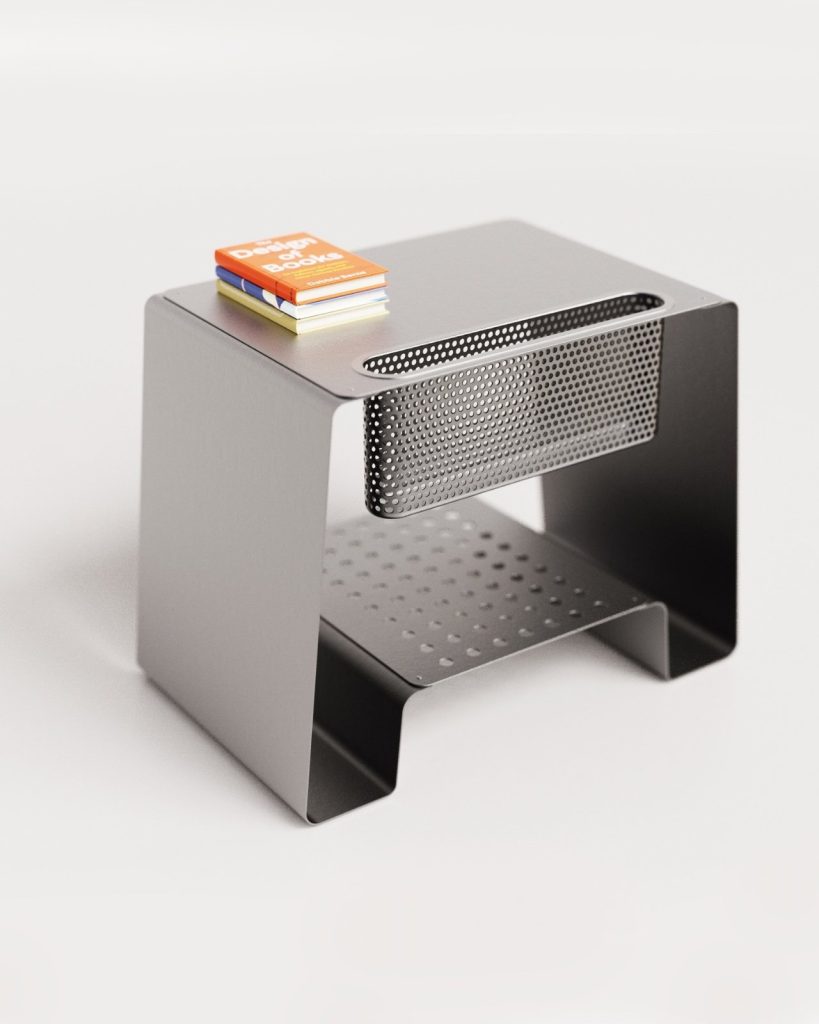
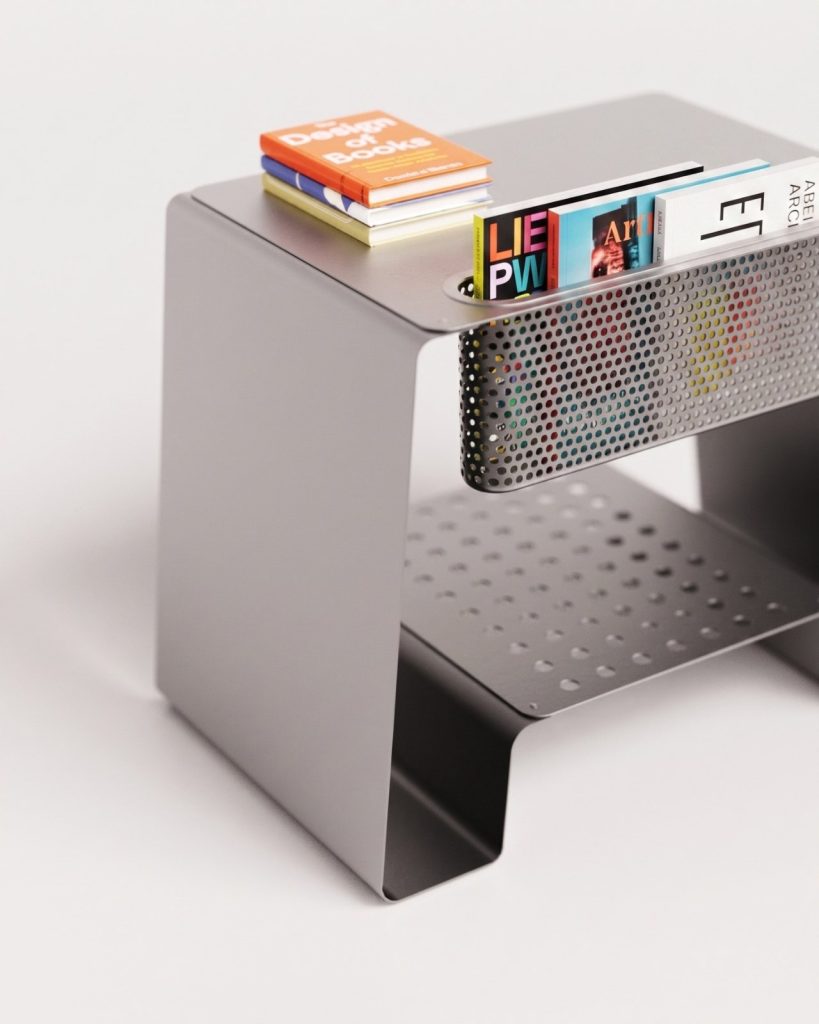
Platea by Gokce Nafak
Platea begins with a refreshingly simple idea: create a stool that can also function as a side table, using just four sheet-metal components. Cut with CNC lasers, shaped on a press brake, and designed to slot together by hand, the piece eliminates the need for adhesives and complicated assembly. Its construction relies on precise geometry rather than an assortment of fasteners, allowing the material itself to do much of the work. The result is a compact, versatile object that makes sense in smaller homes, where every square metre counts and furniture that serves more than one purpose is always welcome.
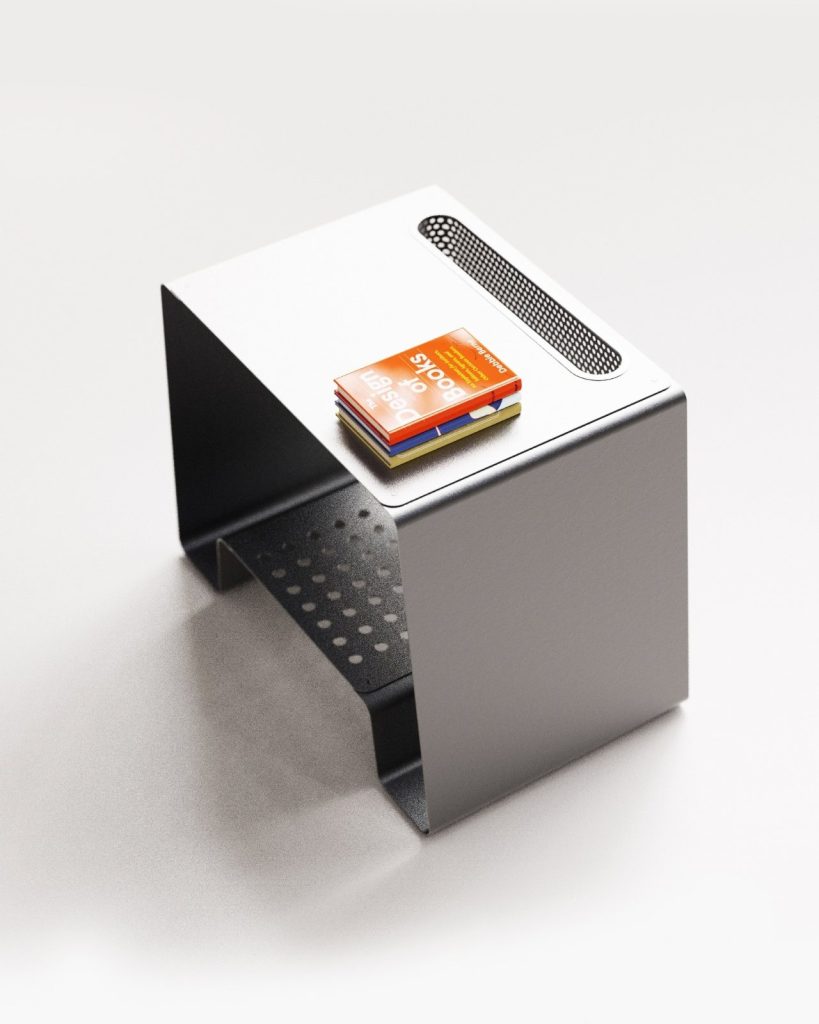
Platea by Gokce Nafak
Vault takes the concept into the realm of seating, using three primary metal components to create an armchair with a distinctly industrial character. Rather than concealing its construction beneath upholstery or decorative finishes, the design puts its edges, seams, and structural logic on display. This honesty gives Vault a visual identity that feels closely connected to its manufacturing process. The chair does not pretend to be anything other than what it is, and that straightforwardness becomes part of its appeal.
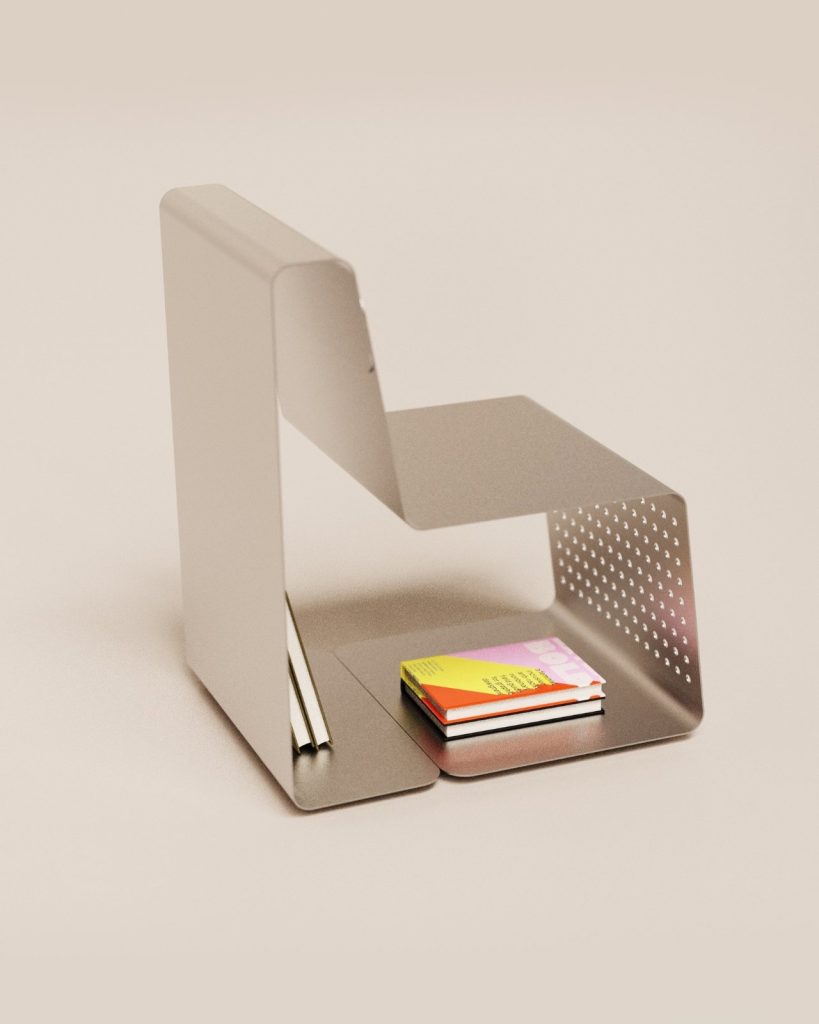
Vault by Gokce Nafak
Together, Platea and Vault suggest that flat-pack furniture could be entering a more considered chapter. Sheet metal offers durability, resistance to humidity, and the potential for recycling at the end of a product’s useful life. Its ability to be cut, bent, and packed efficiently also makes it an appealing material for designers looking to reduce shipping volume without compromising on longevity.
TWIST by Joao Teixeira
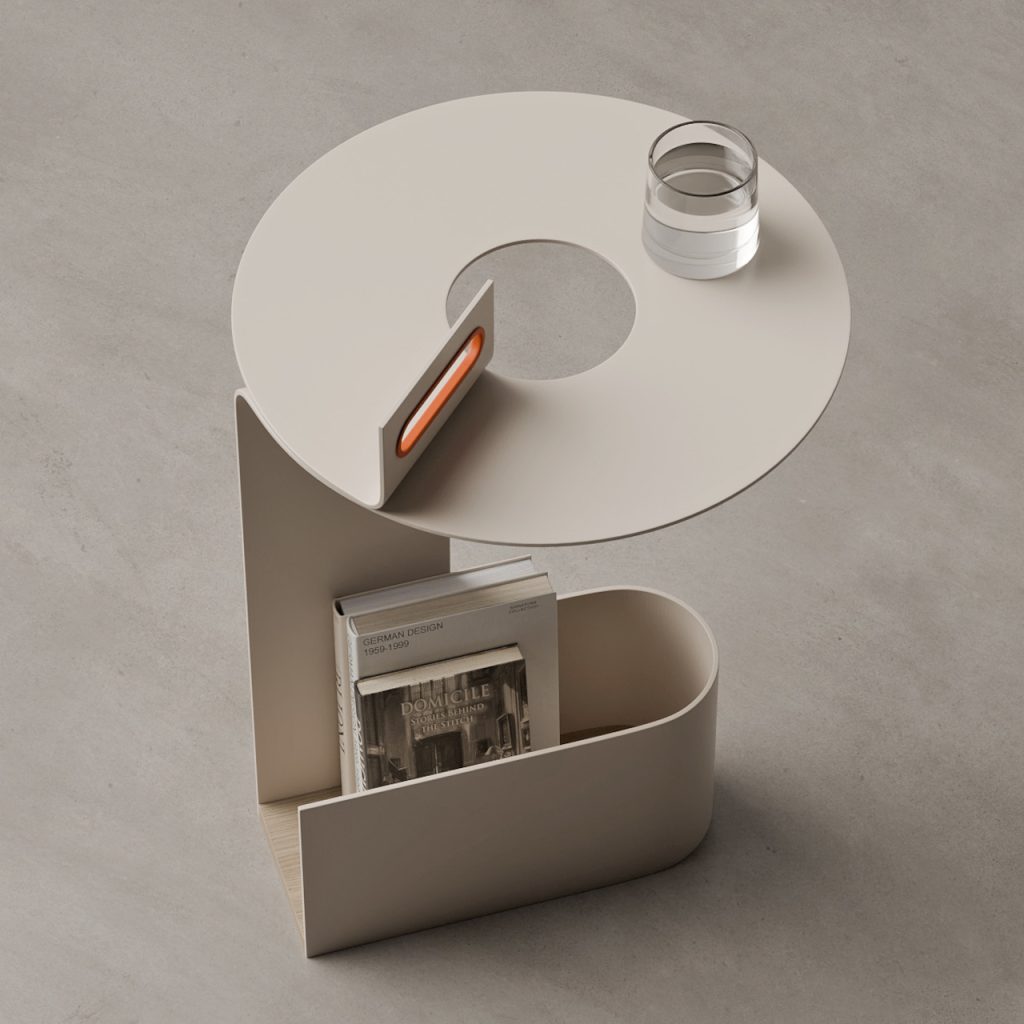
If Platea and Vault demonstrate how metal can make furniture more durable, the TWIST side table by Joao Teixeira explores how it can make furniture more expressive. Side tables are typically uncomplicated companions: a flat surface, a few supporting legs, and just enough room for a coffee cup and a phone. TWIST starts with that familiar formula but stretches it into something far more ambitious, combining a tabletop, a storage compartment, and a carry handle within a single flowing sheet of metal.
TWIST by Joao Teixeira
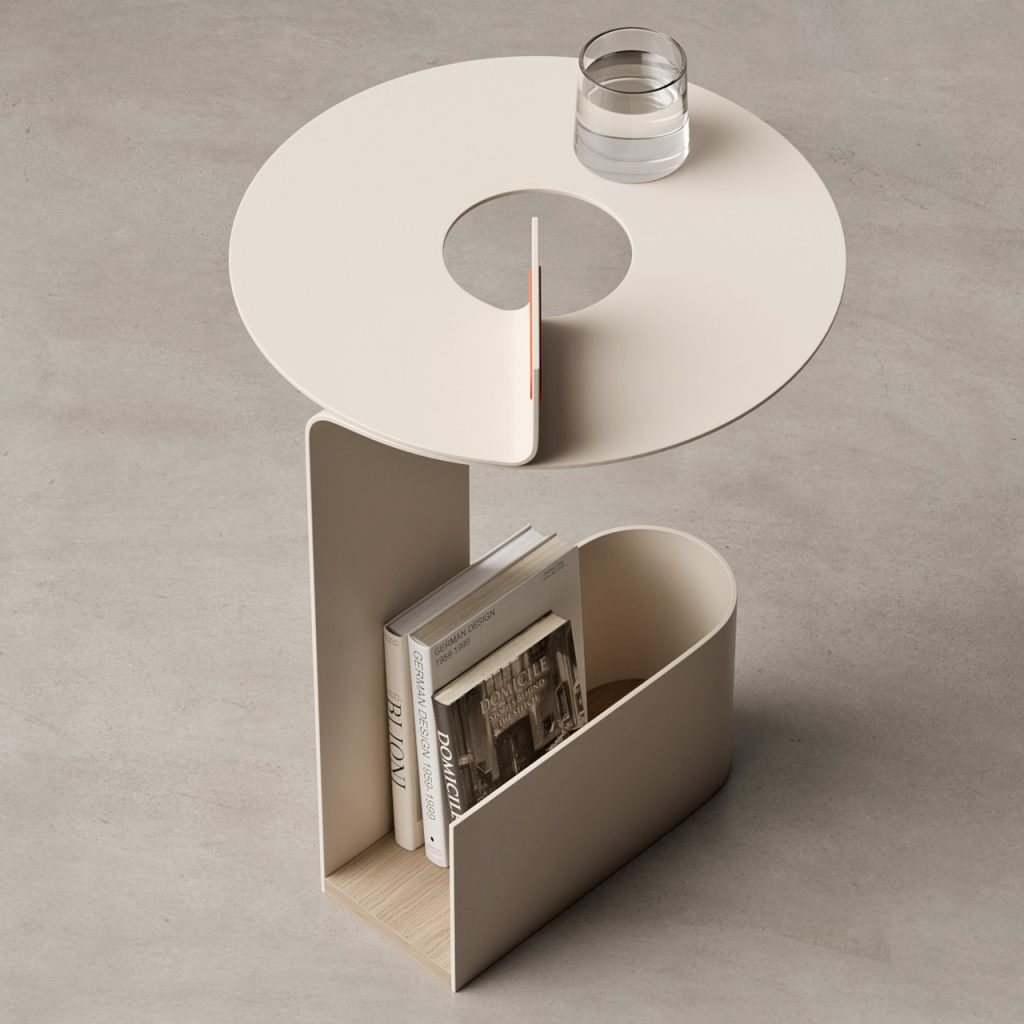
The design’s defining feature is its continuous, ribbon-like construction. The metal rises from the floor, curves into a circular tabletop with a generous central opening, and then descends into an oval storage compartment near the base. Rather than assembling several unrelated components, the design uses the material’s ability to bend into a sequence of connected functions. The result is a sculptural silhouette that feels almost like a three-dimensional drawing, with each curve contributing to both the table’s appearance and its practical use. Even without a book or glass on its surface, TWIST has enough visual character to hold its own in a room.
TWIST by Joao Teixeira
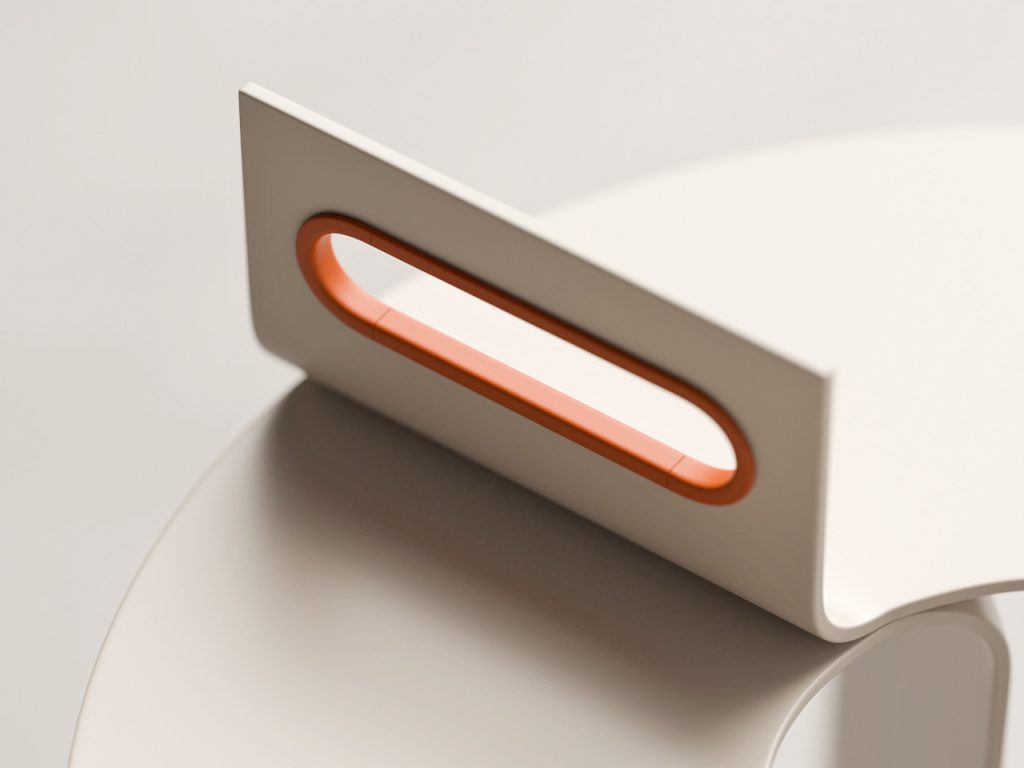
Its integrated handle makes the design particularly engaging. Rising vertically through the tabletop’s central opening, the handle gives users a clear place to grip when moving the table from one spot to another. A contrasting orange covering introduces a softer tactile element and adds a small but effective burst of colour. Below, the open storage compartment provides space for books and magazines, while a wooden base adds warmth and creates a stable resting surface for everyday objects. The combination of cool metal, pale wood, and a restrained orange accent keeps the piece contemporary without making it feel cold or overly technical.
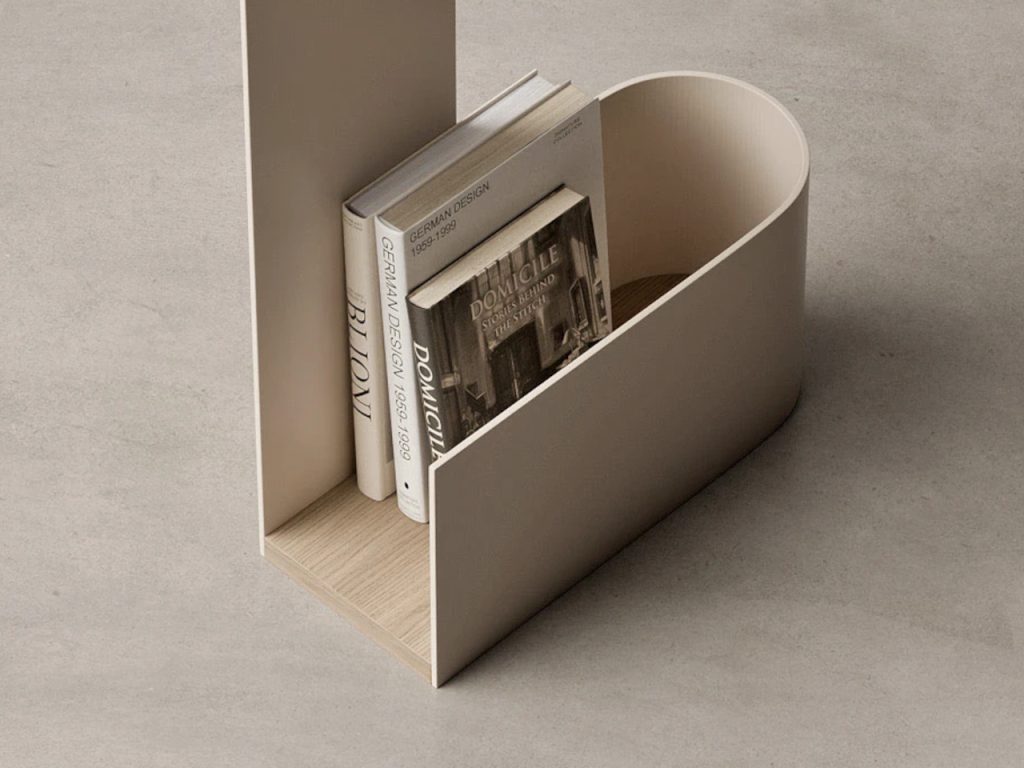
TWIST by Joao Teixeira
TWIST also reflects a broader shift towards furniture that adapts to the way people actually live. In compact apartments and flexible interiors, a side table can no longer afford to be merely a place to put things down. It needs to store, move, and contribute to the character of a space without demanding too much room. Teixeira’s design brings these functions together through a single, legible gesture, demonstrating that multifunctionality does not have to result in visual clutter.
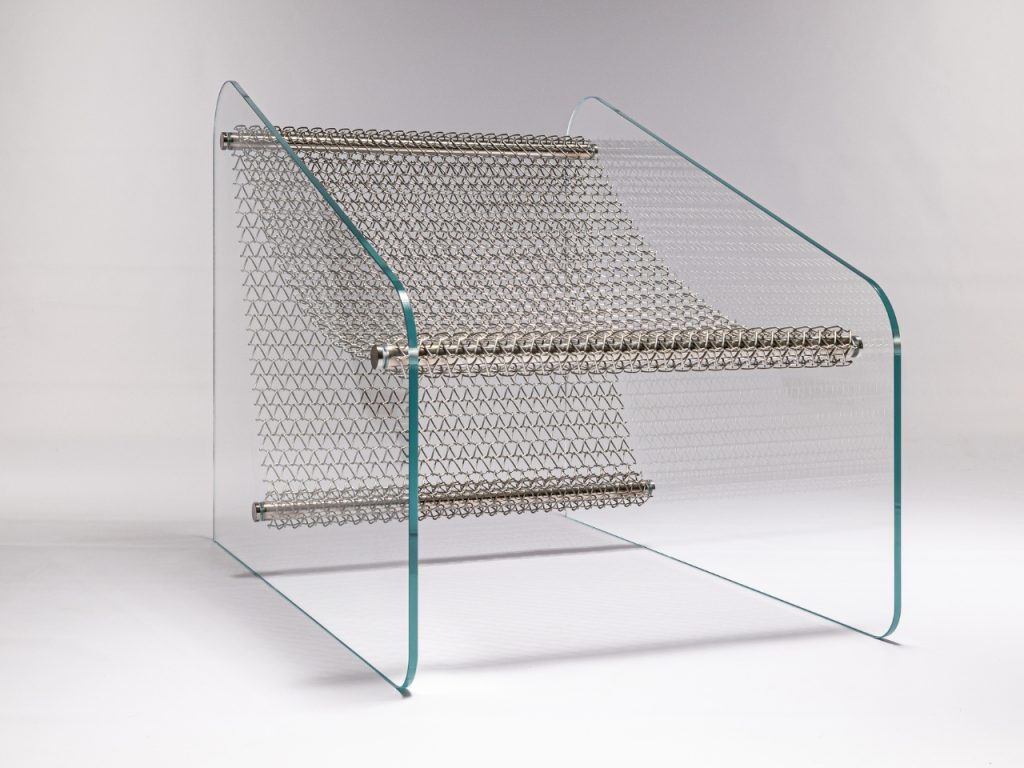
Metal Affaire by Minimal Studio (also header image)
From the practical ingenuity of flat-pack furniture to the fluid geometry of TWIST, metal has already proved its versatility. But Minimal Studio takes the material conversation in a more unexpected direction with Metal Affaire, an armchair that pairs transparent laminated glass with a metallic mesh base. Based in Mallorca, Spain, the multidisciplinary studio approaches minimalism as an exercise in precision rather than subtraction for its own sake. Here, that philosophy produces a chair that challenges expectations about weight, structure, and what an armchair can look like.
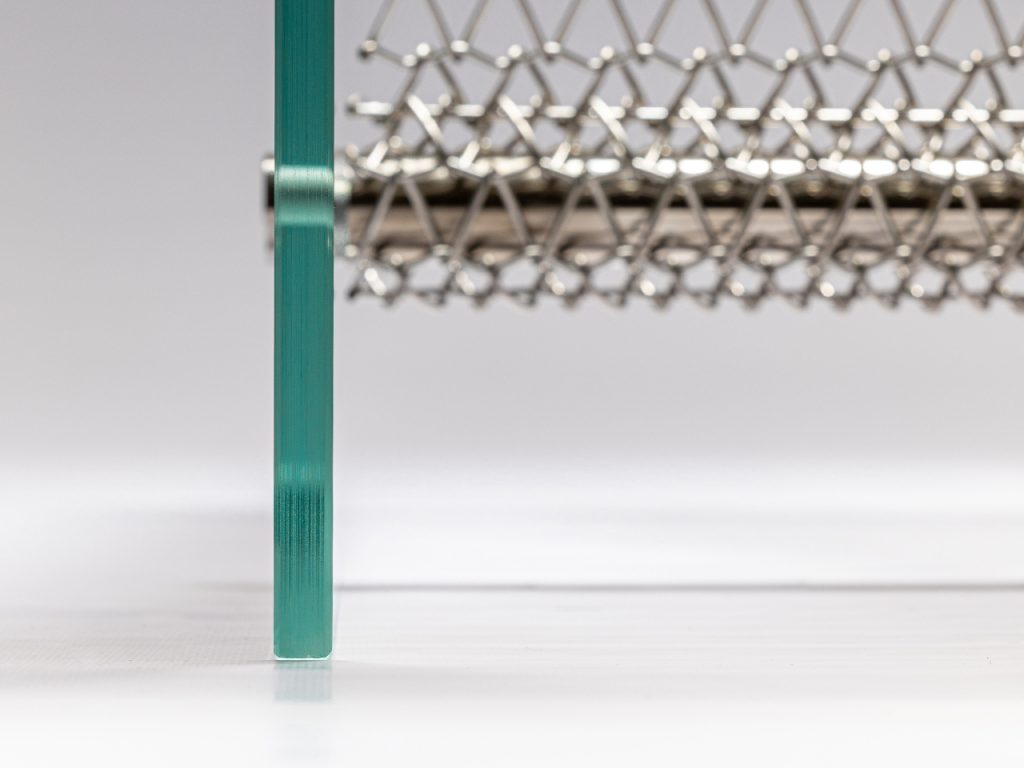
Metal Affaire by Minimal Studio
The first surprise is the glass. Usually associated with windows, partitions, and occasional tables, transparent laminated glass is an unconventional choice for a chair’s main structure. Its transparency gives Metal Affaire an almost weightless appearance, allowing light and the surrounding interior to remain visible through its form. Beneath it, the metallic mesh base provides a contrasting structural presence, grounding the composition and preventing the chair from disappearing entirely into its surroundings. The result is a carefully balanced exchange between visual lightness and industrial strength, with neither material treated as a secondary detail.
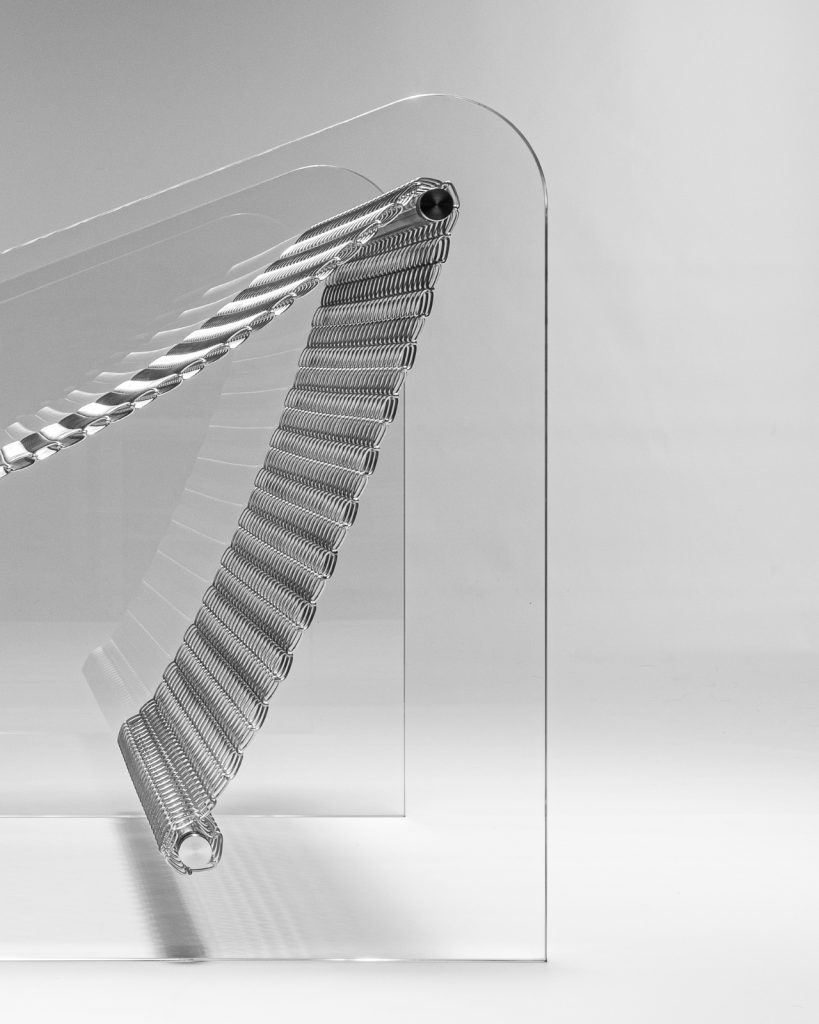
Metal Affaire by Minimal Studio
The design’s appeal goes beyond its striking material combination. Its form echoes its own construction, allowing the glass shell and mesh base to inform one another rather than compete for attention. Measuring 80 centimetres high, 60 centimetres wide, and 60 centimetres deep, Metal Affaire maintains the proportions of a recognisable armchair while approaching the object with the sensibility of sculpture. The question of comfort is inevitable, as is curiosity about the engineering behind a glass seat. The laminated glass is intended to be structural and load-bearing, although the design’s visual drama naturally invites closer scrutiny of its real-world performance and ergonomics. Light is another essential part of the experience. Unlike an upholstered chair or a solid metal object, transparent glass changes its visual presence throughout the day.
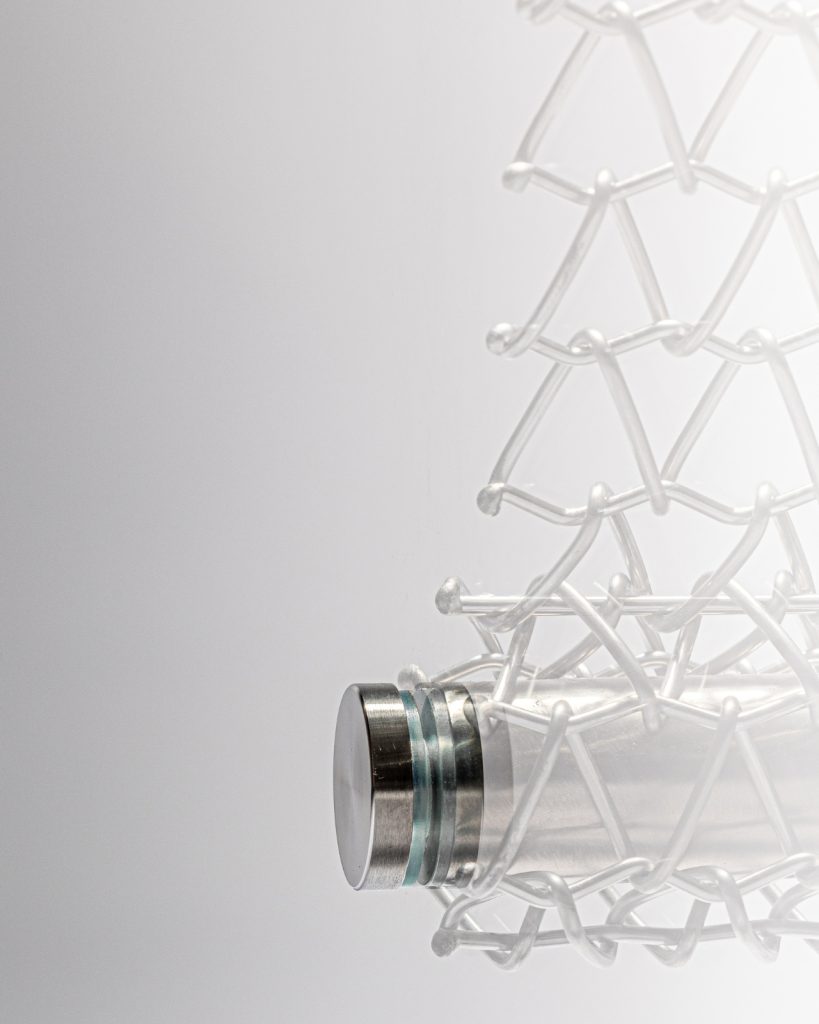
Metal Affaire by Minimal Studio
Reflections, shadows, and shifts in natural illumination alter how the chair appears from different angles and at different times. Its metallic mesh remains visible, but the glass allows the surrounding room to become part of the composition. This interplay gives Metal Affaire a sense of movement without requiring any moving parts. It also illustrates an important principle in contemporary furniture design: material choice can influence not only an object’s strength and appearance, but also how it interacts with the atmosphere around it. By bringing industrial mesh and transparent glass together, Minimal Studio creates a piece that is simultaneously architectural, functional, and undeniably theatrical.
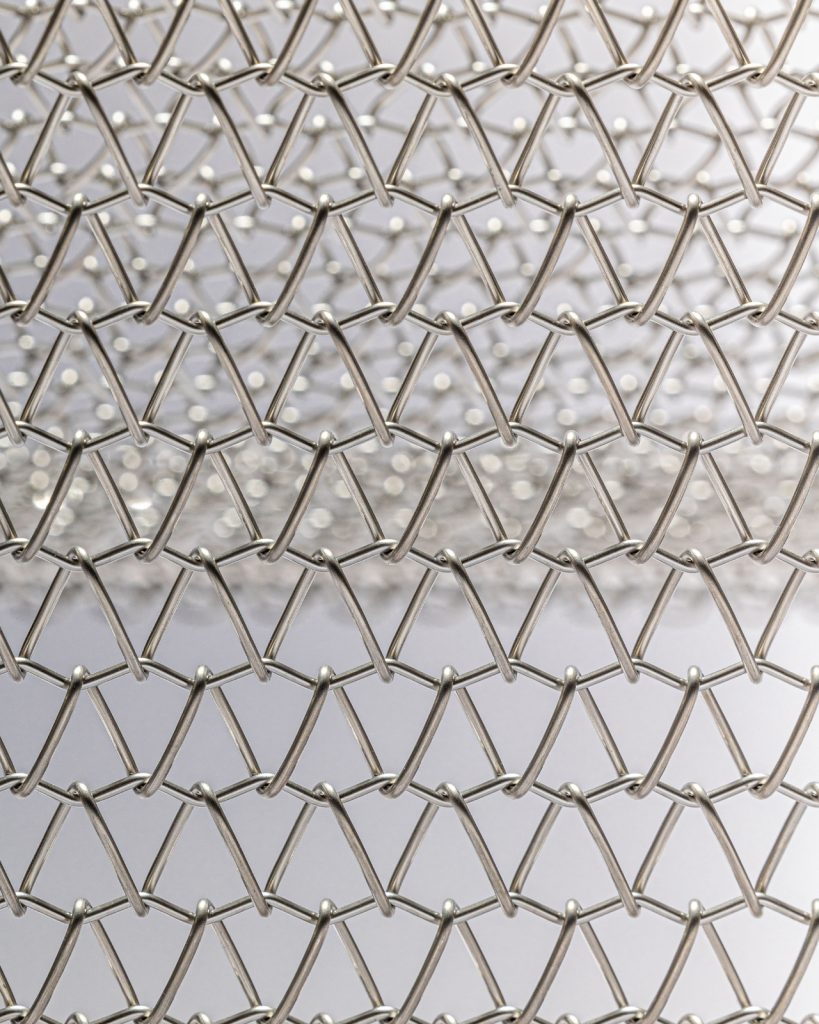
Metal Affaire by Minimal Studio
Their innovations are not simply about making furniture look different. They address practical questions about longevity, space, portability, manufacturing, and the relationship between an object and its environment. They also demonstrate that industrial materials need not produce cold or impersonal results. Through careful shaping, thoughtful detailing, and a clear understanding of how people use objects, metal can become a medium for warmth, flexibility, and artistic expression.