What happens when designers stop treating sustainability as a constraint and start treating it as a source of invention? Across architecture, material research and furniture, a new generation of designers is looking beyond conventional supply chains to find opportunity in what is already around us. From locally harvested chalk and apple wood to invasive clam shells and fungi-grown composites, these projects suggest that the future of design may be less about discovering new materials and more about seeing familiar ones differently.
Harvest Moon by Charles Holland, Catharine Rossi and Local Works (also header image)
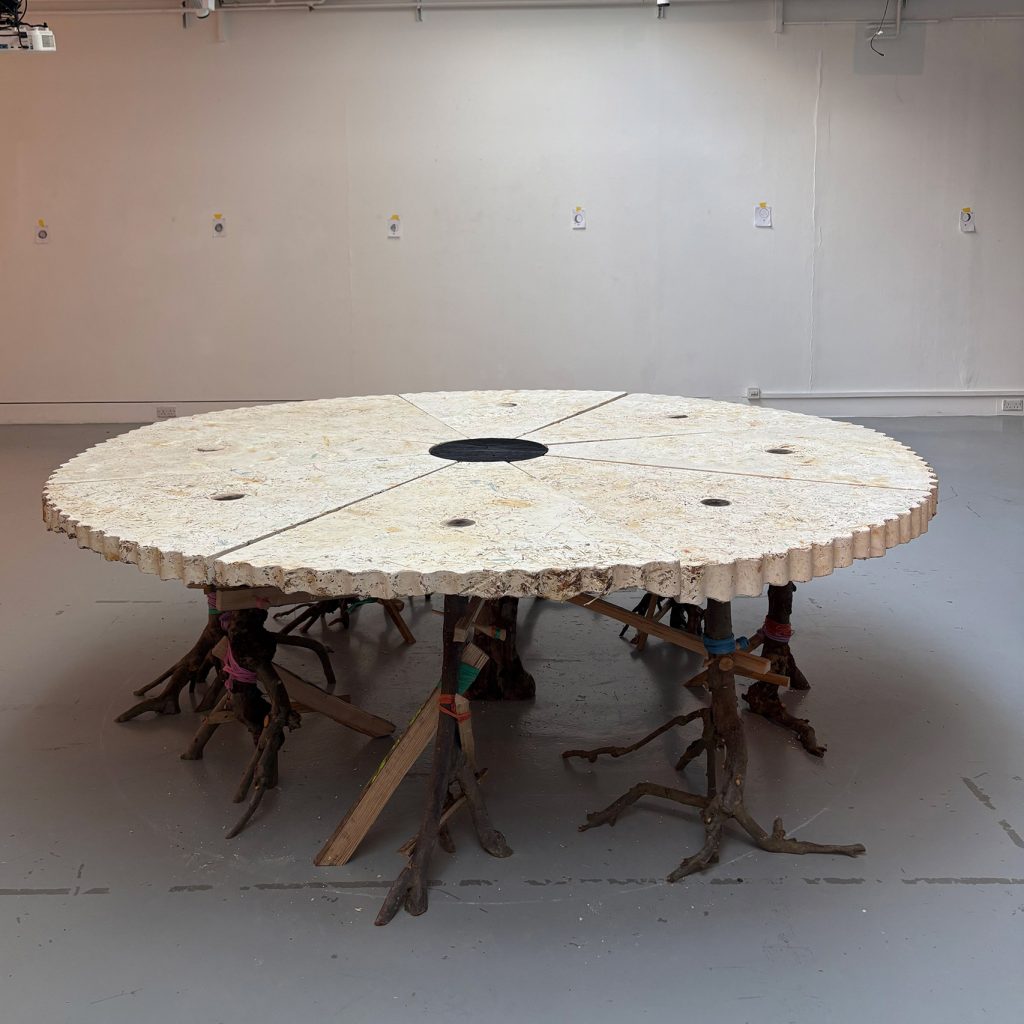
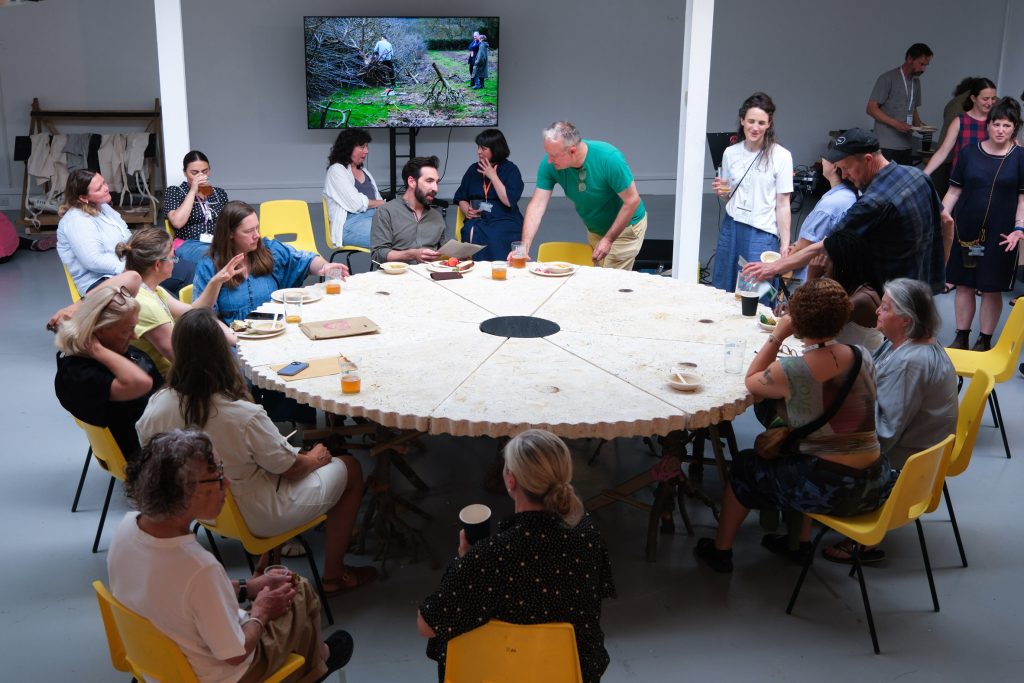
For Harvest Moon, architect Charles Holland, academic Catharine Rossi and design studio Local Works began with an unusually specific question: how much can a piece of furniture be made from what exists around it? The answer was remarkably ambitious. Every material used for the table, as well as the tools used to assemble it, was sourced within a 40-mile radius of Canterbury in the UK.
Harvest Moon by Charles Holland, Catharine Rossi and Local Works
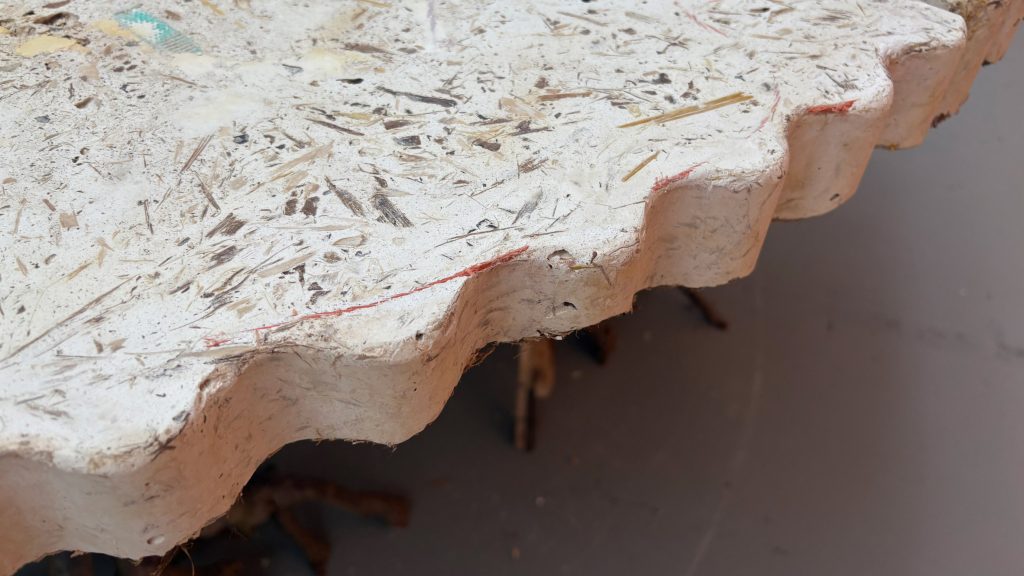
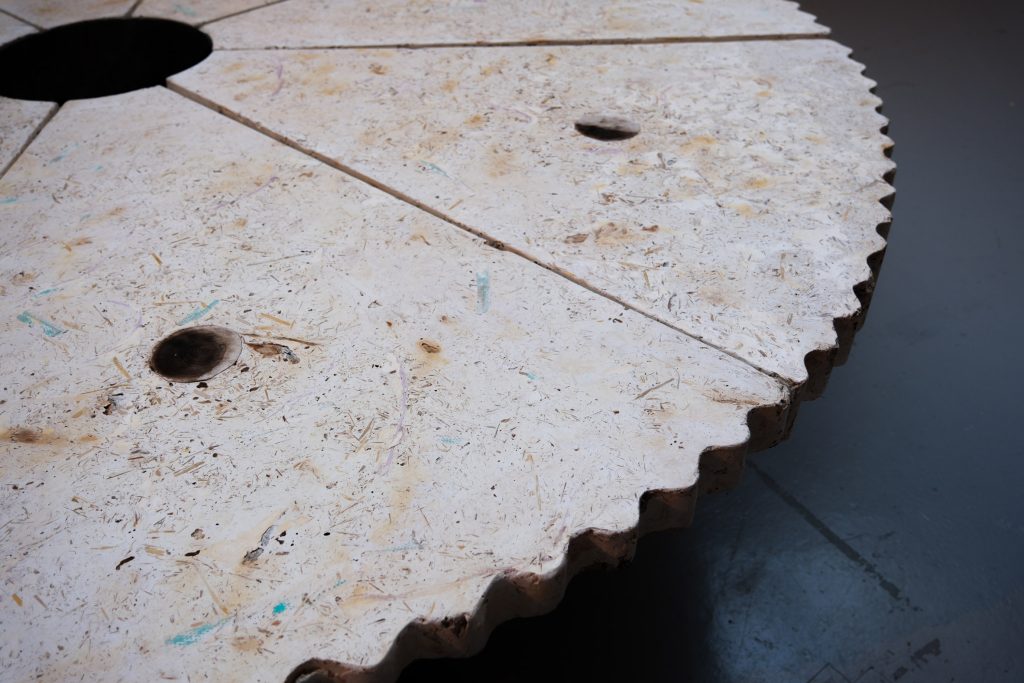
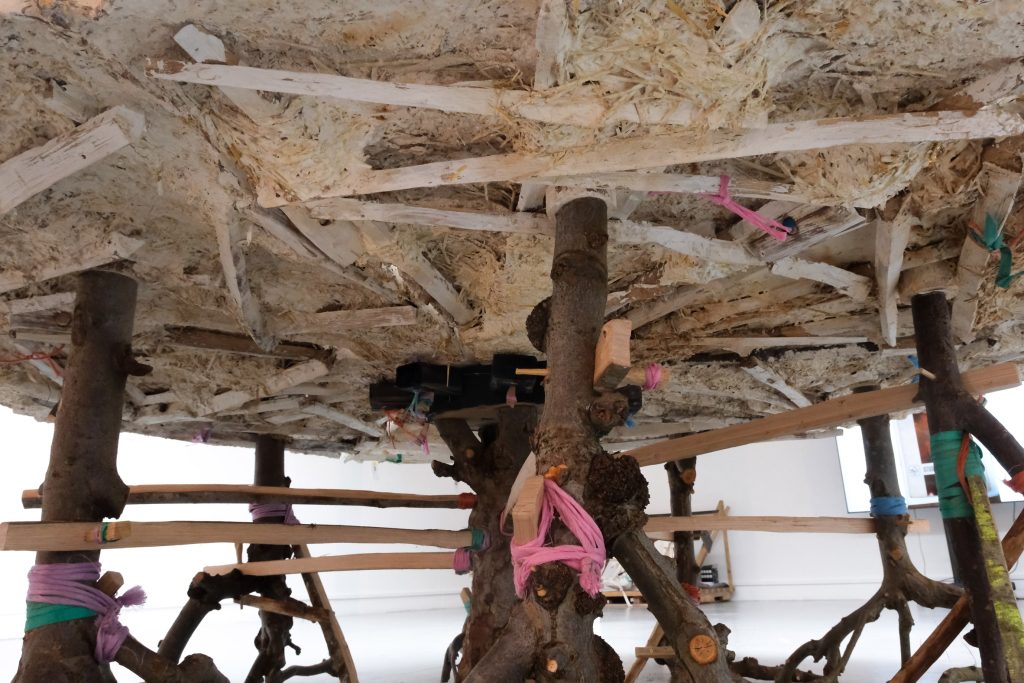
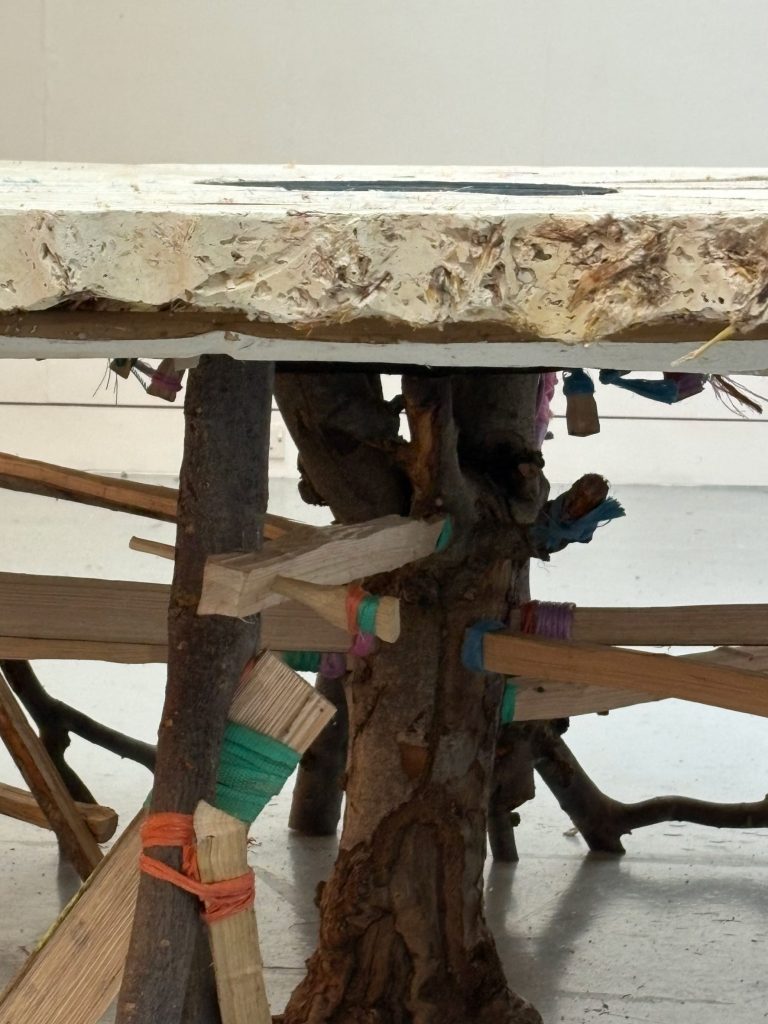
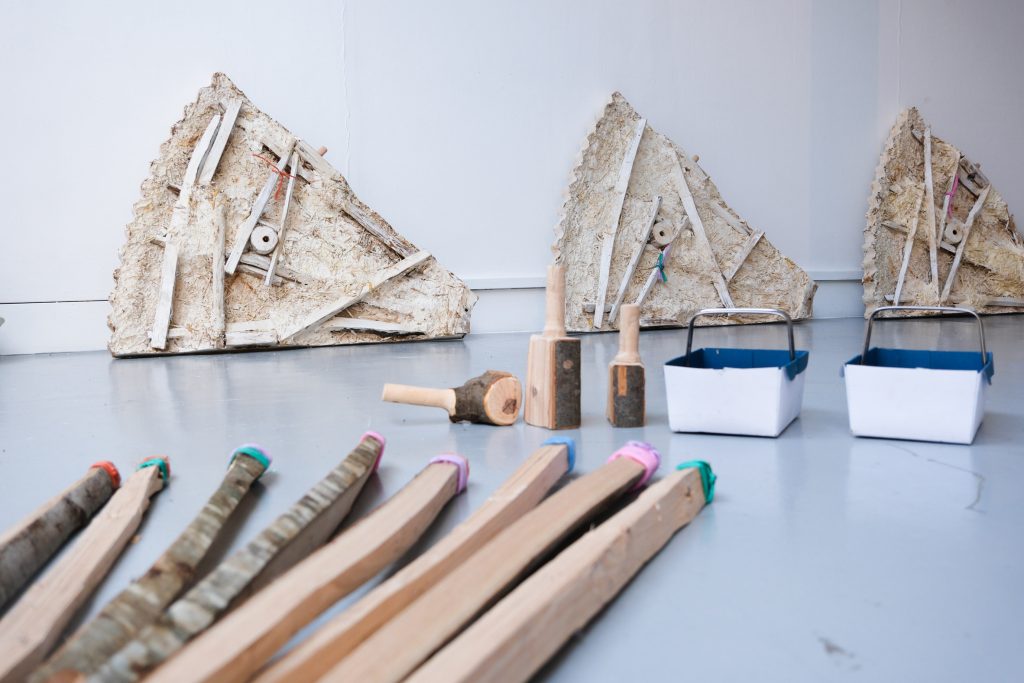
The result is a table that looks less like a conventional piece of furniture and more like a map of its landscape. Its top is cast from chalk and incorporates bark, wood chippings and agricultural waste such as baling twine and pallet straps, producing a rough terrazzo-like surface. Apple tree branches form the legs, while chestnut timber creates the structural frame. Even the “rebar” is made from apple wood. The construction deliberately leaves these interventions visible, turning practical necessity into visual character.
Harvest Moon by Charles Holland, Catharine Rossi and Local Works
Rather than disguising how it was made, Harvest Moon puts its materials and assembly methods on display. Brightly coloured bindings indicate the order in which the components are assembled, adding a playful graphic layer to an otherwise earthy palette.
Harvest Moon by Charles Holland, Catharine Rossi and Local Works
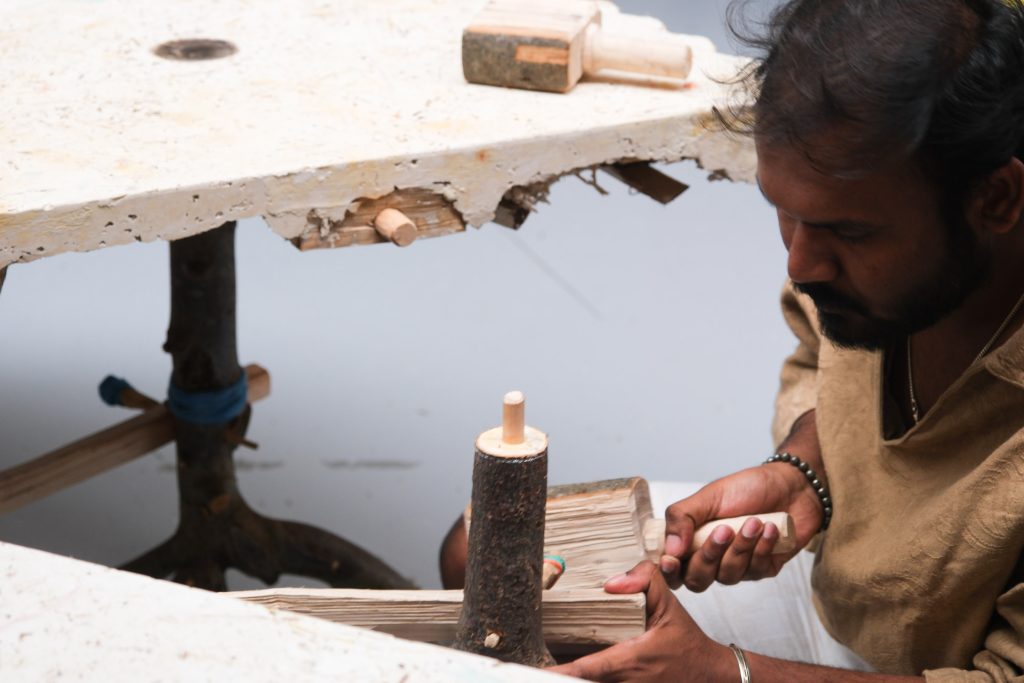
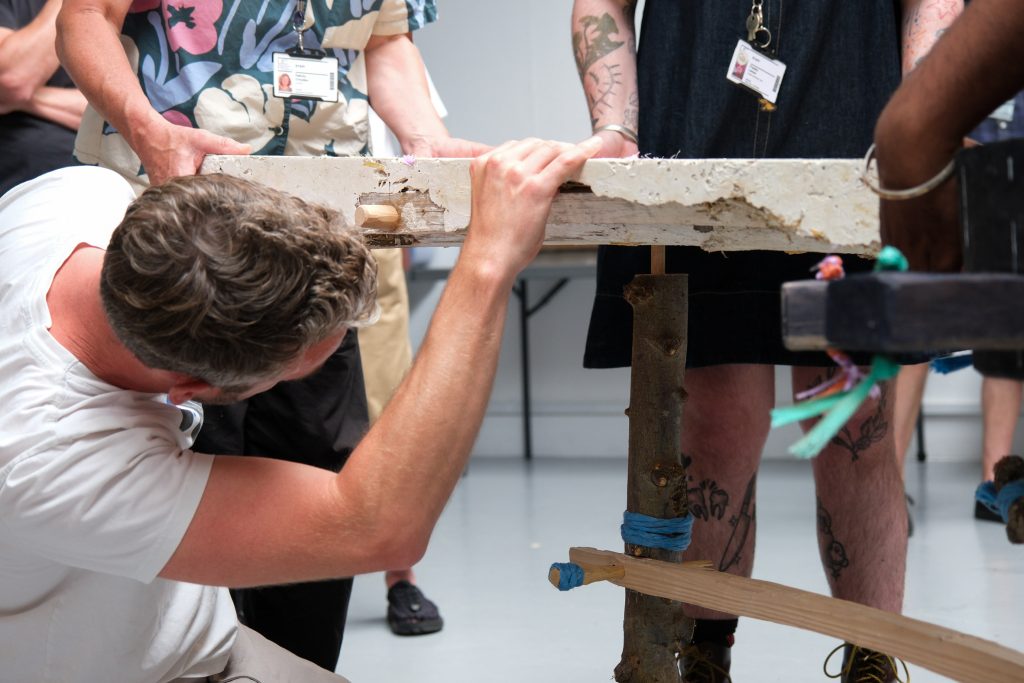
Harvest Moon can be disassembled, transported and rebuilt elsewhere as a communal activity, accompanied by a musical score and a publication containing assembly instructions and guidance for hosting a harvest gathering. Each reconstruction becomes slightly different, turning furniture-making into a form of social ritual. In this sense, the table is not simply made from local materials. It is designed to generate local relationships.
Harvest Moon by Charles Holland, Catharine Rossi and Local Works
And that idea of material as a relationship, rather than simply a resource, leads naturally to another project where the material itself is usually regarded as a problem.
CLAM-CRETE by Sami Kimberley
At Central Saint Martins, Sami Kimberley’s Objects of Eco-Cultural Design explores what happens when design responds to ecosystems rather than placing human needs at the centre of the story. Her approach combines material experimentation with co-design, seeking ways for objects to reconnect people with local ecological conditions.
CLAM-CRETE by Sami Kimberley
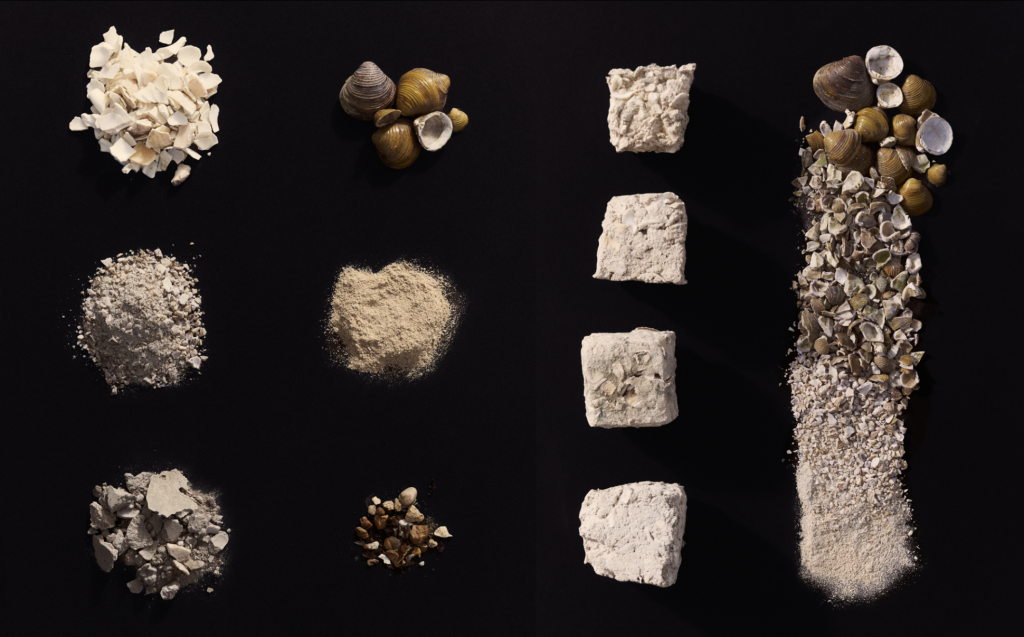
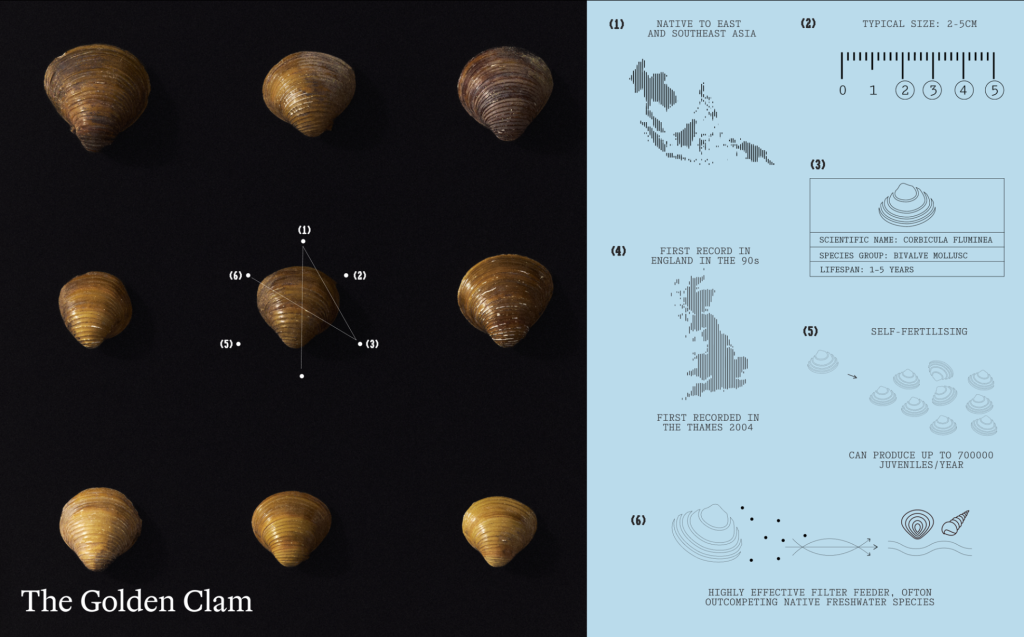
The first iteration focuses on the Golden Clam, or Corbicula fluminea, a non-native species that has been present in the Thames since 2004. The clam acts as an ecosystem engineer, changing river sediment, displacing native species and altering nutrient levels. Instead of treating the shells simply as waste from removal efforts, Kimberley asks a more productive question: could the ecological problem itself become part of the solution?
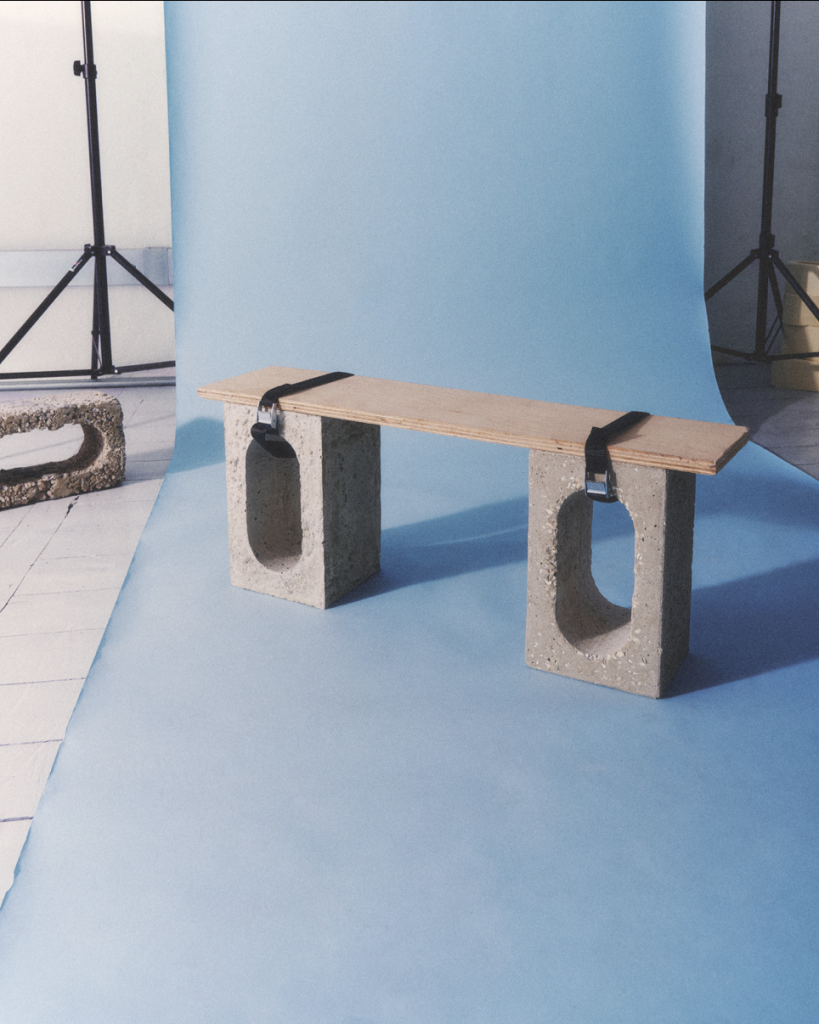
CLAM-CRETE by Sami Kimberley
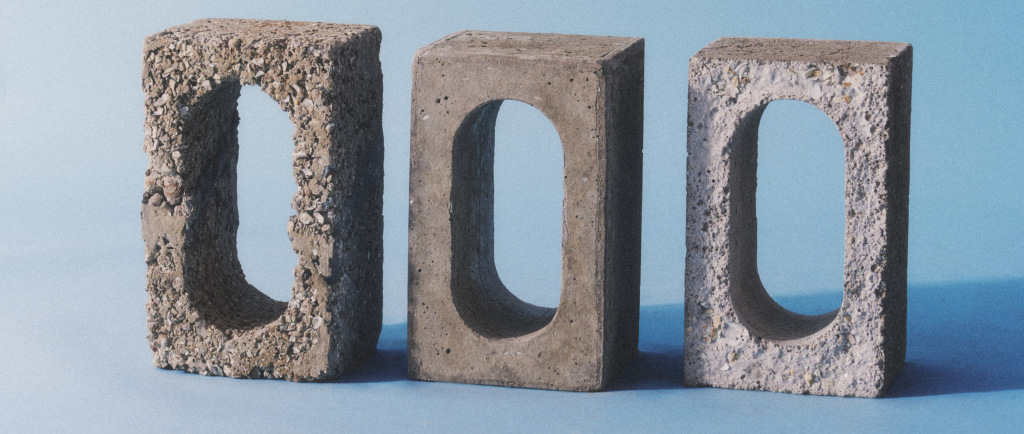
The answer is CLAM-CRETE, a composite material made using Golden Clam shells as an aggregate replacement. The shells were tested with different binders, including Portland cement, sodium alginate and lime mortar, with the research also investigating possibilities for reducing dependence on carbon-intensive materials and harmful sand extraction. What emerges is not one definitive recipe, but a material system capable of adapting to different contexts.
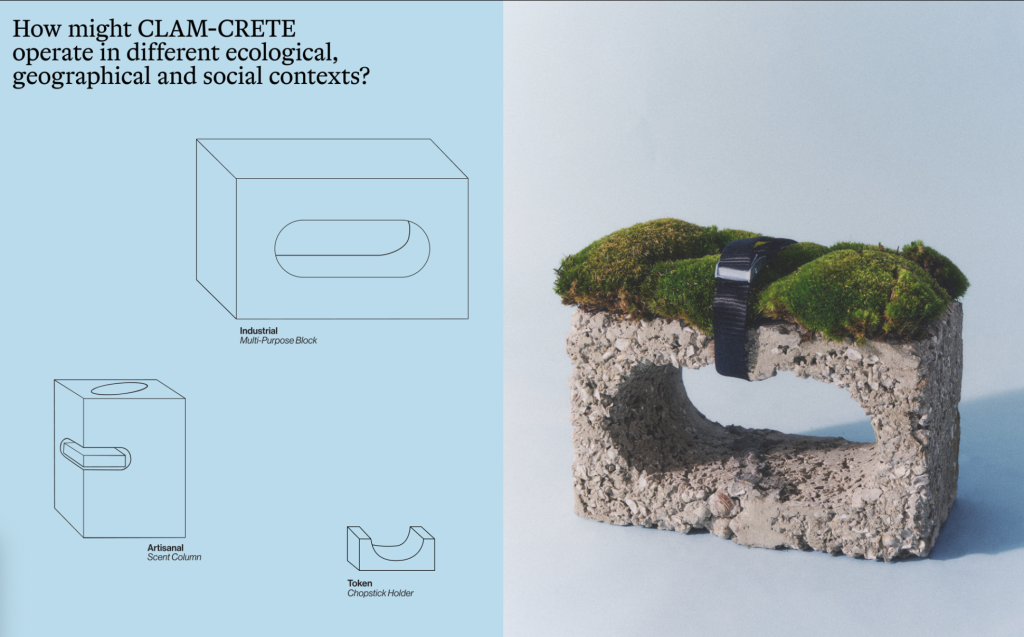
CLAM-CRETE by Sami Kimberley
That scalability is perhaps the project’s most interesting feature. At one end, CLAM-CRETE could become industrial-scale blocks associated with dredging and ecological restoration. At the other, hand-collected shells can be transformed through community workshops into small objects such as chopstick holders. Between those extremes sit objects such as bricks and ornaments, each reflecting a different relationship between material abundance, place and participation.
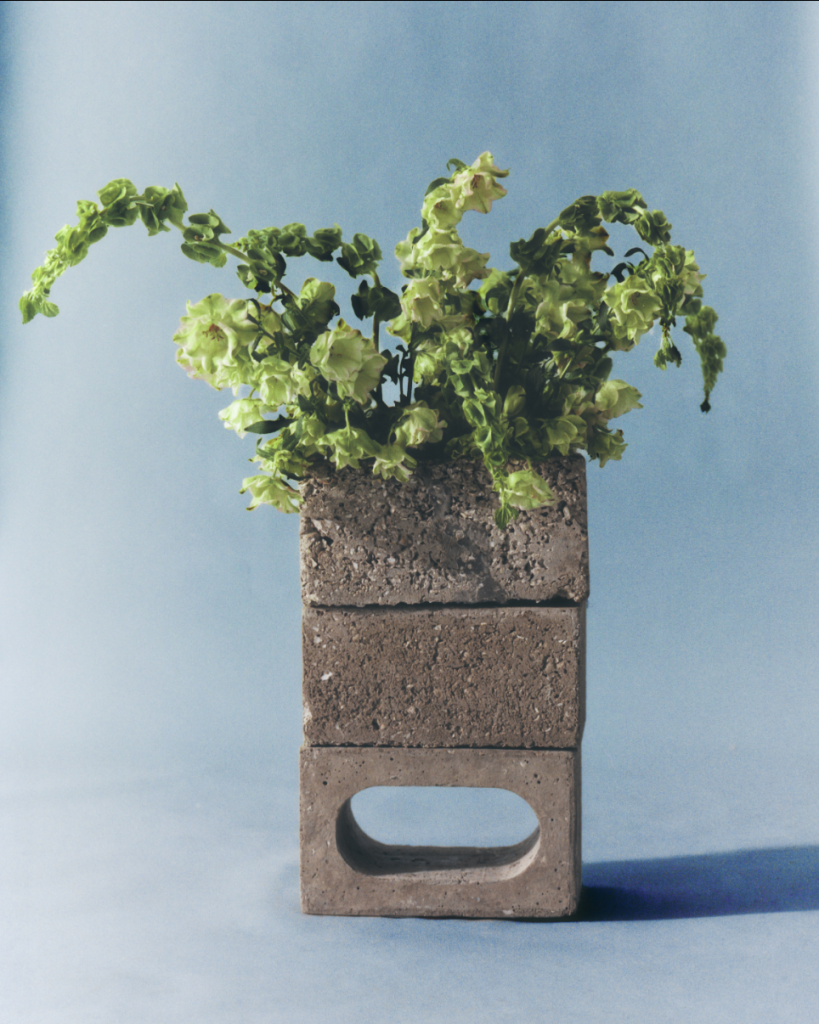
CLAM-CRETE by Sami Kimberley
The project suggests that regenerative design does not necessarily begin with a completely new material. Sometimes it begins by paying closer attention to a material that already exists, understanding the ecological forces behind it, and finding a way to redirect those forces into something useful. From river shells, the conversation now moves to a material that is perhaps even more unconventional: fungi.
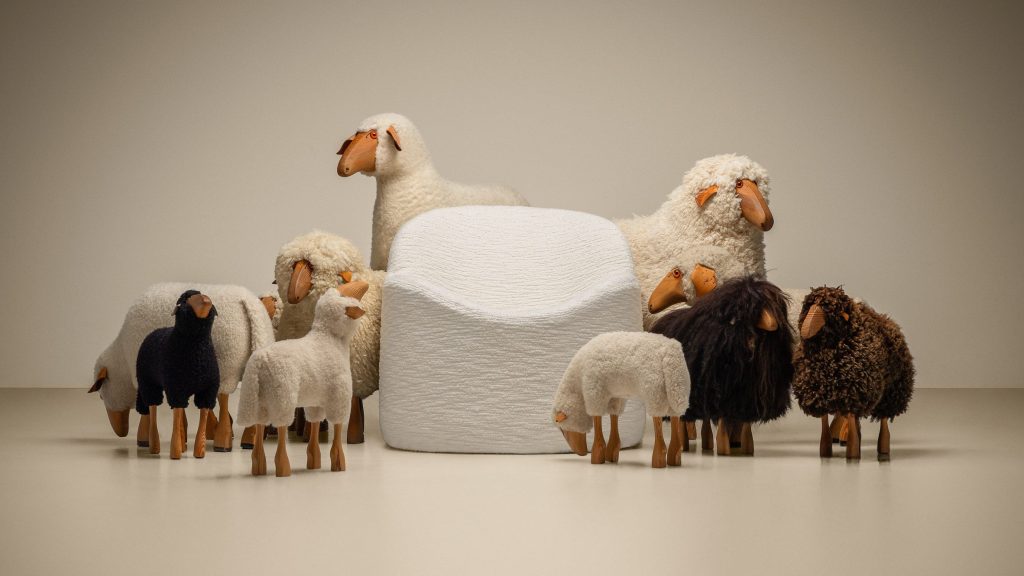
Aifunghi furniture
Mycelium has been a rising star of material innovation for years, celebrated for its ability to transform agricultural fibres into mouldable, compostable composites. Yet Aifunghi, a new furniture brand founded by former Moooi product developers, is approaching the material with a different challenge: can mycelium furniture move from experimental curiosity into something people actually want to live with?
Aifunghi furniture
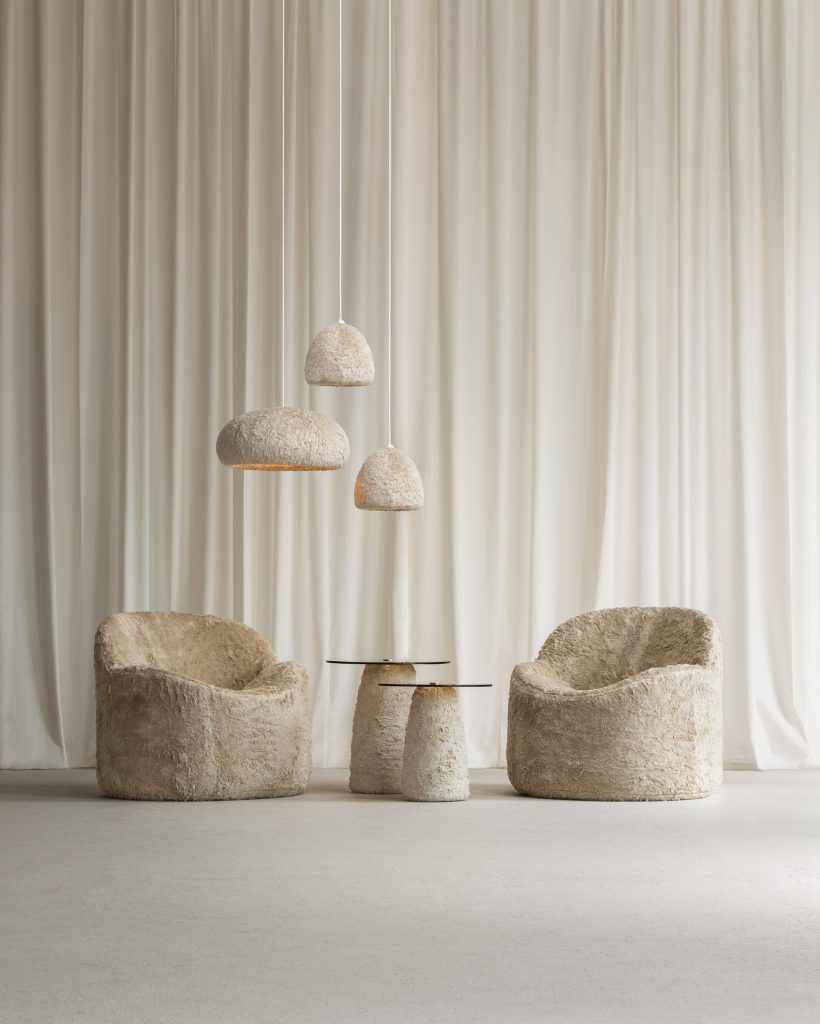
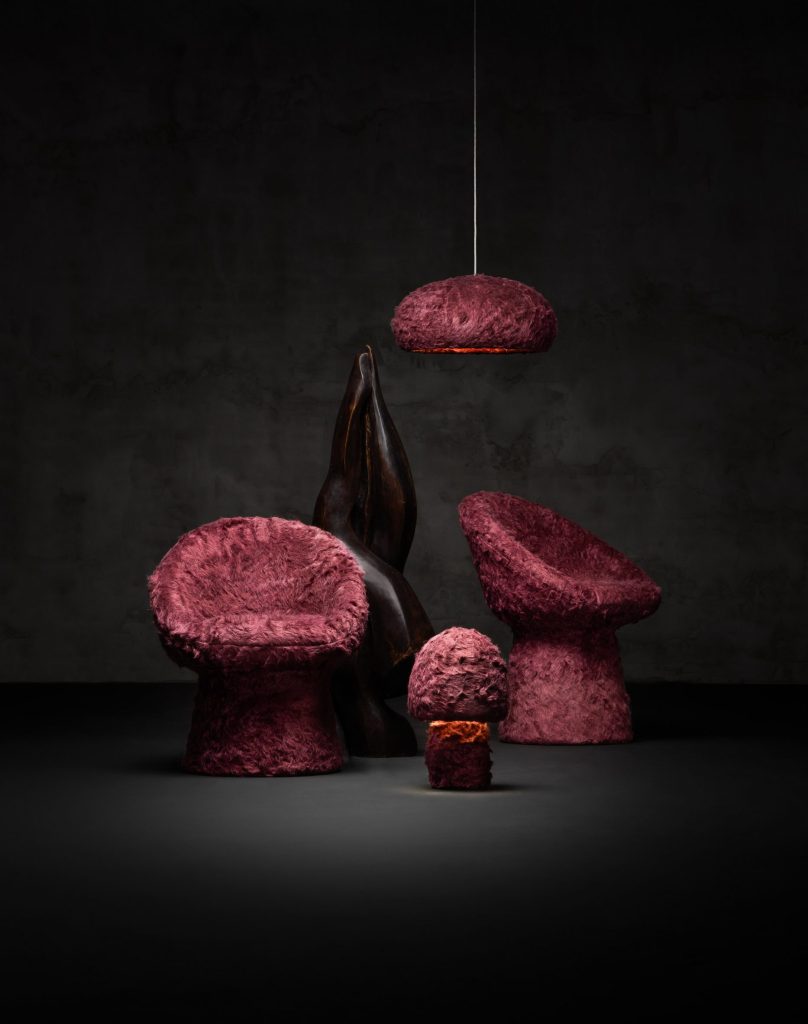
The company’s debut at Copenhagen’s 3 Days of Design presented ten pieces including chairs, tables and lamps. Their appearance is deliberately expressive, with furry surfaces that challenge the assumption that sustainable furniture must look restrained, austere or overtly “natural”. The ambition is straightforward: make mycelium furniture appealing, usable and commercially attainable rather than leaving it in the realm of prototypes and limited-edition experiments.
Aifunghi furniture
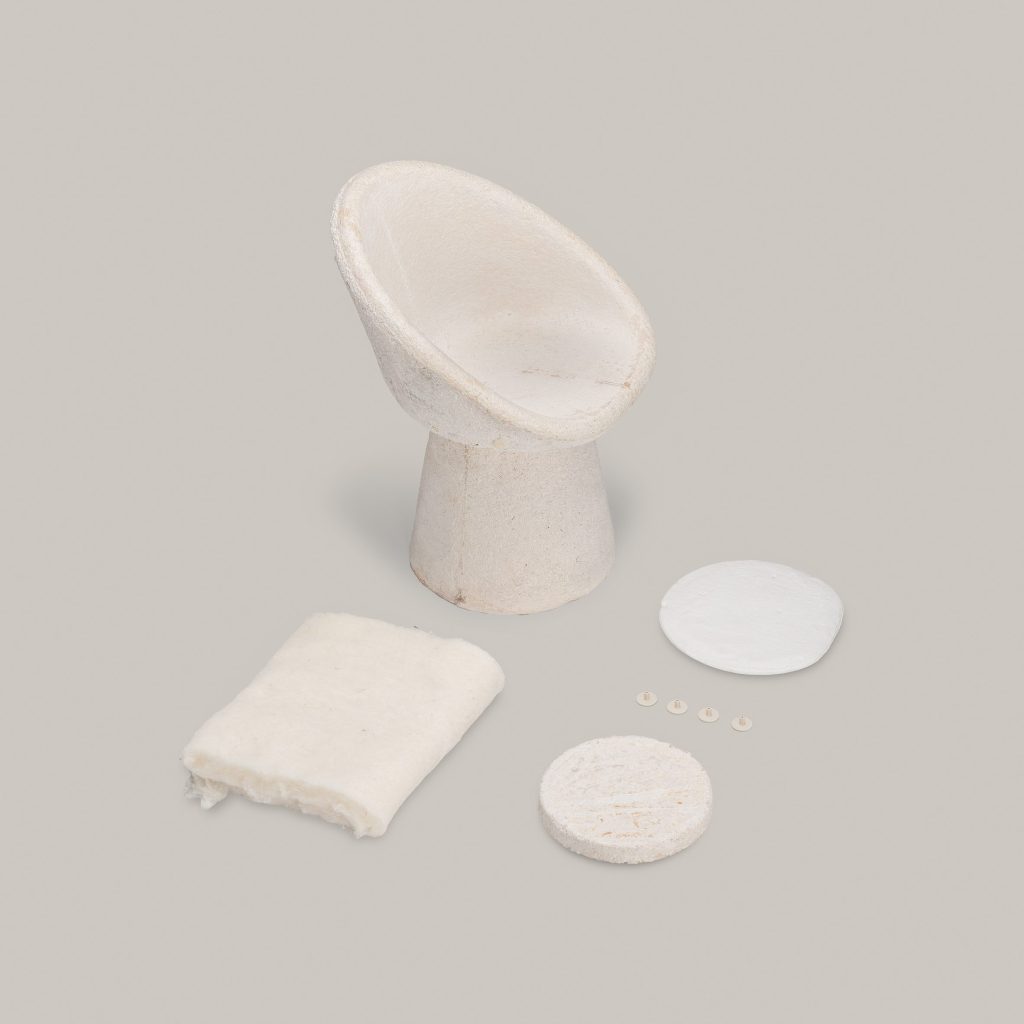
Behind the visual playfulness is serious material development. Aifunghi uses a bio-composite developed by its sister company Growmolding, combining hemp fibres with mycelium. As the fungi grows, it consumes and binds the hemp fibres into a strong mouldable structure without plastic. The chairs are designed to be entirely free from petroleum-derived plastics and compostable, while seaweed-based bio-foam provides the padding and plant-fibre faux fur made from nettle, hemp and flax replaces conventional synthetic upholstery.
Aifunghi furniture
The innovation extends beyond the material recipe to manufacturing. Aifunghi has established a semi-industrial factory in Enkhuizen capable of producing up to 1,200 pieces a year. That is significant because sustainable materials often face a familiar contradiction: they may be environmentally promising, but difficult to manufacture consistently at meaningful volumes. Aifunghi is attempting to close that gap, with its dining chair reportedly achieving the EN16139 Level 1 contract-seating test, opening the door to more demanding commercial applications.
Aifunghi furniture
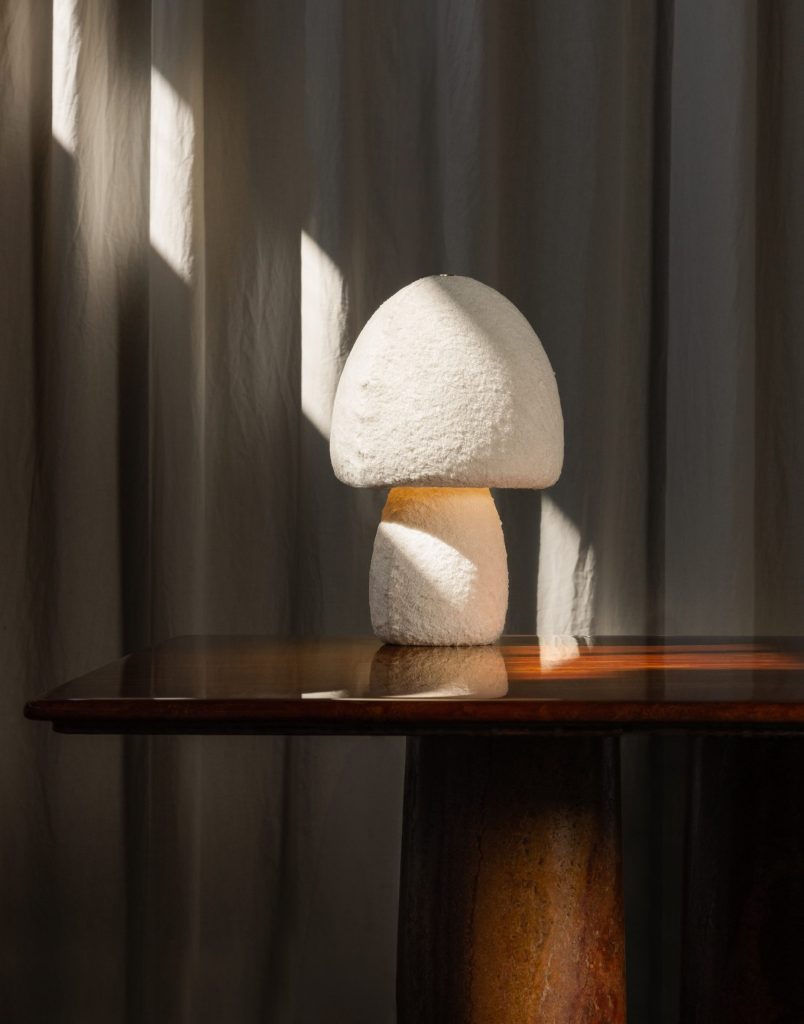
The collection also demonstrates that circular thinking does not have to produce uniform objects. Its lamps pair mycelium interiors with plant-based fur exteriors, while Bolete side tables combine upholstered bases with fused glass panels made from shards left over from mouth-blown glass production. Waste streams, biological growth and industrial processes become ingredients in a visual language that is deliberately tactile and fun.
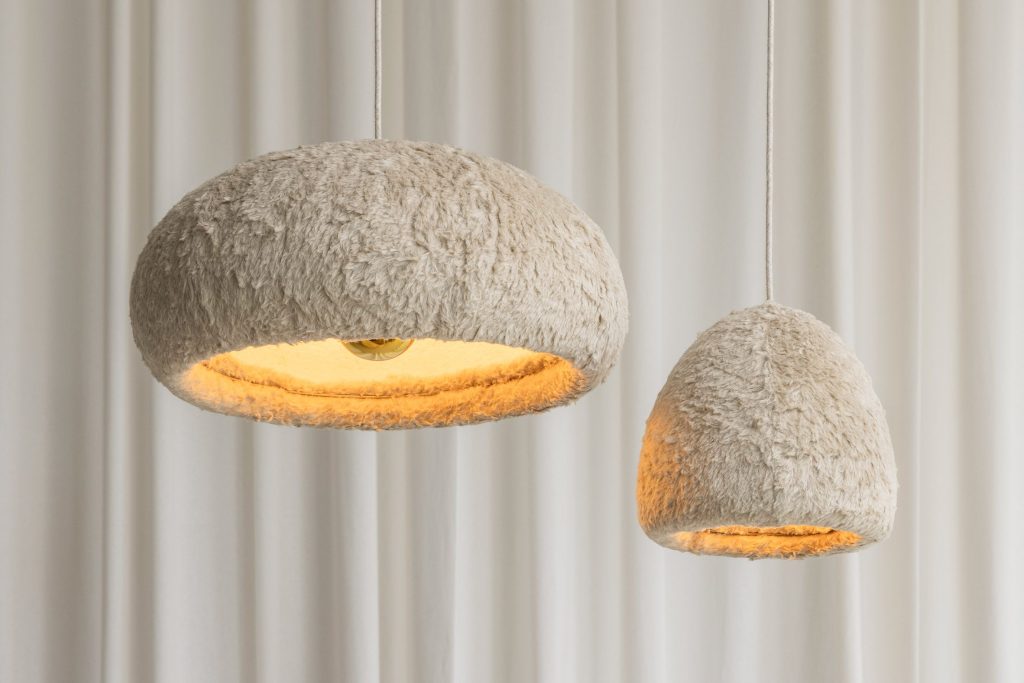
Aifunghi furniture
Taken together, these three projects reveal a broader transformation in sustainable design. The future of sustainable design may not be defined by a single miracle material. It may instead be defined by a more inventive relationship with the materials already surrounding us. The most exciting question is no longer simply, “What can we make?” It is “What can we make from here?” And increasingly, the answer is proving to be much more interesting.