Furniture is usually expected to do its job quietly. A chair supports, a table holds, a stool offers a place to sit. But some designers are more interested in what happens when these familiar objects become expressive, revealing how they work, where they come from, and even how they might change over time. Contemporary designers explore furniture as a form of communication, using construction, material, and movement to make everyday objects more curious and engaging.
For French designer Matteo Voisin, the most interesting part of a piece of furniture may be the part that is usually hidden. His Screws collection, developed as a graduation project at Chelsea College of Arts, takes a deliberately transparent approach to construction. Rather than concealing the hardware that holds each object together, Voisin makes it the visual language of the collection. Threaded wooden dowels and oversized hex nuts become both structural elements and signals, telling the user how the furniture works.
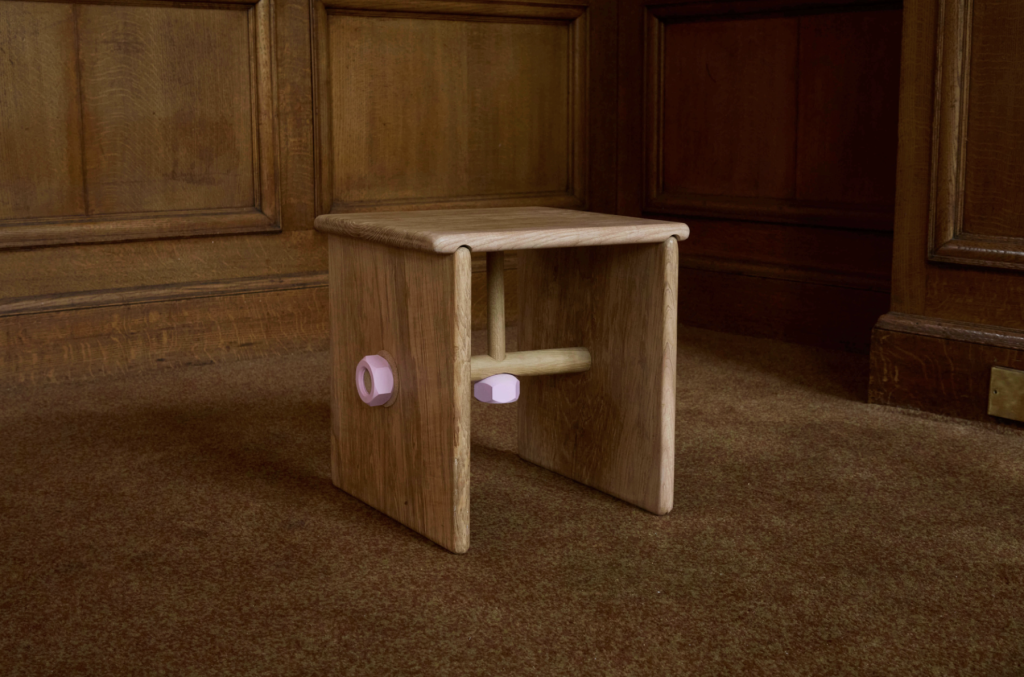
Screws stool by Matteo Voisin
The idea reaches its clearest expression in the Screwssssss Stool. Made from three identical oak boards, the stool is assembled without glue or conventional screws. Colourful pink PLA hex nuts hold the side panels in place, while a rounded hex nut locks the seat through compression. The result is remarkably simple, but that simplicity is precisely the point. The joint is no longer something to ignore or hide. It becomes the structure, the decoration, and an invitation to understand the object.
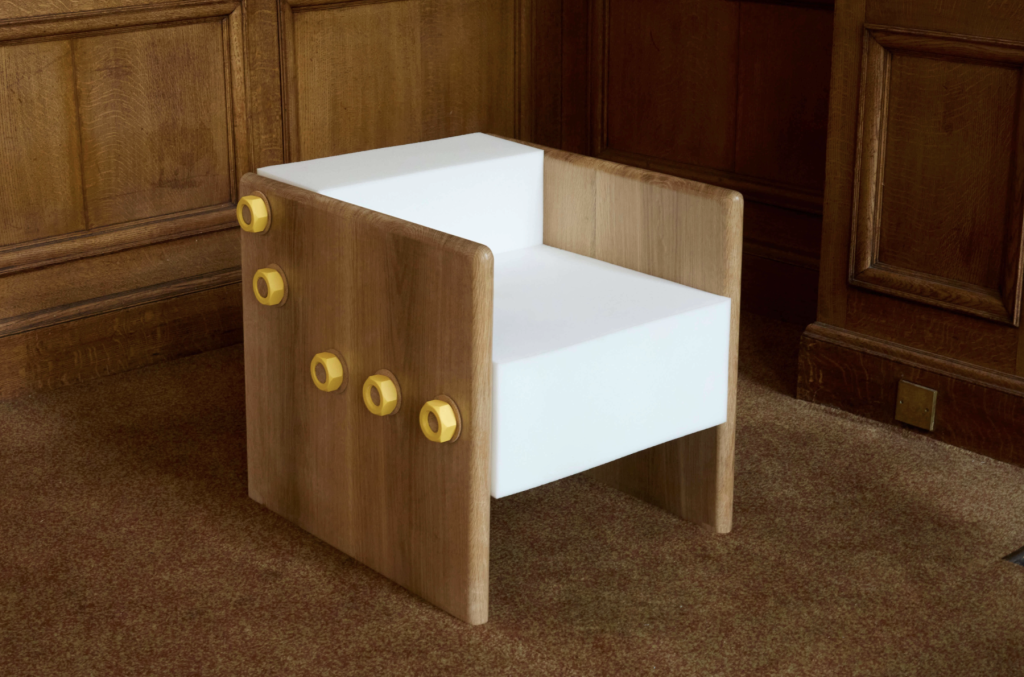
Screws chair by Matteo Voisin
Voisin’s approach also gives the furniture an unusual sense of accessibility. By making its construction immediately legible, the stool suggests that furniture does not need to be mysterious or intimidating. It can be taken apart, repaired, and understood by its owner. The larger collection extends this thinking into pieces such as the Screwssssss Lounge Chair, where yellow hex nuts punctuate the outer faces of the armrests and exposed PU foam reveals a material that would normally disappear beneath upholstery. The chair feels almost like a work in progress, deliberately resisting the expectation that furniture should arrive as a perfectly sealed and finished object.
That attitude makes Screws more than a playful exercise in joinery. Voisin, who was born in Clamart in 2005 and works across furniture and industrial design, uses a familiar visual vocabulary to rethink the relationship between people and the things they own. The oversized fasteners may be humorous, but their message is serious: when we can see how something is made, we can begin to feel that it belongs to us.
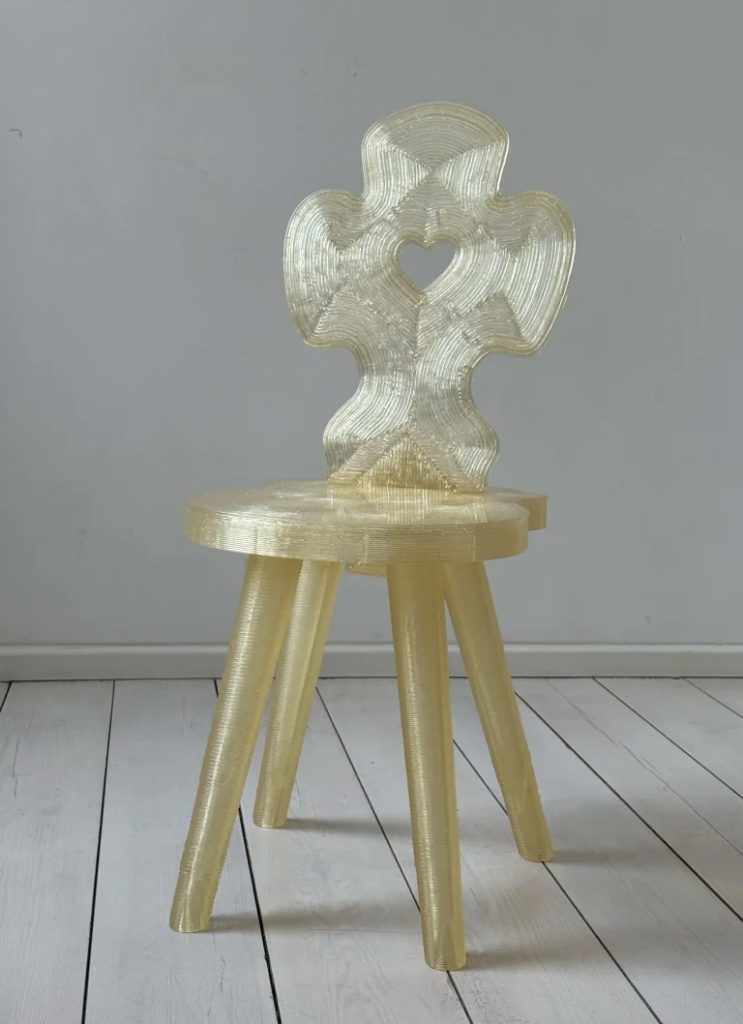
Heimatlos chair by Em Ef Studio
If Voisin makes construction visible, Berlin- and Frankfurt-based Em Ef Studio takes a different route, using contemporary manufacturing to reconnect furniture with the visual language of the past. Its Heimatlos chair, meaning “chair with no roots,” consists of three precisely interlocking components. The form draws on traditional construction principles, but its method of production places it firmly in the present.
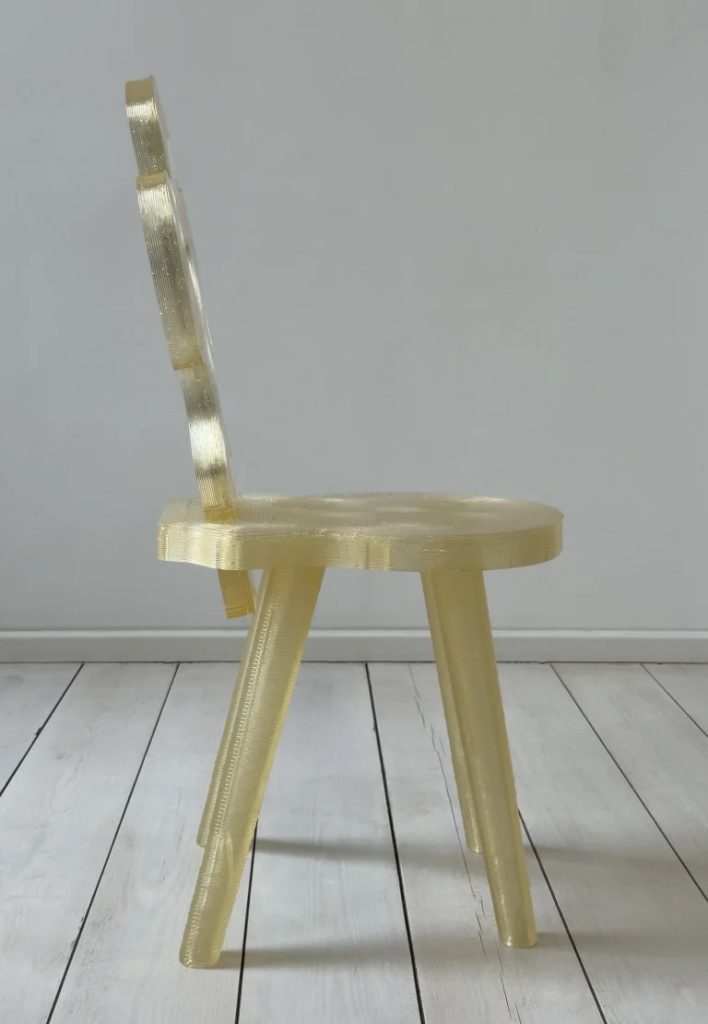
Heimatlos chair by Em Ef Studio
The chair is 3D-printed layer by layer from biodegradable PLA in its natural colour. Those layers create a finely grooved surface that catches the light, giving the material an almost ceramic appearance. There is something slightly surprising about the effect. From a distance, the ornate back and rhythmic surface could belong to a handcrafted chair from another era. Up close, the precision of additive manufacturing reveals itself.
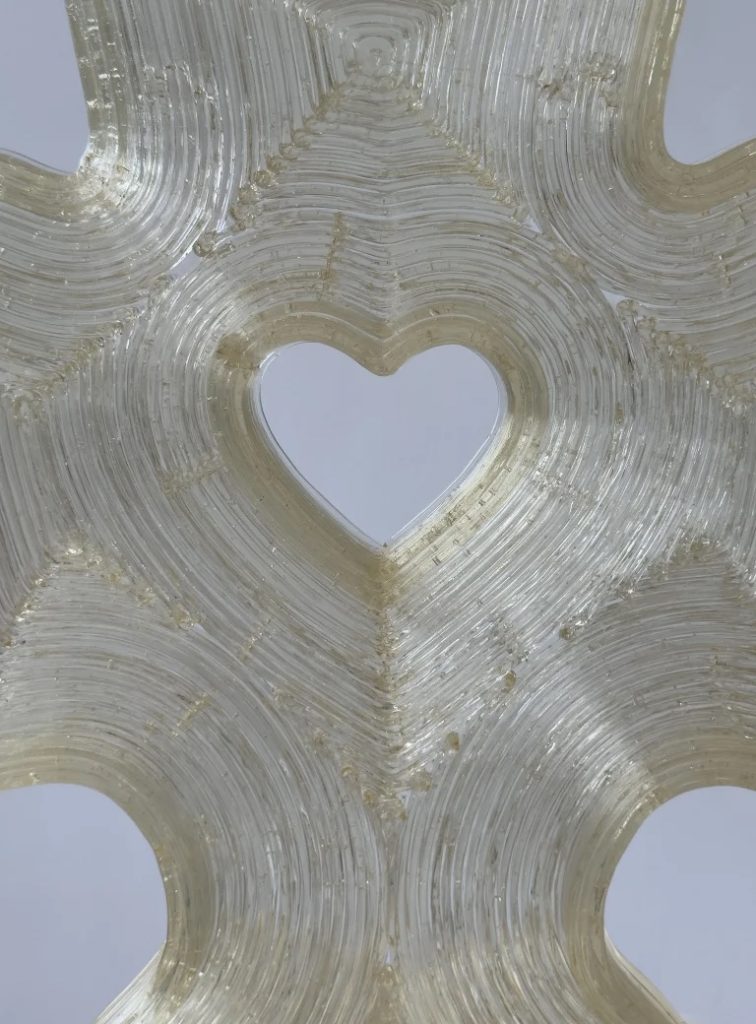
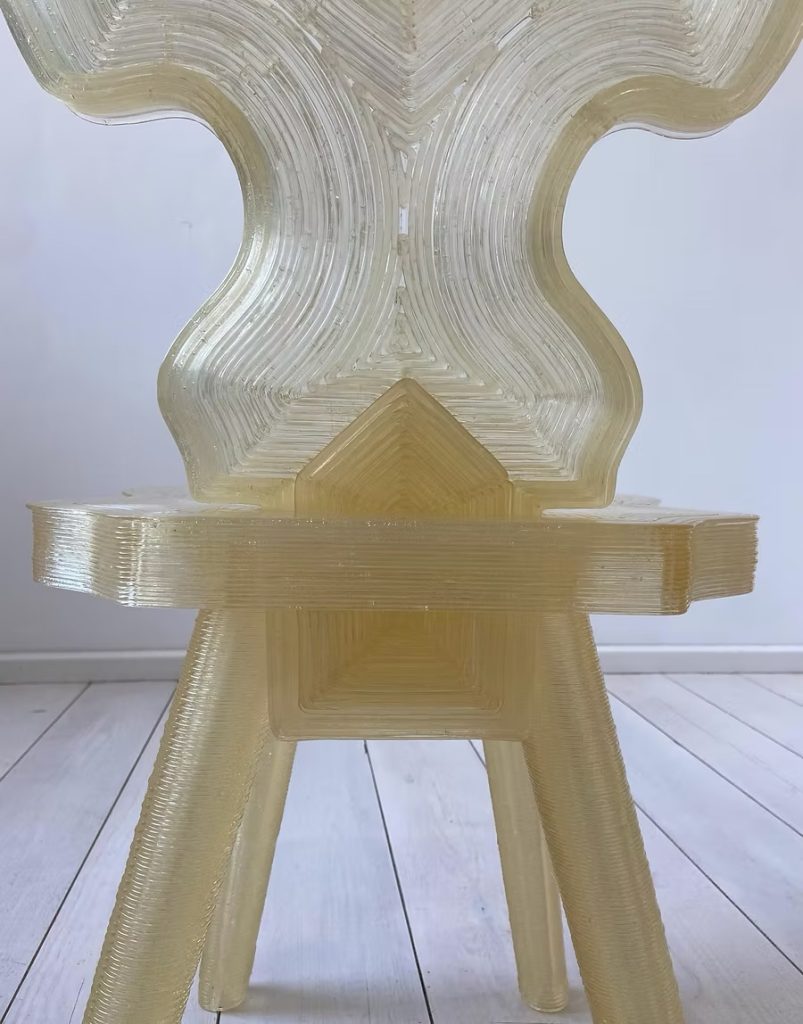
Heimatlos chair by Em Ef Studio
This tension between old and new is what gives the design its character. Rather than using 3D printing simply to produce an obviously futuristic object, Em Ef Studio employs the technology to recreate the visual richness and structural logic associated with traditional furniture. The process is contemporary, but the emotional reference is familiar. It is a reminder that innovation does not always mean abandoning the past. Sometimes it means finding a new way to speak its language.
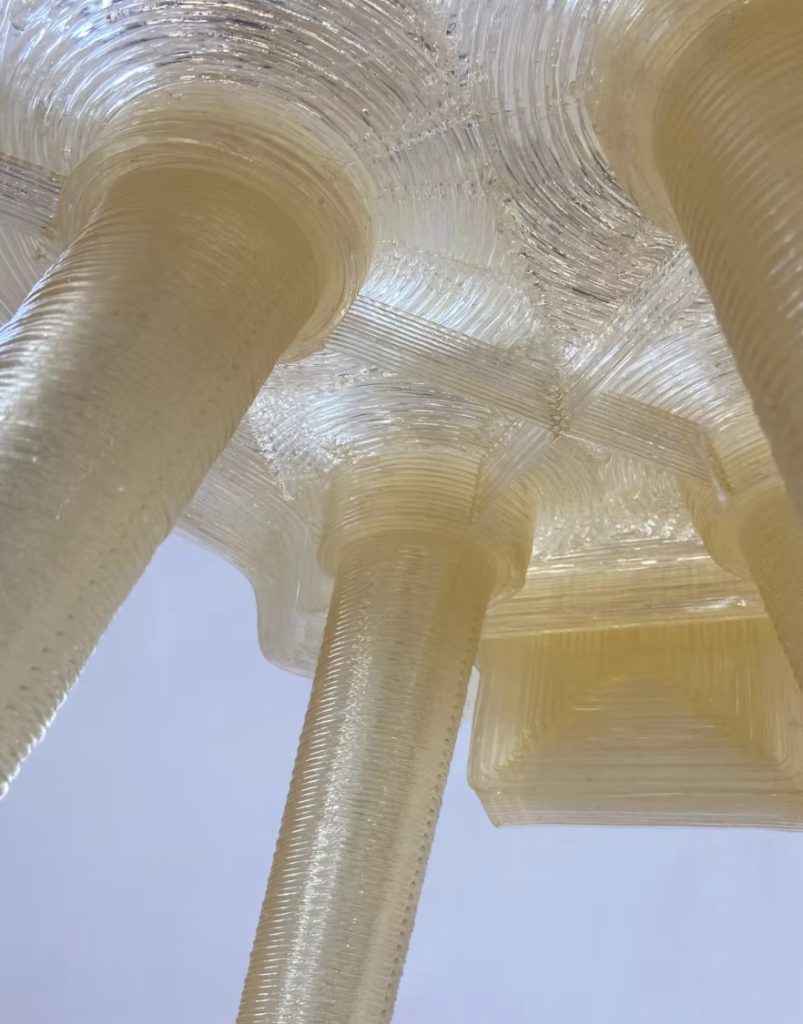
Heimatlos chair by Em Ef Studio
In that sense, Heimatlos is appropriately named. The chair seems to occupy a space between worlds, neither entirely rooted in traditional craft nor defined by the aesthetic clichés of digital fabrication. Its identity comes from the meeting point between the two. Like Voisin’s visible fasteners, it asks us to look beyond furniture’s basic function and consider how an object can communicate its history through the way it is made.
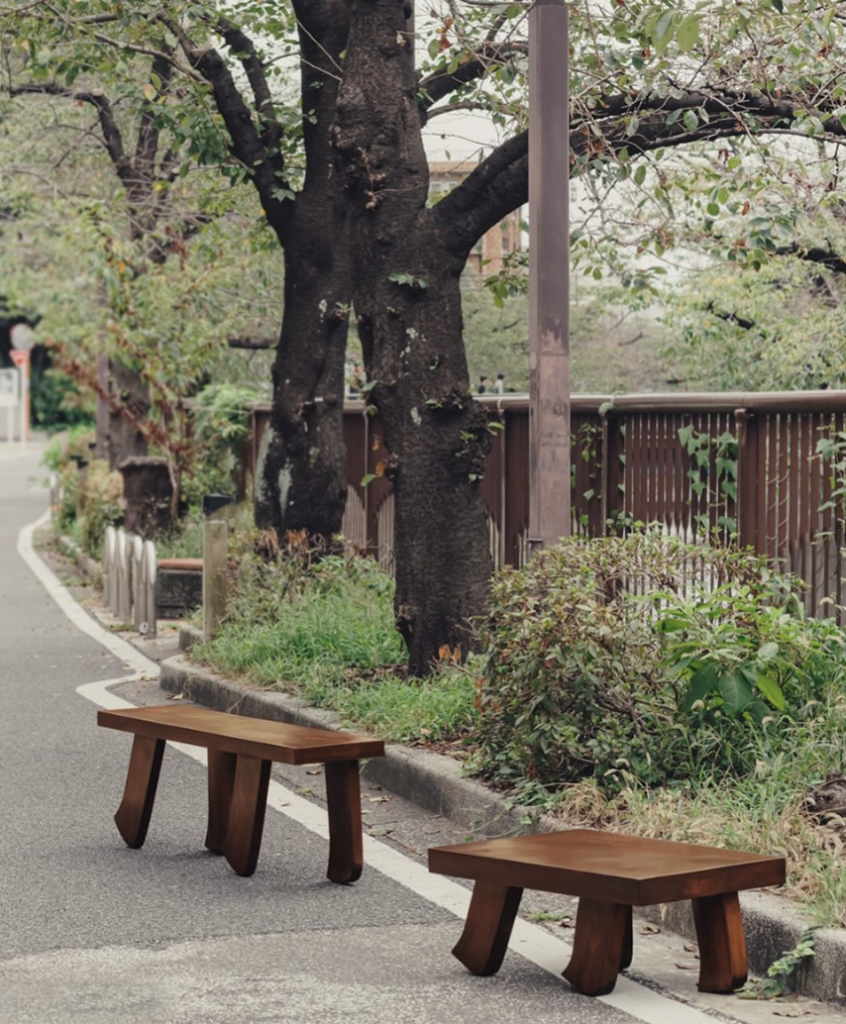
Barefoot by Jorge Suárez Kilzi
While the first two projects use construction and production to challenge our expectations, Jorge Suárez Kilzi looks at something even more fundamental: movement. Barcelona brand Kilzi’s Barefoot Table explores what the studio describes as “motion held in balance”, using playfully slanted legs that make the table appear as though it has momentarily paused mid-stride. The effect is humorous and slightly surreal, turning an otherwise familiar piece of furniture into something that seems almost alive.
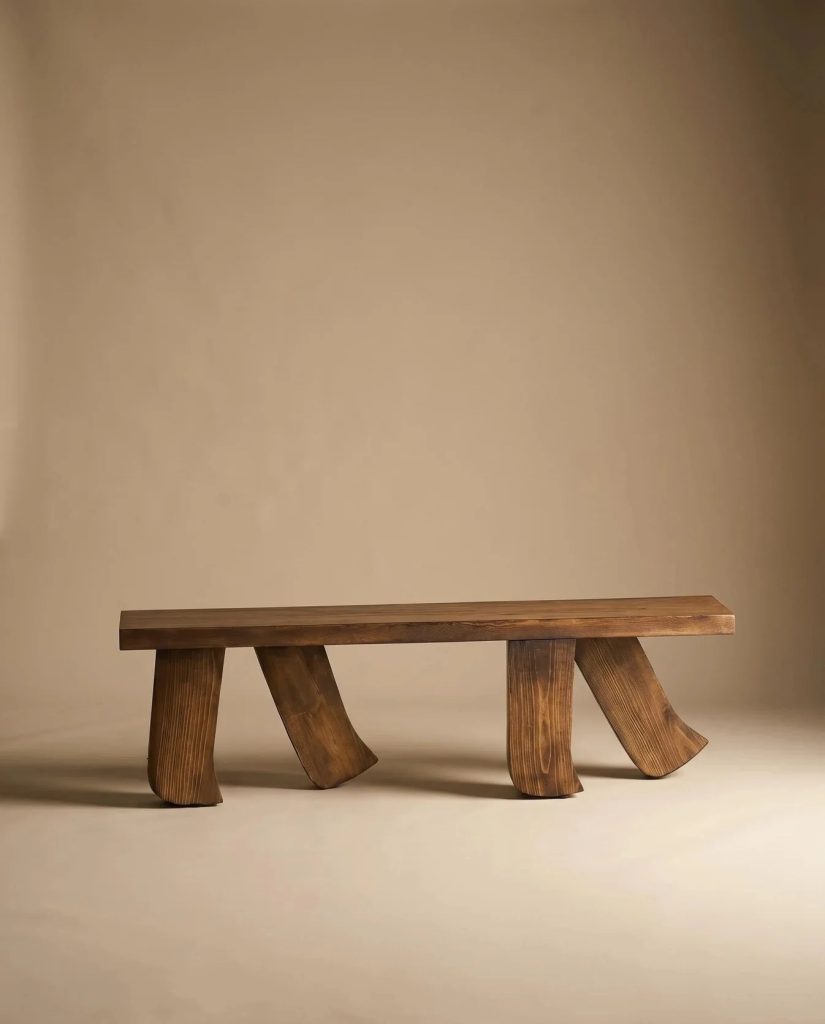
Barefoot by Jorge Suárez Kilzi
Crafted from solid dyed chestnut, the dining table was conceived as “an ode to the quiet movement that exists even in moments of stillness”, according to studio founder Jorge Suárez-Kilzi. Its four legs take on the character of a walking foot, introducing a subtle sense of instability while remaining firmly grounded. The visual joke is immediate, but beneath it sits a more thoughtful observation about how we experience space. Even objects that appear completely static can suggest movement, transformation, and the passage of time.
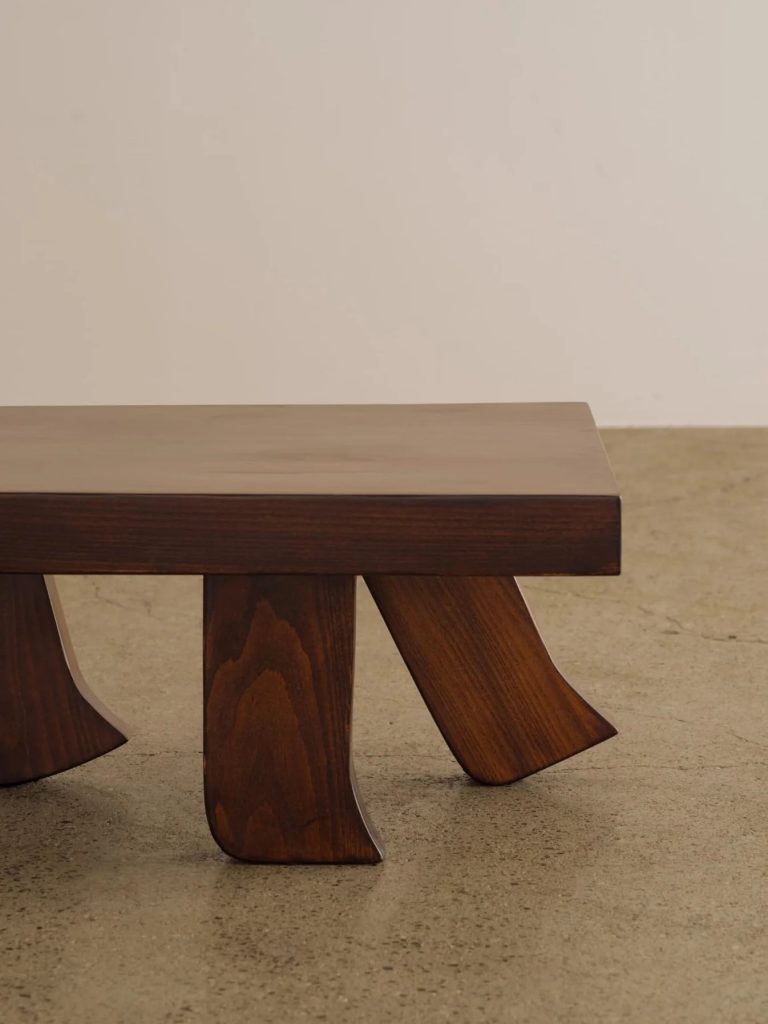
Barefoot by Jorge Suárez Kilzi
The Barefoot collection explores this tension between stillness and motion. A table is traditionally associated with stability and permanence, yet Kilzi gives it a body language of its own. The slanted legs seem ready to carry it somewhere, transforming a functional object into a playful character within the room. The result is expressive without being overly theatrical, allowing the concept to emerge through a small but powerful shift in proportion and posture.
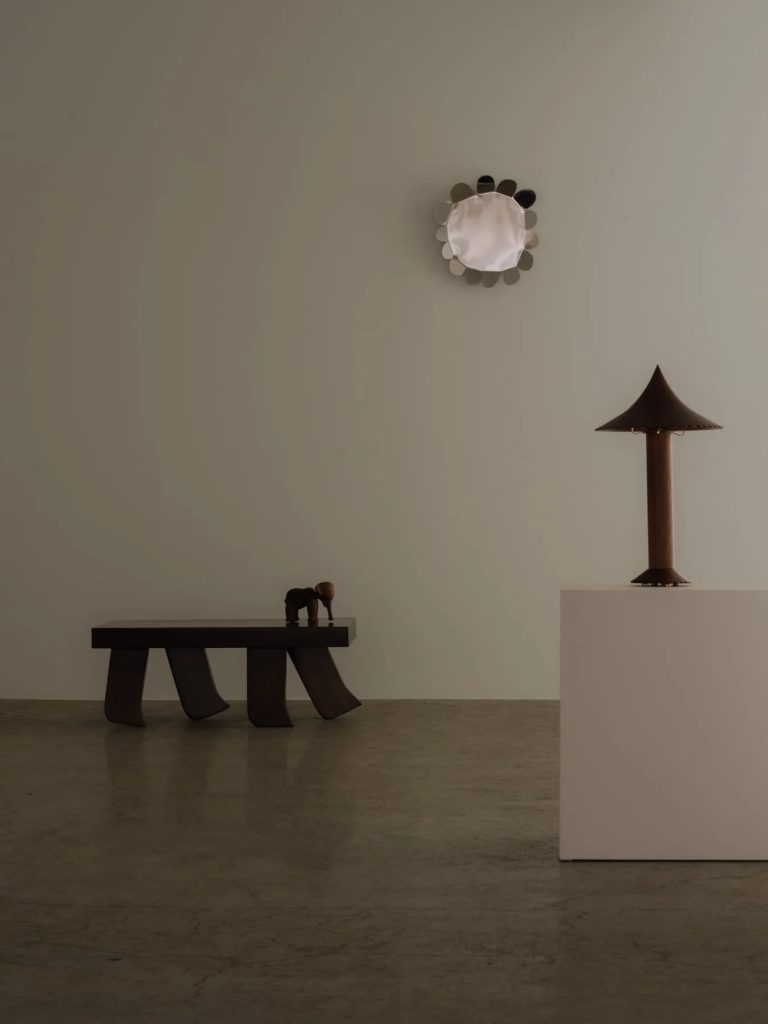
Barefoot by Jorge Suárez Kilzi
Originally conceived as a coffee table, Barefoot is designed to adapt in scale and context to suit different interiors. This flexibility reinforces the collection’s central idea that furniture, much like the spaces and people around it, is never completely fixed. We may return to the same table every day, but the moments that happen around it are always changing. Kilzi’s design gives that simple truth a physical form, suggesting that even when furniture stays in place, it can still feel as though it is going somewhere.
What connects these projects is not a shared aesthetic but a shared curiosity about what furniture can communicate. These very different pieces of furniture communicate through colour, construction, texture, form, and movement. And in doing so, they remind us that good design is not only about making objects work. It is also about giving people something to notice, understand, and perhaps even smile about.