Memorials are among the most complex challenges in design. They must hold grief without overwhelming it, tell stories without simplifying them, and offer spaces where memory can evolve over time. The most compelling memorials do more than mark tragedy. They choreograph experience, using landscape, architecture, and material to guide visitors through reflection, mourning, and resilience.
ET-302 Memorial Monument and Park by Alebel Desta Consulting Architects and Engineers
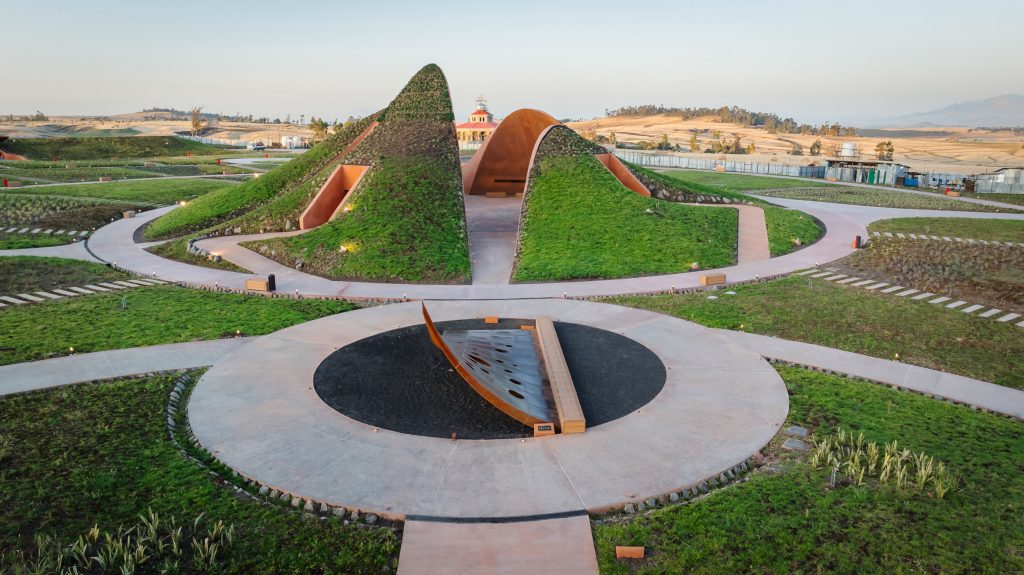
Near Addis Ababa, local Alebel Desta Consulting Architects and Engineers has completed the ET-302 Memorial Monument and Park, dedicated to the 157 victims of the Ethiopian Airlines Flight 302 crash. Built directly on the crash site, the project emerged from an international design competition funded by stakeholders including Boeing and Ethiopian Airlines and developed in close collaboration with the victims’ families.
ET-302 Memorial Monument and Park by Alebel Desta Consulting Architects and Engineers
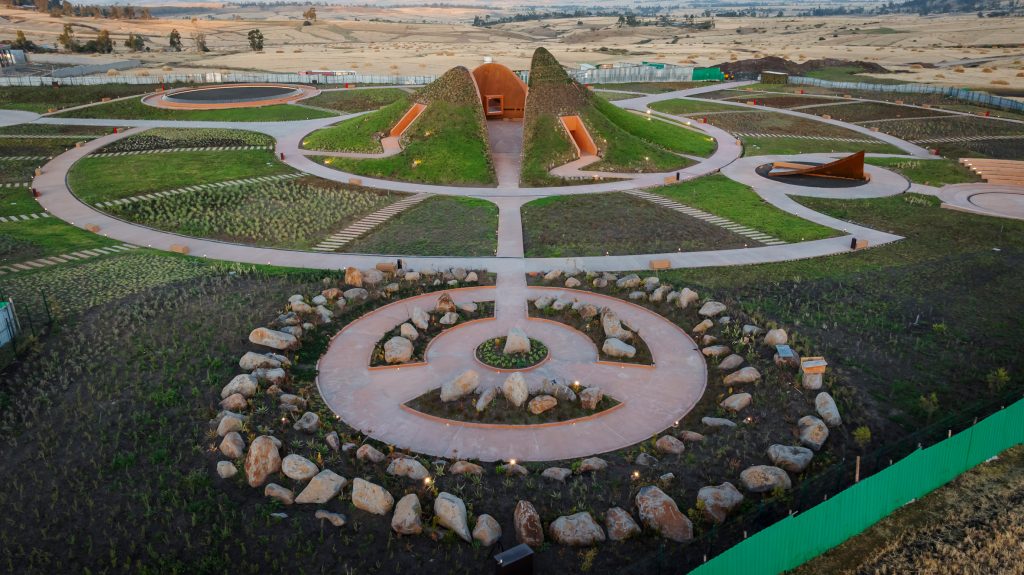
The design centres on a radial landscape that frames remembrance as a journey. Paved pathways spread outward from a central monument made of red-pigmented concrete, guiding visitors through gardens and reflective spaces. The approach path from the southwest symbolises the final trajectory of the flight, subtly introducing visitors to the narrative of the site before they reach the memorial’s core.
ET-302 Memorial Monument and Park by Alebel Desta Consulting Architects and Engineers
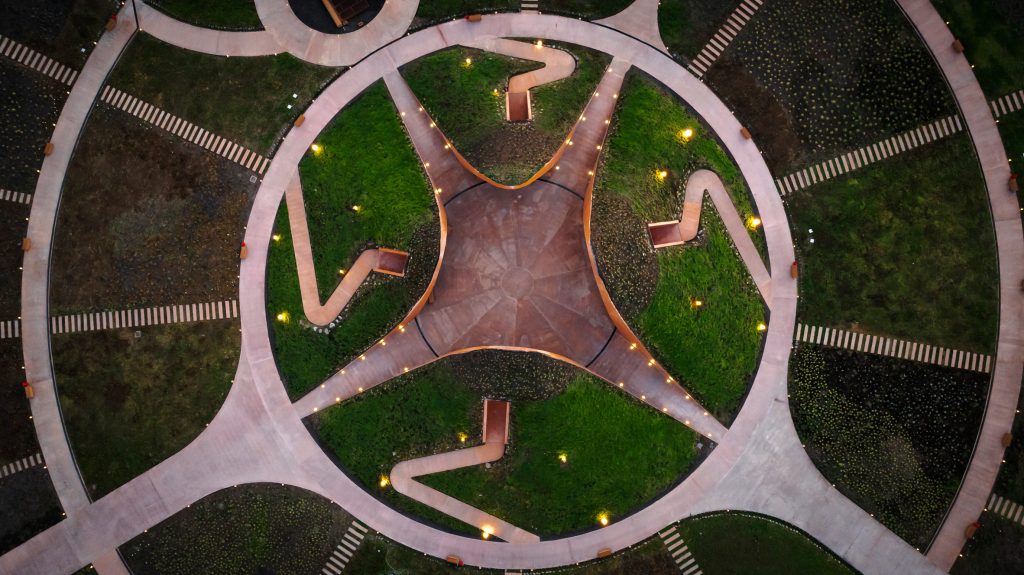
At the centre stands a sculptural monument divided into four segments that represent the continents from which the victims came: Africa, Europe, North America, and Asia. Narrow paths cut between these segments and converge at a sheltered space for collective reflection. Within each section, plaques shaped like airplane windows commemorate individual lives, while small raised cubicles allow visitors to pause in solitude and read bronze plaques engraved with personal stories.
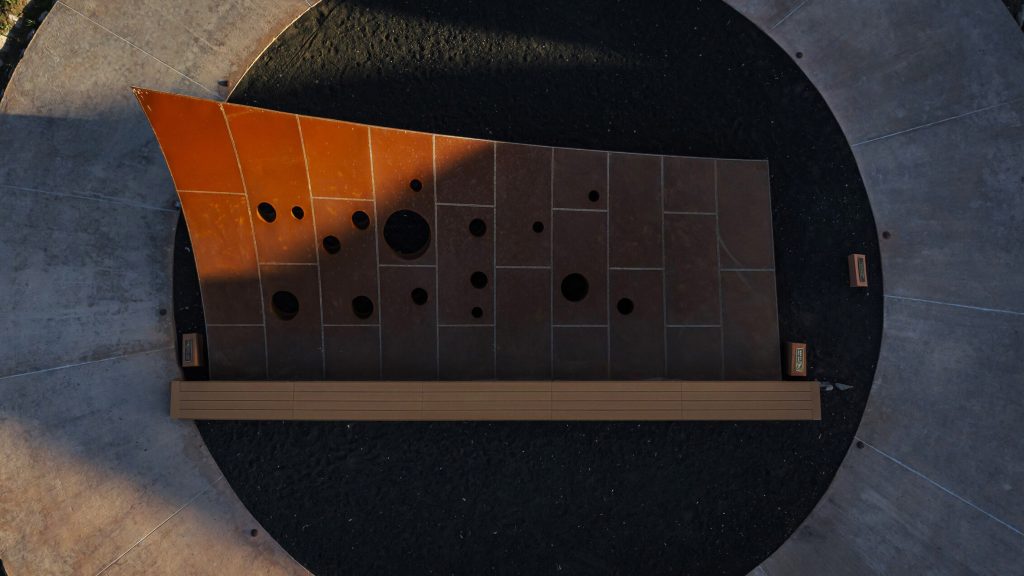
ET-302 Memorial Monument and Park by Alebel Desta Consulting Architects and Engineers
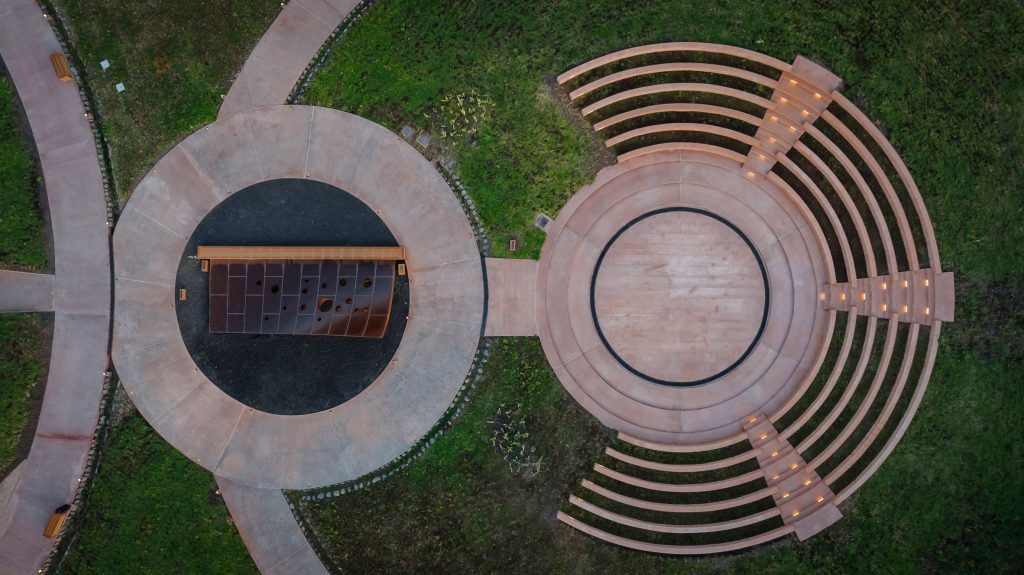
The surrounding landscape deepens the emotional experience. A circular burial ground intentionally left empty sits to the west, protected by a simple metal balustrade. To the east, a Corten steel Healing Monument perforated with openings allows light to filter through its surface, symbolising the passage from sorrow toward recovery. Along the outer ring of the park, an amphitheatre accommodates larger memorial gatherings while rock gardens composed of locally sourced stones reinforce the connection between memory and the Ethiopian landscape.
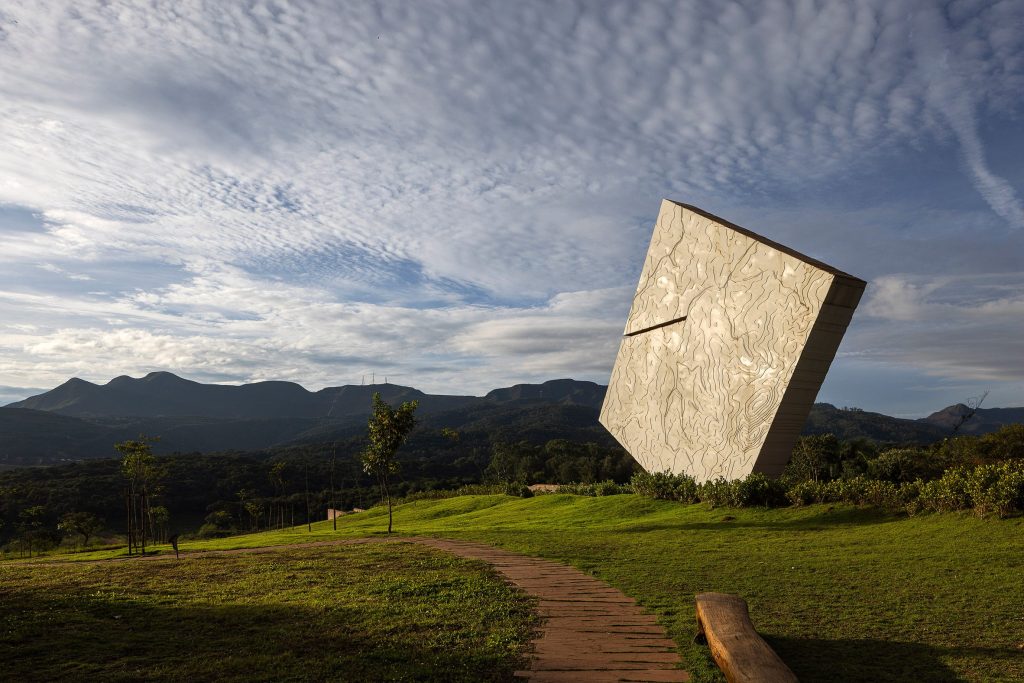
Brumadinho Memorial by GPAA (also header image)
If the Ethiopian memorial unfolds through landscape, the Memorial Brumadinho in Brazil focuses on immersion. Designed by Gustavo Penna Arquitetos & Associados (GPAA), the project commemorates the 272 people who died when a mining dam collapsed in January 2019 near the city of Brumadinho in Minas Gerais.
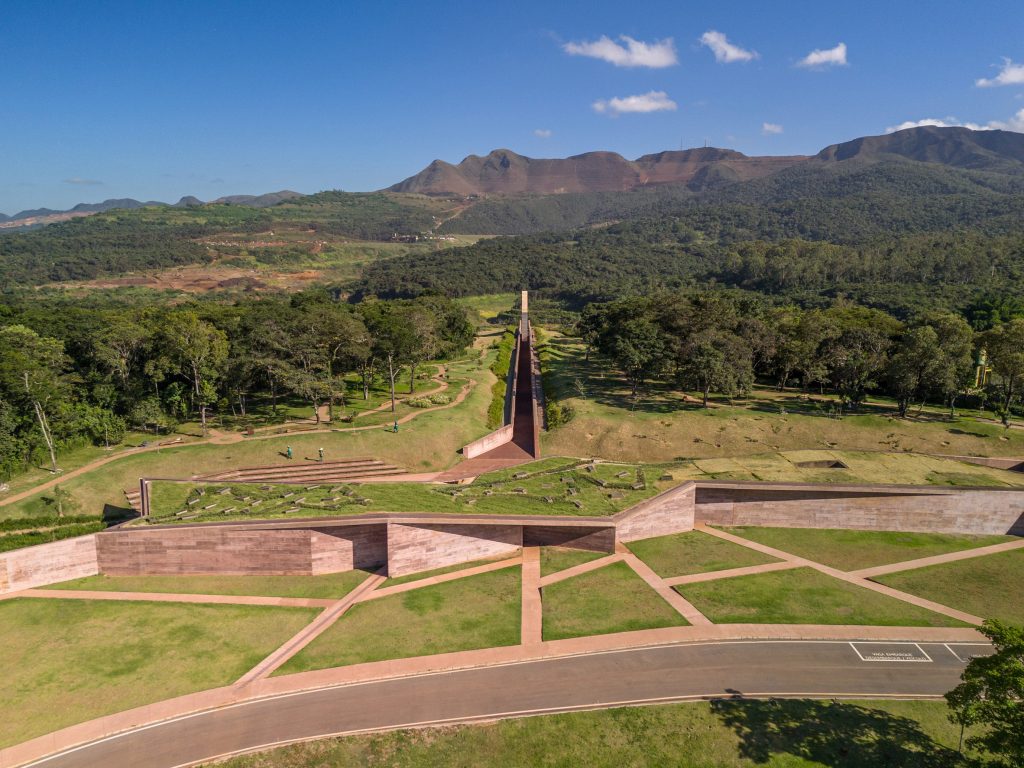
Brumadinho Memorial by GPAA
The disaster devastated the surrounding terrain, and the memorial occupies the very site where the collapse occurred. Developed in collaboration with families of the victims, the design treats the landscape as both witness and narrative device. Visitors move through a sequence of architectural interventions that transform the act of remembrance into a physical journey.
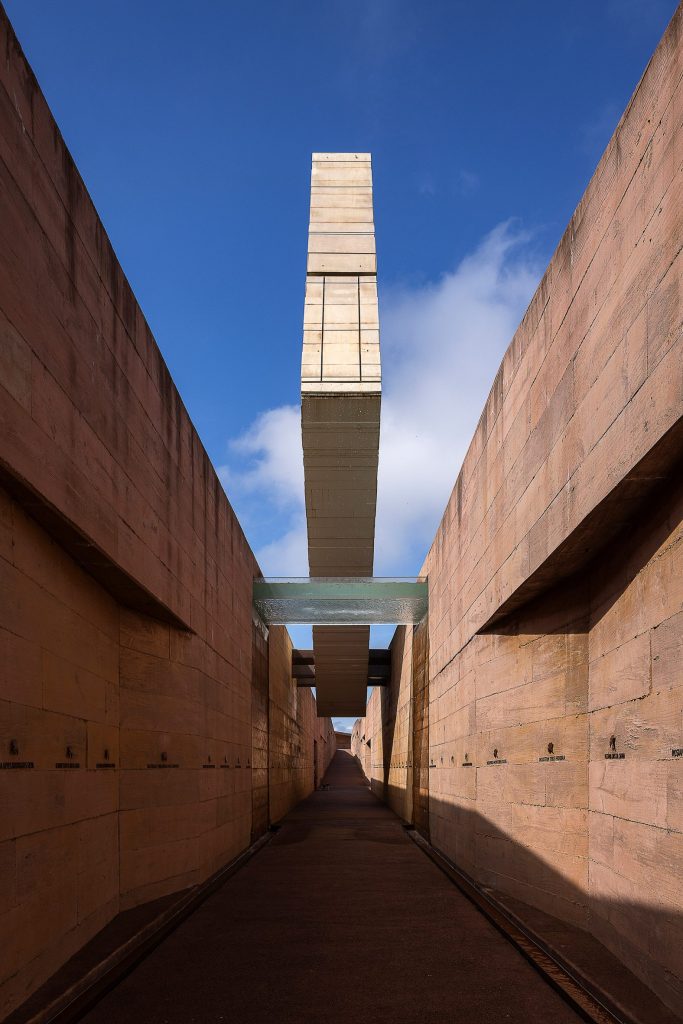
Brumadinho Memorial by GPAA
The experience begins at a sharply angular entry pavilion whose fractured form evokes the violence of the dam’s rupture. Concrete walls are mixed with pigment from mining tailings, directly incorporating the material associated with the tragedy. Inside, a cluster of crystals represents the victims, whom families lovingly refer to as “jewels.” Once a year, at precisely 12:28 pm on January 25, a beam of sunlight enters the pavilion and illuminates the crystals, marking the exact moment of the collapse.
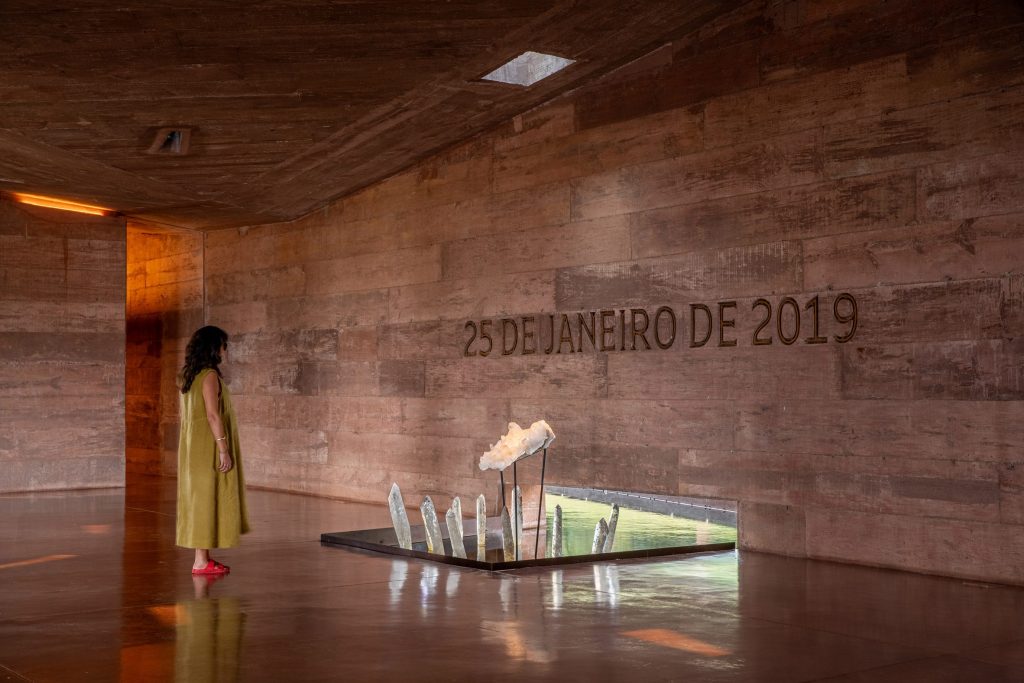
Brumadinho Memorial by GPAA
From the pavilion, visitors descend into a 230-metre carved pathway flanked by tall concrete walls that restrict views outward. The narrow corridor creates a controlled perspective that focuses attention on the distant horizon. Names of the victims are engraved along the walls, while illuminated floral elements provide moments of quiet symbolism along the route.
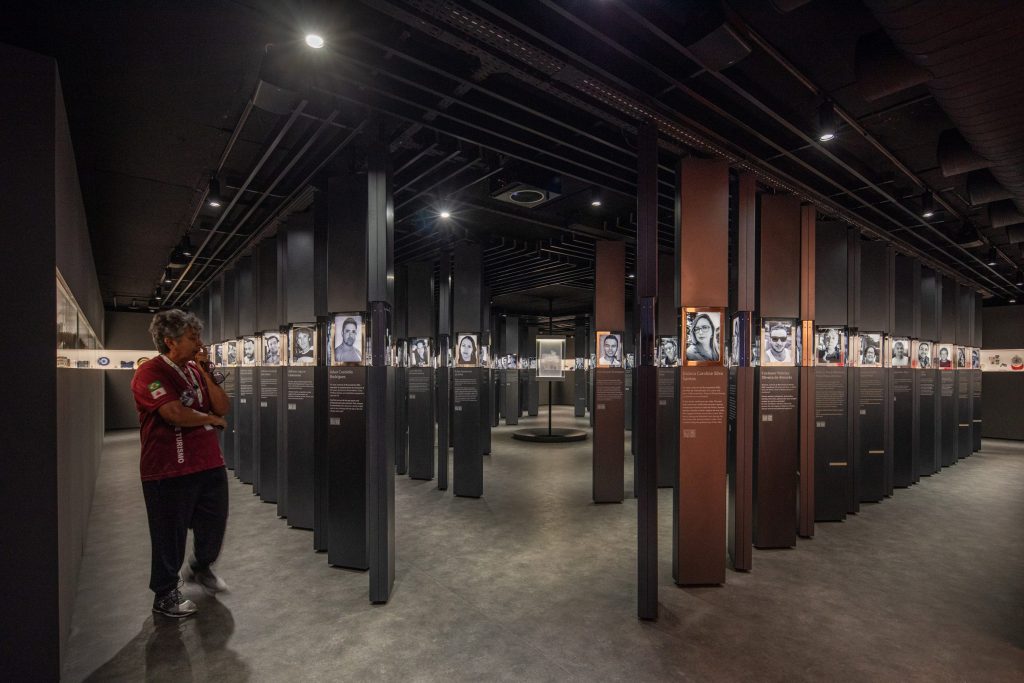
Brumadinho Memorial by GPAA
Halfway along the passage, a tilted concrete sculpture measuring 11 by 11 metres hovers overhead. Its destabilised geometry represents the rational systems that failed before the disaster. The path eventually opens toward a reflection pool and a lookout point where visitors can observe the transformed landscape. Around the site, 272 newly planted ipê trees bloom each year as living markers of resilience.
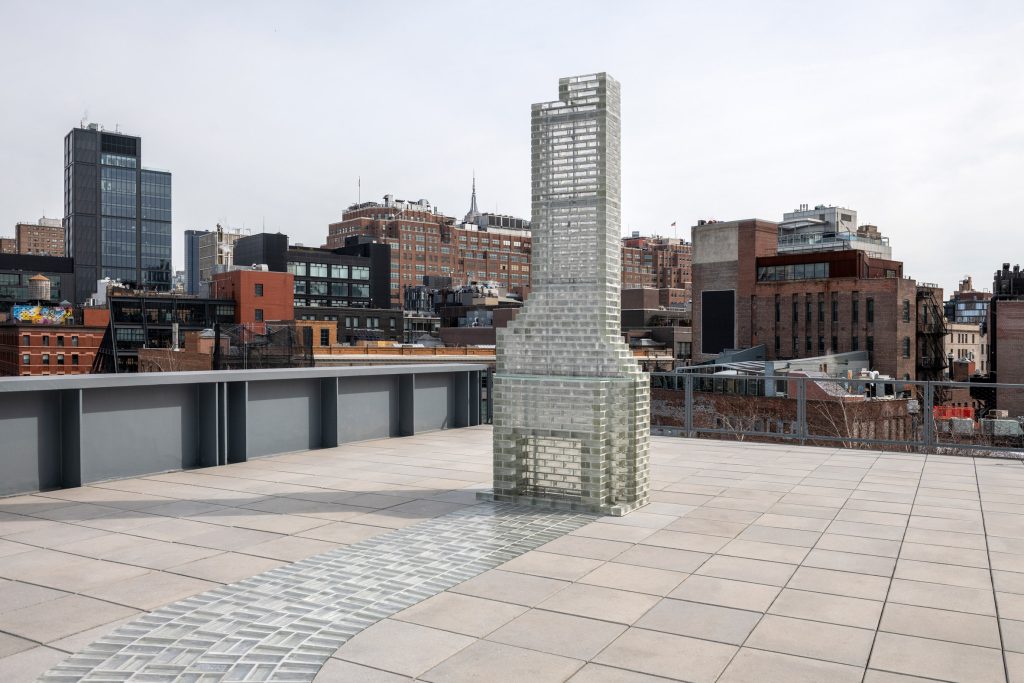
Monument (Altadena) by Kelly Akashi
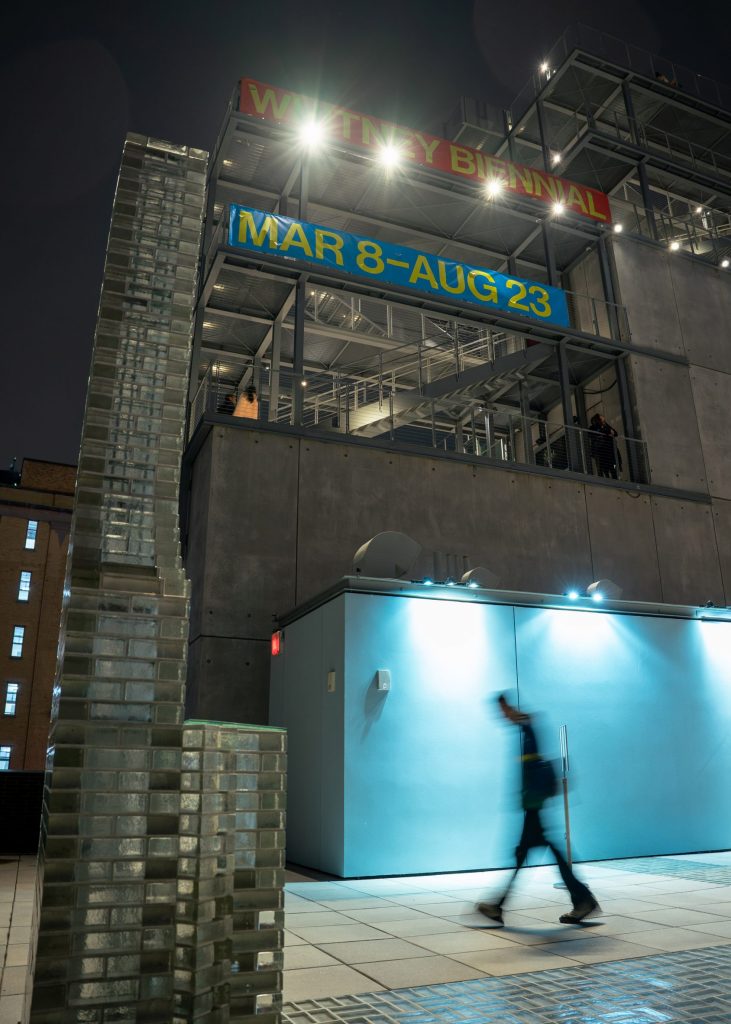
While large memorial landscapes often address collective tragedy, artists are also exploring more intimate forms of remembrance. For the 2026 Whitney Biennial in New York, California-based artist Kelly Akashi presented Monument (Altadena), a sculpture that reflects on the destruction caused by the devastating Los Angeles wildfires of January 2025.
The installation recreates a chimney using 821 hand-cast glass bricks, referencing the chimneys that remained standing across fire-ravaged neighbourhoods in Pacific Palisades and Altadena. These structures became haunting markers of homes that had otherwise disappeared. Akashi herself lost her 1926 home and studio in the fire, making the project both a public monument and a personal act of rebuilding.
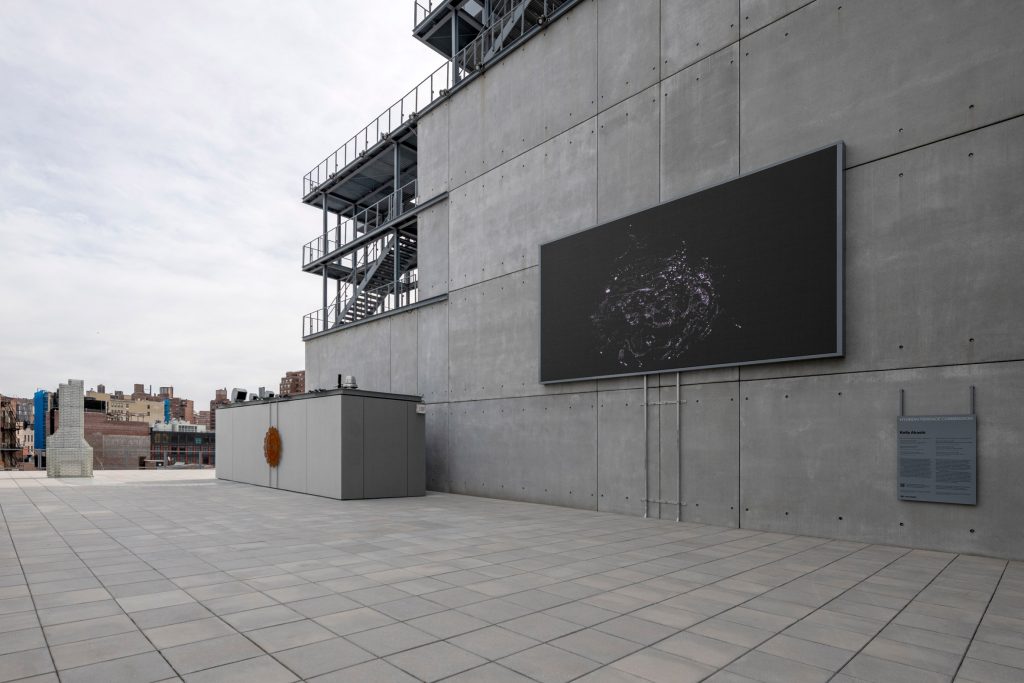
Monument (Altadena) by Kelly Akashi
Constructed in the artist’s Hudson Valley studio, the six-thousand-pound glass structure stands alongside a reconstructed walkway composed of 538 elements. Each brick becomes part of a careful process of reconstruction. Rather than replicating the original chimney with traditional materials, Akashi chose solid glass bricks so the familiar form could be reimagined through a new material language.
The result is both solid and fragile. Light passes through the translucent blocks, unsettling the heaviness normally associated with masonry chimneys. For Akashi, this tension reflects the emotional complexity of rebuilding after catastrophe. The form survives, but its meaning shifts.
Monument (Altadena) by Kelly Akashi
Accompanying the chimney is another piece titled Inheritance (Distressed), a relief sculpture based on a Corten steel dolly that once belonged to the artist’s grandmother and was also lost in the fire. Together, the works explore how objects carry family histories and how art can preserve fragments of memory when the physical world disappears.
Despite their differences in scale and context, these projects share a common design philosophy. Each treats memory not as a static object but as an experience shaped through movement, material, and atmosphere. The result is a new generation of memorials that do not simply commemorate the past. They help communities carry it forward.