The creative process often begins with an unexpected question: what if the materials we discard still have more to offer? Across contemporary art and design, creators are increasingly turning to overlooked and obsolete materials as starting points for new ideas. When artists engage with materials that carry histories of use, weathering, or technological obsolescence, they introduce layers of meaning that new materials rarely possess.
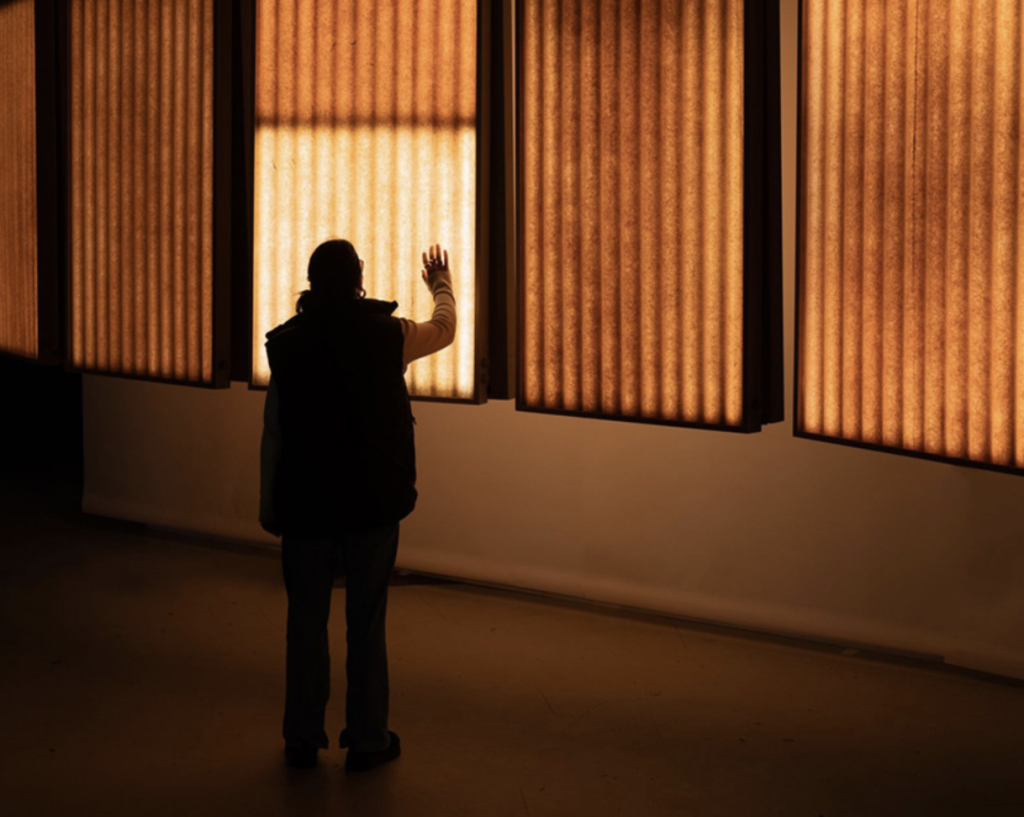

Königswinter by Heilig Objects (also header image)
In the forests above Königswinter, near the Siebengebirge nature reserve in western Germany, a neglected hillside hut has become the unlikely source of a striking light sculpture. Königswinter, designed by Daniel Heilig for Heilig Objects, is constructed from reclaimed corrugated fiberglass panels that once served as daylighting elements for the remote structure. After nearly fifty years of exposure to sun, frost, and rain, the panels developed amber hues, visible fiber networks, and subtle shifts in density that now define the sculpture’s character.

Königswinter by Heilig Objects
Designer Daniel Heilig spent five years searching for materials capable of producing the desired spatial and luminous effect. The fiberglass panels from the Königswinter site offered precisely the qualities he was seeking. Their translucency and natural patina carried both structural integrity and a sense of environmental history. Rather than heavily altering the surfaces, the design intervention focuses on careful preservation. The panels are cleaned, stabilized when necessary, and mounted within custom wooden frames that introduce architectural clarity while allowing the material’s weathered personality to remain visible.
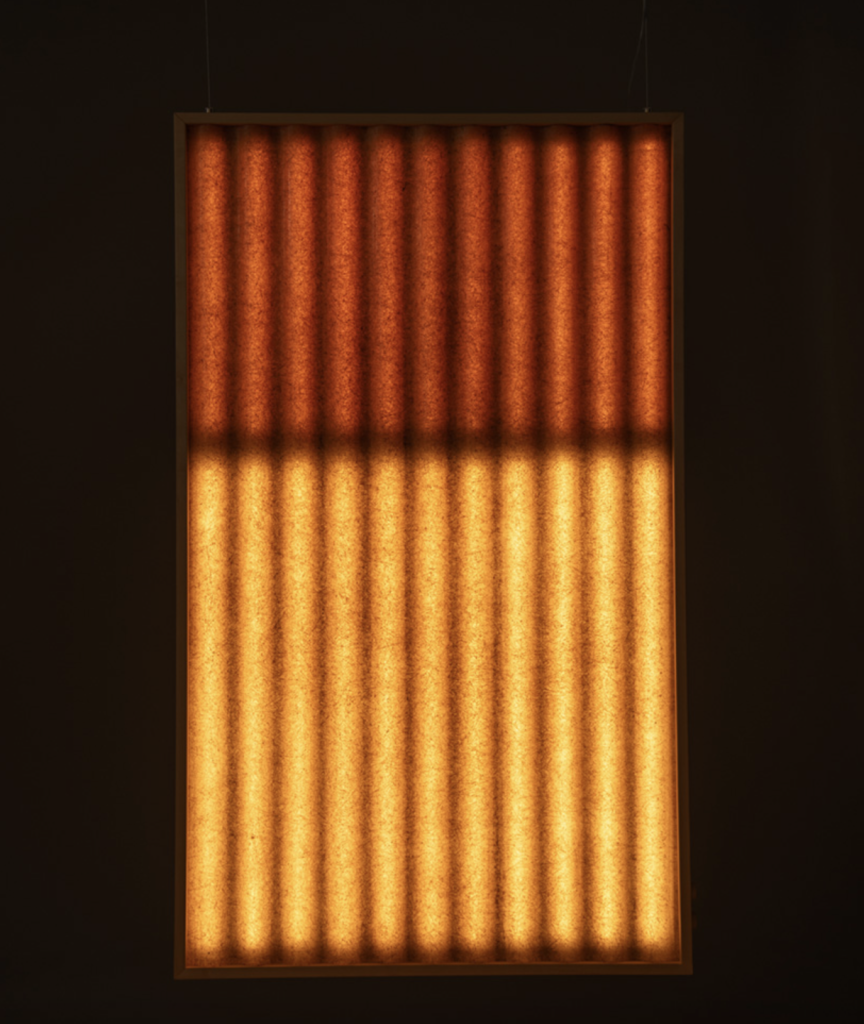

Königswinter by Heilig Objects
Lighting plays a decisive role in the transformation. LED elements positioned behind the panels interact with diffusing layers that emphasize the fiberglass itself rather than simply producing illumination. When the sculpture is unlit, it appears as a textured, layered surface framed in wood. Once activated, the embedded fibers become dramatically visible and the panel emits a warm amber glow. A faint halo forms around the frame, giving the object an atmospheric presence within its surroundings.
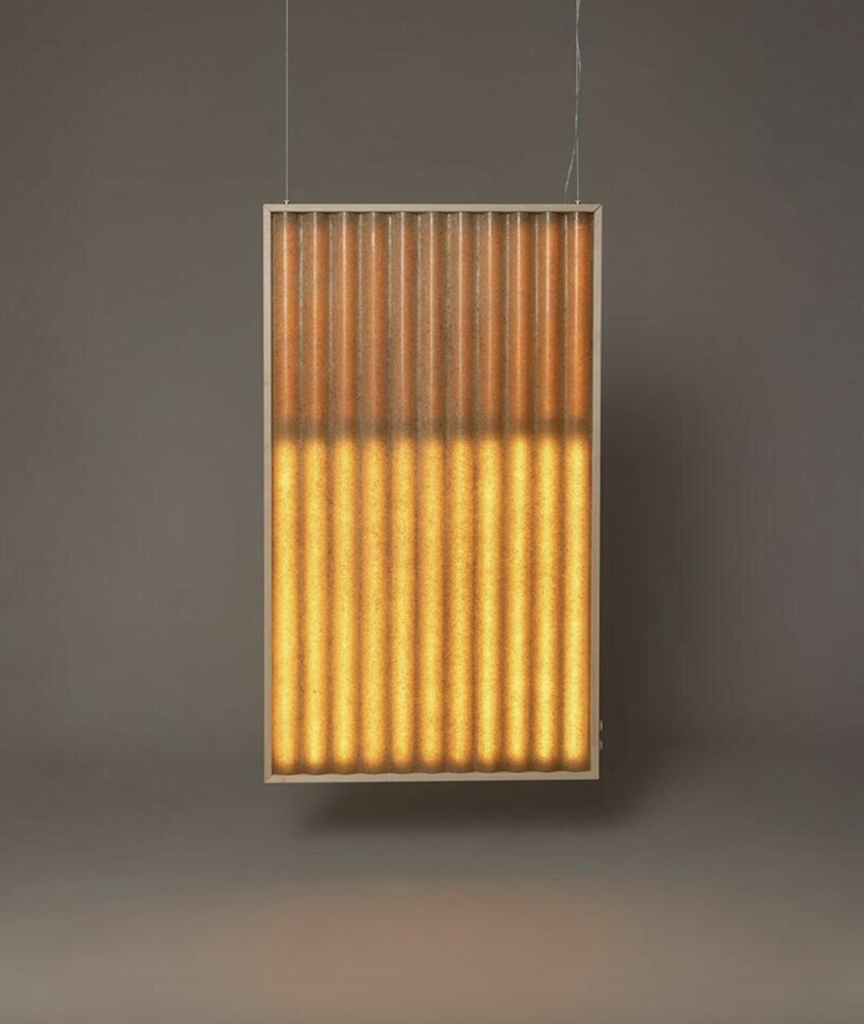
Königswinter by Heilig Objects
Because the source material comes from a single forest site, the number of viable panels is limited. Each piece in the series therefore exists as a collectible object tied directly to its origin landscape. Available in MONO and DUO configurations with adjustable lighting, Königswinter demonstrates how careful material recovery can produce an object that is both sculptural and deeply rooted in place.
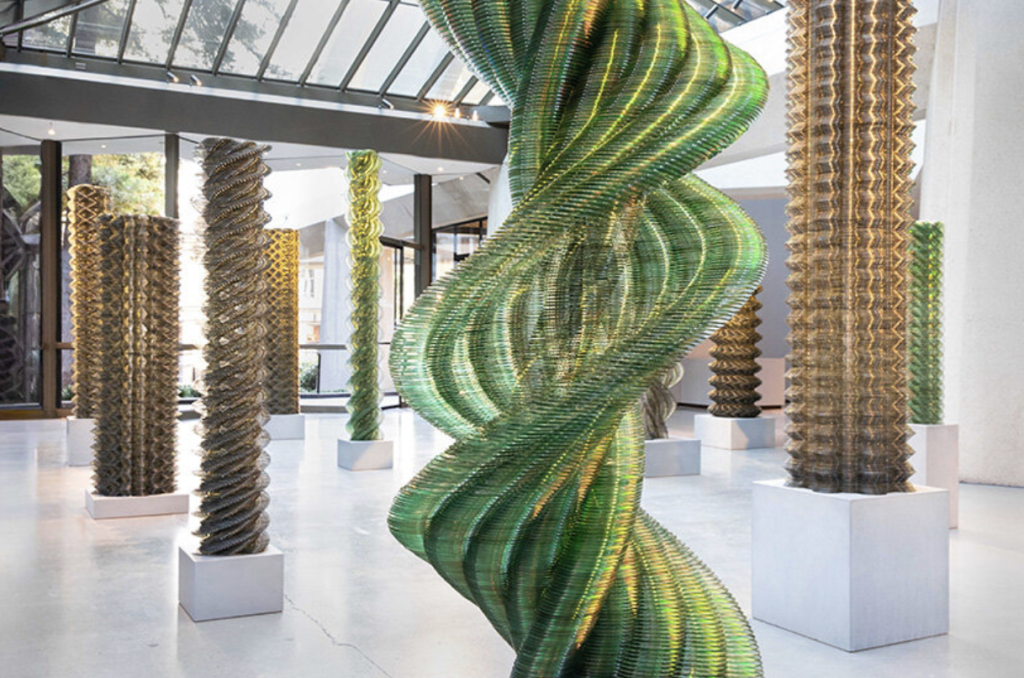
Stratagems by Tara Donovan
If Königswinter draws its character from a quiet forest environment, artist Tara Donovan’s latest work engages with the intensity of the urban skyline. Her exhibition Stratagems, presented by the Institute of Contemporary Art San Francisco at the Transamerica Pyramid Center, features a group of vertically oriented sculptures constructed entirely from thousands of recycled CDs. Installed in the transparent Annex space, the works echo the soaring geometry and reflective surfaces of the surrounding skyscraper.
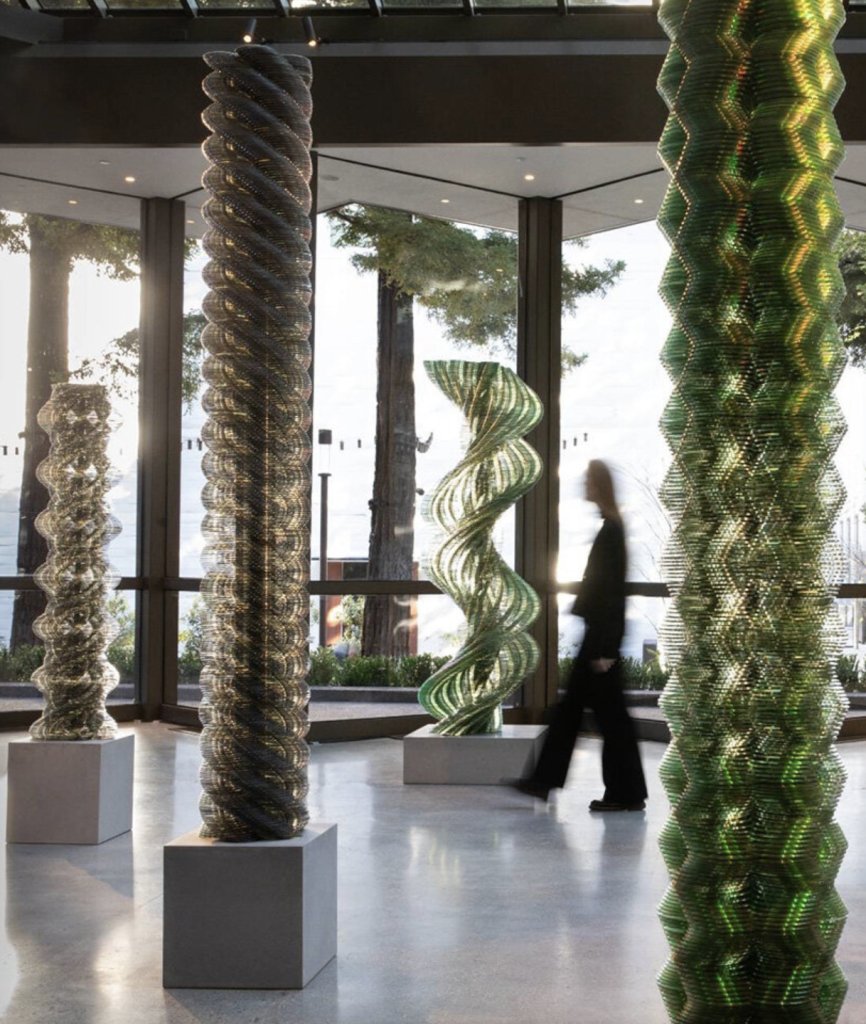
Stratagems by Tara Donovan
Donovan’s practice has long revolved around the transformation of ordinary materials through repetition and accumulation. Over the past two decades she has assembled installations from plastic cups, paper plates, rubber bands, and straws, allowing familiar objects to dissolve into large-scale environments. Earlier projects evoked atmospheric phenomena such as fog or geological formations. In Stratagems, her focus shifts toward the architectural language of the modern city.
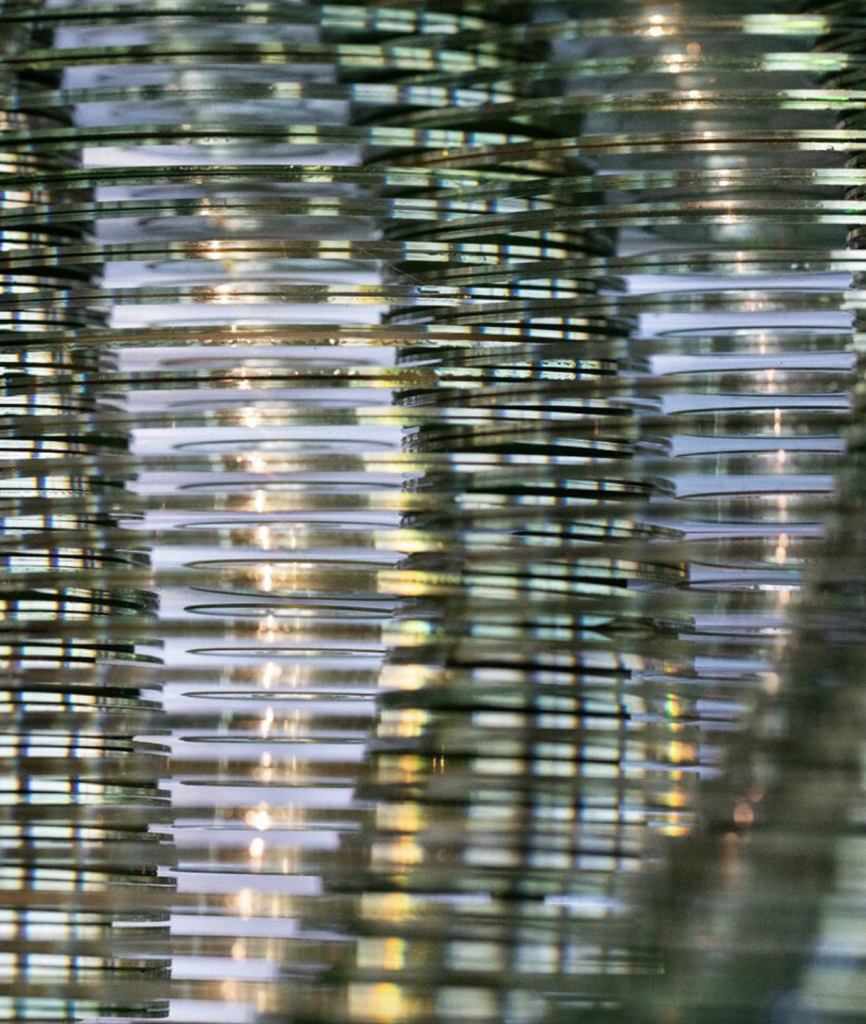
Stratagems by Tara Donovan
The CD, once a symbol of late twentieth century technology, now exists largely as an obsolete object. Donovan repurposes it as a modular building block, stacking and aligning the discs into dense vertical structures. Their mirrored surfaces capture and fragment the surrounding environment, reflecting the sky, the movement of clouds, and the presence of visitors within the gallery. As daylight changes, the sculptures transform visually, never appearing exactly the same twice.
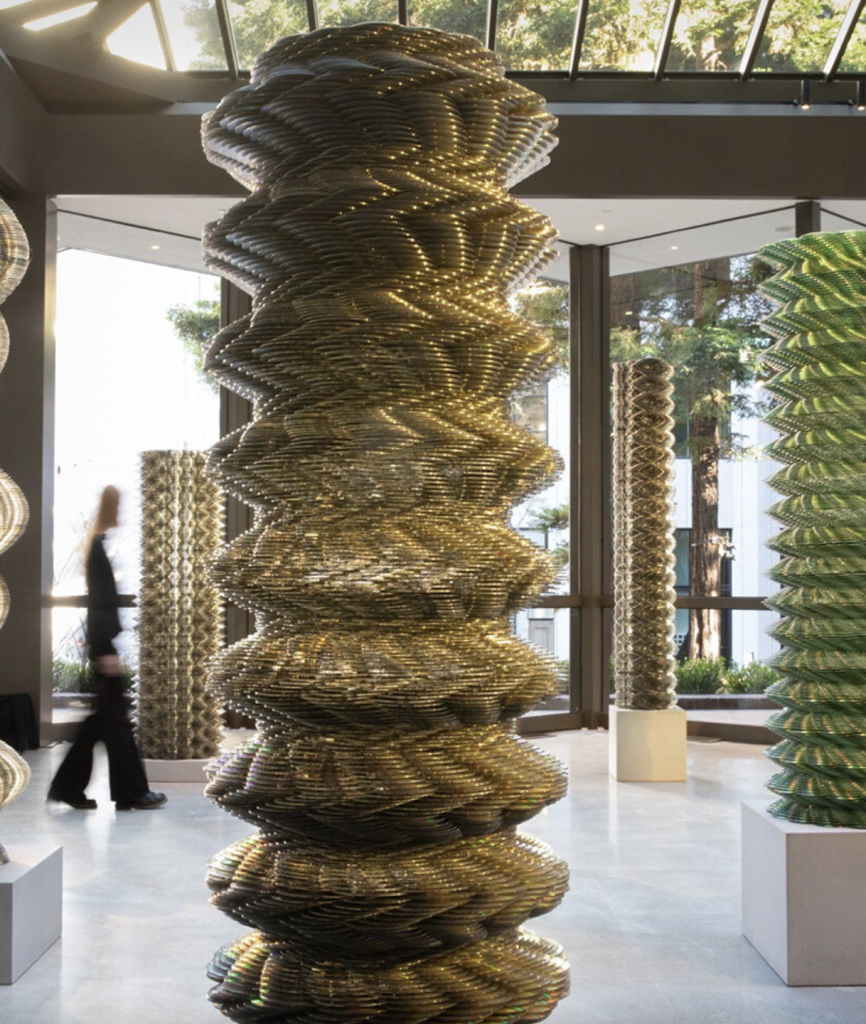
Stratagems by Tara Donovan
This dynamic quality creates a subtle dialogue with the architecture that surrounds them. The reflective towers echo the Transamerica Pyramid’s glass skin while simultaneously questioning the permanence of technological progress. By turning outdated media into architectural surfaces, Stratagems suggests that even the artifacts of digital culture can become raw material for new spatial experiences.
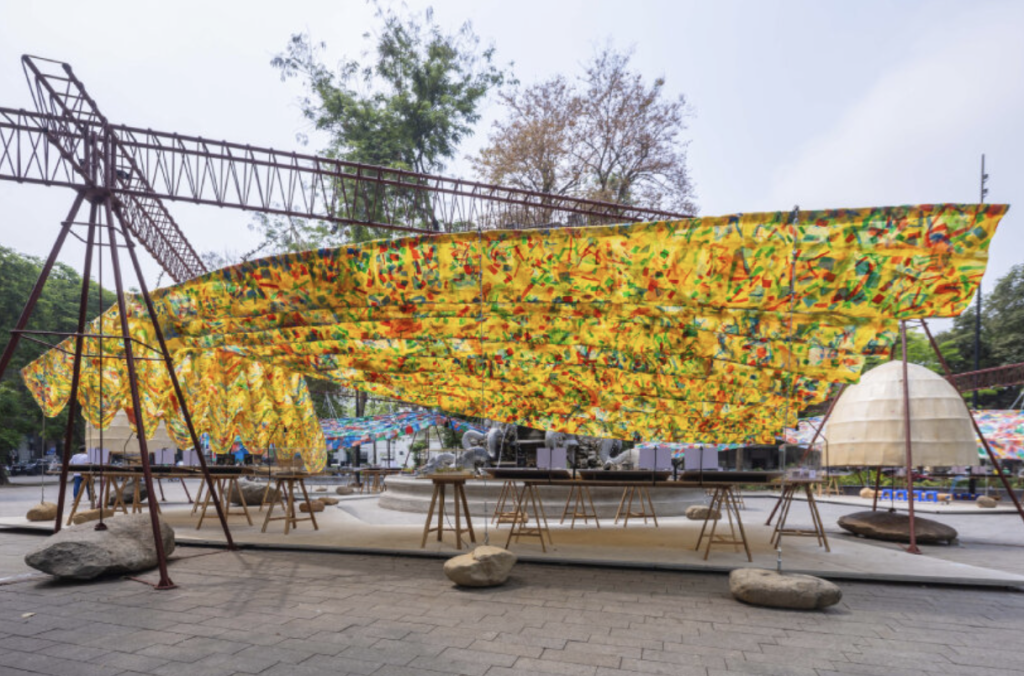
The T10A Pavilion by ODDO architects
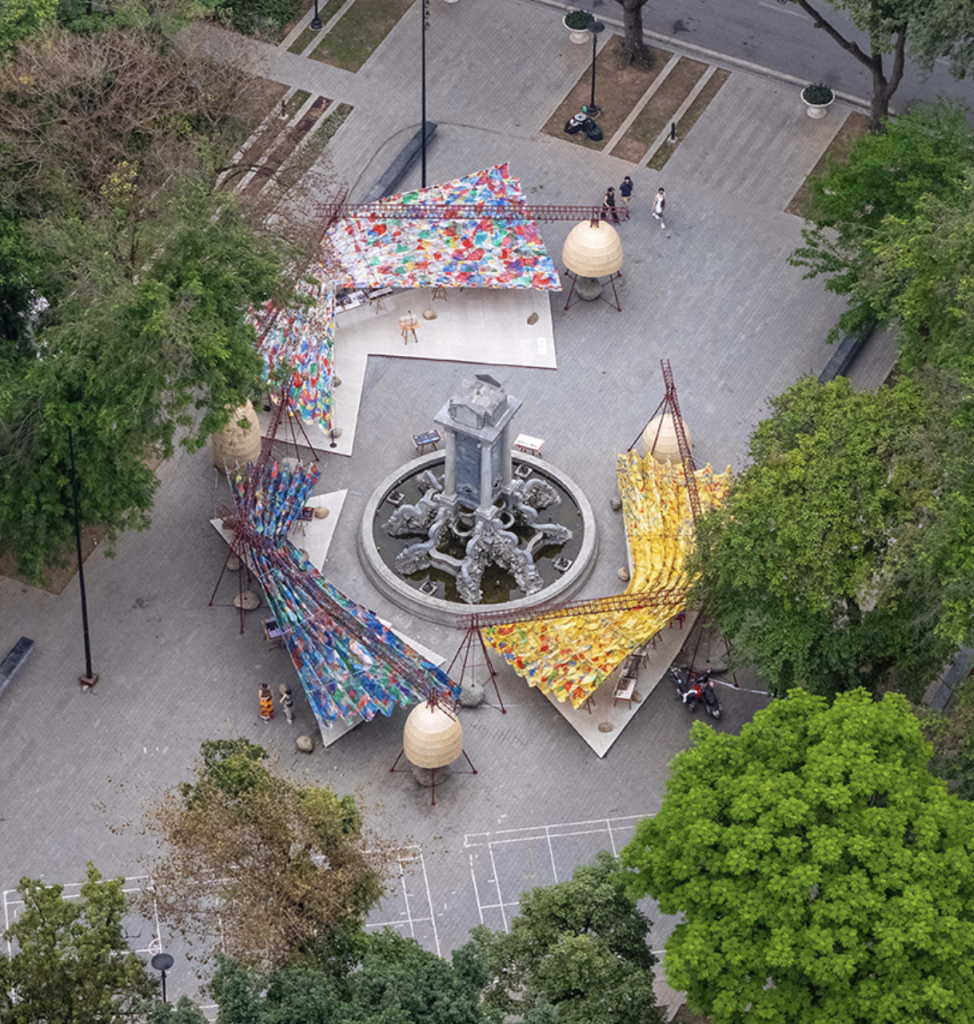
While Donovan’s work engages the skyline, another project explores the social potential of repurposed materials at the scale of public space. In Hanoi, ODDO architects have created T10A, a temporary exhibition pavilion built from more than 40,000 recycled plastic bags combined with traditional Vietnamese handmade paper known as Giấy Dó. Designed as a venue for exhibitions on Vietnamese architecture, the structure blends contemporary environmental thinking with local craft traditions.
The T10A Pavilion by ODDO architects
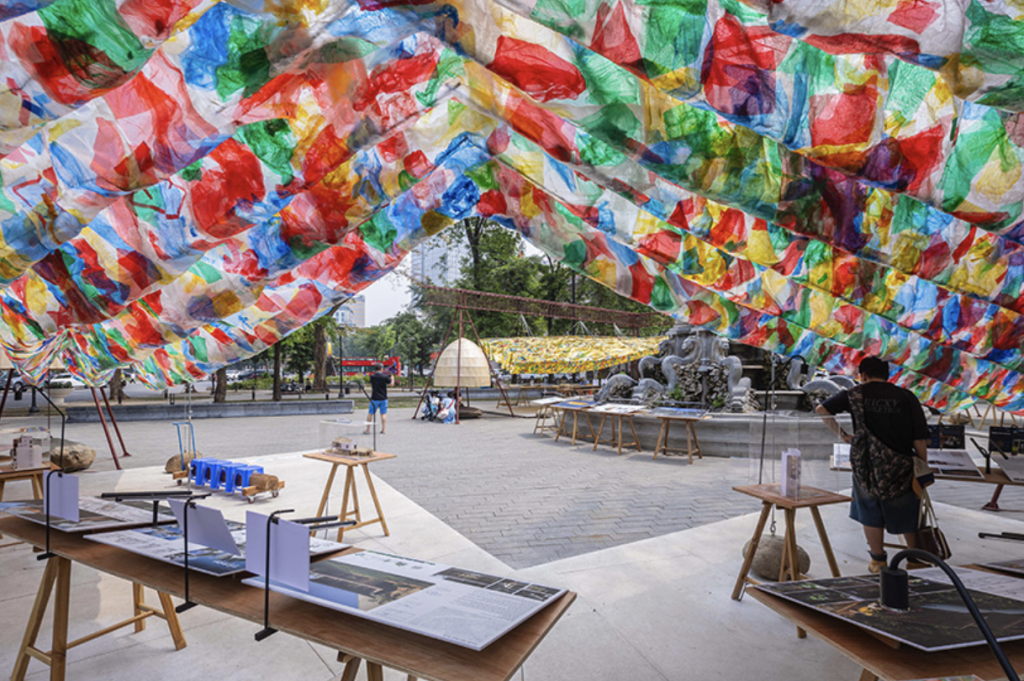
The pavilion’s lightweight steel framework supports a series of translucent surfaces that filter daylight through layers of recycled plastic. During the day, sunlight passing through the panels produces shifting patterns of color inside the space. After sunset, internal lighting transforms the pavilion into a glowing landmark within the city. Three large wing-like roof sections define the structure, each sheltering a different exhibition theme including residential architecture, interior design, and sustainability projects.

The T10A Pavilion by ODDO architects
Community participation plays a central role in the project. Volunteers helped collect the plastic waste used for the panels and assisted in assembling parts of the structure. Inside the pavilion, a group of paper domes invites visitors to explore architectural drawings and project information. These domes also carry drawings created by children from a local kindergarten who were invited to imagine and illustrate their vision of Hanoi’s future. Their contributions add a playful and personal dimension to the architectural installation.
The T10A Pavilion by ODDO architects
Importantly, the life cycle of the pavilion does not end when the exhibition closes. The materials used in T10A will be repurposed once again to produce bags and other design products, ensuring that the project remains part of a continuing material loop. Through this approach, the pavilion transforms plastic waste from a symbol of pollution into a resource for creative production.
As sustainability becomes a central concern for the design world, such projects demonstrate that reuse can extend far beyond practical recycling. When treated as a source of inspiration rather than limitation, discarded materials become the foundation for a new creative language.