In design, innovation often begins with a simple but powerful question: what if the materials we throw away still had something to offer? Across architecture and product design, a growing number of creators are exploring this idea by transforming discarded materials into thoughtful, functional objects and spaces. The approach is both environmental and conceptual. Rather than treating waste as a problem to hide, designers are reframing it as a resource that can shape form, structure, and experience.
The Kulhad Pavilion by Wallmakers
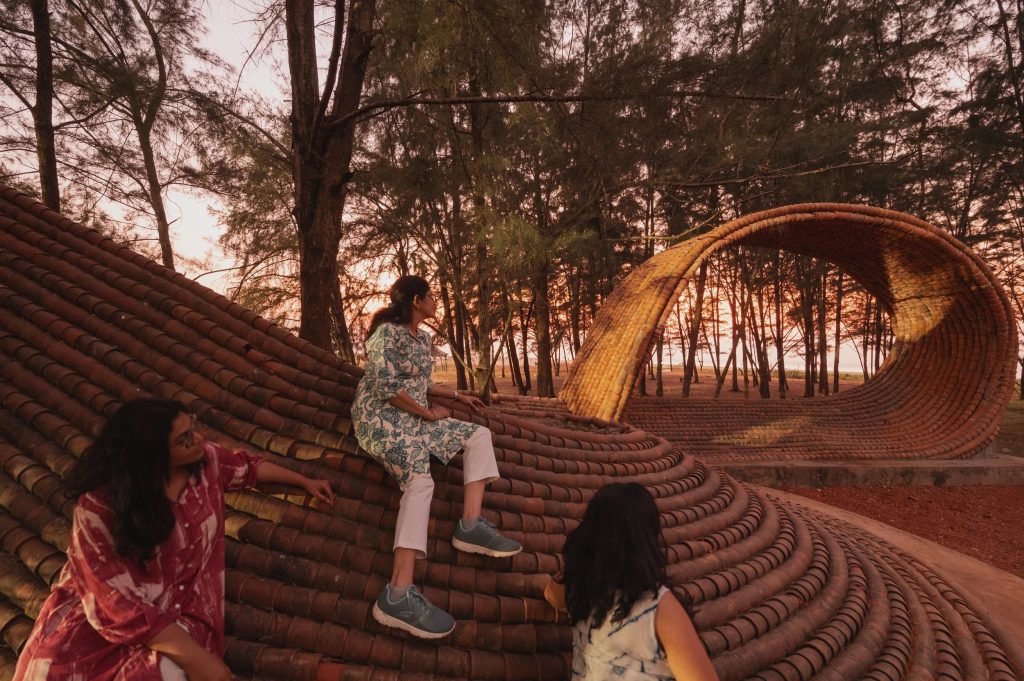
Sinuous and richly textured, the Kulhad Pavilion by architecture studio Wallmakers stretches along the edge of Miramar Beach in Goa, India. Built as a temporary installation for the Serendipity Arts Festival 2025, the pavilion occupies a narrow shaded strip between trees and shoreline. Its presence is modest yet striking, weaving between the landscape while offering moments of rest, shade, and gathering along the coast.
The Kulhad Pavilion by Wallmakers
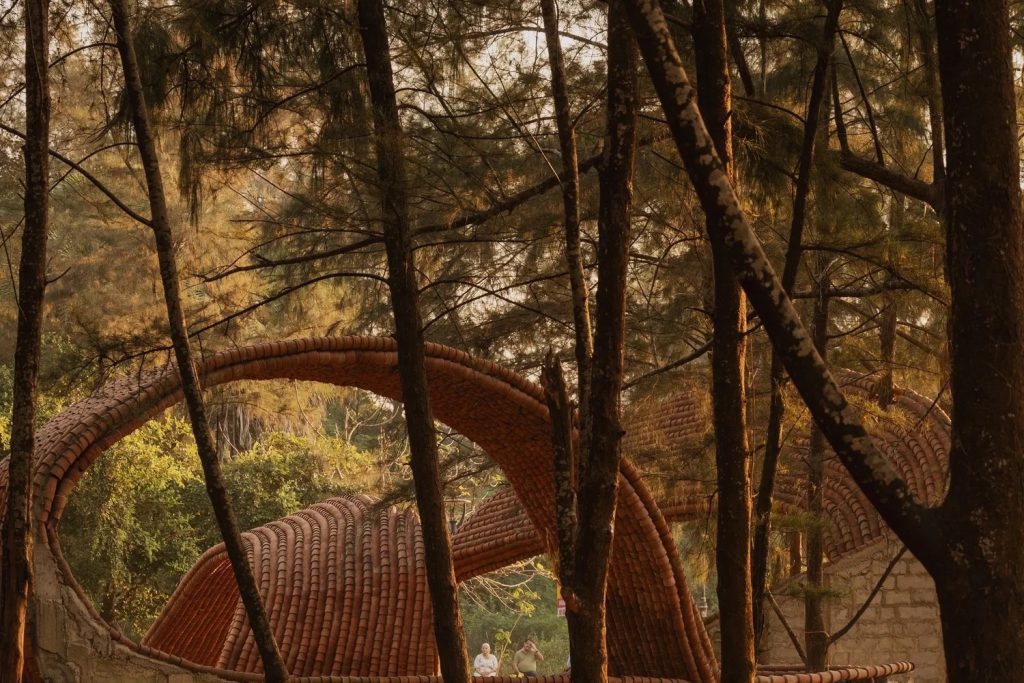
The project draws its material from an everyday object deeply rooted in Indian culture: the kulhad, a small terracotta mud cup traditionally used for tea at railway stations. These cups are meant to be used briefly and then discarded, leaving behind a quiet but persistent trail of ceramic waste across tracks, streets, and sometimes even beaches. For the pavilion, more than 18,000 kulhads were collected from local communities in Dharavi, Mumbai and given a second life as architectural building blocks.
The Kulhad Pavilion by Wallmakers
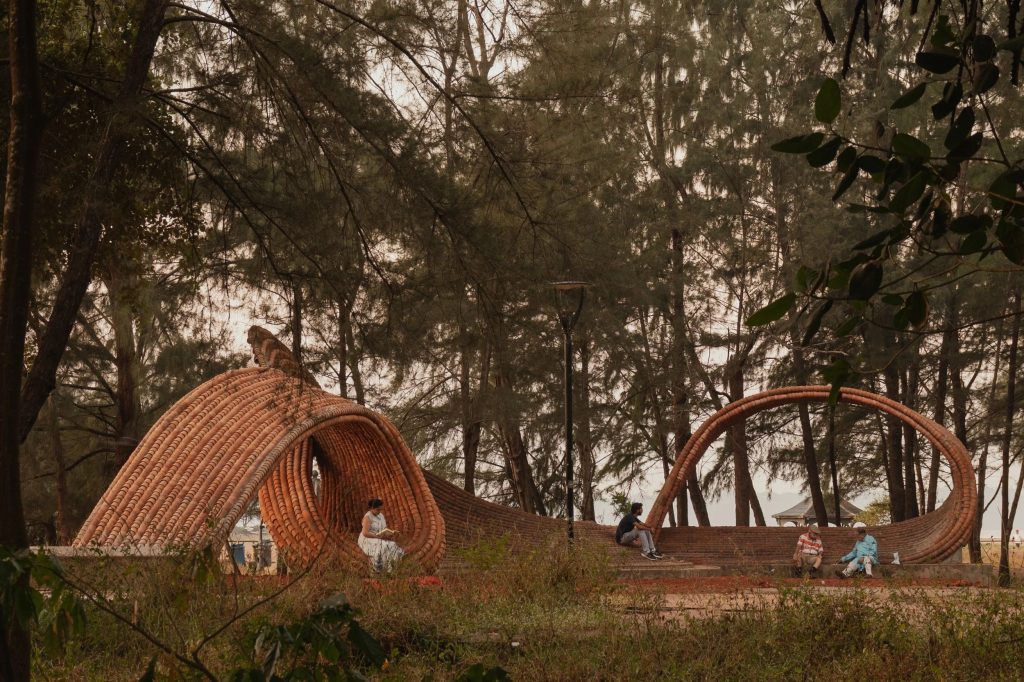
Structurally, the pavilion relies on three compressive catenary vaults, a form that channels forces downward through pure geometry rather than steel reinforcement. The earthen cups are stacked and bonded together to form porous masonry walls that filter light and airflow while maintaining structural stability. This approach highlights how traditional materials and simple physics can produce resilient architecture without relying on resource intensive systems.
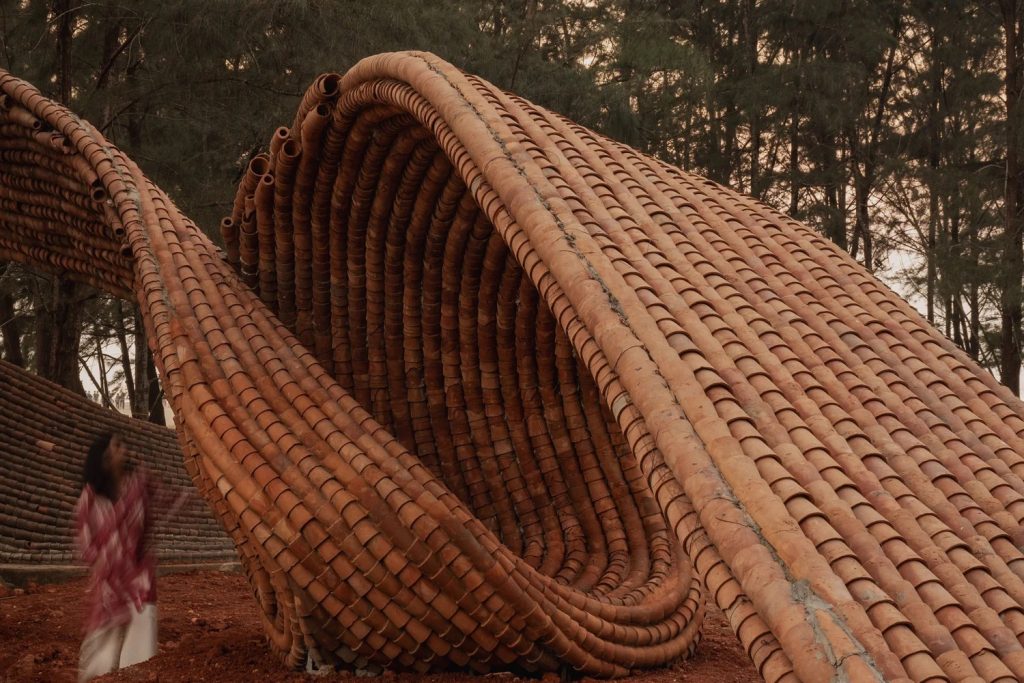
The Kulhad Pavilion by Wallmakers
As the vaults meander along the beach edge, the structure becomes part seating, part informal stage, and part refuge from the sun. Visitors pause beneath the curves, while animals often find shelter in the same spaces. The result is a pavilion that not only reuses discarded objects but also reconnects them with public life, transforming a symbol of everyday waste into a communal coastal landmark.
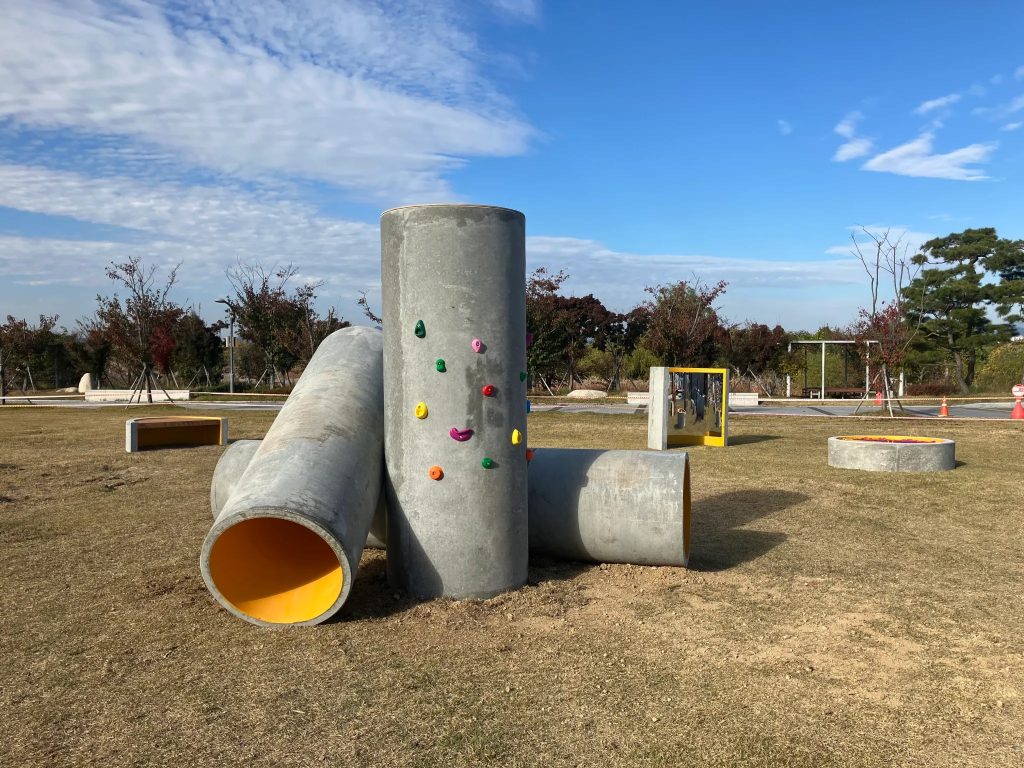
Concrete Utopia by Hyunje Joo
If the Kulhad Pavilion reclaims small everyday objects, Concrete Utopia tackles a material at the opposite end of the scale. Created by designer Hyunje Joo for the Museum of Contemporary Art Busan in South Korea, the installation repurposes discarded concrete pipes into a flexible public pavilion that doubles as an urban playground.
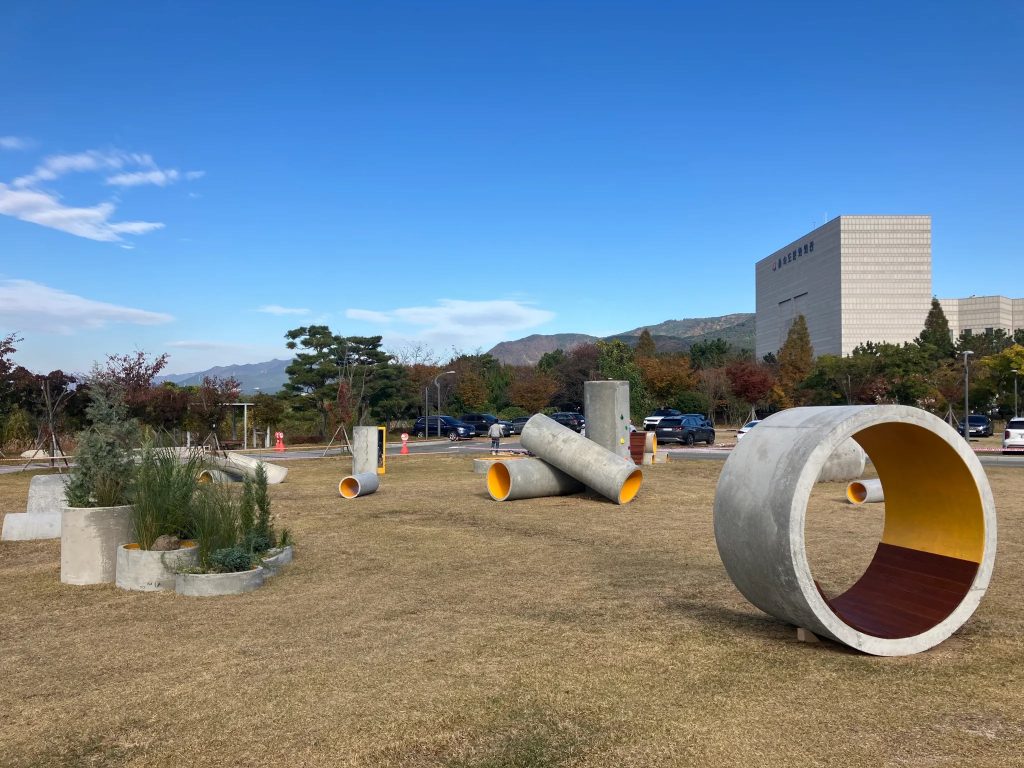
Concrete Utopia by Hyunje Joo
Concrete remains the most widely used construction material in the world after water, yet its production is responsible for significant greenhouse gas emissions. Modern cities are built from it, surrounded by it, and defined by it. Concrete Utopia confronts this reality directly by reclaiming abandoned infrastructure components rather than introducing new materials into the cycle.
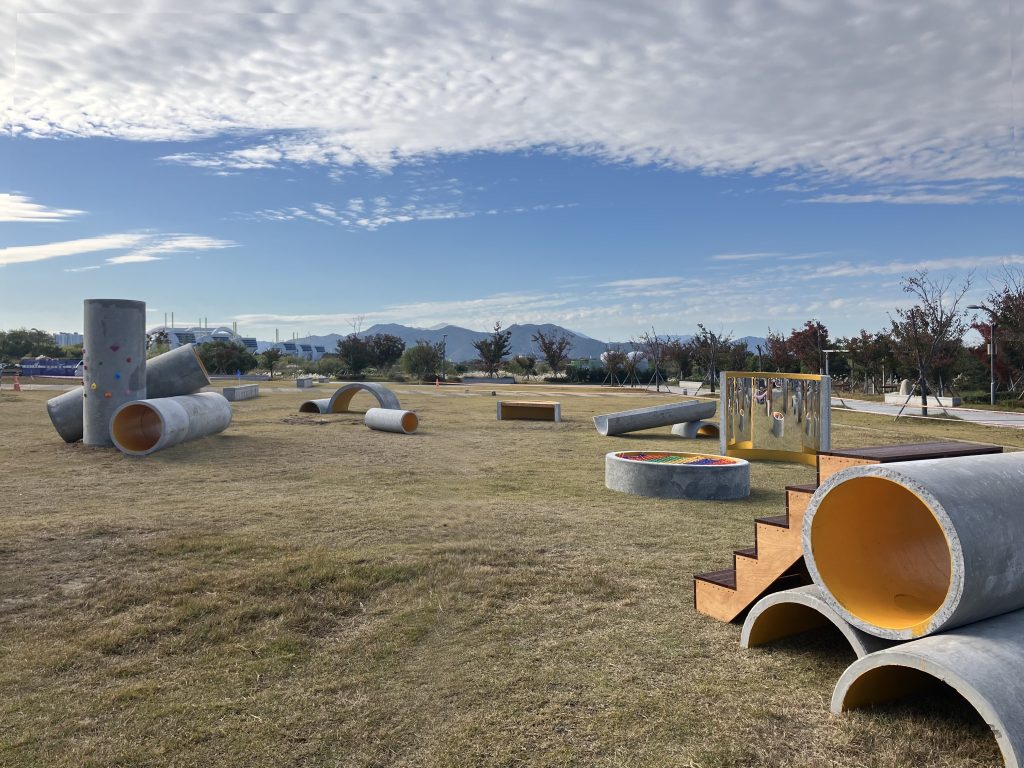
Concrete Utopia by Hyunje Joo
The installation assembles concrete pipes of different diameters into an open configuration that visitors can climb through, sit within, or circulate around. The circular forms naturally invite movement and exploration, transforming what was once a purely functional construction element into an inhabitable spatial system. In this setting, infrastructure becomes architecture and playground at the same time.
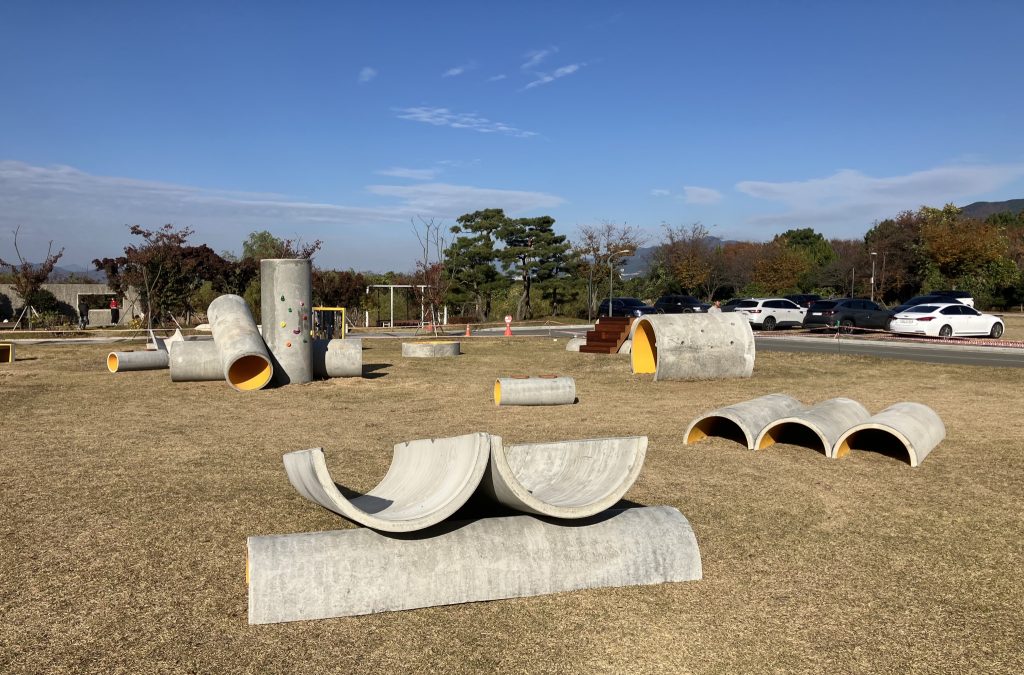
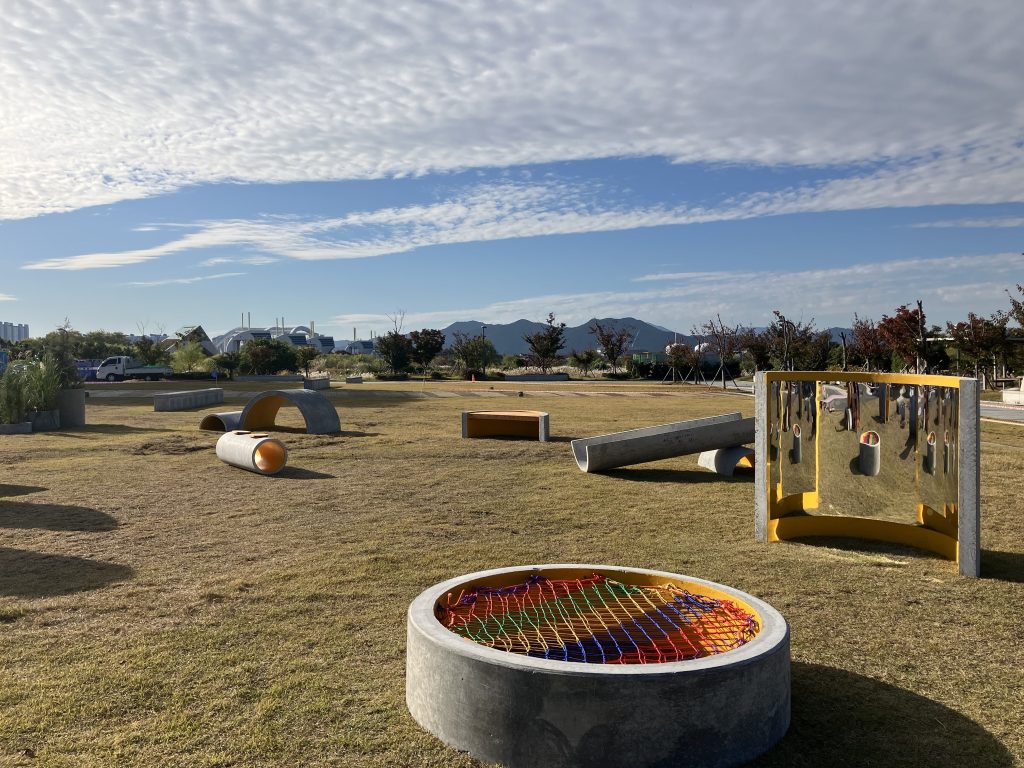
Concrete Utopia by Hyunje Joo
At a conceptual level, the project operates as a miniature city composed of reused fragments. Its open ended layout avoids hierarchy and encourages multiple interpretations of the space. By reorganizing existing material rather than producing more of it, Concrete Utopia reframes urban resilience as a design challenge rooted in reuse, adaptability, and imaginative spatial thinking.
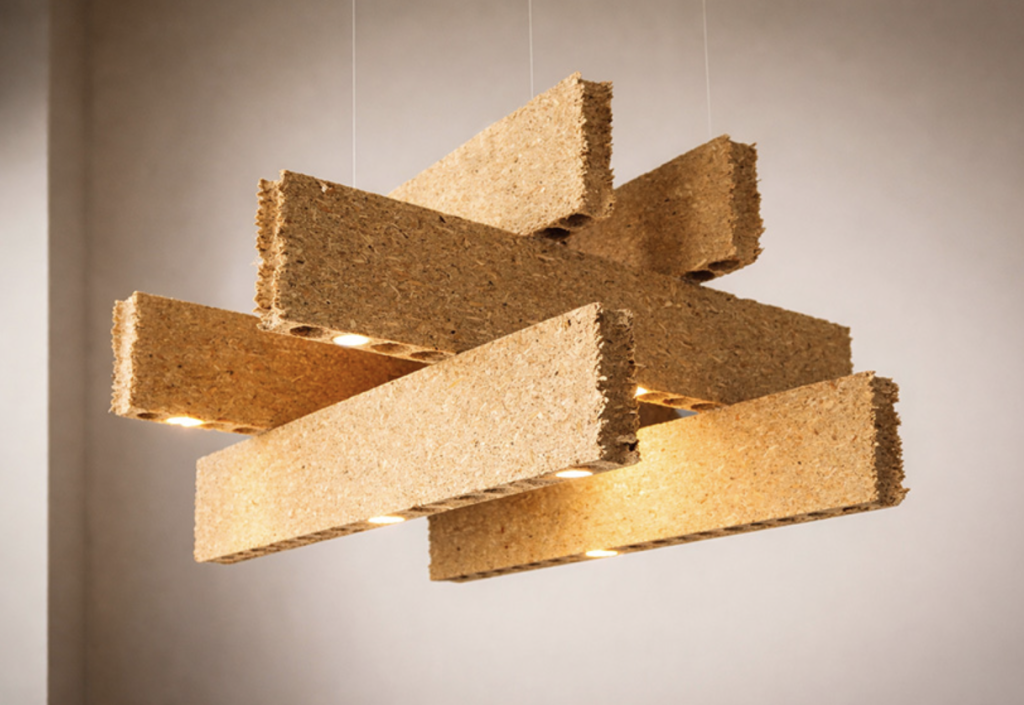
OOOOOlamp™ by Tobia Zambotti and studio Hildiberg (also header image)
While large scale installations often dominate discussions about reuse, innovation can also happen at the scale of a single object. The OOOOOlamp™ by interior designer Tobia Zambotti and creative studio Hildiberg demonstrates how manufacturing byproducts can become the foundation of a refined lighting design.
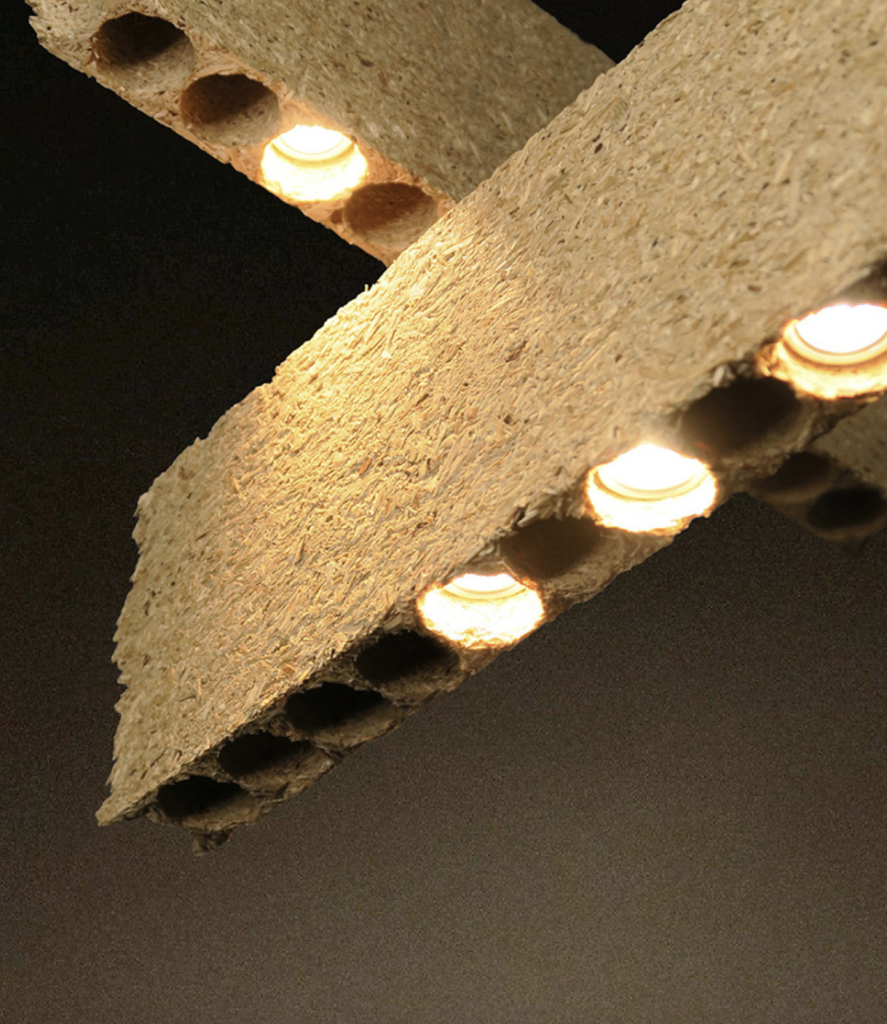
OOOOOlamp™ by Tobia Zambotti and studio Hildiberg
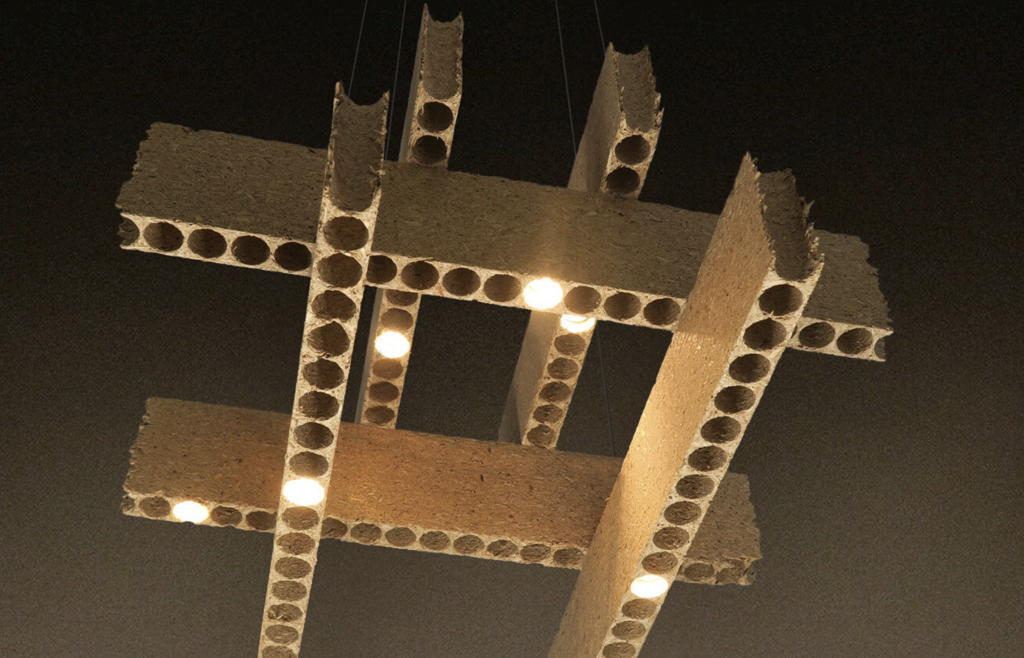
The lamp is built from hollow core door waste, specifically the particleboard panels left over after circular cutouts are made during door production. These openings are typically introduced to reduce weight and accommodate hardware such as handles. Once removed, the perforated boards are usually discarded, leaving behind a material defined by an unexpected pattern of circular voids.
Instead of hiding this industrial byproduct, the designers made it the central visual element of the object. The lamp retains the perforated boards as its structural framework, allowing the repeating circular openings to define its geometry. Potlights are installed directly within the existing holes so that each void becomes a light aperture, transforming negative space into a source of illumination.
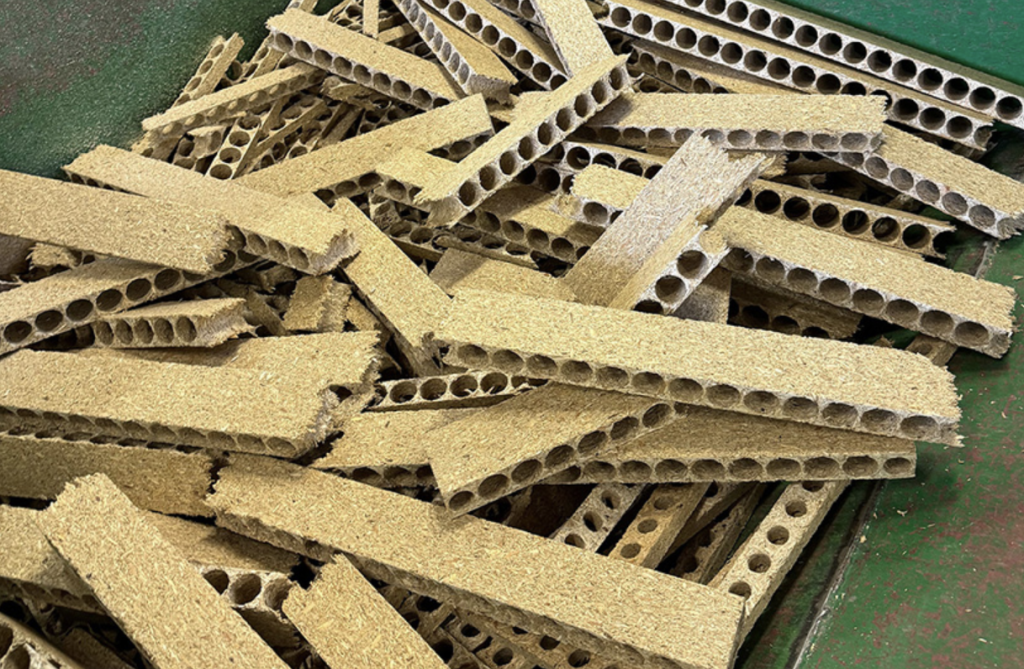
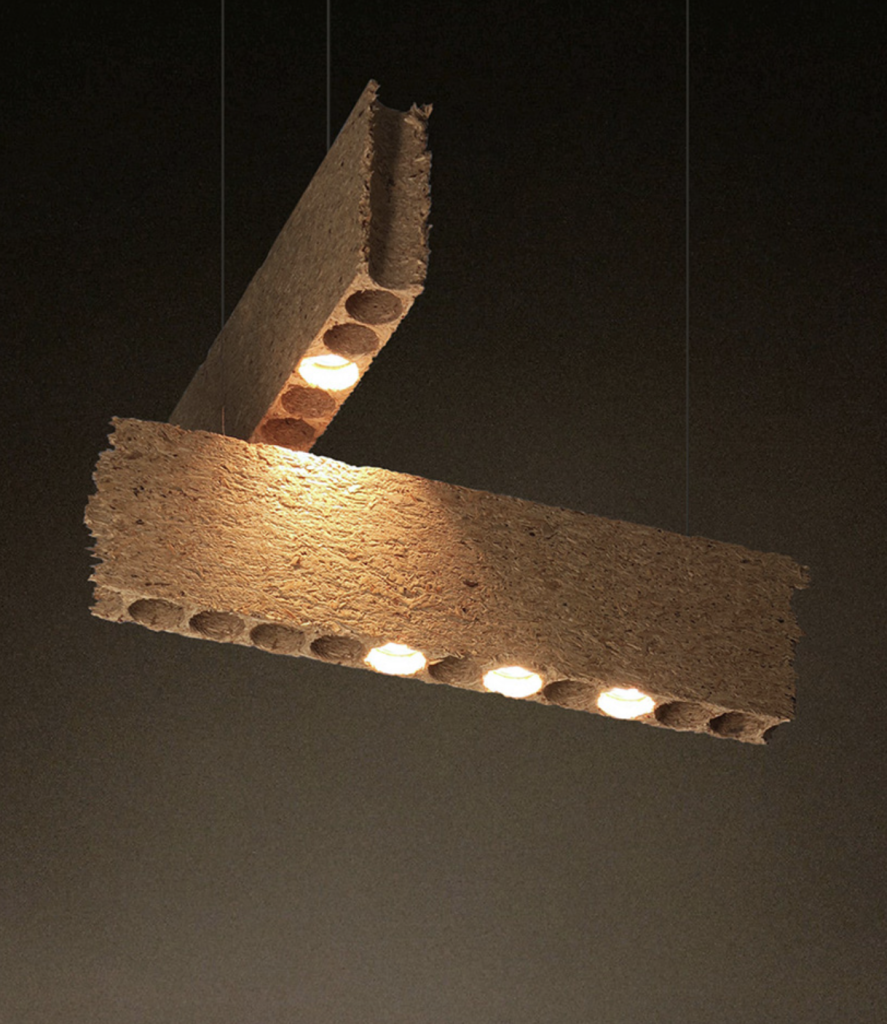
OOOOOlamp™ by Tobia Zambotti and studio Hildiberg
The resulting object is both sculptural and straightforward. The rhythm of circles distributes light across the surface while preserving the raw character of the particleboard panels. By keeping the traces of the manufacturing process visible, the OOOOOlamp™ highlights how design can work with the material conditions it inherits rather than attempting to erase them.
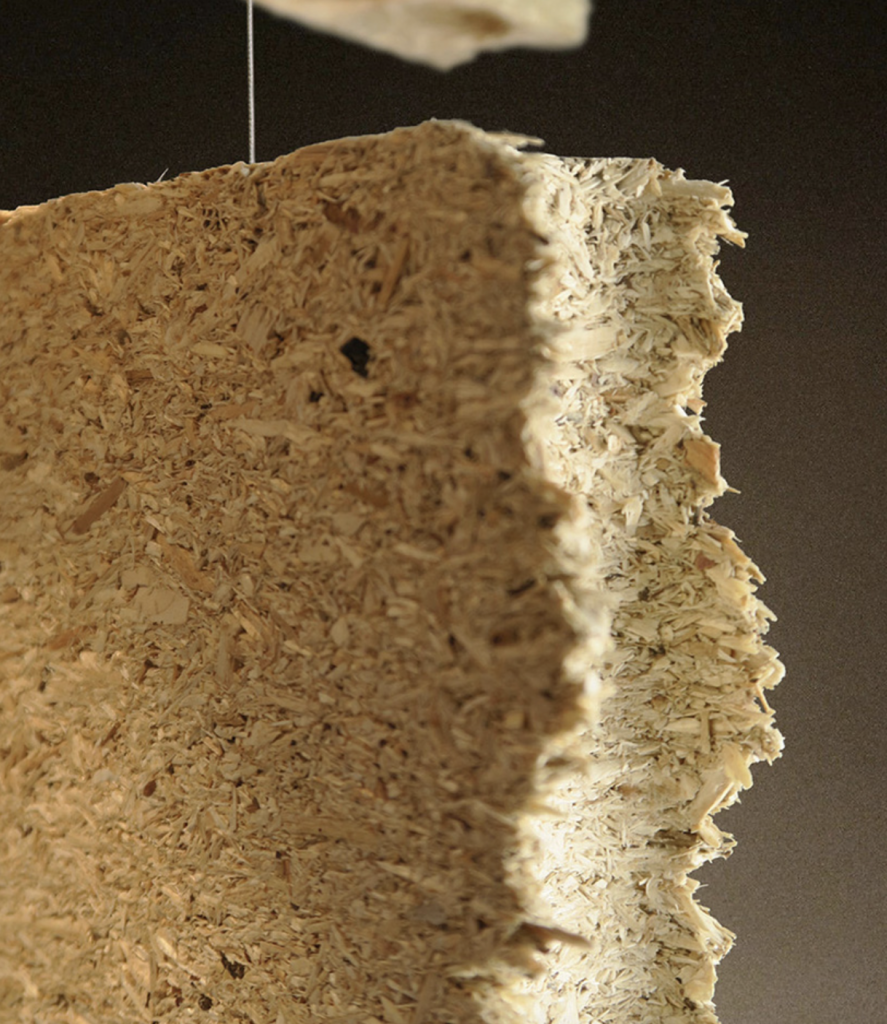
OOOOOlamp™ by Tobia Zambotti and studio Hildiberg
Across these three projects, a common idea emerges: the future of design may depend less on inventing new materials and more on rethinking the ones already around us. Sometimes the most innovative designs are not built from the newest resources, but from the ones that have already been waiting for a second chance.