Shipping containers were once the anonymous workhorses of global trade, quietly moving goods across oceans and railways. Today, they are enjoying a second life as building blocks for design experimentation. Architects, brands, and innovators have discovered that these steel boxes offer more than durability. They offer modularity, portability, and a raw industrial aesthetic that can be adapted in surprising ways.
Calaak pools by Calaak’Oncept
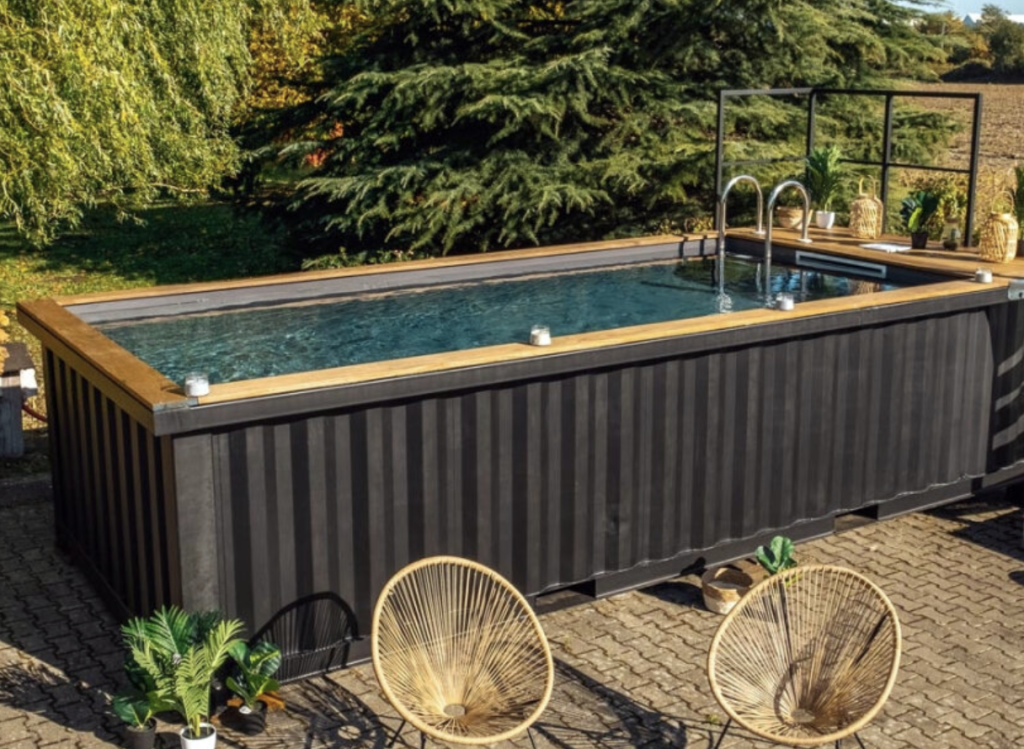
French company Calaak’Oncept has turned the humble shipping container into something many homeowners dream of: a private swimming pool. Based in Geispolsheim in the Bas-Rhin region, the firm specializes in cargotecture, transforming cargo structures into architectural products. Their Calaak pools blend industrial character with contemporary comfort, offering a prefabricated solution that is both durable and surprisingly refined. Rather than simply delivering a container and installing it, the company guides clients through the entire design process, helping them shape pools that fit their landscapes, budgets, and lifestyles.
Calaak pools by Calaak’Oncept
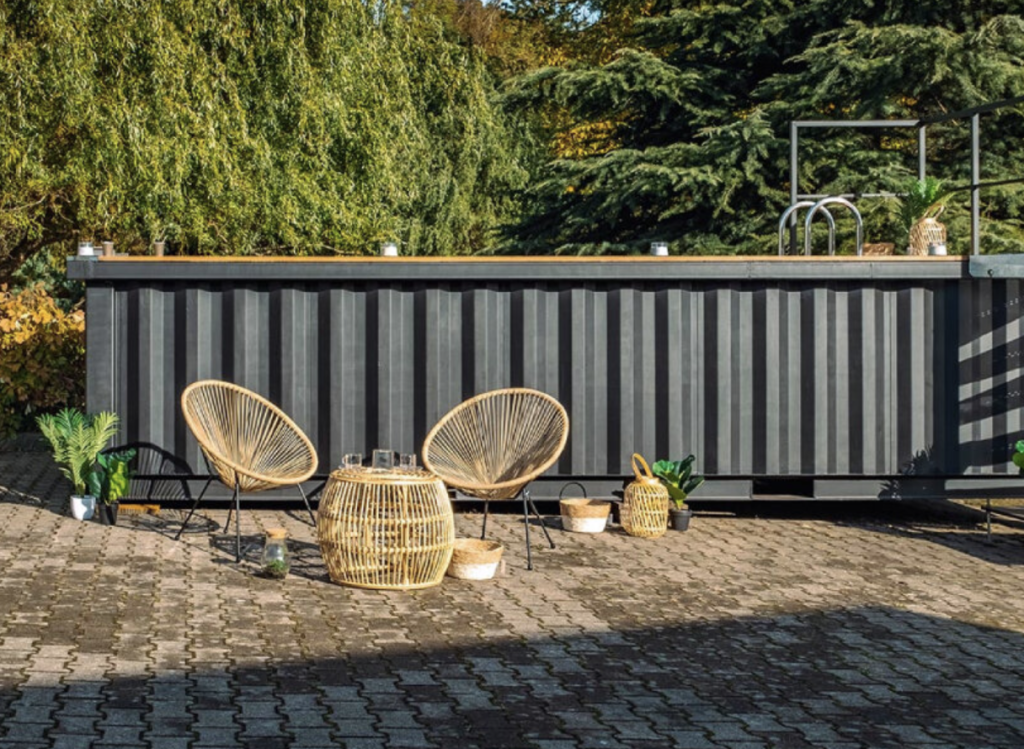
Flexibility is central to the concept. Calaak pools can be installed above ground, semi-buried, or fully integrated into the terrain. Some are even elevated on dramatic sites to frame views of surrounding landscapes. Each pool can be tailored through a variety of exterior claddings, including steel or wood finishes, as well as glazed railings, lighting options, and custom access features. The result is a pool that retains its industrial DNA while adapting to the aesthetic of a garden or terrace.
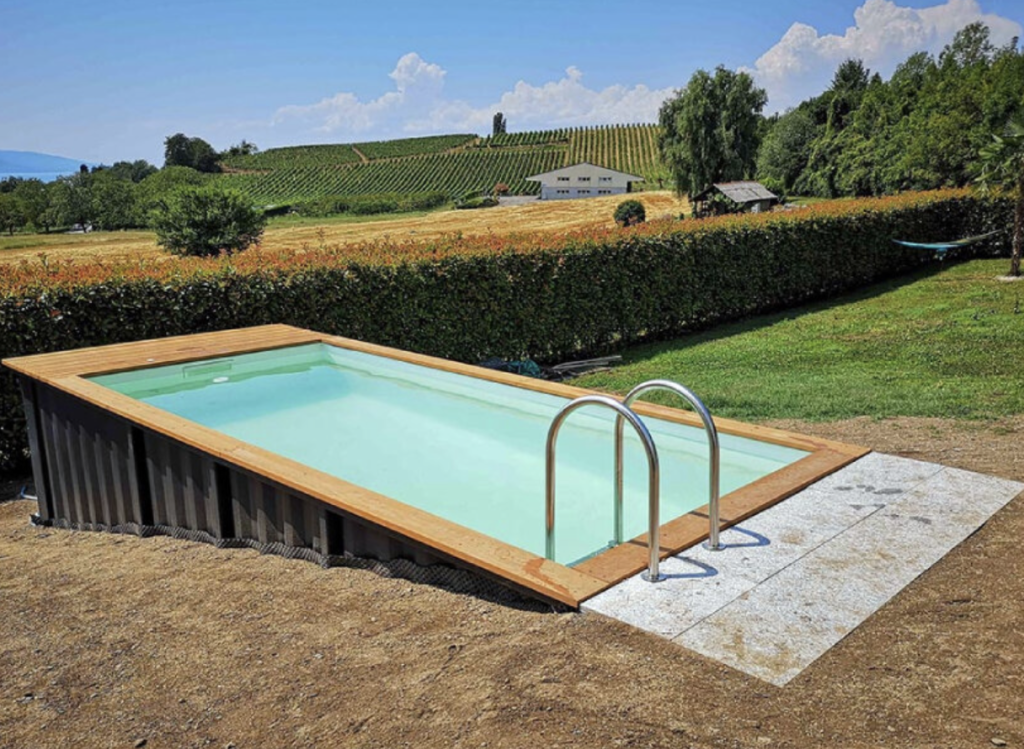
Calaak pools by Calaak’Oncept
The company offers several main formats, including compact six-meter pools suited for small gardens and larger twelve-meter versions designed for athletic swimming or family use. Wellness features extend the concept beyond traditional pools. Spa configurations include multi-seat hydromassage areas, aromatherapy systems, chromotherapy lighting with ten color options, and waterfall features that introduce both movement and sound into the environment. These additions transform the container into a personal retreat rather than just a place to swim.
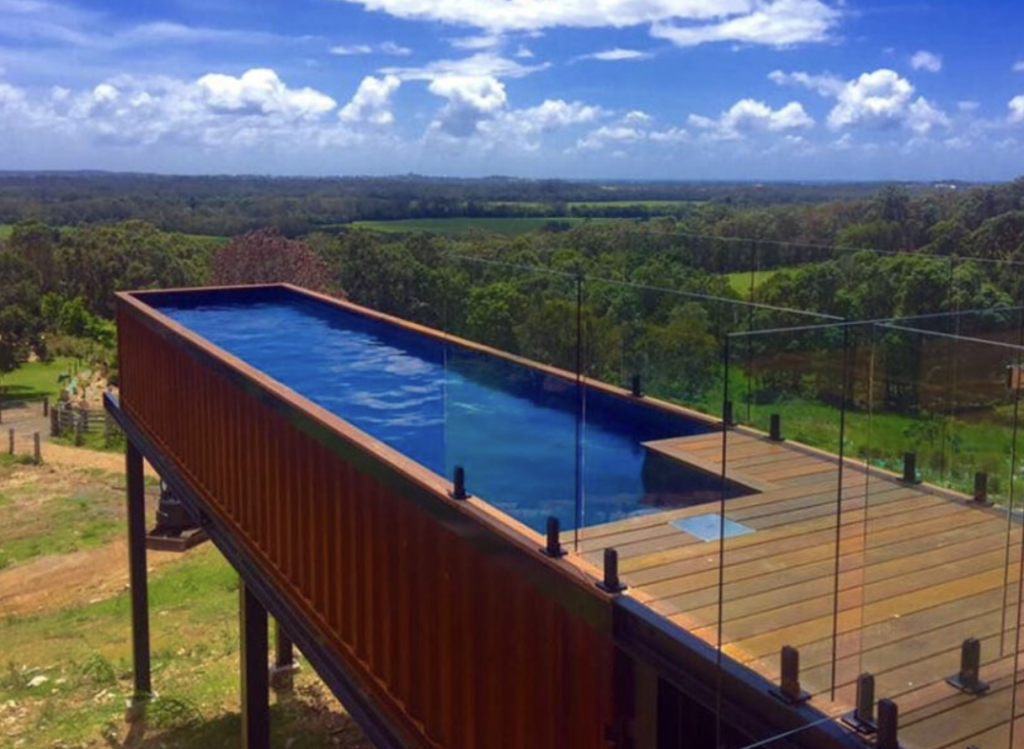
Calaak pools by Calaak’Oncept
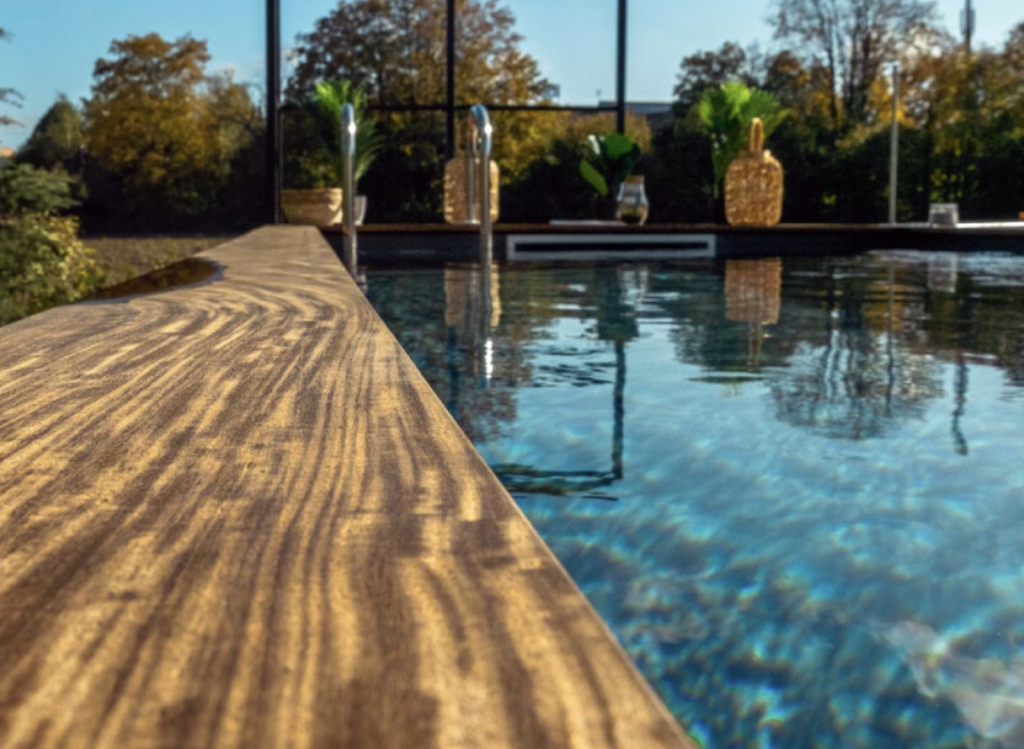
Practicality remains a defining advantage. Installation can be completed in a single day, while manufacturing typically takes only a few weeks. The pools are delivered by truck and positioned with cranes depending on site conditions. Calaak’Oncept even explores ambitious delivery methods such as helicopter lifting for difficult terrain. With corrosion-resistant materials and low-maintenance filtration systems, the project demonstrates how an industrial shipping unit can evolve into a refined backyard centerpiece.
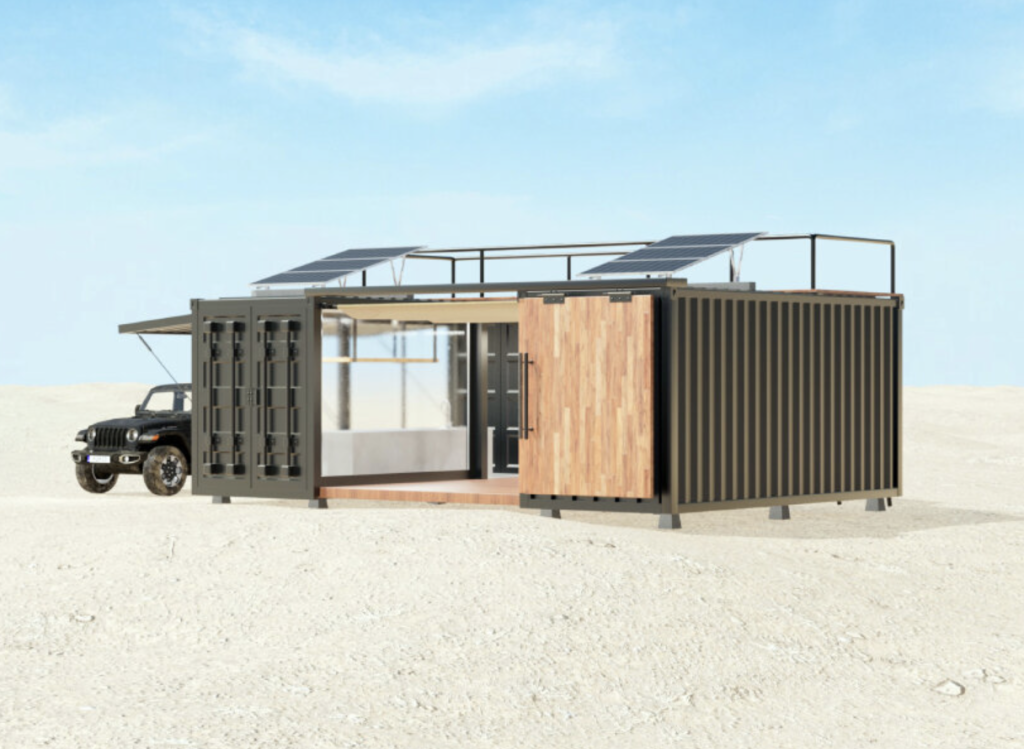
Jeep container house by Jeep Japan and Dolive
If Calaak’Oncept transforms containers into leisure infrastructure, Jeep Japan imagines them as mobile sanctuaries. Developed in collaboration with housing brand Dolive, the Jeep container house is conceived as a traveling home that can be assembled or dismantled almost anywhere. The concept aligns naturally with Jeep’s adventurous identity, proposing a compact dwelling that brings the comforts of home into remote landscapes.
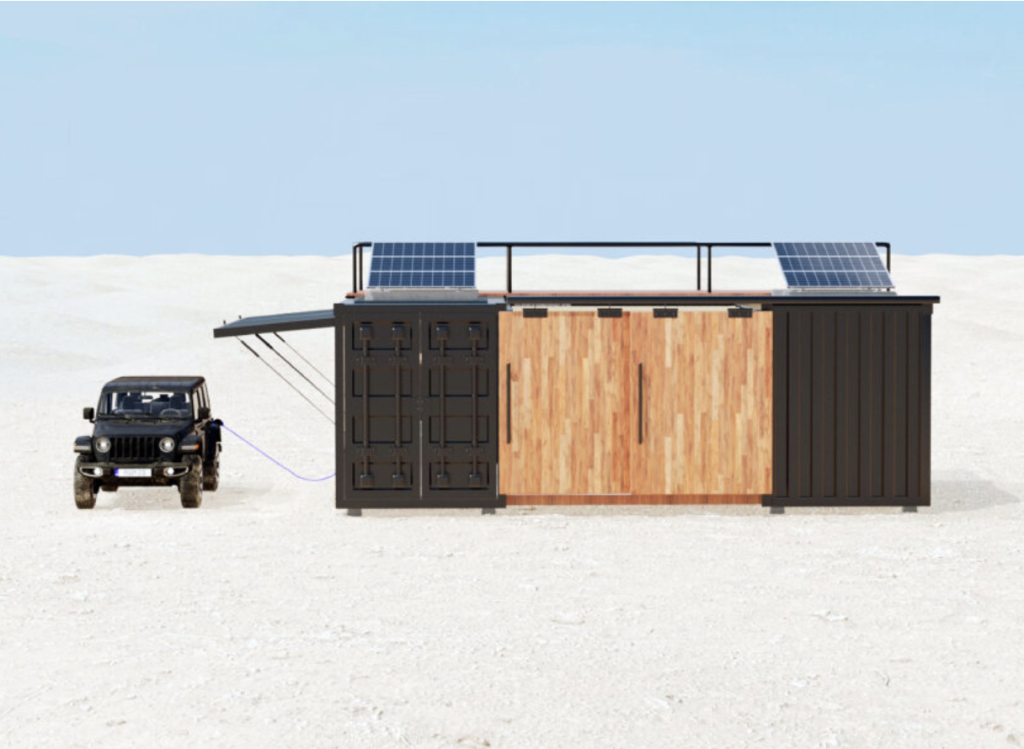
Jeep container house by Jeep Japan and Dolive
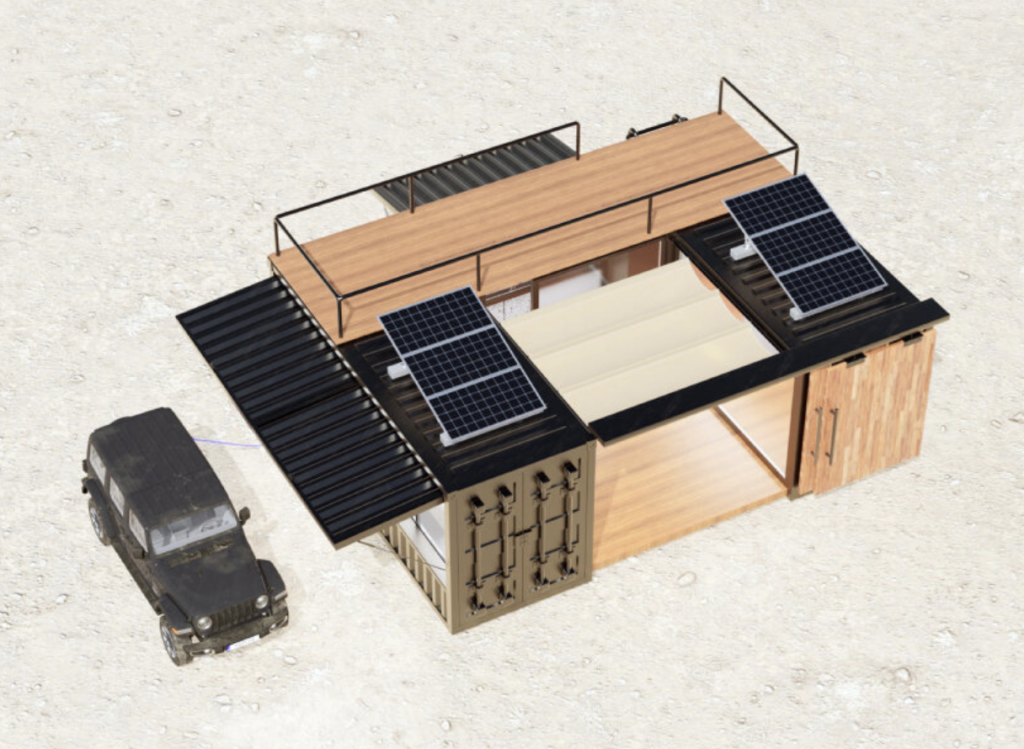
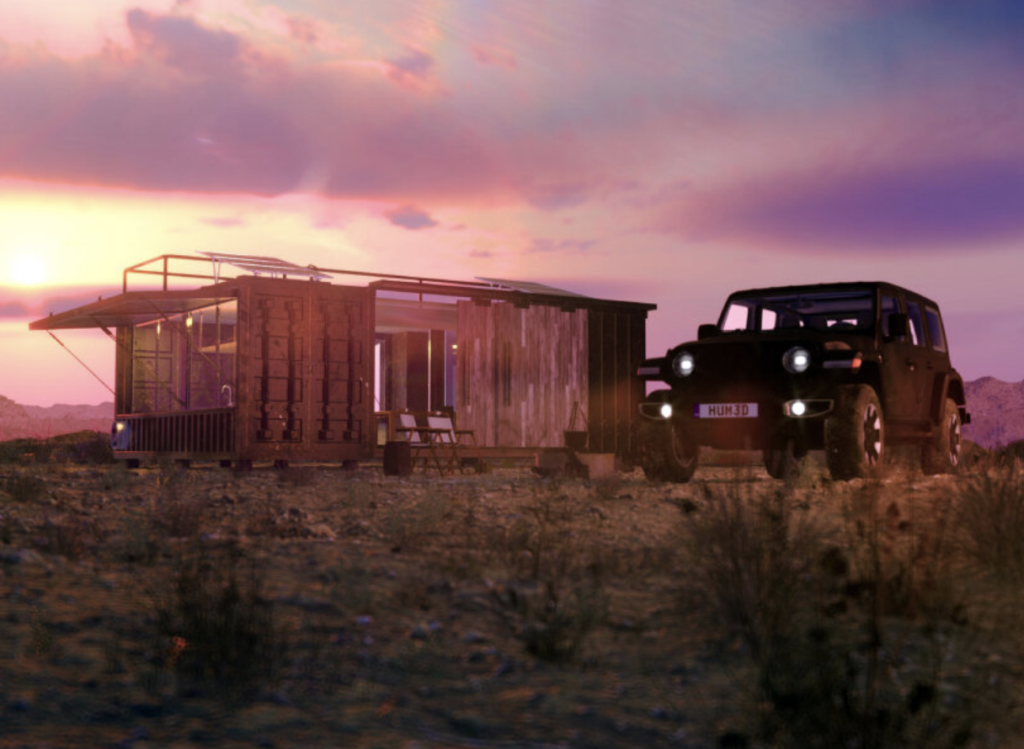
The design emphasizes openness and connection to nature. A sliding central door maximizes space efficiency and immediately reveals the interior upon entry. Large windows on multiple sides invite natural light and frame views of the surrounding environment. When sunlight becomes intense, hinged window panels fold down like the lid of a treasure chest, creating shade while preserving the outdoor atmosphere.
Jeep container house by Jeep Japan and Dolive
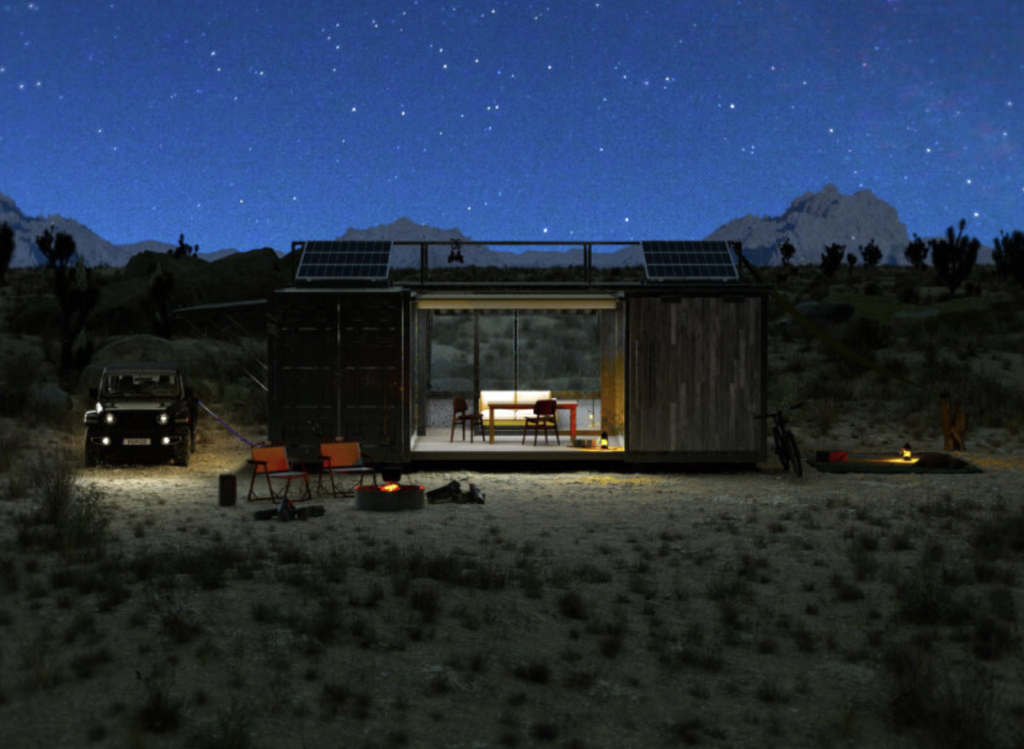
Unlike traditional small houses that define strict interior zones, the Jeep container house intentionally leaves the internal layout undefined. Owners can decide where to place sleeping areas, kitchens, dining spaces, or living zones according to their needs. This open approach echoes the improvisational spirit of camping, encouraging residents to personalize their living environment with their own furniture, textiles, and outdoor gear.
Jeep container house by Jeep Japan and Dolive
Sustainability plays an important role in the concept as well. Solar panels mounted on the roof generate electricity for the home and can even charge Jeep vehicles parked nearby. Recyclable wood finishes soften the industrial steel frame, helping the structure feel more like a contemporary cabin than a temporary shelter. The result is a hybrid between architecture and outdoor lifestyle equipment, offering a retreat that can exist equally in forests, deserts, or snowy mountains.
Kotobuki Cheese & Meat Factory by micelle ltd. (also header image)
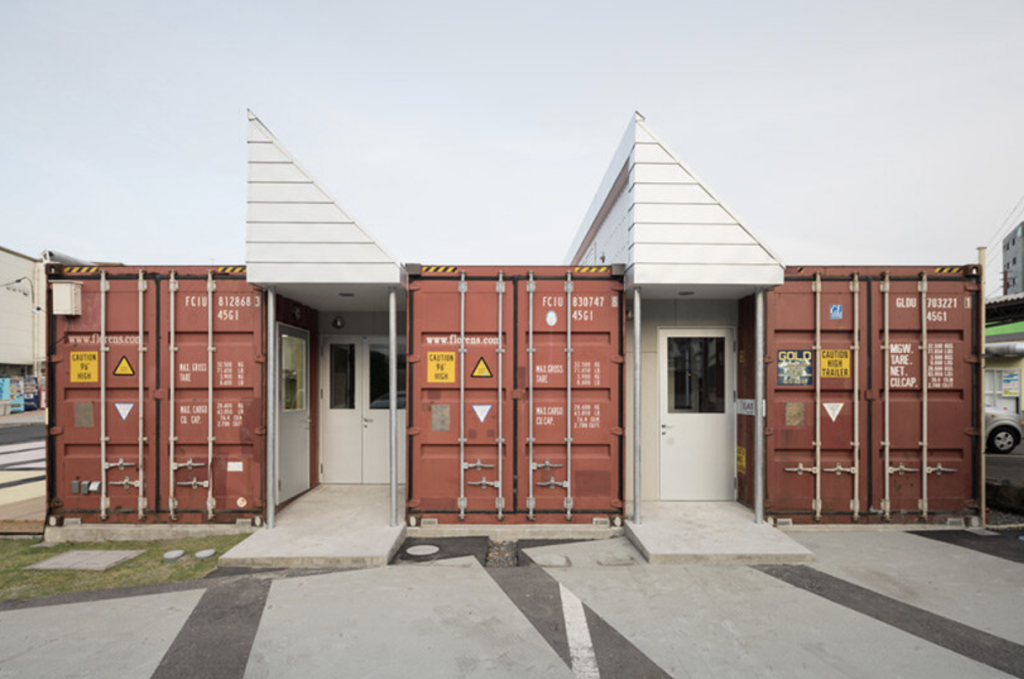
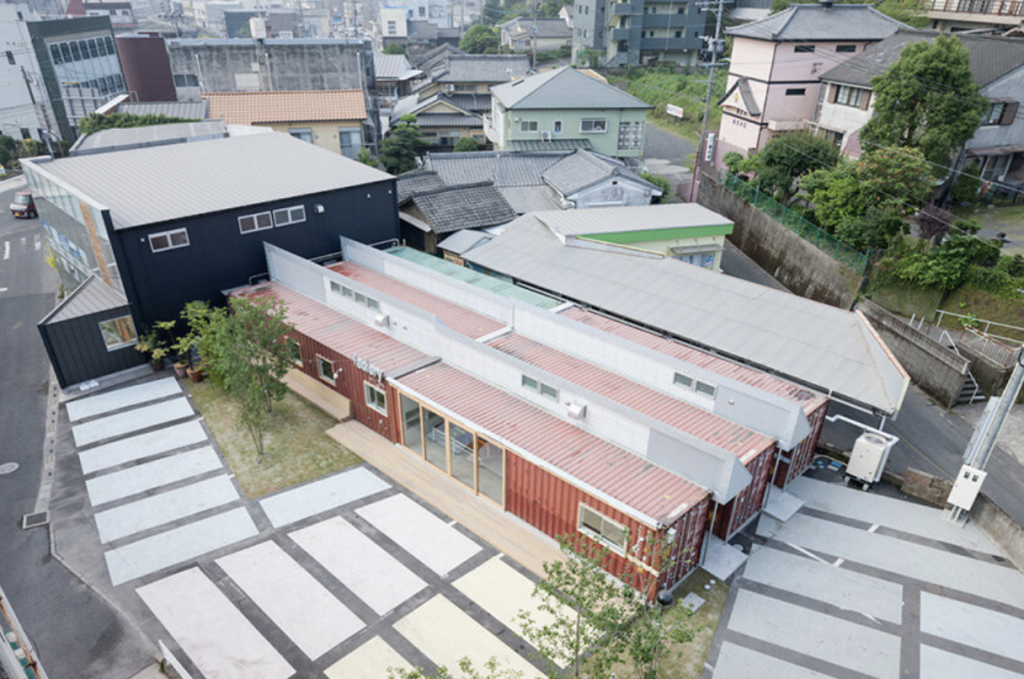
While the first two projects reinterpret containers for leisure and living, the Kotobuki Cheese & Meat Factory in Kagoshima, Japan demonstrates their potential in industrial architecture. Designed by Hyogo-based architecture firm micelle ltd., the building occupies the former site of a demolished department store parking lot. Instead of constructing a conventional factory, the architects assembled the structure from second-hand shipping containers, creating a bold visual contrast within the surrounding rural landscape.
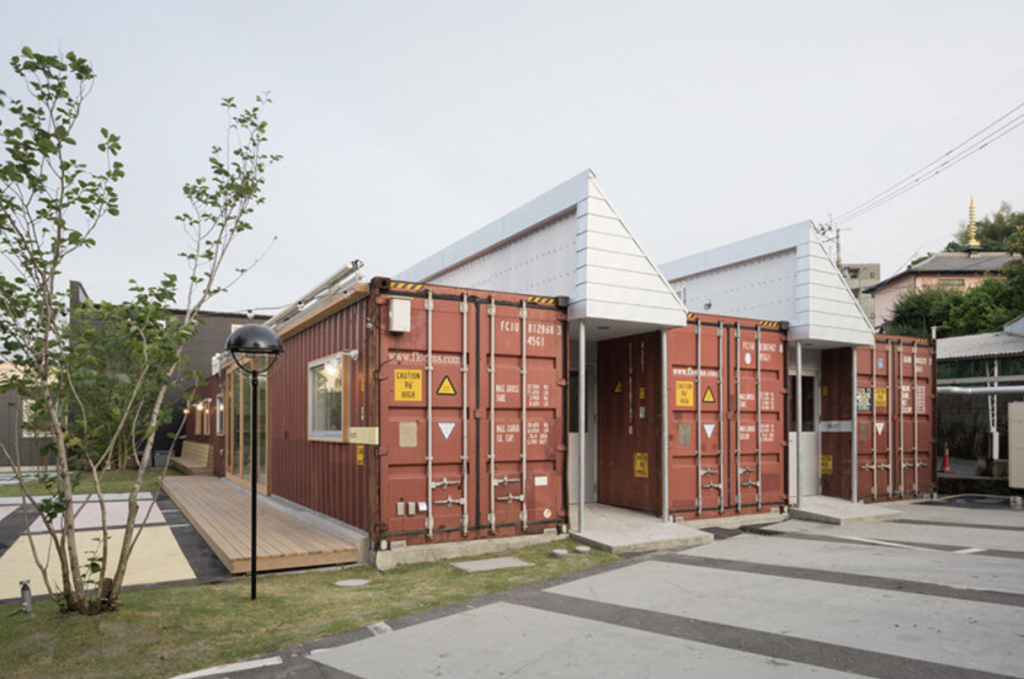
Kotobuki Cheese & Meat Factory by micelle ltd.
Interestingly, the idea originated with the client rather than the architects. Initially surprised by the proposal, the design team soon recognized how containers already appeared throughout the local countryside as improvised storage units. This everyday presence convinced them that containers were not foreign objects but familiar elements within the regional environment. Reusing them as building modules allowed the project to resonate with its context while introducing a fresh architectural language.
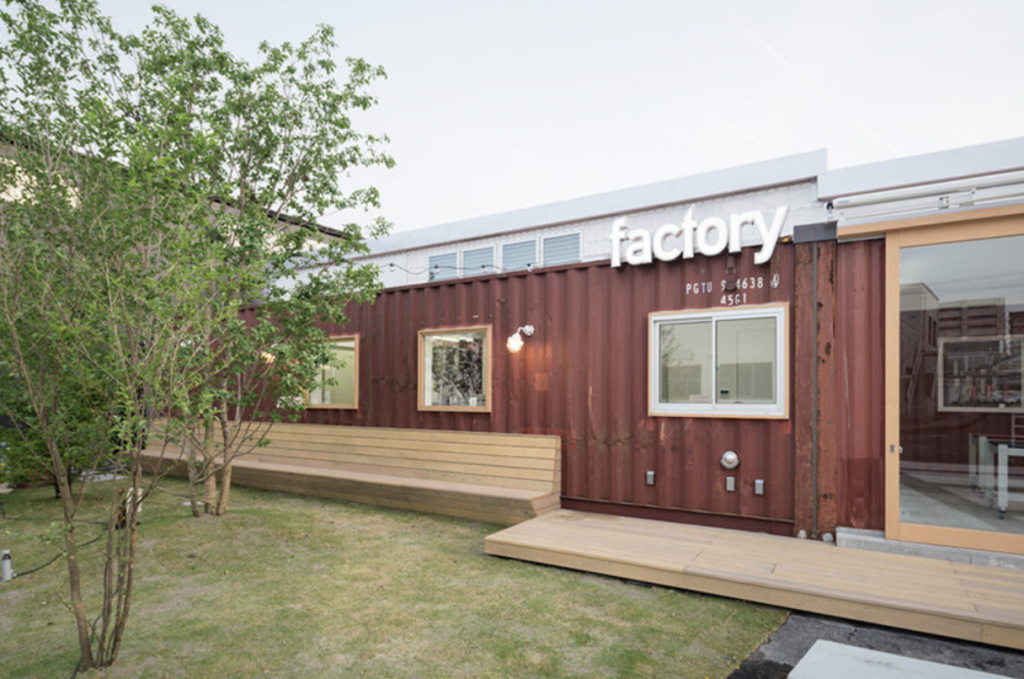
Kotobuki Cheese & Meat Factory by micelle ltd.
The structure arranges the containers in parallel rows, with gaps between them bridged by a continuous shed roof reminiscent of traditional sawtooth factory roofs. These spaces allow natural light, ventilation, and heat control to enter the interior, improving the functionality of the processing facilities. The building houses both food production areas and a food education center, connecting manufacturing with public learning.
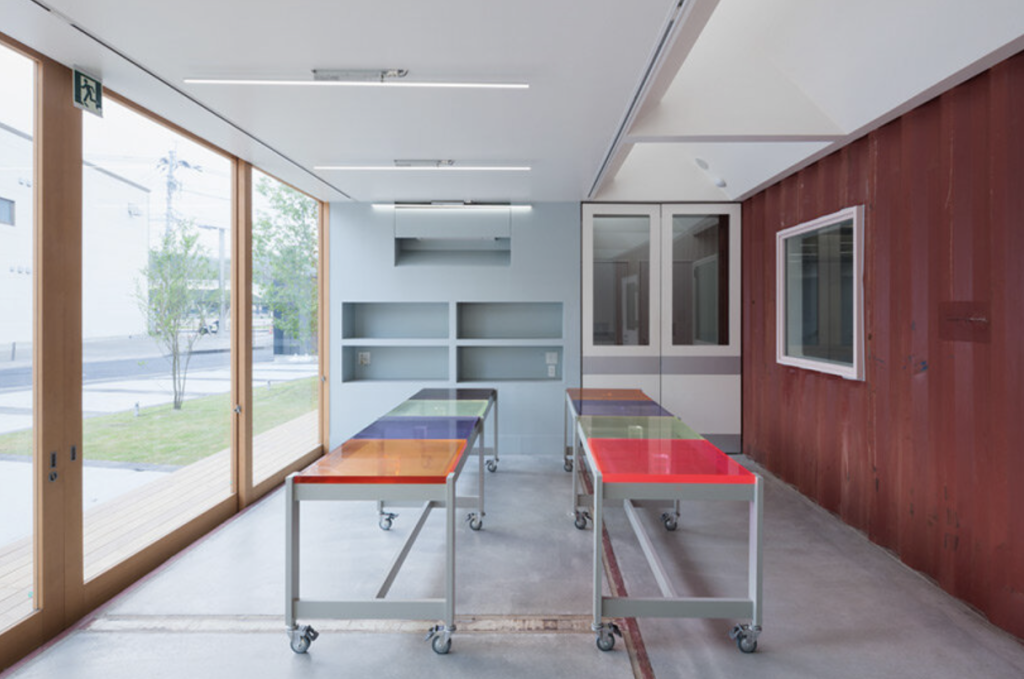
Kotobuki Cheese & Meat Factory by micelle ltd.
Each container contributes its own visual narrative. Although they share the same standardized dimensions, the reused units carry traces of their previous journeys. Faded paint, scratches, old labels, and weathered joints remain visible on their surfaces. Rather than concealing these marks, the architects embraced them as design features. The result is a building composed not only of steel modules but also of layered histories, transforming industrial leftovers into a striking architectural identity.
Together, these three projects reveal the extraordinary adaptability of the shipping container. What unites them is a shared willingness to rethink materials that already exist rather than producing entirely new ones. As sustainable design gains urgency, this once overlooked industrial object may remain one of architecture’s most versatile building blocks.