For much of the industrial age, factories have been symbols of extraction, pollution, and separation from the natural world. Today, that narrative is beginning to change. Faced with climate urgency and growing social expectations, designers and manufacturers are reimagining industrial architecture as a tool for environmental repair rather than degradation. Sustainable factories are emerging as places that conserve resources, regenerate ecosystems, and reconnect production with its surroundings. In this new paradigm, innovation is measured not only by output, but by how thoughtfully industry coexists with the planet.
Esquel by Ronald Lu & Partners
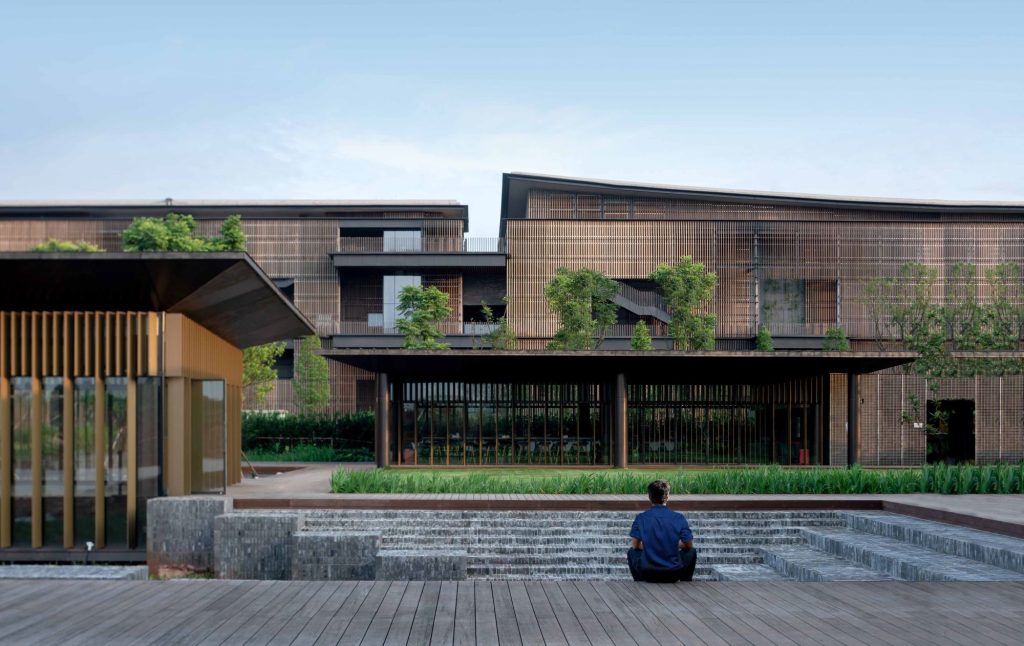
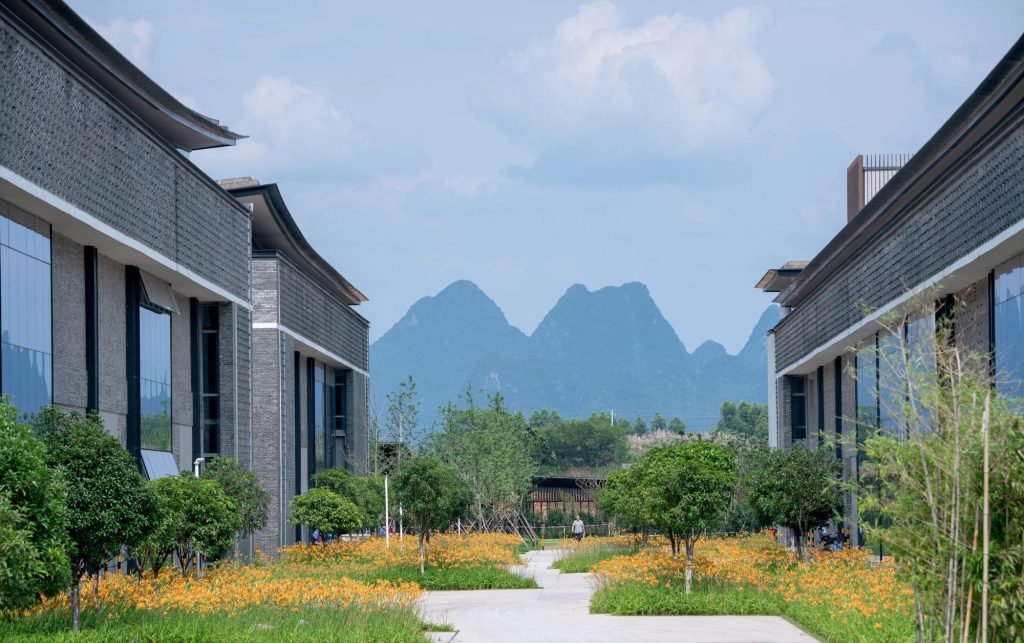
Set within the dramatic karst scenery of Guilin, Ronald Lu & Partners’ Integral project reimagines a garment factory as a living, ecological system. Developed for textile and apparel manufacturer Esquel, the 511,800 square meter complex is described as a “sustainable development garden” rather than a conventional industrial site. Completed in phases beginning in 2019, the project challenges the long held perception of textile manufacturing as low-tech and environmentally harmful.
Esquel by Ronald Lu & Partners
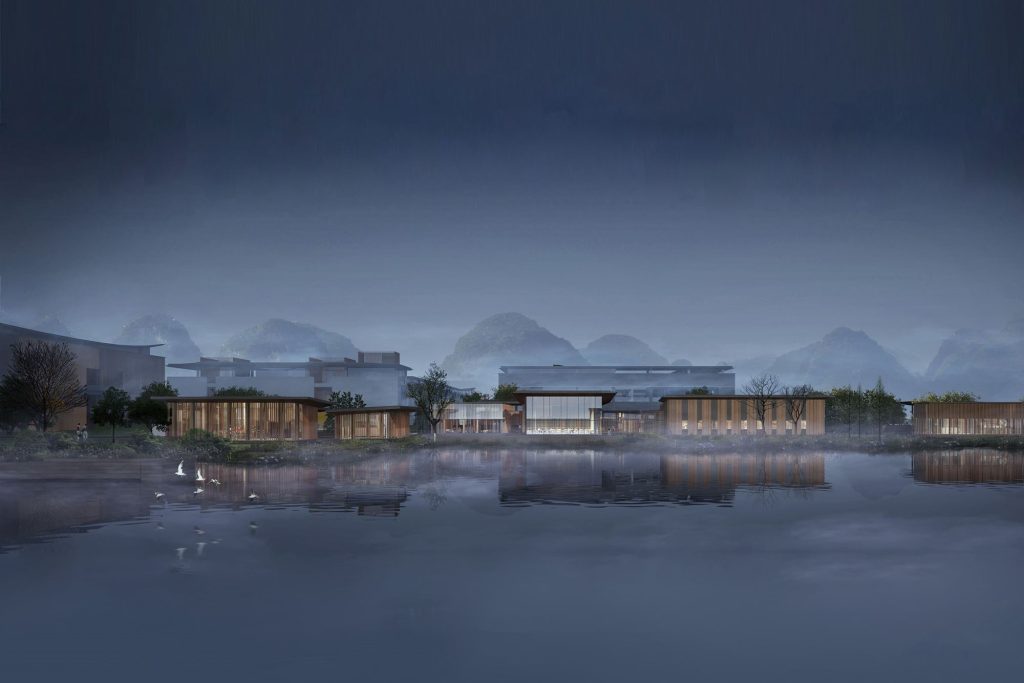
From the outset, the design was driven by an ambition to integrate production with conservation. Extensive studies of the site’s geology, topography, and cultural history informed a plan that unites manufacturing, agriculture, and tourism. Rather than erasing the existing landscape, the architects worked to restore it. Formerly degraded land was transformed back into wetlands and lakes, while bamboo groves, fish ponds, and native ecosystems were carefully preserved and enhanced.
Esquel by Ronald Lu & Partners
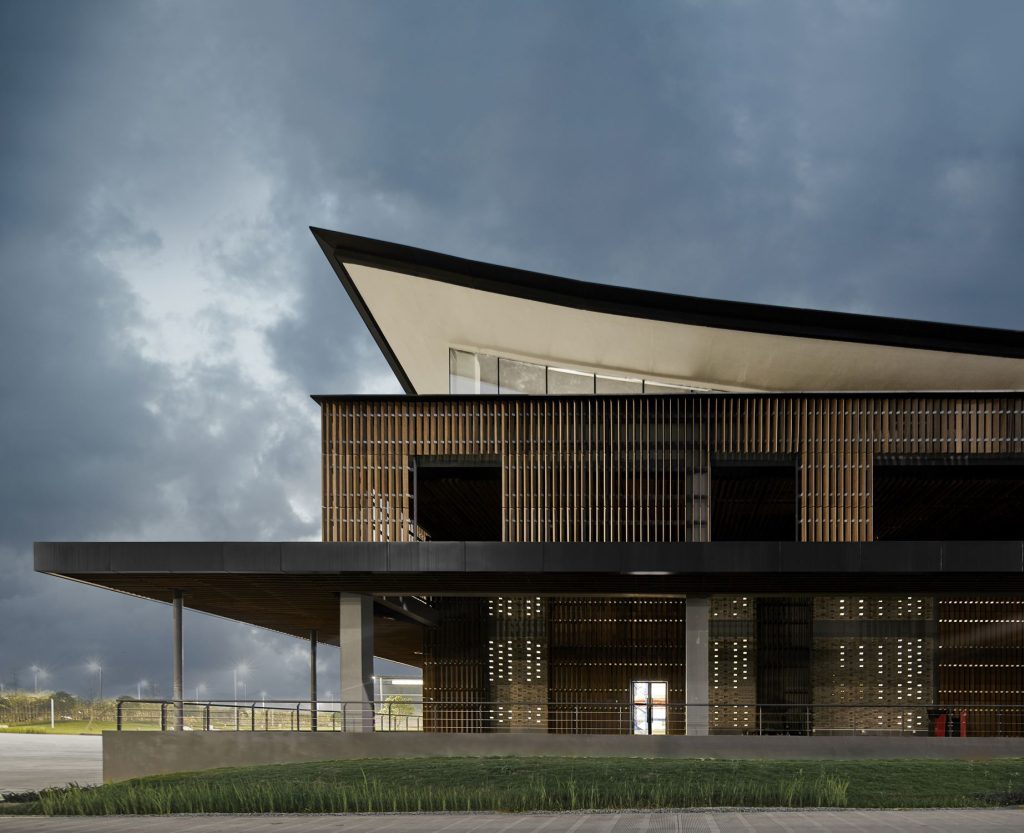
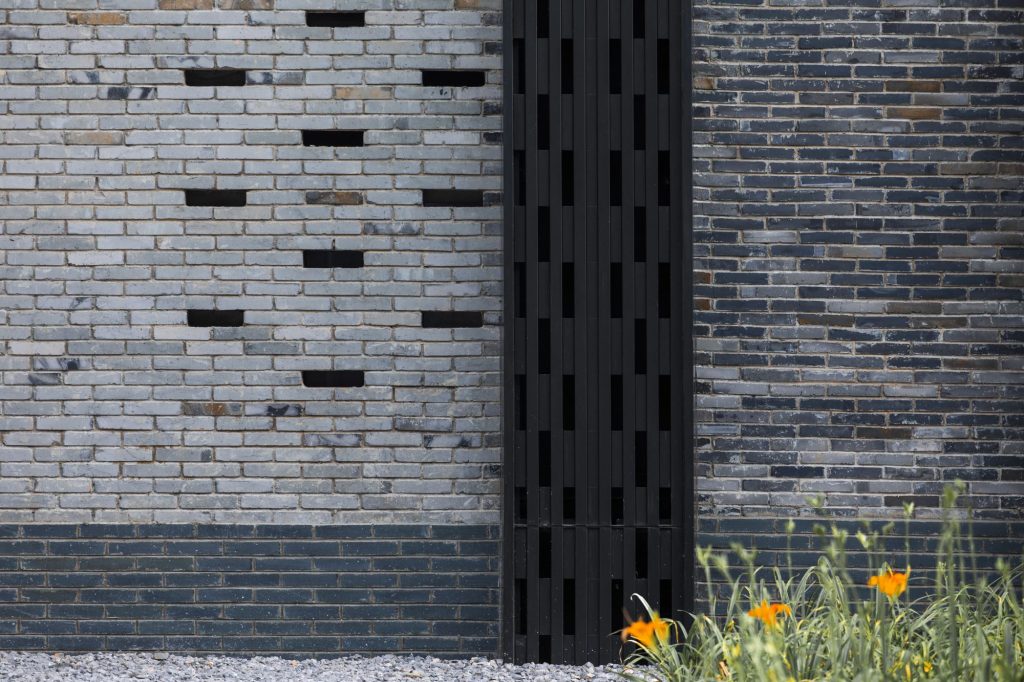
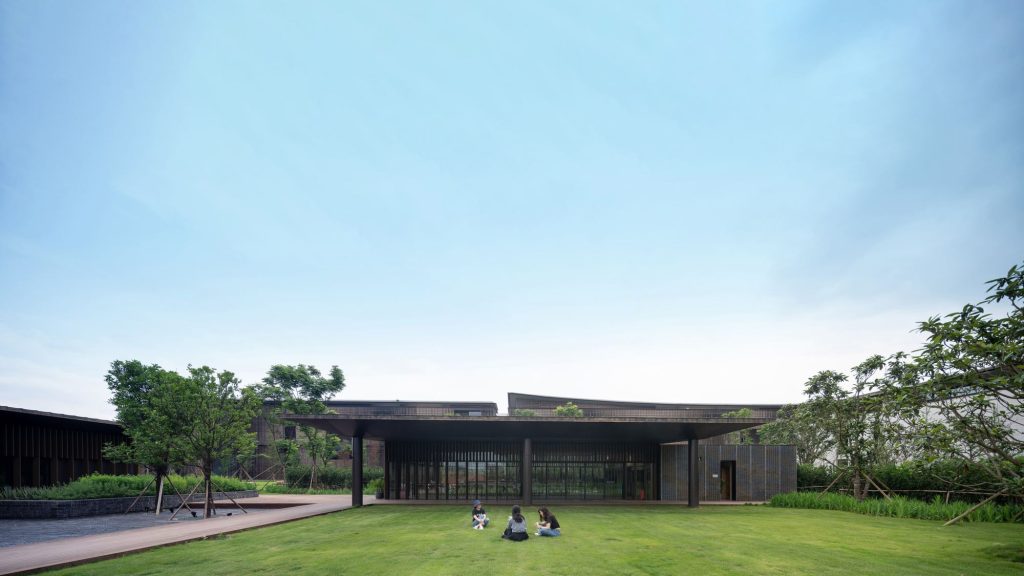
The spatial strategy reinforces this environmental sensitivity. Large production buildings are arranged horizontally and kept to a maximum height of just 22 meters, allowing greenery to dominate the visual experience. Small-scale structures line the restored lake, blurring the boundary between architecture and nature. Materials such as blue bricks, grey tiles, and bamboo reference local villages and traditional construction methods, grounding the project firmly in its regional context.
Esquel by Ronald Lu & Partners
Beyond production, Integral functions as an industrial eco-tourism park. Botanical gardens, learning centers, exhibition halls, and staff facilities coexist with textile workshops and craft centers. A rooftop farm supplies fresh produce for the onsite restaurant, while semi-transparent bamboo façades improve natural ventilation and soften the scale of long elevations. Inside, glass walls and deliberately vague boundaries between indoor and outdoor spaces create a transparent working environment. The result is a factory that does not dominate its landscape, but grows from it.
Brompton by Hollaway Studio
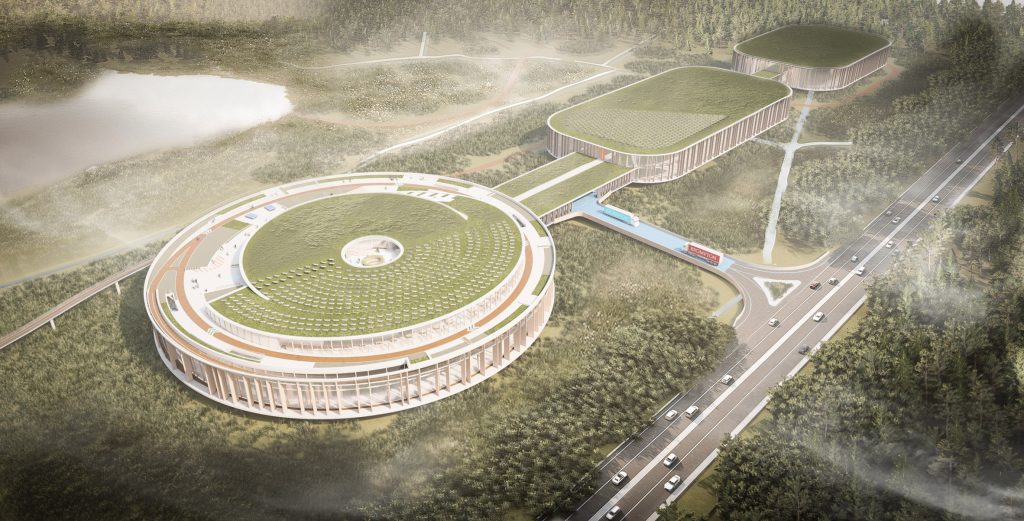
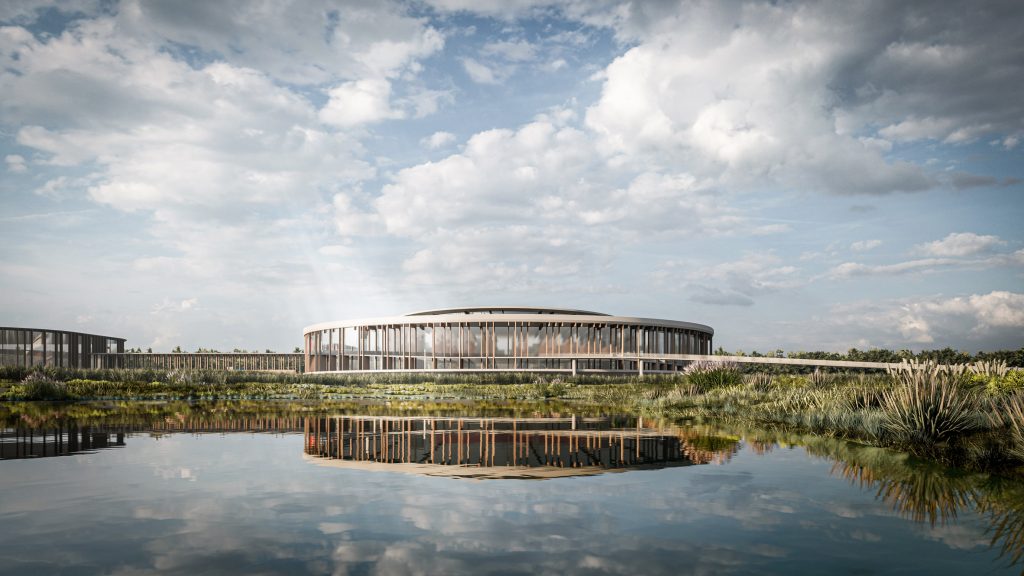
If the Guilin project embeds manufacturing into a historic landscape, Brompton’s proposed headquarters and factory in Ashford, Kent looks ahead to the future of urban and industrial living. Designed by Hollaway Studio and planned for completion in 2027, the carbon-neutral facility is envisioned as a “factory of the future” that places sustainability and people at its core.
Brompton by Hollaway Studio
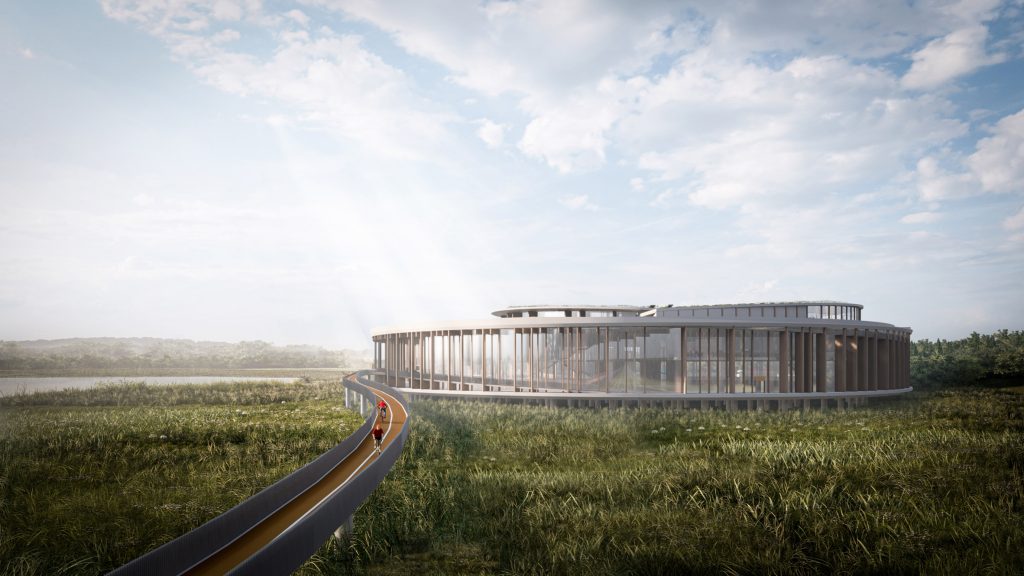
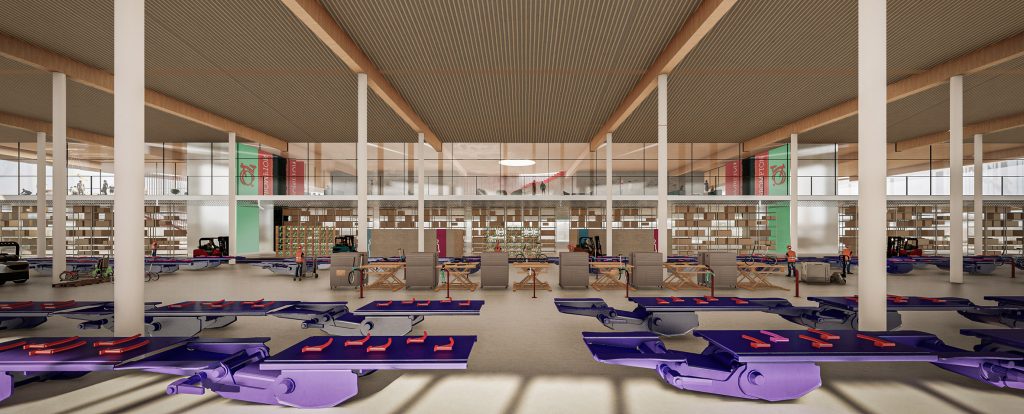
The building will sit within a 100-acre wetland site that is set to be rewilded and transformed into a nature reserve. Rather than treating the wetlands as a constraint, the design elevates the circular building 2.2 meters above the ground, minimizing its impact on wildlife and hydrology. The wheel-like form is both a literal and symbolic nod to Brompton’s identity as a bicycle manufacturer.
Brompton by Hollaway Studio
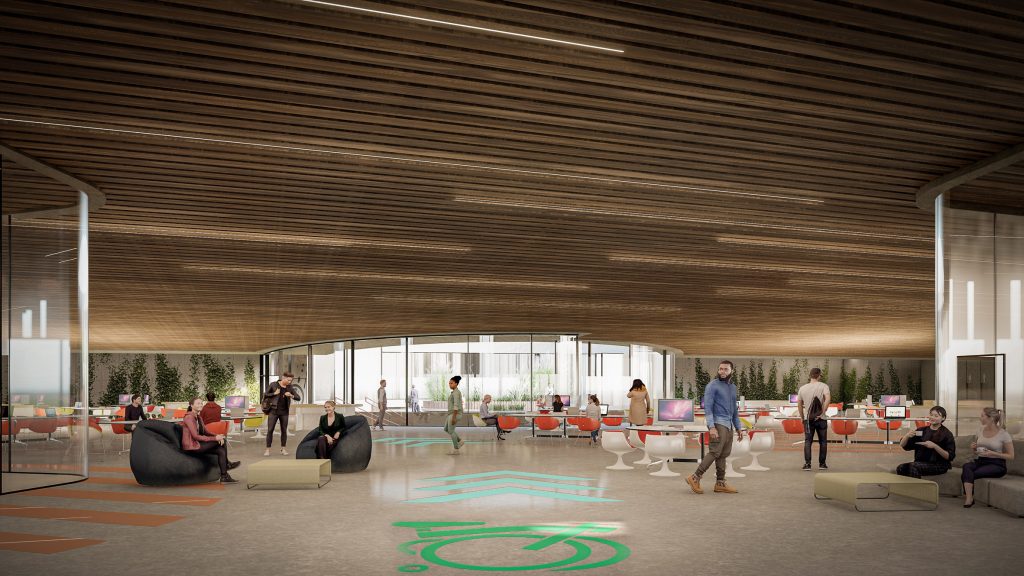
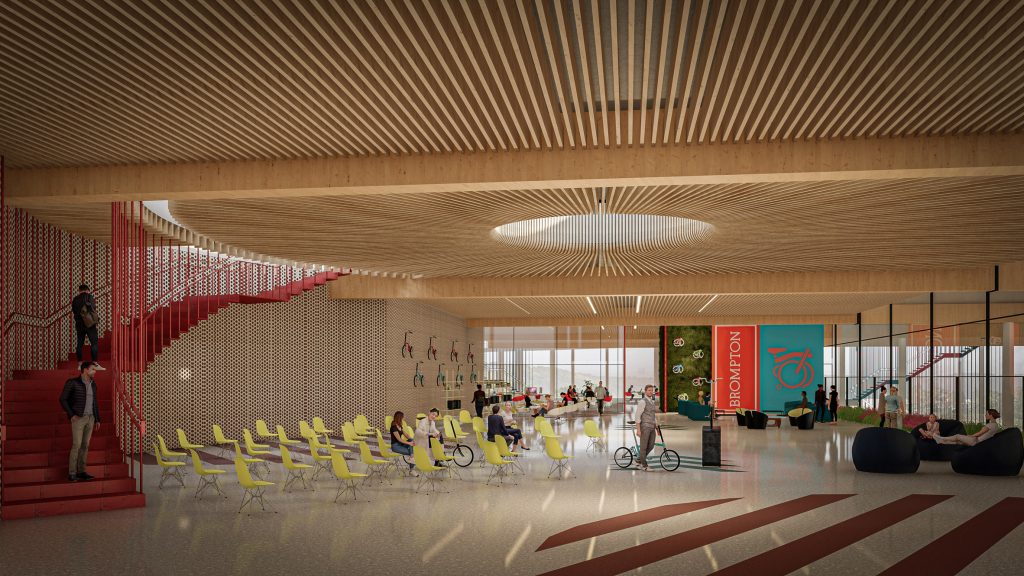
Sustainability informs every aspect of the design. The factory will optimize natural daylight and ventilation, generate energy through wind and solar sources, and draw heat from the ground using its foundation piles. Responsible material sourcing, careful assessment of embodied carbon, and long-term adaptability are integral to the project’s environmental strategy. The ambition is not only to be carbon-neutral, but to remain resilient and useful for decades to come.
Brompton by Hollaway Studio
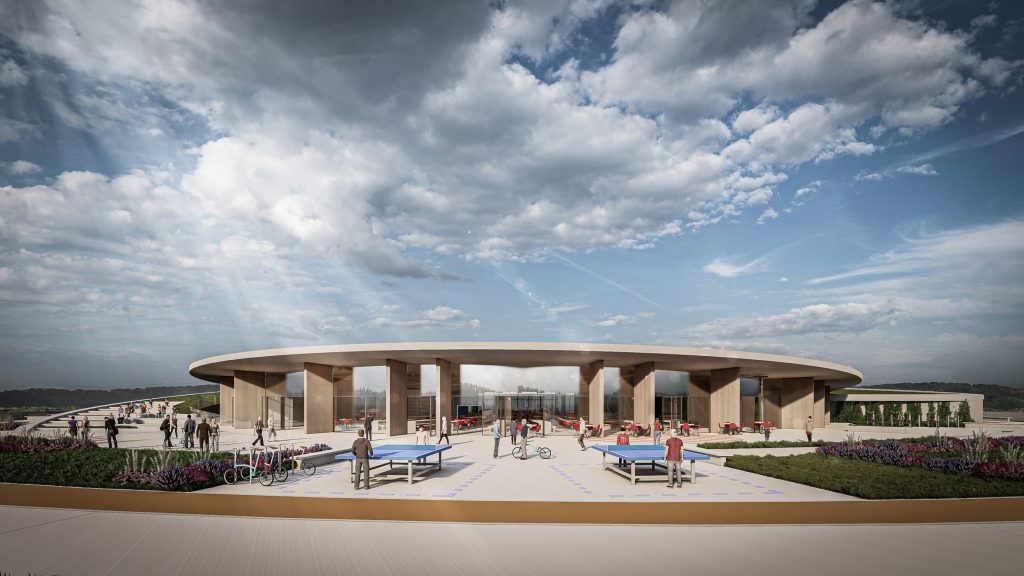
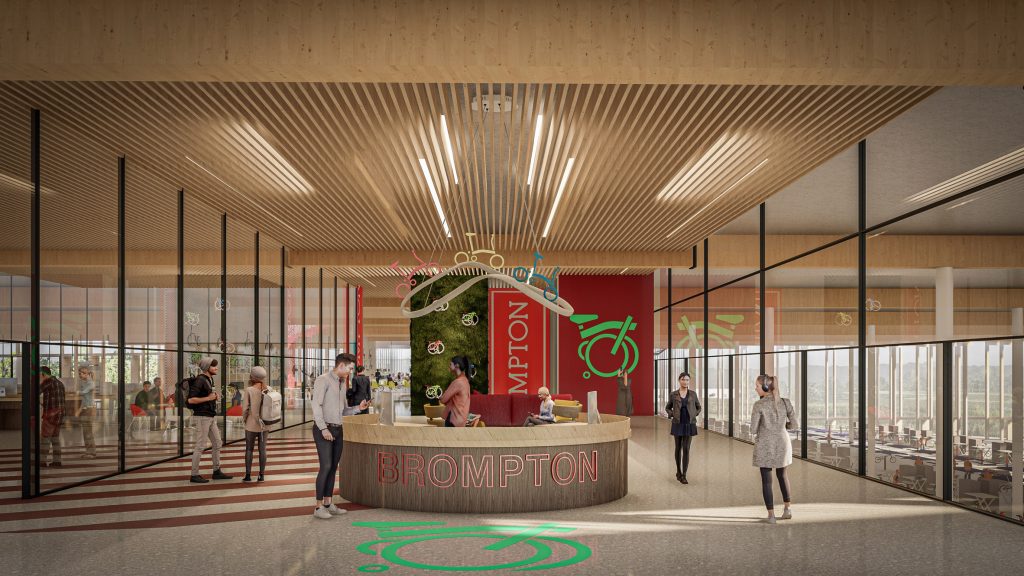
Public access is a defining feature. Production areas will be visible to visitors, a dedicated elevated cycle ramp will lead directly into the building, and a rooftop museum and canteen will open onto a large terrace overlooking the wetlands. With space for over 1,500 staff and a production target of 200,000 bikes per year, the facility balances industrial scale with human experience. In doing so, Brompton positions manufacturing as a civic and cultural asset rather than an isolated operation.
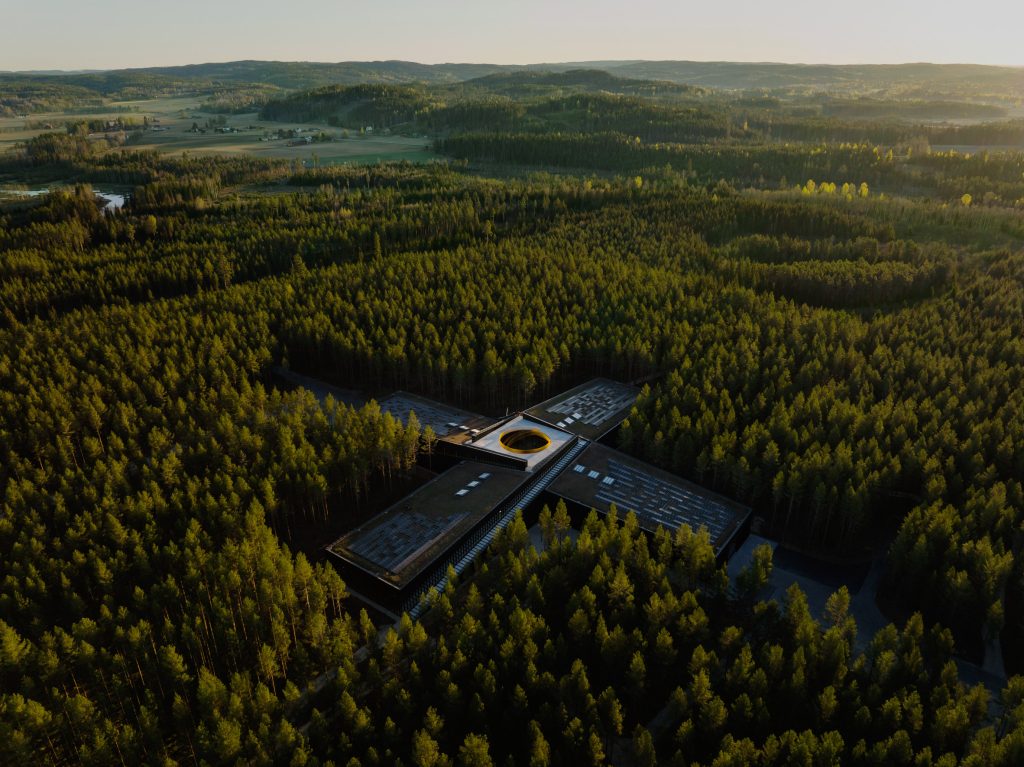
Vestre’s The Plus by BIG (also header image)
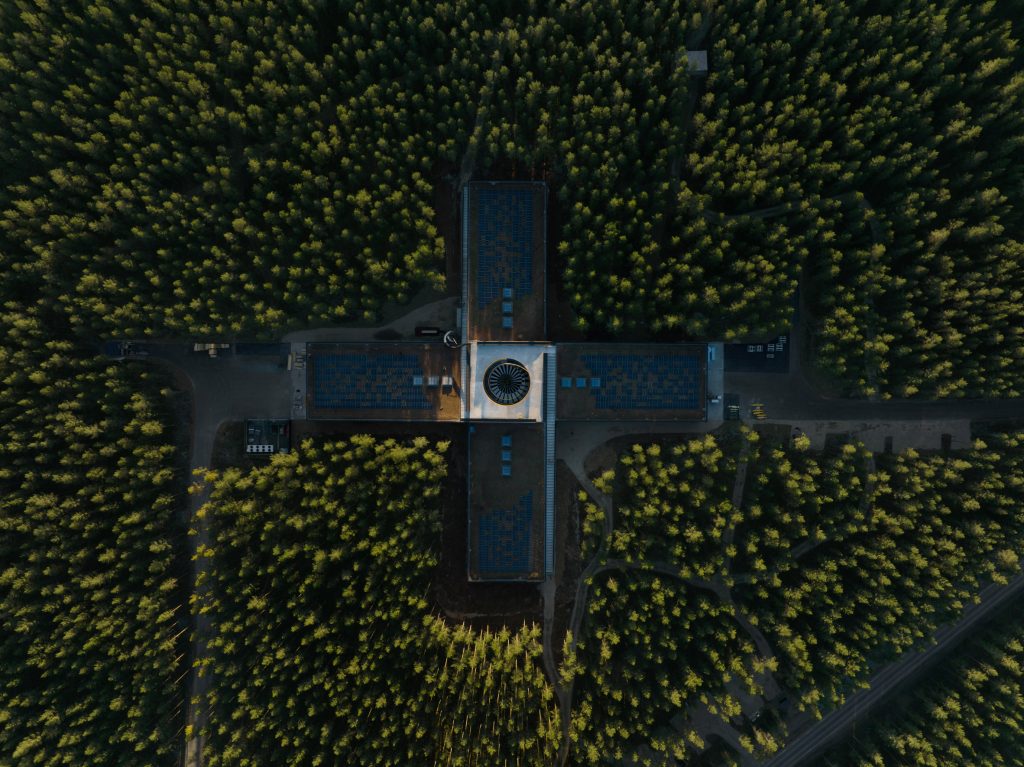
Where Brompton rethinks the factory as a public destination, Vestre’s new manufacturing complex in Magnor, Norway pushes the idea even further. Designed by Bjarke Ingels Group and known as The Plus, the 7,000 square meter facility has been described by its creators as the world’s most environmentally friendly furniture factory. It is designed to generate 55 percent fewer greenhouse gas emissions than a conventional factory and is set to achieve a BREEAM Outstanding rating.
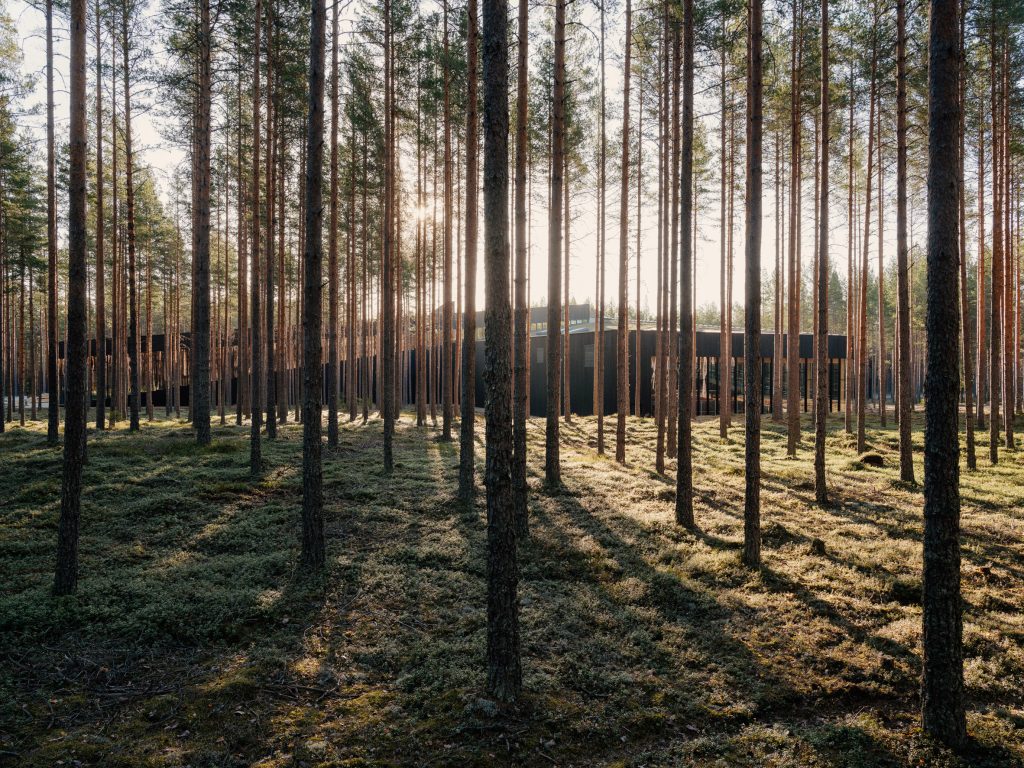
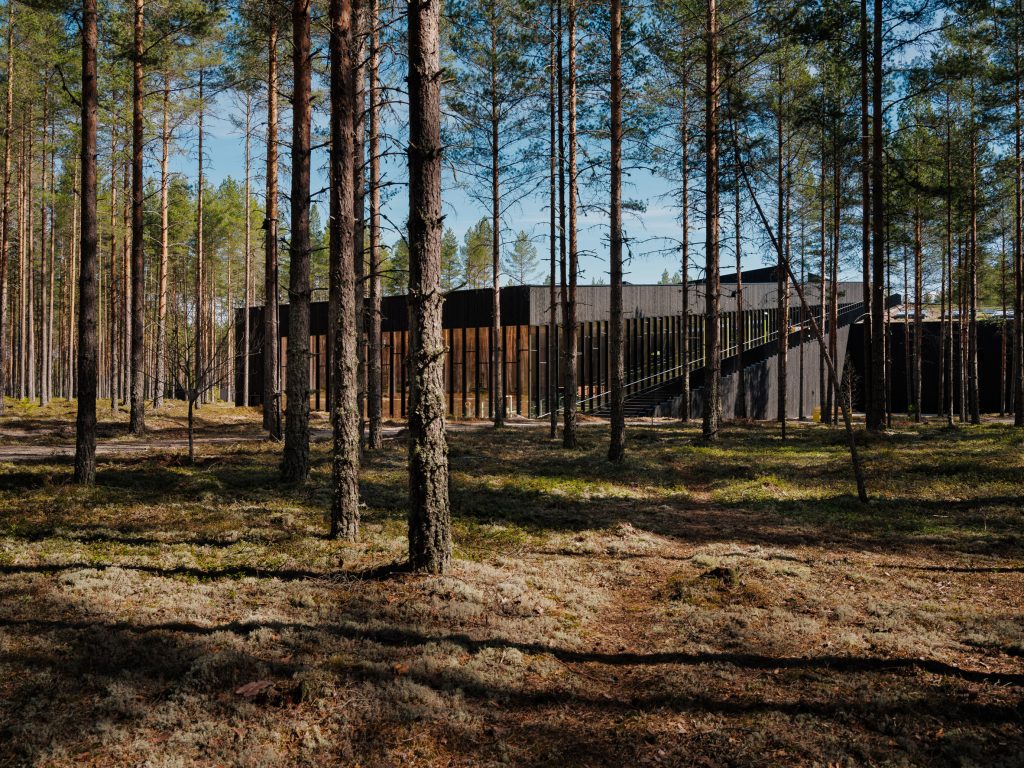
Vestre’s The Plus by BIG
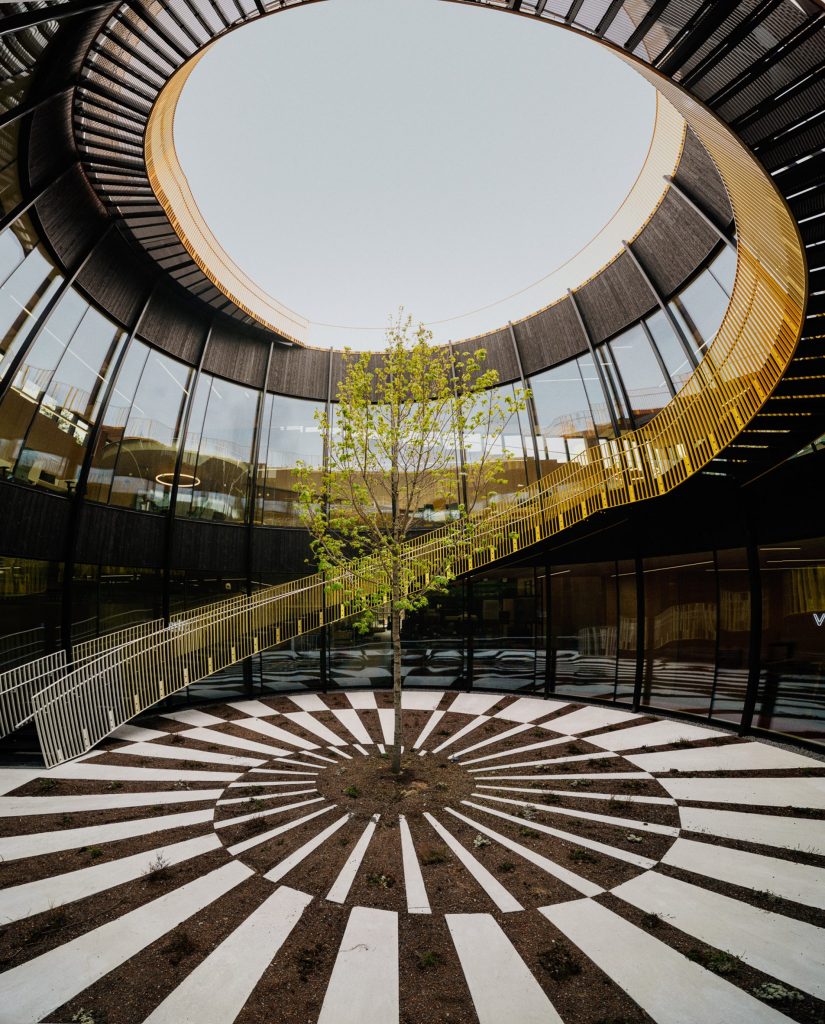
The building’s cross-shaped form organizes four production areas around a central circular courtyard, creating clarity in both workflow and spatial experience. Set within a 300,000 square meter pine forest park, the factory is surrounded by public paths and oversized furniture installations that invite the local community to explore the site. This openness is inspired by the Norwegian concept of Allemannsretten, or the right to roam, which underpins the project’s philosophy.
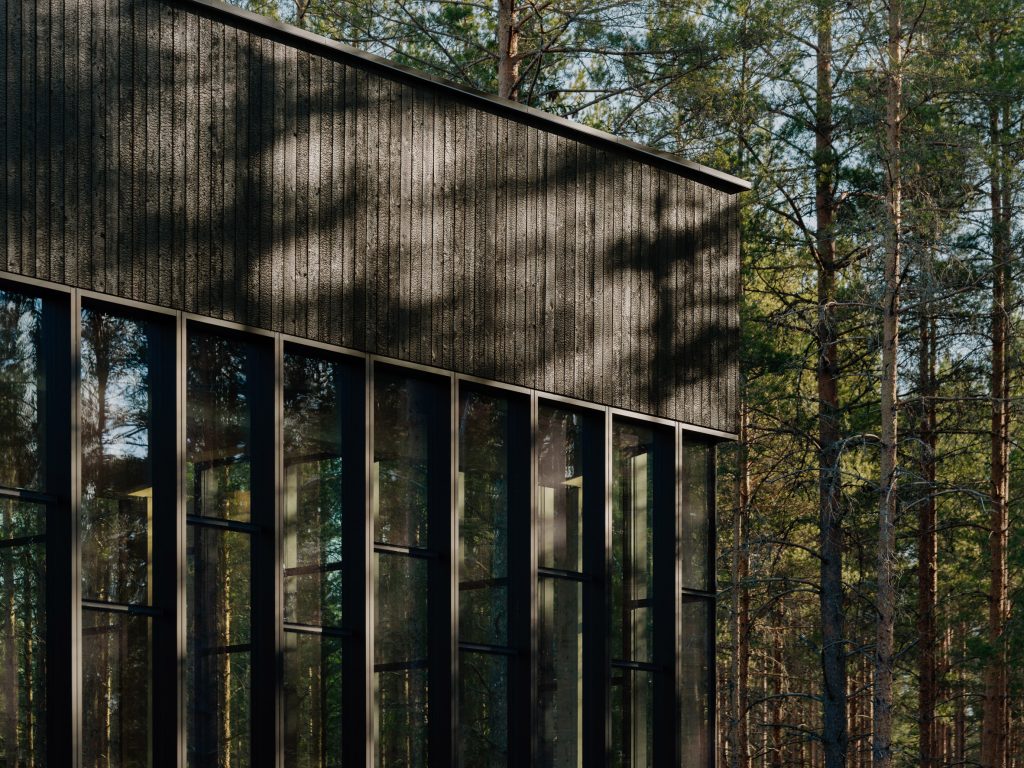
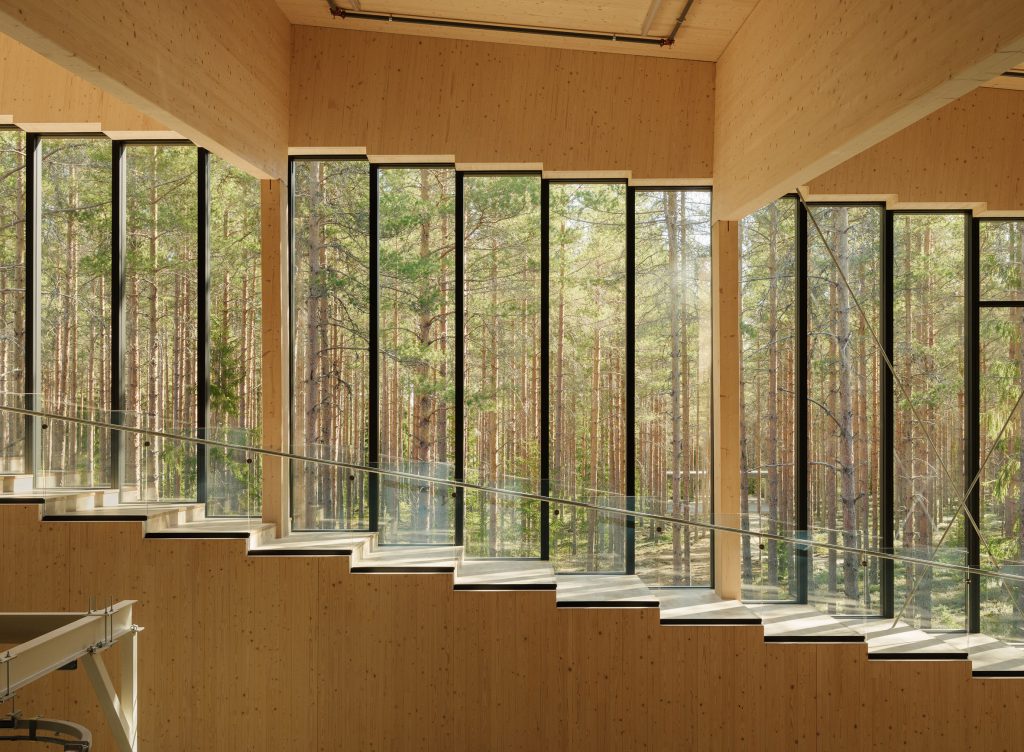
Vestre’s The Plus by BIG
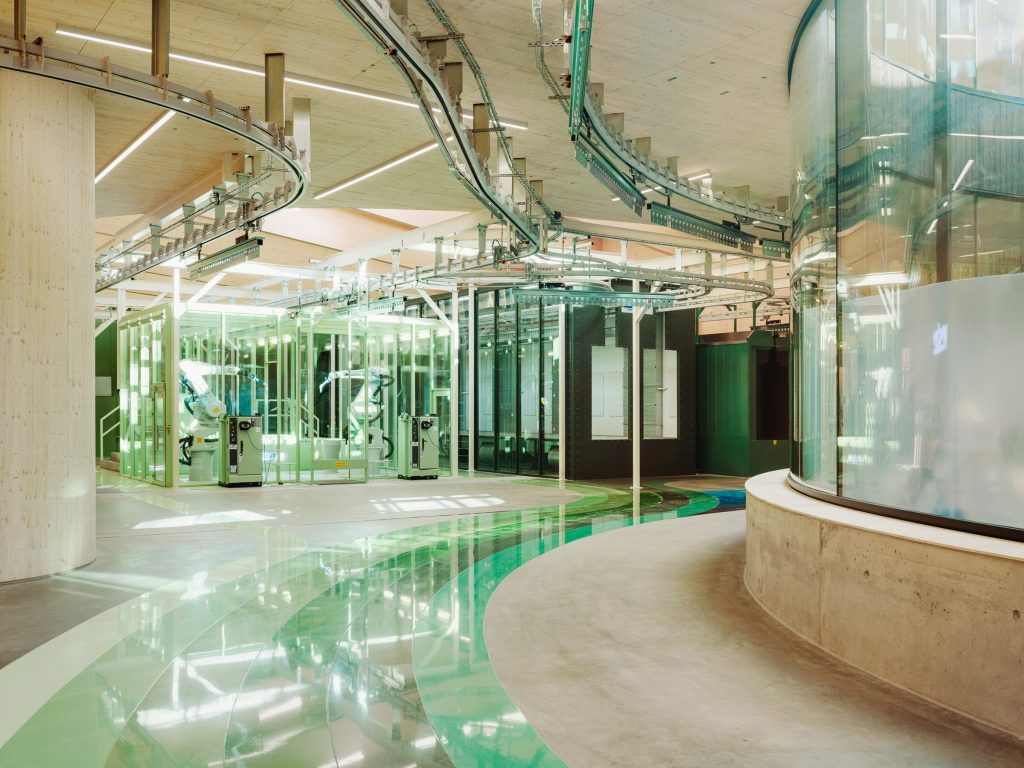
Transparency is both literal and conceptual. Large windows on all four wings allow passersby to see into the factory, while exterior ramps lead visitors onto a green rooftop with views across the forest. Inside, sustainability is on full display. Nine hundred rooftop solar panels generate around 250,000 kWh of energy annually, and up to 95 percent of production water is recycled. Dedicated energy and clean water centers educate visitors about these systems, turning the factory into a learning environment.
Completed in just 18 months, The Plus is intended as a prototype rather than a one-off statement. Vestre hopes it will inspire a new generation of industrial buildings that are sustainable, social, and economically viable.
Vestre’s The Plus by BIG
Together, these three projects point to a profound shift in industrial design. Sustainable factories are no longer about hiding impact or offsetting damage. They are about integration, transparency, and responsibility. As architects and manufacturers continue to collaborate across disciplines and borders, the factory is being redefined as a place where production, nature, and people can genuinely coexist.