Designers around the world are reimagining what a roof can be, transforming a once-forgettable surface into a platform for sustainability, artistry, and architectural storytelling. Grass covered roofs are no longer reserved for folklore or quaint hillside cottages. They have become markers of ecological awareness and design experimentation. These projects reveal how green roofs can inspire awe, provoke debate, and reshape our relationship with the natural world.
Black Villa by Reza Mohtashami (also header image)
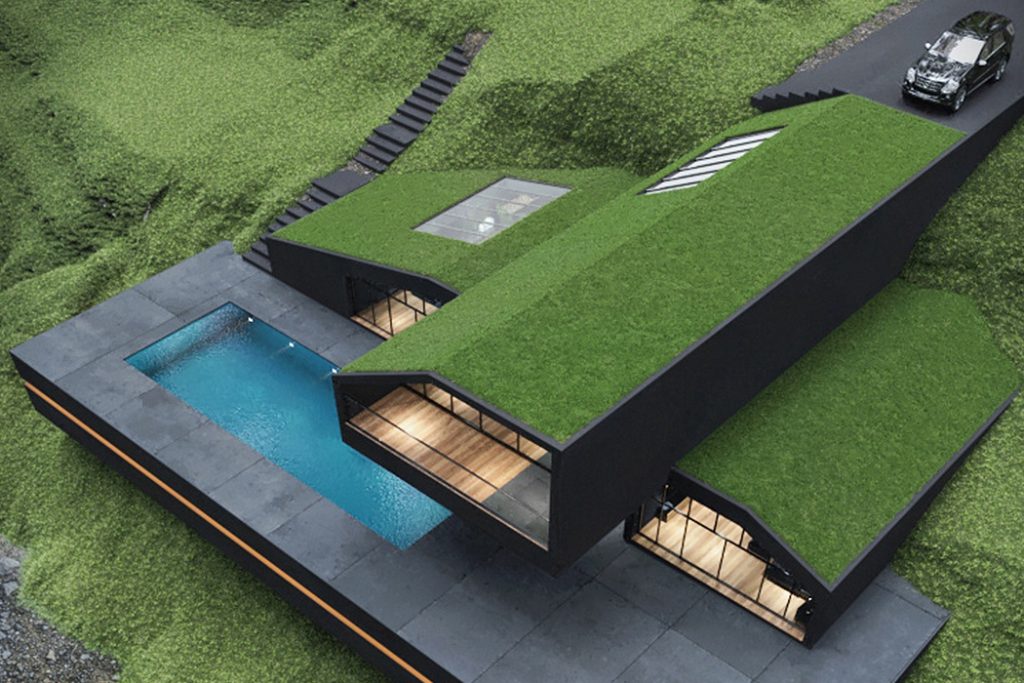
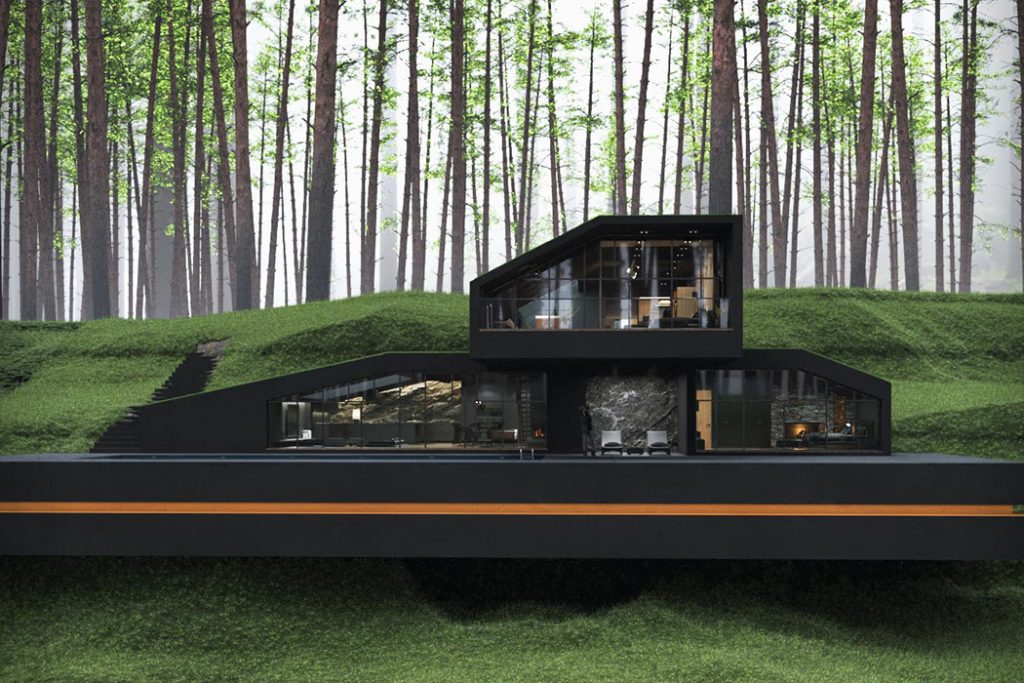
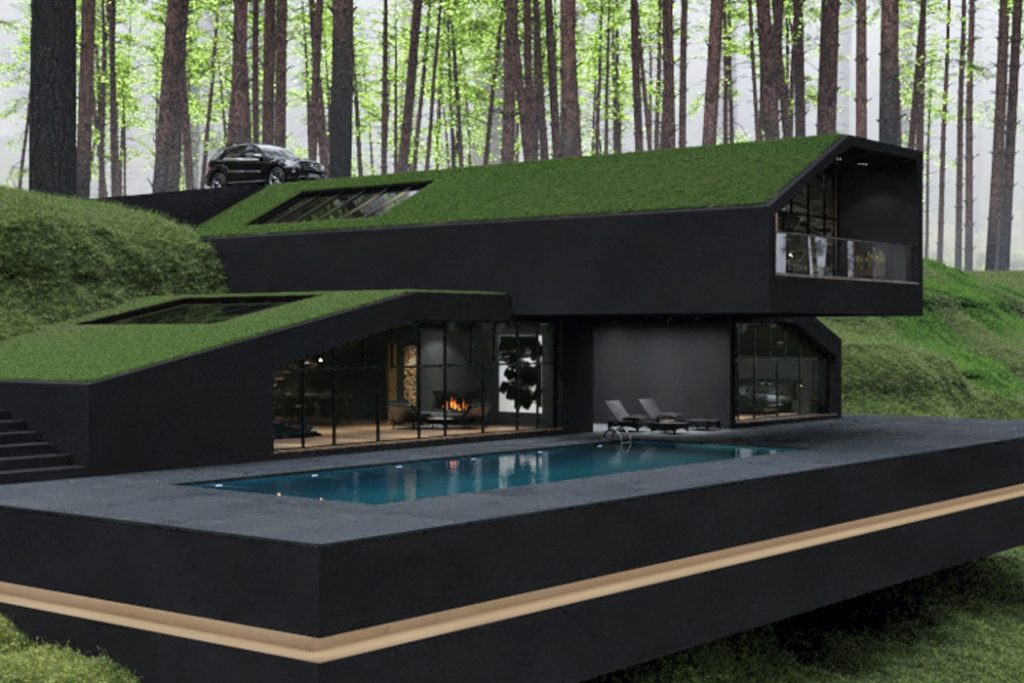
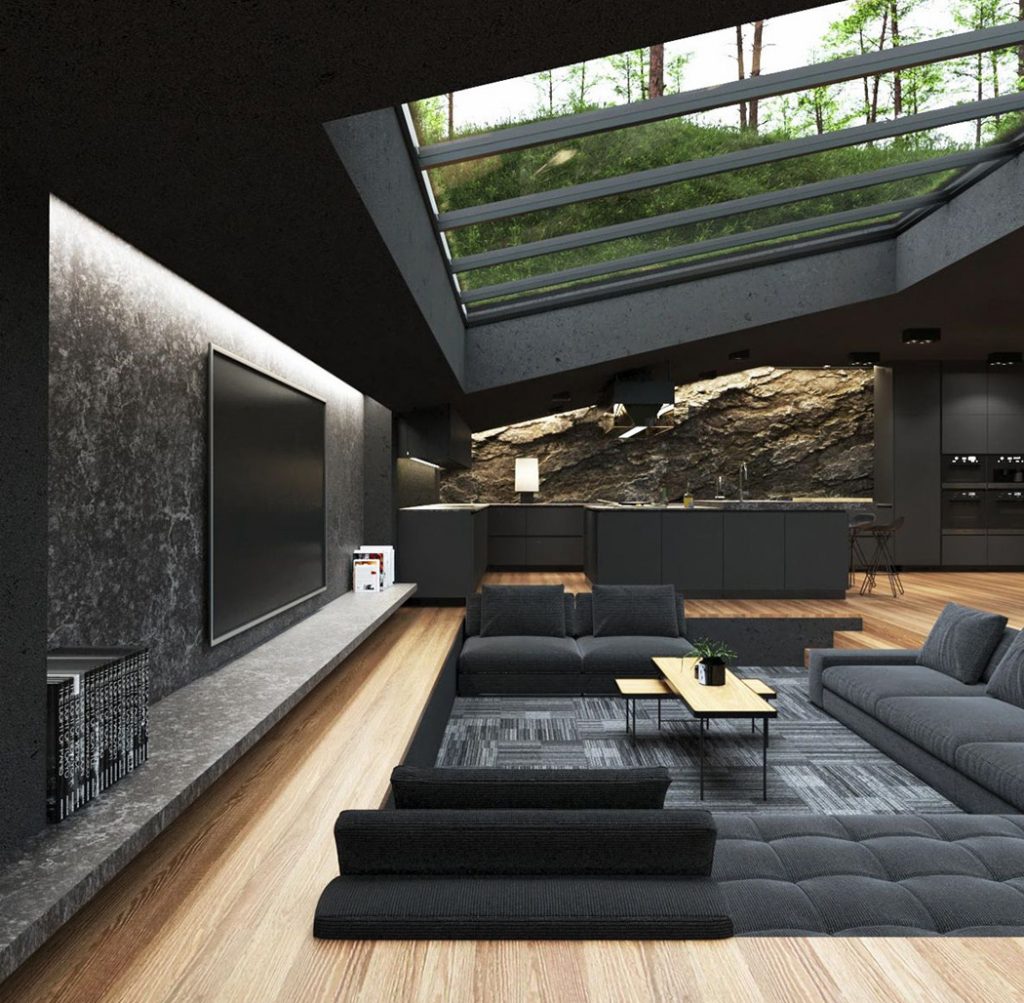
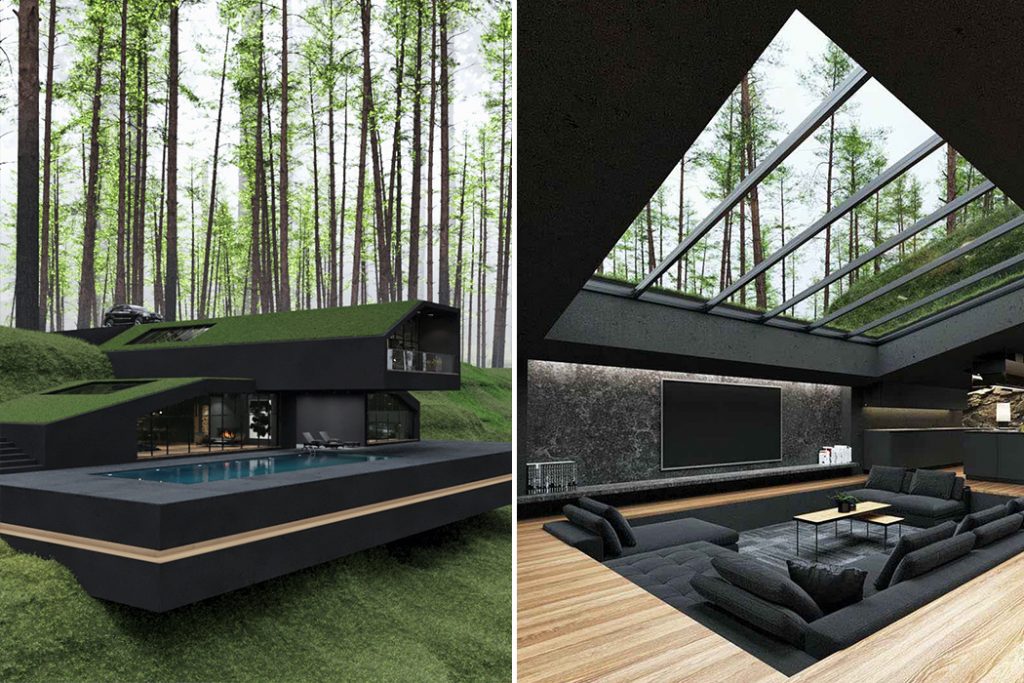
To begin, the Black Villa in Harriman State Park shows how a contemporary home can take cues from fantasy realms while embracing modern sustainability. Designed by Reza Mohtashami, the residence adopts the charm of a hobbit hole, yet pairs it with sharp, elegant lines and a dramatic earth-sheltered form. Its most memorable feature is a lush, grass covered roof that sweeps across the structure like a velvet cloak. Inside, the house opens into a sophisticated interior defined by generous skylights and floor to ceiling windows that bathe the space in natural daylight. This interplay between openness and enclosure gives the project a cinematic quality that feels both hidden and inviting.
Black Villa by Reza Mohtashami
Green roofs have steadily garnered interest over the past decade thanks to their environmental and economic benefits. They can help reduce energy usage by acting as natural insulation, and they maintain roof temperatures far lower than traditional materials. The Black Villa incorporates these efficiencies while also managing stormwater runoff, a crucial consideration for regions with inadequate drainage systems. The design demonstrates the tangible advantages of living roofs and suggests a way forward for homes that seek to merge comfort with responsibility.
Black Villa by Reza Mohtashami
Yet the project also raises an important question. Should an energy efficient home be placed within a national park, where construction inevitably disrupts the existing ecosystem? Transitioning from this tension between innovation and impact, the next project shows how harmony with the landscape can be achieved in a setting designed for immersive, natural living.
EARTH villa by Sou Fujimoto
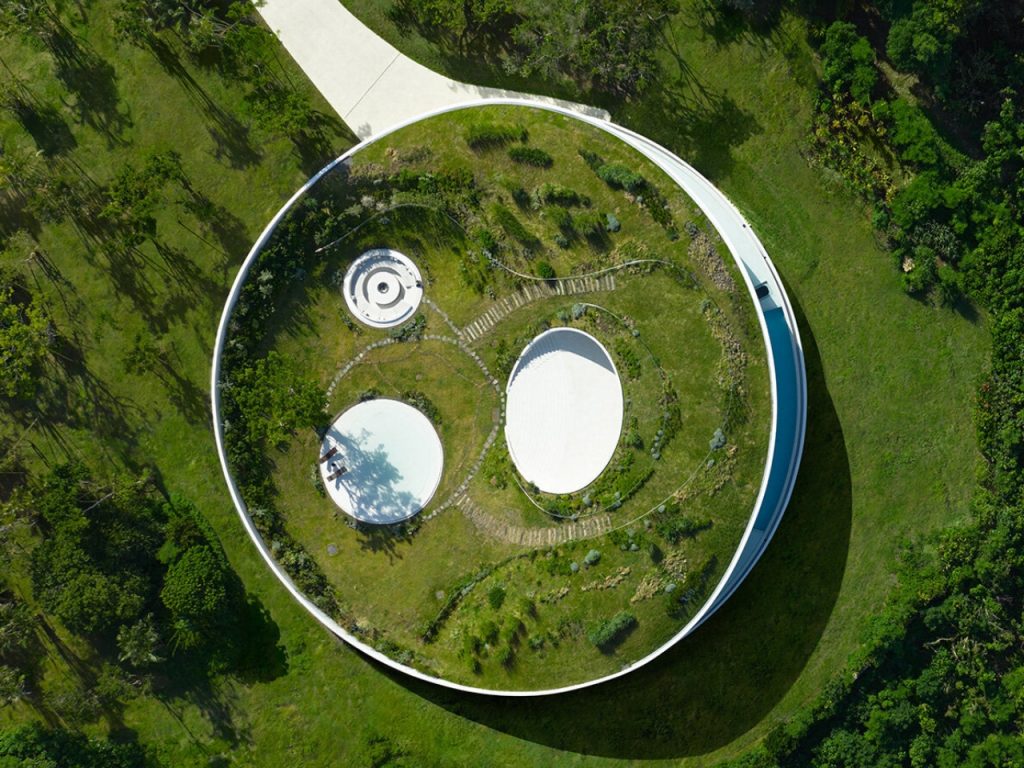
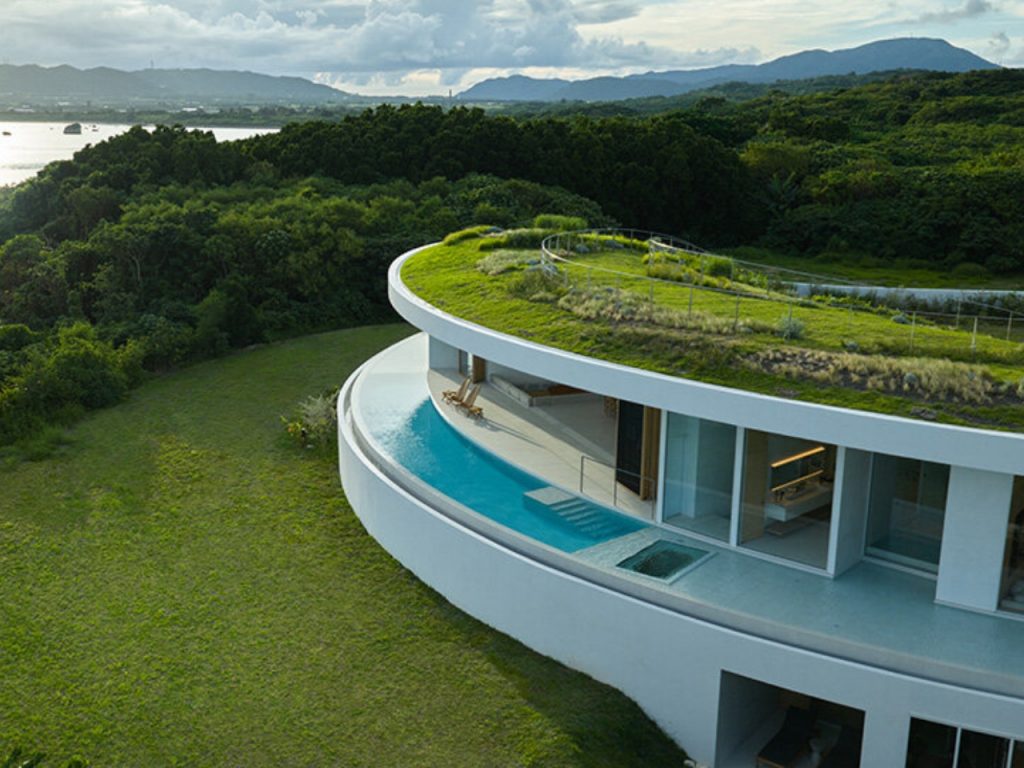
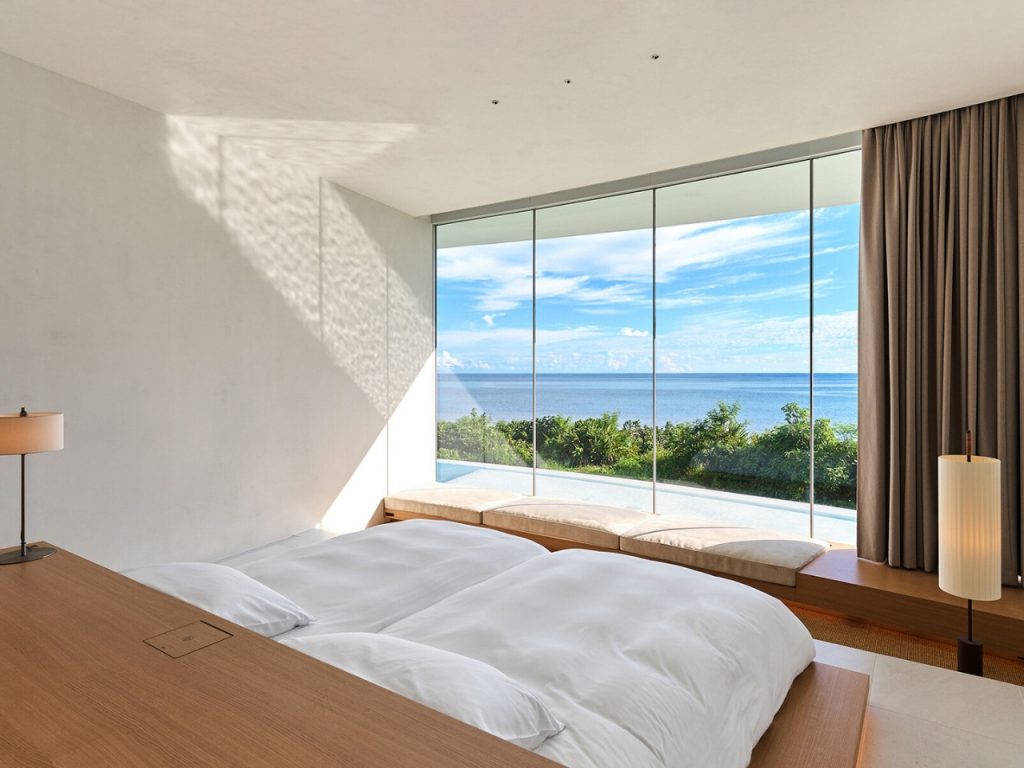
On the island of Ishigaki in Japan’s Okinawa Prefecture, Sou Fujimoto’s EARTH villa takes the idea of organic architecture to a new level. Created for NOT A HOTEL, the project feels less like a residence and more like a sculpted piece of terrain. Arriving at EARTH is described as encountering a building that grew from the ground itself. The circular footprint encloses a private courtyard, creating a sense of sanctuary while maintaining uninterrupted flow between indoor and outdoor spaces. Curved glass walls maximize ocean views and allow sunlight to sweep through the villa in gentle arcs.
EARTH villa by Sou Fujimoto
The living roof is the true star of this design, draped in native grasses and seasonal plants that shift in color and density throughout the year. It softens the building’s profile until the villa reads as part of the surrounding preserve rather than a structure laid upon it. This approach provides insulation, encourages biodiversity, and helps reduce stormwater impact, all while reinforcing the poetic connection between architecture and earth. The villa is undeniably luxurious and aspirational, yet it also proves that high design and environmental sensitivity need not be at odds.
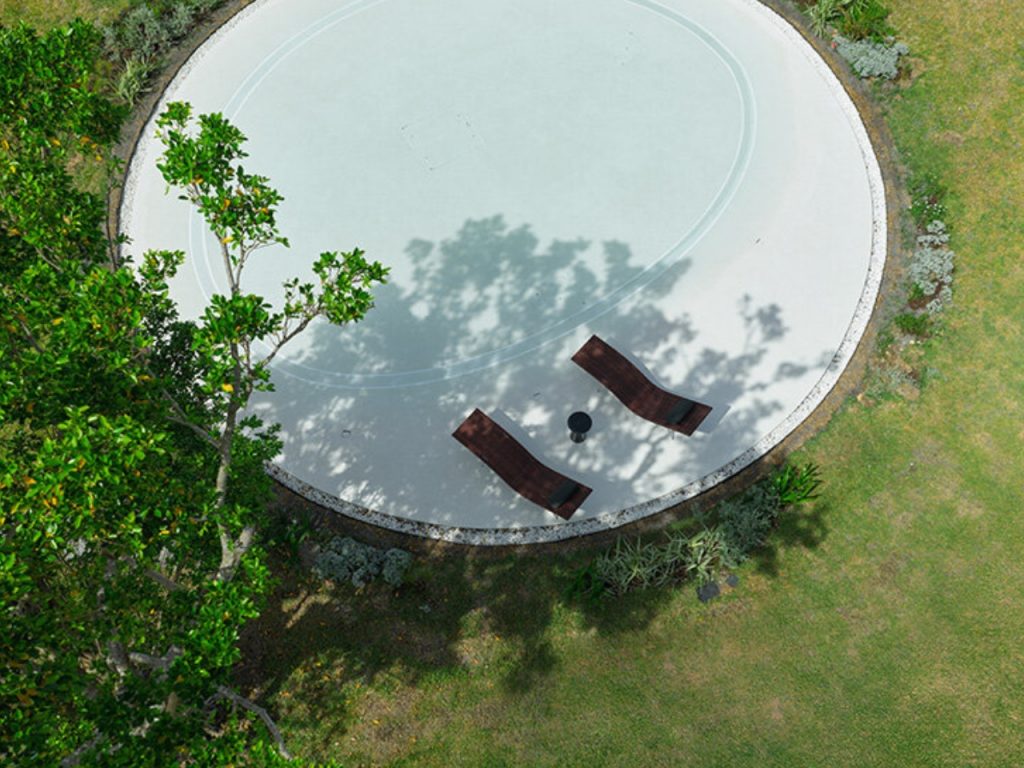
EARTH villa by Sou Fujimoto
Positioned between pristine ocean views and lush greenery, EARTH embodies the symbiosis many designers strive for. It demonstrates how bold form can coexist with ecological restraint, and how a home can function as a quiet steward of its environment.
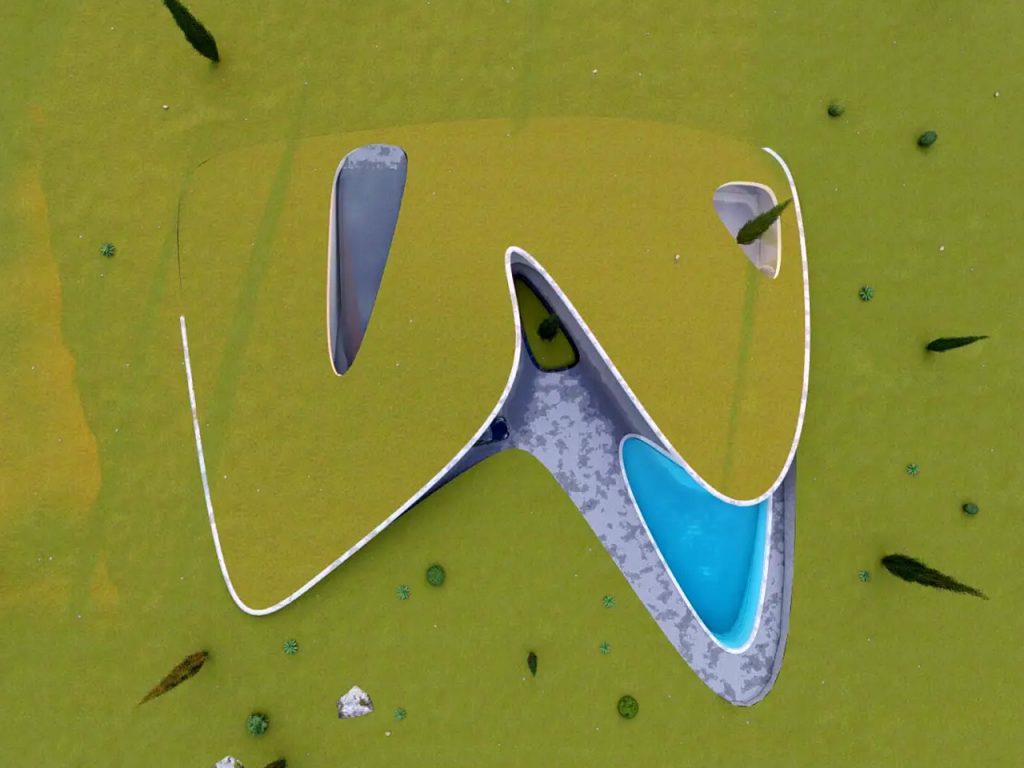
Under the Hill by MRK Office
House Under the Hill in Nashtarood, designed by MRK Office of Iran, takes a more understated yet deeply immersive approach. Much of the home is nestled beneath a living roof that mirrors the curves of the surrounding terrain. The architecture seems to slip into the earth, revealing only gentle slopes, sculpted openings, and simple lines that guide visitors toward the entrance. Once inside, the home unfolds into bright, contemporary spaces that contrast beautifully with the quiet exterior. Concrete, wood, and glass form a calm palette that allows the landscape to remain the protagonist.
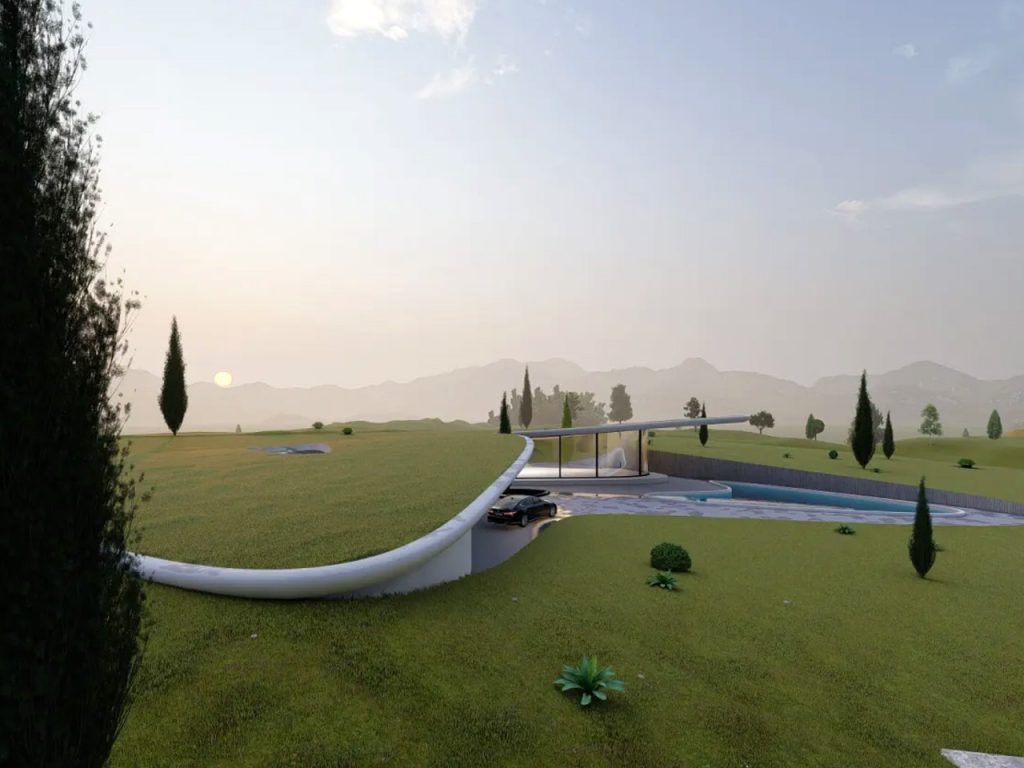
Under the Hill by MRK Office
Spatial flow defines the character of the interior. Rooms blend effortlessly into one another, with sightlines that stretch toward the hills and pool beyond. Bedrooms are placed for privacy and serenity, and bathrooms borrow daylight in ways that make even enclosed spaces feel connected to nature. The green roof overhead supports insulation and ecosystem health while acting as a literal extension of the hillside. This creates a sense that the home is borrowing space from the land rather than claiming it.

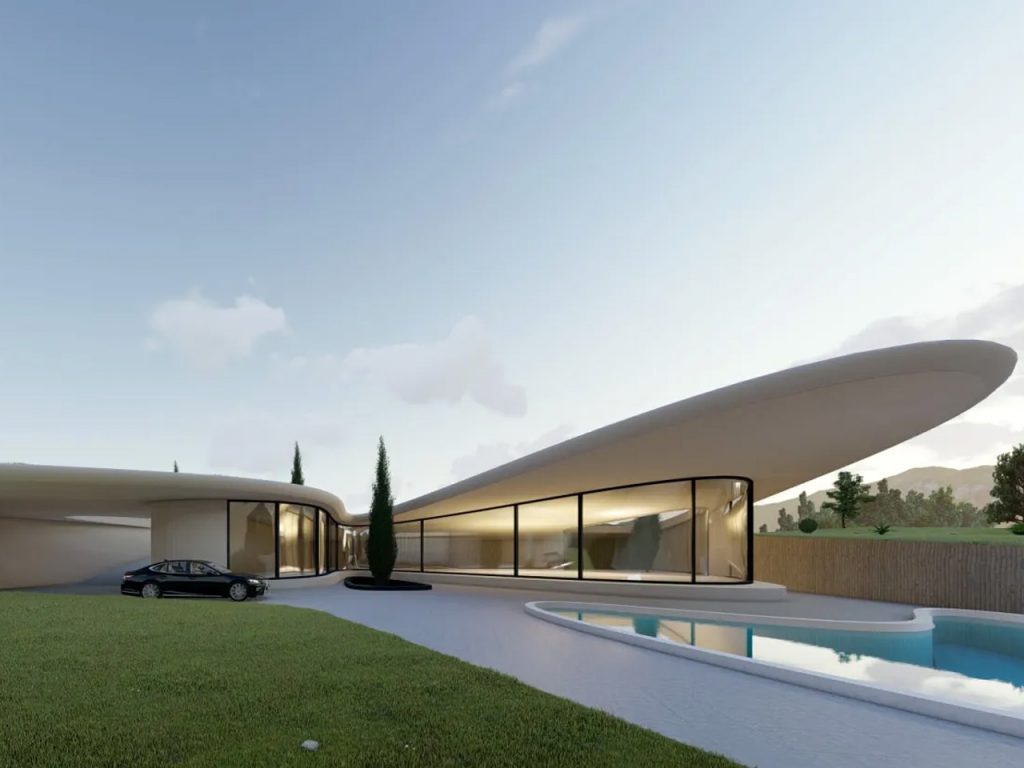
Under the Hill by MRK Office
From circulation paths shaped by smooth curves to storage tucked discreetly into walls, every decision supports clarity and openness. Outdoor terraces nestle beneath the hillside, providing comfortable microclimates throughout the day. Material choices reinforce durability and tactility, making the home not only visually compelling but also deeply livable. Above all, the design champions a philosophy of belonging rather than imposing. It sets a precedent for architecture that protects and nurtures its occupants while honoring the natural contours of the land.