Building on the global exploration of libraries as civic beacons and cultural stages, this next chapter shifts focus to Asia, where architects are reimagining the library as a responsive, community-centered space. Moving from monumental gestures and adaptive reuse to intimate, socially driven designs, these projects illustrate how libraries can bridge cultures, geographies, and generations. Here, the emphasis is on human connection, local craftsmanship, and environmental sensitivity, showing how architecture can transform reading spaces into hubs of learning, play, and cultural exchange.
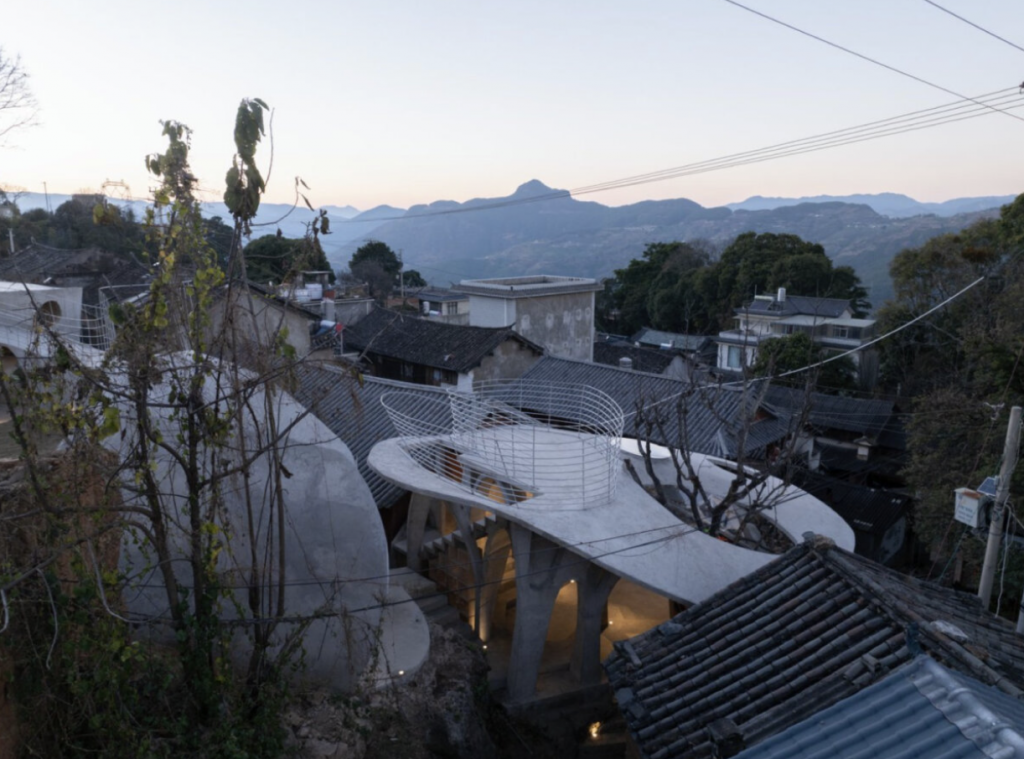
Mushroom Library for Children by Kong Xiangwei Studio
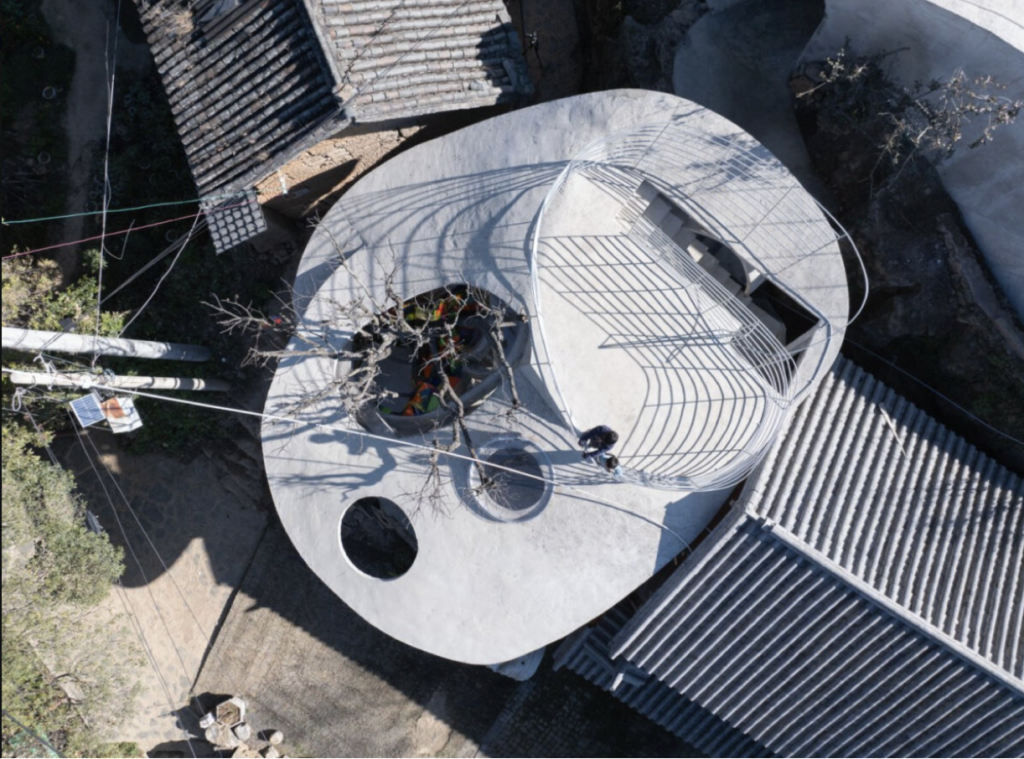
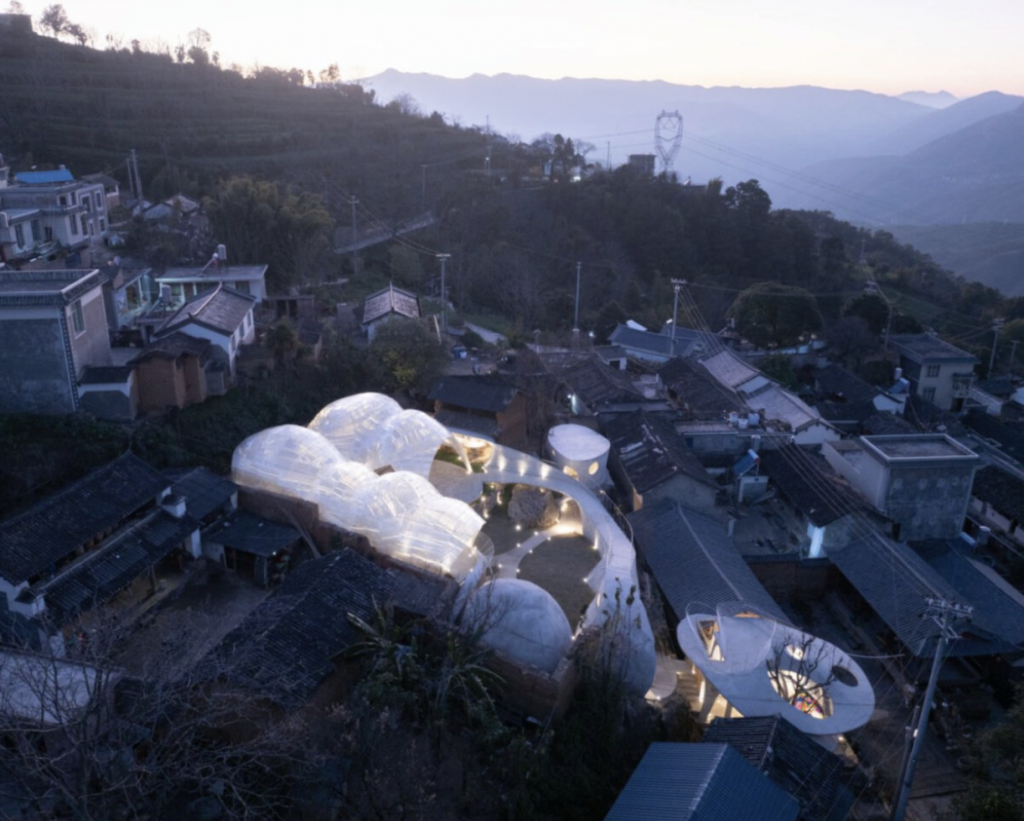
In the remote rural landscape of Yunnan, China, Kong Xiangwei Studio’s Mushroom Library for Children creates a playful and adaptive reading environment. Nestled between traditional dwellings and shaded by an ancient raisin tree, the library responds to both spatial constraints and the desire to preserve local heritage. A lightweight steel framework forms branching arches that support cast-in-place concrete vaults, capped with a mushroom-shaped roof. The structure changes depending on perspective: a simple brim from the alley, an ethereal glowing form from above, or an almost animate presence at night.
Mushroom Library for Children by Kong Xiangwei Studio
Inside, rough, unpolished concrete surfaces celebrate local craftsmanship, while semi-spherical bookshelves and steel columns refract light into delicate patterns. Openings including preserved tree hollows and a central oculus fill the interior with sunlight and shifting shadows. Natural light filters through tree hollows, stair voids, and a central oculus, casting ephemeral shadows that shift through the day.
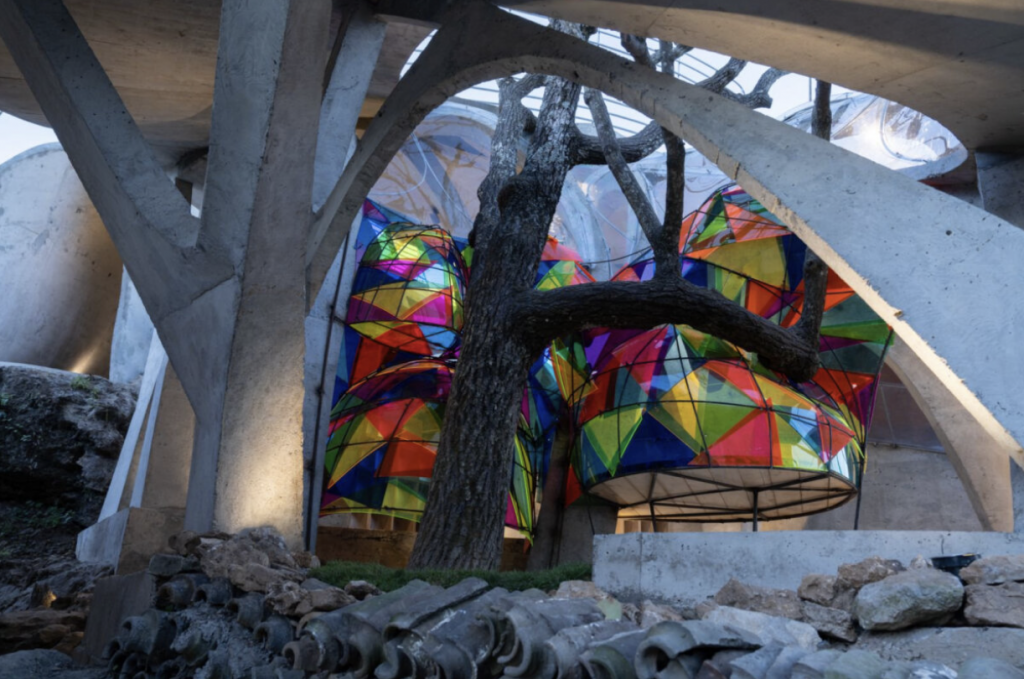
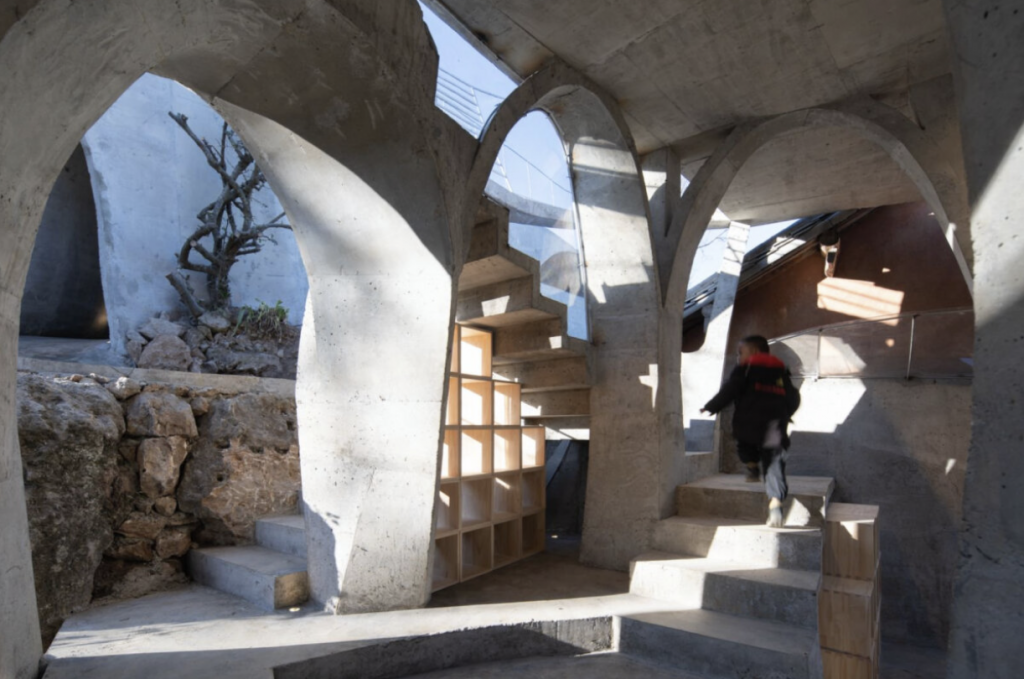
Mushroom Library for Children by Kong Xiangwei Studio
The library’s open layout leads to a rooftop terrace where children can move freely and interact with the tree, harvest fruit, or enjoy views of the forest horizon. By night, the softly illuminated structure hovers like a lantern, a poetic emblem of learning deeply embedded in its community.
SMVIT Library by Cadence Architects
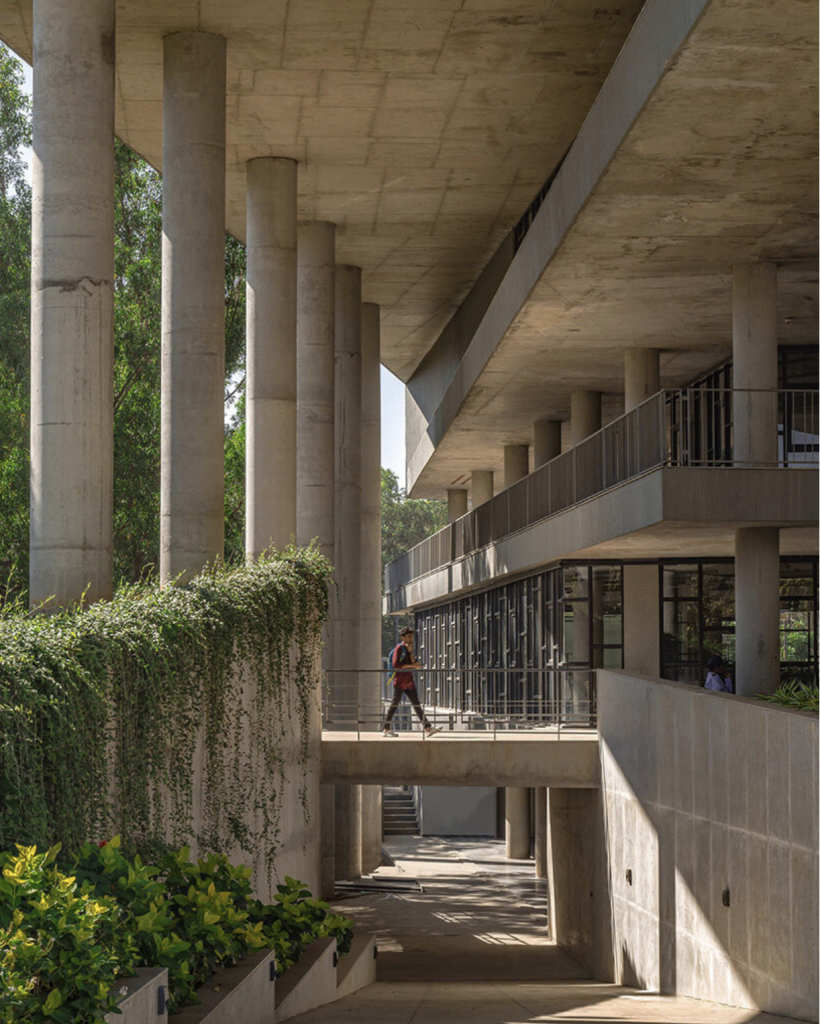
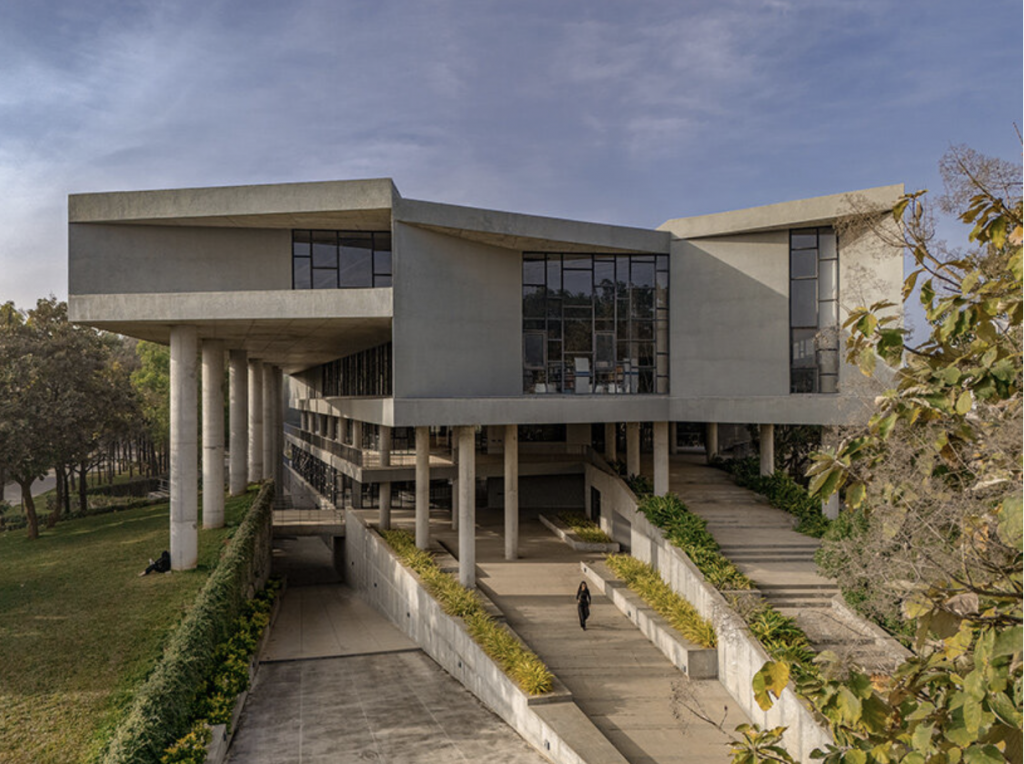
Further south in India, Cadence Architects’ SMVIT Library in Bangalore reinterprets the university library as both a social hub and academic anchor. Positioned strategically between hostels and academic blocks, and soon facing a central plaza, the library functions as both a destination and a conduit for movement.
SMVIT Library by Cadence Architects
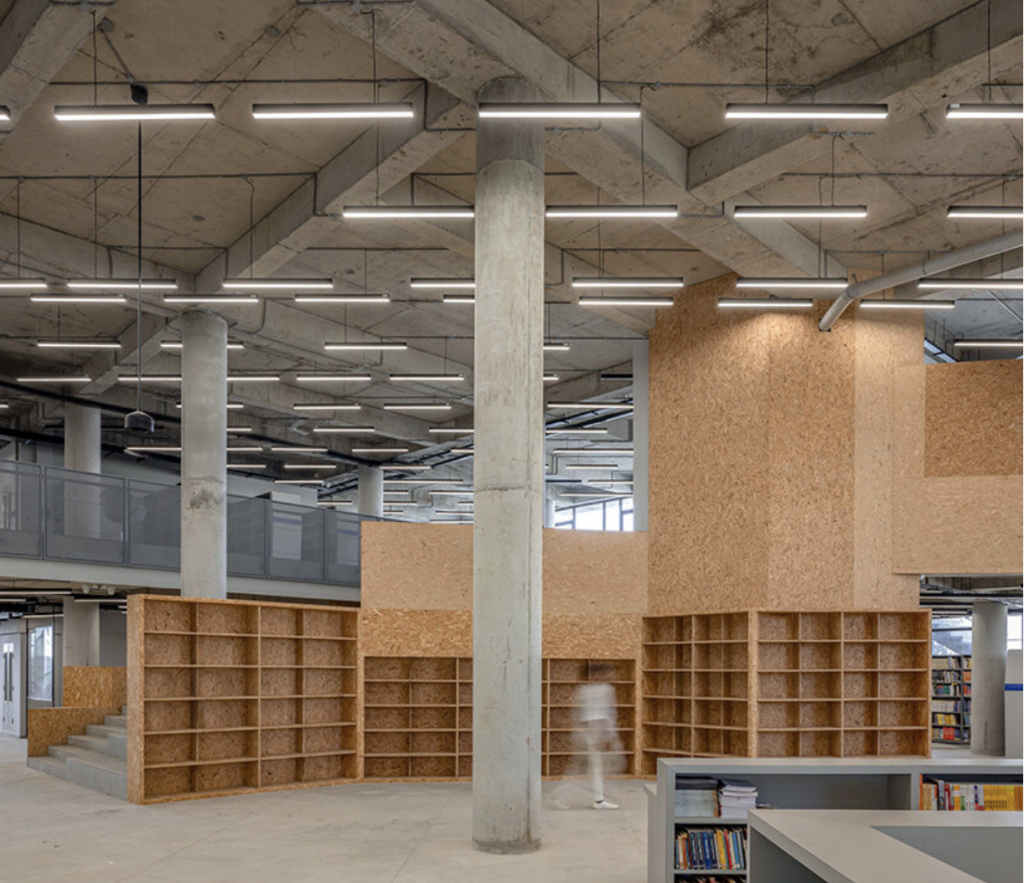
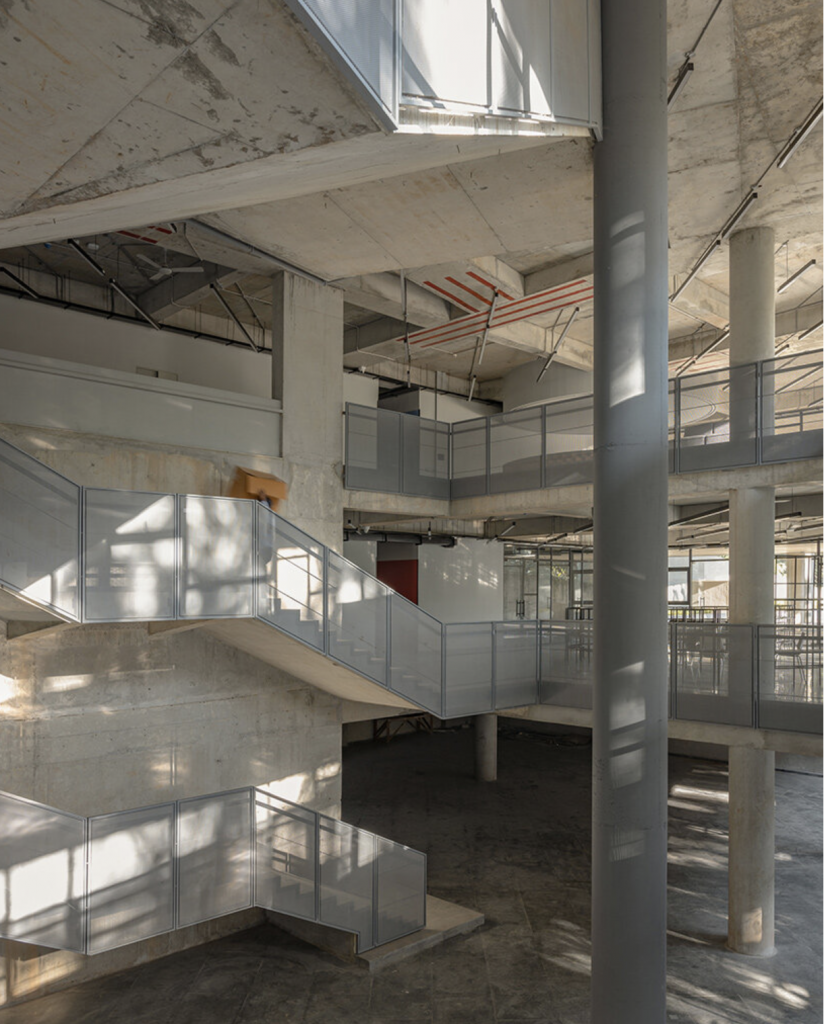
Elevated atop pilotis, the building integrates with the surrounding campus and preserves existing trees while allowing pedestrian movement beneath. Its exposed concrete mass conveys strength and permanence, yet broad pathways and open circulation invite interaction, positioning the library as both destination and connector within the university’s masterplan.
SMVIT Library by Cadence Architects
SMVIT Library by Cadence Architects
The interior balances privacy and collaboration through sectional complexity. Intimate reading alcoves coexist with large communal zones, while generous openings provide natural light and ventilation. The interplay between solid and porous volumes ensures the library feels grounded yet welcoming, supporting both focused study and spontaneous social engagement. This combination of openness, materiality, and thoughtful circulation creates a democratic space where learning and interaction are equally valued.
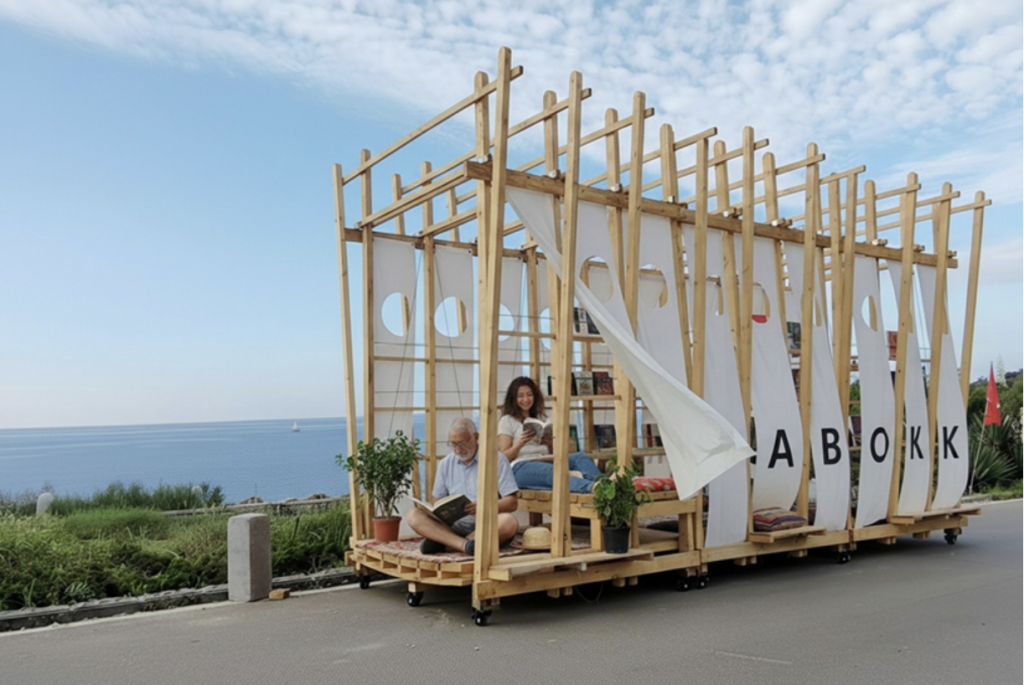
Seaside Mobile Library by Studio WE (also header image)
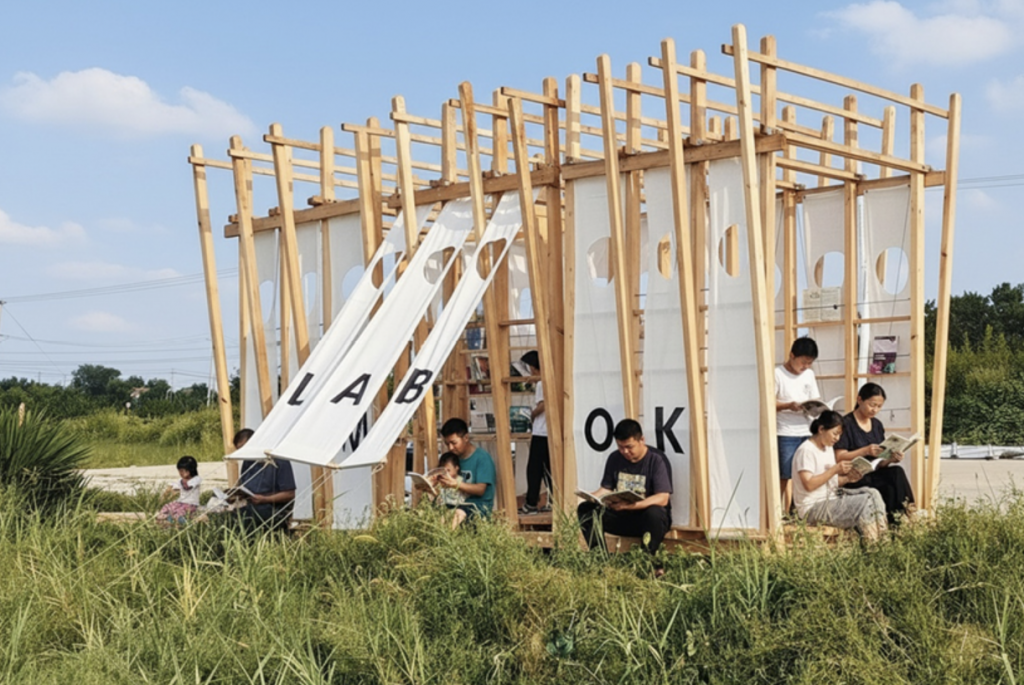
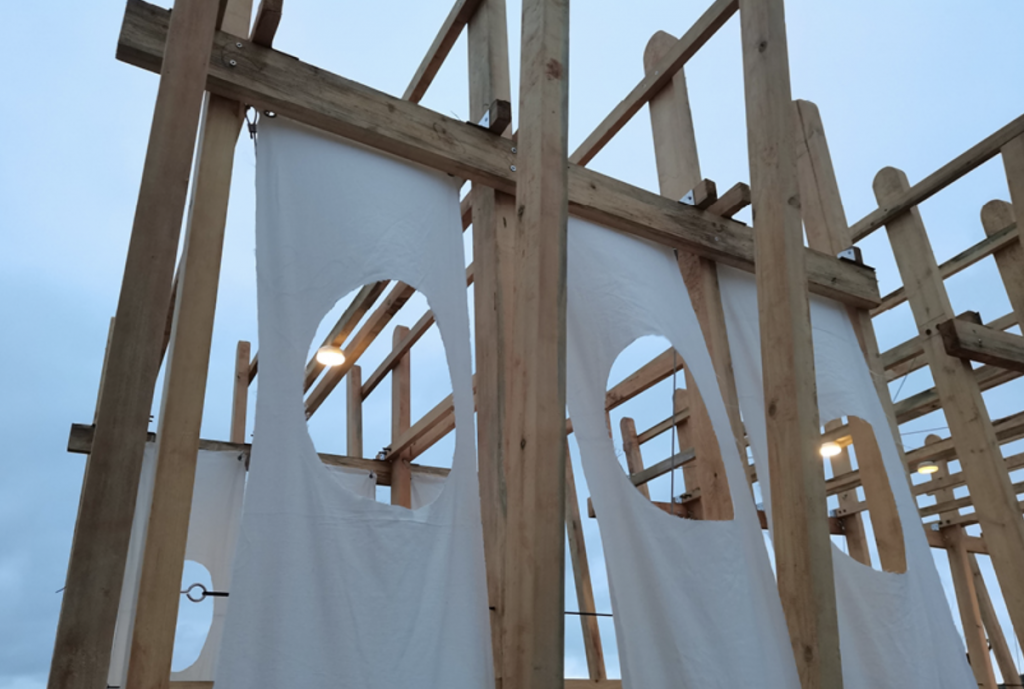
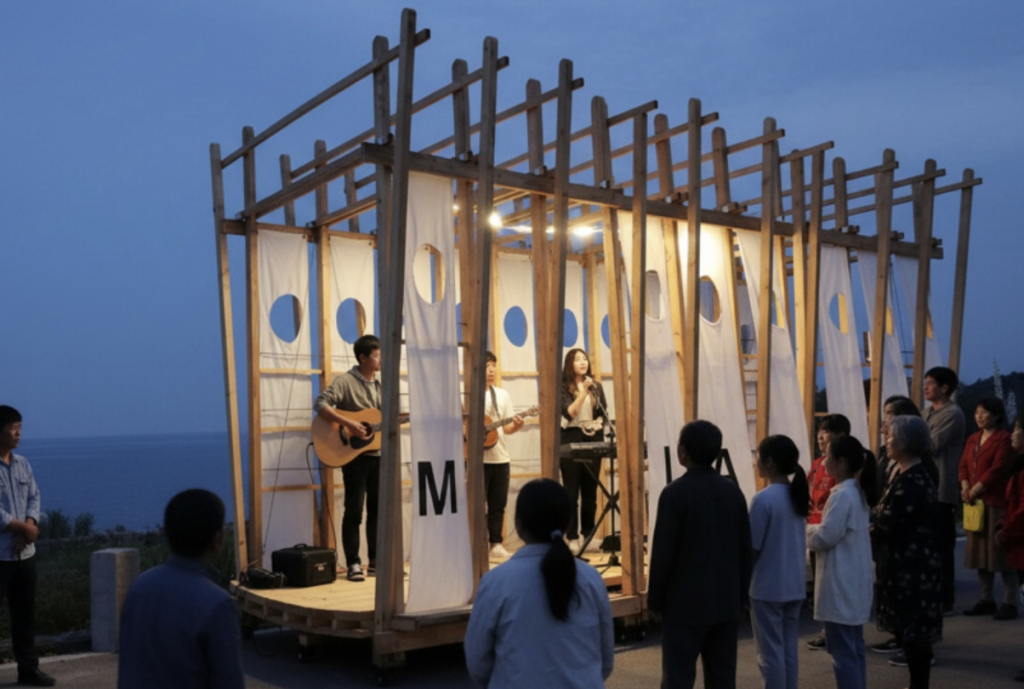
On the eastern coast of China, Studio WE’s Seaside Mobile Library embraces mobility as a vehicle for community enrichment. Anchored along Yantai’s Yangma Island but capable of circulating among fishing villages, the prefabricated timber structure brings consists of three modular units that can be reconfigured as a library, stage, or seaside pavilion.
Seaside Mobile Library by Studio WE
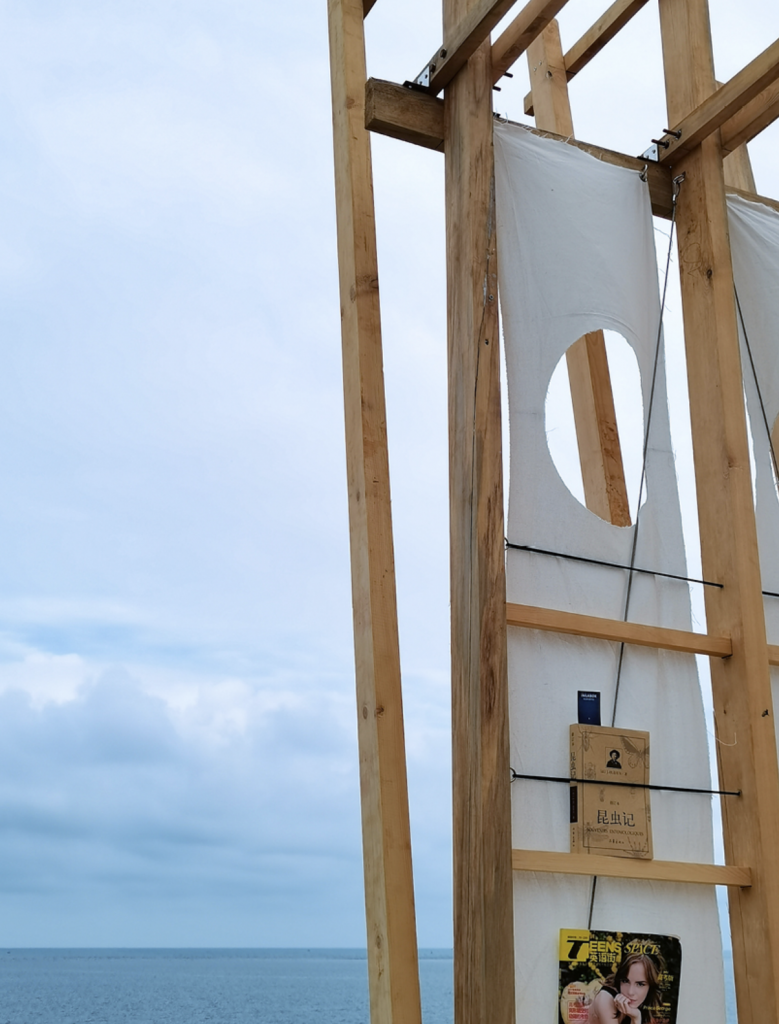
Built from locally sourced timber and prefabricated joinery, the modules are easy to assemble, disassemble, and transport, enabling the library to circulate among coastal fishing villages and bring books, performances, and educational programs to remote communities.
Seaside Mobile Library by Studio WE
Large openings frame sea views and allow natural ventilation, while outdoor terraces expand opportunities for reading, learning, and social gathering. Timber’s natural tones integrate the structure into its coastal context, creating a flexible space that accommodates seasonal and community needs. Beyond its primary function as a library, the mobile design serves as a cultural platform, hosting performances and educational activities, exemplifying how architecture can become both socially catalytic and portable.