Playgrounds are no longer collections of off-the-shelf equipment dropped onto a rubber surface. Today’s most compelling playscapes operate at the intersection of landscape design, architecture, and social innovation. They borrow from nature, experiment with technology, and rethink how children and adults alike inhabit shared space. Across China, a new generation of designers is transforming play into an immersive spatial experience that encourages movement, imagination, and community.
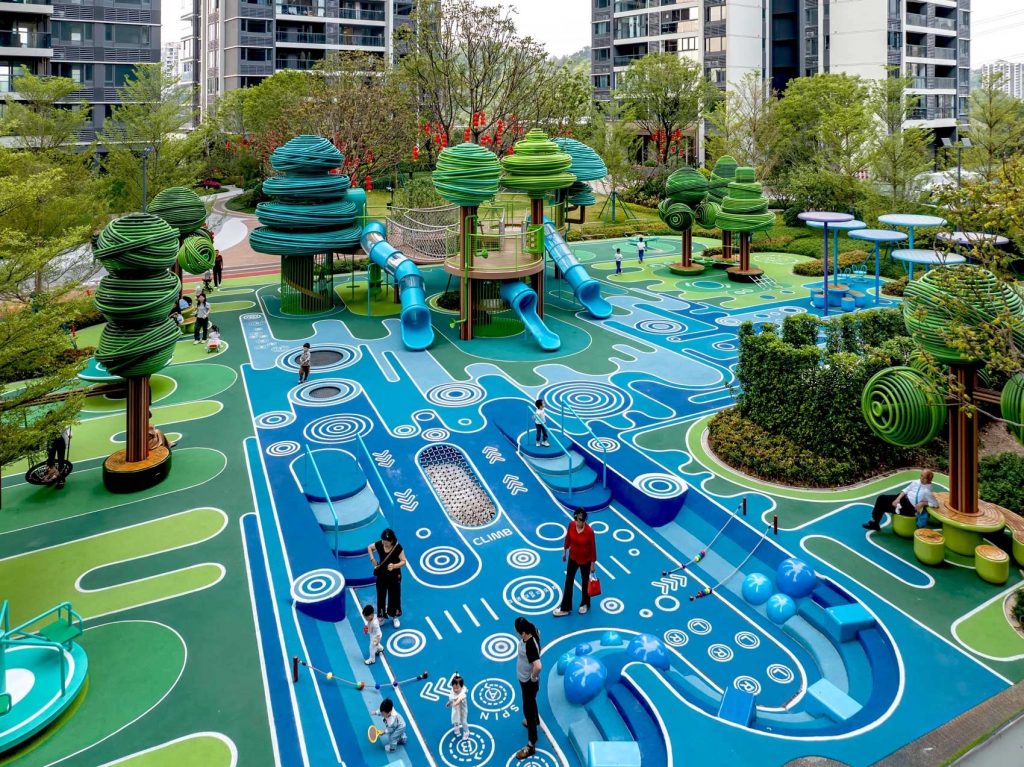
Set within a residential district in Guangzhou, Wired Scape by 100architects reimagines the neighborhood playground as an abstracted natural landscape. Rather than replicating trees and rivers literally, the design translates forest and flowing water into sculptural geometries and graphic surfaces. The result is a fluid environment that feels organic while remaining unmistakably urban, where movement and discovery are embedded into the ground plane itself.
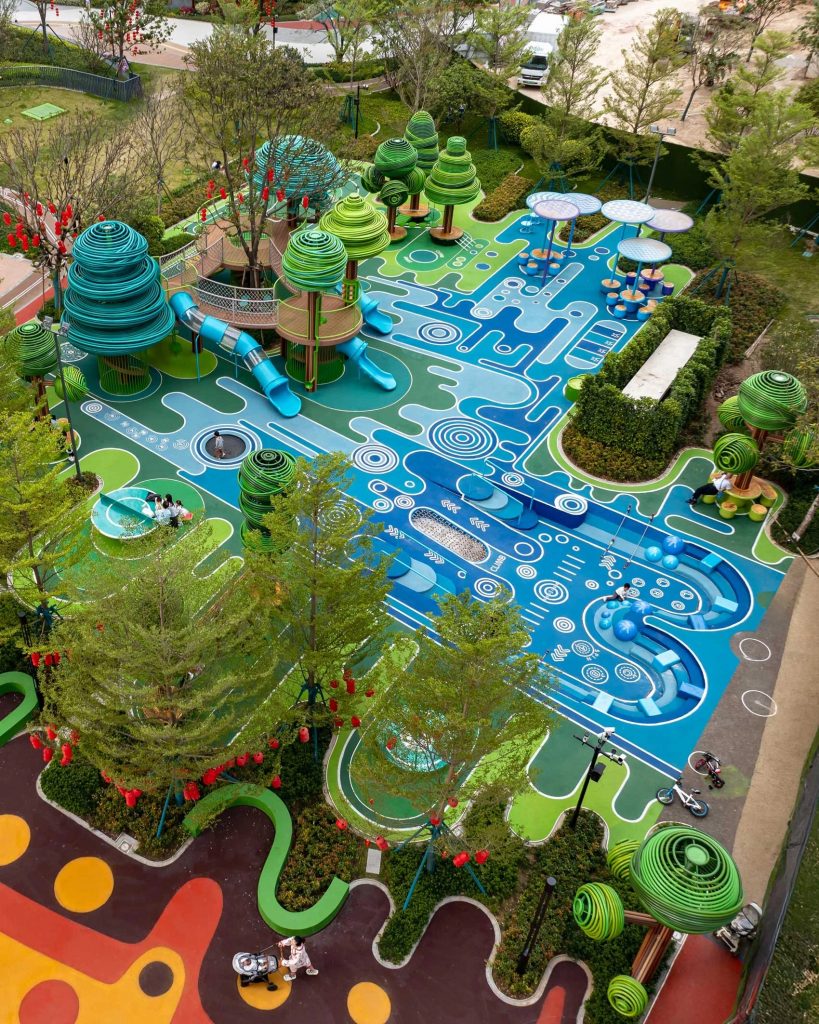
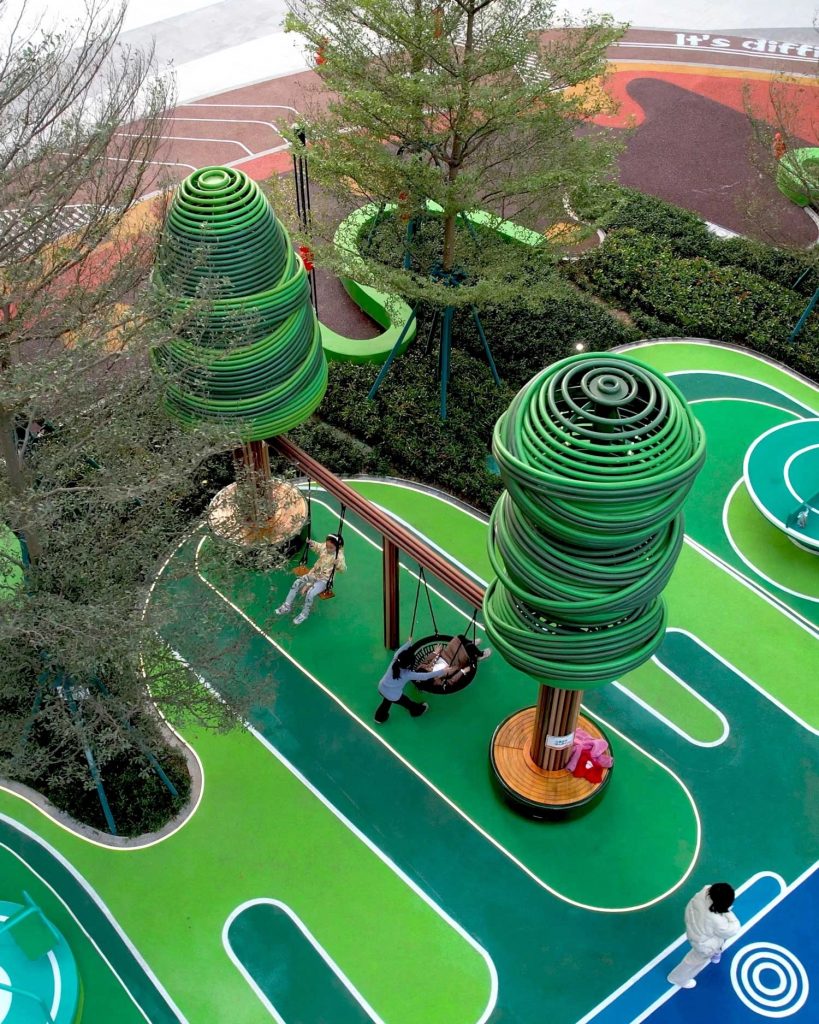
Wired Scape, Guangzhou by 100architects (also header image)
At the heart of the project stand four tree-like structures made from spiraling steel pipes. These vertical elements function simultaneously as climbing frames, landmarks, and shaded canopies. Suspended bridges link the structures at different heights, encouraging exploration across levels and offering children a sense of progression and challenge. Beneath and around them, the playscape unfolds as a continuous terrain rather than a series of isolated attractions.
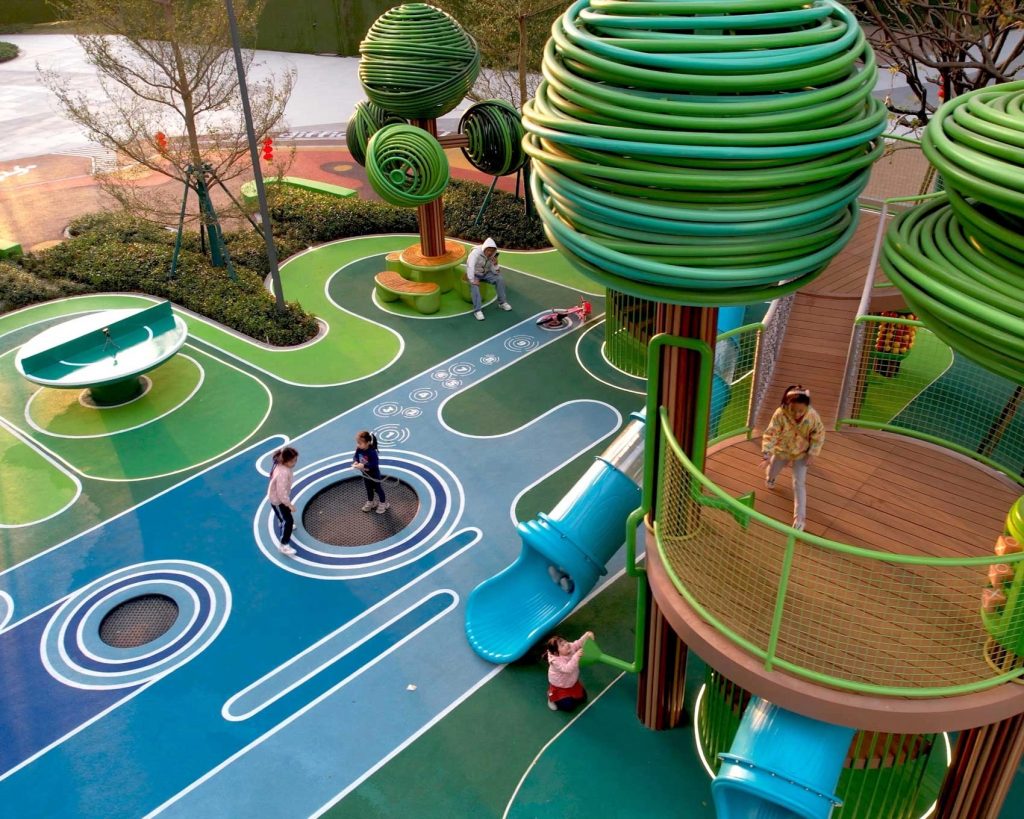
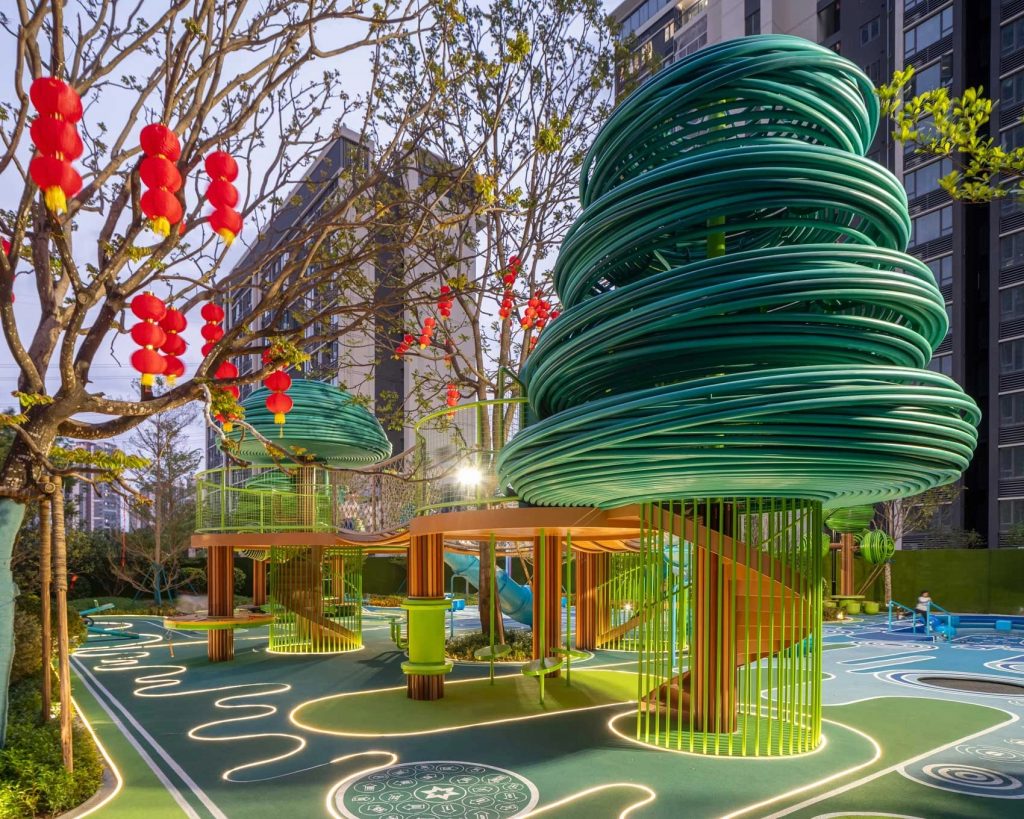
Wired Scape, Guangzhou by 100architects
The ground treatment reinforces this sense of flow. Multicolored, curved lines sweep across the site, referencing water currents while clearly defining plazas, paths, seating areas, and play platforms. A recessed plaza near the center introduces a social dimension, accommodating informal gatherings, small performances, or moments of rest. Play, circulation, and pause are interwoven rather than separated.
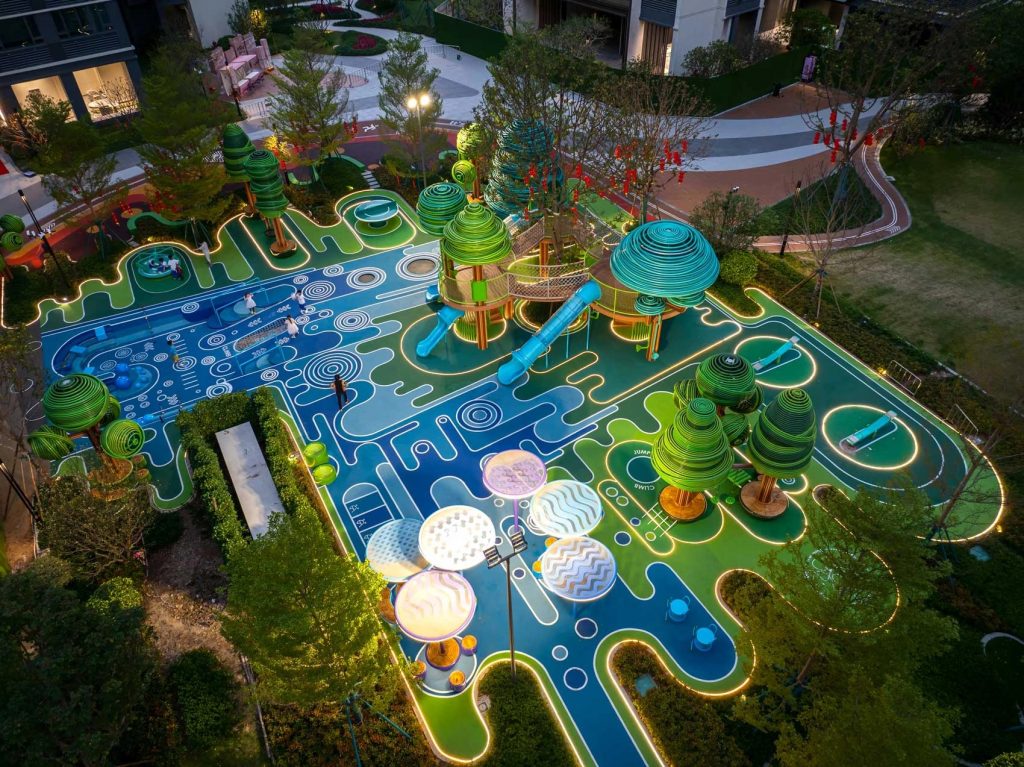
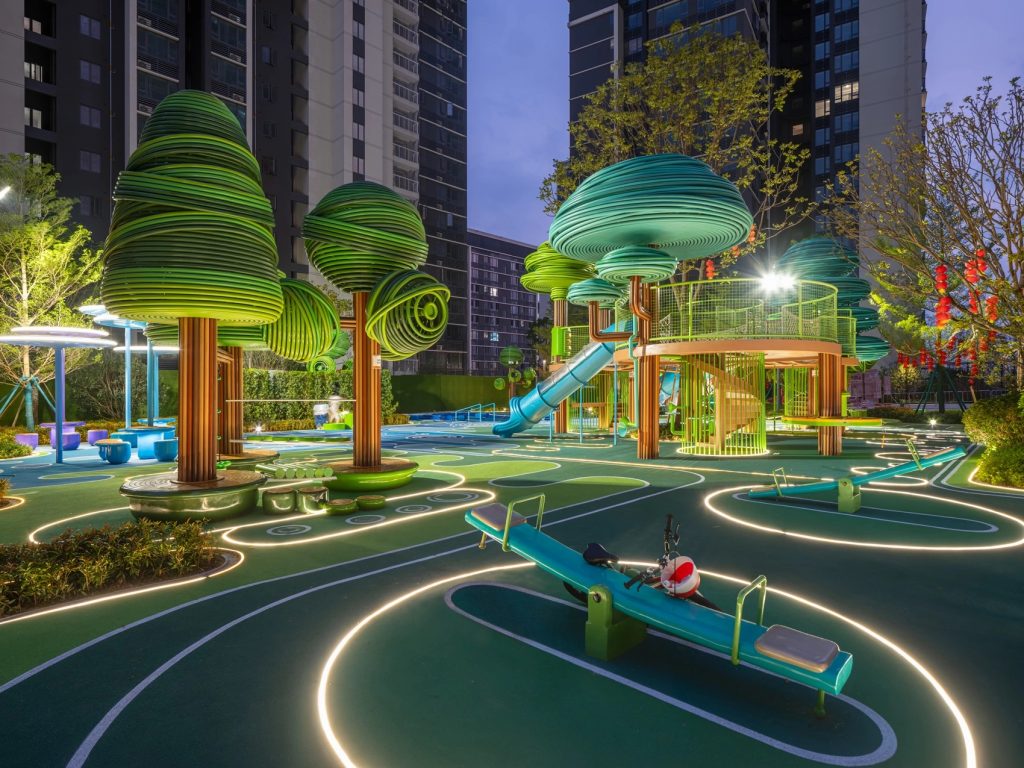
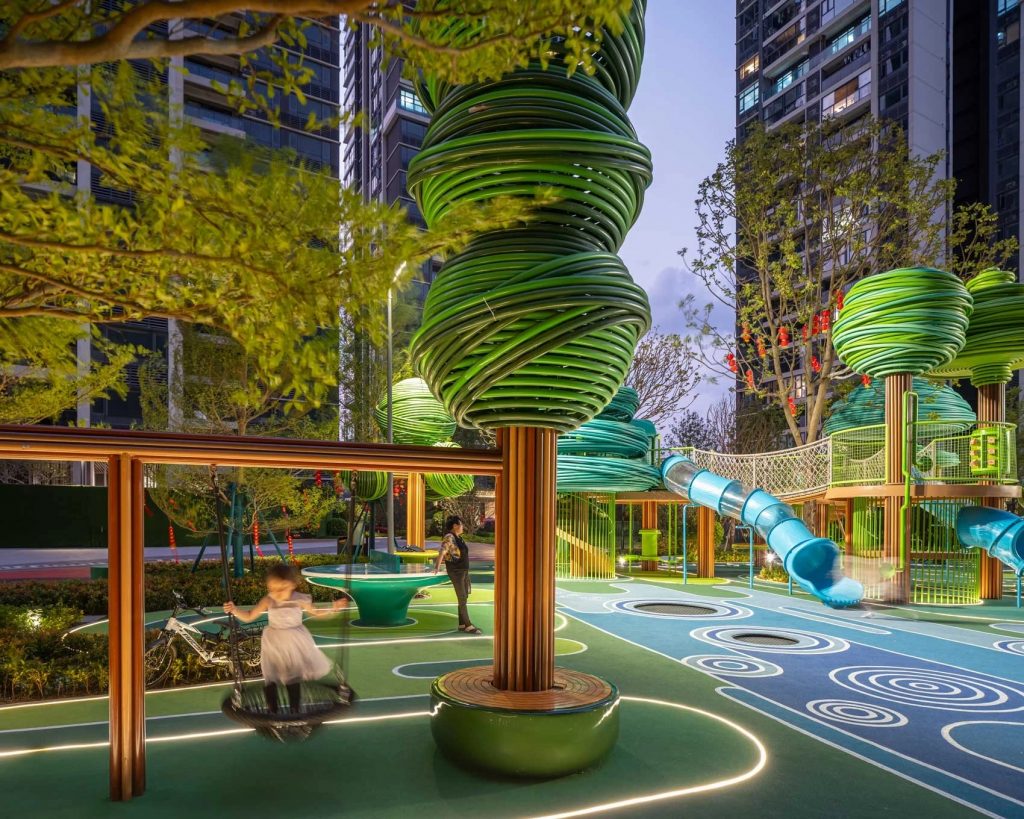
Wired Scape, Guangzhou by 100architects
Importantly, Wired Scape is conceived as a multi-generational environment. Climbing, swinging, sliding, and balancing activities are complemented by seating positioned for supervision and social interaction. Durable materials such as steel piping and resilient surfacing ensure longevity, while integrated lighting extends usability into the evening and gives the playscape a distinct nighttime identity.
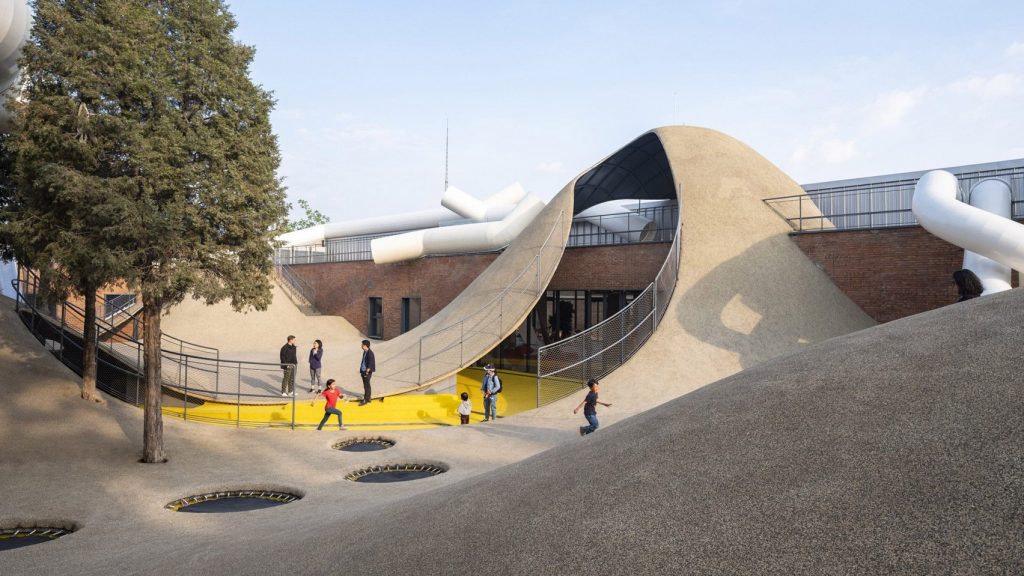
The Playscape, Beijing by we architech anonymous
If Wired Scape abstracts nature into geometry, waa’s Playscape in Beijing looks inward, transforming an industrial relic into a tool for sensory learning. The project converts a cluster of 1970s warehouses into an experiential community center for children, organized around a central courtyard and connected by roof terraces and an aerial bridge. What was once a closed industrial compound is now an open, looping environment of exploration.
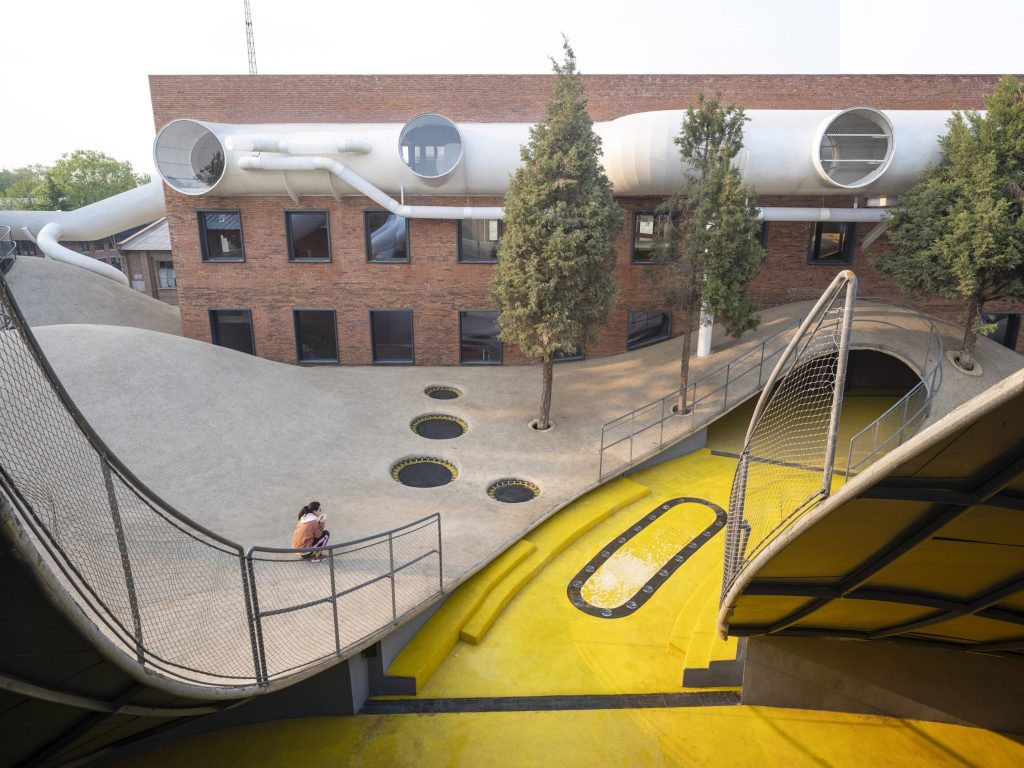
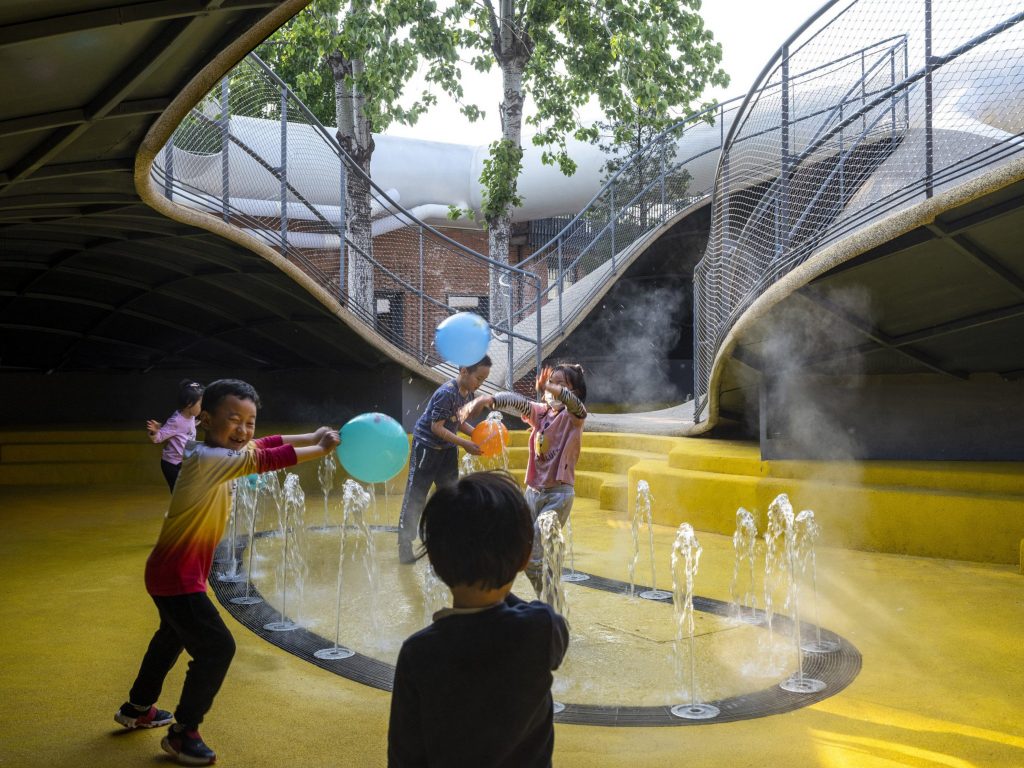
The Playscape, Beijing by we architech anonymous
Designed for a healthcare provider focused on children’s movement development, the Playscape deliberately minimizes screens and gadgets. Instead, it revives the idea of neighborhood street play through spatial experiences that promote physical awareness and decision making. Adventure playgrounds, maze-like routes, and ergonomically scaled nooks invite children to test their bodies and instincts rather than follow prescribed paths.
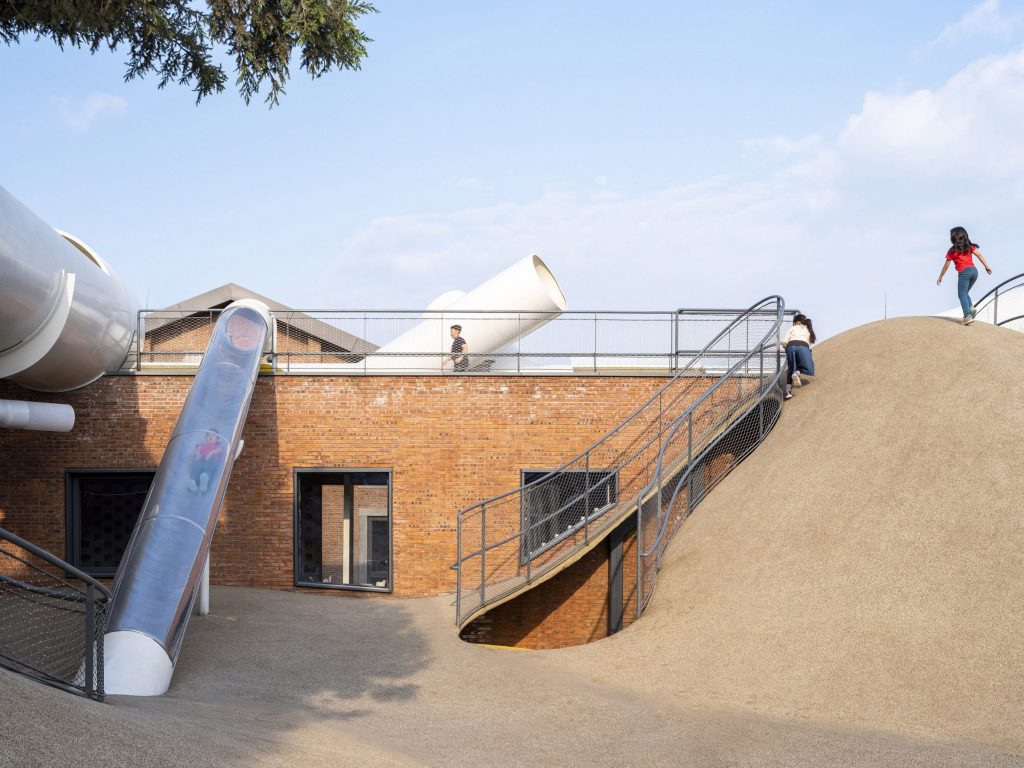
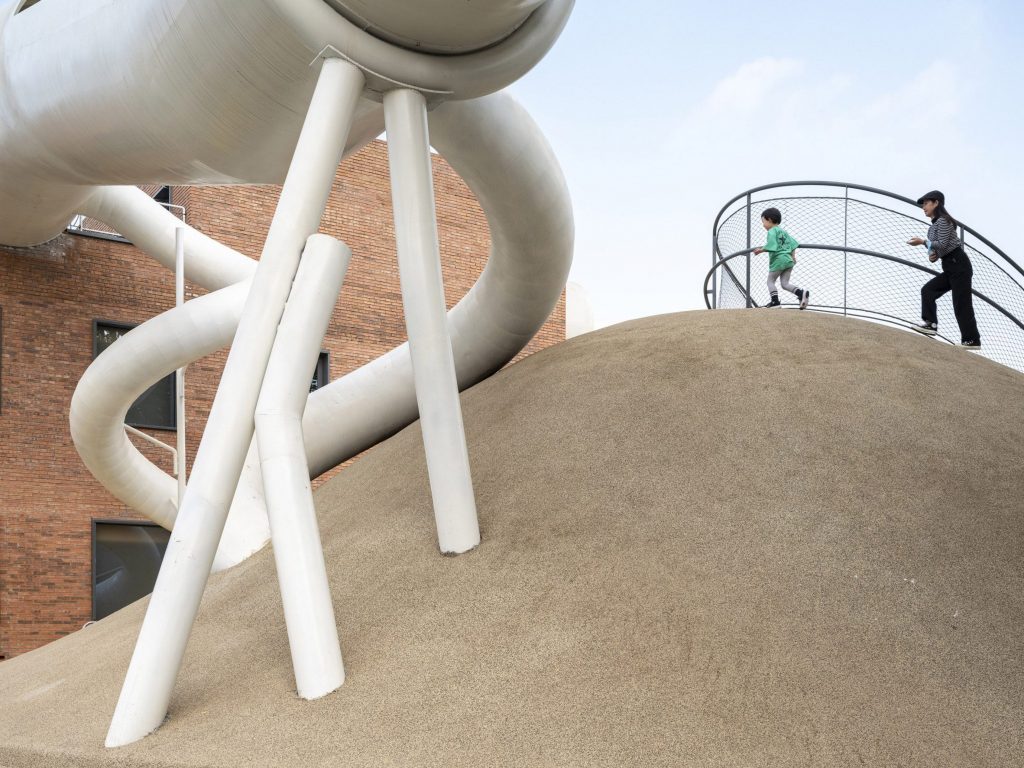
The Playscape, Beijing by we architech anonymous
The design is structured around three architectural devices: pipe, roof, and mound. The pipe system creates bridges, staircases, and narrow passages that challenge balance and proprioception. The roof terraces act as both observation points and alternative routes, encouraging children to choose unconventional ways of moving through space. From here, slides of varying heights lead under the mound, introducing speed, anticipation, and controlled risk.
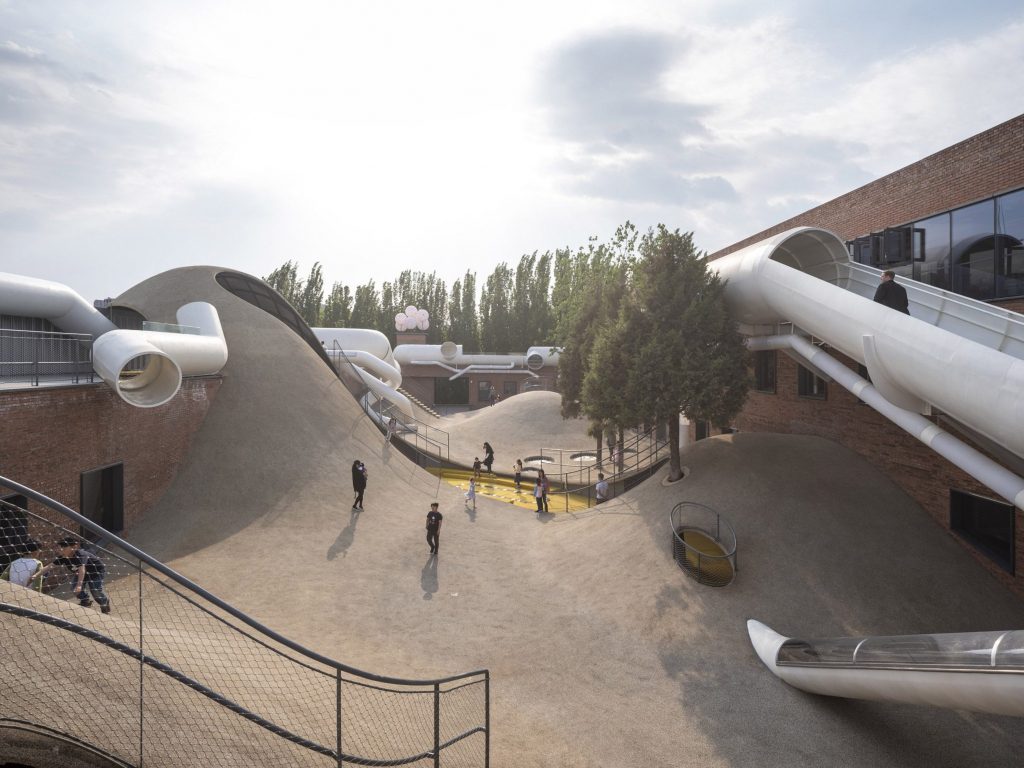
The Playscape, Beijing by we architech anonymous
The mound itself is a landscape of hills and hidden spaces, inviting free exploration above and sheltered play below. Throughout the complex, age-specific zones range from soft topographies for babies to steep climbing areas with suspended nets. Parents remain part of the experience, circulating along looped roof terraces that also host adult amenities. By embracing risk, distorted scale, and open-ended movement, waa positions play as a formative, empowering act rather than a scripted activity.
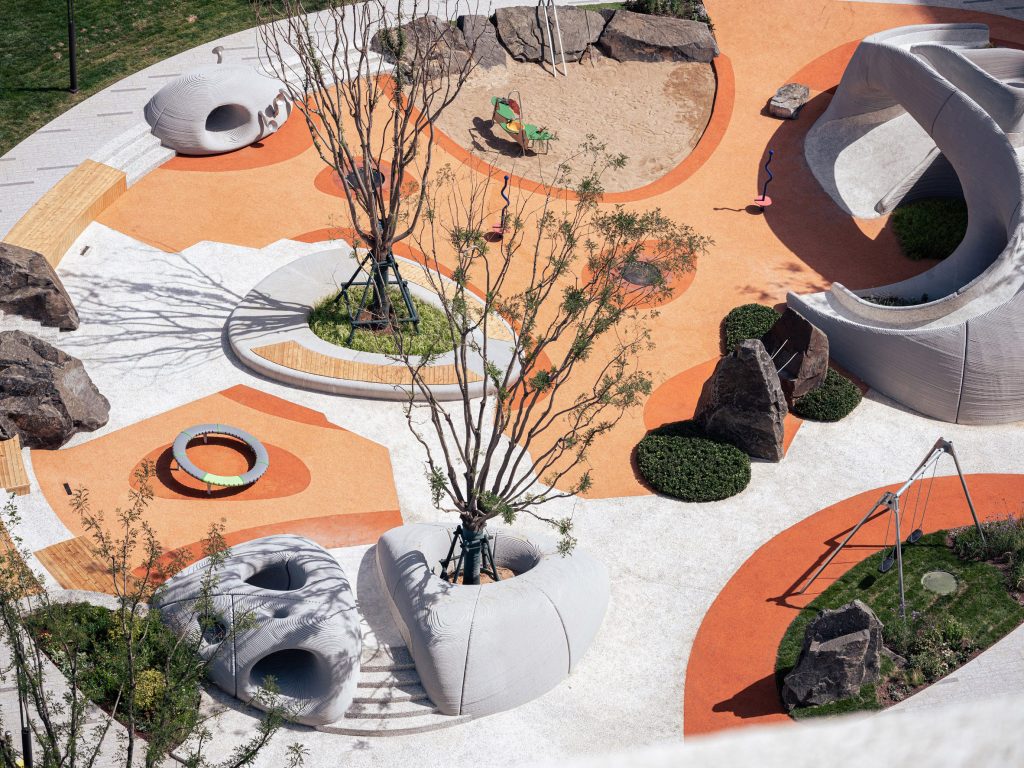
Boulder Park, Shandong by Xisui Design
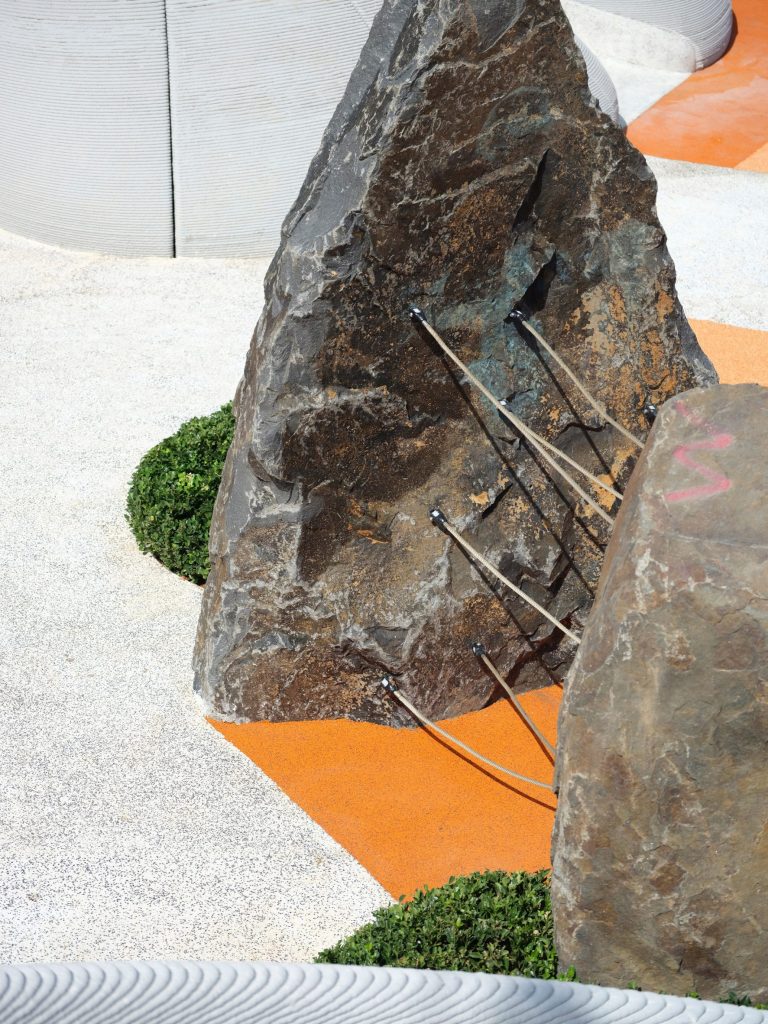
While the Beijing project reclaims the past, Boulder Park in Shandong looks firmly to the future. Designed by Xisui Design, this playground introduces 3D-printed concrete boulders as the primary building blocks of play. Set within a 13,000-square-metre community park in Jinan, the project demonstrates how advanced fabrication can serve deeply human, tactile experiences.
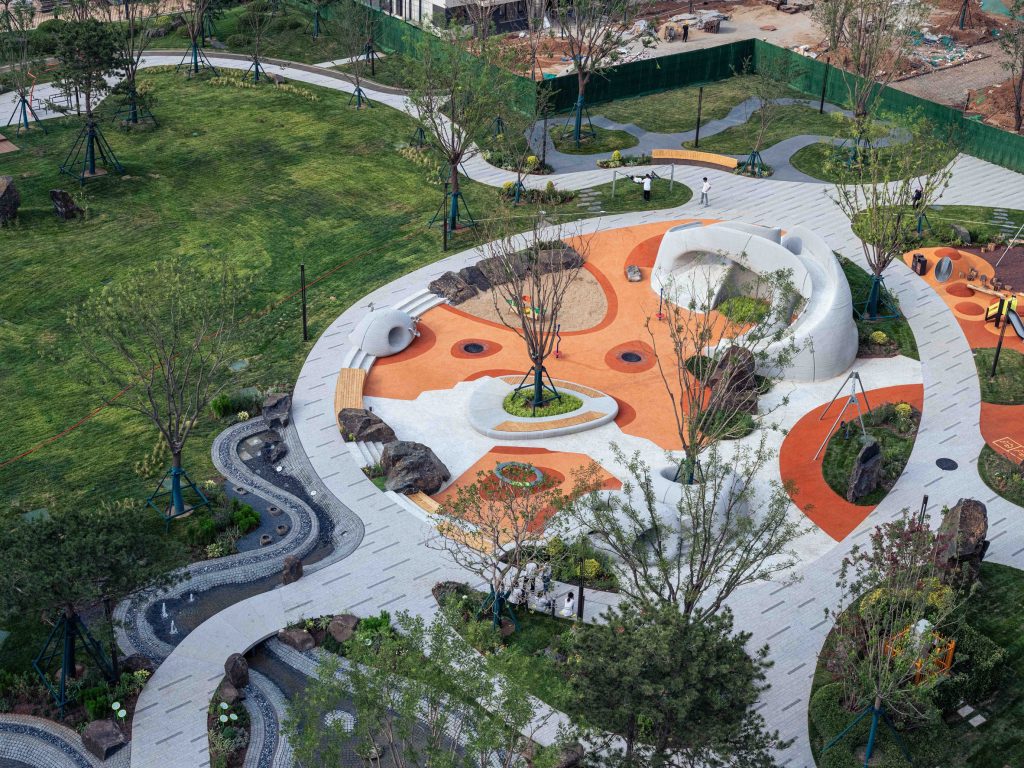
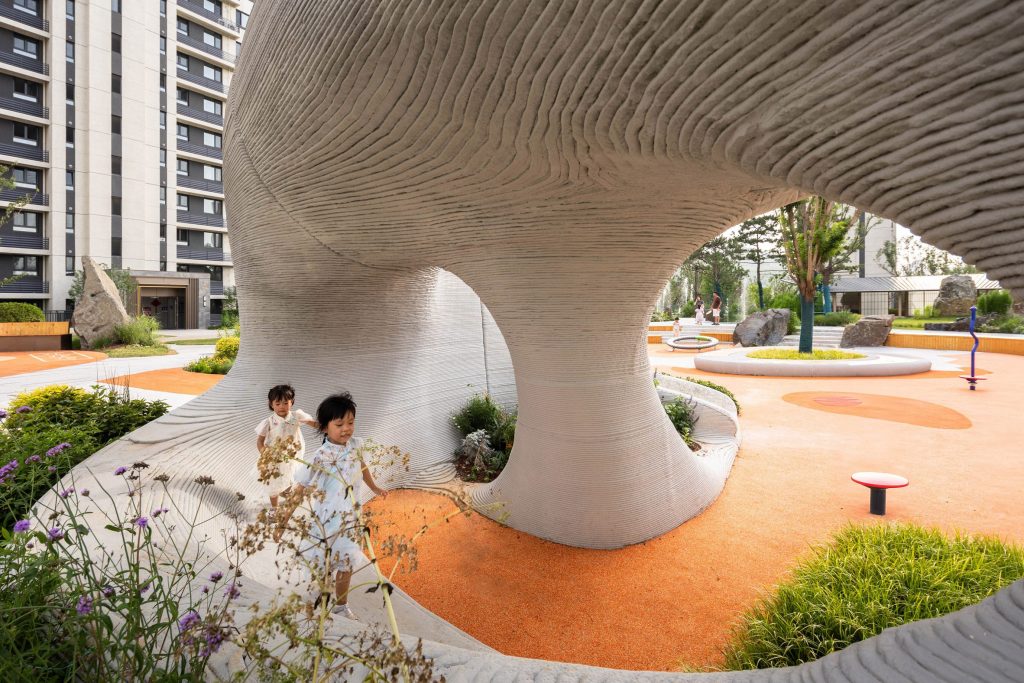
Boulder Park, Shandong by Xisui Design
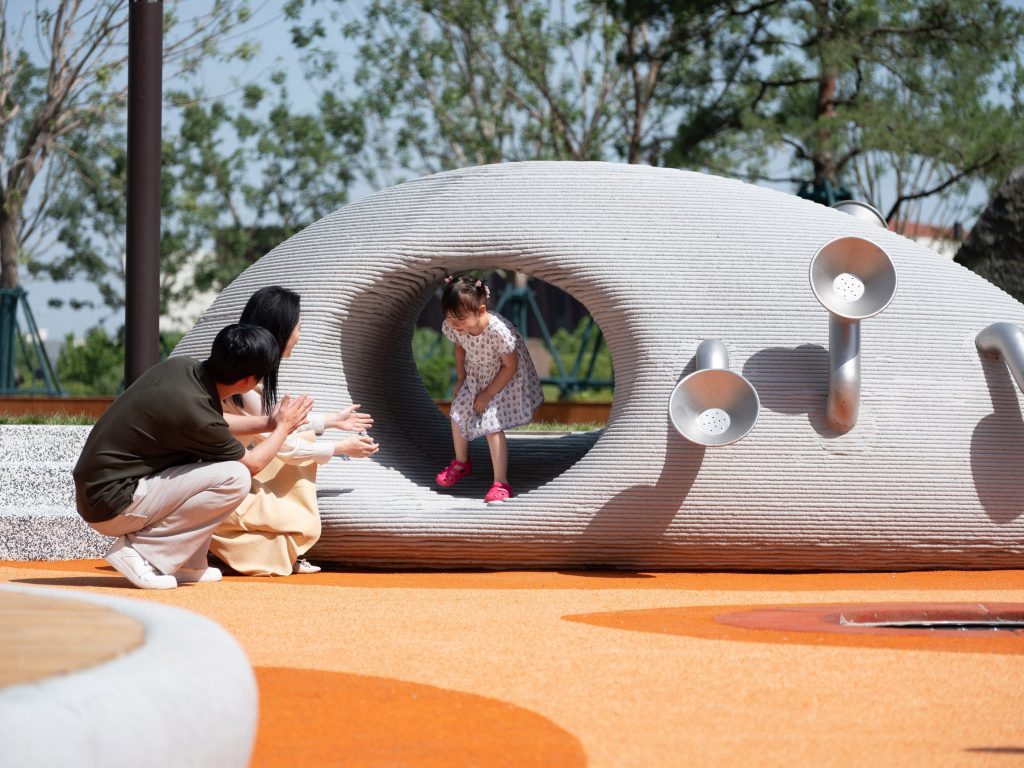
The southern portion of the park is divided into three zones: a water park, a boulder playground, and a woodland area. Across these landscapes, natural elements such as rocks, logs, and sand are combined with cave-like concrete structures that feel simultaneously ancient and futuristic. The boulders are not decorative objects but active participants in play, forming bridges, tunnels, slides, planters, and shelters.
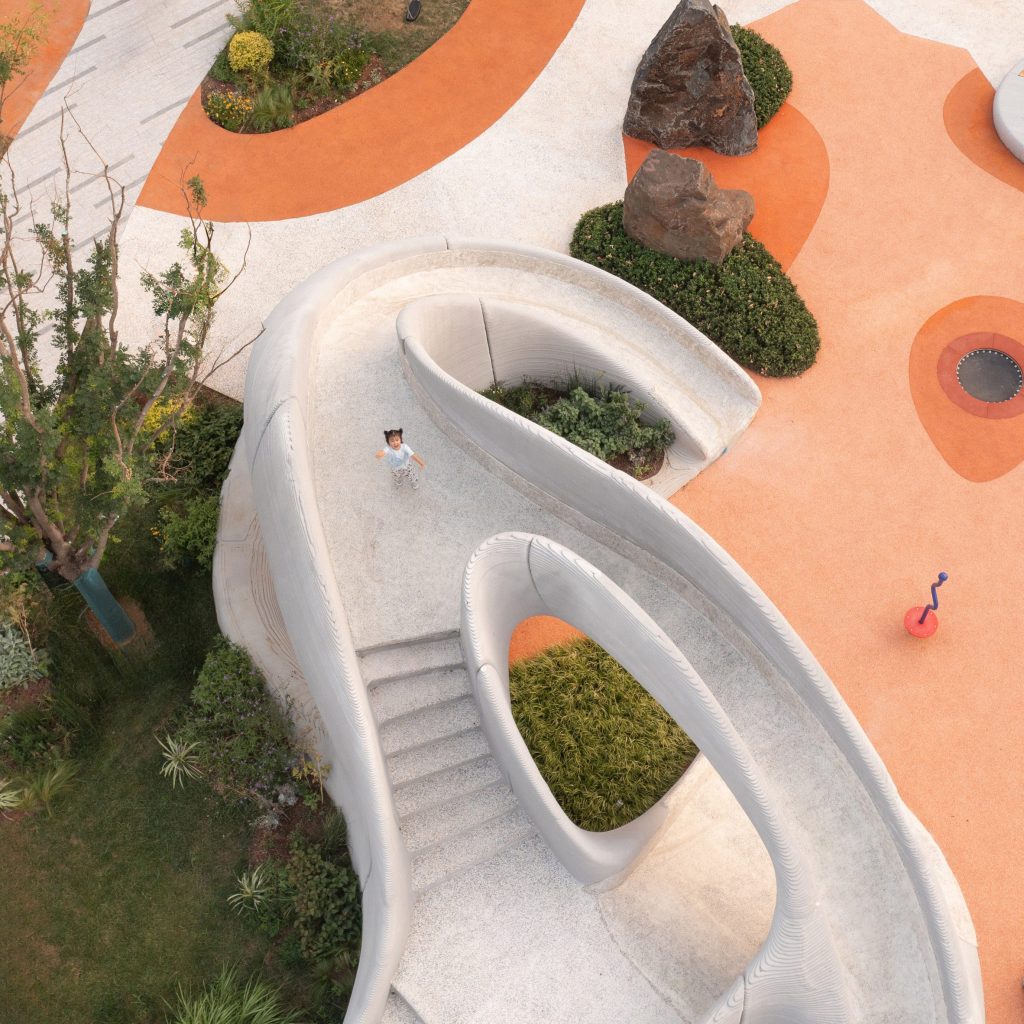
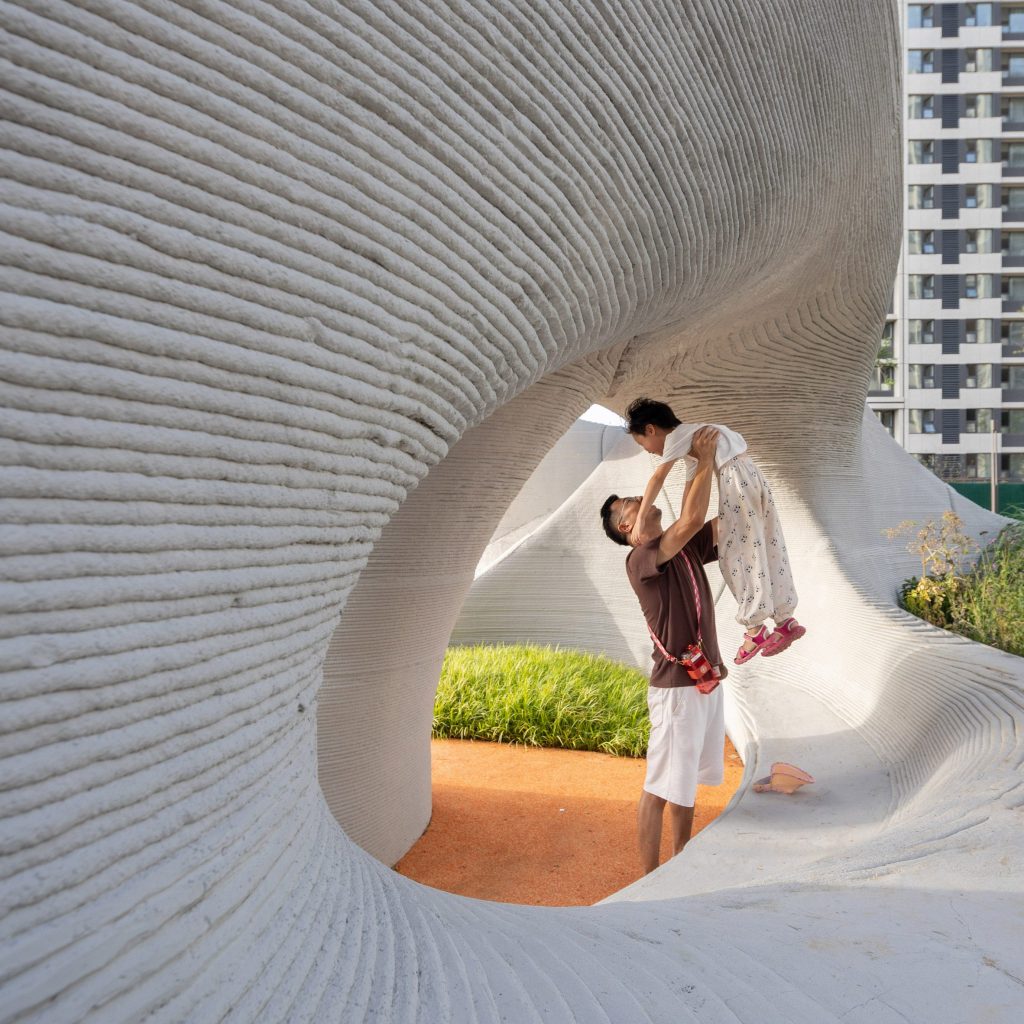
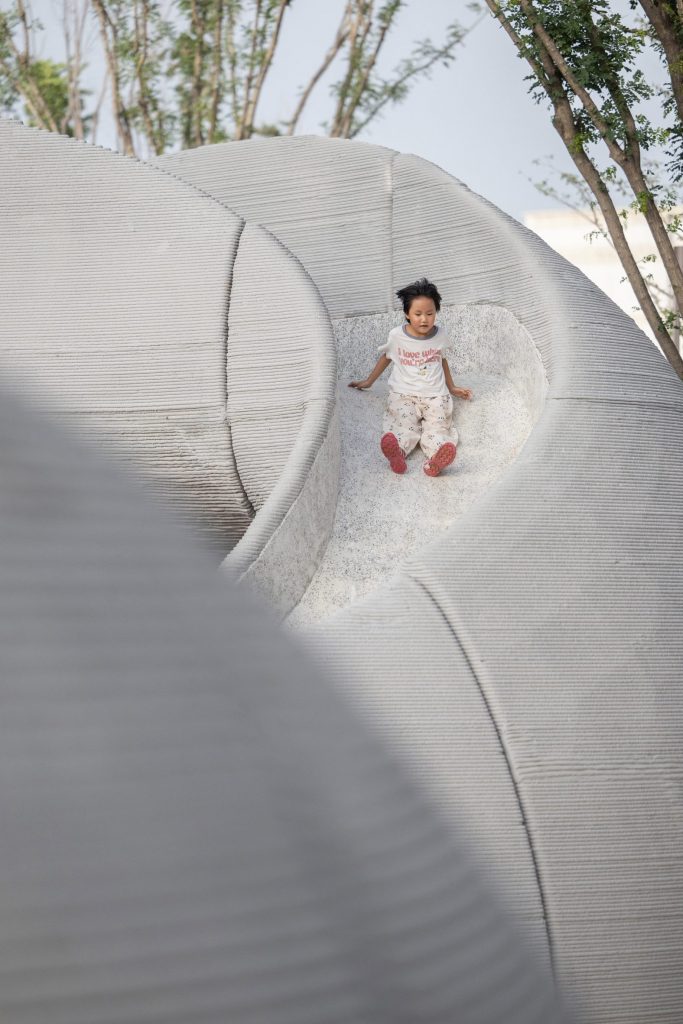
Boulder Park, Shandong by Xisui Design
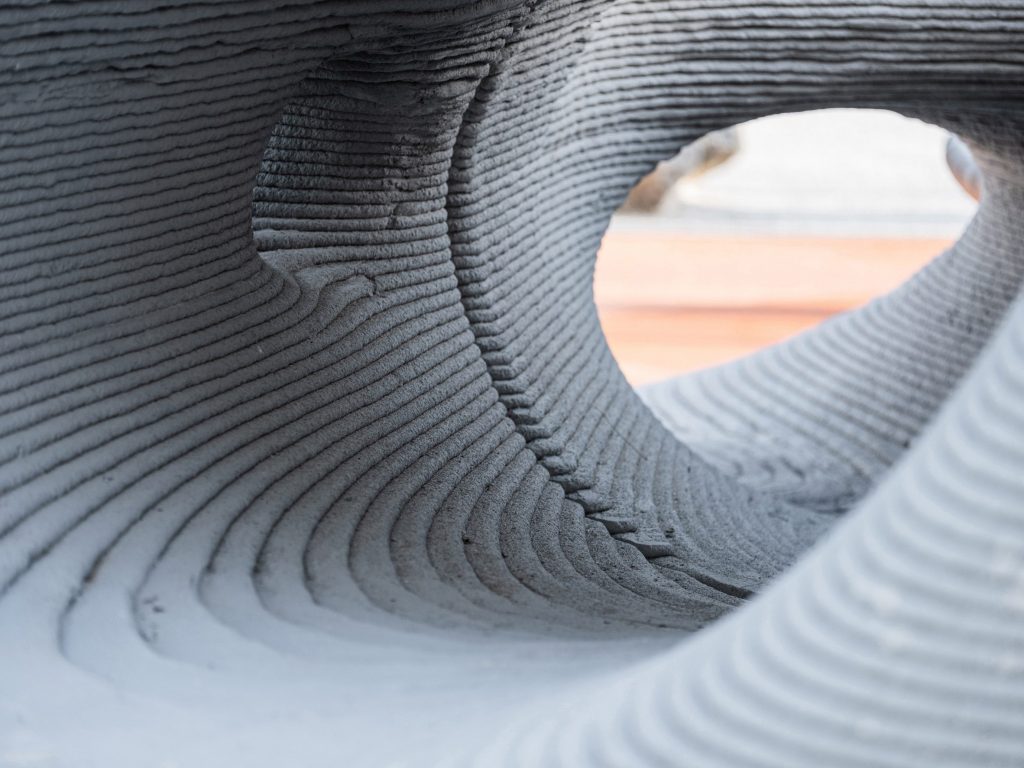
Digitally designed and fabricated by robotic arms that extrude concrete in layers, the 3D-printed elements achieve complex, organic forms with smooth edges and rounded corners. In the central play area, large boulders sit on an orange surface punctuated by timber benches, swings, and sand pits. A bridge-like structure creates slides above and a shaded cave below, while smaller boulders incorporate crawling tunnels and acoustic speaking trumpets.
Boulder Park, Shandong by Xisui Design
According to Xisui Design, 3D-printed concrete offers durability, cost efficiency, and formal freedom, making it particularly suited to outdoor playscapes. Winding paths connect the boulder playground to a water park on one side and a forest zone on the other, encouraging varied rhythms of play. Here, technology quietly recedes into the background, enabling an environment that feels instinctive, exploratory, and grounded in physical experience.